分类: politics

  • Suspect charged with attempted assassination of Trump at Washington dinner

    Suspect charged with attempted assassination of Trump at Washington dinner

    A 31-year-old California man has been formally charged by the U.S. Department of Justice over an alleged plot to assassinate former President and current sitting U.S. President Donald Trump, an incident that has prompted an official full review of White House security protocols just as King Charles III begins a high-profile state visit to the country.

    The suspect, Cole Tomas Allen, appeared before a federal court in Washington, D.C. on Monday to face three criminal counts: attempted assassination of the U.S. president, interstate transportation of a firearm to commit a felony, and discharging a firearm during a violent offense. Allen, who entered no plea during the initial hearing, appeared calm throughout the proceedings, responding politely to all of the judge’s questions with short, formal answers. Court records confirm Allen holds a master’s degree, and reporters in the courtroom noted he closely followed every step of the hearing, with four U.S. marshals positioned around him throughout the appearance. He is scheduled to return for a follow-up hearing on Thursday, and federal prosecutors have requested he remain in pre-trial detention, noting the attempt could be classified as an act of terrorism and that additional charges may be filed as the investigation progresses.

    According to official accountings of Saturday night’s incident at the Washington Hilton, the venue for the annual White House Correspondents’ Association dinner, Allen breached a security checkpoint one floor above the ballroom where Trump, Vice President JD Vance, multiple cabinet secretaries and senior White House officials had gathered. Prosecutors confirmed Allen was armed with a semi-automatic handgun, a loaded pump-action shotgun, and three bladed weapons when he rushed past security barriers. Acting Attorney General Todd Blanche told reporters Monday that during the confrontation, a Secret Service agent was struck in the chest, but was protected by a ballistic vest that stopped the bullet. The injured agent returned fire, striking Allen five times without causing life-threatening injury, and the suspect was taken into custody immediately. Blanche confirmed Allen discharged his shotgun at least once during the incident, though investigators have not yet confirmed whether the agent was hit by gunfire from Allen or by accidental crossfire from other responding law enforcement officers. The agent has since been released from hospital, and is being treated for a non-life-threatening knee injury sustained during the encounter.

    Court documents outline that Allen traveled cross-country from his Los Angeles-area home specifically to carry out the attack. He left his residence on April 21, took a train to Chicago, and arrived in Washington D.C. three days later, checking into the same Hilton hotel where the dinner was being held. Prosecutors say pre-attack writings Allen sent to his family confirm his intent was not only to kill Trump, but to target as many high-ranking administration officials as possible. Public records also show Allen donated $25 to a Democratic PAC supporting Kamala Harris’s 2024 presidential campaign, he previously studied at the prestigious California Institute of Technology, and was a member of a local Reformed church in Pasadena.

    This incident marks the third alleged assassination attempt against Trump in just two years, and it has triggered intense scrutiny of the security arrangements for the event. Questions are being raised about gaps in screening: multiple observers have asked why no attendee ID checks were conducted at the venue, why the entire presidential line of succession was gathered in a single location, and whether the security perimeter around the Washington Hilton was sufficiently robust. Notably, the same hotel was the site of John Hinckley Jr.’s 1981 assassination attempt on then-President Ronald Reagan. In a public statement, hotel management said it strictly followed all security directives issued by the Secret Service, which had lead responsibility for event security, and collaborated fully with local law enforcement and federal security teams.

    Defending the response, Blanche pushed back on criticism Monday, saying “law enforcement did not fail” in protecting the president. He emphasized that Allen was stopped one floor away from the dinner venue, with hundreds of armed federal agents already positioned between the suspect and Trump. Senior White House officials say Trump retains full confidence in the Secret Service, the Department of Homeland Security agency tasked with protecting sitting presidents and senior officials. White House Chief of Staff Susie Wiles has called a high-level meeting this week to review existing security protocols and practices for major public events with presidential attendance. White House Press Secretary Karoline Leavitt said Monday that Trump believes existing protocols worked as intended to contain the threat, and blamed the rising tide of political violence on inflammatory rhetoric from Democratic political leaders.

    The incident has not disrupted the planned state visit of King Charles III, which began Monday at the White House. Trump has publicly assured the British monarch that all necessary security measures are in place and he will be completely safe during his four-day trip. The annual White House Correspondents’ Association dinner, which was cut short by the security incident, will be rescheduled for a date within the next 30 days, with a completely overhauled security posture. FBI Director Kash Patel told Fox News Monday that investigators and security teams are already preparing for the rescheduled event, and that the agency will be “so ready” for Trump’s attendance. No new date has been announced, as event organizers note planning for the high-profile annual dinner typically takes months of preparation.

  • Trump and team renew attacks on adversaries after gala shooting

    Trump and team renew attacks on adversaries after gala shooting

    What began as a rare moment of bipartisan unity and calls for unity in the wake of a shooting at the White House Correspondents Dinner quickly devolved into a familiar cycle of partisan vitriol, as former President Donald Trump and his administration have reverted to sharp attacks on political opponents, the media, and public critics just 48 hours after the alleged assassination attempt.

    Shortly after Saturday night’s incident, which unfolded in front of thousands of attending journalists and political figures, Trump struck an uncharacteristically reflective tone. Still clad in his formal tuxedo, he told the crowd he had originally planned to deliver a blistering, combative speech attacking the press, but opted instead to highlight a shared sense of unity after the scare. “I saw a room that was just totally unified,” he remarked at the time, pointing to a “tremendous amount of love and coming together” and even extending praise to the leadership of the White House Correspondents Association, the annual dinner’s organizer. Press Secretary Karoline Leavitt later confirmed the attack marked the third documented attempt on Trump’s life in just two years.

    That moment of detente proved extremely short-lived. By Monday, the White House had sharply hardened its tone, with Leavitt – who cut short her maternity leave to address the incident – blaming the attempted assassination on what she called “systemic demonization” of Trump by left-wing opponents. “The left-wing cult of hatred against the president and all of those who support him and work for him has gotten multiple people hurt and killed, and it almost did so again this weekend,” Leavitt told reporters during a formal briefing. She went on to argue that political opponents who repeatedly label Trump a fascist, frame him as a threat to democracy, or compare him to Hitler for political gain are directly fueling political violence against the former president and his allies.

    Leavitt’s condemnation was quickly followed by fresh attacks from Trump himself, who turned his fire on late-night television comedian Jimmy Kimmel over a joke targeting former first lady Melania Trump. In a post on his Truth Social platform, Trump demanded Kimmel’s immediate dismissal from ABC, which is owned by the Disney Entertainment conglomerate. Calling Kimmel’s joke “far beyond the pale,” Trump wrote: “I appreciate that so many people are incensed by Kimmel’s despicable call to violence, and normally would not be responsive to anything that he said but, this is something far beyond the pale. Jimmy Kimmel should be immediately fired by Disney and ABC.”

    The rapid shift away from unity has dashed any lingering hopes that the assassination attempt might prompt Trump to pull back from his long history of incendiary, confrontational rhetoric against political rivals, immigrant communities, and journalists – a pattern that has defined his political career over more than a decade. A former reality television star, Trump has long positioned the national media as one of his primary foils, famously branding reporters “the enemy of the people” and repeatedly targeting female journalists with aggressive, personal insults, including calling one reporter “piggy.” He has also pardoned hundreds of rioters convicted for their role in the January 6, 2021 attack on the U.S. Capitol, a riot staged to overturn his 2020 election loss to President Joe Biden. Just in recent months, Trump has publicly stated he was “glad” former FBI director Robert Mueller, who led the Russia probe into his 2016 campaign, had died, and issued an extraordinary threat to Iran warning that a “whole civilization will die tonight” if it acts against U.S. interests.

    By the time he appeared in an interview with CBS’s *60 Minutes* the day after the gala, Trump had fully returned to his combative form. When journalist Norah O’Donnell read extracts of a vague statement from the shooting suspect that referenced unsubstantiated claims without naming Trump, Trump snapped, calling O’Donnell and the network a disgrace. “I’m not a pedophile. You read that crap from some sick person… You shouldn’t be reading that on 60 Minutes,” he shouted.

    Democratic leaders have pushed back hard against Leavitt and Trump’s accusations, rejecting their claims that Democratic rhetoric is to blame for the violence. House Minority Leader Hakeem Jeffries dismissed the White House’s call for civility outright, telling reporters: “This so-called White House press secretary wants to lecture America and lecture us about civility? Get lost. Clean up your own house before you have anything to say to us about the language that we use.”

  • Iran steps up its efforts on the diplomatic front

    Iran steps up its efforts on the diplomatic front

    Against a backdrop of deadlocked bilateral talks with the United States, the Islamic Republic of Iran has launched an intensified regional and global diplomatic push, shifting its core engagement priority to deepening coordination with its neighboring states and longstanding allies. The flurry of high-level diplomacy unfolded across multiple capitals and capitals over recent days, centered on addressing regional security, securing unimpeded navigation through the strategic Strait of Hormuz, and breaking the impasse in Washington-Tehran relations.

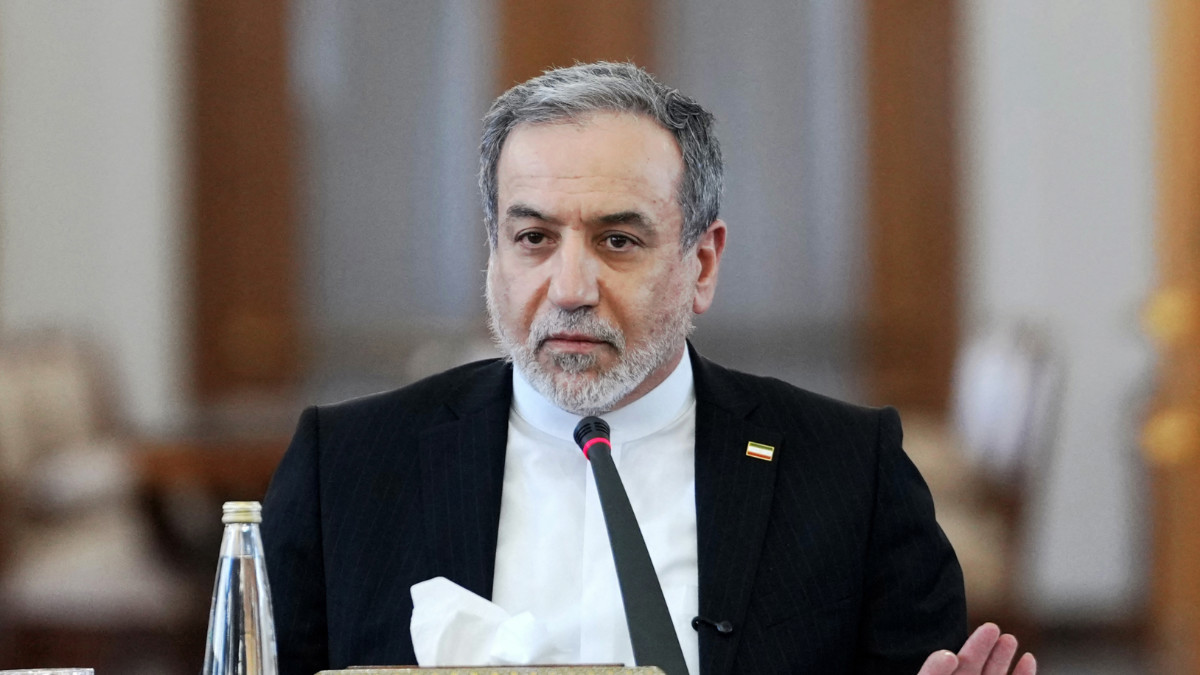
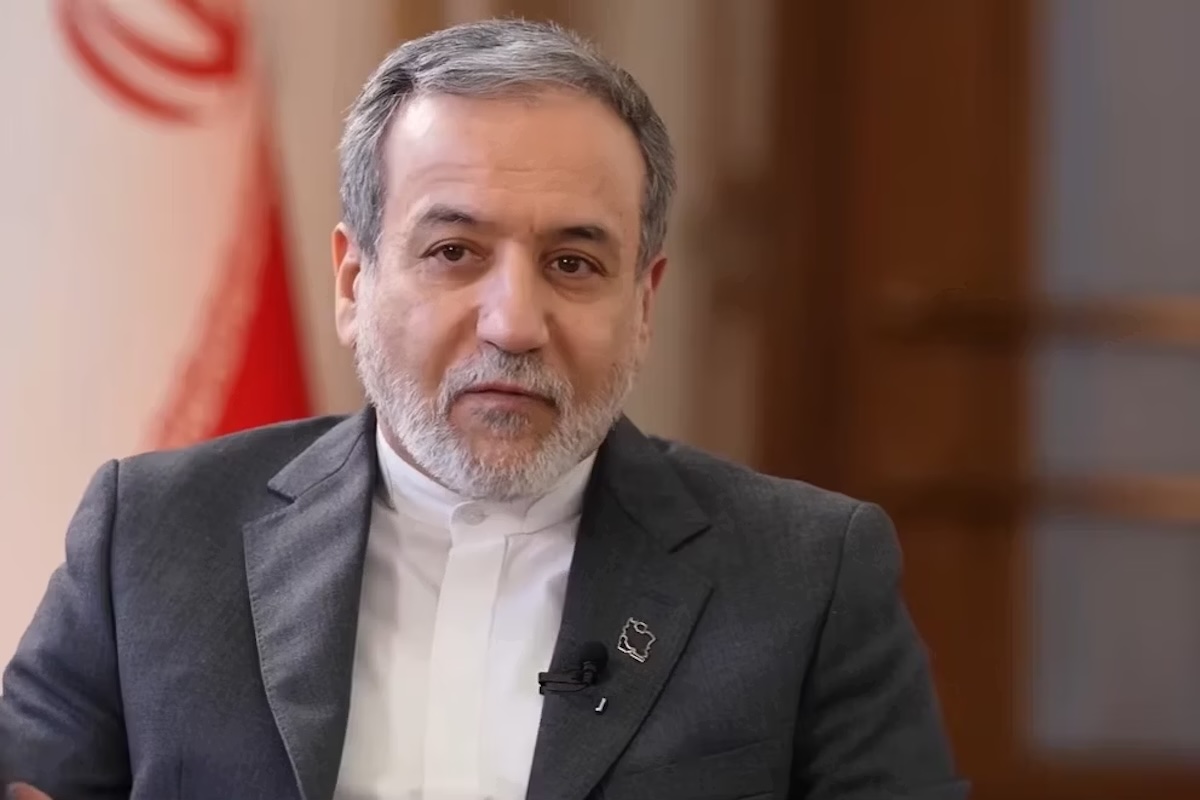
    On Monday, Iranian Foreign Minister Abbas Araghchi held a face-to-face meeting with Russian President Vladimir Putin in St. Petersburg, according to Russia’s state-owned RIA Novosti news agency. During the talks, Putin expressed Moscow’s hope that the Iranian people would successfully navigate what he described as a “difficult period” and that regional peace would ultimately take hold. He reaffirmed that Russia would take all possible steps to advance the interests of both Iran and other nations across the Middle East.

    Aragchi framed his Russia visit — the latest stop on a regional tour that already included stops in Pakistan and Oman — as a critical opportunity to restart in-depth consultations between Tehran and Moscow on evolving regional and global developments, while strengthening bilateral cooperation. He emphasized that Iran’s top diplomatic priority is now its immediate neighborhood, noting that one core focus of discussions is developing frameworks to guarantee safe passage through the Strait of Hormuz, a waterway that carries roughly a fifth of global oil trade, for “all our dear neighbors and the entire world.”

    The foreign minister added that the meeting with Putin allowed the two sides to align their stances on recent events, stressing that ongoing strategic coordination between Iran and Russia carries major regional significance. His earlier stop in the Pakistani capital Islamabad, where he met with Prime Minister Shehbaz Sharif, was particularly important, Araghchi noted, because Islamabad serves as a mediator between Tehran and Washington.

    Acknowledging that prior indirect talks between Iran and the US have yielded limited progress but failed to reach a breakthrough, Araghchi placed blame squarely on Washington, saying the failure stemmed from the United States’ excessive demands and what he called its misguided negotiating approach.

    A day before the St. Petersburg meeting, Omani Foreign Minister Sayyid Badr bin Hamad Al Busaidi announced he had held a “productive discussion” focused on Strait of Hormuz issues with Araghchi. “We recognize our shared responsibility to the international community and the urgent humanitarian need to free the seafarers held for far too long. Much diplomacy is required and practical solutions to ensure lasting freedom of navigation,” Al Busaidi said in a statement.

    Sunday saw Araghchi hold a flurry of diplomatic engagements beyond his Omani talks: he spoke by phone with French Foreign Minister Jean-Noel Barrot to discuss a regional ceasefire and unfolding security developments. Barrot reaffirmed France’s backing for Iran’s diplomatic path to resolving tensions, saying he hoped dialogue would restore peace across the Middle East. On the same day, Araghchi also held talks with Saudi Foreign Minister Prince Faisal bin Farhan, with the two sides reviewing regional dynamics and ongoing collective efforts to de-escalate broader regional tensions.

    These stepped-up diplomatic moves come as US-based news outlet Axios reported that Tehran has submitted a new proposal to Washington aimed at reopening the Strait of Hormuz to full navigation. Citing anonymous administration officials, Axios reported that US President Donald Trump was scheduled to convene a meeting of his top national security and foreign policy advisors in the White House Situation Room on Monday to discuss the standoff with Iran and map out potential next steps.

    Trump has already publicly cast doubt on the new Iranian proposal, canceling a planned trip by special envoys Jared Kushner and Steve Witkoff to Islamabad, citing what he called the excessive time and cost of the trip for an insufficient offer from Tehran. “Iran offered a lot, but not enough,” Trump stated, arguing that the responsibility for advancing talks now rests with Tehran. “If Iran wants to talk, they can come to us, or they can call us,” he said, reiterating his non-negotiable red line: “Iran cannot have a nuclear weapon, otherwise there’s no reason to meet.”

    Iranian parliamentary speaker Mohammad Baqer Qalibaf pushed back against US pressure on Sunday, arguing that Washington has already exhausted most of its leverage in the ongoing economic standoff with Tehran, and that Iran still holds significant negotiating cards to advance its interests.

    The Gulf Cooperation Council’s Assistant Secretary-General for Political and Negotiation Affairs, Abdel Aziz Abu Hamad Aluwaisheg, weighed in on the dispute on Monday, saying that the strategic Strait of Hormuz must not be allowed to remain a “hostage to negotiations between the US and Iran.”

  • In pictures: King Charles and Queen Camilla begin US state visit

    In pictures: King Charles and Queen Camilla begin US state visit

    Nearly two decades after the late Queen Elizabeth II’s last state visit to the United States, Britain’s reigning monarch King Charles III and his wife Queen Camilla have touched down on American soil to launch a four-day diplomatic tour, a gathering timed to coincide with the U.S.’s upcoming 250th anniversary of its independence from British rule. The core mission of this landmark trip, the first state visit to the U.S. by King Charles since he ascended to the throne, is to honor and strengthen the centuries-long special relationship that binds the United Kingdom and the United States.

    Upon their aircraft’s landing at the Maryland airbase, a full red carpet welcome was laid out in line with diplomatic protocol. Dressed in formal ceremonial attire, the royal pair descended the aircraft steps to officially commence their official visit, greeted on the tarmac by two senior diplomatic representatives: White House Chief of Protocol Monica Crowley and the United Kingdom’s Ambassador to the U.S. Sir Christian Turner. Following the initial welcome, local children presented the King and Queen with bouquets of flowers, a warm traditional gesture that added a soft, approachable touch to the formal proceedings.

    After the couple processed through a full military guard of honor, a joint service military band performed both the U.S. and UK national anthems, a traditional ritual marking the formal start of a state visit. Following the opening welcoming ceremonies, the royal couple traveled directly to the White House, where they met with U.S. President Donald Trump and First Lady Melania Trump for a formal afternoon tea. During their time at the executive residence, the couple was also shown a one-of-a-kind beehive crafted in the shape of the White House. The unique beehive is part of an ongoing sustainable honey production initiative hosted on the White House grounds, a project that aligns with King Charles’s longstanding public advocacy for environmental conservation and sustainable farming practices.

  • Redbridge Independents defy Labour minister Wes Streeting’s ‘sectarian’ accusation

    Redbridge Independents defy Labour minister Wes Streeting’s ‘sectarian’ accusation

    Ahead of the May 7 local council elections in the east London borough of Redbridge, a fierce political fight has erupted, pitting incumbent Labour against a rising local challenger party that holds the potential to unseat Labour’s long-standing control of the council. At the center of the row is British Health Secretary Wes Streeting, whose own parliamentary seat is based in Redbridge, a solid Labour stronghold that has been held by the party for years.

    Streeting has sounded a sharp alarm over what he labels “sectarian politics” from the Redbridge Independents, a local political grouping backed by former Labour leader Jeremy Corbyn’s Your Party. Widely tipped as a likely future Labour leader and prime minister should Keir Starmer step down, Streeting has publicly attacked the challengers in both a letter to local constituents and comments to The Times. In his resident letter, he accused the Redbridge Independents of being a divisive faction that only seeks to represent a subset of the community, claiming it prioritizes foreign conflicts over fixing bread-and-butter local issues like damaged roadways. Speaking to The Times late last week, he doubled down: “We’re voting for Redbridge council, not the UN Security Council. Who you choose to run your local council matters and the Redbridge Independents represent a divisive brand of sectarian politics.”

    But Middle East Eye’s on-the-ground reporting has called Streeting’s characterization into question, revealing a much different picture of the challenger party’s priorities.

    Redbridge Independents grew out of a grassroots community action group formed specifically to contest the 2024 May local elections, according to party leader Vaseem Ahmed, a long-time local community politician and recruitment firm owner. Ahmed told MEE that 95 percent of the party’s official 20-page election manifesto is focused exclusively on hyper-local issues that directly impact Redbridge’s 300,000 residents. A review of the group’s campaign materials and social media channels confirms this focus: the party’s top priorities are easing the strain of the cost-of-living crisis on local households, responsible management of council budget priorities, and improving access to elected representatives for residents who have long felt ignored by the ruling Labour establishment. To fix long-standing complaints of unresponsive government, the party has pledged to host regular, open public forums where residents can speak directly to council leaders and councillors, rather than being fobbed off to unstaffed phone lines or unanswered emails.

    Ahmed acknowledges that the party does hold opposition to the current Labour government’s foreign policy, particularly regarding Israel’s war in Gaza, but stresses that the group is realistic about what a local council can achieve. “Redbridge Council is not going to solve the problem in the Middle East,” he said. Even so, he argues the issue is relevant to local council action: the group is calling for Redbridge Council to divest its public pension fund from companies found to be complicit in Israeli violations of international law, a position that puts it at odds with the current Labour government, which earlier this year warned Labour-run councils they could face legal action if they move forward with boycotts of Israeli-linked businesses.

    Ahmed pushed back hard against Streeting’s “sectarian” label, calling it an offensive Islamophobic trope that targets the borough’s large Muslim community. Redbridge is one of London’s most ethnically diverse areas: more than 47 percent of residents identify as Asian or Asian British, and Muslims make up over 30 percent of the population. “It’s such an Islamophobic trope that somehow, if you have Muslims who are in politics, that they’re only going to be worried about fellow Muslims and nobody else,” Ahmed said. “Whereas we live in a diverse community and we represent everybody. You know, if you get elected, you’re not going to focus on one section of the community.”

    He added that the party’s candidate list is ethnically diverse and draws candidates from a wide range of professional backgrounds, including CEOs, entrepreneurs, magistrates, lawyers, doctors, educators and finance professionals, all of whom have deep roots in the Redbridge community. “Ordinary people like ourselves are rooted in the community. We live here, we work here, we raise our families here, and we just want our voices to be represented. Right now, we just don’t feel we have that,” Ahmed said, noting that he stepped down from local mosque committee roles when entering politics to avoid any conflict of interest and protect the charitable status of local religious institutions.

    The Redbridge Independents’ rise comes as the local Labour Party has been rocked by scandal. In 2025, local Labour MP Jas Athwal resigned his council seat after the BBC uncovered dangerous living conditions—including ant infestations and toxic black mould—in multiple rental properties he owned. That resignation triggered a by-election, which the Redbridge Independents won, demonstrating the party’s early electoral momentum against Labour.

    While Your Party, led by Corbyn, has endorsed the Redbridge Independents, Ahmed stressed that the local group retains full autonomy. He explained that Your Party was involved in early conversations about forming a local group, but internal factional conflict within Your Party delayed its official launch, by which point the Redbridge Independents had already organized, begun canvassing and built name recognition across the borough. “Right now our philosophy is that we are unlike other parties here in Redbridge. Whether it’s Greens or Lib Dems or Tories or Labour, they all have to answer to the bosses [nationally],” Ahmed said. “We love the fact that we’re independent and that we can make our own choices for the benefit of the residents of Redbridge.”

    Heading into election day, Labour faces challenges from across the political spectrum: Reform UK and the Conservatives on the right, and progressive challengers including the Redbridge Independents and the Green Party on the left. Polling and early results indicators suggest the council could end up with no single party holding a majority after votes are counted, a result that would rank Redbridge as one of Labour’s most high-profile election night defeats.

  • Milei bars media from presidential palace

    Milei bars media from presidential palace

    A growing confrontation between Argentine President Javier Milei’s administration and the country’s independent press entered its third consecutive day on Monday, with accredited journalists still barred from entering the Casa Rosada presidential palace, deepening concerns over press freedom in the South American nation. The controversial libertarian leader, who has openly aligned himself with former U.S. President Donald Trump and held a long adversarial relationship with Argentine media, has repeatedly lashed out at press outlets since his inauguration in December 2023.

  • Former Israeli PMs Bennett and Lapid merge parties ahead of elections

    Former Israeli PMs Bennett and Lapid merge parties ahead of elections

    Two former Israeli prime ministers, Naftali Bennett and Yair Lapid, have announced a historic merger of their political factions to mount a unified challenge against incumbent Prime Minister Benjamin Netanyahu in national elections set to take place no later than October 2025.

    The new political bloc, named “Beyahad” — which translates to “Together” in Hebrew — will be helmed by Bennett, with the explicit goal of ousting the 76-year-old leader who has controlled Israeli politics for the vast majority of the past 17 years.

    Speaking at a joint press conference held Sunday, Lapid framed the alliance as a necessary step for national unity, while defending his decision to stand behind Bennett, a member of Israel’s political right. Lapid described Bennett as a “liberal, decent, law-abiding right-winger, who did not sell his values – neither to Haredi extortion nor to corruption.” He went on to call on all centrist voters across Israel to rally behind the new bloc, emphasizing that “Israel needs unity like air to breathe.”

    For his part, Bennett echoed the theme of cross-ideological cooperation, noting that the merged party’s unity itself sends a powerful message to voters. Despite past ideological differences between the two leaders’ former parties, Bennett stressed that they are now fully aligned to fight for national change. In a public post shared to the social platform X, Bennett called the merger the most Zionist and patriotic action he and Lapid have ever taken on behalf of the State of Israel.

    “The era of division is over. The era of repair has arrived. When we work together, we win,” Bennett stated. He added that the pair previously delivered more progress during their one-year coalition government than competing administrations achieved over full four-year terms.

    This is not the first time Bennett and Lapid have joined forces to oppose Netanyahu: the pair led separate parties in 2021 when they successfully united a diverse coalition to oust Netanyahu from office, governing under a rotational power-sharing agreement that ultimately collapsed just over a year after taking office.

    In his remarks, Bennett also outlined core principles of the new bloc, noting that the alliance will work to advance a close-knit, inclusive form of Judaism that rejects religious coercion. At the same time, he confirmed that the bloc will only partner with self-identified Zionist parties, ruling out any cooperation with Arab-led Israeli political factions.

    The announcement of the merger has already drawn positive responses from multiple opposition figures, coming as Netanyahu faces cascading criticism on multiple fronts, from his handling of the ongoing conflict with Iran to longstanding political controversies. Netanyahu continues to fight ongoing corruption charges, which he has repeatedly denied, and his push for a controversial package of judicial overhaul reforms has eroded support even among former political allies and sparked mass sustained protests across the country since 2023.

    For many Israeli voters, the most significant failure of Netanyahu’s tenure has been his government’s inability to prevent the October 7, 2023 attack by Hamas from the Gaza Strip, which killed more than 1,100 people in Israel. The leader also faces an active arrest warrant from the International Criminal Court, charging him with alleged crimes against humanity in Gaza.

    Gadi Eisenkot, former chief of the Israeli military and leader of the opposition Yashar party, publicly welcomed the new alliance, saying he views Bennett and Lapid as qualified partners. Eisenkot added that he remains committed to acting responsibly to deliver the change and victory that Israel needs, framing reform of the country’s political system as his lifelong mission.

    Recent polling data underscores the scale of Netanyahu’s declining popularity. A August 2025 survey conducted by the Institute for National Security Studies found that 76 percent of Israeli voters have lost trust in Netanyahu’s government, which has held power since late 2022. That downward trend has continued into September, with early polling showing shrinking support for Netanyahu’s right-wing Likud party, even after a temporary ceasefire between Israel and Iran was announced by U.S. President Donald Trump earlier this month.

  • UK’s King Charles seeks to shore up Trump ties

    UK’s King Charles seeks to shore up Trump ties

    King Charles III touched down in Washington, D.C. on Monday for a four-day state visit that carries profound diplomatic significance, moving forward with the long-planned itinerary despite a recent security scare that targeted U.S. President Donald Trump over the weekend. This trip marks the first visit by Charles and Queen Camilla to the United States since he ascended to the British throne in 2022, and its core mission is to patch the growing rift in the historically close U.K.-U.S. “special relationship” driven by sharp disagreements over the ongoing war with Iran.

    The visit was originally scheduled to celebrate the 250th anniversary of U.S. independence from British rule, but diplomatic frictions have reframed the agenda as a targeted charm offensive aimed at repairing bonds between the two nations. Tensions have escalated in recent weeks: Trump has repeatedly attacked British Prime Minister Keir Starmer over his public opposition to the Iran war, as well as his government’s immigration and energy policies, even going so far as to dismiss Starmer as “no Churchill” — a sharp rebuke to the leader most closely associated with forging the modern special relationship. Despite these frictions, Starmer spoke with Trump by phone Sunday to extend well wishes following the security incident, and has publicly backed proceeding with the state visit, though a recent YouGov poll found nearly half of British respondents support canceling the trip altogether.

    A shooter opened fire near the White House Correspondents’ Association annual gala Saturday, an event attended by Trump, leaving no injuries to the president or other attendees. Buckingham Palace confirmed in a statement that Charles was “greatly relieved” to hear Trump and other guests emerged unharmed, and that the full itinerary would remain unchanged. After consultations between U.S. and British security teams, UK Ambassador to the U.S. Christian Turner told reporters Sunday that “we are all very confident that all appropriate security measures are in place” to protect the royal party throughout their stay.

    The scheduled itinerary kicks off with a formal welcome at the White House Monday, where Trump and First Lady Melania Trump will greet the king and queen before hosting them for tea and a tour of a new beehive installed on the White House grounds by the first lady. On Tuesday, the two leaders will hold formal talks in the Oval Office before a state dinner in the evening, and Charles will deliver a historic address to a joint session of Congress — making him the first British monarch to speak to the legislature since his mother, Queen Elizabeth II, did so in 1991.

    On Wednesday, the royal couple will travel to New York City to tour the 9/11 Memorial & Museum honoring victims of the 2001 terrorist attacks, before departing Thursday for Bermuda, where Charles will make his first visit to a British Overseas Territory as reigning monarch.

    For 77-year-old Charles, the trip also represents a significant personal test, coming as he continues treatment for cancer diagnosed in recent years. Still, monarchy analysts note Charles has a proven track record of navigating high-stakes diplomatic events. Craig Prescott, a royal studies expert at Royal Holloway University of London, pointed to Charles’s deft handling of Trump’s state visit to the UK last September as evidence the king is “generally very good” at managing tense diplomatic occasions. Prescott added that Charles is expected to address the Iran war — widely described as the “elephant in the room” for this visit — in coded language during his congressional address, balancing the UK’s opposition to the conflict with a desire to avoid overt friction with the U.S. administration.

    Trump has framed the visit as an opportunity to repair transatlantic ties, telling Fox News Sunday: “He’s a friend of mine for a long time, so he’s coming, and we’re going to have a great time, and he represents his nation like nobody else can do it.” White House Press Secretary Karoline Leavitt echoed that framing Monday, saying the visit would “honor the long-standing and special relationship between the United States and the United Kingdom.”

    Beyond the diplomatic tensions over Iran, the trip also carries lingering baggage from the ongoing controversy surrounding the late convicted sex offender Jeffrey Epstein, and Charles’s brother, Prince Andrew, the Duke of York, who had close personal ties to the billionaire before Epstein’s death in prison in 2019. The scandal, which led Andrew to step back from official royal duties, has remained a persistent stain on the reputation of the monarchy, and analysts note it could cast an unplanned shadow over the carefully choreographed tour.

  • UAE ‘aggressively’ lobbying US to designate Yemen’s Islah as a terror group, sources say

    UAE ‘aggressively’ lobbying US to designate Yemen’s Islah as a terror group, sources say

    A diplomatic rift is brewing in the Middle East after multiple anonymous regional, U.S. and Yemeni sources confirmed to Middle East Eye that the United Arab Emirates has waged an aggressive, four-month lobbying campaign to push the former Trump administration to designate Yemen’s Islah Party as a Specially Designated Global Terrorist (SDGT) – a move that would directly undercut Saudi Arabia, the group’s main international backer.

    The push from Abu Dhabi came after the Trump administration designated three national branches of the Muslim Brotherhood – Egyptian, Jordanian and Lebanese – as terrorist organizations earlier this year. While the UAE issued a muted public statement praising the decision as a positive step for global counter-terrorism efforts, senior Emirati officials privately expressed deep frustration that the action failed to meet their longstanding demand: a blanket terror designation for the entire Muslim Brotherhood movement, a goal Abu Dhabi has pursued for more than a decade across Washington and European capitals.

    A senior U.S. official, speaking on condition of anonymity to discuss sensitive diplomatic deliberations, noted that Emirati leaders genuinely believed the Trump administration would move forward with the proscription at some point. While it remains unclear whether Abu Dhabi secured a formal timeline from U.S. counterparts, a terror designation would carry severe consequences: a SDGT label would force U.S. financial institutions to freeze all assets linked to the party and bar all its members from entering the United States. If the more severe Foreign Terrorist Organization (FTO) designation was adopted, any individual anywhere in the world suspected of providing material support or resources to Islah could face prosecution under U.S. anti-terrorism law.

    The lobbying push sets the stage for a major escalation between Gulf rivals Saudi Arabia and the UAE, who have seen their once-aligned alliance fracture sharply over divergent strategic interests across the Middle East in recent years. Founded more than 30 years ago as the Yemeni Congregation for Reform, Islah is an independent Yemeni political party that blends Islamist, tribal and conservative ideological currents. While often characterized as ideologically sympathetic to the Muslim Brotherhood, the party has repeatedly denied any formal affiliation with the movement. Two members of the Saudi-backed Yemeni Presidential Leadership Council – Marib Governor Sultan Ali al-Arada and Abdullah al-Alimi Bawazeer – currently hold seats as Islah representatives.

    A senior informed Saudi source confirmed the kingdom is well aware that the UAE’s broader campaign to ban all Muslim Brotherhood branches targets Islah specifically. “They see Islah as the most dangerous branch of the Brotherhood because of its political weight and its role in Yemen,” the source told Middle East Eye. The U.S. official added that while the administration had not formally assessed Riyadh’s reaction, pushing through the designation would almost certainly trigger fierce pushback from the kingdom.

    Longtime coalition partners in the 2015 Yemen intervention, Saudi Arabia and the UAE have grown increasingly at odds over their strategic priorities in the country. Tensions boiled over in late 2022 when Riyadh forced the dissolution of the UAE-backed Southern Transitional Council (STC), a separatist group that Abu Dhabi has supported to politically and militarily marginalize Islah. Since that showdown, Saudi Arabia has moved to push Emirati forces and their local proxies out of key Yemeni territory. The rift extends beyond Yemen: the two Gulf powers also back opposing sides in Sudan’s ongoing civil conflict, with Riyadh supporting the Sudanese Armed Forces alongside Egypt and Turkey, while Abu Dhabi backs the Rapid Support Forces.

    Following a November executive order from the Trump administration that launched the process of designating specific Muslim Brotherhood chapters, the State Department began reaching out to regional stakeholders to gather input on a potential Islah blacklisting. Administration officials sent a series of questions about the party to both Saudi officials and Islah representatives as part of internal deliberations. A State Department spokesperson declined to comment on the outreach, telling Middle East Eye that the agency does not disclose details of internal designation discussions.

    Islah has not issued an official public response to the UAE’s lobbying offensive, but a senior party member told Middle East Eye the move did not come as a surprise. “We expected certain people to come after us after the Trump administration first unveiled the directive in November,” the source said, speaking on condition of anonymity amid a recent rise in targeted assassinations of Yemeni political figures. The party is currently pushing back against the terror allegations and is communicating with the State Department through a third-party intermediary. “Islah is a Yemeni party, and it isn’t a branch of the Muslim Brotherhood. It doesn’t have any links to them,” the source said. “We are happy with what the Muslim Brotherhood is doing in supporting Palestine, but that doesn’t mean Islah is a branch of the Muslim Brotherhood.”

    Abdullah al-Arian, an associate professor of history at Georgetown University’s School of Foreign Service in Qatar, explained the divergent approaches of Saudi Arabia and the UAE to the Muslim Brotherhood. While both nations have formally designated the movement as a terrorist organization, al-Arian noted that the UAE maintains an uncompromising zero-tolerance policy for any group linked to the Brotherhood, “irrespective of what short-term political advantages it might offer.” “There is a far deeper, ideologically driven agenda on the part of the UAE that we don’t see necessarily manifesting from the Saudis,” al-Arian said. “Not because the Saudis are more amenable to these groups or their actual political projects or programmes, but more because they see in them the possibilities for tactical political advantages.”

    Middle East Eye reached out to the UAE embassy in Washington and the Saudi foreign ministry for comment on the lobbying campaign, but did not receive a response prior to publication.

  • Japan’s prime minister launches a panel to review her country’s defense policies as threats escalate

    Japan’s prime minister launches a panel to review her country’s defense policies as threats escalate

    TOKYO – In a landmark move signaling a major shift in Japan’s post-war security posture, Prime Minister Sanae Takaichi officially launched a high-level expert panel Monday to conduct a comprehensive review of the nation’s core security and defense strategies. The initiative comes as mounting geopolitical tensions across East Asia, from intensifying military activity by China to heightened provocations from North Korea and expanded Russian military presence in the region, have pushed Tokyo to accelerate its long-planned military expansion.

    Takaichi, who assumed the premiership in October, has positioned defense upgrading as the centerpiece of her administration’s agenda, framing the expanded military capability as a critical deterrent against growing regional threats. In opening remarks delivered at her official residence at the panel’s inaugural meeting, Takaichi emphasized the urgent need to reorient Japan’s defense priorities to counter emerging threats. “The relatively stable post-Cold War international order has become a thing of the past,” she told the gathered experts. “The international situation has completely changed.”

    Drawing global lessons from ongoing conflicts, Takaichi argued Japan must adapt its military doctrine to account for new styles of combat, including asymmetric tactics and the widespread use of unmanned drone systems, while building capacity to withstand prolonged large-scale conflicts. “We need to learn the lesson from Russia’s invasion of Ukraine and the ongoing war in the Middle East,” she added. “As the world enters an era of turbulence and Japan faces many challenges, the upcoming revision … is a crucial effort that affects Japan’s fate.”

    The security policy review is the latest step in Takaichi’s push to expand Japan’s military reach. Just one week before launching the panel, her cabinet approved a historic rollback of long-standing restrictions on lethal weapons exports, a policy shift that marked a major break from Japan’s post-World War II pacifist framework that restricted the country to self-defense-only military activity. The rollback has been widely praised by the United States and other regional defense allies, who say it will open new avenues for deepening military-industrial cooperation and integrated defense production. However, the move has drawn sharp criticism from domestic pacifist groups and the Chinese government, which argue it deviates dramatically from Japan’s post-war commitment to pacifism.

    The 15-member review panel brings together leading specialists in diplomacy, national defense, and economic policy. Over the coming months, the group will examine Japan’s existing defense frameworks against a range of plausible emergency scenarios, evaluate the current defense budget and long-term funding mechanisms, and prepare concrete policy recommendations for revision. Japan’s current national defense strategy, adopted in December 2022, set a target of doubling defense spending to 2% of gross domestic product by 2027, a commitment that totals roughly 43 trillion yen ($270 billion). Takaichi’s administration has already hit that spending target ahead of schedule, leaving analysts widely expecting the panel to consider additional increases to military outlays in its final report.