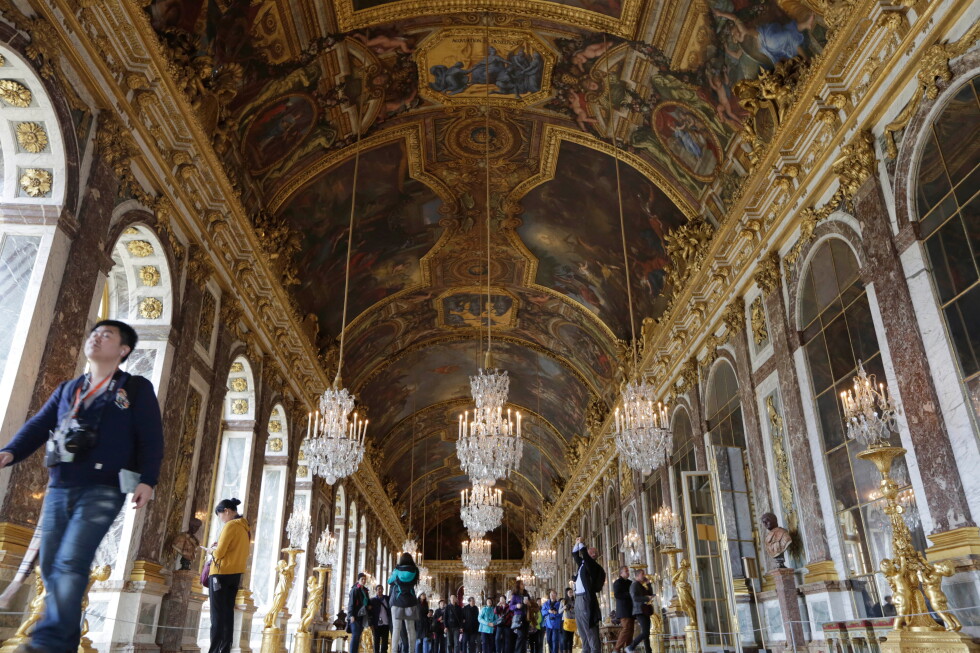
PARIS – As the Group of Seven summit gets underway in France this week, President Emmanuel Macron has pulled out one of the country’s most powerful diplomatic tools: the iconic Palace of Versailles. On Wednesday evening, the 17th-century royal residence of the “Sun King” Louis XIV opened its gates to U.S. President Donald Trump for a private reception, after-dinner program and state dinner held to celebrate the 250th anniversary of the United States, a high-stakes gesture crafted to shore up personal ties at a moment of deep friction across the Atlantic alliance.
Macron’s gambit has already scored one early win: Trump confirmed to reporters that he originally planned to depart the G7 summit early, matching his early exit from the 2023 Canadian-hosted meeting, but changed his plans after receiving the exclusive Versailles invitation. “I’m a fan of beautiful places,” Trump explained, noting the “very nice man” behind the invitation changed his schedule.
For Macron, the lavish welcome is no mere act of hospitality. Speaking to France’s TF1 television earlier this week, he emphasized that keeping Trump in attendance through the final day of the summit was critical to securing full, finalized agreements from the gathering of world leaders. Speaking Wednesday ahead of the dinner, Macron framed the historic site as an active diplomatic asset, comparing international statecraft to soccer. “Whether I’m playing at home or away, my goal is to score goals. And when I host other teams, I try to give them a nice welcome,” he said. “Versailles is a diplomatic tool and an instrument of influence.”
With France lacking the outsized economic or military leverage that Washington holds on the global stage, ceremonial pageantry rooted in centuries of national history remains one of Paris’ most effective levers of power. Experts frame the event as the ultimate demonstration of French soft power: a display of national grandeur built into the stone walls of one of the world’s most recognizable landmarks.
“It is soft-power flex based on hard buildings,” explained Denis Lacorne, a professor of American studies at Paris’ Sciences Po university. This is far from the first time a French president has turned to Versailles for high-stakes diplomacy: Macron welcomed Russian President Vladimir Putin to the palace in 2017, and hosted Britain’s King Charles III and Queen Camilla for a state dinner earlier in his tenure. Palace officials confirmed to the Associated Press that for more than 300 years, Versailles has served as a setting for French leaders to honor visiting dignitaries, and remains “a place in the service of French diplomacy.”
The choice of Versailles carries particular resonance for Trump, a former real estate developer who has long tied architecture to status, success and personal power. In his second term, Trump has pushed forward plans to cement his legacy in stone, including a new ballroom for the White House and a 76-meter triumphal arch modeled after Paris’ own Arc de Triomphe. Trump himself has previously acknowledged that the gilded ballroom at his Mar-a-Lago resort in Florida was directly modeled after Versailles’ iconic ceremonial spaces. Even Trump himself summed up the site’s unique appeal in one blunt line: “Versailles is not gold leaf — Versailles is the real deal.”
Though full details of the private evening have not been released to the public, French media reports indicate the schedule will include a private tour of Versailles’ legendary Hall of Mirrors, a display of the palace’s famous fountains, and a closing fireworks show. Completed in the 17th century, the Hall of Mirrors was a revolutionary technological feat of its era: 357 hand-blown mirrors set into 17 arches along a 73-meter gallery, purpose-built to prove French glass manufacturers could outcompete the then-dominant celebrated glassmakers of Venice. Lacorne notes the hall’s design holds a particular appeal for the U.S. president: “You will be reflected many, many times, from one mirror to another,” he said, adding that for a president who has reworked the Oval Office to feature gold finishes, the appeal of the space is unmistakable.
Macron is far from the first global leader to lean into lavish spectacle to court Trump. Back in 2017, Macron treated Trump to a front-row seat at France’s Bastille Day parade, featuring marching bands, tanks and fighter jets trailing red, white and blue smoke over the Champs-Élysées. Trump called the event “one of the greatest parades I’ve ever seen,” and returned to Washington determined to organize a matching military parade, a goal he finally achieved in 2025 when he presided over a large Army anniversary parade through the U.S. capital.
Other major powers have deployed similar tactics. During a 2017 “state visit plus” to China, Beijing granted Trump a rare private tour of the Forbidden City, an honor once exclusively reserved for Chinese emperors. Last September, the United Kingdom rolled out a full ceremonial welcome for Trump’s second state visit, including mounted honor guards, a horse-drawn carriage procession through Windsor, and a formal state banquet at Windsor Castle. That event earned high praise from Trump, who called it one of the highest honors of his life.
Yet while diplomatic pomp has reliably flattered the U.S. president, it has rarely translated to tangible policy concessions. Macron and Trump have a long history of high-profile public clashes on core policy issues: what began as an early public “bromance” has shifted to a far more transactional, tense working relationship. Today, the two leaders remain sharply divided on multiple critical fronts, from U.S. tariff threats that threaten French wine and Champagne exports to France’s opposition to U.S. policy toward Iran, and persistent differences over Western support for Ukraine.
The controversial event has also drawn criticism from domestic political opponents in France. “We must learn once and for all to live without Trump,” said veteran far-left leader Jean-Luc Mélenchon, voicing opposition to Macron’s choice to honor Trump at one of the country’s most sacred national sites.
Experts acknowledge that Macron does hold key advantages with the venue: Versailles carries centuries of diplomatic tradition, it aligns perfectly with Trump’s well-documented preference for grand, over-the-top ceremony, and the site is already familiar to the hundreds of thousands of American tourists who visit the palace each year. Even so, history offers a note of caution for Macron: back in 1982, U.S. President Ronald Reagan dined beneath the same Hall of Mirrors during a G7 summit, and core trans-Atlantic disagreements persisted long after the ceremonial dinner ended.