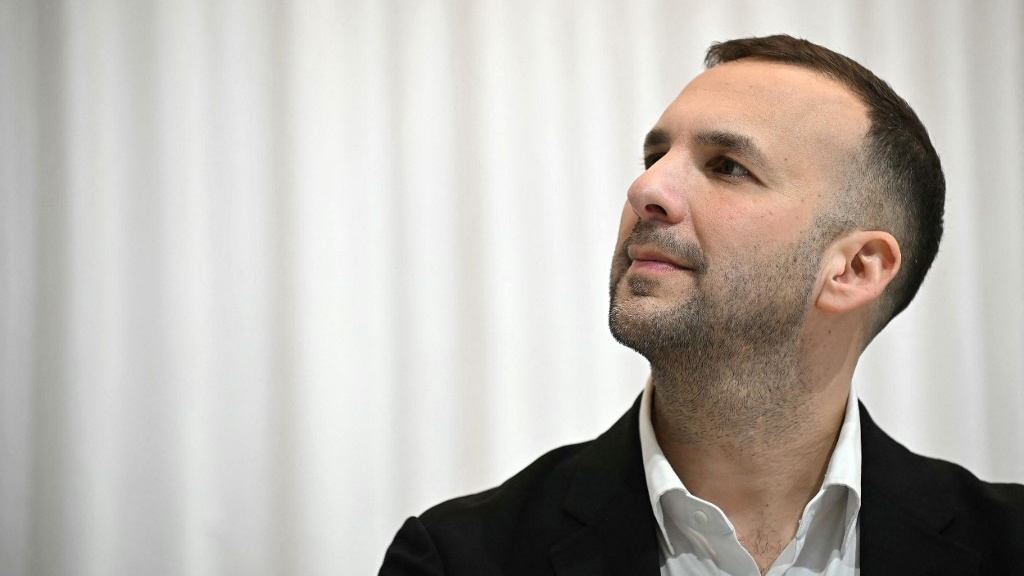
A political firestorm has erupted across British politics this week after a senior Labour government minister was accused of deliberately attempting to entrap Green Party leader Zack Polanski into committing a terrorism offense, over the recently upheld ban on pro-Palestinian direct action group Palestine Action.
The controversy comes just days after the UK Court of Appeal overturned a earlier High Court ruling, reaffirming the legality of the Labour administration’s 2025 decision to proscribe Palestine Action as a designated terrorist organization. Under current British law, any public expression of support for a proscribed terrorist group carries a maximum penalty of 14 years imprisonment, a legislation that has become the center of fierce debate over civil liberties amid the ongoing Gaza conflict.
Days after the Court of Appeal’s ruling upheld the ban, Polanski took to social platform X to slam the government’s approach to pro-Palestinian protest. He argued that labeling peaceful advocacy as terrorism had already led to the unjust arrest and prosecution of ordinary demonstrators, including elderly protestors who faced legal action simply for holding pro-Palestine signs. “It’s deeply authoritarian when people are speaking out against a genocide and for a free Palestine,” Polanski wrote.
Minutes after the Green leader’s post, Mike Tapp — Labour MP and Parliamentary Under-Secretary of State for Migration and Citizenship — publicly replied with a repeated two-line question: “Do you support the Palestine Action group? Do you support the Palestine Action group?”
Polanski’s response avoided directly answering the question, instead turning the exchange into a broader critique of the government’s restrictive protest laws. “The fact that your government has made it illegal for me to answer yes is a damning testament to your flagrant disregard for civil liberties,” he said. “This may be targeted at those taking action against the genocide, but it sets a very dangerous precedent that puts everyone at risk.”
The exchange quickly went viral online, drawing widespread condemnation from civil liberties advocates, journalists, and ordinary social media users, with nearly all critics accusing Tapp of intentional entrapment. Prominent left-wing commentator Owen Jones called the interaction deeply shocking, noting that the minister deliberately asked the question knowing a positive answer would open Polanski to arrest and years of prison time. “That’s thanks to his government’s unhinged law,” Jones added.
Alonso Gurmendi Dunkelberg, a legal researcher at the London School of Economics, echoed the concern, highlighting the extraordinary severity of the penalty attached to a simple public statement of opinion. “Whether you agree or disagree [with the group], think about that for a second,” he wrote.
Many social media users echoed the criticism, with one commenting that “A government minister publicly baiting an opposition leader about having him arrested is crazy stuff.”
The legal battle over Palestine Action’s ban stretches back months. In February 2026, the High Court ruled that then Home Secretary Yvette Cooper’s original proscription order was unlawful and discriminatory, following a legal challenge brought by the group’s co-founder Huda Ammori. After the ruling, the government immediately launched an appeal to the higher court, which ruled in the government’s favor on Monday.
In their ruling, Court of Appeal judges said the ban “struck a fair balance” between individual rights to freedom of speech and assembly and the UK government’s stated interests in national security. Even so, the court explicitly acknowledged the ban would likely create a “chilling effect” that would deter ordinary people from speaking out against Israeli military operations in Gaza.
The human cost of the ban has been substantial even before the latest ruling. Since proscription was first introduced, thousands of UK civilians have been arrested on terrorism charges for attending silent pro-Palestinian vigils and holding signs expressing support for the group. Campaign organization Defend Our Juries reports that between the High Court’s February ruling and the recent Court of Appeal decision, around 700 additional people were arrested for holding signs reading “I opposed genocide, I support Palestine Action.” By the time the High Court issued its original ruling, that number had already climbed to 3,400.