Nearly four months after open hostilities broke out between the United States and Iran, senior American officials have publicly released the full text of a landmark bilateral memorandum of understanding (MoU) designed to cement a lasting ceasefire, reopen the critical Strait of Hormuz, and ultimately end the ongoing conflict between the two nations.
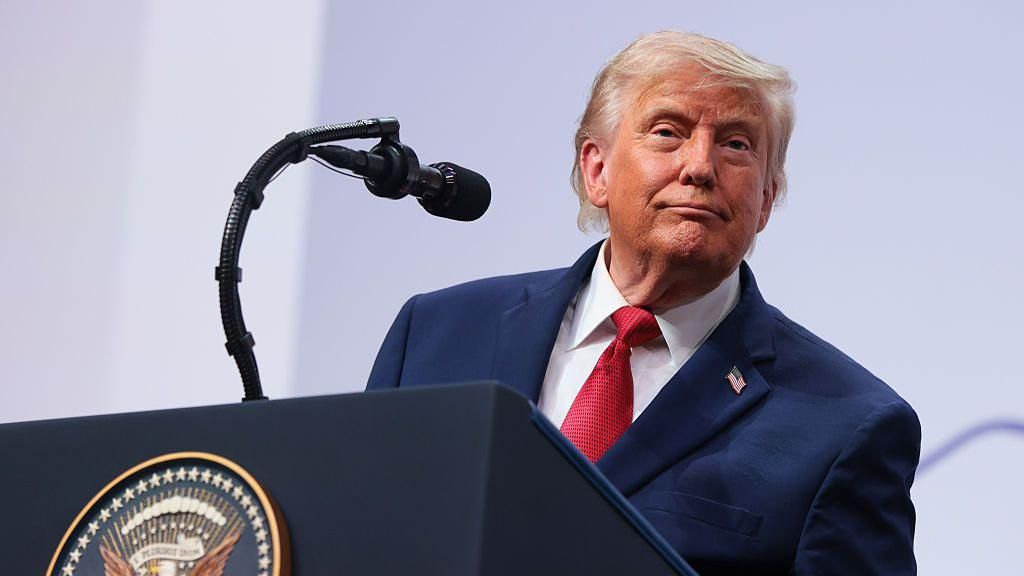
The Trump administration has framed the 14-clause agreement as strictly performance-based, meaning Iran will only access the concessions laid out in the text after it fulfills all of its binding commitments under the deal. Speaking from the G7 summit hosted in Evian-les-Bains, France, former President Donald Trump told reporters that the formal signing of the agreement would take place “shortly”, with an indicative target date as early as June 18.
The opening clause of the MoU requires the US, Iran, and their respective allied partners to declare an immediate and permanent end to all military operations across every active front, including the ongoing conflict in Lebanon. From the Trump administration’s perspective, growing anxiety has mounted in recent days that expanded Israeli military operations against the Iran-aligned Hezbollah movement could derail the fragile agreement with Tehran. For its part, Iranian officials have long maintained that any ceasefire must explicitly include Lebanon, with a Foreign Ministry spokesperson warning Wednesday that any continued Israeli military activity in the country would count as a clear violation of the understanding, prompting unspecified “necessary measures” in response. The agreement codifies that neither side will launch offensive military action or issue threats of force against the other moving forward, while committing both parties to upholding the full territorial integrity and sovereign authority of the Lebanese state. The end goal of the agreement is a full, permanent end to the bilateral conflict, though the reaction of Israeli leadership to this core requirement remains unconfirmed as of Wednesday.
A second core clause reaffirms that both nations will respect each other’s full sovereignty and territorial integrity, and commit to refraining from any interference in each other’s internal domestic affairs. Analysts note this provision is likely to draw pushback from Iranian dissident groups, who have previously received public support from Trump, who promised “help is on the way” to anti-government protesters that demonstrated across major Iranian cities earlier this year.
Under the third provision, the US and Iran have agreed to work toward a comprehensive final peace deal within a maximum 60-day window, a timeline that can be extended if both sides consent to an extension. The countdown will officially begin once leaders from the two countries sign the MoU during a planned ceremony in Geneva scheduled for later this week. Iranian Foreign Ministry spokesman Esmaeil Baqaei confirmed Wednesday that “so far, our plans for the Geneva meeting have not changed”, adding that a proposal to have the two national presidents sign the agreement is currently under active review. The Iranian foreign ministry has also formally confirmed its commitment to reaching a final understanding within the 60-day timeline.
The fourth clause outlines a phased rollback of American maritime restrictions: once the MoU enters into force, the US will begin lifting its naval blockade and all other disruptions or impediments on Iranian commercial ports, with full completion of the blockade removal scheduled for 30 days. During this transition period, the number of vessels the US permits to access Iranian ports will be calibrated to match the rate of traffic restoration Iran achieves in the Strait of Hormuz. Once a comprehensive final deal is signed, the US has committed to withdrawing all American military forces from areas in proximity to Iran within 30 days, returning the US military posture and asset positioning to the status it held before hostilities began on February 28.
Parallel to the American blockade rollback, the MoU requires Iran to deploy its best efforts to organize immediate, unrestricted free passage for all commercial vessels through the Strait of Hormuz, with no transit fees charged for crossing. This has been a top priority for the US since the outbreak of war, when the closure of the strategic chokepoint triggered a sharp spike in global oil prices. The agreement requires commercial traffic to resume immediately once the MoU is signed, with technical, military obstacles and existing mines to be cleared as a priority. American officials repeatedly emphasized during an off-camera briefing Wednesday that all vessels will be guaranteed free, toll-free access to the strait under the terms of the deal. Long-term, Iran will cooperate with Oman and other Gulf Cooperation Council states to negotiate a broader multilateral framework for managing navigation access and security in the Strait of Hormuz. A senior US official noted that while Washington expects Iran to push aggressively to assert its sovereign rights over the waterway, Gulf states would never accept a permanent tolling system for transit.
A sixth key provision commits the US and its regional partners to develop a definitive, mutually approved reconstruction and economic development plan for Iran valued at a minimum of $300 billion. The formal funding and implementation mechanism will be finalized within 60 days of a comprehensive final deal, with all necessary US licenses, waivers and regulatory approvals to be granted. Notably, the agreement does not require direct American financial contribution to the fund: a senior administration official stressed that the US is not required to pay “a cent of money” to Iran. To illustrate, the official offered a hypothetical example: if Iran complies fully with its commitments, Emirati authorities could move forward with constructing a new power plant in Iran with American diplomatic approval, no US public funds required. Trump and other senior officials have gone out of their way to stress to the American public that no direct US taxpayer funds will go to Iran, a stark contrast the administration says to the 2015 Iran Nuclear Deal negotiated by the Obama administration.
Under the agreement’s seventh clause, the US will terminate all existing economic sanctions on Iran, including those imposed via UN Security Council resolutions and unilateral American sanctions. The exact timeline for sanctions removal remains to be negotiated as part of the final deal, though both sides have confirmed their shared intention to address the issue immediately once the MoU takes effect. Iran’s economy has already suffered severe damage from years of crippling sanctions, exacerbated by the recent American campaign, Operation Economic Fury, which has sought to cut Tehran off entirely from the global financial system.
On the nuclear issue, the eighth clause codifies Iran’s commitment to not pursue or acquire a nuclear weapon, and both sides have agreed to implement a framework to manage the existing stockpile of enriched uranium held by Iran. The specific mechanism for managing the material has not been finalized, with the agreement noting that details will be settled in subsequent negotiations. At a minimum, the existing enriched uranium will be downblended domestically under continuous supervision by the International Atomic Energy Agency (IAEA). A senior US official called this baseline requirement a “major win” for American negotiating positions, with Trump previously stating that preventing Iran from acquiring a nuclear weapon accounted for 99% of his objectives when he launched Operation Epic Fitry earlier this year. As the deal is structured to be performance-based, all sanctions relief laid out in the seventh clause is directly tied to Iran fulfilling its nuclear commitments under clause eight.
The ninth and tenth clauses establish a nuclear status quo during the transition period before the enriched uranium stockpile is fully addressed, freezing the current state of Iran’s nuclear program until a final deal is reached. In practical terms, this means the US will not impose new additional sanctions on Iran during the transition, and will issue temporary waivers for exports of Iranian crude oil, petroleum products, and associated services including international banking transactions and commercial transportation.
The eleventh clause addresses the longstanding sticking point of Iranian frozen assets, a core demand for Tehran that has represented a major obstacle to progress in negotiations for months. Under the agreement, the US commits to making all frozen and restricted Iranian funds fully available once the MoU is signed, with specific release procedures to be negotiated during the transition talks. A senior US official confirmed Wednesday that assets will be released incrementally as Iran complies with specific commitments during the post-MoU negotiations, such as beginning the process of downblending its highly enriched uranium stockpile, as an incentive for continued adherence to the deal.
The final three clauses lay out the procedural and governance framework for the agreement. First, the US and Iran will establish a joint monitoring mechanism to oversee MoU implementation and compliance with any future final deal, though the exact structure and authority of this body remains undetermined. Once the MoU is signed and implementation begins, formal negotiations for a comprehensive final deal will launch immediately. Finally, the agreement requires that any final bilateral deal will receive formal endorsement via a binding UN Security Council resolution to cement its international legitimacy.