分类: health

  • Plane sent to bring Irish passengers home from virus-hit ship

    Plane sent to bring Irish passengers home from virus-hit ship

    A deadly hantavirus outbreak onboard the Dutch-owned cruise vessel MV Hondius has sparked a coordinated international evacuation effort, after the outbreak claimed three lives and forced hundreds of passengers to be repatriated to their home countries for mandatory quarantine.

    The vessel docked at the Spanish Canary Island of Tenerife early on Sunday morning, following weeks of the virus spreading among passengers and crew. By the time the ship reached port, passengers from Spain and France had already completed disembarkation and flown back to their home nations, where they are now completing isolation protocols.

    The Irish government moved quickly to organize the repatriation of two of its citizens who were onboard the cruise, deploying an Irish Air Corps aircraft to Tenerife on Sunday afternoon to conduct a specialized aeromedical evacuation. Ireland’s Department of Health confirmed that the operation was designed to transport the two passengers directly back to Irish territory, with the mission contingent on the pair maintaining good health following their disembarkation. Officials added that both Irish citizens have already followed required isolation rules while onboard the ship and are currently in stable good health.

    Spanish health and port authorities confirmed Sunday that the process of evaluating passengers’ health status and coordinating disembarkation was progressing smoothly and as planned. In addition to the Irish passengers, travelers from the United Kingdom, Turkey, and the United States are scheduled for evacuation from Tenerife later the same day, according to official updates.

    The outbreak has already resulted in three fatalities onboard the MV Hondius, two of which have been confirmed as linked to hantavirus infection. All passengers who leave the ship will be required to complete a period of self-isolation after departing Tenerife, a requirement driven by the virus’s maximum incubation period of up to nine weeks. The World Health Organization has formally issued a recommendation that all exposed passengers complete a 42-day quarantine starting from their date of last potential exposure to the virus.

    This is not the first emergency response triggered by the MV Hondius outbreak. Earlier in the crisis, British military medics parachuted into the remote Atlantic island of Tristan da Cunha, a British overseas territory, to assist a British national who disembarked the cruise in mid-April and developed suspected hantavirus symptoms two weeks after arriving. The man, a resident of the remote island, remains in stable condition while isolating. When local oxygen supplies on the island dropped to a critical level, the UK Ministry of Defense arranged for an RAF A400M transport aircraft to drop additional oxygen supplies to the island Saturday.

    Irish officials emphasized that the entire repatriation process has been developed in close consultation with public health experts, with strict protocols in place to protect both returning passengers and local communities. “The return of the passengers has been carefully planned and guided by public health authorities to ensure safety for everyone—these measures protect communities while respecting the dignity and well being of those returning home,” the Irish Department of Health said in a formal statement.

  • Evacuation of hantavirus-hit ship begins in Canary Islands

    Evacuation of hantavirus-hit ship begins in Canary Islands

    A large-scale, coordinated repatriation operation got underway Sunday to evacuate passengers and crew from the Dutch-flagged cruise ship MV Hondius, which has been tied to a deadly hantavirus outbreak that has triggered international health concerns. The vessel docked at the Port of Granadilla on the Spanish island of Tenerife, Canary Islands, after weeks of transiting the Atlantic Ocean amid the public health emergency.

    Three passengers on board have already died from complications of the virus: a Dutch couple and a German national. Multiple other people have also fallen ill with the rare pathogen, which most commonly spreads through rodent populations, but the strain identified on the ship — the Andes virus — is the only variant capable of human-to-human transmission, a detail that amplified global alarm. With no licensed vaccines or specific targeted treatments currently available for hantavirus, and the outbreak originating after the ship departed Ushuaia, Argentina — a country where the virus is endemic — in early April, health agencies have been working around the clock to contain the spread.

    Spanish Health Minister Monica Garcia confirmed that all remaining passengers and crew, numbering close to 150, will be evacuated via chartered repatriation flights by the end of Monday. The final flight is scheduled to carry the last group of evacuees to Australia, after which the empty vessel will set sail for the Netherlands.

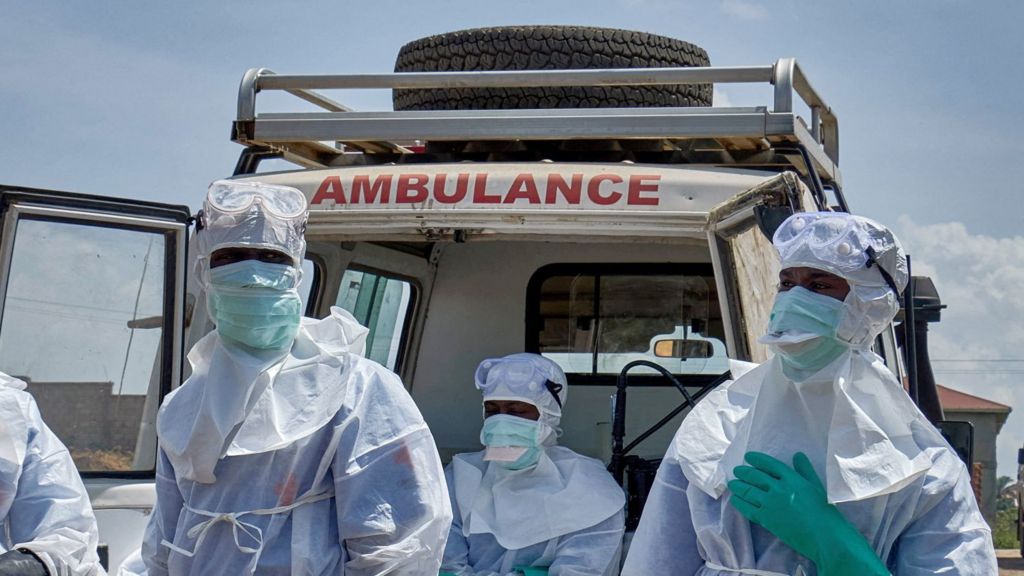
    On-site reporting from Agence France-Presse shows that evacuees, clad in full blue medical protective suits, boarded smaller transfer boats from the anchored cruise ship to reach the Tenerife quay, before being transported via sealed buses to Tenerife South Airport for their outbound flights. Regional authorities originally resisted allowing the vessel to dock, only granting permission for it to anchor offshore initially, and strict protocols have been put in place to eliminate any contact between evacuees and the local Tenerife population. White medical screening tents have been erected along the port, and sections of the small industrial port have been cordoned off by police officers, many of whom are also wearing personal protective equipment.

    Garcia confirmed that all passengers are currently asymptomatic and passed a final comprehensive medical screening before disembarkation was cleared. The evacuation follows a pre-planned order: the 14 Spanish nationals on board were the first to leave, followed by a charter flight for Dutch citizens that will also carry passengers from Germany, Belgium, Greece and additional crew members. Separate chartered flights for passengers from Canada, Turkey, France, the United Kingdom, Ireland and the United States were scheduled to depart throughout Sunday.

    World Health Organization Director-General Tedros Adhanom Ghebreyesus is on site in Tenerife alongside Spanish health officials to oversee the high-stakes containment and evacuation operation. Regional officials have imposed a hard deadline of Monday for the operation to wrap up, as forecasted adverse weather conditions will force the vessel to leave the anchorage area after that point.

    Earlier last week, the WHO confirmed that six of the eight previously suspected hantavirus cases on board have tested positive, and there are no remaining suspected cases among people still on the vessel. The MV Hondius arrived off Tenerife’s coast early Sunday after departing Cape Verde, where three infected passengers were already evacuated to Europe for medical treatment earlier this week. The ship had embarked on its Atlantic crossing from Ushuaia on April 1, and WHO investigators believe the initial infection occurred before the cruise officially began, with secondary spread occurring between people on board the cramped vessel. That conclusion has been disputed by Argentine provincial health official Juan Petrina, who argues that based on the virus’s multi-week incubation period and other epidemiological factors, there is an “almost zero chance” that the initial index case — a Dutch passenger linked to the outbreak — contracted the virus in Ushuaia.

    Despite the international concern, global and Spanish health officials have repeatedly stressed that the overall risk to global public health remains low, pushing back against comparisons that draw parallels between this outbreak and the global Covid-19 pandemic. Health authorities across multiple countries are currently monitoring any passengers who disembarked the MV Hondius at previous stops, as well as all close contacts of those confirmed cases to prevent any secondary spread off the vessel.

  • Hantavirus-stricken cruise ship arrives at Tenerife in Spain’s Canary Islands

    Hantavirus-stricken cruise ship arrives at Tenerife in Spain’s Canary Islands

    TENERIFE, Spain — A cruise ship impacted by a hantavirus outbreak, carrying over 140 passengers and crew members, has safely reached the port of Tenerife, the largest island in Spain’s Canary Islands archipelago located off the western coast of Africa. Preparations are now underway for a controlled disembarkation process for passengers and a portion of the vessel’s crew.

    According to joint statements from the World Health Organization (WHO), Spanish national and local health authorities, and the ship’s operator Oceanwide Expeditions, none of the people currently remaining on board the MV Hondius are exhibiting any clinical signs of hantavirus infection at this time. The outbreak has already claimed three lives, and five former passengers who departed the vessel at an earlier stage of the journey have tested positive for the pathogen, which is known to cause severe, potentially fatal respiratory or renal illness in humans.

    High-level officials including WHO Director-General Tedros Adhanom Ghebreyesus, alongside Spain’s Minister of Health and Minister of the Interior, were on site to oversee the coordinated evacuation operation. Spanish authorities have emphasized strict biosecurity protocols to prevent community spread: all disembarking passengers and crew will remain completely isolated from the local Tenerife population at all times. No one will be allowed to leave the ship until chartered evacuation flights are fully prepared to transport each individual directly back to their home countries.

  • Tenerife medics poised for arrival of virus-hit cruise ship

    Tenerife medics poised for arrival of virus-hit cruise ship

    Nearly a month after the first hantavirus fatality was recorded on the expedition cruise ship MV Hondius, the vessel is finally nearing Granadilla Industrial Port on the Spanish island of Tenerife, in the Canary Islands archipelago, to launch one of the most complex public health and repatriation operations in recent European history.

    Spanish health and emergency authorities have spent weeks finalizing intensive preparedness protocols to receive the ship and coordinate the safe disembarkation and repatriation of more than 100 passengers and crew trapped at sea after multiple ports denied the vessel entry following the outbreak. Though the MV Hondius is expected to enter the waters off Tenerife before dawn Sunday, strict isolation rules will remain in force from the moment it approaches the coast: a 1-nautical-mile security perimeter will be enforced around the vessel, and it will anchor offshore at the port rather than docking directly to contain any potential spread of the rare Andes hantavirus strain, which has already claimed three lives on board.

    Spanish Health Minister Mónica García has labeled the multi-national operation unprecedented, noting that 23 countries are involved in coordinating repatriation efforts. The meticulous planning has been tailored in part to address widespread public concern among Tenerife residents, who have expressed anxiety over bringing a vessel carrying a dangerous virus to their island. Canary Islands President has openly stated he will not feel at ease until every person on board has left the island.

    García repeatedly emphasized Saturday that the risk of community transmission to the general public remains low, warning that unnecessary alarm, misinformation and public confusion run counter to core public health safety principles. By Saturday, security had been visibly tightened across the southern Tenerife industrial port, with Spanish military police and national disaster response teams erecting large purpose-built reception areas and restricting all public access to the waterfront.

    Once the MV Hondius is repositioned to its designated anchorage by approximately 07:00 CET (06:00 GMT) Sunday, specialized medical teams will board the vessel to screen every person on board for hantavirus symptoms. As of the latest updates, no additional people have developed active symptoms of the virus, which has an incubation period of up to nine weeks. After screening, passengers and crew will be sorted into groups by nationality and transported to shore in small, controlled shuttles, with pre-arranged charter planes already waiting on the tarmac at Tenerife’s airport to fly them back to their home countries. Medically equipped aircraft are also on standby to airlift any symptomatic people to isolation facilities if needed.

    Spanish nationals repatriated from the vessel will be flown directly to Madrid, where they will complete a mandatory quarantine period at the Gomez Ulla military hospital. Officials have not yet confirmed how long quarantine will last for those returning to Spain or other countries around the world, given the pathogen’s unusually long incubation window.

    World Health Organization Director-General Tedros Adhanom Ghebreyesus is personally present in Tenerife to oversee the disembarkation operation, and has praised Spanish authorities for their solid, effective response to the outbreak. The outbreak has been traced back to a popular birdwatching landfill site at the southernmost tip of Argentina, where the virus is carried by wild rodents. While human-to-human transmission of this strain is extremely rare, three passengers on the MV Hondius have already died from the infection. Tedros acknowledged that lingering trauma from the COVID-19 pandemic has made local residents’ anxiety legitimate, but reaffirmed that the risk of widespread community contagion is low both due to the inherent nature of the virus and the extensive prevention measures put in place by the Spanish government. He urged nervous local residents to trust the operation’s leadership.

    Local medical facilities have also finalized full preparedness for potential complications: dozens of intensive care specialists are on standby at Tenerife’s Candelaria Hospital, with a fully equipped strict isolation bed stocked with testing supplies, a ventilator, and stockpiles of personal protective equipment ready to treat any severely ill patients. “We have never encountered this specific hantavirus strain before, but it is a virus with manageable complications, the same type of cases we handle every day,” said Mar Martin, chief intensive care doctor at the facility. “We are fully trained and absolutely ready.”

    When the plan to divert the MV Hondius to Tenerife was first announced, it sparked significant public anger across the island, with port workers holding a noisy protest outside the regional parliament Friday over fears that safety protocols would be insufficient. In recent days, however, greater transparency around the operation has helped restore a cautious calm. In the capital city of Santa Cruz de Tenerife, local resident Jennifer, who was out walking with her child, noted: “The virus is dangerous, of course. But they say you need to have very close contact to get it. If we’re careful, we hope it’s not too serious.”

    Some residents remain critical of the central Spanish government’s decision to route the vessel to Tenerife, framing the issue as a political rather than purely medical concern, and a number of locals recalled that early reassurances about COVID-19 preceded uncontrolled pandemic spread. Still, there is no widespread panic on the island. “If they don’t come into contact with us from the ship, then we’re fine,” local resident Esteban told reporters. His partner Isabel added: “If the measures are adequate, then I don’t think people here are worried.”

    Not all people on board will disembark in Tenerife: approximately 30 crew members will remain on the MV Hondius to sail the vessel back to its home country of the Netherlands. For the majority of those on board, however, weeks of fear and uncertainty trapped at sea are finally coming to an end — though the next phase of the crisis, a prolonged quarantine period, still lies ahead.

  • WHO chief reassures Tenerife residents ahead of hantavirus cruise ship arrival

    WHO chief reassures Tenerife residents ahead of hantavirus cruise ship arrival

    Tensions are running high on the Spanish Canary Island of Tenerife this weekend, as public health authorities and local emergency services finalize strict containment protocols for the imminent arrival of the MV Hondius — a Dutch cruise vessel grappling with a deadly hantavirus outbreak that has already claimed three lives.

    As residents voiced deep anxiety, with lingering trauma from the 2020 COVID-19 cruise ship outbreaks still fresh for many, World Health Organization Director-General Tedros Ghebreyesus delivered a direct public message to ease community fears, stressing that this event poses far lower public health risk than the coronavirus pandemic.

    “I know you are worried,” Tedros told Tenerife residents in a public address Saturday. “I know that when you hear the word ‘outbreak’ and watch a ship sail toward your shores, memories surface that none of us have fully put to rest. The pain of 2020 is still real, and I do not dismiss it for a single moment. But I need you to hear me clearly: this is not another Covid. The current public health risk from hantavirus remains low.”

    Six confirmed cases of hantavirus have been linked to the voyage, which originated in South America. Three passengers have died from the infection to date: the first fatality was recorded on April 11, a second on May 2, and a 69-year-old Dutch passenger who disembarked in St. Helena on April 24 died in South Africa two days later. Two infected British passengers are currently receiving care in the Netherlands and South Africa, while a third Briton is undergoing treatment for a suspected case on the remote Atlantic island of Tristan da Cunha, where the ship made a mid-April stopover.

    The MV Hondius is scheduled to dock at Granadilla Port between 4:00 a.m. and 6:00 a.m. GMT Sunday, Spanish Health Minister Mónica García confirmed at a press briefing Saturday. The decision to allow the vessel to dock in Tenerife has been deeply controversial: regional president Fernando Clavijo has openly opposed the move, questioning why the vessel could not complete its outbreak response at its previous stop in Cape Verde. Far-right Spanish party Vox has attacked the national central government over the call, and local protests have broken out across the island in recent days. In contrast, Tedros praised Spanish Prime Minister Pedro Sánchez for the decision, framing it as “an act of solidarity and moral duty,” noting that Tenerife was selected specifically for its robust medical infrastructure, emergency response capacity, and ability to facilitate safe repatriation of passengers.

    To eliminate any risk of community spread, Spanish authorities have put in place a rigorous set of containment measures. All passengers will remain quarantined aboard the vessel while initial health screenings are conducted, and no one will be permitted to disembark until a repatriation flight is waiting on the island’s tarmac to carry them directly back to their home countries. Repatriation flights are arranged for passengers from the United Kingdom, United States, France, Germany, Belgium, and Ireland, with Spanish passengers prioritized for disembarkation and repatriation.

    All people who interact with passengers during transfer — including bus drivers and logistics staff — will be required to wear FFP2 masks, and passengers will only be permitted to bring a small, sealed bag of essential items such as identification documents, mobile devices and chargers, and basic personal necessities when disembarking. Notably, the body of the passenger who died aboard the vessel will not be unloaded in the Canary Islands; the ship will continue onward to the Netherlands after repatriations are complete, where the remains and personal belongings will be disinfected before being removed.

    Health experts explain that hantaviruses are most commonly carried by wild rodents, and the strain detected in this outbreak — the Andes strain — can spread between humans, a mode of transmission that has raised targeted concerns. All infected passengers are believed to have contracted the virus during pre-voyage travel through Argentina, Chile, and Uruguay, where they visited areas with populations of rodent species known to carry the pathogen, Tedros confirmed. As of this publication, the exact origin of the outbreak remains unclear, and public health teams have not yet confirmed whether any additional crew or asymptomatic passengers have been exposed to the virus. A WHO expert is already aboard the vessel to monitor conditions, and Tedros has announced he will travel to Tenerife personally to observe the response operation first-hand. Symptoms of hantavirus infection range from mild flu-like effects including fever, muscle aches, fatigue, and abdominal pain to severe respiratory distress in advanced cases.

  • Experts wonder ‘Where is the CDC?’ as a hantavirus outbreak unfolds on a cruise ship

    Experts wonder ‘Where is the CDC?’ as a hantavirus outbreak unfolds on a cruise ship

    A high-profile hantavirus outbreak aboard a South Atlantic cruise ship is sparking widespread criticism of the U.S. Centers for Disease Control and Prevention, with public health experts warning the agency’s absence from the frontline response signals a dangerous erosion of its once-legendary global leadership in infectious disease management.

    The outbreak first emerged in early April, when a 70-year-old Dutch passenger developed a fatal febrile illness during a voyage traveling from Argentina to Antarctica. His death was followed by two more fatalities — his wife and a German passenger — and hantavirus was formally confirmed as the causative pathogen on May 2. The World Health Organization formally classified the cluster as an outbreak days later, with roughly two dozen U.S. citizens on board the vessel: seven disembarked last month, while 17 remain on the ship currently docked in the Canary Islands.

    Unlike past international public health emergencies, where the CDC stepped in immediately as a core partner to the WHO leading on-site investigations, risk communication and passenger coordination, this outbreak has been almost entirely managed by global health bodies and foreign authorities. Multiple leading public health experts say the CDC’s delayed, low-profile response represents a stark departure from its decades-long reputation as the world’s preeminent public health agency.

    “The CDC is not even a player,” stated Lawrence Gostin, a Georgetown University expert in global public health law. “I’ve never seen that before.” Dr. Jeanne Marrazzo, CEO of the Infectious Diseases Society of America, called the outbreak a critical test of U.S. preparedness for emerging biological threats — one the country is failing. “This is a sentinel event that speaks to how well the country is prepared for a disease threat. And right now, I’m very sorry to say that we are not prepared,” she explained.

    The muted CDC role comes after 16 months of restructuring under the second Trump administration, which has already withdrawn the U.S. from the World Health Organization, restricted CDC scientists from communicating with international colleagues at multiple points, and cut thousands of roles across the agency — including specialists working in its ship sanitation program. The administration has pivoted away from multilateral global health coordination, instead pursuing a network of one-on-one bilateral public health agreements with individual nations, which it says will advance American innovation in global health. To date, roughly 30 such agreements have been finalized.

    HHS Secretary Robert F. Kennedy Jr. has framed current agency reforms as an effort to “restore the CDC’s focus on infectious disease, invest in innovation, and rebuild trust through integrity and transparency.” But experts argue the current hantavirus response exposes the flaws in this new approach.

    Jennifer Nuzzo, director of Brown University’s Pandemic Center, noted that hantavirus poses minimal broader risk, as it does not spread easily between humans — the only reason the current situation has not spiraled out of control. Even so, she argues the agency’s response lays bare its weakened current state. “This situation just shows how empty and vapid the CDC is right now,” Nuzzo said.

    The CDC has not remained completely silent on the outbreak. Earlier this week, the agency released a brief statement calling the risk to the U.S. general public “extremely low” and framing the U.S. as “the world’s leader in global health security.” Nuzzo pushed back on that messaging, arguing it failed to meet core public health communication standards: “Not only was that not helpful, it actually does damage because a core principle of public health communications is humility.”

    Acting CDC Director Dr. Jay Bhattacharya posted on social media that the agency is sharing technical expertise, coordinating with domestic and international stakeholders, and monitoring the health of all U.S. passengers in preparation for medical support. Arizona state officials confirmed this week that one asymptomatic, non-contagious U.S. passenger who disembarked earlier has already returned to the state, with notification coming via the CDC. WHO officials also confirmed the agency has shared basic technical data related to the pathogen.

    For the most part, however, federal health officials have declined interview requests and remained tight-lipped, with key updates emerging only through anonymous leaks. It was not until Friday evening that the CDC officially confirmed it would deploy a small response team to the Canary Islands to meet the ship, with a second team prepping at Offutt Air Force Base in Nebraska to receive evacuated U.S. passengers at a dedicated quarantine facility.

    Experts have drawn a sharp contrast between this slow response and the CDC’s aggressive action during the 2020 Diamond Princess COVID-19 outbreak, another large cruise ship outbreak off the coast of Japan. At that time, the CDC immediately deployed on-site personnel, led evacuation efforts for U.S. passengers, managed quarantine protocols, shared viral genetic data, coordinated closely with the WHO and Japanese authorities, held regular public briefings, and published rapid research that became the global reference for COVID-19 transmission on cruise ships.

    While the overall Diamond Princess response did draw criticism for failing to stop the virus’s global spread, former CDC Director Dr. Tom Frieden and other experts note that the agency was actively engaged from day one. “The CDC was right on top of it, very visible, very active in trying to manage and contain it,” Gostin said, contrasting that with the current delayed, subdued response. He added that the administration’s bilateral approach to global health cannot replace multilateral coordination: “You can’t possibly cover a global health crisis by doing one-on-one deals with countries here and there.”

  • WHO head will oversee evacuation of passengers, crew from hantavirus-stricken cruise ship

    WHO head will oversee evacuation of passengers, crew from hantavirus-stricken cruise ship

    In a coordinated global response to an unprecedented hantavirus outbreak on a Dutch-flagged Antarctic cruise ship, World Health Organization Director-General Tedros Adhanom Ghebreyesus arrived in Spain on Saturday to lead the safe evacuation of more than 140 passengers and crew currently aboard the MV Hondius. The vessel, which has been linked to three fatalities and five confirmed infections among passengers who previously disembarked, is scheduled to dock off the coast of the Canary Islands’ Tenerife in the early hours of Sunday.

    Tedros is set to travel to Tenerife alongside Spain’s top health and interior officials to oversee the disembarkation process, which has been planned in close consultation with European public health agencies. In a public post on X, the WHO chief confirmed that no one currently aboard the vessel has developed observable hantavirus symptoms, adding that the organization remains committed to active monitoring, cross-border coordination, and transparent updates for both member states and the general public. “So far, the risk for the population of Canary Islands and globally remains low,” he emphasized.

    Spain’s activation of the EU Civil Protection Mechanism has put a specially equipped medical evacuation plane, designed to handle high-consequence infectious diseases, on standby for the operation. Per a letter from Dutch foreign and health ministers to the Dutch parliament, if any passenger or crew member falls ill during or after disembarkation, the aircraft will transport the affected person to specialized care on the European mainland immediately. Once they leave the ship, all people on board will be moved to a fully isolated, cordoned-off quarantine area to prevent potential spread. After medical screening, asymptomatic non-Dutch nationals will be repatriated by their home countries – both the U.S. and U.K. have already confirmed they will deploy charter flights to retrieve their citizens. Asymptomatic Dutch passengers and crew will complete a six-week home quarantine under continuous monitoring by local Dutch health services, and the Netherlands has offered temporary quarantine accommodation for other nationalities if needed, given the vessel’s Dutch registration.

    The outbreak has triggered a massive global contact tracing effort spanning four continents, as public health officials work to track more than two dozen passengers who left the MV Hondius before the hantavirus infection was officially confirmed. The first passenger death on the ship occurred on April 24, but health authorities only formally confirmed hantavirus in a passenger sample on May 2 – a two-week gap that left more than 20 passengers from 12 countries disembark at various ports without proper contact tracing protocols.

    One notable case that sparked global public concern involved a KLM flight attendant who fell ill after sharing a flight with an infected cruise passenger. The passenger, a Dutch woman whose husband had died from the virus on the ship, was too sick to complete her April 25 flight from Johannesburg to Amsterdam and was taken off the plane in Johannesburg, where she later died. On Friday, the WHO announced the flight attendant had tested negative for hantavirus, a result that WHO spokesman Christian Lindmeier said should ease unfounded public fears. “The risk remains absolutely low. This is not a new COVID,” Lindmeier noted.

    As of Friday, public health agencies have reported new suspected cases in two locations. U.K. health authorities confirmed a third British former passenger is suspected of having hantavirus, currently located on the remote British overseas territory of Tristan da Cunha, where the cruise ship stopped in April. No update has been released on the individual’s condition. In Spain, a woman in the southeastern province of Alicante who shared a flight with the deceased Dutch infected passenger is currently being tested for the virus after developing symptoms consistent with hantavirus infection.

    Two British former passengers have already tested positive for the virus: one is hospitalized in the Netherlands, and the second is receiving care in South Africa. South African health officials are currently tracing all contacts of passengers who disembarked in the country, with a particular focus on passengers who took an April 25 flight from St. Helena to Johannesburg. U.S. state health authorities are also monitoring a small number of U.S. residents who were passengers on the cruise and have already returned home; none have developed symptoms to date.

    Hantavirus, the pathogen at the center of the outbreak, is most commonly transmitted to humans through inhalation of air contaminated by rodent droppings, and does not spread easily between people. However, the specific strain detected in this outbreak – Andes virus – has been documented to spread between people in rare cases, prompting heightened precautionary measures from global health authorities. Symptoms of hantavirus typically develop between one and eight weeks after exposure to the virus.

  • Anger and resignation in Tenerife as hantavirus ship approaches

    Anger and resignation in Tenerife as hantavirus ship approaches

    Tensions are running high on the Spanish island of Tenerife this week as local residents and port workers push back against a national government agreement to allow the hantavirus-exposed cruise vessel MV Hondius to disembark its passengers this weekend. The ship, which departed Cape Verde after three infected people were evacuated and local authorities refused it docking access, is heading for Canary Islands waters after the Spanish administration struck a deal with the World Health Organization (WHO) to accept the passengers. The plan has sparked widespread anger and anxiety across the archipelago, amplifying existing frustrations over ongoing migration pressures.\n\nOn Friday, dozens of port workers gathered outside the Canary Islands regional parliament in Santa Cruz de Tenerife to demonstrate against the docking arrangement. Blowing whistles, sounding vuvuzelas and holding signs highlighting their safety concerns, protesters said they have not been given adequate protection or clear information about the vessel’s arrival. Joana Batista, a representative of the local port workers’ union speaking at the rally, said workers were uncomfortable being assigned to the port without special safety protocols when an infected ship was approaching. Some union members have threatened to block the ship’s access to the island if their demands for full protection and transparency are not met. Batista added that while the ship may be allowed to dock, it must do so with all necessary public health safeguards in place, and local residents deserve full clarity on passenger movement and potential risks to the community.\n\nFor many local residents, the arrival of the cruise ship has compounded long-simmering frustration over the Canary Islands’ status as a primary entry point for thousands of undocumented migrants arriving from North and West Africa. Nutritionist María de la Luz Sedeño, who observed the protest, called the ship’s planned arrival the “last straw” for local residents tired of bearing the brunt of unaddressed international crises. While some Canary islanders take pride in welcoming migrant arrivals, others share Sedeño’s frustration, and the crisis has become a unifying point of discontent for many who feel the national government ignores local input. According to NGO Caminando Fronteras, more than 3,000 people died attempting to reach the Canary Islands in 2025, most traveling in unsafe makeshift dinghies. The ongoing migration situation will draw global attention next month when Pope Leo is scheduled to visit the islands to meet with migrants and aid organizations. Sedeño also criticized the central government for overriding clear opposition to the cruise ship’s arrival from Canary Islands regional president Fernando Clavijo, saying “the people here are not being listened to.”\n\nIn response to accusations of overreach and lack of transparency, the Socialist-led national government has released full details of its public health plan for the vessel’s arrival. Instead of docking directly at a populated Tenerife port, the MV Hondius will anchor offshore, and passengers will be transported via ferry to the remote Granadilla industrial port in the island’s southeast, far from residential neighborhoods. After disembarkation, all foreign passengers will be immediately repatriated, while the 14 Spanish nationals on board will be transferred to Madrid for quarantine. Virginia Barcones, head of Spain’s civil protection agency, emphasized that authorities have taken all steps to ensure no contact between passengers and local residents, guaranteeing that local communities will be “absolutely and completely protected.”\n\nThe government’s detailed plan has eased concerns for some Tenerife residents. Marialaina Retina Fernández, a local pensioner, said she feels calmer now that clear information has been released. Noting that the Canary Islands have access to high-quality local healthcare, she expressed cautious acceptance of the temporary presence of the ship’s passengers. “It’s not ideal that they all end up coming here, but if the authorities say they’ll do everything possible to make sure nobody gets infected, let’s hope that’s how it is,” she said.\n\nDespite the government’s public health safeguards, far-right party Vox has sought to politicalize the issue by drawing parallels between the cruise ship arrival and undocumented migrant arrivals. Meanwhile, many local residents say the arrival of a multi-national ship with a viral outbreak brings unwanted flashbacks to the early days of the COVID-19 pandemic, when the first confirmed COVID case in Spain was a German tourist on nearby La Gomera, followed by the quarantine of 1,000 hotel guests and staff on Tenerife. Both the WHO and the Spanish government have explicitly pushed back on comparisons to the COVID-19 pandemic, downplaying the epidemiological risks of the current hantavirus situation. Still, many residents remain on edge. Retina Fernández, for her part, framed the situation as just another crisis the Canary Islands have been forced to manage, noting “we’re used to all sorts of problems arriving here, and you can see that we’re good at managing these situations.”

  • Argentina’s hot spot for Antarctic cruises insists it didn’t cause the hantavirus outbreak

    Argentina’s hot spot for Antarctic cruises insists it didn’t cause the hantavirus outbreak

    A public dispute over the source of a deadly hantavirus outbreak linked to an Antarctic cruise has erupted between regional authorities in Argentina’s southernmost province of Tierra del Fuego and national public health officials, raising questions about the country’s weakened disease monitoring system and threatening the region’s critical tourism economy. The outbreak, which centers on the Andes variant of hantavirus — a rare strain capable of limited person-to-person transmission — was traced by Argentine federal health authorities earlier this week to a landfill outside Ushuaia, Tierra del Fuego’s main city and the primary departure gateway for Antarctic cruises. Federal investigators named the site as the most likely location where two Dutch tourists, who later died from the infection, contracted the virus while birdwatching. But regional officials are pushing back fiercely against this conclusion, arguing there is compelling evidence that the infection occurred elsewhere during the couple’s four-month journey across South America, and warning that the false origin claim is causing severe damage to the region’s reputation.

  • Aboard the hantavirus-hit cruise ship, some passengers fear what awaits back home

    Aboard the hantavirus-hit cruise ship, some passengers fear what awaits back home

    As the cruise ship MV Hondius, hit by an outbreak of hantavirus, steams toward the Spanish port of Tenerife in the Canary Islands, a surprising tension has emerged among its 140+ passengers and crew. For the Spanish nationals on board, anxiety stems not from the risk of contracting the virus itself, but from the hostile public reception they expect to face once they set foot on land. In exclusive phone interviews with the Associated Press on Friday, two anonymous Spanish passengers — a man and a woman — detailed the vitriol and misinformation spreading across public platforms about the ship and those aboard.

    Sensationalized mainstream coverage and inflammatory social media content, including memes calling for the vessel to be sunk, have painted passengers as dangerous viral vectors to be shunned. “You go onto social media – they want to dynamite the boat. They want to sink the boat,” the male passenger told AP. “You see what’s out there and you realize you’re heading into the eye of a hurricane,” the female passenger added. “Many people forget that in here there are more than 140 passengers. In reality, there are 140 human beings.” Both requested anonymity out of fear of further backlash once they disembark, currently scheduled as early as Sunday.

    This wave of public panic has echoes of the early days of the COVID-19 pandemic, when viral outbreaks on cruise ships sparked global alarm. But World Health Organization officials have repeatedly pushed back against misplaced comparisons, stressing that hantavirus poses minimal risk to the general public and this event is not the start of a new global pandemic. “This is very different virus. I want to be unequivocal here,” stated Maria Van Kerkhove, WHO’s head of epidemic and pandemic preparedness, on Thursday. “This is not the start of a COVID pandemic.”

    Unlike SARS-CoV-2, which spreads easily between people, hantavirus is most commonly transmitted to humans through inhalation of particles contaminated by rodent droppings. While the Andes strain detected on the MV Hondius can spread between people in extremely rare cases, the overall risk of widespread transmission remains very low. Despite these clear expert assurances, misinformation and distrust in public health guidance — a trend that took hold during the COVID pandemic — have persisted. A Spanish anti-establishment group called Iustitia Europa, which gained prominence opposing COVID-19 public health restrictions, has publicly called for the MV Hondius to be barred from entering Spanish territorial waters. “The Canary Islands cannot become Europe’s health laboratory … We demand transparency, responsibility, and protection for Spaniards to avoid repeating the mistakes of the past,” the group posted on social media platform X.

    Even some regional Spanish politicians have echoed public anxiety, taking a hard defensive stance against the ship’s arrival. Canary Islands regional president Fernando Clavijo told Spanish newspaper El País on Friday that he would not feel at ease until the ship departs Spanish waters and all passengers have reached their designated quarantine sites. Madrid regional leader Isabel Díaz Ayuso also publicly opposed the decision to transfer 12 Spanish passengers from the ship to a Madrid military hospital for quarantine, as planned by national authorities.

    “The public narrative has painted this as a boat of infected people, a boat of multimillionaires, full of rats,” the male passenger on board explained. “Society is in some way contaminated with a lot of noise and a lot of lies.” He did note that he has found some comfort in the Spanish government’s promise of official escorts upon arrival in Tenerife, where port workers held a protest this week over a lack of transparency regarding planned safety protocols. Spanish authorities have clarified that the escorts are standard protocol to maintain isolation requirements, not a measure to protect passengers from violent confrontation.

    Contrary to chaotic public portrayals of life on board, daily routines on the MV Hondius have remained calm in the days approaching port. After a team of epidemiologists boarded the ship off the coast of Cape Verde to brief passengers on the actual risks of the outbreak, most have been reassured that human-to-human transmission is extremely rare. Passengers who leave their cabins for common areas follow masking and social distancing rules, spending time reading, attending educational talks, joining early morning exercise groups on the upper decks, or birdwatching — a key activity for many travelers who had embarked on the voyage to photograph wildlife in remote Atlantic regions, not to become the center of a global public health story.

    Remarkably, despite the stigma and uncertainty they now face, both Spanish passengers say the experience would not stop them from taking another cruise in the future. “For me, personally, traveling is a means to … live out what I’m passionate about — which is observing nature and documenting nature,” the female passenger said. “Of course I would go on a cruise again.”