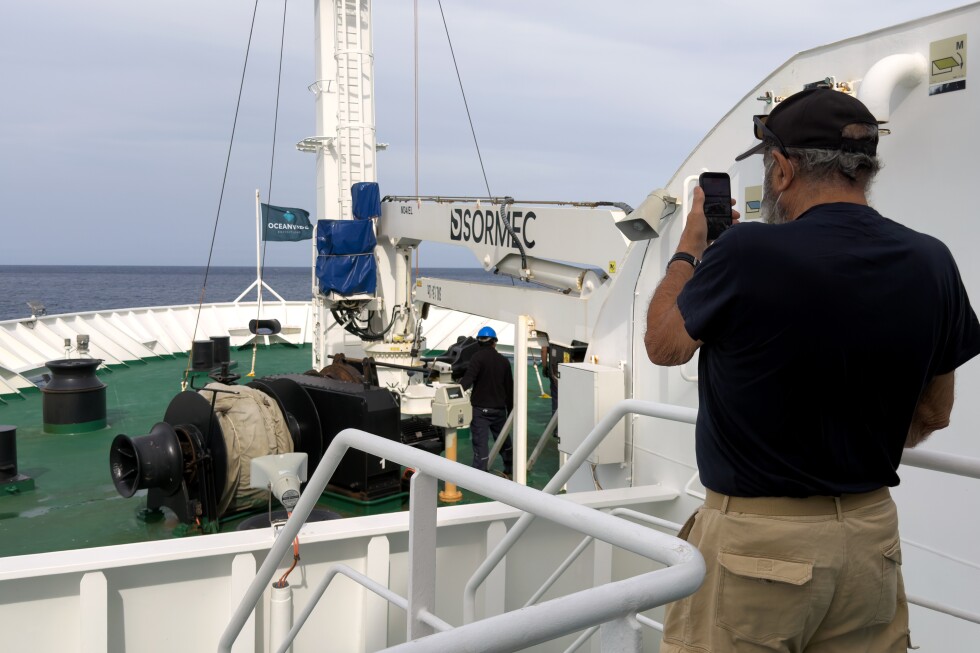
In a coordinated global response to an unprecedented hantavirus outbreak on a Dutch-flagged Antarctic cruise ship, World Health Organization Director-General Tedros Adhanom Ghebreyesus arrived in Spain on Saturday to lead the safe evacuation of more than 140 passengers and crew currently aboard the MV Hondius. The vessel, which has been linked to three fatalities and five confirmed infections among passengers who previously disembarked, is scheduled to dock off the coast of the Canary Islands’ Tenerife in the early hours of Sunday.
Tedros is set to travel to Tenerife alongside Spain’s top health and interior officials to oversee the disembarkation process, which has been planned in close consultation with European public health agencies. In a public post on X, the WHO chief confirmed that no one currently aboard the vessel has developed observable hantavirus symptoms, adding that the organization remains committed to active monitoring, cross-border coordination, and transparent updates for both member states and the general public. “So far, the risk for the population of Canary Islands and globally remains low,” he emphasized.
Spain’s activation of the EU Civil Protection Mechanism has put a specially equipped medical evacuation plane, designed to handle high-consequence infectious diseases, on standby for the operation. Per a letter from Dutch foreign and health ministers to the Dutch parliament, if any passenger or crew member falls ill during or after disembarkation, the aircraft will transport the affected person to specialized care on the European mainland immediately. Once they leave the ship, all people on board will be moved to a fully isolated, cordoned-off quarantine area to prevent potential spread. After medical screening, asymptomatic non-Dutch nationals will be repatriated by their home countries – both the U.S. and U.K. have already confirmed they will deploy charter flights to retrieve their citizens. Asymptomatic Dutch passengers and crew will complete a six-week home quarantine under continuous monitoring by local Dutch health services, and the Netherlands has offered temporary quarantine accommodation for other nationalities if needed, given the vessel’s Dutch registration.
The outbreak has triggered a massive global contact tracing effort spanning four continents, as public health officials work to track more than two dozen passengers who left the MV Hondius before the hantavirus infection was officially confirmed. The first passenger death on the ship occurred on April 24, but health authorities only formally confirmed hantavirus in a passenger sample on May 2 – a two-week gap that left more than 20 passengers from 12 countries disembark at various ports without proper contact tracing protocols.
One notable case that sparked global public concern involved a KLM flight attendant who fell ill after sharing a flight with an infected cruise passenger. The passenger, a Dutch woman whose husband had died from the virus on the ship, was too sick to complete her April 25 flight from Johannesburg to Amsterdam and was taken off the plane in Johannesburg, where she later died. On Friday, the WHO announced the flight attendant had tested negative for hantavirus, a result that WHO spokesman Christian Lindmeier said should ease unfounded public fears. “The risk remains absolutely low. This is not a new COVID,” Lindmeier noted.
As of Friday, public health agencies have reported new suspected cases in two locations. U.K. health authorities confirmed a third British former passenger is suspected of having hantavirus, currently located on the remote British overseas territory of Tristan da Cunha, where the cruise ship stopped in April. No update has been released on the individual’s condition. In Spain, a woman in the southeastern province of Alicante who shared a flight with the deceased Dutch infected passenger is currently being tested for the virus after developing symptoms consistent with hantavirus infection.
Two British former passengers have already tested positive for the virus: one is hospitalized in the Netherlands, and the second is receiving care in South Africa. South African health officials are currently tracing all contacts of passengers who disembarked in the country, with a particular focus on passengers who took an April 25 flight from St. Helena to Johannesburg. U.S. state health authorities are also monitoring a small number of U.S. residents who were passengers on the cruise and have already returned home; none have developed symptoms to date.
Hantavirus, the pathogen at the center of the outbreak, is most commonly transmitted to humans through inhalation of air contaminated by rodent droppings, and does not spread easily between people. However, the specific strain detected in this outbreak – Andes virus – has been documented to spread between people in rare cases, prompting heightened precautionary measures from global health authorities. Symptoms of hantavirus typically develop between one and eight weeks after exposure to the virus.