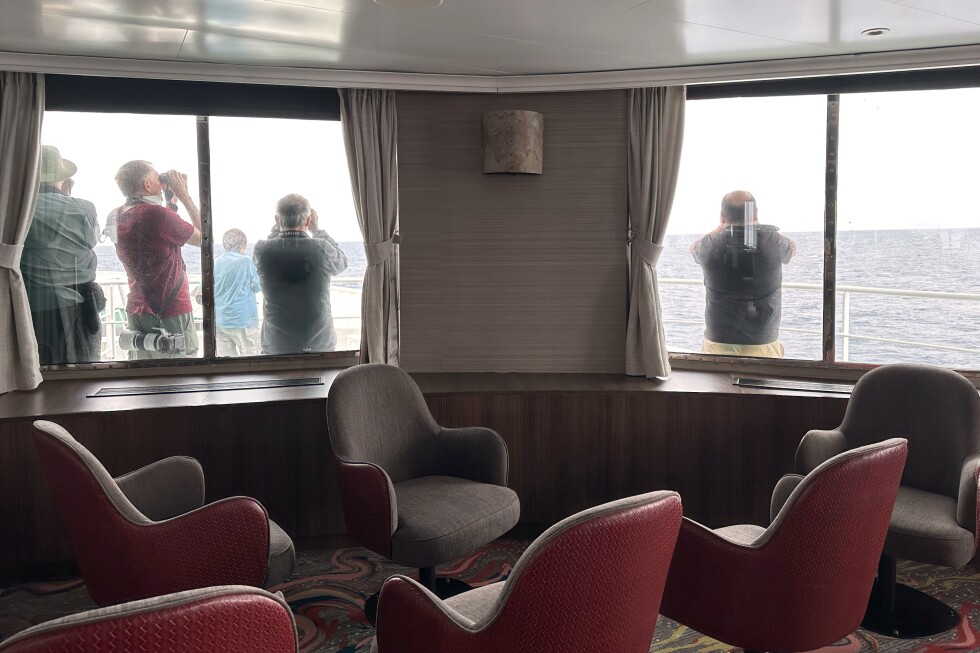
As the cruise ship MV Hondius, hit by an outbreak of hantavirus, steams toward the Spanish port of Tenerife in the Canary Islands, a surprising tension has emerged among its 140+ passengers and crew. For the Spanish nationals on board, anxiety stems not from the risk of contracting the virus itself, but from the hostile public reception they expect to face once they set foot on land. In exclusive phone interviews with the Associated Press on Friday, two anonymous Spanish passengers — a man and a woman — detailed the vitriol and misinformation spreading across public platforms about the ship and those aboard.
Sensationalized mainstream coverage and inflammatory social media content, including memes calling for the vessel to be sunk, have painted passengers as dangerous viral vectors to be shunned. “You go onto social media – they want to dynamite the boat. They want to sink the boat,” the male passenger told AP. “You see what’s out there and you realize you’re heading into the eye of a hurricane,” the female passenger added. “Many people forget that in here there are more than 140 passengers. In reality, there are 140 human beings.” Both requested anonymity out of fear of further backlash once they disembark, currently scheduled as early as Sunday.
This wave of public panic has echoes of the early days of the COVID-19 pandemic, when viral outbreaks on cruise ships sparked global alarm. But World Health Organization officials have repeatedly pushed back against misplaced comparisons, stressing that hantavirus poses minimal risk to the general public and this event is not the start of a new global pandemic. “This is very different virus. I want to be unequivocal here,” stated Maria Van Kerkhove, WHO’s head of epidemic and pandemic preparedness, on Thursday. “This is not the start of a COVID pandemic.”
Unlike SARS-CoV-2, which spreads easily between people, hantavirus is most commonly transmitted to humans through inhalation of particles contaminated by rodent droppings. While the Andes strain detected on the MV Hondius can spread between people in extremely rare cases, the overall risk of widespread transmission remains very low. Despite these clear expert assurances, misinformation and distrust in public health guidance — a trend that took hold during the COVID pandemic — have persisted. A Spanish anti-establishment group called Iustitia Europa, which gained prominence opposing COVID-19 public health restrictions, has publicly called for the MV Hondius to be barred from entering Spanish territorial waters. “The Canary Islands cannot become Europe’s health laboratory … We demand transparency, responsibility, and protection for Spaniards to avoid repeating the mistakes of the past,” the group posted on social media platform X.
Even some regional Spanish politicians have echoed public anxiety, taking a hard defensive stance against the ship’s arrival. Canary Islands regional president Fernando Clavijo told Spanish newspaper El País on Friday that he would not feel at ease until the ship departs Spanish waters and all passengers have reached their designated quarantine sites. Madrid regional leader Isabel Díaz Ayuso also publicly opposed the decision to transfer 12 Spanish passengers from the ship to a Madrid military hospital for quarantine, as planned by national authorities.
“The public narrative has painted this as a boat of infected people, a boat of multimillionaires, full of rats,” the male passenger on board explained. “Society is in some way contaminated with a lot of noise and a lot of lies.” He did note that he has found some comfort in the Spanish government’s promise of official escorts upon arrival in Tenerife, where port workers held a protest this week over a lack of transparency regarding planned safety protocols. Spanish authorities have clarified that the escorts are standard protocol to maintain isolation requirements, not a measure to protect passengers from violent confrontation.
Contrary to chaotic public portrayals of life on board, daily routines on the MV Hondius have remained calm in the days approaching port. After a team of epidemiologists boarded the ship off the coast of Cape Verde to brief passengers on the actual risks of the outbreak, most have been reassured that human-to-human transmission is extremely rare. Passengers who leave their cabins for common areas follow masking and social distancing rules, spending time reading, attending educational talks, joining early morning exercise groups on the upper decks, or birdwatching — a key activity for many travelers who had embarked on the voyage to photograph wildlife in remote Atlantic regions, not to become the center of a global public health story.
Remarkably, despite the stigma and uncertainty they now face, both Spanish passengers say the experience would not stop them from taking another cruise in the future. “For me, personally, traveling is a means to … live out what I’m passionate about — which is observing nature and documenting nature,” the female passenger said. “Of course I would go on a cruise again.”