分类: health

  • Hantavirus may have spread between passengers on cruise ship, WHO says

    Hantavirus may have spread between passengers on cruise ship, WHO says

    A deadly hantavirus outbreak on a Dutch-operated cruise vessel has left three passengers dead and prompted an urgent international investigation into the rare possibility of sustained human-to-human virus transmission, the World Health Organization (WHO) has confirmed. The outbreak unfolded on the MV Hondius, an expedition cruise ship operated by Netherlands-based firm Oceanwide Expeditions, which launched its transatlantic voyage roughly one month ago from an Argentine port.

  • Inside the cruise ship at the center of the hantavirus outbreak

    Inside the cruise ship at the center of the hantavirus outbreak

    Three passengers have died and at least two more have fallen ill in a suspected hantavirus outbreak aboard a Dutch polar expedition cruise ship, which has been anchored off the coast of Cape Verde after local authorities blocked all passengers from disembarking over public health fears, multiple global health and government officials have confirmed.

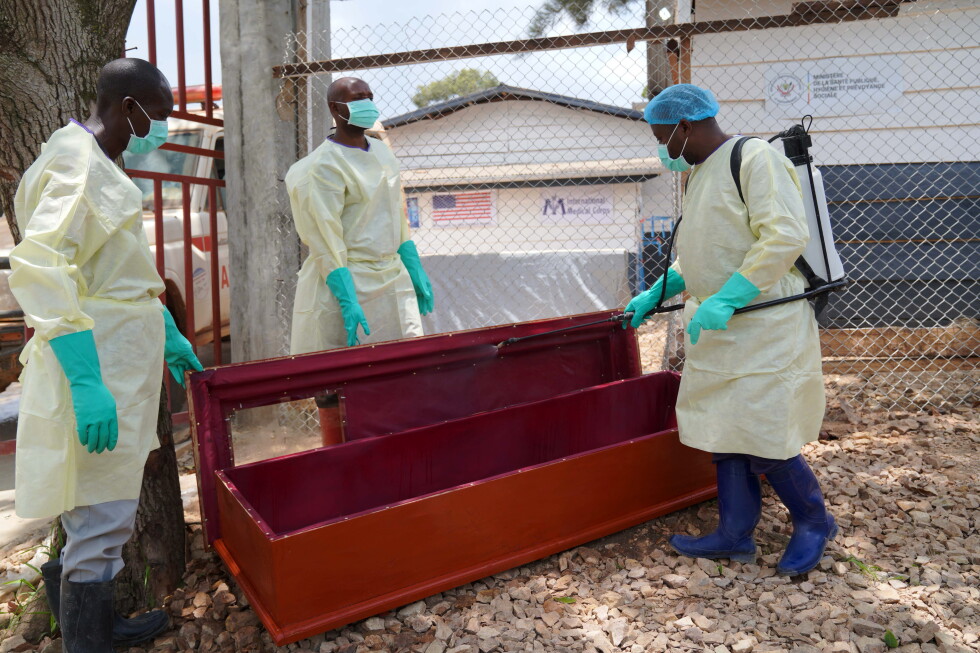
    The MV Hondius, operated by Netherlands-based Oceanwide Expeditions, was mid-voyage on a multi-week expedition journey that launched from Ushuaia, Argentina on April 1, bound for Antarctica and remote island destinations across the South Atlantic, when the outbreak was detected. As of the latest updates, nearly 150 passengers and crew remain confined to their individual cabins under isolation protocols, video footage obtained by the Associated Press confirms. The ship’s public spaces including open decks and common halls are nearly empty, with only a small number of masked personnel moving through restricted areas. Medical teams in full personal protective equipment—including full-body white hazmat suits, boots, and respiratory protection—have been observed transferring supplies and personnel between the Hondius and smaller support craft off the ship.

    Local Cape Verdean authorities, based in the capital Praia, made the decision to bar disembarkation to protect the country’s population of roughly 590,000 people. The archipelago nation, located off the western coast of Africa, has deployed a specialized response team including doctors, surgeons, nurses, and laboratory specialists to provide on-site medical support to the vessel, while activating enhanced safety protocols across all port areas as a precaution against the rodent-borne virus. The World Health Organization (WHO) notes that while human-to-human transmission of hantavirus is rare, it is possible, prompting the strict safety measures. Cape Verde’s National Director of Health Angela Gomes emphasized that the government’s top priority is upholding maximum protection for both local residents and response personnel, noting all medical teams interacting with the ship are equipped with full protective gear to prevent transmission.

    In the immediate aftermath of the outbreak, the timeline for evacuating the sick remained unclear, but the WHO announced Monday that the plan called for a medical evacuation of affected passengers to the Netherlands for advanced care. If evacuation could not be completed through Cape Verde, Oceanwide Expeditions noted it would reroute the ship to one of two Spanish Canary Island ports: Tenerife or Las Palmas. By Tuesday, WHO’s director of epidemic and pandemic preparedness Dr. Maria Van Kerkhove confirmed in a Geneva press briefing that the official adjusted plan is for the Hondius to continue onward to the Canary Islands, where Spanish authorities will accept the vessel. She added that no additional passengers or crew have developed symptoms as of Tuesday’s update, and once the two remaining sick passengers are medically evacuated, the ship will be cleared to resume movement. Early reports had noted three additional people had experienced mild symptoms, but none have progressed to active cases.

    The Spanish Ministry of Health however offered a more cautious update Tuesday, stating it is conducting close coordinated monitoring with the WHO and other involved stakeholders, and no final decision on a port of call has been made. Until all risk assessments are complete, the ministry will not formalize any acceptance of the vessel, per its official statement.

    Officials in the Argentine province of Tierra del Fuego, where the voyage originated, confirmed that all passengers were screened for hantavirus symptoms before departure, and no cases were detected when the ship set sail. Juan Facundo Petrina, the province’s epidemiology director, noted that hantavirus symptoms can take up to eight weeks to appear after initial exposure, meaning any infection likely occurred before passengers boarded, or very early in the voyage.

    As of the latest update, the WHO says the situation on board remains under careful continuous monitoring, with the global health body coordinating an international response that includes in-depth laboratory testing, case isolation, targeted care, and planning for evacuation. Oceanwide Expeditions said in a statement that the atmosphere on the ship remains calm, with all passengers remaining composed, and the vessel has activated its highest level (Level 3) outbreak response protocol, which includes strict isolation, enhanced hygiene, and constant medical monitoring of all people on board.

  • Do viruses spread more easily on cruise ships?

    Do viruses spread more easily on cruise ships?

    For years, cruise ships have carried a reputation as hotbeds for rapid viral transmission, with frequent news reports of norovirus and COVID-19 outbreaks making headlines during peak vacation seasons. But the question on every traveler’s mind remains: do viruses truly spread more easily on these large floating vessels compared to other crowded public spaces? To answer this pressing public health question, the British Broadcasting Corporation recently assembled a comprehensive breakdown of leading expert opinions, breaking down the unique factors that shape infection risk on cruises.

    Experts point to several key characteristics of cruise travel that can create favorable conditions for viral spread, even when operators implement strict hygiene protocols. First, cruise ships house thousands of passengers and crew in close quarters, with shared dining halls, entertainment venues, swimming pools, and cabins that often have limited ventilation compared to land-based buildings. Many passengers also spend extended periods of time on board – often a week or more – which gives contagious viruses more time to move from person to person before infected guests can disembark and seek treatment. This combination of prolonged close contact and shared enclosed spaces has historically led to larger outbreaks than many other leisure settings.

    That said, modern cruise lines have ramped up their infection control measures significantly in the wake of the COVID-19 pandemic. Today, most major operators maintain enhanced air filtration systems, regular surface sanitation, and updated protocols for isolating passengers who develop symptoms mid-cruise. Experts also note that the perception of heightened risk is partially skewed by the fact that outbreaks on cruise ships receive far more media attention than similar outbreaks in hotels or resort towns on land. When an outbreak is detected on a cruise, it is systematically tracked and reported because all passengers are contained in one closed environment, making it easier to count cases – a level of monitoring that rarely exists for land-based destinations.

    Ultimately, experts agree that while cruise ships do carry some inherent elevated risk of viral spread compared to less crowded settings, the actual level of risk depends heavily on the specific measures operators take and the current state of circulating viruses in the broader community. Travelers can reduce their own risk by staying up to date on vaccinations, practicing good hand hygiene, and avoiding crowded indoor spaces on board when possible if they have underlying health conditions that put them at higher risk of severe illness.

  • What is hantavirus, and can it spread between humans?

    What is hantavirus, and can it spread between humans?

    A suspected hantavirus outbreak aboard an international cruise ship traveling between Argentina and Cape Verde has resulted in three fatalities, triggering global public health scrutiny over how the typically rodent-borne pathogen spreads in enclosed passenger settings. The World Health Organization (WHO) has formally confirmed one case of the potentially lethal virus so far, while moving quickly to reassure global populations that the overall public risk remains low. Even with this official assessment, the unusual cluster of illnesses on the vessel has reignited longstanding questions about whether hantaviruses can spread from person to person in closed environments. Virginie Sauvage, who leads France’s National Reference Centre for Hantaviruses, told Agence France-Presse (AFP) that genetic sequencing of the virus strain involved will be the critical next step to unpack what occurred during the voyage.

  • Passengers isolating on cruise after Cape Verde ban over suspected virus deaths

    Passengers isolating on cruise after Cape Verde ban over suspected virus deaths

    A polar expedition cruise ship, the MV Hondius, remains anchored off the coast of Cape Verde’s capital Praia this week, after the West African island nation barred the vessel from docking over a suspected hantavirus outbreak that has already claimed three lives. All 149 passengers and crew, representing 23 nationalities including citizens of Spain, the United Kingdom and the United States, are now under strict isolation aboard the ship as public health authorities across the globe coordinate a response.

    The outbreak unfolded as the vessel completed a journey from Ushuaia, Argentina, bound for Cape Verde. Operator Oceanwide Expeditions confirmed in a statement Monday that two fatalities occurred on board the ship, while a third death was recorded after a passenger disembarked prior to the vessel reaching Cape Verde’s waters. One confirmed hantavirus case is currently receiving intensive care in Johannesburg, South Africa, and two additional people on the MV Hondius remain in need of urgent medical attention.

    Hantavirus, a rare pathogen most often transmitted to humans from exposure to rodent excrement, has been formally confirmed in the patient treated in Johannesburg. However, Oceanwide Expeditions emphasized that investigators have not yet formally linked the three deaths to the virus, and no confirmation of hantavirus has been returned for the two symptomatic people still aboard the ship. “The exact cause and any possible connection are under investigation,” the company added.

    Cape Verdean public health officials defended the decision to bar the ship from entering port, framing the move as a critical measure to protect the local population. Maria da Luz Lima, president of the country’s National Institute of Public Health, told public broadcaster RTC Sunday that the vessel would remain anchored offshore with no contact between passengers and the Cape Verdean public.

    Despite the outbreak and fatalities, the World Health Organization (WHO) has moved to reassure the global public that the broader population risk remains low. “There is no need for panic or travel restrictions,” WHO Europe director Hans Kluge said in a public statement, noting that hantavirus infections are uncommon and almost always tied to contact with infected rodents. The agency added that while rare, person-to-person transmission is possible, and infections can lead to severe respiratory illness that requires close monitoring.

    The UN health agency says it is acting with urgency to support the response effort, collaborating with all involved governments to coordinate medical care, evacuations, on-board investigations and public health risk assessments.

    International authorities are now working to identify a new port of disembarkation to allow for full medical screening and care. The Canary Islands, a Spanish territory off the coast of Northwest Africa, is currently the leading candidate for the disembarkation. Dutch authorities have agreed to lead a coordinated effort to repatriate two symptomatic passengers to the Netherlands for treatment, though the operation is still pending approval from Cape Verdean local officials.

    Dutch Foreign Ministry confirmed to AFP that it is actively exploring options for medical evacuation of the affected passengers, and will coordinate the full operation if it receives approval. Local doctors have already boarded the vessel to assess the health of the two symptomatic crew members, but Cape Verde has not granted permission to evacuate them to onshore medical facilities.

  • A cruise ship is waiting for help after a suspected outbreak of rare hantavirus onboard killed 3

    A cruise ship is waiting for help after a suspected outbreak of rare hantavirus onboard killed 3

    A Dutch-operated polar cruise vessel carrying nearly 150 people is currently anchored off the coast of Cape Verde in the Atlantic Ocean, waiting for local authorities to grant evacuation permission after a suspected hantavirus outbreak left three passengers dead and at least three others in serious condition, the World Health Organization (WHO) and cruise line operator have confirmed. Among the 88 passengers on board the MV Hondius are 17 American citizens, alongside travelers from the United Kingdom, Spain and other nations.

    The multi-week expedition, which began in Ushuaia, southern Argentina, was originally scheduled to take passengers through Antarctica, the Falkland Islands, South Georgia and a series of remote South Atlantic island outposts. The first fatality was recorded on April 11, when a 70-year-old Dutch passenger died on board after developing classic hantavirus symptoms including fever, headache, abdominal pain and diarrhea, according to Netherlands-based operator Oceanwide Expeditions. His remains were disembarked nearly two weeks later at Saint Helena, a British overseas territory roughly 1,900 kilometers off the African coast, where they remain awaiting repatriation to the Netherlands.

    The man’s 69-year-old wife, who had also fallen ill, was evacuated to South Africa alongside the body. She collapsed shortly after arriving at Johannesburg’s OR Tambo International Airport and died at a nearby hospital. By April 27, the ship reached the remote Atlantic outpost of Ascension Island, where a sick British passenger was evacuated for emergency care in South Africa. That patient later tested positive for hantavirus, and remains in critical, isolated care in an intensive care unit in South Africa.

    A third fatality occurred on board Saturday, when a German national passenger died. Their body is still being held on the MV Hondius, as local authorities have not yet permitted anyone to disembark after the vessel reached Cape Verde on Sunday to request emergency assistance. To date, only the evacuated British patient has received a confirmed positive hantavirus diagnosis; WHO officials note that five total cases are suspected, including the three fatalities.

    Two additional crew members — one British, one Dutch — are currently on board experiencing severe symptoms and require urgent evacuation, Oceanwide Expeditions confirmed. As of Monday, the operator was still waiting for approval from Cape Verdean public health authorities to offload sick passengers and crew. If evacuation permission is not granted in Cape Verde, the company says it is considering rerouting to the Spanish Canary Islands, specifically Las Palmas or Tenerife, to offload those in need of care.

    Oceanwide Expeditions stated that it has implemented strict precautionary protocols on the vessel, including isolation of symptomatic people, and no other people on board have reported developing hantavirus symptoms. The WHO is coordinating a multi-country public health response to the incident, working alongside local authorities and the cruise operator to conduct a full public health risk assessment, coordinate evacuations, and carry out further laboratory testing and epidemiological tracing. Viral sequencing is also underway to confirm the strain of the virus. The Dutch Ministry of Foreign Affairs is also assisting in exploring evacuation options for people on the vessel.

    Hantavirus is a rare pathogen spread primarily through contact with urine or feces from infected rodent populations such as rats and mice. The virus gained renewed public attention last year, when Betsy Arakawa, wife of veteran Hollywood actor Gene Hackman, died from a hantavirus infection in New Mexico. While rare cases of person-to-person transmission have been recorded, the virus is not easily spread between humans, WHO officials emphasize. There is no specific cure or targeted treatment for hantavirus, but early clinical intervention significantly improves a patient’s chance of survival. The virus causes two severe syndromes: hantavirus pulmonary syndrome, which impacts the lungs, and hemorrhagic fever with renal syndrome, which affects kidney function; pulmonary syndrome is the more common presentation in the Americas, per the U.S. Centers for Disease Control and Prevention (CDC).

    “While severe in some cases, it is not easily transmitted between people. The risk to the wider public remains low. There is no need for panic or travel restrictions,” Dr. Hans Henri P. Kluge, WHO Regional Director for Europe, said in a public statement Monday.

    The MV Hondius is a 107-meter expedition vessel with capacity for 170 passengers across 80 cabins, and typically sails with a crew of approximately 70, including a full-time on-board doctor. Oceanwide offers 33- and 43-night “Atlantic Odyssey” expeditions along the route the MV Hondius was traveling when the outbreak began. While the source of the current outbreak has not yet been identified, a 2019 hantavirus outbreak in southern Argentina killed at least nine people, prompting a 30-day lockdown of a remote rural town to halt transmission.

    South African public health officials are currently conducting contact tracing in the Johannesburg region to identify any people who may have been exposed to the infected passengers who disembarked in the country. Like the WHO, South Africa’s Department of Health has stressed that there is no cause for public panic, noting that international health authorities are coordinating a coordinated cross-border response to contain any potential spread.

  • A2 Milk baby formula pulled from US shelves after potent toxin discovered in product

    A2 Milk baby formula pulled from US shelves after potent toxin discovered in product

    New Zealand-based dairy giant The A2 Milk Company, owner of one of Australia’s most beloved milk brands, has initiated a voluntary recall of three specific batches of its A2 Platinum infant formula from the United States market after testing confirmed the presence of cereulide, a powerful bacterial toxin.

    The recalled products were distributed exclusively to U.S. consumers through three sales channels: the company’s official website, major e-commerce platform Amazon, and regional retail chain Meijer. In total, approximately 16,428 units of the affected formula were sold to customers across the country.

    Cereulide, the toxin identified in the recalled batches, triggers acute gastrointestinal symptoms that typically onset between 30 minutes and six hours after consumption. The most common reactions include nausea and repeated vomiting. While most healthy adults experience mild, self-resolving symptoms within a short period, infants face elevated risks due to their underdeveloped immune systems. The toxin can lead to dangerous rapid dehydration in young children, so healthcare providers urge caregivers to seek immediate medical attention if an infant displays any adverse symptoms after consuming the affected product.

    The company confirmed that, as of the recall announcement, it has not received any reports of illness, injury, or adverse health events linked to the affected batches. A2 Milk managing director and chief executive officer David Bortolussi moved quickly to reassure consumers that the recall is an isolated incident limited solely to the U.S. market. Bortolussi emphasized that all A2 Milk products sold in other regions, including the company’s key Australian domestic market, remain completely unaffected and safe for consumption.

    Full details of the recalled batches are as follows: batch number 2210269454 with a use-by date of July 15, 2026; batch number 2210324609 with a use-by date of January 21, 2027; and batch number 2210321712 with a use-by date of January 15, 2027. The company is advising all customers who have purchased any of these batches to immediately stop using the product, dispose of it safely, or return it to the original point of purchase for a refund.

    Shortly after the recall was made public, the company’s shares dropped sharply on the Australian Securities Exchange. The Auckland-based firm’s stock closed down 12% from its opening price, falling from AU$7.27 to AU$6.49 in the wake of the announcement, reflecting investor concern over potential reputational and financial impacts from the incident.

  • ‘Low’ risk to public of hantavirus after cruise ship deaths, WHO says

    ‘Low’ risk to public of hantavirus after cruise ship deaths, WHO says

    Three deaths linked to a suspected hantavirus outbreak aboard an expedition cruise ship have triggered an international public health response, with the World Health Organization’s European branch moving quickly to calm public fears on Monday, confirming the broader population faces only minimal risk of transmission. The incident has also spurred Dutch authorities to launch coordinated planning for the medical repatriation of two currently ill passengers still aboard the vessel.\n\nHans Kluge, WHO Europe’s regional director, emphasized in an official statement that there is no justification for widespread panic or the imposition of travel bans related to the event. He noted that hantavirus infections are rare in human populations, and most cases stem from direct exposure to excrement, urine, or saliva of virus-carrying rodents, rather than widespread community spread.\n\nThis is the first public confirmation from the ship’s operator, Netherlands-based Oceanwide Expeditions, regarding the three fatalities aboard the MV Hondius, which was sailing on an itinerary from Ushuaia, Argentina, to a stopover in Cape Verde, an island nation off West Africa’s Atlantic coast. Of the three people who died, two passed away while the vessel was still underway, and the third died shortly after disembarking. Currently, one passenger is receiving intensive care for the virus in a Johannesburg hospital, while two other passengers on board remain in need of urgent medical attention.\n\nOceanwide Expeditions confirmed that Dutch authorities have taken the lead on a multinational effort to repatriate the two symptomatic passengers from Cape Verde to the Netherlands for treatment. The evacuation is still pending, however, as it requires formal approval from Cape Verdean local health and government officials, a process that remains ongoing as of Monday.\n\nAn Agence France-Presse photographer on the ground in Cape Verde confirmed the MV Hondius remained anchored in the port of Praia, the nation’s capital, as of Monday morning. A spokesperson for the Dutch foreign ministry told AFP that the government is actively evaluating all options to medically evacuate the small group of ill passengers from the vessel, and will take over full coordination of the operation once it is approved.\n\nLocal medical teams have already boarded the ship to assess the condition of the two symptomatic passengers, but Cape Verdean officials have not yet granted permission to move the patients to onshore medical facilities. In a statement, Oceanwide Expeditions noted that full disembarkation and universal medical screening for all passengers and crew require close alignment with local public health protocols, and the operator remains in constant communication with Cape Verdean authorities to advance the process.\n\nThe WHO said it has prioritized support for the response to the hantavirus incident, calling the three deaths a tragic loss of life. “WHO Europe is working closely with all affected countries to provide support for patient care, evacuation coordination, on-the-ground epidemiological investigation, and ongoing public health risk assessment,” the agency said.\n\nTo date, hantavirus has only been officially confirmed in the passenger receiving treatment in Johannesburg. Operator officials stressed that it has not yet been definitively proven that the virus caused the three deaths, nor has the virus been confirmed in the two symptomatic passengers still aboard the MV Hondius. “The exact cause of the fatalities and any potential connection to the suspected outbreak are still under active investigation,” the company said.\n\nAs of Sunday, WHO officials confirmed one laboratory-confirmed hantavirus case and five additional suspected cases linked to the voyage. While human-to-human transmission of hantavirus is rare, the UN health agency noted that it is possible, and the virus can cause life-threatening respiratory illness that requires constant close monitoring and urgent supportive care.

  • Cruise ship operator says Dutch to repatriate two ill passengers

    Cruise ship operator says Dutch to repatriate two ill passengers

    A serious public health incident is unfolding on a cruise ship anchored off the coast of Cape Verde, where three people have already died amid a suspected hantavirus outbreak, and Dutch authorities are set to lead a coordinated mission to repatriate two acutely ill passengers still on board, the vessel’s operator has confirmed.

    In its first official public statement addressing the crisis, Netherlands-based Oceanwide Expeditions, which operates the expedition cruise ship MV Hondius, acknowledged the unfolding “serious medical situation” on the vessel. The ship was mid-voyage, traveling north from Ushuaia, Argentina toward Cape Verde when the outbreak began.

    The operator has verified three fatalities connected to the incident: two deaths occurred on board the ship, while a third victim died after disembarking earlier for emergency care. One passenger is already receiving intensive care treatment in a Johannesburg hospital, where hantavirus has been confirmed in their case. Two remaining symptomatic passengers on the MV Hondius now require urgent, advanced medical intervention that cannot be adequately provided on the vessel.

    Oceanwide Expeditions confirmed that Dutch authorities have committed to leading a joint international effort to medically evacuate and repatriate the two symptomatic people from the ship’s current position off Cape Verde to medical facilities in the Netherlands. The evacuation and repatriation effort remains contingent on multiple key approvals, most notably formal authorization from local Cape Verdean authorities, which has not yet been granted. While local medical practitioners have already boarded the vessel to evaluate the health status of the two passengers, permission to move them to onshore medical facilities in Cape Verde is still pending.

    A spokesperson for the Dutch Ministry of Foreign Affairs confirmed to Agence France-Presse that the department is actively assessing all logistical and regulatory options to carry out the medical evacuation of the affected passengers. “If this can take place, the ministry of foreign affairs will coordinate it,” the spokesperson said.

    Oceanwide Expeditions added that it remains in constant close communication with Cape Verdean health authorities to coordinate plans for full disembarkation and universal medical screening of all passengers and crew once local approval is secured.

    Though hantavirus has been confirmed in the Johannesburg patient, operators emphasize that it has not yet been definitively linked to the three recorded deaths, and neither has hantavirus been confirmed in the two symptomatic patients still on the ship. “The exact cause and any possible connection are under investigation,” the company said.

    The World Health Organization released an update on the incident Sunday, confirming one laboratory-positive case of hantavirus and five additional suspected cases. The U.N. health agency noted that while hantavirus infections in humans are rare, human-to-human transmission is possible, and the pathogen can cause life-threatening severe respiratory illness that requires constant specialized monitoring and supportive care.

    Hantavirus is most commonly transmitted to humans from contact with rodent excreta, according to global public health data.

  • What is hantavirus? Cruise ship outbreak explained

    What is hantavirus? Cruise ship outbreak explained

    A tragic suspected outbreak of hantavirus on a cruise ship has claimed the lives of three people, prompting public health officials to launch an investigation into how the rodent-borne pathogen spread in a confined maritime setting. As authorities work to contain the incident and identify additional cases, many members of the public are seeking clear answers about what hantavirus is, how it spreads, and what risks it poses to human populations. Hantavirus is a type of virus that is primarily hosted and transmitted by wild rodents, with different species of the virus found across regions of North America, Europe, Asia, and other parts of the world. Humans most commonly contract the virus through contact with rodent urine, feces, or nesting materials, when infectious particles become airborne and are inhaled. Rare cases of transmission can also occur through bites from infected rodents, and in some documented instances, person-to-person spread has been reported for specific strains of the virus. The most severe form of hantavirus infection in North America is hantavirus pulmonary syndrome (HPS), which causes rapid fluid buildup in the lungs and has a mortality rate of roughly 38% according to data from the U.S. Centers for Disease Control and Prevention. This current outbreak on a cruise ship, a closed environment that can facilitate exposure if rodents have gained access to food storage or living areas, has raised new questions about public health protocols on commercial passenger vessels. At this stage, investigations are ongoing to confirm that the three deaths were indeed caused by hantavirus, identify the source of the outbreak on the ship, and implement measures to prevent further infections among passengers and crew.