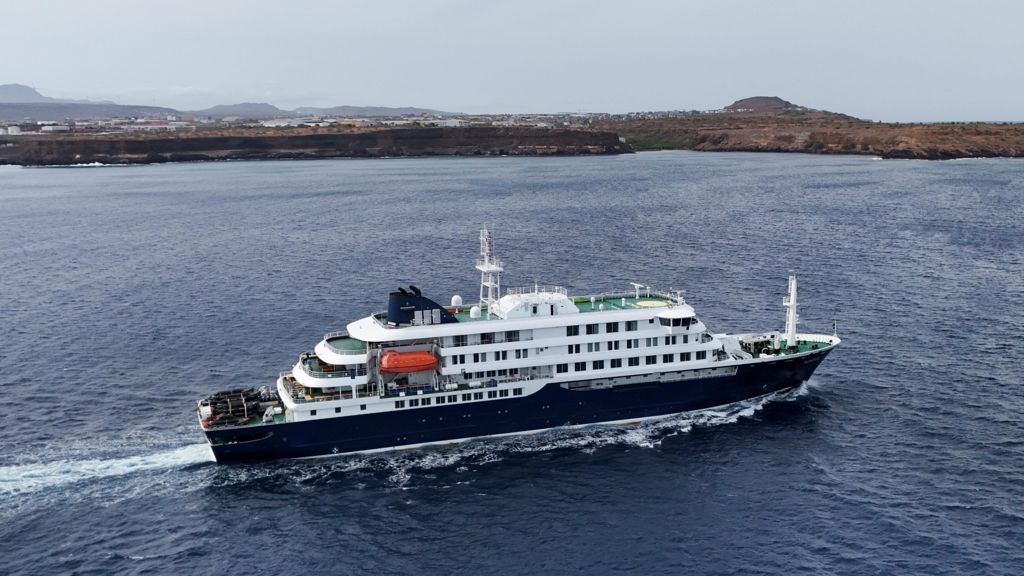
Tensions are running high on the Spanish Canary Island of Tenerife this weekend, as public health authorities and local emergency services finalize strict containment protocols for the imminent arrival of the MV Hondius — a Dutch cruise vessel grappling with a deadly hantavirus outbreak that has already claimed three lives.
As residents voiced deep anxiety, with lingering trauma from the 2020 COVID-19 cruise ship outbreaks still fresh for many, World Health Organization Director-General Tedros Ghebreyesus delivered a direct public message to ease community fears, stressing that this event poses far lower public health risk than the coronavirus pandemic.
“I know you are worried,” Tedros told Tenerife residents in a public address Saturday. “I know that when you hear the word ‘outbreak’ and watch a ship sail toward your shores, memories surface that none of us have fully put to rest. The pain of 2020 is still real, and I do not dismiss it for a single moment. But I need you to hear me clearly: this is not another Covid. The current public health risk from hantavirus remains low.”
Six confirmed cases of hantavirus have been linked to the voyage, which originated in South America. Three passengers have died from the infection to date: the first fatality was recorded on April 11, a second on May 2, and a 69-year-old Dutch passenger who disembarked in St. Helena on April 24 died in South Africa two days later. Two infected British passengers are currently receiving care in the Netherlands and South Africa, while a third Briton is undergoing treatment for a suspected case on the remote Atlantic island of Tristan da Cunha, where the ship made a mid-April stopover.
The MV Hondius is scheduled to dock at Granadilla Port between 4:00 a.m. and 6:00 a.m. GMT Sunday, Spanish Health Minister Mónica García confirmed at a press briefing Saturday. The decision to allow the vessel to dock in Tenerife has been deeply controversial: regional president Fernando Clavijo has openly opposed the move, questioning why the vessel could not complete its outbreak response at its previous stop in Cape Verde. Far-right Spanish party Vox has attacked the national central government over the call, and local protests have broken out across the island in recent days. In contrast, Tedros praised Spanish Prime Minister Pedro Sánchez for the decision, framing it as “an act of solidarity and moral duty,” noting that Tenerife was selected specifically for its robust medical infrastructure, emergency response capacity, and ability to facilitate safe repatriation of passengers.
To eliminate any risk of community spread, Spanish authorities have put in place a rigorous set of containment measures. All passengers will remain quarantined aboard the vessel while initial health screenings are conducted, and no one will be permitted to disembark until a repatriation flight is waiting on the island’s tarmac to carry them directly back to their home countries. Repatriation flights are arranged for passengers from the United Kingdom, United States, France, Germany, Belgium, and Ireland, with Spanish passengers prioritized for disembarkation and repatriation.
All people who interact with passengers during transfer — including bus drivers and logistics staff — will be required to wear FFP2 masks, and passengers will only be permitted to bring a small, sealed bag of essential items such as identification documents, mobile devices and chargers, and basic personal necessities when disembarking. Notably, the body of the passenger who died aboard the vessel will not be unloaded in the Canary Islands; the ship will continue onward to the Netherlands after repatriations are complete, where the remains and personal belongings will be disinfected before being removed.
Health experts explain that hantaviruses are most commonly carried by wild rodents, and the strain detected in this outbreak — the Andes strain — can spread between humans, a mode of transmission that has raised targeted concerns. All infected passengers are believed to have contracted the virus during pre-voyage travel through Argentina, Chile, and Uruguay, where they visited areas with populations of rodent species known to carry the pathogen, Tedros confirmed. As of this publication, the exact origin of the outbreak remains unclear, and public health teams have not yet confirmed whether any additional crew or asymptomatic passengers have been exposed to the virus. A WHO expert is already aboard the vessel to monitor conditions, and Tedros has announced he will travel to Tenerife personally to observe the response operation first-hand. Symptoms of hantavirus infection range from mild flu-like effects including fever, muscle aches, fatigue, and abdominal pain to severe respiratory distress in advanced cases.