A high-profile hantavirus outbreak aboard a South Atlantic cruise ship is sparking widespread criticism of the U.S. Centers for Disease Control and Prevention, with public health experts warning the agency’s absence from the frontline response signals a dangerous erosion of its once-legendary global leadership in infectious disease management.
The outbreak first emerged in early April, when a 70-year-old Dutch passenger developed a fatal febrile illness during a voyage traveling from Argentina to Antarctica. His death was followed by two more fatalities — his wife and a German passenger — and hantavirus was formally confirmed as the causative pathogen on May 2. The World Health Organization formally classified the cluster as an outbreak days later, with roughly two dozen U.S. citizens on board the vessel: seven disembarked last month, while 17 remain on the ship currently docked in the Canary Islands.
Unlike past international public health emergencies, where the CDC stepped in immediately as a core partner to the WHO leading on-site investigations, risk communication and passenger coordination, this outbreak has been almost entirely managed by global health bodies and foreign authorities. Multiple leading public health experts say the CDC’s delayed, low-profile response represents a stark departure from its decades-long reputation as the world’s preeminent public health agency.
“The CDC is not even a player,” stated Lawrence Gostin, a Georgetown University expert in global public health law. “I’ve never seen that before.” Dr. Jeanne Marrazzo, CEO of the Infectious Diseases Society of America, called the outbreak a critical test of U.S. preparedness for emerging biological threats — one the country is failing. “This is a sentinel event that speaks to how well the country is prepared for a disease threat. And right now, I’m very sorry to say that we are not prepared,” she explained.
The muted CDC role comes after 16 months of restructuring under the second Trump administration, which has already withdrawn the U.S. from the World Health Organization, restricted CDC scientists from communicating with international colleagues at multiple points, and cut thousands of roles across the agency — including specialists working in its ship sanitation program. The administration has pivoted away from multilateral global health coordination, instead pursuing a network of one-on-one bilateral public health agreements with individual nations, which it says will advance American innovation in global health. To date, roughly 30 such agreements have been finalized.
HHS Secretary Robert F. Kennedy Jr. has framed current agency reforms as an effort to “restore the CDC’s focus on infectious disease, invest in innovation, and rebuild trust through integrity and transparency.” But experts argue the current hantavirus response exposes the flaws in this new approach.
Jennifer Nuzzo, director of Brown University’s Pandemic Center, noted that hantavirus poses minimal broader risk, as it does not spread easily between humans — the only reason the current situation has not spiraled out of control. Even so, she argues the agency’s response lays bare its weakened current state. “This situation just shows how empty and vapid the CDC is right now,” Nuzzo said.
The CDC has not remained completely silent on the outbreak. Earlier this week, the agency released a brief statement calling the risk to the U.S. general public “extremely low” and framing the U.S. as “the world’s leader in global health security.” Nuzzo pushed back on that messaging, arguing it failed to meet core public health communication standards: “Not only was that not helpful, it actually does damage because a core principle of public health communications is humility.”
Acting CDC Director Dr. Jay Bhattacharya posted on social media that the agency is sharing technical expertise, coordinating with domestic and international stakeholders, and monitoring the health of all U.S. passengers in preparation for medical support. Arizona state officials confirmed this week that one asymptomatic, non-contagious U.S. passenger who disembarked earlier has already returned to the state, with notification coming via the CDC. WHO officials also confirmed the agency has shared basic technical data related to the pathogen.
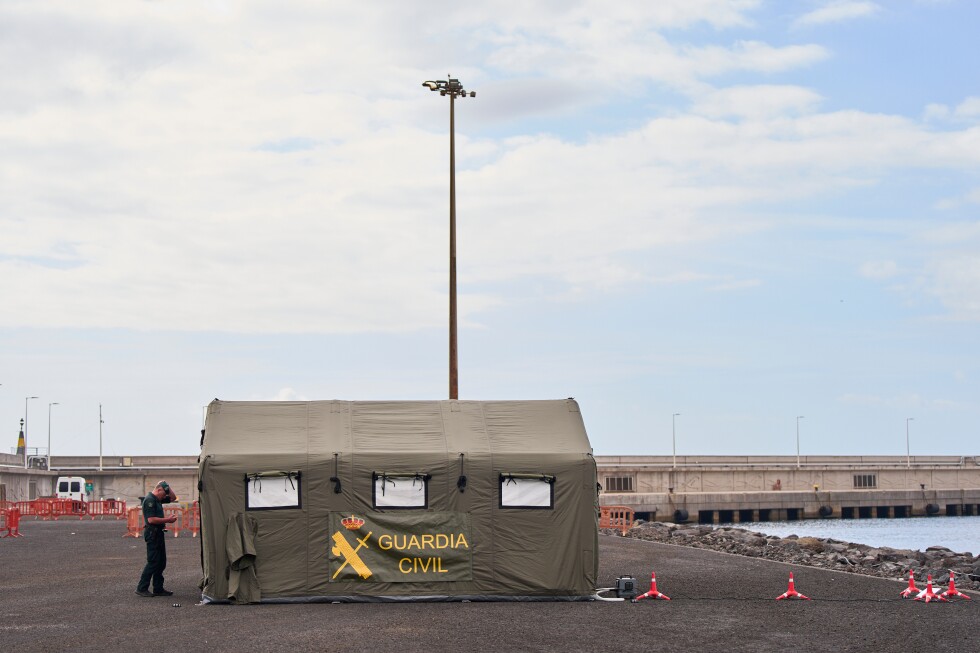
For the most part, however, federal health officials have declined interview requests and remained tight-lipped, with key updates emerging only through anonymous leaks. It was not until Friday evening that the CDC officially confirmed it would deploy a small response team to the Canary Islands to meet the ship, with a second team prepping at Offutt Air Force Base in Nebraska to receive evacuated U.S. passengers at a dedicated quarantine facility.
Experts have drawn a sharp contrast between this slow response and the CDC’s aggressive action during the 2020 Diamond Princess COVID-19 outbreak, another large cruise ship outbreak off the coast of Japan. At that time, the CDC immediately deployed on-site personnel, led evacuation efforts for U.S. passengers, managed quarantine protocols, shared viral genetic data, coordinated closely with the WHO and Japanese authorities, held regular public briefings, and published rapid research that became the global reference for COVID-19 transmission on cruise ships.
While the overall Diamond Princess response did draw criticism for failing to stop the virus’s global spread, former CDC Director Dr. Tom Frieden and other experts note that the agency was actively engaged from day one. “The CDC was right on top of it, very visible, very active in trying to manage and contain it,” Gostin said, contrasting that with the current delayed, subdued response. He added that the administration’s bilateral approach to global health cannot replace multilateral coordination: “You can’t possibly cover a global health crisis by doing one-on-one deals with countries here and there.”