分类: environment

  • Wildfire leads to evacuations in some suburbs of the French city of Bordeaux

    Wildfire leads to evacuations in some suburbs of the French city of Bordeaux

    In the summer of an escalating climate crisis, two of Western Europe’s most popular destinations are grappling with out-of-control wildfires that have forced more than 200,000 people to flee their homes, with flames now pushing toward the iconic French wine hub of Bordeaux.

    The emergency unfolded rapidly across southwestern France and central Spain this week, with record-high temperatures and prolonged drought amplified by climate change turning vast forested areas into tinder that fueled fires of unprecedented ferocity. Officials in both nations have acknowledged they were caught off guard by the speed and intensity of the advancing flames, which have overwhelmed initial firefighting deployments.

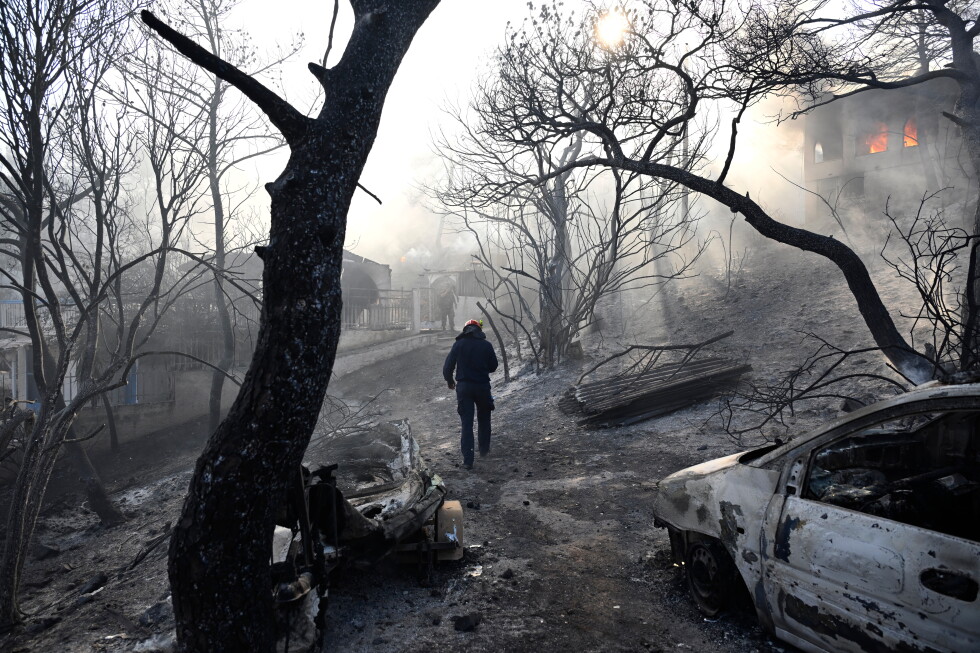
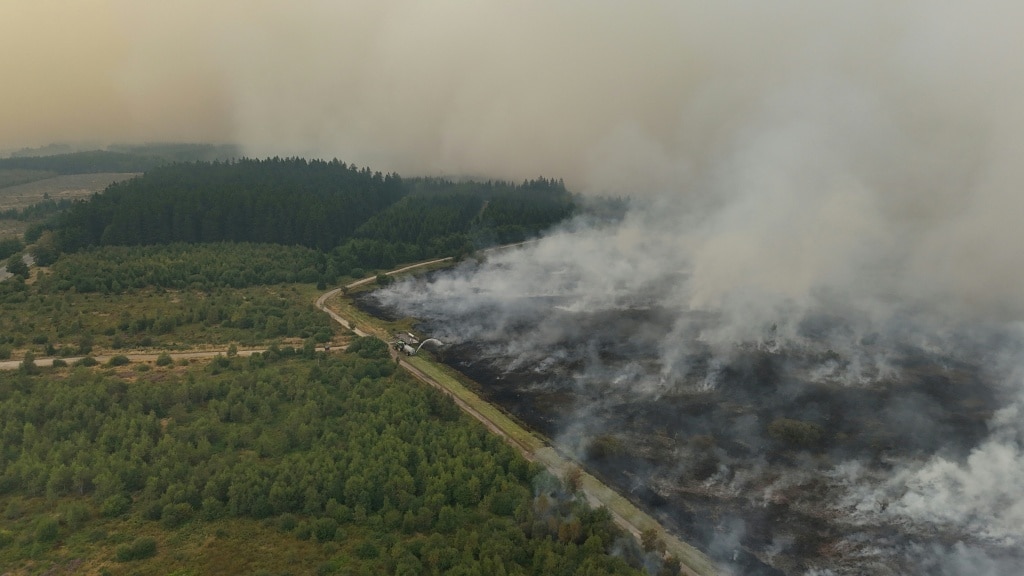
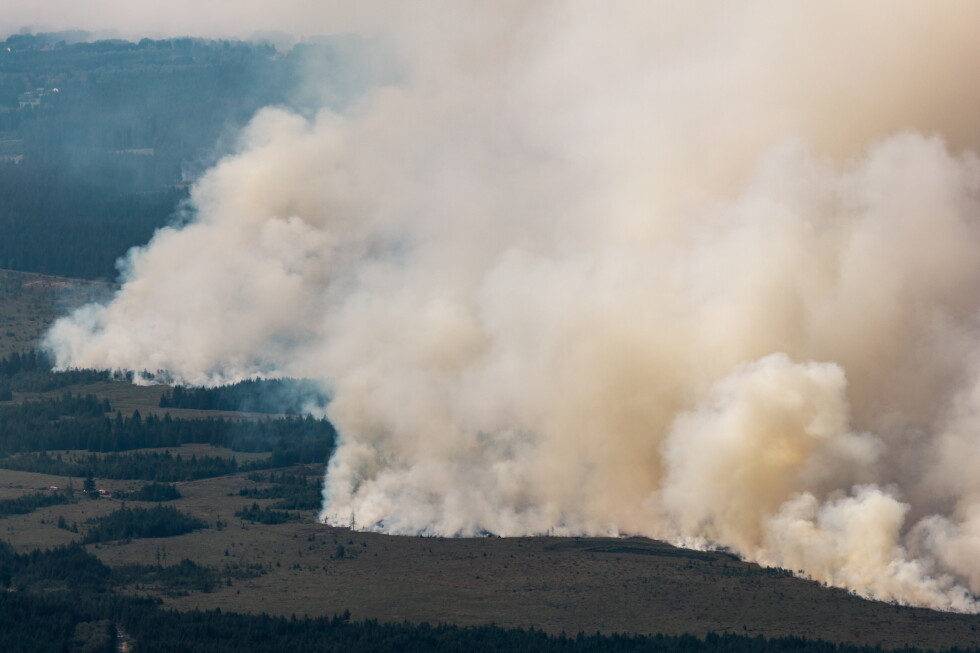
    In France, the blaze that began Wednesday near the Atlantic coastal vacation spot of Cap Ferret — just 37 miles southwest of Bordeaux — has swelled in size driven by strong westerly winds. By Friday, Gironde region prefect Sophie Brocas confirmed the fire had reached an “unprecedented magnitude” and was steadily advancing on the Bordeaux metropolitan area. Overnight Saturday, authorities issued mandatory evacuation orders for portions of three western suburbs of Bordeaux, including the city’s airport, plus additional communities further west beyond the immediate metro area.

    “As the fire continues to spread, and despite the significant resources deployed by firefighters, the evacuation of residents from the affected areas is required to ensure their safety,” the prefecture’s official statement read. Targeted residents received emergency alert notifications directly to their mobile devices with clear evacuation instructions, and authorities have prioritized moving all at-risk people to safe shelter as quickly as possible.

    To date, the French Interior Ministry reports roughly 141,000 people across the Gironde and Landes departments have been forced to leave their homes, with many coastal tourist residents fleeing by boat to escape the fast-moving flames. Dozens of French firefighters have been injured while battling the blazes, though no fatalities have been recorded across either France or Spain. For locals, the scale of the disaster is unprecedented: “An evacuation on this scale has never happened before. All we really hope is that the firefighters can quickly get it under control,” said Laurent Moretti, a resident of the French town of Arès.

    Across the border in central Spain, roughly 60,000 people living west of Madrid have similarly been displaced by raging wildfires that burned out of control Friday. Spanish firefighters have acknowledged the blazes move too quickly and violently to be confronted directly, leaving crews focused on evacuation and containment rather than aggressive frontline attacks. On Saturday, regional officials reported a slight reprieve: cooler temperatures and calmer winds overnight reduced fire intensity, creating a small window to reinforce containment lines.

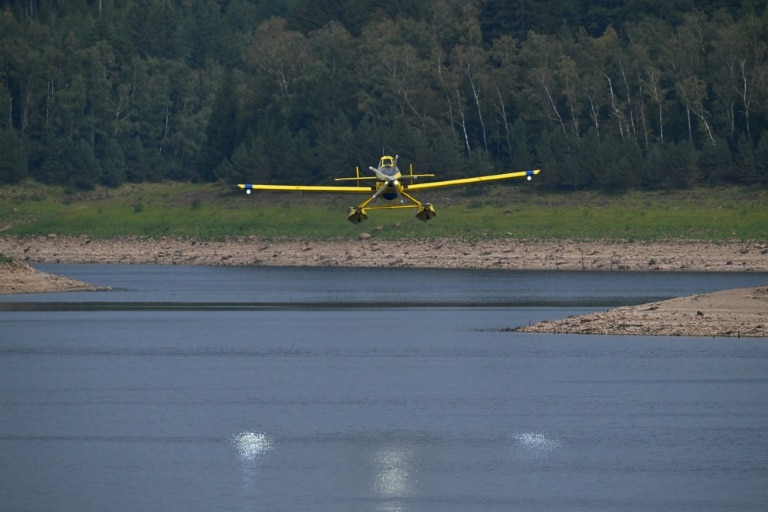
    The European Union has mobilized a cross-national response to the emergency, with water-dumping firefighting aircraft already deployed from the Netherlands and Portugal to assist Spanish crews. Four additional aircraft — two from Italy and two from Greece — were expected to arrive in Spain Saturday to boost response efforts.

    French officials are also ramping up their response, announcing substantial national reinforcements that include additional firefighters, military personnel, medical workers, and wildfire experts to expand the team tackling the blaze. French Interior Minister Laurent Nunez described the France fire as “a large, self-sustaining fire that is extremely difficult to bring under control,” a assessment echoed by frontline crews and residents alike. As plumes of dark smoke have darkened skies across both regions and panicked residents flee by car, with authorities going door-to-door to clear at-risk neighborhoods, the disaster underscores the growing threat extreme heat and wildfires pose to populated European areas amid accelerating climate change.

  • Southern China on alert for Typhoon Noul as Hong Kong cancels flights

    Southern China on alert for Typhoon Noul as Hong Kong cancels flights

    Over a weekend in mid-summer, Southern China and Hong Kong braced for severe weather impacts as Typhoon Noul barrelled toward the coast, triggering high-level weather alerts, mass transport disruptions and large-scale civilian evacuations across the region.

    According to Hong Kong’s Observatory, the storm had intensified steadily as it crossed the northeastern South China Sea on Saturday, recording maximum sustained winds of 140 kilometers (87 miles) per hour near its center while moving gradually closer to eastern Guangdong’s coastline. Forecasters have offered slightly differing timelines for the storm’s landfall: Hong Kong’s weather service projects Noul will come ashore near the Guangdong cities of Huizhou and Shanwei on Sunday morning, while China’s national weather center predicts landfall will occur sometime between late Saturday and early Sunday. All forecasts agree that the storm will bring a dangerous mix of powerful sustained winds and intense squally rainfall to large swathes of the region.

    Transport disruption has been widespread even before the storm makes landfall. Official data from Hong Kong International Airport confirmed that more than 150 flights scheduled for Saturday and Sunday have already been canceled, leaving thousands of passengers stranded amid travel disruptions. In Guangdong province, all domestic rail services scheduled for Sunday have been scrapped entirely, as local authorities work to clear transport corridors ahead of the storm. By late Friday, local media reports confirmed that more than 20,000 residents in high-risk coastal areas of Guangdong had already been evacuated to emergency shelters.

    In Hong Kong, partial collapse of large-scale scaffolding on a high-rise building was reported Saturday afternoon as pre-landfall wind speeds picked up. Local police confirmed that no injuries had been reported in the incident as of the latest update.

    Beyond Guangdong and Hong Kong, the storm is also bringing weather impacts across the region. China’s National Meteorological Center warned that sections of southeastern Guangdong and southern Fujian’s coastline will see extreme heavy rainfall through the weekend. Off Taiwan, the storm passed through waters south of the island on Saturday, bringing significant rainfall to parts of southern and eastern Taiwan before continuing westward away from the island.

    Typhoon Noul marks the third significant tropical cyclone to impact China within the first half of July. Earlier this month, Typhoon Bavi made landfall in eastern China on July 11, bringing destructive wind and rain that forced the evacuation of more than 2 million people across affected regions. Before that, Typhoon Maysak came ashore in southern China on July 3, marking an unusually active early start to the 2020s Pacific typhoon season for coastal China.

  • Brazil’s government says it is working with Peru to protect border Indigenous lands

    Brazil’s government says it is working with Peru to protect border Indigenous lands

    RIO DE JANEIRO, BRAZIL – In a landmark step toward collaborative conservation of the Amazon rainforest, Brazil’s Ministry of Indigenous Peoples announced Friday that it has formalized a new bilateral agreement with Peru’s Ministry of Culture focused on strengthening joint protection of Indigenous territories, particularly those housing uncontacted communities along the two nations’ shared border.

    Negotiations for the memorandum of understanding first launched in 2024, and the full text of the agreement is scheduled to be officially published in Brazil’s government register in the coming weeks, per Brazilian officials. Once implemented, the pact will create a structured cross-border framework for sharing intelligence, aligning enforcement strategies, and coordinating conservation efforts to address shared threats to vulnerable Indigenous lands.

    The announcement arrives amid urgent calls for action from Ashaninka Indigenous leaders, who are currently meeting with federal authorities in Brazil’s capital Brasília to request immediate security intervention for their cross-border territory. Earlier this month, five heavily armed men carrying machine guns entered the Ashaninka lands, threatened local families, and targeted the community’s senior leadership. Spanning the remote western Amazon along the Brazil-Peru divide, the Ashaninka territory has increasingly become a target for transnational criminal groups seeking access to unpatrolled land for illegal activity.

    The growing encroachment is directly tied to the expansion of a key drug trafficking corridor known as the Solimões River route, experts confirm. Criminal gangs and drug traffickers have increasingly carved out smuggling routes through the region, leveraging the dense, remote Amazon rainforest to move illicit goods. While Indigenous stewardship of these lands is widely recognized as one of the most effective barriers to Amazon deforestation – a critical front for regulating global climate systems – that same dense, remote tree cover that Indigenous communities protect also makes the territory ideal hiding spots for criminal networks.

    In response to the recent incursion, Brazilian federal police have opened a formal investigation into the attack, and launched a joint enforcement operation with state authorities in the region earlier this week. The operation’s official mandate is to prevent and crack down on cross-border incursions, organized criminal activity, drug trafficking, environmental harm, and other illegal activities that cross the two nations’ boundary.

    The Brazilian Army has also bolstered its presence in the border region, deploying approximately 30 additional troops to step up patrols. Preliminary intelligence gathered from Indigenous leaders and government agencies indicates the armed attackers were Peruvian citizens who crossed into the Brazilian side of the Ashaninka territory to carry out the incursion. This reinforcement, however, has drawn criticism from Indigenous advocacy groups, who have long argued that temporary troop deployments do little to address the permanent, ongoing threat of criminal encroachment on their lands.

    As of Friday, Peru’s Ministry of Culture had not responded to requests for comment on the new agreement or the recent attack. The Associated Press’ climate and environmental reporting is supported by funding from multiple private foundations, with the AP retaining full editorial control over all content. More information on the AP’s philanthropic partnership standards, a full list of supporters, and funded coverage areas is available at AP.org.

  • Firefighters struggle to contain Madrid wildfires, as more than 140,000 evacuated in France and Spain

    Firefighters struggle to contain Madrid wildfires, as more than 140,000 evacuated in France and Spain

    As southern Europe grapples with record-breaking heatwaves and prolonged drought, catastrophic wildfires have erupted across France and Spain, forcing tens of thousands of residents to flee their homes and overwhelming emergency response capabilities.

    In central Spain, three separate blazes west of Madrid merged into a single massive inferno that regional officials describe as the worst wildfire in the region’s recorded history. Spanish authorities have declared a national emergency after the blaze spun completely out of control, with at least 30,000 people evacuated and an additional 20,000 placed under mandatory lockdown. Madrid’s regional president Isabel Díaz Ayuso characterized the event as a perfect storm of extreme heat, unrelenting gusty winds, and converging fire fronts that has created an unprecedented challenge for first responders.

    Carlos Novillo, Madrid’s regional emergency management chief, confirmed that the wildfire is currently beyond the containment capacity of firefighting teams. “It is not possible to attack the fire in that area, so defensive measures are being taken,” he told reporters, noting the blaze is advancing toward the municipalities of Robledo de Chavela and Fresnedillas de la Olivia, roughly 50 kilometers outside the capital. Spain’s Military Emergency Unit has been deployed to slow the fire’s progress, with priority placed on protecting populated areas near the historic town of El Escorial.

    Emergency crews are also racing to prevent a second large wildfire in nearby Ávila province, the 15,000-hectare Burgohondo blaze, from merging with the Madrid fire. “Authorities are doing everything we can” to stop the two fires from combining, Spain’s Interior Minister Fernando Grande-Marlaska said. As of Friday, more than 15,000 total hectares of land have been burned across the Madrid and Ávila regions, with eight full municipalities fully evacuated and three additional towns locked down.

    Local officials report the fire’s spread has been alarmingly rapid: the mayor of El Tiemblo in Ávila said flames covered 20 kilometers of terrain in less than 30 minutes. For 86-year-old Ecologio Cabrera, who fled his village west of Madrid with hundreds of other evacuees seeking shelter in a Vilamanta sports hall, the disaster is unlike anything he has ever experienced. “If you don’t run from it and you try to face it, it devours you,” Cabrera told reporters. His family had attempted to protect their home with garden hoses before firefighters ordered a full evacuation.

    Spanish authorities have opened an investigation into the Burgohondo blaze, with one person arrested and a second person under investigation for alleged negligence related to heavy machinery use during a period of high fire risk. Spanish Prime Minister Pedro Sánchez is scheduled to visit the region’s emergency coordination center on Saturday to assess the response, after describing the situation as dramatic and urging residents to exercise extreme caution.

    Across the border in southwestern France, the situation is equally dire, with more than 110,000 people evacuated after wildfires tore through the Gironde and Landes regions. The Gironde blaze, labeled an “XXL fire” by local prefect Sophie Brocas, has burned more than 19,000 hectares of forest and destroyed roughly 80 homes. The entire Cap Ferret peninsula, a popular summer tourist destination, was fully evacuated, with hundreds of visitors and residents escaping by boat as flames swept through coastal communities. While the peninsula has a year-round population of less than 8,000, seasonal numbers can surge to 80,000 during peak summer travel.

    Fire officials note conditions are even more severe than the devastating 2022 wildfires that hit the same region, with prolonged drought turning vegetation into dry tinder that allows fires to spread through the night. “We have never seen a convective fire of this magnitude,” French Interior Minister Laurent Nuñez told broadcaster TF1, adding that roughly 50 firefighters have been injured in containment efforts. On Friday evening, the blaze shifted direction and began advancing east toward the major city of Bordeaux, prompting plans for additional evacuations. French President Emmanuel Macron has mobilized military forces to support the response and activated the European Union’s civil protection mechanism to request international reinforcements, which will include two Black Hawk helicopters from the Czech Republic and Slovakia.

    Further south in the Landes region, a second blaze near Biscarrosse forced more than 23,000 people to evacuate from homes, campsites, a nursing home, and a youth summer camp. Landes prefect Gilles Clavreul said the fire could not be extinguished on Friday, with sustained winds of 50 kilometers per hour and temperatures hovering near 37 degrees Celsius creating extreme fire conditions. Local leaders say the prolonged stretch of extreme, dry heat is unprecedented. “We have faced extreme weather conditions for the last month and a half” with no rain and above-average temperatures, said Philippe de Gonneville, mayor of the hard-hit town Lège-Cap Ferret. “It’s unheard of. Neither we nor the firefighters have seen anything like it.”

    The simultaneous outbreaks come as southern Europe grapples with a growing climate-fueled wildfire crisis. Data from the EU’s Copernicus Climate Change Service confirms Europe is warming at more than twice the global average, creating hotter, drier conditions that leave vegetation parched and primed for ignition. Most wildfires require a spark, often from human activity or lightning, but extreme heat, low moisture, and strong winds allow fires to spread rapidly and become nearly impossible to contain. This year alone, wildfires have burned more land across Europe than the annual average recorded over the past two decades, according to the European Forest Fire Information System. The European Environment Agency has warned that climate change has significantly increased forest fire risk across the continent, with the most severe danger concentrated in southern Europe. The European Union has already deployed additional aircraft and helicopters to support cross-border firefighting efforts in both Spain and France as authorities work to bring the blazes under control.

  • Tens of thousands in France flee burning holiday haven, by road and sea

    Tens of thousands in France flee burning holiday haven, by road and sea

    One of France’s most beloved summer retreats, long a quiet favorite of A-list celebrities and wealthy families, has been reduced to a smoky disaster zone, forcing a massive coordinated evacuation of more than 35,000 residents and tourists as an out-of-control wildfire sweeps across the Cap Ferret peninsula.

    Known for its windswept Atlantic sand dunes, casual oyster shacks and understated luxury that draws stars like Marion Cotillard and Jean Dujardin away from the glitzy bustle of the French Riviera, Cap Ferret is now a near-empty landscape. Deserted streets, shuttered storefronts and locked vacation homes mark the normally bustling peak summer tourist season, a transformation that long-term residents say is surreal.

    The blaze ignited on Wednesday in the nearby village of Saumos, just kilometers from the world-famous Medoc wine region, before spreading rapidly through the dense pine forests that cover the Atlantic coast. By Thursday, it had jumped to the Cap Ferret peninsula, prompting regional authorities to order a full evacuation of the peninsula’s 40,000 seasonal and permanent residents.

    Jean Goncalves, a 54-year-old resident of 30 years, fled his home early Friday after watching his neighbor’s wooden home go up in flames. “It’s a disaster, it’s horrible,” he told reporters from AFP, with a cloth tied over his face to block the acrid smoke. At the peninsula’s ferry terminal, local resident Cecile Maumy compared the empty streets to the height of the Covid-19 pandemic lockdowns. “There’s not a soul around. It feels like the Covid period. It’s unbelievable,” she said.

    While no fatalities have been reported as of Friday, the fire has already destroyed more than 50 residential structures and an entire seaside campsite. Regional prefect Sophie Brocas labeled the blaze an “XXL wildfire, unpredictable and voracious,” with locals describing the landscape as resembling a war zone.

    The mass evacuation unfolded via two routes: most evacuees left by private car along the peninsula’s only connecting road, while hundreds of others were transported out by civilian and government ferries. This sea evacuation plan, drafted after devastating 2022 wildfires in the same region, was activated for the first time this week. Local shopkeeper and elected official David Lafforgue noted that the evacuation itself proceeded calmly, despite the chaos of the situation. “Everything was handled smoothly. Suitcases were ready, and people remained calm,” he said.

    But Lafforgue warned of catastrophic long-term impacts for the local tourism-dependent economy. The peak summer tourist season runs from mid-July to mid-August, the most profitable month of the year for local businesses. “Economically, it’s catastrophic. We go from everything to nothing,” he said. “We don’t know whether our seasonal workers will come back or whether our customers will return.”

    Many evacuees have been relocated to the larger coastal town of Andernos, where authorities are now preparing for a potential full evacuation of that town as well, as the fire continues to advance. Andernos deputy mayor Jean-Francois Garric explained that the town is already adjusting to the shifting danger. “We are welcoming people from the peninsula who have been evacuated to our reception centres, and now we have been instructed to evacuate those centres as well,” he said.

    Ninety-year-old Maria Lalanne, a lifelong Cap Ferret resident with no immediate family who fled to Andernos, spoke of her disorientation after being forced to leave her home quickly. She accidentally left her hearing aids and glasses behind amid the rush to evacuate. “I have heart disease, blood pressure issues, eye problems. I don’t know how long this will last. I don’t know what has happened to my house,” she said.

    For visiting tourist Julie Boisvert, who was staying in the nearby village of Le Porge, the evacuation came with only minutes of warning. Gendarmes went door-to-door ordering residents to leave, giving her family just two minutes to depart with their two young children, ages two and five. “We had already packed suitcases just in case, but they gave us only two minutes and carefully checked that nobody was still inside the house,” she said, adding that she had already begun to feel surrounded by advancing flames.

    The Cap Ferret fire is not the only major blaze raging in southwestern France this week. Firefighters are also battling a second large wildfire near the town of Biscarrosse, southwest of Bordeaux, which broke out on Thursday and has already forced the evacuation of 18,000 people. Landes prefect Gilles Clavreul noted that the scale of this year’s fire season is unprecedented for the region. “We have never experienced anything like this,” he said.

    This year’s wave of intense wildfires follows three record-breaking heatwaves that have hit France since May, part of a global pattern of more frequent and more severe extreme weather events directly tied to human-caused climate change. The heat has already caused thousands of excess deaths across the country, dried up major rivers, and created ideal dry conditions for wildfire ignition and spread.

  • Giraffes given a new home in Uganda to escape oil drilling in the country’s largest park

    Giraffes given a new home in Uganda to escape oil drilling in the country’s largest park

    On a crisp, cold morning at Murchison Falls National Park, Uganda’s largest protected wilderness, a team of park rangers gathered to begin a high-stakes conservation mission: relocating a dozen of the country’s critically endangered Nubian giraffes to a safer habitat 65 miles away. As the rangers traded lighthearted jokes and sang to lift their spirits ahead of the complex translocation operation, the weight of the task ahead hung over the group—this project is widely viewed as a critical safeguard for a species increasingly squeezed by human industrial activity.

    Starting on Tuesday, conservation teams began moving 12 Nubian giraffes, Earth’s tallest terrestrial mammal, from Murchison Falls National Park to the rejuvenated Ajai Wildlife Reserve, a journey of 106 kilometers. The multi-day operation is designed to establish a separate, self-sustaining population of the vulnerable species, boost regional biodiversity, and unlock new ecotourism opportunities for local communities.

    The urgent need for this translocation stems from a growing threat to Murchison Falls’ ecosystem: the Ugandan government’s push to develop the region’s extensive oil reserves. An estimated 40 percent of Uganda’s total known oil deposits lie within and around the boundaries of Murchison Falls National Park, and large-scale drilling operations have expanded rapidly in recent months, despite years of fierce opposition from global and local environmental advocates. Heavy industrial machinery now traverses protected wilderness areas as the country moves toward its goal of producing first commercial oil from the region. By June 2023, French energy giant TotalEnergies had officially launched drilling operations in the Tilenga project area, which sits entirely within Murchison Falls National Park.

    Patrick Atimnedi, assistant commissioner for veterinary services at the Uganda Wildlife Authority, who led Tuesday’s translocation work, explained that establishing a satellite population of giraffes in a separate protected area will mitigate the risk of population collapse if oil drilling causes irreversible damage to the species’ current habitat. Beyond oil and gas development, Atimnedi noted that multiple interconnected pressures have been steadily shrinking the available habitat for Nubian giraffes in Uganda, including unregulated tourism expansion, climate change-driven ecological shifts, the spread of woody brush into savanna landscapes, and invasive plant species.

    Nubian giraffes can reach heights of up to 6 meters and weigh as much as 2,000 kilograms, making them particularly vulnerable to habitat fragmentation and loss. “This is shrinking the habitat of wildlife here, but especially giraffes,” Atimnedi said. “So having a seed population somewhere about 100 kilometers away from here within the same conservation area, the same zone, is the right conservation decision to make.”

    After a final safety and strategy briefing from Atimnedi, the operation got underway, with conservation staff guiding three giraffes into specialized waiting trucks. Tree branches were secured inside the vehicles to give the animals access to food during the journey, helping keep them calm throughout the transport. At the Ajai Wildlife Reserve, a team of 12 rangers was already on standby to receive the newly arrived giraffes. Once offloaded, the animals wasted no time exploring their new 166-square-kilometer home.

    Ajai Wildlife Reserve has a complicated conservation history: once home to a thriving, diverse array of African wildlife, the reserve’s entire animal population was wiped out in the early 1980s amid widespread poaching and prolonged political insecurity across northern Uganda. Today, the reserve is the site of an ambitious long-term ecological restoration project, and the Nubian giraffe translocation is the latest milestone in that effort. Beyond giraffes, conservationists have already successfully reintroduced southern white rhinos, Cape buffalo, plains zebras, and hundreds of Uganda kobs to the restored landscape.

    Wilson Katamigwa, senior warden at Ajai Wildlife Reserve, reported that the reintroduced species already in the reserve are thriving: “The animals are now doing very well and are multiplying. Many are now pregnant. They are spreading all over the reserve, both inside the electric fence and outside the electric fence.”

    Conservation officials are optimistic that the 86-year-old reserve, first established in 1937, will provide a stable long-term home for the new giraffe population, helping grow Uganda’s overall Nubian giraffe numbers despite mounting threats from human activity and climate change. To protect the new population, part of the reserve has been enclosed with predator-proof fencing, and the number of anti-poaching rangers has been increased substantially. Local communities, which receive a cut of all tourism revenues generated by the reserve, have also participated in extensive conservation education programs to build buy-in for the project.

    “They are ready to conserve with us, and we are having a good working relationship with the district leadership,” Katamigwa said. Once the full translocation of 12 giraffes is complete, community members will be invited to the reserve to see the giraffes, which have been absent from the region for more than 40 years. “The big dream is that we want to see the economy of this place growing bigger and bigger and for the Madi Okollo district to be included in the money economy using tourism,” Katamigwa added.

    As the first giraffes stepped off the transport trucks onto the reserve’s grasslands, local resident Moses Ayoti could not contain his excitement at the return of the species to the region, and at the environmental and economic benefits the giraffes will bring to his community. “The community is aware, the vigilance is high, and I am sure they are going to take care of the animals because they belong to the local community, too,” Ayoti said.

  • Watch: Wildfires rage across France and Spain

    Watch: Wildfires rage across France and Spain

    Southern Europe is grappling with an escalating climate-driven disaster as intense, fast-spreading wildfires rage across large swathes of France and Spain, forcing mass evacuations of popular tourist destinations and pushing authorities to enact sweeping emergency measures. In France, the worst-hit regions have seen flames devour thousands of hectares of forest and brushland, pushing emergency responders to their limits. Local French officials have issued mandatory evacuation orders for communities in the country’s iconic Mediterranean coastal tourist hubs, areas that draw millions of visitors each summer. With dry, windy conditions amplifying the spread of the blazes, thousands of residents and vacationers have been forced to flee their accommodations and homes with little advance notice.

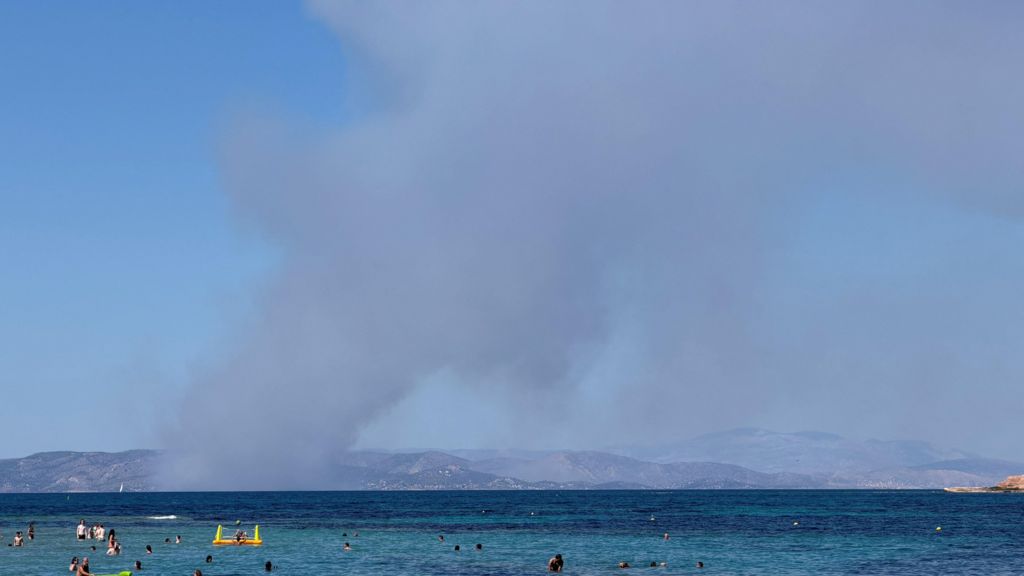
    Across the border in Spain, the scale of the wildfire crisis has prompted the national government to elevate the response to a full state of national emergency. The blazes, fanned by record-breaking heatwaves and prolonged drought that have parched vegetation across the Iberian Peninsula, have scorched vast areas of rural and protected natural land, destroyed critical infrastructure, and threatened populated regions. The declaration of national emergency unlocks additional federal resources, including additional firefighting personnel, military support, and emergency funding, to help local regions contain the outbreaks and support affected communities. Satellite imagery from recent days shows massive plumes of smoke drifting across the Mediterranean, a visible reminder of how widespread the disaster has become. Climate scientists have repeatedly warned that rising global temperatures are increasing the frequency and severity of extreme wildfire events across the Mediterranean basin, turning what was once a seasonal risk into a growing annual catastrophe for the region.

  • Fires in Europe: latest developments

    Fires in Europe: latest developments

    Across the European continent, rapidly spreading and destructive wildfires have triggered emergency responses, mass displacement of residents, and renewed warnings about the accelerating impacts of human-caused climate change. New satellite data collected by the European Forest Fire Information System (EFFIS) confirms that 2024 has already seen the second-largest total area of burned land across European Union member states since systematic record-keeping began.

    A new analysis published this week by the international climate research group World Weather Attribution draws a direct line between the increasing frequency and intensity of European blazes and rising global temperatures driven by the combustion of fossil fuels including oil, coal, and gas. The study confirms that regional drought conditions across the continent have grown far more severe in recent decades, creating tinder-dry landscapes that enable wildfires to ignite and spread much faster than historical norms.

    France, one of the countries hardest hit by this year’s fire season, is facing what officials are calling the most destructive blaze of the current period. In southwestern France, a single massive wildfire in the Lege Cap-Ferret forest region has already burned through more than 10,000 hectares (approximately 25,000 acres) of land, forcing the evacuation of around 40,000 residents to safer areas. French Interior Minister Laurent Nunez confirmed in an interview with Agence France-Presse that the blaze has destroyed 80 residential structures, with roughly 50 of those homes reduced to complete ruin. As of the latest update, no casualties have been reported from the fire.

    Across the entire country, 32 separate wildfires of varying intensity are still actively burning as of Friday. Nunez noted that total burned area in France since the start of the year has surpassed 50,000 hectares, a figure that is nearly three times higher than the total recorded over the same period in 2023. As the main blaze advanced on the Cap Ferret peninsula on Friday, hundreds of residents and visitors were forced to evacuate the coastal area by boat, after the fire outpaced ground evacuation routes. By early Friday, the Cap Ferret blaze had already consumed an area nearly twice the size of Manhattan, according to on-site reports.

    Neighboring Spain is also grappling with out-of-control blazes that threaten populated areas. Two large uncontained wildfires are burning less than 100 kilometers (60 miles) from the Spanish capital of Madrid, and regional authorities warn that difficult weather conditions, particularly strong gusty winds, will hamper firefighting efforts through Friday. Spanish Prime Minister Pedro Sanchez has described the ongoing wildfire crisis as dramatic, noting that extreme fire conditions are impacting multiple provinces across Spain as well as regions in neighboring European countries. Sanchez confirmed that the national government has deployed every available resource to contain the blazes and protect affected communities.

  • Thousands flee wildfires in southern Europe

    Thousands flee wildfires in southern Europe

    A devastating wave of wildfires fanned by record-breaking high temperatures is sweeping across Western and Southern Europe, triggering mass evacuations, emergency declarations, and urgent requests for cross-continental assistance as blazes consume thousands of hectares of land and claim multiple lives. As of Friday, smoke from out-of-control blazes burning just 60 miles from the Spanish capital had drifted into Madrid, while thousands of tourists and local residents were evacuated by boat from a popular French Atlantic vacation peninsula, marking one of the most severe wildfire crises the region has faced in years.

  • At least 50 people killed and 700,000 displaced by India floods after monsoon rains

    At least 50 people killed and 700,000 displaced by India floods after monsoon rains

    Devastating floodwaters triggered by days of relentless heavy monsoon rainfall have swept through India’s northeastern Assam state, leaving at least 50 people dead and forcing more than 700,000 residents from their homes, government officials confirmed Friday. The downpour swelled the banks of the Brahmaputra River, one of Asia’s largest transboundary waterways, beyond capacity, turning vast swathes of the rural and urban landscape into submerged disaster zones.

    Originating in China’s Tibet Autonomous Region, the Brahmaputra cuts 900 kilometers through the length of Assam. This year’s extreme flood event has swallowed nearly 900 entire villages, destroyed thousands of structures, and left thousands of households without critical power access. Official data shows more than 7,000 homes are currently without electricity, while over 290,000 displaced people have sought emergency shelter in government-run relief camps across the state.

    Assam’s Chief Minister Himanta Biswa Sarma confirmed that disaster management authorities have rolled out large-scale relief operations, including airdrops of food, clean water, and essential supplies from military helicopters to cut-off communities. State police, national disaster response teams, and hundreds of local volunteers have been deployed to conduct rescue missions for residents stranded by rising floodwaters and distribute emergency provisions to affected populations.

    For residents like 52-year-old Nazira-based farmer Jatin Gogoi, the floods have brought total ruin. Rising waters washed away his traditional bamboo-walled home, killed all of his cattle, and destroyed his only source of income. With no property left to return to, Gogoi and his five-member family are now relying on the charity of relatives for temporary shelter. “I lost all my cattle. My five-member family and I have nowhere to go, so we are taking shelter in a relative’s home,” Gogoi shared in a phone interview.

    The disaster has also severely disrupted life in Assam’s capital city of Guwahati, a bustling urban center home to nearly 2 million people. Flash flooding on Thursday evening submerged major arterial roads, leaving commuters trapped in their vehicles or workplaces for hours. Sudip Mazumdar, a journalist based in Guwahati, recounted being forced to spend the night at his office after floodwaters reached waist depth on access roads, making travel impossible.

    Climate scientists have long warned that human-caused climate change is intensifying monsoon patterns across South Asia, where the seasonal rain system traditionally occurs in two predictable phases: June to September and October to December. In recent decades, the monsoon has grown far less predictable, with extreme short-duration rain bursts replacing gradual, steady rainfall, followed by extended dry periods that exacerbate both flood and drought risk across the region.