分类: environment

  • Spain declares an emergency after wildfires force evacuations of 10,000 people

    Spain declares an emergency after wildfires force evacuations of 10,000 people

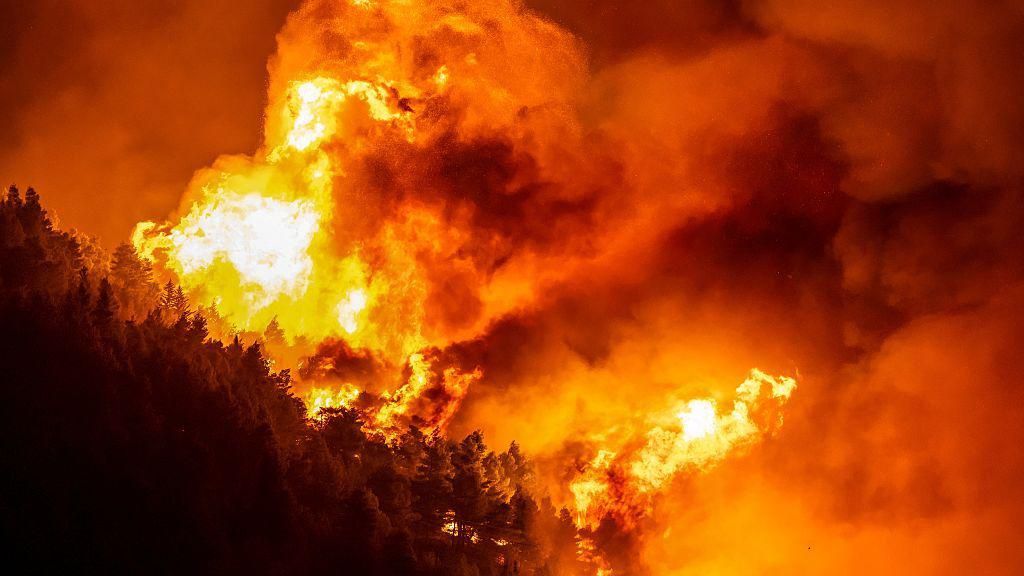
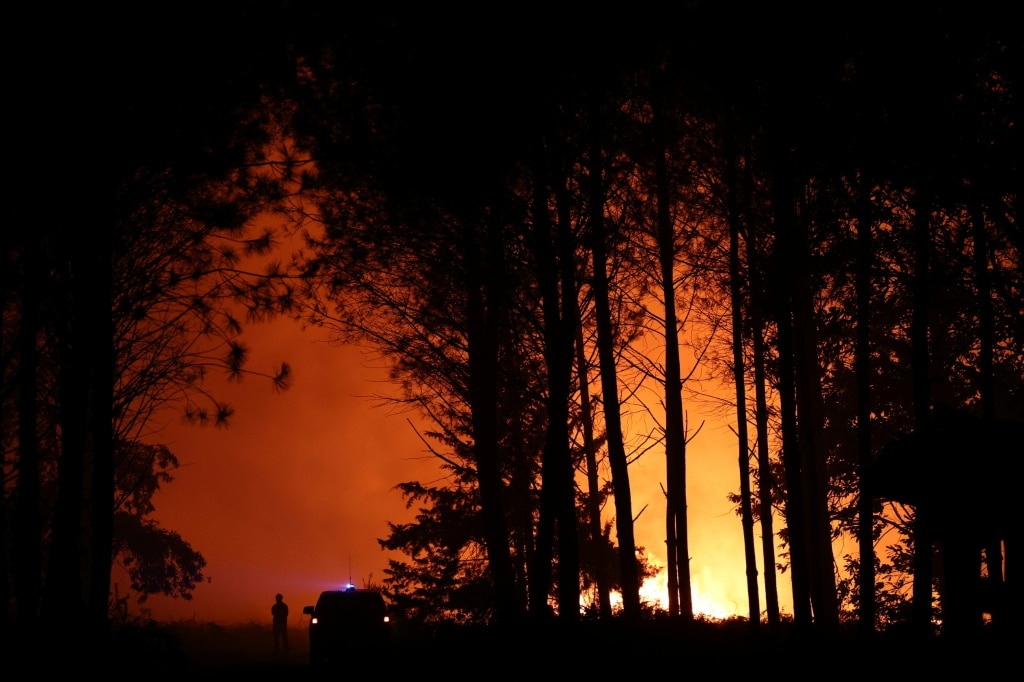
    MADRID – In a dramatic escalation of response to rapidly spreading wildfires that have displaced thousands, Spain’s national government enacted a nationwide state of emergency this Friday. The declaration comes as multiple out-of-control blazes, supercharged by an unrelenting heat wave, swept through central areas surrounding the capital, prompting emergency evacuation orders for nearly 10,000 residents across dozens of small villages.

    Under the new emergency framework, Spain’s interior ministry – the federal body that oversees the country’s national police and security forces – will assume centralized command of all wildfire suppression operations currently being carried out by regional authorities. This move streamlines coordination between local and national response teams, a step officials say is critical to containing the fast-moving fires that have overwhelmed regional resources.

    The Madrid regional government, which governs a broad swath of territory surrounding the capital city, confirmed that evacuation orders had been issued for communities across high-risk fire zones, with the total number of displaced residents climbing to 10,000 as of Friday afternoon. Record-high temperatures and persistent dry conditions have created tinder-dry vegetation across much of the country, turning small ignitions into large, unmanageable conflagrations that spread rapidly with shifting wind patterns.

    Spain has already suffered catastrophic fire damage in 2024, with more than 100,000 hectares (nearly 247,000 acres) of forest and scrubland consumed by flames since the start of the year. Among the most damaging blazes is the second-largest wildfire recorded in modern Spanish history, which has burned roughly 32,000 hectares (79,000 acres) in the central province of Guadalajara over the past several days. The disaster has already claimed human life: earlier this month, 13 people died in a large wildfire that tore through southern Spain, underscoring the deadly threat posed by this year’s extreme fire season.

  • France orders evacuation of peninsula as hundreds flee wildfires by boat

    France orders evacuation of peninsula as hundreds flee wildfires by boat

    A growing cross-border wildfire crisis has swept across southwestern Europe this week, forcing mass evacuations of a popular French tourist destination and prompting Spain to declare a national state of emergency as flames burn out of control near major population centers.

    In southwestern France, local authorities have issued a mandatory full evacuation order for the entire Cap Ferret peninsula, a beloved tourism hot spot in the Gironde region, where hundreds of residents and visitors have already fled the advancing wildfire by sea and road. The blaze, which ignited on Tuesday in the nearby town of Saumos, expanded rapidly overnight, scorching a total of 8,700 hectares (approximately 21,500 acres) of land as of Friday.

    The evacuation order, labeled the “final phase” of the area’s relocation plan, was issued early Friday by Gironde’s regional prefect Sophie Brocas. evacuees were instructed to exit the peninsula via the main highway connecting the area to Bordeaux, while special watercraft were deployed between 7 a.m. and 10 a.m. local time from four public piers to evacuate residents and visitors who could not leave by road.

    French President Emmanuel Macron described the country’s ongoing wildfire situation as “very tense” during an address Thursday night, singling out the Gironde region as the area of greatest concern. In response to the rapidly spreading blaze, Macron confirmed he has requested cross-border assistance from the European Union, with aerial fire-fighting support from Croatia, Portugal, the Czech Republic and Slovakia expected to arrive in the coming days to help ground crews contain the flames. Tragically, two firefighters lost their lives earlier this week while battling a separate blaze near Bordeaux’s airport, though officials confirmed Friday morning that no new casualties had been reported as of press time.

    Across the border in neighboring Spain, the crisis has prompted even stronger government action: Interior Minister Fernando Grande-Marlaska has officially declared a national emergency as out-of-control wildfires burn across multiple areas within close proximity to the capital city of Madrid. Active blazes are currently being fought at Villa del Prado and San Martín de Valdeiglesias in the Madrid autonomous region, as well as at Burgohondo in the neighboring province of Ávila.

    The concurrent wildfire outbreaks come as southwestern Europe faces ongoing record-high summer temperatures and dry conditions that have created extreme wildfire risk across the Iberian Peninsula and southern France, turning the 2026 summer fire season into one of the most challenging in recent years for regional emergency services.

  • Hundreds flee French peninsula by boat to escape wildfire

    Hundreds flee French peninsula by boat to escape wildfire

    A rapidly spreading wildfire forced the complete evacuation of France’s Cap Ferret peninsula on Friday, with more than 400 residents and vacationers escaping the blaze via a fleet of civilian and official boats. The evacuation order came as the inferno, burning just kilometers from one of France’s most famous Bordeaux wine regions, expanded to cover more than 8,000 hectares — an area roughly one and a half times the size of Manhattan. The Cap Ferret wildfire is not an isolated disaster: it is one of multiple active blazes burning across the country amid the peak summer vacation season, which has drawn thousands of tourists to the southwestern Atlantic coast. In response to the spreading flames, authorities have already ordered thousands more visitors to evacuate coastal campsites and seasonal holiday homes, as hundreds of firefighters backed by water-bombing aircraft work around the clock to contain the fire lines. As the crisis escalates beyond the capacity of national response resources, French President Emmanuel Macron announced that Paris has activated the European Union’s civil protection mechanism to request additional firefighting support from neighboring member states. Macron warned that the wildfire situation across the country remains “very intense”, with little sign of relief in the coming days. Data from the European Forest Fire Information System (EFFIS) confirms that 2024 is already shaping up to be one of the worst years for wildfire activity on the continent: the total area of burned vegetation across EU countries is already the second largest recorded since systematic satellite tracking began. The unfolding disaster comes as southern Europe continues to face record-breaking summer heat waves and drought conditions, which have created tinder-dry conditions across forests and shrublands, increasing the risk of uncontrolled wildfire spread.

  • A model Indigenous territory in Brazil’s Amazon seeks protection from criminal gangs

    A model Indigenous territory in Brazil’s Amazon seeks protection from criminal gangs

    For 30 years, the Ashaninka Indigenous people have stood as a global model of Indigenous self-governance and rainforest stewardship along the remote Brazil-Peru border. After reclaiming their ancestral territory from illegal settlers three decades ago, the community built a thriving, self-sustaining way of life: they manage their own governance systems, grow traditional crops, and have successfully protected the old-growth forest that forms the core of their homeland. For Indigenous communities across the Amazon basin, the Ashaninka’s success has long been a beacon of what sovereign Indigenous land stewardship can achieve. Today, that hard-won way of life is under growing violent attack.

    Criminal drug trafficking gangs are increasingly encroaching on Ashaninka territory, turning the remote Amazon rainforest and its winding river networks into major transit corridors for cocaine moving from Andean producer countries to global markets. Ashaninka leaders confirm that violent incursions have continued as recently as this month, and have formally pleaded for federal protection, including a high-level meeting with Brazilian government officials in the national capital this past Thursday. While security forces have been briefly deployed to the region in response to these appeals, Indigenous advocates across the Amazon note that government security presence in these remote border areas is almost always temporary, even as the criminal threat remains constant and growing.

    The invasion of Ashaninka land is not an isolated incident. It is part of a broad, dangerous shift along the Amazon’s border regions, as criminal organizations expand their operations along what experts have named the Solimões River trafficking route. This network of interconnected navigable waterways stretches from the Peru-Brazil border all the way to the major Amazonian hub of Manaus, and has emerged over the past decade as the primary transit corridor for cocaine produced in Peru, Colombia, and Bolivia en route to Brazilian Atlantic ports, from where it is distributed to consumer markets across Brazil and Europe. Today, the route is largely controlled by one of Brazil’s most powerful criminal organizations, the Red Command gang, according to retired Amazonas state police colonel César Mello, who now teaches at the Federal University of Pará and the University of the State of Amazonas.

    Indigenous territories have become strategically critical to this illegal trade for multiple reasons. Remote, densely forested, and largely cut off from consistent government oversight, these lands offer ideal hiding spots for traffickers to store product and move shipments undetected. Beyond the geographic advantages, Mello explained, language barriers, cultural differences, and widespread lack of economic opportunity in Indigenous communities leave many residents vulnerable to criminal exploitation. “These factors make Indigenous peoples a vulnerable population and an attractive source of labor for criminal organizations,” Mello said. Gangs typically first attempt to recruit young Indigenous people with offers of cash and social status that are unavailable in the formal local economy, and turn to intimidation and violence when recruitment fails, he added.

    At the same time, decades of research have confirmed that Indigenous territorial stewardship is one of the most effective tools to curb deforestation in the Amazon, the world’s largest tropical rainforest and a critical bulwark against worsening global climate change. The same forests the Ashaninka have spent 30 years protecting, in other words, have made them a target for the criminal groups that now exploit that remote, dense cover for their operations.

    Local tensions boiled over earlier this month, when a group of armed men invaded the Kampa Indigenous territory, part of the larger Ashaninka ancestral homeland along the Amonia River in the western Amazon. On July 6, five armed Spanish-speaking men carrying machine guns threatened entire families and carried out a targeted search for the territory’s top Indigenous leaders. “It’s one thing for outsiders to enter our territory to steal resources, like timber and wildlife. But this was different. They entered our land looking for our leaders, intending to kill them,” said Francisco Piyãko, coordinator of the Organization of Indigenous Peoples of the Juruá River, who filed formal complaints with Acre state authorities and the Brazilian Army following the incursion. The complaint prompted the deployment of federal security forces, but the damage and fear have lingered.

    The Ashaninka have a long history of pushing back against illegal activity in their territory. Decades ago, traffickers approached the community seeking permission to build a clandestine airstrip for drug shipments; the Ashaninka refused outright, and have remained a consistent block to criminal expansion in the border region for generations. “We have a long history of opposing any kind of illegal activity,” Piyãko said.

    Despite repeated formal appeals to authorities, Ashaninka leaders and other Indigenous advocates say consistent, targeted government protection remains out of reach. Major Jonatas Soares, a police officer based in the key border city of Tabatinga in Amazonas state, near the borders of Colombia and Peru, says there is a fundamental failure in how Brazilian public security serves Indigenous communities. “There is an institutional and intercultural blind spot in the public security services provided to Indigenous peoples,” Soares explained. “The state formally recognizes their territories, yet it fails to translate that presence into continuous protection tailored to their specific needs.”

    Earlier this year, Brazilian Supreme Court Justice Flávio Dino ordered the federal government to ramp up efforts to dismantle criminal organizations operating in the Amazon, citing official investigations that confirm criminal groups are expanding their presence and posing an existential threat to Indigenous communities across the region. Multiple Brazilian government agencies, including the Ministries of Indigenous Peoples, Foreign Affairs, and Justice, as well as the Brazilian Army and the Acre state government, did not respond to requests for comment from the Associated Press on the recent threats to the Ashaninka.

    While the community remains shaken by the recent targeted attack, leaders say their commitment to defending their territory and their way of life remains unbroken. Still, Piyãko stressed that confronting heavily armed criminal groups is not the responsibility of the Ashaninka or other Indigenous communities—it is the legal duty of the Brazilian and Peruvian states. “They allowed this to happen through their absence, so they bear that responsibility,” Piyãko said.

  • Albania police teargas protesters against Trump-linked resort

    Albania police teargas protesters against Trump-linked resort

    On a tense Thursday in Albania’s capital Tirana, security forces deployed tear gas and water cannons to disperse hundreds of demonstrators gathered outside the country’s parliament building, capping more than a month of sustained public anger over a luxury coastal tourism development linked to the Trump family. What began as a targeted environmental campaign against construction in a protected coastal wildlife reserve has grown into a broader protest over government transparency, public corruption, and misallocated public funds, uniting environmental activists, opposition politicians, and ordinary citizens against the ruling administration.

    The wave of daily demonstrations first launched in late May, sparked by plans to build a sprawling luxury resort complex connected to Ivanka Trump and Jared Kushner, the daughter and son-in-law of former U.S. President Donald Trump. The proposed development is located on a protected, unspoiled stretch of Albania’s Adriatic coast, in a protected nature reserve that hosts endangered loggerhead turtle nesting grounds and stable flamingo colonies on an adjacent uninhabited island. Scientists and local environmental activists say preliminary site work has already caused irreversible ecological harm, destroying critical habitats already at risk.

    Marine biologist Olsi Nika, who leads the prominent Albanian environmental NGO EcoAlbania, described the damage from early construction activities as “an absolute biodiversity massacre.” The site’s once-pristine coastal ecosystems, scientists confirm, have been permanently altered, eliminating nesting areas for loggerhead turtles, a species classified as threatened with extinction globally. The project’s location inside a protected natural and cultural heritage zone has amplified public outrage, with critics arguing the government bypassed environmental regulations and public oversight to advance a deal that benefits connected interests.

    Thursday’s clashes broke out as protesters attempted to push through heavy police security cordons to reach the parliament entrance. By the end of the day, Albania’s health ministry confirmed six police officers and 11 demonstrators suffered minor injuries and were treated at local Tirana hospitals. The demonstration was timed to coincide with a parliamentary vote on a 4 million euro ($4.6 million) public subsidy for a Kanye West concert held in Tirana earlier in July, a decision that further enraged a public already frustrated by the government’s handling of the resort project.

    In the chaotic parliamentary session, the subsidy was ultimately approved by 80 votes, all from the ruling Socialist Party, which holds a majority in the 140-seat unicameral legislature. Prime Minister Edi Rama had previously committed to the public funding, arguing it was required to prevent the high-profile concert from being canceled. For protesters, the approval of large public spending for a celebrity concert while pushing forward an environmentally destructive private resort project underscored what they call the government’s lopsided, non-transparent priorities.

    The project has become a major flashpoint for discontent in Albania, drawing thousands of nightly protesters through at least mid-July, according to on-the-ground reporting from Agence France-Presse. Clashes between demonstrators and police have occurred repeatedly in recent weeks outside parliament, with protesters previously throwing eggs at lawmakers as they entered the building. The development’s ties to the Trump family have also drawn international attention to the conflict, turning a local environmental dispute into a globally watched case of conservation versus high-profile development.

    No official crowd counts have been released by the Albanian government, but AFP journalists on site estimate thousands of people have joined the sustained daily protests through more than a month of action. Critics say the project highlights broader concerns about corruption and lack of accountability in Albania’s government, with environmental harm serving as the most visible trigger for widespread public anger that continues to roil the country’s political landscape.

  • Wildfire spreads near popular French tourist town as thousands are evacuated

    Wildfire spreads near popular French tourist town as thousands are evacuated

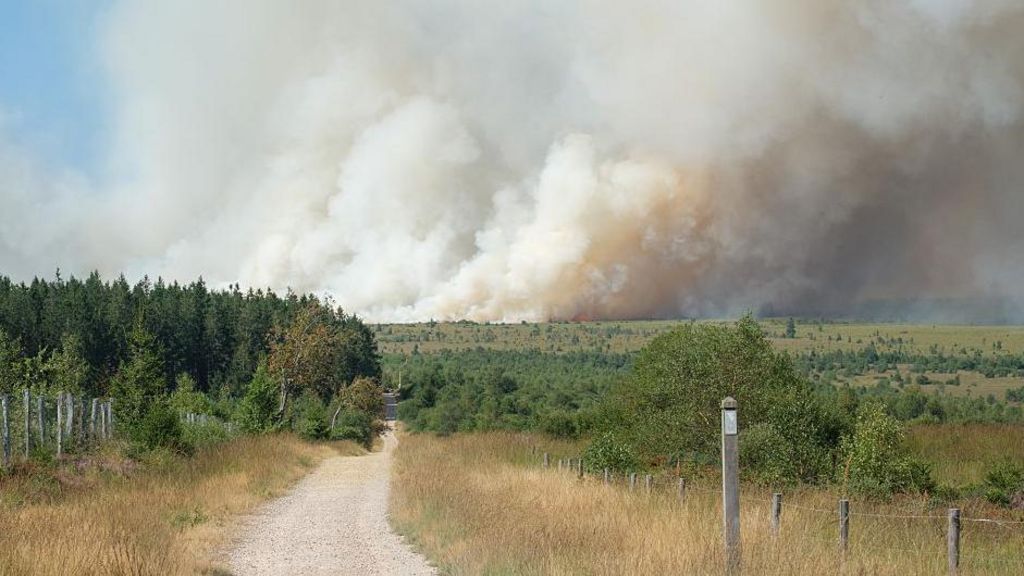
    A fast-spreading wildfire burning through Gironde region forestland along France’s Atlantic coast has forced roughly 20,000 residents and vacationers to flee their homes and resorts, in what marks the latest major wildfire event to hit Southern Europe amid a season of record heat and prolonged drought.

    The blaze, which ignited near the coastal town of Lège-Cap Ferret, roughly 60 kilometers southwest of Bordeaux, has already scorched more than 31 square kilometers of vegetation, regional authorities confirmed Thursday. As of the latest update, no injuries have been documented, but the fire has advanced to within 300 meters of residential neighborhoods in the town of Lège, prompting urgent emergency action.

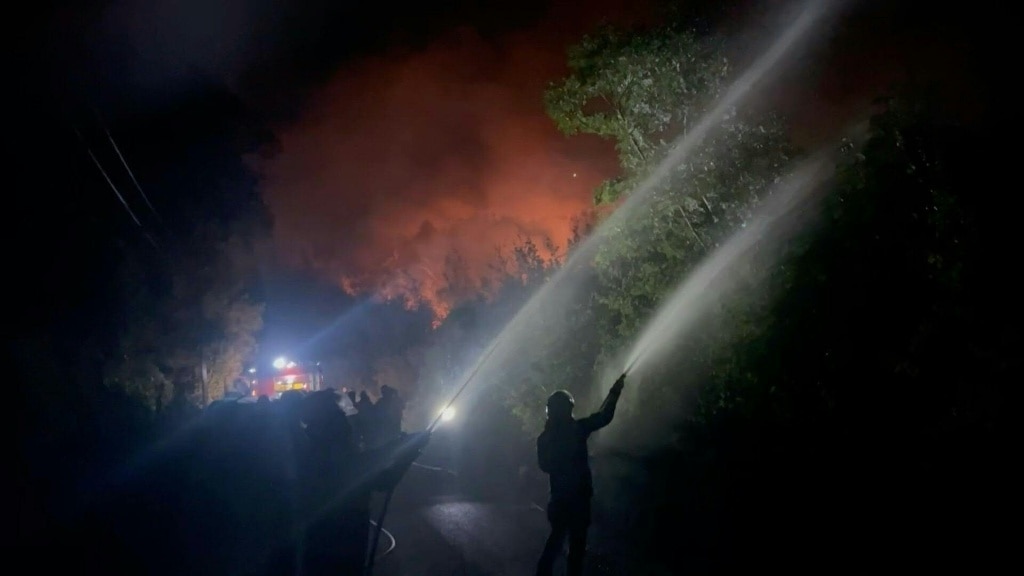
    More than 700 firefighters, including reinforcement teams deployed from the Paris region, have been assigned to contain the blaze, with water bombers called in to drop massive amounts of water on the fire line from the air. By Thursday evening, regional prefect Sophie Brocas’ office reported that while the fire has not yet been fully extinguished, it has been successfully contained to the northern area of Lège, limiting further spread for the time being.

    Evacuation efforts unfolded in two phases overnight and through Thursday: first, roughly 11,000 people, including tourists staying at coastal holiday camps and campgrounds, plus more than 1,000 permanent residents living along the forest edge, were moved to safe zones. As a precautionary measure, authorities later ordered a full evacuation of the nearby village of Claouey, which hosts multiple additional campsites, adding another 8,800 people to the total evacuation count. Local municipalities have set up dedicated reception centers to provide shelter, food, and basic support for displaced evacuees.

    This Gironde blaze is just one part of a far wider wildfire crisis that has engulfed Southern Europe this summer, a disaster climate scientists link directly to human-caused climate change, which is amplifying the frequency and severity of extreme heat and prolonged dry conditions across the Mediterranean region. France has already faced a cascade of heat waves starting earlier than usual this year, bringing record-breaking high temperatures and leaving vegetation so parched that wildfire risk has jumped dramatically. French Interior Minister Laurent Nunez reported that as of this week, more than 12,500 wildfires have burned across France since the start of 2024, consuming nearly 44,000 hectares of land.

    The crisis extends far beyond France’s borders. In Italy, wildfires continued to spread across Sicily on Thursday, just one day after a veteran fire department chief, Alessandro Marchì, died while battling a blaze in the province of Caltanissetta. Italian President Sergio Mattarella released a formal statement of condolences to Marchì’s family and fellow first responders following his death.

    In Spain, firefighters are working around the clock to contain dozens of active blazes amid an ongoing severe heat wave that is projected to push temperatures as high as 44 degrees Celsius (111 degrees Fahrenheit) in the country’s southeast. A blaze near Alcalá de Henares, just outside of Madrid, forced a temporary suspension of high-speed rail service between the capital and Barcelona on Thursday, disrupting travel for thousands of passengers. In the province of Guadalajara, crews continue to battle a week-old blaze that is already the second-largest wildfire recorded in modern Spanish history, having burned 320 square kilometers of land. Other active fires in central Spain, including one near the city of Toledo, have destroyed roughly 20 residential structures and forced additional evacuations of local communities.

  • Around 12,000 people evacuated in France fires

    Around 12,000 people evacuated in France fires

    A wave of destructive, heat-fueled wildfires is tearing across multiple regions of Southern Europe this summer, leaving three firefighters dead, forcing mass evacuations of thousands of residents and tourists, and destroying vast swathes of forest and land. The crisis unfolded just weeks after a landmark climate report confirmed Europe is the world’s fastest-warming continent, amplifying concerns over the growing frequency and intensity of extreme weather events driven by climate change.

    In southwestern France’s Gironde region, local officials confirmed that roughly 12,000 people have been evacuated to escape advancing flames, with 10,000 of those displaced being tourists visiting the popular coastal and forested area. As of Thursday, the wildfire has already burned through more than 2,000 hectares of land, just days after two firefighters lost their lives battling blazes near Bordeaux Airport. No new civilian injuries have been reported as of Thursday, but authorities have enacted strict emergency measures to slow the spread of the fire: all combustion and electric engine use has been banned in heavily forested zones, multiple major roads have been closed, and all high-risk leisure sites in exposed forest areas will stay shut through Thursday evening. Gironde remains under red wildfire alert, as the region grapples with the same prolonged, record-breaking heatwave that has raised fire risk across much of Western Europe.

    French officials have held formal tributes to the two fallen firefighters this week. Interior Minister Laurent Nuñez shared images from a Wednesday memorial, describing the occasion as one marked by “immense emotion” and extending “infinite gratitude” and “unwavering support” to the firefighters’ families.

    Across the Mediterranean, Italy is also reeling from a deadly wildfire crisis of its own. On the island of Sicily, a 60-year-old firefighter Alessandro Marchi died Wednesday while battling a large blaze in San Cataldo. Another firefighter was injured in the same operation, and Sicilian President Renato Schifani has publicly wished the injured first responder a “speedy recovery.” Italian Interior Minister Matteo Piantedosi honored Marchi’s sacrifice in a post on X, writing that the firefighter died “in service to the community” and that “He will not be forgotten.”

    Sicilian Civil Protection head Salvo Cocina confirmed Wednesday that the island has recorded more than 350 separate wildfires in recent days, including 10 major blazes that have already triggered precautionary evacuations. Cocina noted that nearly all of the fires were caused by human activity, and warned that repeated large-scale wildfire events have turned firefighting into a persistent public order and social crisis for the island.

    In neighboring Spain, wildfires have reached the outskirts of Madrid, forcing the evacuation of hundreds of residents earlier this week. Overnight, most displaced residents were allowed to return to their homes, though one neighborhood in Villa del Prado remains off-limits as an adjacent fire continues to burn. Roughly 90 emergency personnel and one firefighting helicopter have been deployed to contain the remaining blaze, with emergency crews launching a “direct attack” on the flames to stop it from spreading further. Spanish weather service AEMET forecast maximum temperatures will reach 36 degrees Celsius across the region on Thursday, and local authorities have continued to warn of an “extreme risk of fires” for the coming 24 hours.

    The current wave of wildfires comes amid a longer-term trend of rising temperatures and increasing fire risk across Europe. A April 2025 report from the Copernicus Climate Change Service confirmed that at least 95% of Europe recorded above-average annual temperatures in 2025, and the continent is warming faster than any other major region on Earth. The report also found that both the total area burned by wildfires and fire-related carbon emissions reached all-time record highs across the continent last year, highlighting the growing threat climate change poses to European communities.

  • Deadly wildfires force thousands from homes in parts of Europe

    Deadly wildfires force thousands from homes in parts of Europe

    As a brutal heatwave pushes temperatures past 40 degrees Celsius across the Mediterranean, fast-moving wildfires have ripped through populated and forested areas of Italy, France and Spain this week, leaving three firefighters dead and forcing tens of thousands of residents and tourists to flee their homes and accommodations. The ongoing disaster comes as climate scientists have long warned that human-caused fossil fuel emissions are intensifying extreme weather events, making heatwaves and wildfires more frequent, longer-running, and far more destructive than historical averages. In Italy, the island of Sicily has become one of the hardest-hit regions, where roughly 6,000 first responders including firefighters, forest rangers and civil protection personnel have battled dozens of blazes that have burned uncontrolled for days. Even with the support of water-bombing aircraft, crews have struggled to contain the flames, fueled by extremely high temperatures and parched, drought-stricken soil that acts as kindling for wildfires. Italian Interior Minister Matteo Piantedosi confirmed one firefighter died after suffering a medical emergency while on the fire lines, with the nation’s Civil Protection Agency describing the overall situation on the island as “serious.” To the northeast of Sicily, the adjacent Calabria region has recorded more than 160 separate blazes, with local civil protection chief blaming most of the fires on intentional arson perpetrated by “malicious individuals.” In one shocking allegation, he claimed arsonists tied flammable liquid-soaked rags to the tails of stray cats to ignite new fires across the region. Across the border in southwestern France, more than 10,000 tourists were forced to evacuate campgrounds and holiday rentals near Bordeaux on Thursday after a wildfire tore through a coastal pine forest. The Le Porge blaze has consumed more than 2,000 hectares of land – an area roughly three times the size of Gibraltar – since it ignited on Wednesday. Two firefighters were killed on Tuesday while battling a separate blaze near Bordeaux Airport, a loss that came as fire department unions warned crews were already stretched to breaking point, facing widespread exhaustion and critical shortages of resources. Wilfried Schneider, a fire captain on the ground in Le Porge, described the blaze as having an intensity rarely seen in the region, fueled by densely packed pine stands that burn hot and spread quickly. “We saw a big cloud of black smoke spread across the sky in the middle of the afternoon,” said Julie Leonard, a 30-something Bordeaux resident who traveled with her family to a safe observation point outside the evacuation zone. Bernard Roche, a 75-year-old long-term resident of the area who evacuated his cabin, noted that conditions had been exceptionally dry for weeks. “If I’d been brave, I would have stayed in my cabin, but it was too hot. I got in my car and left,” Roche said. While Le Porge mayor Martial Zaninetti suggested the fire may have started from a machine used to clear forest tracks, no official cause has been confirmed. Local authorities confirmed that 700 residents evacuated their homes as a precaution, with an additional 3,000 campers relocated to safer areas further from the fire. Further north in Spain, emergency officials reported Thursday that progress on containing a large wildfire south of Madrid has allowed most displaced residents to return to their homes. That blaze ignited Wednesday near Toledo, roughly 75 kilometers from the Spanish capital, prompting immediate evacuation orders for multiple communities as flames advanced toward residential areas. Only residents of El Encinar del Alberche in Villa del Prado municipality remain under evacuation orders as of Thursday. Fire crews called overnight containment progress “very positive,” though the blaze has not been fully stabilized and multiple regional roads remain closed. Hundreds of firefighters continue to battle a much larger, older blaze in Guadalajara province, roughly 100 kilometers north of Madrid, which has burned nearly 32,000 hectares since it started one week ago. According to data from the European Forest Fire Information System, Spain has already lost more than 393,000 hectares of land to wildfires in 2025 – the worst annual wildfire toll in the country’s modern recorded history.

  • Hundreds hospitalised in Japan heatwave ‘disaster’

    Hundreds hospitalised in Japan heatwave ‘disaster’

    Japan is currently grappling with an unprecedented extreme heatwave that has officially been labeled a national disaster, leaving at least 14 people dead and forcing hundreds of residents and visitors into hospital care for heat-related illnesses. On Thursday, Tokyo Fire Department officials released staggering daily figures confirming that 453 people required emergency hospital treatment for heatstroke and related complications on Wednesday alone — the highest single-day count recorded since the city began tracking such statistics 16 years ago in 2008. Emergency service callouts for heat-related incidents also hit a record high not seen since consistent record-keeping began in 1963.

    The unprecedented surge in heat-related hospitalizations comes as much of the island nation bakes under consistent high temperatures, with the death toll rising to at least 14 across the country over the past seven days, per data from Japan’s Fire and Disaster Management Agency. In Tokyo prefecture, home to roughly 14 million residents, one person has already died from heat-related causes in this event, with four more in critical condition and 18 others classified as seriously ill.

    “We are urgently urging people across the capital to stay consistently hydrated and run air conditioning whenever possible to avoid heatstroke,” a fire department spokesperson told reporters. The spokesperson added that patient numbers have climbed steadily alongside rising temperatures, with sharp, worrying increases reported on both Tuesday and Wednesday.

    Tourists visiting popular Tokyo attractions have described the conditions as punishing, with many altering entire travel itineraries to prioritize access to cool spaces. Nick Estes, a 35-year-old American tourist visiting Tokyo’s historic Asakusa district with his family, noted the extreme conditions felt even more intense than his trip last summer. “We’ve planned every part of our day around staying cool: spending time on the air-conditioned metro, popping into small air-conditioned souvenir shops, doing anything we can to bring our body temperatures down,” Estes explained. “Especially with young kids, it’s been absolutely brutal. I was here last summer, and somehow it feels even hotter this year.”

    Central Japanese regions have seen some of the worst heat, with Aichi Prefecture — home to the major city of Nagoya and Toyota Motor’s global headquarters — reporting 116 hospitalizations on Wednesday alone. Nationwide, heatstroke alerts have been issued for nearly all of Japan’s 125 million residents, and the disaster management agency has formally categorized the event as a disaster.

    “Temperatures have climbed steadily since mid-July, and severe heat is forecast to continue across the entire country,” the agency stated in an official release. “It is no exaggeration to call this extreme heat a disaster, given how many people are being rushed to hospitals or even losing their lives to heatstroke.”

    By early afternoon Thursday, at least six locations across Japan recorded temperatures of 40°C or higher, with three more sites hitting 39.9°C. The highest reading was logged in Hamamatsu, located in central Shizuoka Prefecture, which hit 41.1°C. Toyota City followed at 40.8°C, and Kuwana in Mie Prefecture reached 40.7°C. Japan’s all-time record high temperature of 41.8°C was set just last month in Isesaki, north of Tokyo.

    This year, Japanese authorities introduced a new official term for days with temperatures exceeding 40°C: kokushobi, which translates to “cruelly hot day.” The label was created to draw greater public attention to the severe risks of extreme heat, though it does not trigger mandatory nationwide emergency measures.

    Climate scientists have repeatedly warned that human-caused climate change is steadily increasing both the frequency and intensity of extreme heat events across Japan and the globe. Last year, Japan experienced the hottest summer on its national record, a trend that visitors and residents alike say they are noticing firsthand.

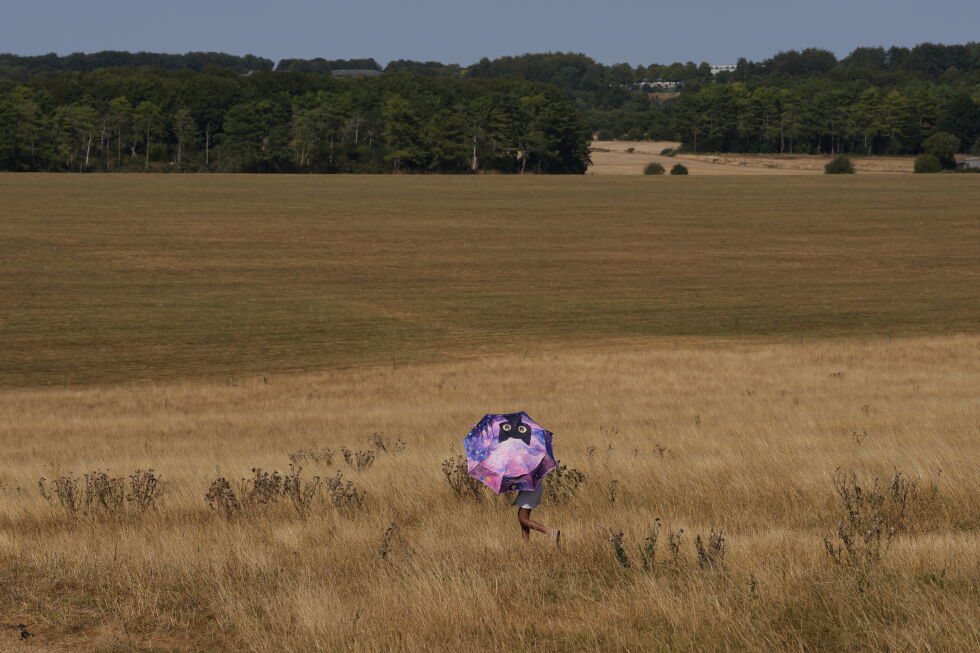
    “You leave your hotel at 8:30 in the morning and it already feels like midday, and it just gets hotter and hotter as the day goes on,” said Yesenia Gueta, a 47-year-old tourist from Los Angeles. “Now I understand why Japanese clothing is loose, and why people carry umbrellas to block the sun all the time. This heat is extreme, and that new name ‘cruelly hot day’ fits perfectly.”

    Many Japanese residents are also expressing growing anxiety about what the coming weeks of summer will bring, with temperatures already hitting record levels in mid-July. “Since it’s already this hot in mid-July, I’m worried about what August will be like,” said 24-year-old Japanese university student Nukochama, who carries a fully charged portable electric fan at all times to stay cool.

  • Giant swing on Swiss peak aims to boost summer tourism as Alps warm

    Giant swing on Swiss peak aims to boost summer tourism as Alps warm

    Beneath the bright summer sun of the Swiss Alps, piercing shrieks—half thrill, half nervous excitement—cut through the crisp mountain air as a chairlift approaches Grand Chamossaire peak, the centerpiece of Villars ski resort. Perched 2,110 meters above sea level, a striking 12-meter V-shaped steel structure holds the resort’s newest star attraction: a giant swing that launches riders out over a steep, open void, with sweeping panoramic views of snow-dusted Alpine peaks and rolling green valleys stretching out before them.

    The attraction, which opened to the public earlier this month, is far more than just a new adventure activity for thrill-seekers. It represents a strategic, long-term adaptation by Alpine ski resorts to a shifting climate, as rising temperatures make winter snowfall increasingly unpredictable at many mid-altitude mountain locations. For Villars-Gryons-Diableret, the region that manages the Villars resort, the goal is simple: diversify tourist offerings to draw more off-season visitors, put underused ski lift infrastructure to work in summer, and protect the local tourism economy that supports hundreds of jobs.

    Martin Deburaux, head of the ski area, told Agence France-Presse that while the past two winter seasons have actually drawn record visitor numbers—as skiers who once frequented lower-altitude slopes now travel higher to find reliable snow—the resort is planning ahead for an uncertain future. “We know we are facing climate change,” Deburaux explained. “We are looking for substitutes to conserve jobs, the dynamism and the tourist economy built up around our ski lift facilities.”

    Right now, the gap between winter and summer visitor numbers is stark: the resort welcomes more than 700,000 guests during the winter ski season, but only around 100,000 in the summer months. Resort leaders aim to triple summer visitor volumes over the next few years, a goal that requires building a diverse lineup of warm-weather activities beyond skiing. The giant swing is just the latest addition to a growing portfolio that already includes hiking trails, mountain biking routes, and a large-scale ephemeral land art fresco by French artist Saype, which covers an entire hillside with an image of a child drawing.

    In a nod to travelers who seek quiet, undisturbed nature alongside adventure, resort planners intentionally sited the new swing in an area already zoned for recreational activities, leaving larger swathes of the mountain untouched for visitors who prefer peaceful Alpine scenery over adrenaline rushes. Accessible to anyone with a ski lift ticket, the swing can accommodate up to three riders at once. Each participant sits on a saddle shaped like the body of an Alpine ibex, grips sturdy handlebars, and is secured with heavy safety straps before a system of cables and pulleys pulls them back to a 90-degree suspended position, hanging face-down hundreds of meters above the valley floor.

    When the safety release triggers, the swing lurches forward into a dramatic plunge that elicits everything from joyful screams to breathless laughter from riders. Many who have tested the attraction describe the experience as equal parts terrifying and exhilarating. “I had a bit of a pit in my stomach before getting strapped in,” said Alexandra Henchoz, a 37-year-old visitor who tried the swing with her husband and 10-year-old daughter. “But once it is happening, it is just incredible. You feel like a bird flying.”

    Other visitors echoed that mix of fear and delight. Yannick Boudouin, 38, called the moment of release “an amazing sensation,” while his partner Anais Fougairolles, 31, described it as “a mini free-fall and then nothing but fun.” Seventy-year-old Marc Truffer admitted he was so scared he couldn’t even scream during the initial plunge. “It took my breath away going down, but then the view was magnificent,” he said.

    As climate change continues to reshape the Alpine landscape, the Grand Chamossaire swing offers a model for how mountain resort communities are proactively reimagining their economies, balancing the need to grow off-season tourism with respect for the fragile natural environment that draws visitors to the region in the first place.