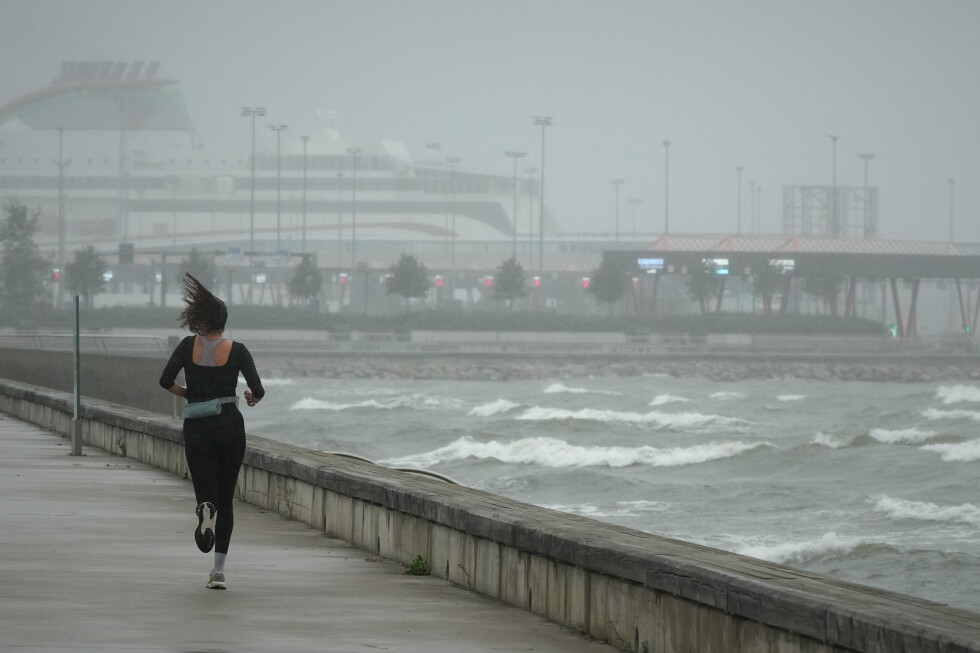
A destructive cyclone that swept through the Baltic region of Northern Europe between Saturday and early Sunday has left three people dead, hundreds injured, and more than 800,000 residents without access to electricity, emergency officials and meteorological agencies confirmed this weekend.
The storm system brought hurricane-force wind gusts and record-breaking rainfall to Latvia, Lithuania, Estonia, and northeastern Poland, crippling critical infrastructure, disrupting travel, and triggering widespread service outages across the area. Latvian meteorologists called the event the most impactful storm to hit the country in nearly 20 years.
“This seems to be the most severe storm in Latvia since 2005 in terms of its overall impact,” explained Andris Viksna, a senior representative of the Latvian Environment, Geology and Meteorology Center, in an interview with the Associated Press. In central Latvia’s city of Jelgava, one person was killed when a portion of a crumbling building collapsed under the strain of the storm on Saturday, with multiple additional injuries reported across other parts of the country. In the Latvian capital of Riga, wind gusts surpassed 67 miles per hour, and weather monitoring stations across the nation recorded half of an average month’s total rainfall in just 24 hours on Saturday.
More than 250,000 Latvian households and businesses lost power during the height of the storm, and mobile network coverage was disrupted in many hard-hit rural and suburban areas. Fallen trees and debris blocked rail lines and roadways, bringing most local public transit services to a halt. Riga International Airport announced Sunday morning that many incoming and outgoing flights would face delays or be rerouted to alternate airports due to the overnight damage and unsafe weather conditions.
In neighboring Lithuania, a second fatality was reported when a falling tree struck and killed a resident amid the high winds. More than 200,000 Lithuanians lost power, and multiple people were treated for storm-related injuries. To the north, Estonia also faced severe impacts: western and northern coastal regions, as well as the country’s offshore island communities, bore the brunt of the storm, disrupting critical ferry connections that connect the islands to the mainland and delaying international rail services arriving from Latvia and Lithuania.
Northeastern Poland also felt the cyclone’s force, with more than 100,000 residents losing power across the region as downed lines and damaged distribution networks knocked out service.
While the full link between this extreme weather event and human-caused climate change cannot be formally confirmed yet, Viksna noted that current climate trends support a plausible connection. “It is plausible that human-caused climate change may have intensified the rainfall associated with the cyclone,” he said.
Emergency management officials across the region reported that conditions began to stabilize throughout Sunday, with restoration crews working around the clock to repair power grids, clear blocked transit routes, and restore critical services. Forecasters expect full recovery of normal operations and weather conditions by Monday.