分类: entertainment

  • Why Eurovision’s fallout over Israel may change the competition forever

    Why Eurovision’s fallout over Israel may change the competition forever

    Seventy years after its founding as a unifying celebration of cross-continental music, the Eurovision Song Contest is confronting the most severe crisis in its history, as deep divisions over Israel’s participation in the 2026 Vienna-hosted event have sparked an unprecedented boycott by five major European public broadcasters. The roots of this year’s upheaval stretch back to the 2025 Eurovision final held in Basel, Switzerland, where geopolitical tensions boiled over long before the final winner was announced.

    Anti-Israel protests, organized in opposition to Israel’s ongoing military campaign in Gaza that began in October 2023, surrounded the 2025 contest venue. Hundreds of demonstrators gathered, bearing Palestinian flags and covering their bodies in fake blood to symbolize civilian casualties in Gaza, which the Hamas-run Gaza health ministry puts at more than 72,000. The unrest spilled into the arena during the final, when two protesters attempted to storm the stage during Israeli contestant Yuval Raphael’s performance, throwing paint that accidentally struck a Eurovision crew member. As the final vote counts rolled in, the atmosphere in the venue reached a fever pitch of tension: audience members chanted for second-place contender Austria, with many openly praying Israel would not secure enough points to win the right to host 2026’s event. When Austria ultimately claimed the top spot, UK Eurovision commentator Graham Norton joked that organizers were breathing a huge sigh of relief at avoiding a 2026 final in Tel Aviv.

    Beneath the surface, the 2025 result sparked lasting controversy that set the stage for this year’s boycott. While Raphael earned only middling scores from competition judges, she won the public vote by a wide margin – a result that immediately drew scrutiny from multiple broadcasters. Critics pointed out that official Israeli government accounts, including that of Prime Minister Benjamin Netanyahu, had urged supporters to vote for Raphael the maximum 20 times per person, a practice allowed under contest rules. The implication was that the strong public showing reflected coordinated mass voting rather than organic popular support for Raphael’s entry.

    The European Broadcasting Union (EBU), which organizes the annual contest, launched an independent audit of the results, which confirmed there was no evidence that mass voting disproportionately skewed the final outcome. The EBU reaffirmed that the 2025 result was valid and robust, but that finding failed to ease growing discontent among member broadcasters. Calls for a broader review of the longstanding voting system grew, with many outlets arguing that the current framework no longer guaranteed a fair reflection of viewer opinion.

    The 2025 near-win for Israel brought decades of simmering tensions over geopolitics’ role in Eurovision voting to a breaking point. This year, that tension has erupted into the biggest boycott in the contest’s 70-year history. While 35 countries are still set to participate in the 2026 contest, public broadcasters from Spain, Ireland, the Netherlands, Iceland and Slovenia have all withdrawn in opposition to Israel’s inclusion.

    Boycotting outlets cite a range of overlapping reasons, most rooted in protest against Israel’s military campaign in Gaza. Many have explicitly accused the Israeli government of genocide, a charge Israel vehemently denies. While the boycotting broadcasters insist their decisions were made independently, most align with the official stances of their national governments – all of which have strongly criticized Israel’s actions in Gaza, and recently joined a failed push to suspend the European Union’s preferential trade relations with Israel.

    This unprecedented action marks a sharp escalation from previous years, when only a handful of broadcasters raised public objections to Israel’s participation after the Gaza war began, with none withdrawing from the 2024 or 2025 contests. Israel’s Culture and Sports Minister Miki Zohar has dismissed the boycott as shameful and hypocritical, arguing that Eurovision should remain a celebration of music and cross-cultural connection, not a platform for political grandstanding.

    Geopolitical influence is nothing new for Eurovision. For decades, politically aligned and neighboring nations have consistently exchanged higher public votes, and contest historian Dr. Dean Vuletic, author of *Postwar Europe and the Eurovision Song Contest*, notes that entry to the contest has long been used as a political tool. Since the Cold War era, countries have used Eurovision participation to signal international legitimacy or geopolitical alignment, from Franco’s 1961 Spanish debut to non-aligned Yugoslavia’s early participation amid the Cold War divide.

    Past conflicts have also spurred isolated withdrawals, but those were typically temporary and regionally contained: Greece boycotted in 1975 over Turkey’s invasion of Cyprus, Armenia skipped the 2012 contest hosted by Azerbaijan over Nagorno-Karabakh tensions, and Lebanon withdrew ahead of its 2005 debut rather than comply with EBU rules requiring it to broadcast all entries, including Israel’s. The only time Morocco participated, in 1980, it was the one year Israel did not compete, a connection widely accepted as the reason for its one-off appearance. This year’s boycott, however, is broader and more foundational, challenging the EBU’s core ability to keep geopolitics from overwhelming the competition.

    For boycotting broadcasters, the core issue is that the presence of a country actively at war undermines the integrity of the contest as a purely musical competition. Natalija Gorščak, president of the management board of Slovenia’s withdrawing broadcaster RTV, explained that widespread public protest from Eurovision fans over sharing a stage with Israel pushed her organization to take an ethical stand for peace. Gorščak argues that even though Raphael, an Israeli survivor of the October 7 Hamas attack on the Nova music festival who performed with shrapnel still in her leg, met all EBU rules requiring entries to be non-political, her participation was inherently symbolic and political.

    The 2022 Russian expulsion from Eurovision following its full-scale invasion of Ukraine, and Ukraine’s subsequent victory that same year, has also amplified calls for rule change. The EBU ruled that a Russian entry would bring the contest into disrepute, and Ukraine’s Kalush Orchestra went on to win the 2022 contest, thanks in part to a wave of politically motivated public solidarity voting. Critics, including Gorščak, argue this set a precedent that questions the fairness of the contest: political solidarity voting overwhelmingly benefits entries from countries involved in active conflict, sidelining performers from other nations regardless of the quality of their music.

    Critics of the status quo now argue that the EBU’s longstanding rule, which allows any EBU member broadcaster to field an entry regardless of whether their country is at war, needs urgent reform. “When there is political conflict we should really think how the representative from the aggressor’s part and from the victim’s part should be involved and how they could be involved,” Gorščak said. “This is the debate I think we need to have within Eurovision.” Spain’s public broadcaster chair José Pablo López echoed that call at a parliamentary hearing earlier this year, urging a full overhaul of EBU statutes to bar countries in active conflict from participating. A senior official from a non-boycotting broadcaster acknowledged the widespread frustration, admitting that “a country from a conflict creates a bigger one for the contest” and that current rules do not create an equal playing field for all participants.

    Opponents of a rule change and the boycott argue that barring Israel (or any nation) from participation violates Eurovision’s core founding values of unity and inclusivity. Dana International, who won Eurovision for Israel in 1998, argued online that “you don’t punish an entire country because you disagree politically with its government… Announcing a withdrawal from Eurovision harms the very idea of peace, harms Israel, and harms the contest itself.” Israeli public broadcaster Kan, which holds Israel’s EBU membership, has repeatedly affirmed it has not broken any contest rules, and argues that disqualifying it would undermine the core values the EBU claims to uphold. Notably, the EBU itself has previously defended Kan from sustained political attacks by the current Israeli government, which has threatened the public broadcaster’s independence and existence amid proposed broadcast reforms.

    In response to growing criticism, the EBU has made minor adjustments to rules for 2026, cutting the maximum number of votes per viewer from 20 to 10 and introducing new guidelines discouraging disproportionate promotion by third parties including government agencies. Even so, the EBU issued a formal warning to Kan just ahead of the 2026 contest after current Israeli representative Noam Bettan published social media posts instructing followers to “vote 10 times for Israel,” a move organizers said violated the spirit of the competition. Kan complied with a request to remove the content.

    As final preparations wrap up for the 70th Eurovision Song Contest in Vienna, the event remains mired in political controversy rather than being able to focus on the music, performance and spectacle that define the annual competition. Insiders report that this year it has been harder than ever to recruit participating artists, many of whom worry about reputational damage amid the growing partisan divide over the event. Petitions and protests continue to surround the contest, even as organizers reaffirm their commitment to their founding mission of providing a platform for peace and unity in a divided world.

    Looking ahead, the central question facing Eurovision remains: can the 70-year-old competition adapt to a more divided geopolitical landscape, or will it be permanently redefined as a forum for political expression, rather than the celebration of music it was founded to be?
  • Selfies galore as Eurovision kicks off in Vienna

    Selfies galore as Eurovision kicks off in Vienna

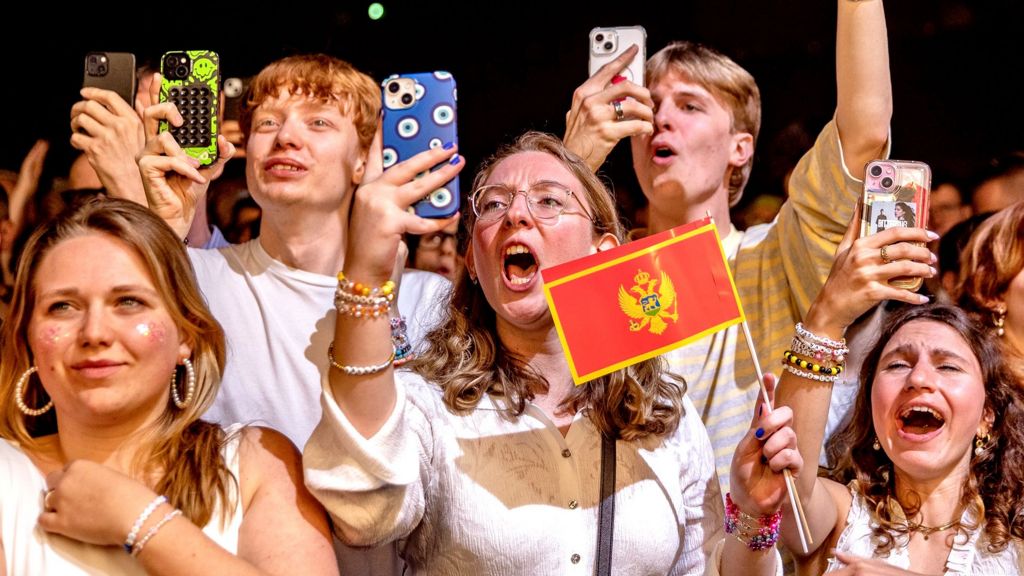
    The 70th edition of Eurovision, the world’s most-watched live song contest, has officially launched in Vienna, Austria, bringing a wave of excitement across the capital even as long-simmering controversy over Israel’s participation casts a shadow over the celebrations. Thousands of fans from across Europe and beyond have descended on the city to attend pre-final events, with the grand final scheduled to take place on May 16.

    On Sunday afternoon, event organizers rolled out a signature turquoise carpet — the contest’s alternative to a traditional red carpet — to kick off a vibrant opening ceremony welcoming 35 competing national delegations. Surrounded by fans snapping selfies with fellow attendees and contestants, French representative Monroe told reporters that the atmosphere on the ground was overwhelmingly warm. “There is a lot of positive energy, people are smiling, they’re very warm,” she said.

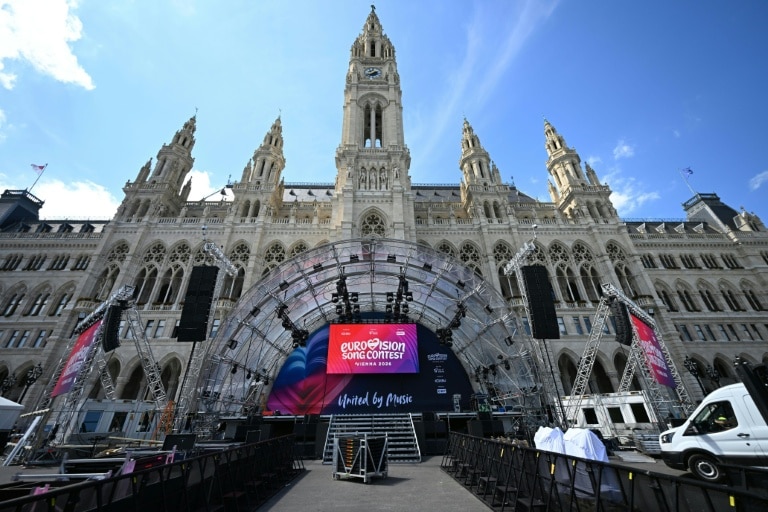
    In the city square in front of Vienna’s iconic neo-Gothic city hall, which has been converted into a secured fan zone, organizers have set up a giant screen screening highlights and memorable moments from the contest’s 70-year history. The competition, which draws more than 170 million viewers across television and online streaming platforms annually, generates billions of views on social media and other digital platforms worldwide. This year, Finland enters the contest as an early heavy favorite, with an entry pairing brooding vocalist Pete Parkkonen with acclaimed violinist Linda Lampenius. In a rare break from contest rules that require all instruments to be pre-recorded, the European Broadcasting Union (EBU), Eurovision’s governing body, has granted an exception to allow Lampenius to perform her part live, per Finnish media reports. While Austria earned an automatic spot in the final as last year’s winner, this year’s contestant Cosmo is not expected to challenge for the top title, with bookmakers placing the performer far down leaderboard projections. The five largest financial contributors to the EBU — Germany, France, Italy, the United Kingdom and Austria — all receive automatic final spots regardless of semi-final performance.

    Beyond the excitement of the performances, this year’s contest has been marked by widespread calls for a boycott over Israel’s inclusion, amid ongoing military conflict in Gaza. Five countries — Spain, Ireland, Iceland, the Netherlands and Slovenia — have already announced they will withdraw from the 2025 edition in protest. The countries have cited Israel’s devastating military campaign in Gaza, launched in retaliation for the October 7, 2023 attack by Hamas that killed roughly 1,200 people and took 250 hostages. Palestinian health officials report more than 34,000 Palestinians have been killed in the bombardment that has followed. More than 1,000 high-profile artists and musical groups have also backed the boycott call, including industry icons Peter Gabriel and British trip-hop group Massive Attack.

    On Saturday, one day before the official opening ceremony, hundreds of pro-Palestinian protesters marched through central Vienna to demonstrate against Israel’s participation. Hundreds of police officers were deployed to maintain security around the demonstration, which concluded peacefully. The controversy has also split European political leaders: German Culture Minister Wolfram Weimer, who has confirmed he will attend the contest, told German outlet Augsburger Allgemeine that the boycott calls cause him personal distress. “The boycott call against Israel made me ‘suffer’,” he said, adding that he had defended Israel’s right to participate “at the highest political levels.”

    Organizers have already stepped in to reprimand Israeli public broadcaster KAN, the country’s participating Eurovision outlet, after it released a public campaign urging viewers to cast 10 votes for Israel’s entry. Eurovision head Martin Green announced Saturday that the EBU had issued a formal warning to KAN, noting that such direct calls to drive up voting volumes violate both the contest’s rules and its core spirit. The EBU also updated its official voting rules ahead of this year’s contest specifically to prevent artificially inflated public voting, a change that came after Israeli broadcasters made similar mass voting appeals during the 2024 competition.

  • Beatles’ early years drama starts filming in Germany

    Beatles’ early years drama starts filming in Germany

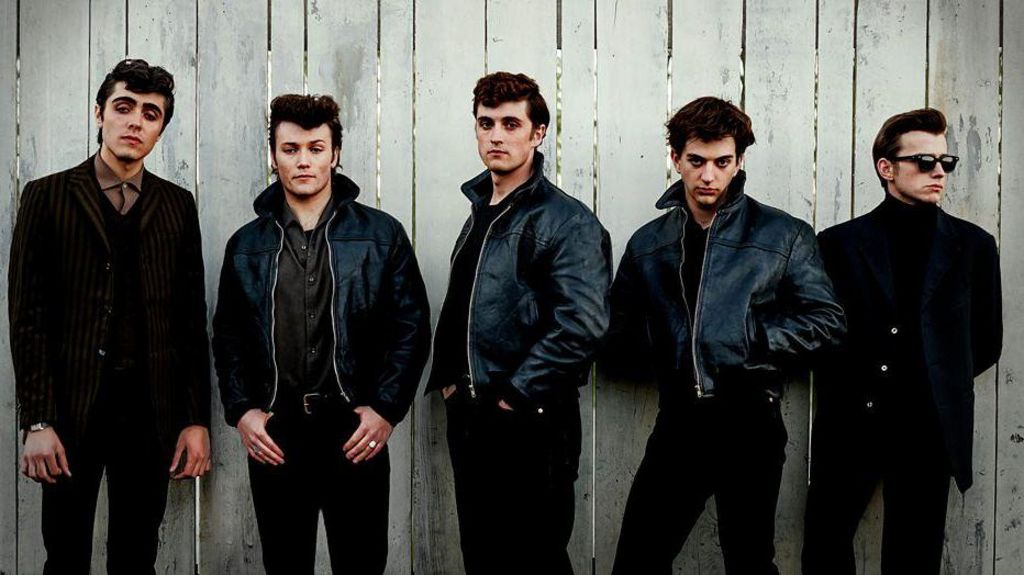
    Decades after The Beatles reshaped global popular music, a highly anticipated new television drama exploring the band’s little-known formative years has entered production, with filming locations spanning two countries that shaped their earliest identity. Titled *Hamburg Days*, the six-part BBC One project centers on the era between 1960 and 1962, when the fledgling rock group played more than 250 chaotic, career-building shows in Hamburg, Germany’s bustling port city.

    Unlike later Beatles content that focuses on the band’s legendary 1960s global superstardom, *Hamburg Days* spotlights the original lineup that many casual fans do not know well: it includes bassist Stuart Sutcliffe and drummer Pete Best, alongside young founding members John Lennon, Paul McCartney and George Harrison. The story draws its core inspiration from the memoirs of Klaus Voormann, a German artist and musician who collaborated closely with the band in later years — most famously designing the iconic cover art for their 1966 *Revolver* album, and even stepping in to play bass on select Beatles recordings.

    The co-production between British and German entertainment firms will split filming between multiple key locations: Liverpool (the band’s lifelong hometown in northwest England), the northern German port of Hamburg, and Munich in southern Germany. Producers have framed the series as an intimate origin story, tracing how the young, scrappy group of British teenagers met Voormann and pioneering photographer Astrid Kirchherr — connections that would spark the artistic transformation that turned them into what would become the most influential music phenomenon in modern history.

    Kirchherr, who passed away in 2020 at the age of 81, is widely credited with shaping The Beatles’ signature early visual identity, including the iconic mop-top hairstyle that became one of their most recognizable trademarks. She was also engaged to Sutcliffe, who left the band to pursue fine arts studies in Hamburg, only to die from a brain hemorrhage at just 21 years old in 1962, a devastating loss that left a lasting mark on the remaining band members. For his part, Best — who was famously ousted from the band by manager Brian Epstein in 1962, replaced by Ringo Starr — has previously spoken publicly about his shock at the abrupt dismissal, a moment the drama is expected to address with nuance.

    The project boasts an acclaimed creative team. The script is penned by Wirral-born writer Jamie Carragher, who previously contributed to the award-winning HBO hit series *Succession*, while directing duties are split between Christian Schwochow, a veteran of Netflix’s *The Crown*, and German filmmaker Laura Lackmann. The newly announced cast features rising young performers: Rhys Mannion will lead as John Lennon, with Ellis Murphy as Paul McCartney, Harvey Brett as George Harrison, Louis Landau as Stuart Sutcliffe, and Patrick Gilmore as Pete Best. German actors round out the key creative roles, with Luna Jane portraying Astrid Kirchherr, Laura Tonke playing her mother Nielsa, and Casper von Bülow taking on the role of Klaus Voormann.

    Cast members joined local officials from both Liverpool and Hamburg for a public event over the weekend, appearing at the opening of a new exhibition of never-before-seen Beatles letters in Hamburg. The gathering included Liverpool City Region Mayor Steve Rotheram, who was in Hamburg for an official trade mission, and Hamburg state secretary Christoph Holstein.

    *Hamburg Days* is not the only major Beatles biographical project currently in production: acclaimed director Sam Mendes is also working on a four-part feature film series about the band, which is on track to release in 2028, with a star-studded cast including Harris Dickinson as Lennon, Paul Mescal as McCartney, Barry Keoghan as Ringo Starr, and Joseph Quinn as Harrison. For Liverpool, the arrival of the new drama cements the region’s growing status as a major UK production hub: in recent months, Merseyside has hosted more on-location shoots than any other UK region outside of London, with projects including *This City is Ours*, *The Cage*, and the iconic gangster series *Peaky Blinders* all filming there.

  • Bread dresses and gowns inspired by cathedrals at Nigeria fashion spectacle

    Bread dresses and gowns inspired by cathedrals at Nigeria fashion spectacle

    Widely hailed as Africa’s most prestigious red-carpet gathering for film and fashion, the 12th edition of the Africa Magic Viewers’ Choice Awards (AMVCA) touched down in Lagos, Nigeria, last weekend, turning a traditional awards ceremony into a global showcase of African creative excellence. Hosted at the iconic Eko Hotel and Suites, the annual event balances two core missions: honoring standout achievements in African film, television, and digital storytelling, while giving creators and celebrities a high-profile platform to test boundary-pushing fashion designs that spark conversation across the continent. This year, the red carpet leaned into unapologetic, over-the-top creativity, with many stars bringing large entourages to help navigate crowds of photographers and screaming fans while maneuvering oversized, elaborate ensembles.

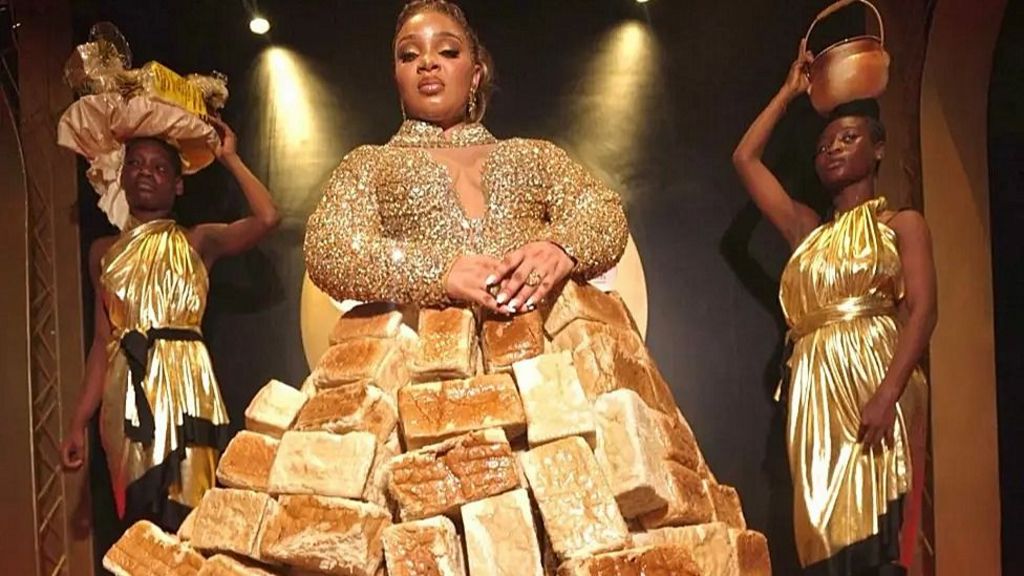
    One of the most viral looks of the night came from reality TV personality Queen Mercy Atang, who turned heads in a custom gown crafted entirely from more than 500 loaves of bread. Flanked by two attendants carrying additional bread trays and a team of assistants to support the heavy outfit as she walked the carpet, Atang admitted the design left her barely able to move freely — but explained the look was a deliberate marketing move for her own bread-baking business, not just a stunt for attention. “What better stage to promote my brand than the AMVCA?” she told reporters. The design, created by renowned Nigerian designer Toyin Lawani of Tiannah’s Empire, launched a new trend Lawani termed “everyone wear your business,” and quickly dominated social media discussion around the event. While some fans praised the clever entrepreneurial branding, others criticized the design as a waste of food — a claim Atang quickly rejected.

    Ghanaian fashion icon Nana Akua Addo, long known for her dramatic AMVCA appearances, delivered another showstopping moment with a structured silver gown inspired by Germany’s Cologne Cathedral. The architectural design featured hand-painted details mimicking cathedral windows, sweeping cathedral-shaped extensions, and coordinated silver accessories, with Addo’s team on hand to help carry the largest sections of the piece. Designer Abasswoman revealed the creative process began back in November 2025, with final touches completed just 48 hours before the ceremony, built to mirror the centuries-old landmark’s grandeur and meticulous craftsmanship.

    Nigerian actress Uche Montana, who also took home the night’s Trailblazer Award — an honor recognizing rising talents making unique contributions to African entertainment — arrived in a fiery red-and-gold feathered ensemble designed to symbolize “fire and the rebirth of the phoenix.” Montana shared that the look had been in development since the start of 2026, and that she invested a significant personal sum to bring the vision to life, pushing back against the common misconception that all celebrity red-carpet looks are provided for free by brands. “So much financial and emotional work goes into creating these looks,” she explained.

    Beyond the red carpet spectacle, the night delivered emotional and historic moments that celebrated the very best of African storytelling. Bucci Franklin earned the award for Best Supporting Actor for his turn as Oboz, a brash, unapologetically loyal cybercrime boss in the feature *To Kill a Monkey*, a role deeply rooted in the street culture of Nigeria’s Benin region. To prepare for the part, Franklin immersed himself in local influencers, music, and dialect, a commitment that earned widespread praise from audiences for its raw realism. In a moving acceptance speech, Franklin dedicated the win to his mother, who passed away just one week before the film’s premiere. *To Kill a Monkey* also took home the award for Best Cinematography.

    Linda Ejiofor made AMVCA history as the first performer ever to win two of the ceremony’s biggest acting awards in a single night: Best Lead Actress for *The Serpent’s Gift* and Best Supporting Actress for *The Herd*. The star told reporters she had only dared to hope for one win, but her husband had predicted the double victory ahead of the ceremony. She also thanked her mother, who worked with her to refine her Igbo language delivery for her roles until she felt fully confident in the performances.

    The critically acclaimed drama *My Father’s Shadow* capped its historic awards run by taking home three of the night’s top honors: Best Movie, Best Director, and Best Writing, for filmmaker Akinola Davies Jr. The project, which explores themes of paternal love, estrangement, and grief, made history earlier this year as the first Nigerian film ever selected for the official lineup at the Cannes Film Festival, and has already screened in theaters across Nigeria and the United Kingdom. It beat out fan favorites including *The Herd*, *The Serpent’s Gift*, and *Gingerrr* to claim the top prize.

    Additional acting honors went to Uzor Arukwe, who took home Best Lead Actor for *Colours of Fire*, while industry veterans Sola Sobowale and Kanayo O. Kanayo received Lifetime Achievement Awards for their decades-long contributions to Nollywood. Kanayo O. Kanayo leaned into his iconic on-screen persona as a stylish, powerful godfather for his red-carpet look, describing the tailored ensemble as a celebration of “old money godfatherism and tailored mafia” style, styled by Prinz Innovation.

    Many stars used the red carpet to celebrate African cultural heritage, with Nollywood favorite Stan Nze — known for his work centering Igbo culture — stepping out in a sleek black ensemble paired with his signature traditional engraved horse-hide hand fan. Reality star and actor Tobi Bakre channeled Yoruba royalty in a handcrafted agbada by designers Deji and Kola, paired with a custom brass ceremonial staff. Actress and producer Monica Friday used her look to make a political statement, wearing a purple ball gown embroidered with the flags of seven nations including Iran, which she described as a tribute to conflict zones around the world and a call for global peace.

    Even without an official best-dressed category this year, fan favorite Osas Ighodaro — a multiple-time winner of the award — delivered one of the most anticipated looks of the night, stepping out in a flowing silver corset gown by Veekee James encrusted with hundreds of crystals and gemstones. Emerging creators from across the continent also brought bold creativity to the red carpet: Angolan actress Lesliana Pereira wowed in a floor-length black gown featuring a half-butterfly wing embellished with shimmering gold and silver stones, while reality star OJ Posharella showcased her own design work in a multi-layered colorful look paired with an oversized statement bow perched on her head.

    As the 12th AMVCA draws to a close, the event once again solidified its reputation as Africa’s leading cultural gathering, highlighting both the growing global influence of Nollywood and the unmatched creativity of African fashion designers.

  • The Cannes Film Festival is about to begin. Here are the key films making their debut

    The Cannes Film Festival is about to begin. Here are the key films making their debut

    For 12 consecutive days starting this Tuesday, the global film industry will turn its full attention to the sun-drenched shores of the French Riviera, where the annual Cannes Film Festival – one of the most prestigious and influential cinematic showcases on the planet – opens its doors to premieres, red-carpet galas, and the unveiling of what could be the next crop of award-winning hit films.

    Now in its 78-plus year of operation, the festival has long held a unique reputation as both a world-class platform for groundbreaking cinema and a glamorous cultural spectacle that draws A-list talent, top directors, and film lovers from every corner of the globe. History shows that a premiere launch at Cannes often paves the road to Oscar success: recent Palme d’Or contenders and winners including *Parasite* and *Anora* have gone on to take home the Academy Award for Best Picture, and last year’s Cannes lineup featured multiple eventual Oscar nominees such as *Sentimental Value*, *The Secret Agent*, and *It Was Just an Accident*. This year’s 12-day event is expected to produce similarly future award contenders, though major Hollywood studios will largely stay on the sidelines for 2025.

    Leading this year’s jury, tasked with awarding the festival’s top honor the Palme d’Or, is celebrated South Korean filmmaker Park Chan-wook. The opening ceremony will also kick off a series of honorary Palme d’Or recognitions, with legendary New Zealand director Peter Jackson receiving the first honor this year, followed by iconic entertainer Barbra Streisand at a later date. Beyond the official festival screenings, pop culture fans have an extra point of interest: HBO’s hit series *The White Lotus* is currently filming its fourth season on the Croisette, Cannes’ iconic waterfront promenade, bringing a dose of small-screen star power to the city.

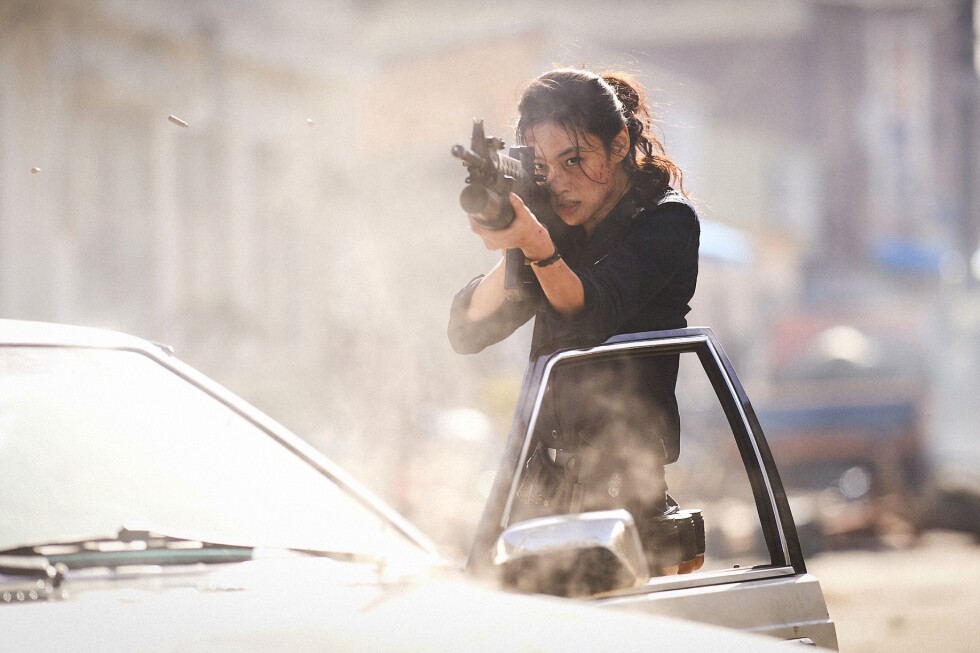
    This year’s official lineup leans heavily into work from world-renowned auteur directors, with highly anticipated features spanning genres, languages, and storytelling styles. One of the buzziest entries is Na Hong-jin’s long-in-development sci-fi thriller *Hope*, a genre-bending project that festival artistic director Thierry Fremaux says constantly shifts creative directions. The film features a cross-cultural cast mixing top Korean talent Hwang Jung-min, Zo In-sung, and Jung Ho-yeon with Hollywood stars Michael Fassbender, Alicia Vikander, and Taylor Russell, and many industry observers predict it could mark Na’s global breakthrough.

    Another high-profile American addition is James Gray’s *Paper Tiger*, a Queens-set crime drama that was a late addition to the competition slate. Starring A-list leads Adam Driver, Miles Teller, and Scarlett Johansson, the film centers on two brothers who get tangled up with the Russian mafia, and it has quickly become one of the most anticipated American films of this year’s festival. Romanian master Cristian Mungiu, a former Palme d’Or winner for *4 Months, 3 Weeks and 2 Days*, returns to competition with *Fjord*, starring Sebastian Stan and Renate Reinsve as a Romanian-Norwegian couple who relocate to the wife’s isolated rural hometown in Norway.

    In the Un Certain Regard sidebar, Jane Schoenbrun – one of the most talked-about new voices in contemporary American independent cinema – presents *Teenage Sex and Death at Camp Miasma*, a slasher-movie-set story starring Hannah Einbinder and Gillian Anderson. Polish auteur Pawel Pawlikowski, famous for his stripped-back, black-and-white period dramas *Ida* and *Cold War*, debuts his third feature in this creative vein: *Fatherland*, which follows German author Thomas Mann on a post-World War II road trip, starring Hanns Zischler in the lead role alongside Sandra Hüller as his daughter.

    Japanese master Ryusuke Hamaguchi, who made history with the Oscar-nominated *Drive My Car*, makes his French-language debut with *All of a Sudden*, a thoughtful drama starring Virginie Efira and Tao Okamoto centered on a nursing home director and a terminally ill Japanese playwright. Fellow beloved Japanese filmmaker Hirokazu Kore-eda – a former Palme d’Or winner for *Shoplifters*, celebrated for his gentle, empathetic storytelling – ventures into sci-fi territory with *Sheep in the Box*, which follows a grieving couple who adopt an infant humanoid robot after losing their own son.

    Ira Sachs’ *The Man I Love* was the only American film selected for competition before James Gray’s late addition, and it sees Rami Malek take on the lead role as an actor with a life-threatening illness in 1980s New York, preparing for what may be his final performance. French filmmaker Arthur Harari, who co-wrote 2023 Palme d’Or winner *Anatomy of a Fall*, steps into the director’s chair for competition with *The Unknown*, a body-swap drama starring Léa Seydoux about a photographer who wakes up in the body of a woman he followed after photographing her at a party. Acclaimed Russian director Andrey Zvyagintsev, whose previous works *Leviathan* and *Loveless* earned Oscar nominations, returns to Cannes after a near-fatal illness during the COVID-19 pandemic with *Minotaur*, a drama about a business executive facing a personal crisis in rural Russia.

    Among special screenings, Steven Soderbergh’s documentary *John Lennon: The Last Interview* has already drawn major headlines for its creative use of artificial intelligence to visualize John Lennon’s philosophical reflections, drawn from the final interview the Beatles icon gave at his New York home the Dakota shortly before his 1980 assassination. The film promises audiences an unprecedented intimate look at one of the most influential musicians of the 20th century. Finally, Spanish auteur Pedro Almodovar, a longtime Cannes favorite, debuts his deeply personal new melodrama *Bitter Christmas*, a multi-layered story exploring filmmaking, grief, and aging that marks a return to Almodovar’s native Spanish language and Spanish setting after his recent English-language feature *The Room Next Door*.

  • Our relationship with food is messed up – let’s sort it out, says Stanley Tucci

    Our relationship with food is messed up – let’s sort it out, says Stanley Tucci

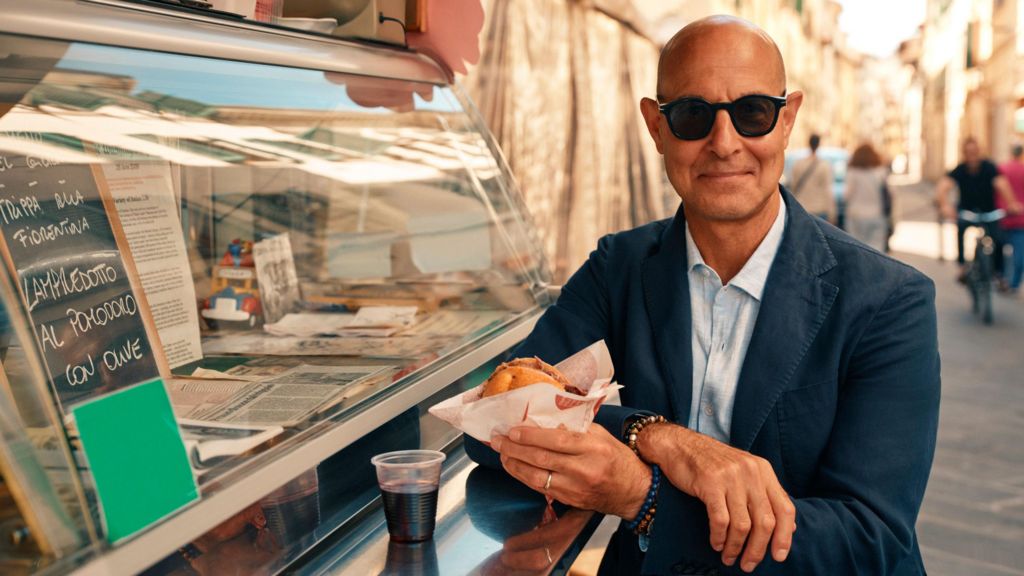
    When the highly anticipated second season of *Tucci in Italy* drops on Disney+ on May 12, viewers will be greeted by a recurring, warm motif that feels instantly familiar to anyone who has stepped foot in an Italian home: no matter how full Stanley Tucci insists he is, locals – from doting nonne to respected head chefs, and even whole family units – will pile more food onto his plate before he can finish his first helping.

    This relentless hospitality echoes the experience of anyone who has grown up with or been welcomed into Italian culture, where food is never just sustenance. It is a language of affection, a core pillar of hospitality, and a fundamental part of personal and collective identity rolled into one shared experience.

    In this new season, the celebrated actor, known for his role in *The Devil Wears Prada*, traverses the entire length and breadth of Italy – from the sunbaked shores of Sicily to the turquoise coasts of Sardinia, and all the way to the snow-dusted valleys of northern Italy. His journey goes far beyond tasting iconic dishes: he dives into centuries-old regional culinary traditions, meets tight-knit local communities, and steps into the small, family-run kitchens that are the beating heart of Italian food culture. Alongside sweeping shots of glistening fresh seafood, vibrant market produce, and one-of-a-kind local delicacies, Tucci weaves the story of a people whose social fabric is stitched together by family bonds and long-held ritual.

    In an interview, Tucci highlighted that one of the most striking features of Italian culture is its profound regional diversity, a trait that is most visible on the dinner plate. “We think we know what Italy is, but it’s incredibly complex and diverse,” he explained. Unlike many other nations, most Italians draw stronger identity from their local city or region than from the country as a whole. “When you say to someone, ‘You’re from Italy’, they’ll say, ‘No, I’m from Tuscany’ or ‘I’m from Florence’, so they are very territorial, especially when it comes to food,” he said.

    This strong local pride is on full display in an episode set in the Tuscan city of Siena, where Tucci explores the historic contrada system – centuries-old neighborhood districts that have maintained fiercely distinct identities for centuries. “They all believe their contrada is the greatest,” Tucci laughed, “and they express that in many ways, including food.”

    The divides between regional cuisines are just as stark in northern Italy, where climate and geography have shaped ingredient availability and cooking styles that differ dramatically from the south. “You go up north and you might only find tomatoes in the summer and you’ll find the likes of goulash, polenta and buckwheat which you would never find in the south,” Tucci noted. This patchwork of culinary traditions shatters the common international misconception that Italian food can be reduced to “just pizza and pasta.” “It’s not,” he emphasized.

    The 65-year-old host recalled every dish he sampled during filming with obvious affection. When asked to name the standout meal of the season, he immediately insisted “everything” was incredible, before singling out a handful of exceptional pasta dishes, including one prepared with multiple varieties of fresh mozzarella.

    But beneath the celebration of food, Tucci also raises a pressing concern: modern society is steadily losing the ability to find joy and deep emotional connection in shared meals. Speaking to the shifting cultural attitudes around eating, amplified by the rising popularity of weight loss drugs, Tucci argued that society’s relationship with food has become “really messed up.” “We overthink it, and the idea of what we’re supposed to look like has messed up our relationship with food,” he said.

    He added that modern culture increasingly pushes for uniformity across people, places, and food: “we want everything to look the same, taste the same and be generic.” Instead, Tucci argues that diversity and even imperfection – especially when it comes to produce and food – should be celebrated. “We should celebrate the tomato or the onion that comes out of the ground not looking perfect,” he said.

    A self-described non-adherent to food fads and passing trends, Tucci pushed back against the modern view of food as nothing more than a tool to satiate hunger, erasing its deeper cultural and emotional meaning. “Our relationship with food now is it’s just something you eat to feed your belly, but that’s not what it is,” he said.

    The conversation also turned to some of the most hotly debated culinary “crimes” against Italian cuisine, and Tucci had no shortage of firm opinions. Pineapple on pizza is an unambiguous no. Learning that some home cooks and restaurants prepare carbonara with cream, bacon, or cheddar cheese made him shudder (traditional carbonara only requires guanciale, pecorino romano, and egg yolk, after all). While breaking spaghetti in half before cooking is usually off the table, he acknowledged that some regional soups and dishes do call for broken pasta. As for post-dinner cappuccinos, ketchup on pasta, or parmesan cheese over seafood pasta? “Absolutely not,” he said.

    *Tucci in Italy* Season 2 will be available exclusively for streaming on Disney+ starting May 12.

  • Indian model’s understated Met Gala debut revives debate on cultural representation

    Indian model’s understated Met Gala debut revives debate on cultural representation

    Two years ago, a chance encounter in a New York City subway station launched an unlikely new star onto the global fashion stage. Today, 26-year-old Indian model Bhavitha Mandava’s 2026 Met Gala debut has divided audiences and critics alike, igniting conversations about fashion excess, cultural representation, and the rising appeal of quiet authenticity in an industry defined by over-the-top spectacle.

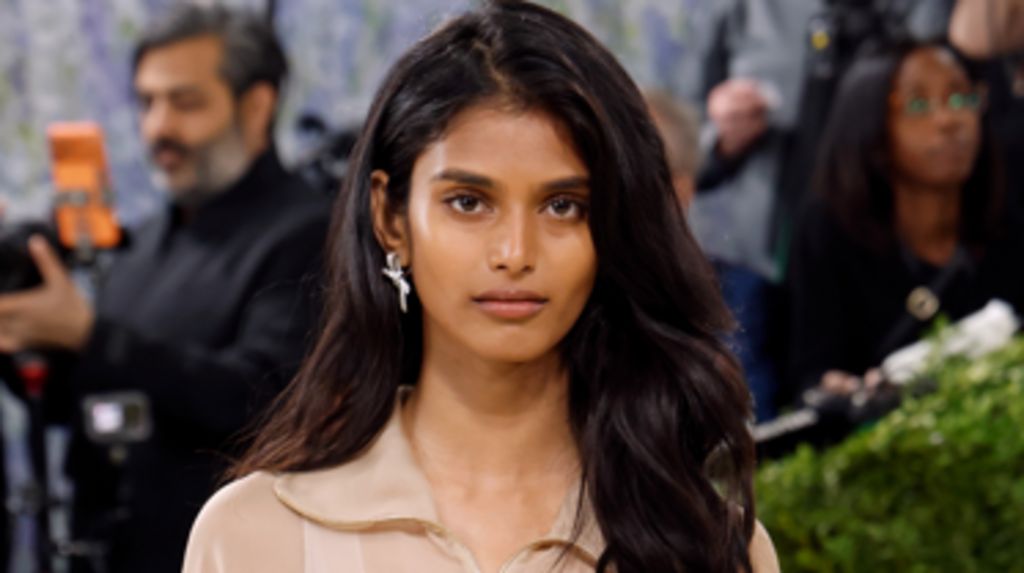
    At fashion’s most high-profile annual event, where guests typically arrive in elaborate, statement-making couture that demands attention before the wearer even speaks, Mandava’s Chanel look read as deliberately restrained at first glance. From across the red carpet, she appeared in a sheer zip-up jacket paired with what looked like casual low-rise denim. Next to the structured gowns, dramatic silhouettes, and bold declarations that define the Met Gala’s red carpet, her outfit felt intentionally understated. But that simplicity was anything but accidental: fashion outlets soon revealed the “denim” was actually handcrafted silk muslin, printed and tailored to mimic textured cotton, turning casual everyday attire into a deliberate, high-fashion artistic choice.

    This deliberate contrast between appearance and craft has split public and media reaction. Some fashion observers have praised Mandava’s look as a thoughtful, quiet rebuke of the Met Gala’s typical over-the-top excess, a subtle subversion of the event’s obsession with grandeur. Others argue the understated ensemble failed to live up to the scale and prestige of the occasion, questioning whether it missed a once-in-a-generation moment for global visibility. Indian media has mirrored this divide, with some outlets hailing the outfit’s intentional minimalism and others arguing it undersold the importance of her debut as one of India’s rising fashion stars. On social media, the debate has expanded beyond fashion, touching on how Indian identity is framed, received, and often simplified on global cultural stages.

    Mandava’s rapid ascent from anonymous graduate student to global fashion fixture is as unusual as her signature aesthetic. Raised in Hyderabad, a city in southern India, she was pursuing a graduate architecture degree at New York University in 2024 when the 28Models scout approached her on her way to share a plate of biryani with a friend. The completely unplanned encounter quickly upended her life: within months, she was walking runways for luxury powerhouses Bottega Veneta, Dior, and Courrèges, before building a close ongoing partnership with Chanel. Even as her career exploded, Mandava never adopted the flashy persona common to rising modeling stars. In a February interview with *British Vogue*, she joked that her agent still teases her for early castings where she showed up in thrifted jeans and free NYU student t-shirts, wearing whatever was clean that day.

    Late last year, Mandava made history as the first Indian model to open Chanel’s prestigious Métiers d’Art show in New York, held on a meticulously reconstructed subway platform that intentionally echoed the setting of her discovery. Her opening look? A simple white t-shirt, half-zipped knit sweater, and loose denim — a template of deliberate understatement that she carried directly to the Met Gala red carpet.

    What makes Mandava’s story resonate far beyond fashion circles is its relatable core. Even after her rapid rise, she has carried the quiet authenticity of her former life as a grad student with her. She often speaks of her studies, her family, and the slow rhythm of ordinary life in interviews, rather than leaning into the manufactured myth of overnight stardom. When she opened the Chanel show, she shared a viral clip of her parents watching the live stream from their home in India: her mother repeating her name in stunned disbelief, her father sitting quietly beside her, beaming with quiet pride. The unguarded, intimate moment won millions of hearts online. On social media, she describes herself as a “Brooklyn lab rat”, balancing transatlantic life between architecture research, couture history study, and global runway commitments. It is a low-key persona that fits perfectly with fashion’s current embrace of “quiet luxury” and effortless, unforced style — but it clashed sharply with the heightened expectations of the Met Gala.

    In the wake of the social media firestorm over her Met Gala look, Mandava has declined to engage directly with critics, only sharing photos of the evening to her Instagram without additional comment. She later told *British Vogue* that the outfit was a personal tribute: a way to carry forward the memory of the subway encounter that launched her career, elevating the casual clothes she wore that day into couture while keeping it unmistakably hers.

    The fashion industry is notoriously fickle, and the current obsession with understatement may soon fade. It would also be unfair to expect Mandava, a young talent still early in her career, to remain frozen in this specific persona forever. But for now, her quiet, unforced presence offers a refreshing breath of air in an industry dominated by performance and overproduction — proof that authentic, understated style can still command the world’s attention.

  • Another year, another controversy for Eurovision – but fans are sticking by it

    Another year, another controversy for Eurovision – but fans are sticking by it

    The 70th iteration of the Eurovision Song Contest is set to open its doors in Vienna this Sunday, kicking off with the iconic turquoise carpet parade that will bring together competitors from 35 participating nations. What should be a joyous celebration of cross-cultural music and unity, however, has been overshadowed by a bitter, years-long controversy over Israel’s inclusion in the competition, driven by ongoing fallout from the 2023 Gaza conflict.

    As delegations assemble in the Austrian capital, five longstanding Eurovision participants will be notably absent: Iceland, Ireland, the Netherlands, Slovenia, and Spain have all pulled out of the 2026 contest in protest of Israel’s participation. The debate over Israel’s presence first ignited in October 2023, when the Israeli government launched a large-scale military offensive in Gaza in response to a Hamas-led attack that Israeli authorities report killed approximately 1,200 people and took 251 hostages. To date, the Hamas-run Gaza health ministry puts the Palestinian death toll from the offensive at 72,628. A ceasefire has been in place since October 2025, but the political rift over Israel’s Eurovision participation has not healed.

    Controversy has dogged Israel’s participation in the two most recent editions of the contest, held in Malmö 2024 and Basel 2025. During that time, mass anti-Israel protests filled host city streets, and Israeli contestants were assigned armed security detail for their protection. In 2025, Israeli entrant Yuval Raphael — a survivor of the October 7 attacks — told the BBC she had practiced performing through boos during rehearsals. Two stage invaders interrupted her performance during the grand final, and tensions boiled over after Raphael’s song unexpectedly placed first in the public vote, ultimately landing her second place overall after lower jury scores. Multiple countries alleged that the public vote was skewed by an unprecedented intervention from Israeli Prime Minister Benjamin Netanyahu’s government, which repeatedly urged its social media followers to vote for Raphael’s entry.

    Last November, a coalition of countries pushed for a formal vote to exclude Israel from the 2026 contest. When the motion failed, the boycotts began, including the withdrawal of Ireland — a seven-time Eurovision winner — and Spain, one of the competition’s largest financial backers.

    For Eurovision, a cultural event uniquely dependent on its passionate global fan community, the boycott and ongoing controversy have left audiences deeply divided. Unlike most major entertainment events, Eurovision integrates independent fan media directly into official proceedings, granting fan websites and blogs equal access to press centres, press conferences, and behind-the-scenes content alongside legacy outlets like the BBC and The New York Times. Fan creators publish year-round content, from pre-selection show analysis to rehearsal leaks, voting predictions, and staging breakdowns, cementing their central role in the event’s ecosystem.

    “The fan base is very important for the commercial dimension of Eurovision,” explained Dean Vuletic, historian and author of *Postwar Europe and the Eurovision Song Contest*. “When it comes to merchandising, when it comes to ticket sales, the fans are really the ones fuelling this Eurovision industry. They’re the ones you can count on to attend the contest, even when it becomes mired in political controversy.”

    In response to the 2026 boycott, a number of prominent fan platforms have suspended all coverage of this year’s contest. “The Eurovision we once knew, that shaped this community and inspired us to create this channel, just isn’t the one we fell in love with all those years ago,” wrote the team behind cross-continental fan page Eurovision Hub. Ireland’s Eirevision podcast echoed that sentiment: “A contest founded on unity, peace, and connection has never felt more divided. We no longer recognise the Eurovision Song Contest we grew up with.”

    Other conflicted fans have sought a middle ground. Welsh Eurovision fan Philip Dore published a widely shared reflective piece on fan site ESC Insight addressing the split, titled “So, what do Eurovision fans do now?” Dore noted that for many, Eurovision is far more than a one-night song competition: the event has longstanding deep ties to LGBTQ+ liberation and community, and is a key space of belonging for neurodiverse fans. He outlined a range of options for divided fans, from full personal boycott to a “halfway” approach that involves following pre-contest build-up but stepping back once events kick off in Vienna.

    “This isn’t an easy situation for anyone,” Dore wrote. “Many people in the community are feeling a mix of sadness, anger, and loss, and I have no intention of adding judgment to anyone.”

    Despite the deep rift, many of the traditional signs of Eurovision excitement remain visible across social media, where fans continue to share photos, memes, and interviews ahead of the contest. All tickets for nine total events in Vienna sold out in record time, with every grand final seat claimed in just 14 minutes. “To see every single show sell out so quickly is a powerful reminder of what the Eurovision Song Contest represents – joy, togetherness and shared experience at a time when that feels more important than ever,” said Martin Green, the British producer overseeing the 2026 contest.

    The on-the-ground mood among fans is far more nuanced, however. “It still feels exciting. It still feels like something that I couldn’t miss. And, that said, it feels different,” said Rob Lilley-Jones, host of UK-based podcast Euro Trip. “There’s still that fun element but now, and for the last few years, you are going into Eurovision week with a sense of apprehension and nervous anticipation.” Lilley-Jones called the 2024 Malmö contest, marked by heightened security and pervasive backstage tension, the worst in the event’s history.

    Marcos Maximillian Tritremmel, president of Austria’s national Eurovision fan club, told Germany’s Der Spiegel that he understands the motivations for protest, but confrontations with fans have crossed a line. “But when you get yelled at on your way into a concert hall – ‘What are you doing here? Why are you supporting the genocide?’ – at that point, it stops being funny.”

    Lilley-Jones says he has debated ending his podcast over the controversy, but ultimately decided that continuing to create content feels like the right choice: if the contest can still bring small moments of joy to audiences navigating a difficult global context, he argues, it is worth continuing. That approach — prioritizing dialogue over further division — has become the prevailing attitude among many fans who choose to engage with this year’s event.

    Vuletic, who has studied the contest’s long history of political controversy, argues that Eurovision will weather this current rift just as it has overcome past crises. He notes that claims this is the “most political Eurovision ever” overlook decades of political unrest tied to the event. For example, the 2009 contest in Moscow was overshadowed by violent police crackdowns on a gay pride rally held to coincide with the event, and the 2012 contest hosted by authoritarian Azerbaijan faced widespread criticism over the regime’s suppression of political dissent; that year’s winner, Sweden’s Loreen, publicly highlighted human rights abuses during her visit.

    “The media tends to sensationalise the current moment but we’ve always had to navigate the political context [of the contest],” Vuletic said. “And the fans have always kept coming, no matter what.”

    Organizers have worked to balance competing demands ahead of the 2026 opening: host Austrian public broadcaster has confirmed it will not ban Palestinian flags from the venue or censor audience booing of the Israeli entry. That said, the boycott will have concrete impacts: broadcasters in the boycotting countries will not air any 2026 content, almost guaranteeing a drop in global viewing figures. Uncertainty also lingers over what would happen if Israeli entry Noam Bettan’s ballad *Michelle* — ranked as one of the year’s strongest competitors — takes home the win.

    For Eurovision’s fans, who have already navigated years of growing tension, the 2026 contest will unfold with far more trepidation than the usual upbeat pre-event anticipation.

  • Conflict inflames tensions at Venice Biennale of Art

    Conflict inflames tensions at Venice Biennale of Art

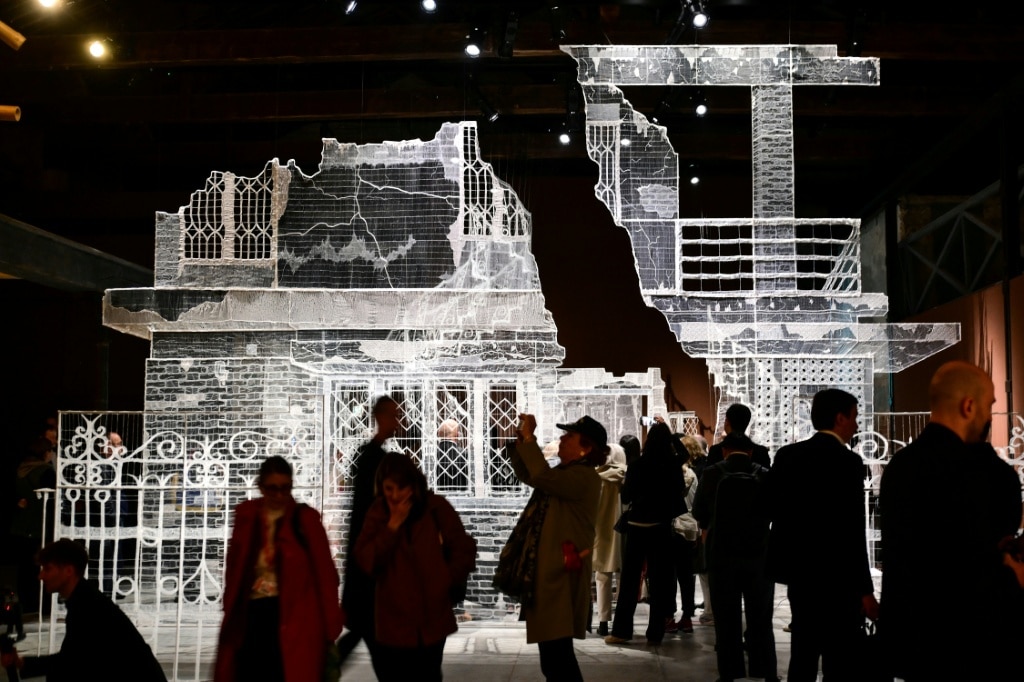
    The world’s most prestigious contemporary art gathering, the Venice Biennale, opens its doors to the public this Saturday against a backdrop of searing global geopolitical tension, as competing representations of warring nations have turned the iconic event into a flashpoint for international conflict. The proximity of participating pavilions for Russia, Ukraine, Israel, and Palestinian artistic collectives has sparked heated debate, with one key stakeholder comparing the arrangement to hosting a violent offender at a private gathering of friends. Just meters from Russia’s exhibition space in the Biennale’s central gardens sits a deer sculpture recovered from active front lines in Ukraine, a quiet but visceral symbol of the war that has split the artistic community since Moscow’s full-scale invasion in February 2022. Russia’s return to the Biennale, after a two-year absence following the invasion, triggered widespread international condemnation when the participation was announced in early March. Speaking on the ground in Venice Thursday, Ukrainian Culture Minister Tetiana Berejna delivered a scathing rebuke of the decision to allow Russia to participate. “Having them here in the Biennale is like inviting a serial killer to a dinner with your friends,” Berejna said, rejecting arguments that art should remain a space separate from geopolitics and welcome all participants regardless of state actions. She added that more than 340 Ukrainian artists have been killed by Russian forces since the start of the full-scale invasion, and that Russian forces have deliberately targeted Ukrainian cultural infrastructure. “When Russia comes to our country, they destroy our libraries, they burn our books, they destroy our museums,” she said. “Culture is targeted during this war.” The friction extends far beyond the ongoing war in Ukraine, as multiple other regions in active conflict have a presence at this year’s event. The United States and Israel, which launched a targeted strike on Iranian territory in late February, both maintain official pavilions; Iran, which was originally slated to participate, ultimately pulled out of the exhibition. Israel’s pavilion at the Arsenale, the Biennale’s sprawling secondary exhibition space housed in a former 19th-century shipyard, sits just a short walk from Ukraine’s national pavilion. While Palestine does not hold official state recognition from Italy and thus cannot host its own official national pavilion, a dedicated group exhibition focused on Gaza is being held at Venice’s Palazzo Mora, titled “Gaza – No Words – See the Exhibit”. Curator Faisal Saleh, founder of the Palestine Museum based in Connecticut, United States, said the exhibition was created to amplify Palestinian experiences amid ongoing military operations in Gaza. “There’s really no way to describe the horror that was inflicted upon the Palestinians in Gaza, and I don’t think we would want to be in the same place as the people who did that,” Saleh said. The heightened tensions have forced Italian authorities to deploy a permanent police presence near the Russian, Israeli, and U.S. pavilions, a visible reminder that the rifts from global war have the potential to spill over into the art event. According to Italian national news agency Ansa, roughly 2,000 protesters gathered in Venice Friday for a pro-Palestinian demonstration calling for the removal of Israel’s official pavilion from the Biennale. Earlier in the week, Russia’s pavilion became the site of a high-profile joint protest by members of Russian dissident group Pussy Riot and Ukrainian feminist collective Femen, where demonstrators marched with covered faces and bare chests to oppose Moscow’s participation. Biennale President Pietrangelo Buttafuoco defended the decision to include all participating entities, arguing that barring artists based on their nationality would undermine the event’s core purpose. “If the Biennale were to start selecting not works but affiliations, not visions but passports, it would cease to be what it has always been: the place where the world comes together, and all the more so when the world is torn apart,” Buttafuoco said Wednesday. That view is shared by many artists and Italian political leaders who argue art should not be reduced to a tool of political division. Israeli sculptor Belu-Simion Fainaru, whose installation “The Rose of Nothingness” features a water basin fed by a slow drip irrigation system, said the growing political rifts are eroding art’s fundamental mission. “The divisions at the Biennale were destroying the meaning of art… to unite people,” Fainalu told AFP. “I don’t think we should reduce the art world to a political arena.” Italian Deputy Prime Minister Matteo Salvini echoed that sentiment during a visit to the Biennale Friday, noting that individual artists should not be treated as official spokespeople for their governments’ military or political actions. “I don’t think American, Chinese, Israeli, or Russian artists are spokespeople for ongoing conflicts,” Salvini said. At the Palazzo Mora Gaza exhibition, around 100 hand-embroidered works created by Palestinian women living in refugee camps bring to life the experiences of people in Gaza over the past two years, with Saleh noting the pieces carry a raw power that outstrips even journalistic photography. In a bid to de-escalate tensions and center the theme of coexistence, event organizers scheduled three evenings of reflection focused on the theme of peace during the pre-opening week, featuring appearances by exiled Russian filmmaker Alexander Sokurov and prominent Palestinian writer and architect Suad Amiry.

  • Dozens of artists bring new life to a gigantic former ironworks on UNESCO’s world heritage list

    Dozens of artists bring new life to a gigantic former ironworks on UNESCO’s world heritage list

    In the southwestern German town of Völklingen, sitting just kilometers from the French border, a one-of-a-kind artistic collaboration has kicked off against a backdrop of industrial history. Dozens of urban creatives from 17 nations have gathered at Völklingen Ironworks — a decommissioned 19th-to-20th century iron production facility preserved as one of Europe’s most extraordinary industrial heritage sites — to launch the 2026 Urban Art Biennale, an event that continues a 15-year tradition of pairing contemporary street and graffiti art with the ironworks’ sprawling, atmospheric abandoned spaces.

    As a UNESCO World Heritage Site inscribed in 1994, Völklingen Hütte holds unique global significance: it is the only fully intact integrated ironworks from the 19th and 20th centuries remaining intact across Western Europe and North America. Industrial iron production halted here in 1986, and the entire site has been preserved exactly as it stood when operations shut down, with no major new constructions added after the mid-1930s. Today, the 6-hectare (nearly 15-acre) site operates as a public museum, where visitors still navigate a maze of cold furnaces, towering chimneys, and original warning signs marking hazards like crushing risks that once faced workers.

    For event organizers and participating artists, the ironworks is far more than a novel exhibition space — it is the foundational origin of street and urban art itself. “This location is at the core of street art and graffiti art,” explained Ralf Beil, general director of the Völklingen Hütte museum. “It all began in industrial places like this. Artists love this place and they do works for the Völklinger Hütte, in the Völklinger Hütte, with the Völklinger Hütte.”

    This year’s biennale features 50 commissioned site-specific works, each tailored to the ironworks’ unique industrial character, with a deliberate rejection of commercialized art to prioritize pure, place-driven creation. Standout works range from provocative installations to large-scale interventions that play off the site’s layers of history. France-based artist Tomas Lacque has created an installation featuring a small van, a mound of tires, children’s toys, and debris coated entirely in a layer of paint. Placed in a cavernous hall that once housed active iron furnaces, the piece evokes the imagery of fossil fuel-powered transportation frozen and covered in ash, echoing the way ancient Roman Pompeii was preserved after volcanic eruption.

    Spanish artist Ampparito has intervened directly into the site’s architecture, painting the phrase “no hay nada de valor” — translated as “There is nothing of value here” — in massive white lettering across the roof of one of the ironworks’ huge industrial sheds. The work is designed to be viewed from a 148-foot (45-meter) high viewing platform, turning a structural element of the former factory into a large-scale conceptual statement.

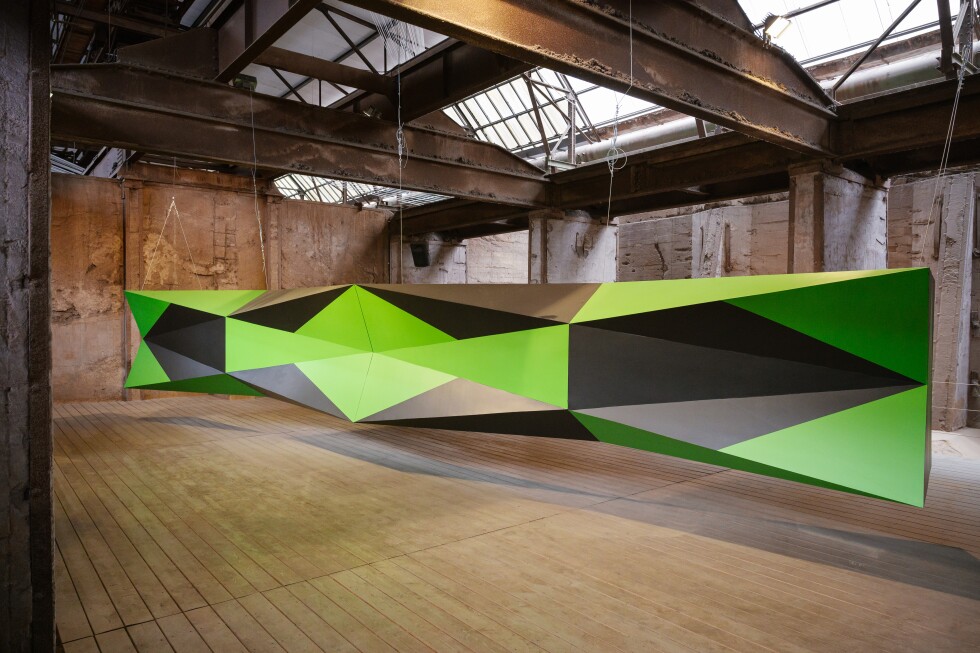
    Other contributors include Dutch artist Boris Tellegen, better known by his artistic moniker Delta, who installed a massive black-and-green wooden sculpture that anchors and illuminates one of the ironworks’ interior halls. The France-based collective Vortex-X, which specializes in upcycling salvaged industrial materials, stretched sweeping arcs of white industrial fabric across an entire hall for their work titled *Memory in transit*, creating a dynamic installation that evokes movement and the passage of time at the dormant site.

    Participating artists have emphasized the unique tension and beauty of creating contemporary work in a space that retains the grit and memory of its working past. British artist Remi Rough, who contributed small, sharply clean and clinical paintings that intentionally contrast with the site’s weathered texture, noted the unexpected aesthetic appeal of the abandoned facility: “It’s so dusty and it’s so old, but it’s beautiful, you know, there’s beauty in decay. I think what I’ve done makes you kind of just perceive it in a bit of a different way.”

    Danish artist Anders Reventlov echoed the respect many creators hold for the site’s working history, saying he felt humbled by the opportunity to create work in a space that was once a brutal workplace. “As somebody told me … it was hell to work here. Now it’s not hell. It’s like a nice place, people walking around, there are bees, there are beautiful flowers, but yeah, we still remember the history and that’s super important.”

    Beil emphasized that the biennale’s commitment to site-specificity rules out pre-made commercial works, keeping the focus entirely on art that responds to this one-of-a-kind location. “This is an installation for the space,” he said. “This is pure art.”

    The 2026 Urban Art Biennale opens to the public on Saturday and will run through November 15, welcoming visitors to explore the intersection of contemporary urban art and 20th-century industrial heritage.