The 70th iteration of the Eurovision Song Contest is set to open its doors in Vienna this Sunday, kicking off with the iconic turquoise carpet parade that will bring together competitors from 35 participating nations. What should be a joyous celebration of cross-cultural music and unity, however, has been overshadowed by a bitter, years-long controversy over Israel’s inclusion in the competition, driven by ongoing fallout from the 2023 Gaza conflict.
As delegations assemble in the Austrian capital, five longstanding Eurovision participants will be notably absent: Iceland, Ireland, the Netherlands, Slovenia, and Spain have all pulled out of the 2026 contest in protest of Israel’s participation. The debate over Israel’s presence first ignited in October 2023, when the Israeli government launched a large-scale military offensive in Gaza in response to a Hamas-led attack that Israeli authorities report killed approximately 1,200 people and took 251 hostages. To date, the Hamas-run Gaza health ministry puts the Palestinian death toll from the offensive at 72,628. A ceasefire has been in place since October 2025, but the political rift over Israel’s Eurovision participation has not healed.
Controversy has dogged Israel’s participation in the two most recent editions of the contest, held in Malmö 2024 and Basel 2025. During that time, mass anti-Israel protests filled host city streets, and Israeli contestants were assigned armed security detail for their protection. In 2025, Israeli entrant Yuval Raphael — a survivor of the October 7 attacks — told the BBC she had practiced performing through boos during rehearsals. Two stage invaders interrupted her performance during the grand final, and tensions boiled over after Raphael’s song unexpectedly placed first in the public vote, ultimately landing her second place overall after lower jury scores. Multiple countries alleged that the public vote was skewed by an unprecedented intervention from Israeli Prime Minister Benjamin Netanyahu’s government, which repeatedly urged its social media followers to vote for Raphael’s entry.
Last November, a coalition of countries pushed for a formal vote to exclude Israel from the 2026 contest. When the motion failed, the boycotts began, including the withdrawal of Ireland — a seven-time Eurovision winner — and Spain, one of the competition’s largest financial backers.
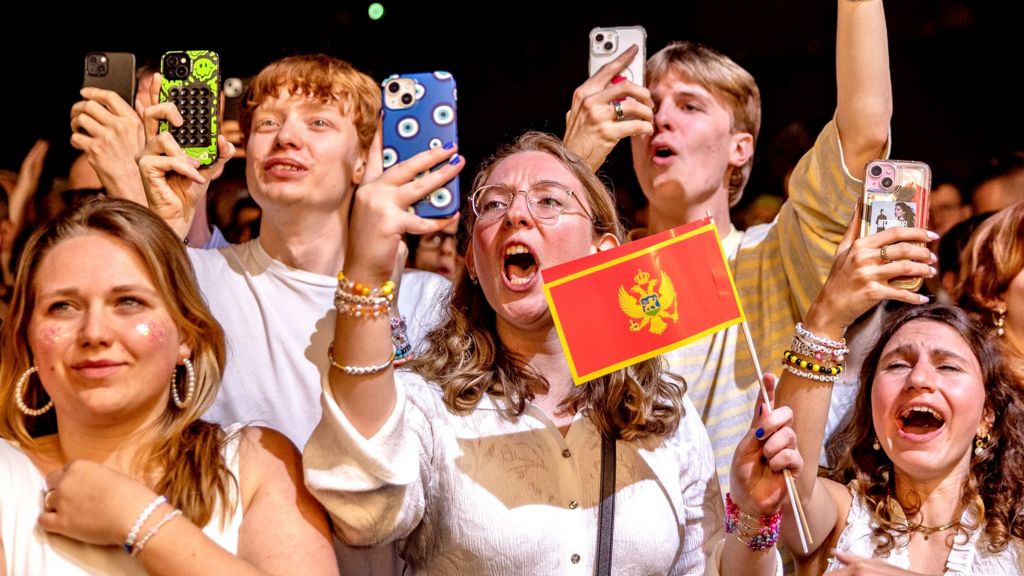
For Eurovision, a cultural event uniquely dependent on its passionate global fan community, the boycott and ongoing controversy have left audiences deeply divided. Unlike most major entertainment events, Eurovision integrates independent fan media directly into official proceedings, granting fan websites and blogs equal access to press centres, press conferences, and behind-the-scenes content alongside legacy outlets like the BBC and The New York Times. Fan creators publish year-round content, from pre-selection show analysis to rehearsal leaks, voting predictions, and staging breakdowns, cementing their central role in the event’s ecosystem.
“The fan base is very important for the commercial dimension of Eurovision,” explained Dean Vuletic, historian and author of *Postwar Europe and the Eurovision Song Contest*. “When it comes to merchandising, when it comes to ticket sales, the fans are really the ones fuelling this Eurovision industry. They’re the ones you can count on to attend the contest, even when it becomes mired in political controversy.”
In response to the 2026 boycott, a number of prominent fan platforms have suspended all coverage of this year’s contest. “The Eurovision we once knew, that shaped this community and inspired us to create this channel, just isn’t the one we fell in love with all those years ago,” wrote the team behind cross-continental fan page Eurovision Hub. Ireland’s Eirevision podcast echoed that sentiment: “A contest founded on unity, peace, and connection has never felt more divided. We no longer recognise the Eurovision Song Contest we grew up with.”
Other conflicted fans have sought a middle ground. Welsh Eurovision fan Philip Dore published a widely shared reflective piece on fan site ESC Insight addressing the split, titled “So, what do Eurovision fans do now?” Dore noted that for many, Eurovision is far more than a one-night song competition: the event has longstanding deep ties to LGBTQ+ liberation and community, and is a key space of belonging for neurodiverse fans. He outlined a range of options for divided fans, from full personal boycott to a “halfway” approach that involves following pre-contest build-up but stepping back once events kick off in Vienna.
“This isn’t an easy situation for anyone,” Dore wrote. “Many people in the community are feeling a mix of sadness, anger, and loss, and I have no intention of adding judgment to anyone.”
Despite the deep rift, many of the traditional signs of Eurovision excitement remain visible across social media, where fans continue to share photos, memes, and interviews ahead of the contest. All tickets for nine total events in Vienna sold out in record time, with every grand final seat claimed in just 14 minutes. “To see every single show sell out so quickly is a powerful reminder of what the Eurovision Song Contest represents – joy, togetherness and shared experience at a time when that feels more important than ever,” said Martin Green, the British producer overseeing the 2026 contest.
The on-the-ground mood among fans is far more nuanced, however. “It still feels exciting. It still feels like something that I couldn’t miss. And, that said, it feels different,” said Rob Lilley-Jones, host of UK-based podcast Euro Trip. “There’s still that fun element but now, and for the last few years, you are going into Eurovision week with a sense of apprehension and nervous anticipation.” Lilley-Jones called the 2024 Malmö contest, marked by heightened security and pervasive backstage tension, the worst in the event’s history.
Marcos Maximillian Tritremmel, president of Austria’s national Eurovision fan club, told Germany’s Der Spiegel that he understands the motivations for protest, but confrontations with fans have crossed a line. “But when you get yelled at on your way into a concert hall – ‘What are you doing here? Why are you supporting the genocide?’ – at that point, it stops being funny.”
Lilley-Jones says he has debated ending his podcast over the controversy, but ultimately decided that continuing to create content feels like the right choice: if the contest can still bring small moments of joy to audiences navigating a difficult global context, he argues, it is worth continuing. That approach — prioritizing dialogue over further division — has become the prevailing attitude among many fans who choose to engage with this year’s event.
Vuletic, who has studied the contest’s long history of political controversy, argues that Eurovision will weather this current rift just as it has overcome past crises. He notes that claims this is the “most political Eurovision ever” overlook decades of political unrest tied to the event. For example, the 2009 contest in Moscow was overshadowed by violent police crackdowns on a gay pride rally held to coincide with the event, and the 2012 contest hosted by authoritarian Azerbaijan faced widespread criticism over the regime’s suppression of political dissent; that year’s winner, Sweden’s Loreen, publicly highlighted human rights abuses during her visit.
“The media tends to sensationalise the current moment but we’ve always had to navigate the political context [of the contest],” Vuletic said. “And the fans have always kept coming, no matter what.”
Organizers have worked to balance competing demands ahead of the 2026 opening: host Austrian public broadcaster has confirmed it will not ban Palestinian flags from the venue or censor audience booing of the Israeli entry. That said, the boycott will have concrete impacts: broadcasters in the boycotting countries will not air any 2026 content, almost guaranteeing a drop in global viewing figures. Uncertainty also lingers over what would happen if Israeli entry Noam Bettan’s ballad *Michelle* — ranked as one of the year’s strongest competitors — takes home the win.
For Eurovision’s fans, who have already navigated years of growing tension, the 2026 contest will unfold with far more trepidation than the usual upbeat pre-event anticipation.