分类: entertainment

  • Chaos marks the Venice Biennale after the jury quits over Israeli and Russian participation

    Chaos marks the Venice Biennale after the jury quits over Israeli and Russian participation

    The world’s most prestigious contemporary art event, the Venice Biennale, opens its 2025 edition this Saturday, marking one of the most politically charged and chaotic iterations in the exhibition’s decades-long history. What was meant to be a celebration of global artistic vision has been upended by geopolitical conflict after the awards jury stepped down en masse to protest the inclusion of Israeli and Russian national pavilions, leaving no Golden Lion awards granted by official adjudicators. Compounding the friction, large-scale public demonstrations have been staged outside the two contested pavilions, amplifying tensions that have split the global arts community.

    While the jury framed its protest around its stance that only nations facing International Criminal Court investigations for alleged human rights violations should be excluded from awards consideration, the move has drawn further debate, with many critics arguing the United States should have been held to the same standard. Renowned British-Indian sculptor Anish Kapoor, one of the most high-profile voices in the protest, summed up the widespread frustration driving the unrest: “We are pushing back against the politics of hate and war that have plagued our world for far too long.”

    In a sudden shift to an open, audience-driven selection process, visitors will now step into the jury’s role, casting votes for two top honors: best national pavilion from the 100 participating countries, and best participant in the Biennale’s central curated exhibition, titled *In Minor Keys*. Modeled after the fan-voted Eurovision Song Contest, the results will remain under wraps until the exhibition’s closing day on November 22.

    Amid the political upheaval, the 2025 Biennale carries a historic legacy: it is the first major central exhibition curated by an African woman, the late Cameroonian curator Koyo Kouoh, who passed away one year ago before the show could be completed. Five collaborating curators stepped in to bring Kouoh’s vision to life, a vision centered on amplifying underrepresented minority perspectives from across the globe. The exhibition greets visitors with a towering, red feather-sculpted costume embroidered with glass beads, rooted in the Black Masking carnival culture of New Orleans, a tradition born from cultural practices brought to the Americas by enslaved Africans. In total, Kouoh selected 110 artists and collectives to participate, staying true to her core mission of carving out space for creators who are often sidelined by mainstream arts institutions. “She dedicated her practice to making space for every voice to shine, and that ethos runs through every corner of this exhibition,” explained co-curator Marie Helene Pereira.

    Leading the slate of nationally curated pavilions, Britain’s representative, Turner Prize-winner Lubaina Himid, brings a deeply personal exploration of immigration, belonging and what it means to build a home in an adopted country. Titled *Predicting History: Testing Translation*, the presentation features vivid, brightly colored canvases that depict couples navigating the everyday dilemmas of being a newcomer. Himid, who was born in Zanzibar and has lived in Britain for more than 70 years, broke down the core tension of one standout work: “We have two architects debating where to build. One argues that building a permanent structure would prove they have contributed to the nation’s culture. The other says no – we need to build something we can escape from if we have to leave tomorrow.”

    Off the main exhibition grounds, the Vatican has stepped in to offer visitors a quiet spiritual escape from the surrounding chaos with its pavilion, the *Mystic Garden*, installed on the grounds of the Discalced Carmelite order adjacent to Venice’s central train station. Guests wander through working vineyards, past a fruiting pomegranate tree and beds of fragrant herbs, wearing headphones that deliver a curated soundscape: reimagined compositions by 12th-century abbess, mystic and composer St. Hildegard of Bingen, reworked by contemporary artists including Brian Eno and Patti Smith. “Music helps us turn inward and connect with what Hildegard called the symphony that God placed within every life,” explained Father Ermanno Barucco, prior of the Carmelite order overseeing the installation.

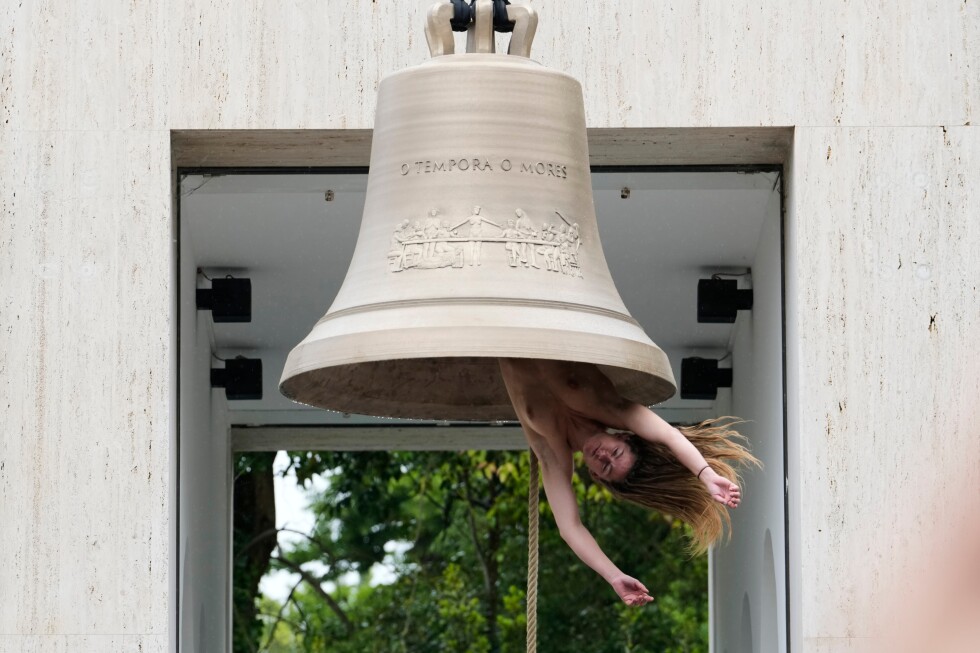
    Austria’s pavilion has become one of the most talked-about presentations on the Giardini grounds thanks to its unflinching, provocative performance art, which uses unorthodox materials to critique overtourism and the commercialization of Venice. Outside the pavilion, a naked female performer hangs from a giant brass bell, acting as a human clapper that rings the instrument with every movement. Inside, another nude performer rides a Jet ski in circles inside a large water tank, a visual metaphor for Venice’s transformation into nothing more than a crowded amusement park for international tourists. In one of the exhibition’s most controversial pieces, a third nude performer breathes through a scuba regulator while submerged in a tank of filtered toilet water pulled from nearby facilities, for a project titled *Seaworld Venice*.

    Against the backdrop of calls for boycott, Israeli pavilion artist Belu-Simion Fainaru, a Romanian-born Israeli, has centered his installation on the tension between love and war, rooted in Jewish mysticism. Water drips slowly from suspended glass tubes into a central pool, pausing every cycle for exactly 42 seconds – a reference to the 42-day divine creation of the world in Jewish mystical tradition. Locks of love, similar to those placed by romantic couples on European bridges, hang across the pavilion walls, engraved with the commandment “Love thy neighbor as thyself” in Hebrew and the hopeful phrase “This too shall pass.” Fainaru pushed back against calls to exclude Israel, framing his own participation as a political act in favor of dialogue: “I oppose boycotts, and I stand for open conversation. That is my political statement. The jury’s move to exclude Israel from awards is nothing less than discrimination.”

    Closing out the slate of standout national presentations, the Estonian pavilion centers the unrecognized labor of women through a durational, living artwork. Artist Merike Estna is working on-site throughout the entire six-month run of the Biennale to complete a large-scale wall painting inside a converted former church that now operates as a community gymnasium. The layered history of the space mirrors Estna’s artistic practice, which builds deeply textured surfaces through repeated, spontaneous applications of paint over time. The daily act of painting is intentional, meant to draw attention to the underappreciated everyday work that sustains communities and the planet. Curator Natalia Sielewicz described the project as “the everyday feminism of sustaining life, of sustaining our planet.”

  • Anti-work anthems, Boy George and controversial lyrics: A guide to all 35 Eurovision songs

    Anti-work anthems, Boy George and controversial lyrics: A guide to all 35 Eurovision songs

    As a much-anticipated burst of joy for global audiences weary from geopolitical and social uncertainty, the 2026 Eurovision Song Contest is gearing up to kick off its semi-final round in Vienna this Tuesday. This year’s competition brings a smaller lineup than recent editions, with just 35 participating nations – the most compact field since 2003 – a shift driven by a widespread partial boycott over Israel’s inclusion in the contest. While the political controversy remains impossible for many fans to separate from the spectacle, the 2026 iteration still delivers the chaotic, larger-than-life pageantry that has made the annual event a cultural staple, with everything from a silver-painted AI-themed performance and a fake gorilla cameo to pop legend Boy George and the longest sustained high note in contest history.

    Following the trend of back-to-back winners Nemo of Switzerland and JJ of Austria, who integrated operatic vocal techniques into their winning tracks, 2026 sees a wave of contestants drawing from classical and operatic inspiration. Leading this pack is 17-year-old French prodigy Monroe, the youngest competitor this year, whose entry *Regarde!* blends frenetic string arrangements, glitched drum beats and powerhouse “Queen of the Night” style vocals. Billed as a celebration of the diverse musical heritage of France, the track builds to a showstopping climax, and industry analysts predict a top 10 finish with thoughtful stage staging. Montenegro’s Tamara Živković takes a maximalist approach on *Nova Zora*, pairing a thunderous techno beat with a Greek chorus to deliver a message about women breaking gender barriers. Co-written by professional opera singer Vesna Aćimović, the track comes as Montenegro aims to end a decade-long semi-final qualification drought that stretches back to 2015. Closing out the operatic category is Latvia’s Liene Atvara, whose haunting ballad *Ēnā* explores the lifelong trauma of growing up with a parent struggling with alcoholism. The soft, muffled opening verses build to a cathartic operatic finale that is guaranteed to leave not a single dry eye in the venue.

    Controversy has already erupted around Romania’s return entry *Choke Me*, performed by Bucharest physics master’s student Alexandra Căpitănescu. Critics have labelled the track dangerous and reckless, claiming its lyrics reference unsafe sexual choking, a practice linked to permanent brain injury and death. But Căpitănescu pushes back against this interpretation, explaining the song is a metaphor for the emotional suffocation caused by self-imposed pressure and self-doubt. Regardless of the lyrical debate, the track itself is widely praised for its gritty, urgent energy, built on churning demonic guitar riffs and Căpitănescu’s distinctive raspy vocals. Equally layered is Switzerland’s entry *Alice* from Veronica Fusaro: on the surface a gentle waltz-time ballad about love, the track actually tells a chilling story of abusive stalking from the perspective of the perpetrator, adding a dark twist that elevates the already solid composition.

    For fans craving upbeat dance tracks to cut loose to, the 2026 contest delivers no shortage of high-energy options. Bulgaria’s entry *Bangaranga*, performed by established pop star Dara, is a delightfully unapologetic, sass-filled bop packed with a speaker-shattering drum beat and an gratuitous, crowd-pleasing dance break. Germany’s Sarah Engels offers a more conventional Euro-dance anthem *Fire*, which draws clear inspiration from Dua Lipa’s pop-dance sound and relies on the familiar rhyme of “fire” and “desire”, but the track remains stubbornly catchy enough to perform well in public televoting. Belgium’s brooding pop entry *Dancing On the Ice* from Essyla is a sleek, hypnotic track that lacks the knockout chorus needed to take the top prize, while Cyprus’s Antigoni – a former *Love Island* contestant – invites audiences to the dance floor for sun-soaked Mediterranean escapism with *Jalla*. Blending traditional Tsifteteli belly dance rhythms with the Latin-infused sensuality associated with Shakira, the track already made headlines when a group of conservative Cypriot public figures condemned its music video as offensive to local history and traditions – a controversy that has only boosted the track’s popularity.

    Many 2026 contestants have embraced the challenge of packing multiple distinct sonic ideas into Eurovision’s strict three-minute time limit, resulting in some of the most surprising genre-bending entries in recent memory. Current pre-contest favorites Finland’s Linda Lampenius & Pete Parkkonen deliver *Liekinheitin* (Flamethrower), which opens as a brooding passionate ballad before abruptly shifting into high-energy demonic electro-pop, anchored by a frantic violin solo. Already a number one hit in Finland, the track uses the metaphor of third-degree burns from intimate contact to describe all-consuming red-hot love, building to a climax as tense as a bomb countdown. Close behind Finland in the rankings is Greece, whose entry *Ferto* from Akylas blends traditional Greek instrumentation with retro Super Mario video game sound effects and a pulsing house beat. While the track initially reads as a brash anthem chasing fame and fortune, it shifts to a heartfelt tribute to Akylas’s single mother, who raised him through Greece’s devastating financial crisis, with a promise to end their lifelong struggle. Poland’s Alicja *Pray* also uses clever misdirection, opening with a gospel-style organ and mass chorus before shifting into sharp-edged rap, though the overall composition feels disjointed. Lithuania’s Lion Ceccah makes a dramatic visual statement, performing *Sólo Quiero Más* fully covered in silver paint. Sung in six languages, the track explores the rise of artificial intelligence and growing human detachment from reality, with a stage performance reenacting the struggle to break free from machine dependence – a concept that comes off as overly dramatic for many critics.

    This year’s contest features two tracks centered on the universal frustration of corporate burnout and workplace dissatisfaction. Armenia’s Simón Hovhannisyan leads this theme with the gritty rock track *Paloma Rumba*, whose lyrics mock unproductive corporate meetings and empty workplace perks, with the line “This meeting could have been an email / Free coffee won’t keep me here, man.” His stage performance sees him flinging stacks of paper across the stage while backflipping toward the exit, backed by traditional Armenian folk instruments the duduk and dohl, though critics note the high-energy track becomes exhausting over its three-minute run time. The United Kingdom’s entry from the uniquely named Look Mum No Computer echoes this frustration. Over a rambunctious synth-driven sound that blends Kraftwerk’s electronic experimentation with Kaiser Chiefs’ Britpop energy, he laments being trapped in an office cubicle before escaping on a road trip across Europe, delivering the catchy chorus “Ein, Zwei, Drei” in German – a playful move clearly designed to appeal to EU voters, which the UK has struggled to win over in recent years. The entry has already divided audiences: some praise the UK for taking a creative risk, while others find the track irritating, meaning its final result will likely hinge on the quality of its live performance.

    The slow, dramatic ballad category is packed with powerhouse vocal performances this year. Australia is sending one of its biggest pop stars, Delta Goodrem, to Vienna with *Eclipse*, a sweeping romantic ballad in the tradition of Celine Dion that describes a passion so intense it blocks out the sun. While the premise is scientifically unlikely, Goodrem’s conviction and vocal control make the track a credible contender for the grand prize. Denmark’s Søren Torpegaard Lund delivers a torrid tale of toxic romance on *Før Vi Går Hjem* (Before We Go Home), anchored by a simmering intensity that captivates audiences even if the simple chorus feels unremarkable. Azerbaijan’s Jiva delivers a cinematic break-up ballad *Just Go*, with cold, cutting lyrics about erasing a former lover from one’s soul, though the track blends into the crowd of similar overblown ballads that have failed to qualify for the final in recent years. Malta’s Aidan, one of the country’s biggest stars, brings a tender, wounded sincerity to the sentimental ballad *Bella*, in which he pines for the title character, whose name is repeated 20 times across the track. Israel’s Noam Bettan offers another heartbreak ballad *Michelle*, which tells the story of being trapped in emotional pain after a devastating relationship, with flourishes of Spanish guitar, but fails to connect emotionally with listeners. Ukraine’s band Leléka delivers one of the most resonant entries of the contest with *Ridnym*, a delicate, understated track that explores the feeling of hopelessness during war and the quiet drive to keep going despite everything. The song closes with a stunning 30-second-long high note – the longest in Eurovision history – that leaves audiences breathless just thinking about it.

    Several entries this year center deeply emotional, personal storytelling rooted in national history. Albania’s Alis delivers the devastating ballad *Nân*, which tells the story of a mother waiting for her child to return home, a theme that resonates deeply in Albania, where 40% of the population has emigrated since the fall of communism in 1991. A former X Factor winner, Alis delivers the track with a raw sincerity that is hard to match. Croatia’s ethno-pop quintet Lelek shares a harrowing historical story on *Andromeda*, which explores the suppression, abduction and forced marriage of Christian women during the Ottoman Empire, and the secret cross tattoos they used to protect their identity. Portugal’s entry *Rosa* from Bandidos do Cante stands out from the crowded field with its simple, stunning a capella arrangement drawn from the traditional cante Alentejano musical tradition, born from bull-herders who sang to coordinate their work. Turning the energy back up, Moldova’s Satramos delivers *Viva, Moldova!*, a raucous celebration of the first generation of Moldovans born after independence, blending the upbeat energy of hits like Chumbawamba’s *Tubthumping* with traditional pan flute. Satramos performs in a football jersey printed with the number 373 – Moldova’s international dialing code – and the track even opens with a playful nod to the arrival jingle played at Chișinău International Airport, making it a joyful love letter to Moldovan culture.

    For fans craving nostalgic disco vibes, 2026 offers several throwback entries. San Marino brings a high-profile collaboration with three-time contestant Senhit teaming up with 80s pop icon Boy George for the transcontinental disco track *Superstar*, though critics note the track lacks the fizz of past memorable entries, falling flat despite its star power. Georgia’s entry *On Replay* from junior Eurovision 2008 winners Bzikebi is a generic club track that fails to stand out, despite the band’s energetic live performance. Italian veteran Sal Da Vinci’s throwback disco track *Per Sempre Sì*, dedicated to his long-time wife and childhood sweetheart, leaves audiences with a warm, nostalgic glow, though its dated sound makes a win unlikely. Luxembourg’s Eva Marija, a songwriting student at a London music school, rounds out this group with *Mother Nature*, an uplifting eco-themed pop track that draws comparisons to young indie-pop stars Griff and Sigrid, which her classmates immediately identified as a potential hit when she first performed it.

    Several 2026 entries play with language and unexpected conceptual narratives, resulting in some of the contest’s most quirky entries. Host nation Austria pins its hopes on 19-year-old Cosmó, whose track *Tanzschein* – literally translated as “dance license” – opens with the deadpan declaration “You need a dance licence, I have to be strict about that” over a slinking bass line. The track compares clubgoers to jungle animals, and features a stage performance with costumed gorillas and lions, leading to widespread confusion over whether it’s a commentary on toxic nightlife culture or just a chaotic bit of fun. Sweden’s Felicia performs *My System* wearing a diamond-studded face mask, which she reveals represents her struggles with mental health and self-image, while the lyrics tell the story of a destructive relationship she experienced early in her music industry career, paired with a thunderous techno drop sure to shock older audiences. Czechia’s Daniel Žižka embraces mixed metaphors on *Crossroads*, placing himself simultaneously in open waters, foreign fields, a golden cage and a vicious spider web to explore the difficulty of making decisions in an age of information overload. The brooding ballad builds to a stunning vocal climax, but it remains to be seen whether voters will be turned off by its convoluted lyrical concept.

    Rock makes a strong return to the 2026 contest, five years after Måneskin’s iconic victory. Norway’s Jonas Lovv delivers *Ya Ya Ya*, a catchy, charisma-filled stomp-rock track with a riff echoing The Hives’ *Hate To Say I Told You So*, built for group singing. Estonia’s Vanilla Ninja, who previously represented Switzerland in 2005, offers the perky pop-rock anthem *Too Epic To Be True*, which carries the playful energy of early 2000s *Josie & The Pussycats*, though it currently sits near the bottom of pre-contest betting odds. For fans who prefer their rock dark and menacing, Serbia’s nu-metal band Lavina delivers *Kraj Mene* (Next To You), a smouldering track about suffocating infatuation that builds to a genuinely terrifying final scream from frontman Luka Aranđelović – a chilling note to end our preview on.

    With semi-finals set to kick off in just a few days, the 2026 Eurovision Song Contest delivers something for every taste, from dance bops to emotional ballads, conceptual oddities to crowd-pleasing rock. All that remains is to see which entries will win over the global audience and claim a spot in the grand final, and hopefully end the UK’s recent streak of low-point finishes.

  • Rebel Wilson accused of ‘complete revision of history’ as defamation case closes

    Rebel Wilson accused of ‘complete revision of history’ as defamation case closes

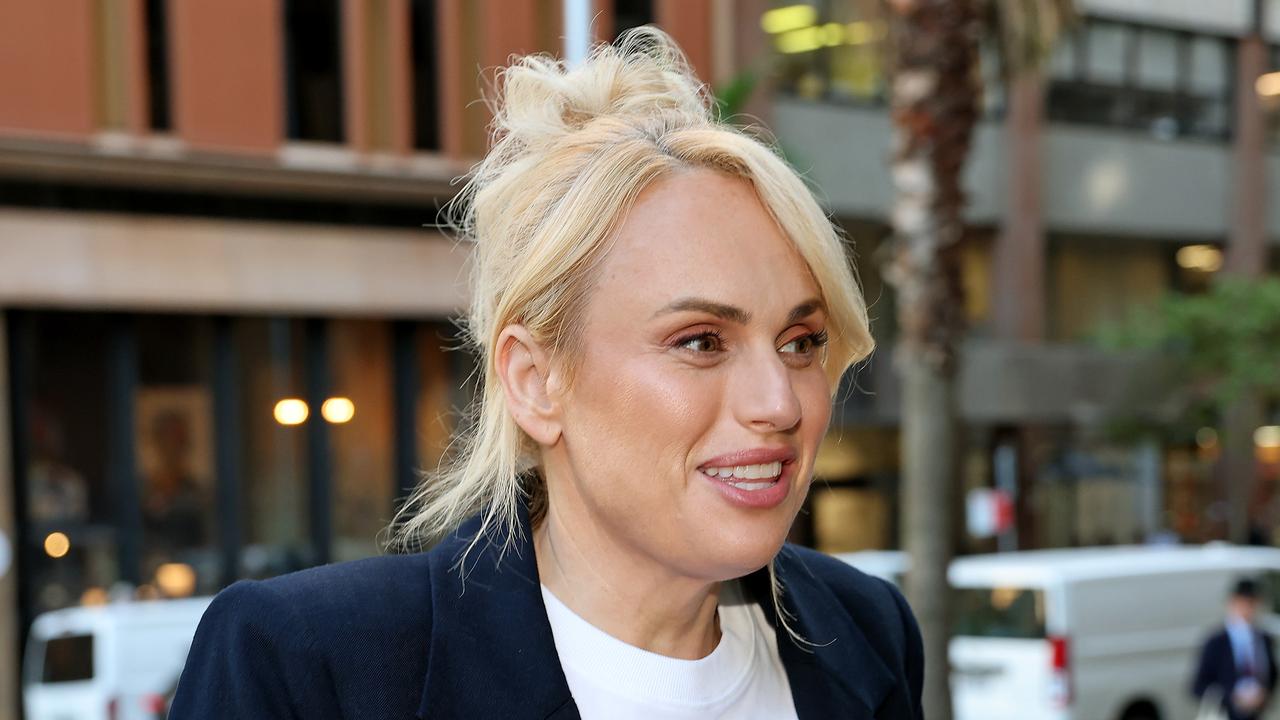
    A high-profile defamation case centered on Hollywood star Rebel Wilson has wrapped its closing arguments in an Australian court, with both sides trading starkly conflicting accounts of events that unfolded on Sydney’s Bondi Beach back in 2023. The lawsuit was filed by 2021 Western Australian acting academy graduate Charlotte MacInnes, a rising young performer who landed a lead role in Wilson’s directorial debut feature *The Deb*. MacInnes accuses Wilson of spreading false, reputation-ruining claims about her across two series of Instagram posts in 2024 and 2025, and is now seeking aggravated damages for the alleged harm. At the heart of the legal battle is a specific incident that took place in September 2023, when MacInnes joined *The Deb* producer Amanda Ghost for a daytime swim at the iconic coastal spot. Court testimony confirmed that Ghost suffered a sudden, severe allergic reaction to the cold ocean water, breaking out in painful red welts and experiencing uncontrollable shaking. To help her recover, the pair retreated to Ghost’s nearby luxury rental apartment to warm up. What followed is the subject of intense dispute: MacInnes ran a bath for the ailing producer, stepped into the tub herself to get warm while both women remained in their swimwear, and Ghost joined her shortly after. Ghost’s assistant even brought hot drinks to the pair and sat with them briefly, confirming no inappropriate behavior occurred in the moment, according to the plaintiff’s legal team. In a sworn affidavit, Wilson claimed that the day after the incident, MacInnes approached her saying Ghost had pressured her into joining the bath, which left her feeling sexually uncomfortable. Wilson stated that she was deeply troubled by the account and suspected a sexual advance had taken place. Two days later, Wilson followed up with MacInnes via phone, however a text message Wilson sent to Ghost immediately after that call, which was entered into court evidence, read: “Charlotte says all good. She just meant ‘it was a bizarre situation’ not that she felt personally uncomfortable x.” MacInnes’s legal team, led by senior barrister Sue Chrysanthou, has argued that Wilson’s entire narrative of the incident is a deliberate, malicious falsification. In closing statements, Chrysanthou slammed Wilson’s account as a “complete revision of history” that defies basic logic, pointing out that Ghost was experiencing a medical emergency at the time, making any coordinated sexual advance impossible. She went as far as labeling Wilson a “fantastical liar” who invented the “terrible” claims against MacInnes for personal gain during contract negotiations for *The Deb*, where Wilson was seeking a larger payout from producers. The plaintiff’s team also added accusations that Wilson engaged in a pattern of bullying against female crew and cast members on the set of the film, a claim Wilson has repeatedly dismissed as “absolute nonsense.” An additional allegation claims that Wilson commissioned a smear website to target Ghost, a charge she also firmly denies. On the defense side, Wilson’s lawyer Dauid Sibtain SC pushed back against MacInnes’s claims, arguing that the young actress has altered her account of the incident over time to secure professional benefits from the film’s production team. Sibtain told the court that MacInnes’s career has not suffered any harm from Wilson’s social media posts — in fact, he noted, her career has flourished in the years since the incident, with her landing a major record deal and multiple additional acting roles through connections to Ghost, as he alleged she was promised in exchange for retracting any claims of harassment. The case has now completed three weeks of testimony and closing submissions, with Justice Elizabeth Raper expected to reserve her decision on the case. This is not the only legal trouble Wilson is currently navigating: the actress is already facing two separate lawsuits from *The Deb* producers, including one filed in Australia and another in the United States, both originating from disputes tied to the production of the film.

  • Rebel labelled ‘fantastical liar’ whose own witnesses ‘destroyed’ her credit as her blockbuster defamation trial closes

    Rebel labelled ‘fantastical liar’ whose own witnesses ‘destroyed’ her credit as her blockbuster defamation trial closes

    One of Hollywood’s most high-profile legal disputes, a defamation lawsuit brought by actor Charlotte MacInnes against A-lister Rebel Wilson over claims made during production of Wilson’s directorial debut *The Deb*, has reached its final stage after two weeks of hearings at Sydney’s Federal Court. As Justice Elizabeth Raper prepares to issue a ruling, closing arguments delivered Friday painted sharply conflicting portraits of the two stars at the center of the case.

    The dispute traces back to an incident at Bondi Beach in September 2023, when producer Amanda Ghost suffered a sudden medical episode that left her with severe hives and uncontrollable shaking. After the incident, Ghost and MacInnes — Wilson’s co-star in the upcoming musical comedy — took a bath together in swimwear to help ease Ghost’s symptoms.

    Wilson has claimed that MacInnes privately told her she felt uncomfortable following the bath, before later retracting the complaint to advance her acting career. In a series of 2024 Instagram posts, Wilson publicly shared these claims, moves Sue Chrysanthou SC, MacInnes’ barrister, described as a public takedown of the young rising actor. MacInnes has repeatedly denied ever raising a complaint of discomfort or misconduct, saying the entire narrative was fabricated by Wilson.

    In her closing submissions, Chrysanthou delivered a blistering attack on Wilson’s credibility, arguing that testimony from the Hollywood star’s own witnesses had completely undermined her version of events. “She is a fantastical liar who has made up terrible, terrible allegations against multiple people, and her own witnesses have discredited her,” Chrysanthou told the court. She further argued that any claim of sexualized misconduct was inherently illogical, given the context of the emergency incident: “On the question of inappropriate and sexual behaviour, when one accepts the circumstances of why they were in the bathroom in their swimmers, freezing, one could hardly imagine a less sexy environment for some kind of harassment to occur. Shaking and hives…it’s not exactly an environment where one would accept some kind of sexual approach. It defies logic.”

    Chrysanthou highlighted key inconsistencies in Wilson’s testimony, most notably her claim that she reported the alleged complaint to local film producer Greer Simpkin the day after the incident and was instrumental in the decision to move MacInnes out of the shared Bondi penthouse. Simpkin — called as a witness by Wilson’s legal team — testified that she first learned of the incident a full week later, when Ghost approached her to arrange the move, directly contradicting Wilson’s account. Chrysanthou called Simpkin’s testimony “devastating” for Wilson, saying the entire narrative of Wilson taking prompt responsible action as director was a deliberate fabrication, not an innocent mistake. “This is a concoction by Ms Wilson … that she apparently took responsible steps as a director and reported it to the local producer, and then took advice from her to raise it with Ms Ghost. This is not an error, this is a concoction,” she said.

    Rebuffing the claim that Simpkin’s testimony destroyed Wilson’s credibility, Dauid Sibtain SC, Wilson’s lawyer, argued the producer did not have a clear, flawless recollection of the timeline of events, and had simply given the best testimony she could offer. Sibtain pushed back against the assertion that Wilson had invented the story, arguing there was no logical motive for his client to disrupt production harmony and create conflict between Ghost and MacInnes. He maintained that Wilson is a “witness of truth” who accurately reported the complaint she received, noting “A senior producer and a junior actor being in a bath together, if anyone heard that and no other facts, one would assume a complaint would be imminent.” He also counterclaimed that MacInnes had given false testimony under oath, pointing to what he described as evasive answers about the professional benefits MacInnes had received through her connection to Ghost.

    Chrysanthou rejected the defense’s arguments outright, retorting: “That’s what she does. She is a liar who makes up stories about people, it’s hard to explain why.” She also told the court that the lawsuit had taken a devastating toll on the young actor, who has not received new acting work since the dispute became public and has suffered from severe anxiety that has disrupted her sleep and appetite. “It’s actually beggars belief my friends have suggested that my client is living her dreams,” Chrysanthou said. “No young woman dreams to be pulled into the spotlight by a celebrity…and lied about.”

    After closing arguments concluded, Justice Raper reserved her decision, with no timeline for a ruling released as of yet.

  • AI actors not eligible for Golden Globes, say organizers

    AI actors not eligible for Golden Globes, say organizers

    Hollywood’s awards season rulebook just got a clear new update on artificial intelligence, with Golden Globe organizers announcing Thursday that performances created entirely or substantially by AI will not be considered for the prestigious annual honors. The policy shift comes just days after the Academy of Motion Picture Arts and Sciences, the governing body behind the Oscars, laid out its own restrictive AI rules for the film industry’s top awards, marking a unified industry stance on the hotly contested technology.

    The new Golden Globe guidelines do not implement a blanket ban on all AI use in performances, however. Rulemakers have carved out exceptions for technical and cosmetic AI applications that enhance rather than replace human work. Uses such as AI-powered de-aging, aging effects, or minor visual adjustments to a performer’s on-screen appearance are allowed, as long as the core, underlying performance is delivered by the credited human actor, and AI does not fundamentally replace or alter the human’s creative work. Only submissions where the performance itself is primarily generated or created by artificial intelligence are marked ineligible.

    This coordinated move by two of Hollywood’s most prominent awards organizations comes amid years of growing tension around AI in the entertainment sector. The issue was a core bargaining demand during the 2023 Hollywood labor strikes, which shut down most film and television production for months. Both acting and writing guilds argued that unregulated use of AI could displace human workers, erase creative credits, and threaten the long-term livelihoods of industry professionals.

    The latest policy changes also follow a high-profile demonstration of AI-generated acting that sparked widespread industry debate. Last year, an AI-recreated version of late Hollywood star Val Kilmer was unveiled at a gathering of cinema chain owners, one year after Kilmer’s death. The digitally de-aged Kilmer appeared in a trailer for the upcoming archaeological action film *As Deep as the Grave*, delivering a full line of dialogue to another character. The project was developed with the full support of Kilmer’s family, who granted creators access to the actor’s extensive personal video archives to recreate his likeness and performance at multiple stages of his life. Even with family approval, the project renewed urgent conversations about how AI should be regulated in professional entertainment and awards recognition.

  • Venice Biennale targeted by strike action and protests over Israel’s involvement

    Venice Biennale targeted by strike action and protests over Israel’s involvement

    One of the world’s most prestigious international arts events, the 2026 Venice Biennale, has become the center of a growing global protest movement demanding the exclusion of Israel’s national pavilion, with a 24-hour cross-sector cultural strike scheduled for Friday during the festival’s pre-opening events. This planned industrial action marks the first organized strike in the 130-plus year history of the iconic exhibition, growing out of mounting demonstrations that launched on the festival’s opening press week over both Israel and Russia’s inclusion in this year’s event.

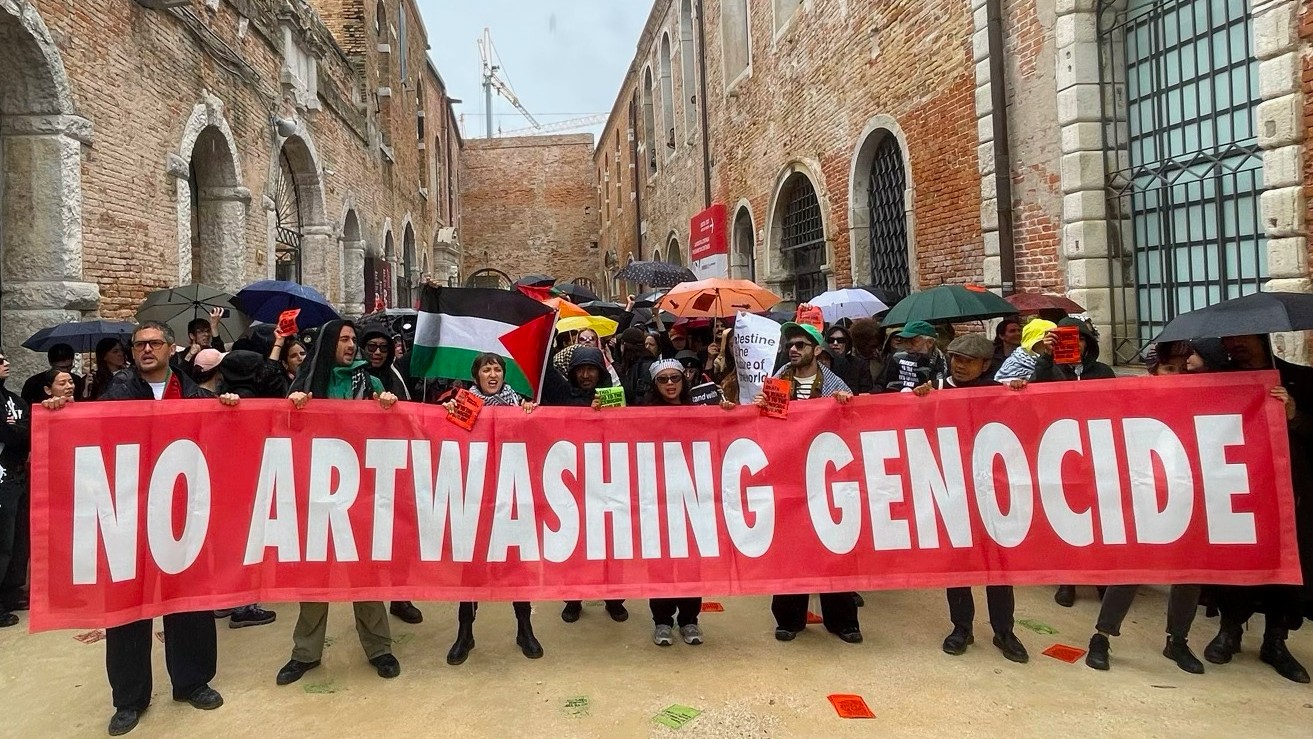
    The unrest began on Wednesday, when the Art Not Genocide Alliance (ANGA), the coalition leading the protest movement, held a mass direct action outside Israel’s temporary exhibition space at the Venice Biennale’s Arsenale complex. Hundreds of demonstrators, including participating artists, Biennale workers, and activist supporters, assembled with placards reading “No artwashing genocide” and “No genocide pavilion” to hear addresses from cultural figures taking part in this year’s event. Protesters argue that Israel has no place at a global arts gathering after it killed dozens of Palestinian artists and destroyed hundreds of cultural and artistic sites during its ongoing military campaign in Gaza, which the coalition describes as a state-led genocide.

    In a public statement released during the demonstration, ANGA reaffirmed the group’s core position: “We are here to express our refusal to tolerate genocidal destruction in the name of freedom.”

    The Wednesday protest came after Biennale leadership refused to respond to a March 17 open letter from ANGA demanding the immediate expulsion of Israel’s national pavilion. The letter, which called for Israel’s full exclusion from the event, was signed by 236 participating artists, curators, and Biennale workers, including internationally renowned cultural figures Alfredo Jaar, Brian Eno, Lubaina Himid, Yto Barrada, and Cauleen Smith.

    “No artist or cultural worker should be asked to share a platform with this genocidal state,” the letter read. “As long as Israel exists by means of genocide, ethnic cleansing and apartheid, it must not be represented at the Venice Biennale.” The letter also highlighted that Israeli military operations have deliberately targeted cultural infrastructure, a core value the Biennale claims to uphold.

    ANGA has repeatedly clarified that its opposition targets state representation, not individual Israeli artists. “A national pavilion at the Venice Biennale is an official cultural representation of that state,” the group explained in comments earlier this year. ANGA added that it opposes the use of dissenting Israeli artists who oppose the Gaza campaign as “cultural cover for state violence,” noting that the current setup forces all participating Israeli artists into an impossible position, requiring them to legitimize the state’s actions regardless of their personal political beliefs.

    This year’s controversy is not an isolated incident. The 2024 art Biennale saw ANGA launch a similar campaign against Israel’s participation, collecting more than 24,000 signatures on an open letter demanding exclusion. That campaign ultimately ended when the selected Israeli artist, Ruth Patir, voluntarily closed the pavilion in protest of Israel’s military actions. In response to Patir’s move, the Israeli government added a mandatory clause to the 2026 pavilion contract requiring the selected artist to keep the space open for the full run of the event.

    For 2026, Israel is not exhibiting in its permanent Giardini pavilion, which it has operated since 1952. The Israeli culture ministry claimed the permanent space needed structural renovations, so the Biennale granted Israel permission to host its exhibition in a temporary space at the Arsenale rather than requiring it to rent private venue space. ANGA has condemned this accommodation as “an explicit institutional endorsement of Israel at a moment of escalating violence” in Gaza and the occupied West Bank.

    Friday’s 24-hour cultural strike, a first in Biennale history, is being coordinated by ANGA alongside a coalition of local and international grassroots cultural groups including Biennalocene, Sale Docks, Mi Riconosci, and Vogliamo Tutt’altro. Three major Italian trade unions — Associazione Difesa Lavoratori (ADL Cobas), Unione Sindacale di Base (USB), and Confederazione Unitaria di Base (CUB) — have also joined the call for action. This is not the first time Italian labor groups have taken action against Israel: Italian dockworkers have previously staged industrial action refusing to load military cargo bound for Israel.

    “This is the first ever organised strike to occur within the Biennale,” ANGA said. “It will be a crucial moment, bringing together different organisations and sending a clear message during the pre-opening days of the Biennale.”

    Israel’s inclusion is not the only point of contention at this year’s festival. The Biennale has also drawn widespread criticism for allowing Russia to return to the exhibition for the first time since Moscow’s full-scale invasion of Ukraine in 2022. While the Italian culture ministry has publicly supported Israel’s participation, it has publicly opposed Russia’s inclusion. Russia’s 2026 entry is co-led by Anastasia Karneeva, daughter of a former Russian intelligence officer, and Ekaterina Vinokurova, daughter of Russian Foreign Minister Sergey Lavrov.

    Biennale chairman Pietrangelo Buttafuoco, a right-wing Sicilian journalist who converted to Islam in 2015, defended the festival’s decision to include both countries during a Wednesday press conference. “This whole world born of the French revolution, the Enlightenment and secularism has flipped into its exact opposite: a laboratory of intolerance, and demands for censorship, closure and exclusion,” Buttafuoco said. “The Biennale is not a court; it is a garden of peace. We cannot shut it down, we cannot boycott as an automatic response. We must discuss. We may disagree, and we do so forcefully.”

    The Venice Biennale alternates annually between art and architecture editions, and opens to the general public on Saturday after a week of private pre-opening events, with protests expected to draw thousands of additional demonstrators to Venice this week.

  • Shakira teases new song for the FIFA World Cup 2026 with Afrobeats star Burna Boy called ‘Dai Dai’

    Shakira teases new song for the FIFA World Cup 2026 with Afrobeats star Burna Boy called ‘Dai Dai’

    NEW YORK – As the global sports community counts down to the 2026 FIFA World Cup, global music icon Shakira has stepped back into the World Cup spotlight, dropping a highly anticipated teaser for the tournament’s official anthem from one of soccer’s most legendary venues.

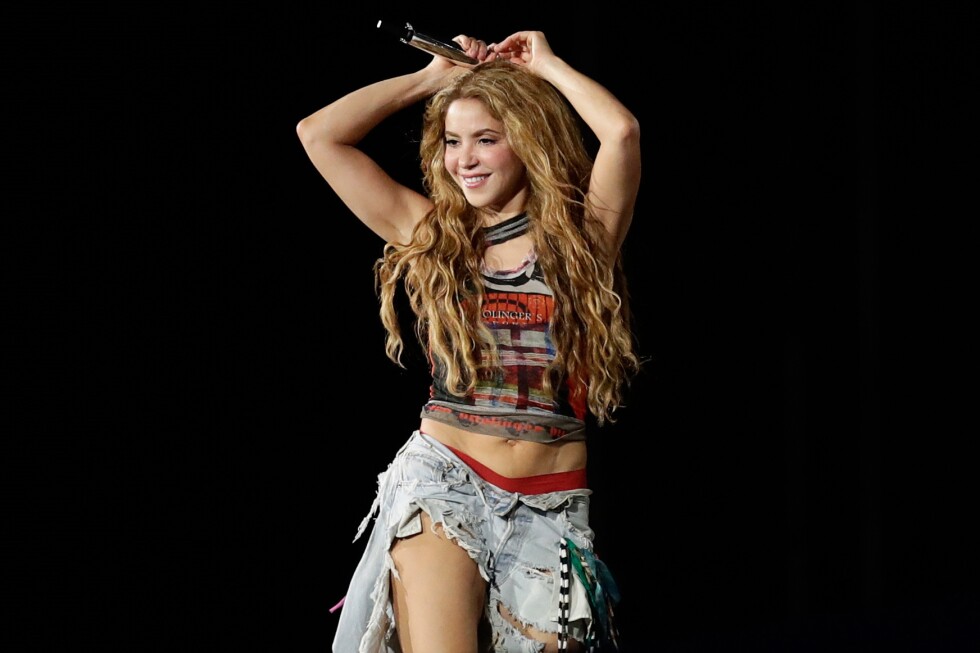
    The Colombian hitmaker shared a 60-second preview of her new track “Dai Dai” across her social media channels Thursday, confirming the song as the 2026 FIFA World Cup Official Song and tagging Afrobeats superstar Burna Boy as a collaborator on the release. Filmed on the grass of Rio de Janeiro’s iconic Maracaná Stadium, the teaser shows Shakira front and center on the pitch, surrounded by a troupe of energetic dancers as she performs a snippet of the track. In the preview, the artist delivers uplifting lyrics in English: “Here in this place / You belong,” with a male vocal harmonizing underneath, followed by the line “What broke you once / Made you strong.” Fans do not have to wait long for the full release: the complete track is set to drop globally on May 14.

    For Shakira, penning and performing a World Cup anthem is far from uncharted territory. The singer cemented her place in both soccer and pop history with “Waka Waka (This Time For Africa)”, the official song of the 2010 FIFA World Cup held in South Africa, which remains one of the most streamed and recognizable World Cup tracks of all time.

    It is important to note that “Dai Dai” is a separate official release from Coca-Cola’s own 2026 World Cup anthem, a reimagined version of Van Halen’s classic rock hit “Jump”. That track features an eclectic lineup of artists: Colombian reggaeton star J Balvin, legendary Blink-182 drummer Travis Barker, acclaimed pop and R&B vocalist Amber Mark, and iconic rock guitarist Steve Vai.

    In that rework, Amber Mark opens the track with her signature clear, luminous vocals delivering the original song’s English lyrics, while Steve Vai puts a fresh spin on the track’s instantly recognizable guitar riff and Travis Barker amps up its percussion section. The biggest change to the original comes from J Balvin, who penned an entirely new verse in Spanish. Speaking to the Associated Press in March, Balvin explained that the production, from frequent collaborator L.E.X.V.Z, blends Brazilian funk rhythms with hard-hitting strings and hip-hop influences. “‘Jump’ is not a fútbol song,” he said, noting the original track’s lack of ties to the sport. “So that’s why I had to put the Latin love and passion for fútbol (in the lyrics).”

    This year’s FIFA World Cup is set to kick off on June 11, with an opening match between Mexico and South Africa at Mexico City’s historic Azteca Stadium. The tournament will conclude with the final match scheduled for July 19 at MetLife Stadium in East Rutherford, New Jersey, located just outside New York City.

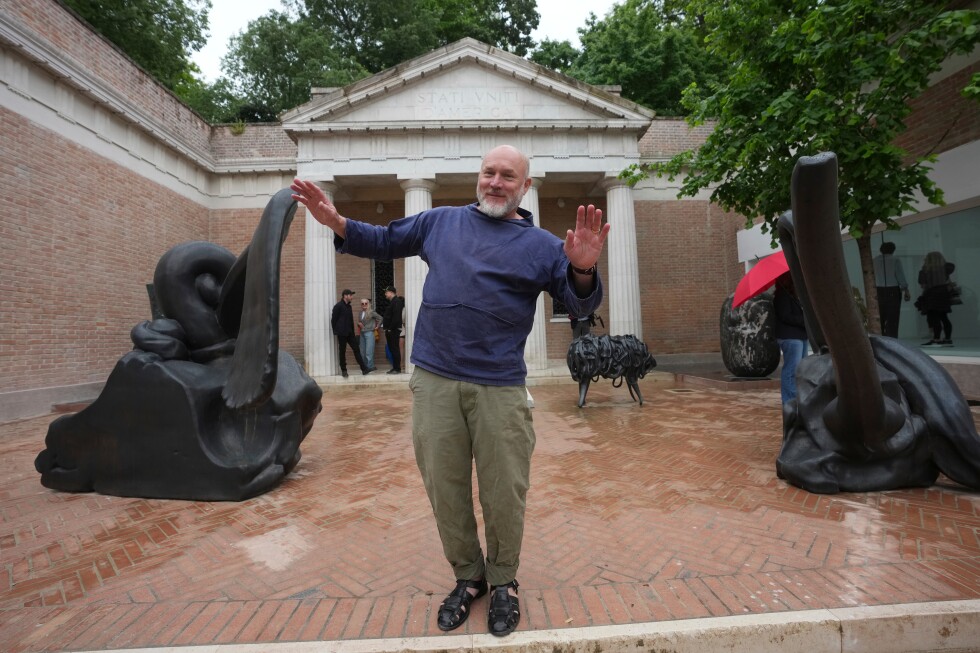
  • An outsider artist takes the world’s biggest stage with the US Pavilion at the Venice Biennale

    An outsider artist takes the world’s biggest stage with the US Pavilion at the Venice Biennale

    As the 2026 Venice Biennale prepares to open its gates to the global art world, self-taught American sculptor Alma Allen finds himself at the center of one of the world’s most prestigious contemporary art platforms — a spot he secured only after a turbulent, last-minute selection process that has stirred widespread criticism across the international art community.

    A Utah-born sculptor who has built his three-decade career working independently from Mexico, Allen has long positioned himself as an outsider to the insular, clique-driven contemporary art establishment. Now, just days ahead of the Biennale’s official launch, he faces intense scrutiny from critics and art world observers alike, all eyes fixed on the U.S. Pavilion, the iconic Jeffersonian-style brick venue that hosts the American presentation every two years.

    Controversy has shadowed the 2026 U.S. pavilion selection from the start, with many describing the process as uncharacteristically opaque. When the open call for the commission was revised, language centering diversity, equity and inclusion was removed, and replaced with a new mandate to promote “American values.” This shift led most major cultural institutions that typically compete for the coveted commission to step back, amid fears of being drawn into unseemly administrative politics.

    The road to Allen’s appointment was rocky from the outset. The original planned exhibition, set to feature work by artist Robert Lazzarini and curated by art historian John Ravenal, had already secured U.S. State Department approval before it collapsed last September, when the project’s required institutional sponsor pulled its support. A subsequent attempt to attach the Lazzarini project to the newly created American Arts Conservancy (AAC) fell through, and within a short timeframe, the new lineup — AAC as sponsor, Jeffrey Uslip as commissioner, Allen as the exhibiting artist — was announced.

    Ravenal, the curator behind the failed original project, has criticized the revised selection as highly irregular. He notes that after the original application deadline closed in July, there was no public committee vetting process, no open applications, breaking with 40 years of established open call and peer review practices for the U.S. pavilion. He has described Allen as “a pawn in this whole thing.”

    Allen is no stranger to the backlash his participation has sparked, but he is firm in pushing back against claims of political influence. He stresses that the current U.S. administration has not interfered in his exhibition in any way, saying bluntly: “My art is not propaganda.”

    This is the first time in Allen’s 30-year career that he has felt the need to defend his practice and his place in a major show. For three decades, he worked largely outside the constant critical gaze of the mainstream art world, a circumstance he calls a genuine pleasure. His practice centers on organic, biomorphic sculptures carved from wood, shaped from stone, and cast in bronze. He intentionally refuses to title most works, choosing instead to leave space for viewers to bring their own interpretations to each piece.

    Allen’s exhibition, titled *Call Me the Breeze*, brings together a dozen brand-new works alongside pieces he created over the past two decades. The title, he explains, is a nod to his lifelong ability to navigate unexpected obstacles — a skill he developed as a self-taught artist who has rarely benefited from institutional support throughout his career. Uslip, the pavilion’s commissioner, says that exact independent, non-institutional background is what made Allen the right choice for the commission. “I am deeply interested and invested in artists who are not, I guess, academicized … or lobotomized,” Uslip explained.

    In a playful, ironic touch that nods to the controversy surrounding the show, Allen installed a large cast bronze evil eye on the exterior of the U.S. pavilion, a talisman he joked would ward off negative energy. In a fittingly chaotic twist, the piece was stuck in transit and failed to arrive just days before the opening.

    Inside the pavilion’s central courtyard, a headless, directionless sheep sculpture stands as a quiet self-portrait, representing Allen’s status as the outsider shunned for being “the wrong sheep.” His newest body of work includes bronze wall sculptures, treated with chemical processes that turn the rigid metal into a spontaneous, fluid medium he compares to watercolor.

    Allen’s path to the Venice Biennale is a story of unconventional persistence. Early in his career, he experienced homelessness in New York City, selling his small creations from an ironing board as an act of sheer desperation — a step that launched his career, connecting him with his first collectors. Today, his work is held in major institutions including the Los Angeles County Museum of Art and the Palm Springs Art Museum; he previously took part in the 2014 Whitney Biennial, and made his European debut in Brussels in 2022.

    When Allen received the last-minute commission, he made his first ever trip to Venice that November to walk through the pavilion. A trip to the Venice Accademia to see Hieronymus Bosch’s *The Visions of Hereafter*, a haunting work depicting heaven, hell and purgatory, inspired the exhibition’s core structure. “I wanted there to be a bit of the chaos that we go through,” Allen said of the show’s framework.

    Looking back on the chaotic path that brought him to the Biennale, Allen says his selection came down to one key trait: his willingness to step into high-pressure, last-minute challenges. “When they do, I’m prepared to try it, and fail at it. That’s fine,” he says. Now, as opening day approaches, the outsider artist is ready to meet the world’s critical gaze with the same quiet adaptability that has defined his decades-long career.

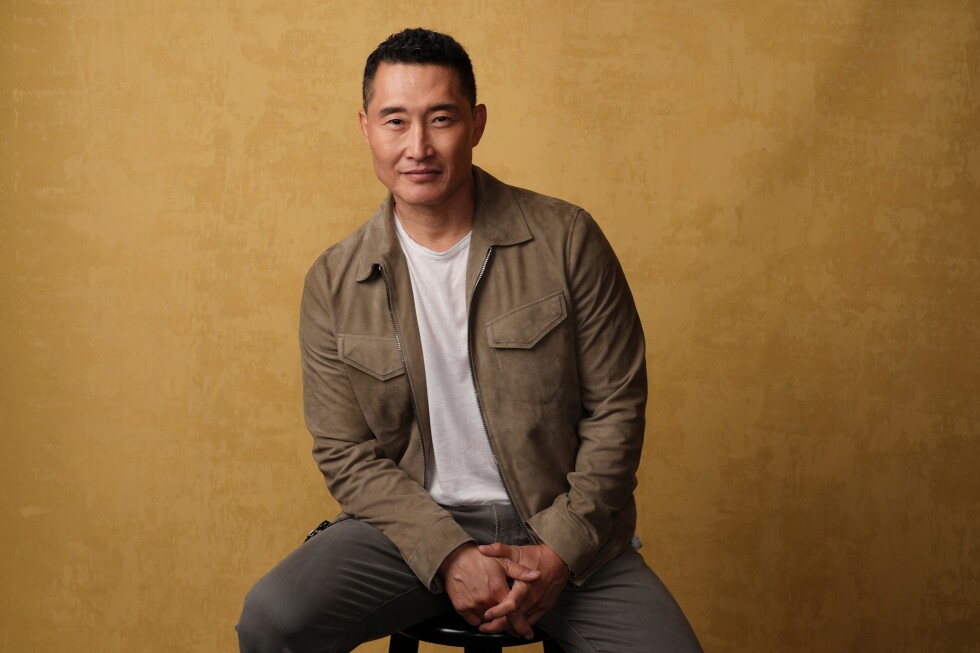
  • Daniel Dae Kim explores booming South Korean pop, film, cosmetics and food influences for CNN series

    Daniel Dae Kim explores booming South Korean pop, film, cosmetics and food influences for CNN series

    In a surprising twist that blends personal curiosity and professional storytelling, veteran entertainer Daniel Dae Kim recently tried an unconventional K-beauty treatment few celebrities would volunteer for: microinjections of salmon sperm DNA into his face, administered at a Seoul clinic. The procedure, intended to lower facial inflammation and boost skin elasticity, left Kim with a faint sunburn-like flush, but he brushed off the minor side effect and declared himself camera-ready within minutes.

    That on-camera experiment is just one small segment of Kim’s ambitious new project, the CNN original series *K-Everything: The Global Rise of Korean Culture*, a passion project he calls a “love letter” to South Korea’s most beloved cultural exports, spanning beauty, food, music and film. The series is set to premiere Saturday on CNN International, with additional streaming availability on CNN and HBO Max.

    For Kim, the series is far more than a typical travel documentary. Born in South Korea before moving to the U.S. at the age of one, the multi-hyphenate actor, director and producer has long held deep ties to the country, and the show frames its exploration of South Korea’s transformation through a deeply personal lens. In just three generations, the nation climbed from a war-ravaged developing nation to one of the world’s most dynamic, modern cultural powerhouses, and *K-Everything* traces that extraordinary shift through the lens of its most popular global exports.

    Viewers can expect Kim to guide them across the full breadth of modern Korean culture. At the energetic annual kimchi festival in Pyeongchang, he unpacks how fermented Korean cuisine is upending long-held norms in fine dining scenes across the globe. In separate episodes, he sits down for one-on-one conversations with some of South Korea’s biggest entertainment figures, including A-list actor Lee Byung-hun, “Gangnam Style” pioneer Psy, BigBang member Taeyang, and the songwriters behind the Oscar-winning hit “Golden”. The K-beauty episode takes Kim even further: after chatting with beauty influencer LeoJ and model Irene Kim about shifting global beauty standards, he tests a range of viral K-beauty products from serums to sheet masks, even takes a tour of a facility that harvests snail slime for skincare formulations.

    The personal journey extends to Kim’s own family, too. During filming, he accompanied his parents around Seoul, which has transformed so dramatically in recent decades that every landmark they remembered from their youth has disappeared. For his parents, navigating the hyper-modern capital felt almost like exploring a foreign country, leaving Kim as their trusted guide—a role that mirrors his work on the series.

    Kim is joining a booming trend of A-list celebrities taking on travel and culture hosting roles, with high-profile names from Stanley Tucci and Eugene Levy to Chris Hemsworth and Will Smith launching their own documentary series in recent years. Kim cites iconic late chef and travel host Anthony Bourdain as a major inspiration; Bourdain pioneered the modern format of the celebrity travel host, leaning into personal perspective rather than rigid scripted narration.

    “I wouldn’t say that this show is as irreverent as Anthony Bourdain’s show was, but I loved it because I felt like he was showing me his take on each country and he was a trusted guide,” Kim explained. “If I can be that for some people then that’s the spirit that I’d like to bring into this show.”

    CNN executives say Kim’s unique background makes him the perfect person for this project. Amy Entelis, executive vice president for talent, CNN Originals and creative development, noted that Kim brings an unmatched combination of passion, firsthand knowledge, and ability to connect with global audiences that can’t be replicated by an outside host.

    “From the first time I met him, it was clear he was incredibly well equipped to tackle this — deeply passionate about the subject and highly knowledgeable. He was also very focused on making sure the way we look at Korean culture translates to a broad global audience, really putting a spotlight on it,” Entelis said.

    While this marks Kim’s first time hosting a full television series, he says the role felt natural, not outside his comfort zone. As an artist who has been shaped by his Korean heritage throughout his life and career, introducing the culture he loves to a global audience felt like a calling, not work.

    Beyond entertainment, Kim also hopes the series will serve a larger social purpose: bridging cultural divides and pushing back against the sharp rise in anti-Asian racism that surged globally during the COVID-19 pandemic. “If we can start to understand one another a little bit better through culture, then I think it is one step toward bringing together a global community. And I think the world could use a little more understanding in general,” he said.

    For new viewers unfamiliar with South Korea, Kim says the series offers a accessible, human introduction that no textbook or classroom lecture can match. By bringing together people from every corner of Korean society—from different cities, socioeconomic backgrounds, and creative fields—the series broadens understanding of just how diverse and dynamic modern Korean culture is, beyond the viral trends that dominate global social media.

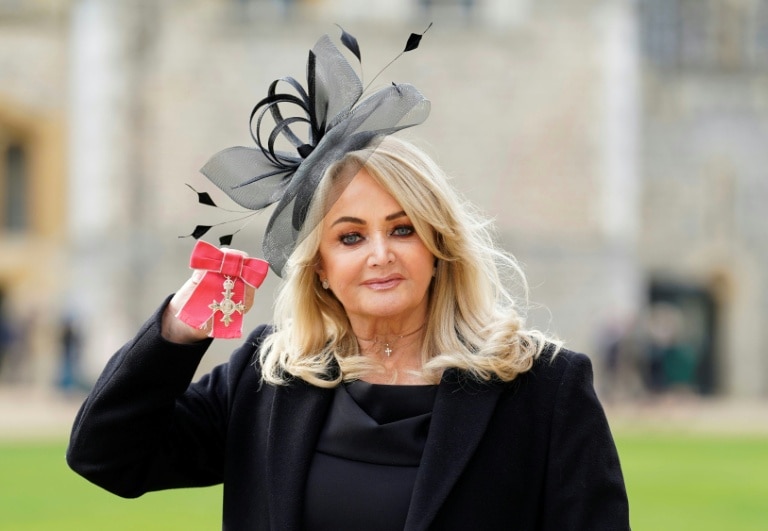
  • Welsh singer Bonnie Tyler ‘recuperating’ after emergency surgery in Portugal

    Welsh singer Bonnie Tyler ‘recuperating’ after emergency surgery in Portugal

    Legendary Welsh vocalist Bonnie Tyler, whose distinct husky voice has carried her through a five-decade career of global chart-topping hits, is currently recovering after undergoing emergency intestinal surgery at a hospital in Faro, southern Portugal. The update was shared Wednesday via the star’s official Instagram account, confirming that the procedure was completed successfully.

    At 74 years old, Tyler has long cemented her status as one of pop music’s most recognizable performers. She first rose to mainstream prominence in the 1970s, breaking into the industry with her 1976 breakthrough hit “Lost in France” followed by another fan favorite “It’s a Heartache”. Her career reached new heights in 1983 with the release of “Total Eclipse of the Heart”, a power ballad that claimed the number one spot on music charts on both sides of the Atlantic.

    Tyler’s discography is packed with other culturally defining hits, including 1984’s “Holding Out For A Hero”, which was featured on the blockbuster soundtrack for the hit American film *Footloose*. Decades into her career, she continued to represent her home country on global stages, stepping onto the Eurovision Song Contest stage in 2013 as the UK’s entry in Malmö, Sweden with the track “Believe In Me”.

    Most recently, Tyler’s decades of contributions to music were formally recognized by the late Queen Elizabeth II in 2022, when she received a royal honor for her 50 years of work in the industry. Fans and followers have been offered no additional update on her condition beyond confirmation of her recovery, but the news comes ahead of a planned major milestone: Tyler is scheduled to embark on a European tour later this year to celebrate the 50th anniversary of her breakthrough debut hit “Lost in France”.