分类: entertainment

  • K-pop stars BTS draw 50,000-strong crowd in Mexico

    K-pop stars BTS draw 50,000-strong crowd in Mexico

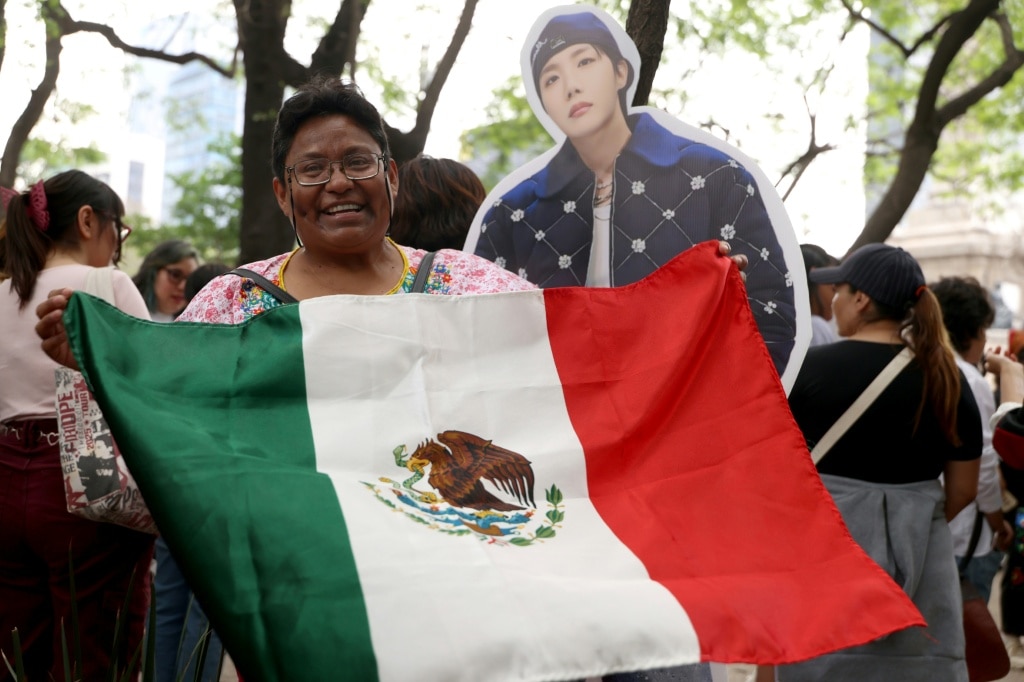
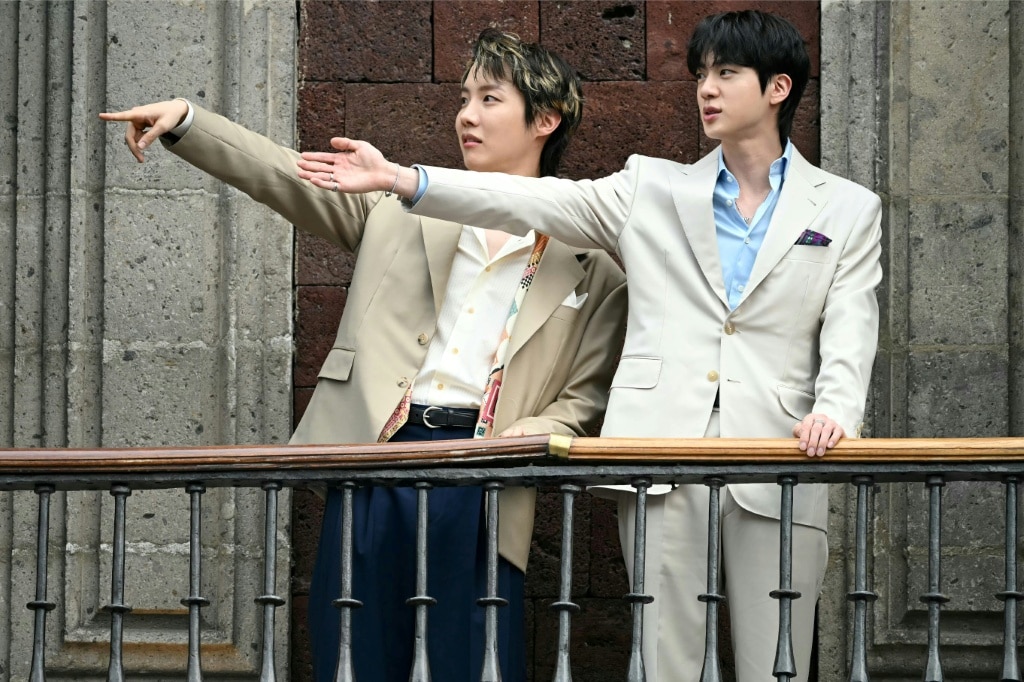
    Global K-pop phenomenon BTS has once again demonstrated its unparalleled cross-cultural popularity, drawing a massive crowd of roughly 50,000 adoring fans to the main square outside Mexico’s National Palace in Mexico City this Wednesday. The band made an appearance on the palace balcony to greet waiting supporters following a closed-door meeting with Mexican President Claudia Sheinbaum.

    The iconic septet recently stepped back into the global spotlight back in March, ending an almost four-year hiatus that saw all members complete their mandatory South Korean military service. This return has already sent shockwaves through the global entertainment industry: all tickets for BTS’ upcoming three stadium concerts in Mexico City, scheduled for May 7, 9 and 10, sold out in just minutes, with more than 135,000 passes snapped up by eager fans.

    During the balcony appearance, group leader Kim Nam-joon delighted the gathered crowd by addressing them in Spanish, saying, “I love you, I adore you. Thank you very much!” After the meeting, President Sheinbaum announced she had already extended an invitation for the group to return to Mexico next year, and later shared a photo of herself with the band holding their latest album *ARIRANG* on her social channels.

    Lizeth Zarate, event coordinator for the Zócalo — Mexico City’s central public square that sits directly in front of the National Palace — confirmed the estimated crowd size of 50,000, which included fans who traveled from across the country just for a chance to see the group in person, even those who could not secure tickets to the sold-out concerts.

    For many fans in the crowd, the brief appearance was a once-in-a-lifetime moment. “They’re my whole world,” 25-year-old office secretary Estefany Victoriano told Agence France-Presse. Eighteen-year-old Zoe Perez, one of the many fans shut out of concert ticket sales, told reporters she was overcome with emotion at the sight of the band. “I’m speechless, and it’s a very beautiful feeling to see them in person. Since I couldn’t get tickets, well, it makes me a little emotional,” Perez said, her voice breaking as she spoke.

  • ‘Integrity costs something’: Eurovision winners want Israel out of the contest

    ‘Integrity costs something’: Eurovision winners want Israel out of the contest

    For decades, the Eurovision Song Contest’s governing body has insisted that the annual cultural event is strictly apolitical, aiming to unite European artists and audiences through music rather than global conflict. Yet scratch beneath the surface of the glitzy performances and catchy melodies, and politics has been a persistent, defining presence, shaping the event’s history again and again through high-profile controversies rooted in global tensions. One of the most dramatic examples dates back to 1974, when Portugal’s entry *E depois do adeus* was broadcast across the country just as the Carnation Revolution — the uprising that toppled Portugal’s authoritarian dictatorship and cleared the way for independence for its African colonies — was getting underway, turning the song into an accidental revolutionary signal. More recent decades have brought repeated disputes: in 2009, Azerbaijani authorities interrogated 43 citizens who cast votes for neighboring rival Armenia’s entry, while Ukraine and Russia traded barbs for years over Russia’s invasion of Ukrainian territory before Moscow was expelled from the competition entirely in 2022. Today, however, no controversy looms larger than the fierce debate over Israel’s eligibility to compete in the 2026 contest, hosted this year in Vienna, which erupted after the start of Israel’s military campaign in Gaza in October 2023 that has sparked widespread accusations of genocide.

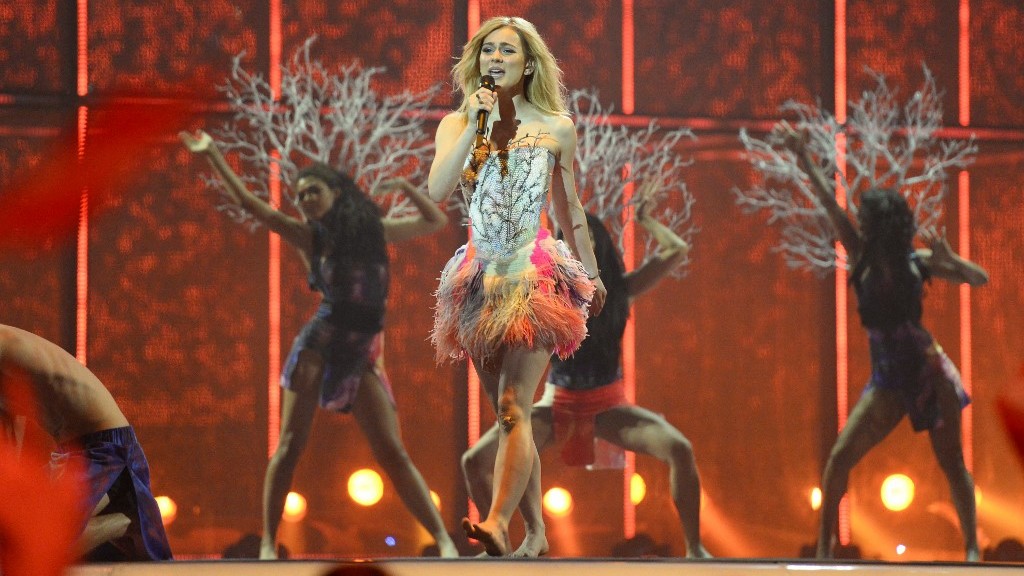
    Emmelie de Forest, the Danish singer who won Eurovision in 2013 with her hit *Only Teardrops*, is among the most prominent past winners speaking out against Israel’s inclusion. In an interview with Middle East Eye, de Forest framed her opposition as rooted first and foremost in the devastating humanitarian crisis unfolding in Gaza, where tens of thousands of civilian lives have been lost. “It’s also about what it means when cultural institutions try to completely separate themselves from political reality. I don’t think music exists outside the world around us,” she explained. De Forest is one of more than 1,000 global artists who have signed the *No Music For Genocide* petition, which calls for a widespread boycott of the 2026 contest. The list of signatories includes other high-profile names: 1994 Irish Eurovision winner Charlie McGettigan, as well as global music stars Peter Gabriel, Bjork, Massive Attack, Macklemore, Brian Eno and Mogwai, among others.

    While Ireland’s national broadcaster RTE has heeded calls to withdraw from the competition, de Forest’s home country of Denmark remains a participant — a decision she called disappointing, but not unexpected. The singer acknowledged that speaking out has cost her personally: she has cut ties with some friends and put her professional income at risk, but argues that standing by one’s principles requires sacrifice. “sometimes integrity costs something,” she said. “What I find most difficult is the idea that Eurovision can somehow be separated entirely from political reality. I simply don’t believe that is possible anymore. Keeping Israel in the competition is also a political decision.”

    The European Broadcasting Union (EBU), which oversees the Eurovision Song Contest, rejected widespread pressure to bar Israel from competing when it ruled in December 2024 that the country would remain eligible for the 2026 event. In response to that decision, Nemo — the non-binary Swiss artist who won the 2024 contest — announced they would return their winner’s trophy, arguing that Israel’s inclusion directly contradicts the core values Eurovision claims to uphold: unity, inclusion and dignity for all people.

    McGettigan, the 1994 Irish winner, quickly announced he would follow Nemo’s lead — until he realized he had never received a physical trophy to return. “So let’s say I returned a virtual trophy!” he joked to Middle East Eye. For McGettigan, the campaign to withdraw from Eurovision has been deeply personal: an avid lifelong fan of the contest, he joined pro-Palestinian campaigners in lobbying RTE to pull out of 2026, and his advocacy helped convince the broadcaster to vote to withdraw. “I’m a not a member of any organisation…it’s just me personally, and thankfully, the management at RTE decided after a vote that they weren’t going to take part and that’s admirable, I think,” he said.

    McGettigan said he could no longer stay silent after seeing relentless footage of the humanitarian catastrophe in Gaza, where official counts put the Palestinian death toll at more than 72,000, with thousands more still missing and presumed dead under rubble, and the vast majority of the enclave’s infrastructure reduced to ruin. Even after a US-brokered ceasefire took effect in mid-January 2025, hundreds more Palestinians have been killed, just one week before Israel was formally confirmed as a 2026 contestant. McGettigan added that his awareness of the link between Eurovision and Israeli policy dates back to 2018, when Israel won the contest just days after Israeli forces killed 62 Palestinian civilians, including six children, during the peaceful Great March of Return protests in Gaza. “Now if that had happened in our country, and if 62 people had been murdered like that, we certainly wouldn’t be celebrating winning Eurovision,” he noted.

    Like de Forest, McGettigan rejects the long-held claim that Eurovision should remain strictly apolitical, pointing to the centuries-long tradition of musicians using their platforms to advance social change and call out injustice. “When you look back at people like Pete Seeger from the 1960s, Woody Guthrie, Bob Dylan, Joan Baez, all these artists have used their music to promote peace, to draw attention to injustice,” he said. “There are two strains of thought there, some countries just see this as entertainment, and they don’t see entertainment as having any place for politics – but I do.”

    So far, Spain is the only member of Eurovision’s “Big Five” (the group of largest funding countries that automatically qualify for the final, including the UK, France, Germany and Italy) to announce its withdrawal. After Spain confirmed its exit, Middle East Eye requested comment from the UK’s Department for Culture, Media and Sport, which declined to comment and deferred to the BBC, the UK’s national Eurovision broadcaster. The BBC also declined to comment, and requests for comment from the representing artists for the UK, France and Germany had not been answered by the time of publication.

    As the 70th Eurovision Song Contest prepares to kick off in Vienna next Tuesday, protests are already planned to mobilize outside the competition venue. Austrian police confirmed at a recent press conference that they expect roughly 3,000 demonstrators, with both pro-Palestinian and pro-Israel groups planning gatherings, and anticipate attempts to blockade sites and disrupt the event. To maintain security, drones will be banned within a 1.5-kilometer radius of all contest-related sites, and the US FBI has established a dedicated cyber security task force that Austrian authorities can contact around the clock to address potential threats. Adding extra symbolic weight to the protests, the 15 May, the eve of the Eurovision grand final, also marks Nakba Day — the annual commemoration of the 1948 displacement and massacre of hundreds of thousands of Palestinians that accompanied the founding of the State of Israel.

    For her part, de Forest emphasized that her criticism is directed at the EBU and its institutional decision to allow Israel to compete, not at individual participating artists or ordinary Eurovision fans. She says she would not feel comfortable attending the 2026 event, but still values the sense of cross-cultural connection and community that the contest has long fostered for fans around the world. Still, she argues that audiences cannot ignore the ongoing crisis in Gaza: “At the same time, I think people should continue speaking openly, asking difficult questions and refusing to simply move on as if nothing is happening. Fans have more influence than they sometimes realise, especially collectively.”
  • ‘Enjoy the show. Ignore the war’: Venice Biennale faces backlash after including Russia

    ‘Enjoy the show. Ignore the war’: Venice Biennale faces backlash after including Russia

    One of the art world’s most prestigious global gatherings, the Venice Biennale, has been roiled by high-profile demonstrations and bitter political division ahead of its official public opening, centered on the controversial decision to allow Russia to return to the event for the first time since Moscow launched its full-scale invasion of Ukraine in 2022.

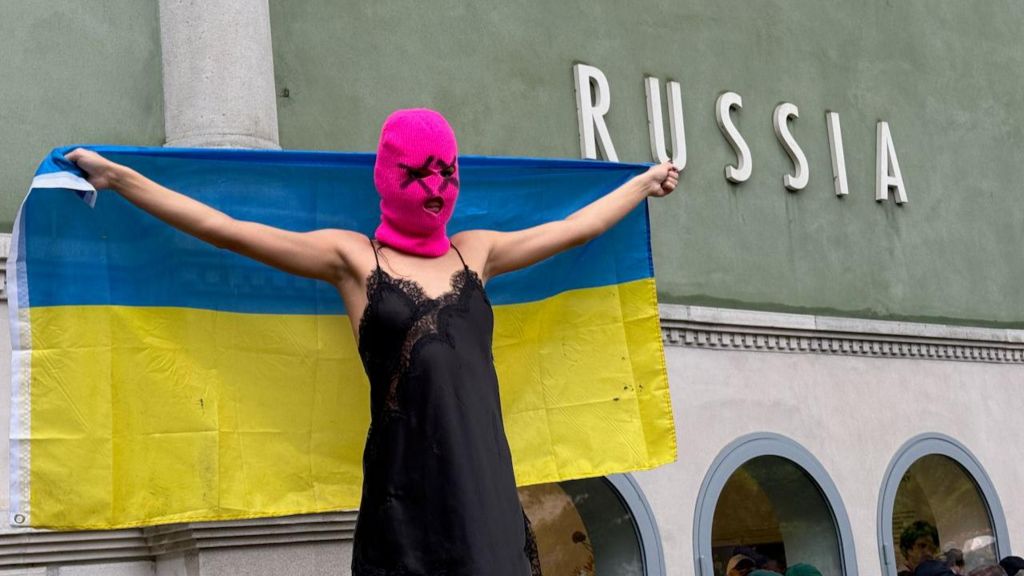
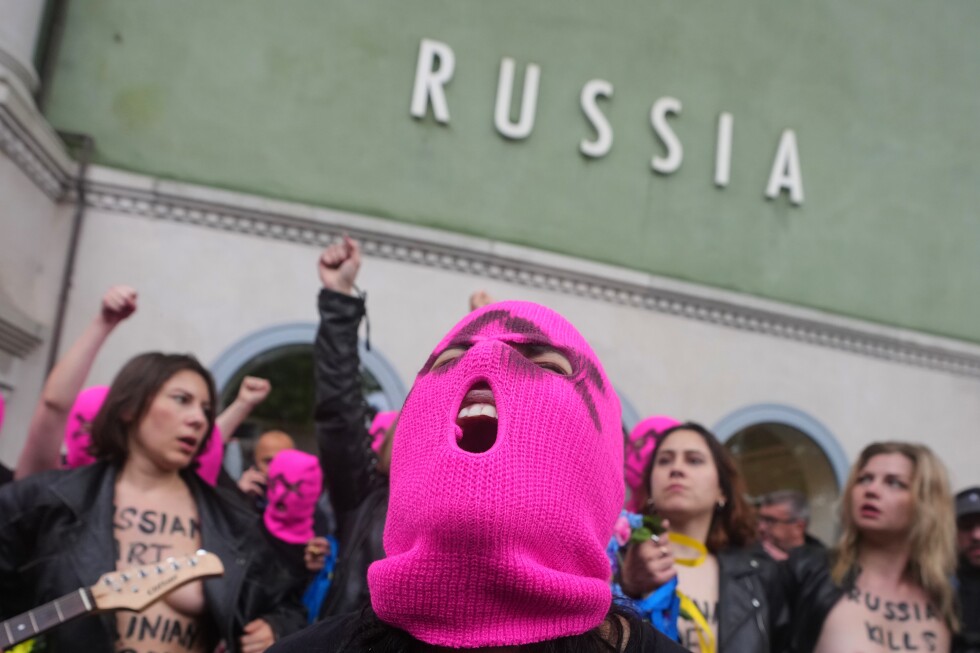
    Two prominent activist groups – Russian protest punk collective Pussy Riot and Ukraine-founded women’s rights movement FEMEN – teamed up for a dramatic, attention-grabbing demonstration outside the Russian national pavilion. Dressed head-to-toe in black with eye-catching fluorescent pink balaclavas, the activists charged through the Biennale’s iconic canal-side gardens, chanting loudly directly outside the glass-doored pavilion venue. As security personnel scrambled to slam the pavilion’s doors shut to block the protest, the demonstrators ignited colored smoke flares, raised their fists in defiance, and shouted slogans including, “Russia kills! Biennale exhibits!” One prominent protest poster carried a searing message: “Curated by Putin, dead bodies included.”

    Nadya Tolokonnikova, a founding member of Pussy Riot, framed Russia’s reinstatement to the Biennale as a deliberate component of Moscow’s broader hybrid warfare campaign against the West. “They’re drinking vodka and champagne inside their pavilion, soaked in the blood of Ukrainian children,” Tolokonnikova said in an interview. “This isn’t just about tanks, drones, murder and rape in Ukraine. It’s also about culture, art, language – it’s how Russia tries to conquer the West, and you all just opened the doors for them.”

    Controversy over Russia’s return has stretched far beyond the activist protest. The European Commission has issued a strong condemnation of the decision, threatening to withdraw €2 million in core funding for the Biennale. Brussels argues that allowing an aggressor state like Russia to showcase its art on this global platform directly violates the ethical standards tied to the grant. Italy’s national culture minister has also joined the boycott, announcing he will skip the opening of the fair this Saturday. However, high-profile Italian politician Deputy Prime Minister Matteo Salvini – who drew international attention in 2014 for visiting Moscow’s Red Square wearing a Vladimir Putin-branded t-shirt – has rejected calls for a boycott, stating that “No pavilion should be excluded.” Sources familiar with the European Commission’s position indicate Brussels is unimpressed by Rome’s refusal to back the exclusion.

    The political friction at the 61st Venice Biennale is not limited to Russia’s participation. Last week, the entire international jury for the event resigned in protest after a reference was made to countries whose leaders face arrest warrants from the International Criminal Court for suspected war crimes – a designation that covers both Russia and Israel. On Wednesday morning, a separate group of demonstrators targeted the Israeli pavilion, covering the entrance floor with rain-soaked leaflets branding the space a “Genocide Pavilion.” Israel’s foreign ministry has previously hit back, accusing a “political jury” of turning the Biennale into a venue for “anti-Israeli political indoctrination.”

    Venice Biennale president Pietrangelo Buttafuoco, a right-wing former journalist who has publicly expressed admiration for Russian President Vladimir Putin, has broken his near-silence on the growing controversy to push back against critics. He slammed calls for the exclusion of Russia and Israel as a “laboratory of intolerance,” dismissing the demands as censorship and exclusion. “If the Biennale began to select not works but affiliations, not visions but passports, it would cease to be what it has always been: the place where the world meets,” Buttafuoco told reporters before walking out of the press conference without taking questions.

    But critics say Buttafuoco’s argument ignores the harsh reality of the war in Ukraine, highlighted by a series of striking posters pasted across Venice this week. The advertisements promote an “Invisible Biennale,” featuring imaginary events by Ukrainian artists and writers killed during the Russian invasion. One entry highlights Volodymyr Vakulenko, a Ukrainian author shot by Russian troops after they occupied his village; each poster is stamped with the line: “Cancelled. Because the author was killed by Russia.”

    Held every two years, the Venice Biennale’s national pavilions are widely viewed as one of the most high-profile platforms for countries to project soft power globally, a role that is particularly significant for authoritarian states seeking to shape international perception. After Russia’s full-scale invasion in 2022, the curators of the Russian pavilion pulled out in protest, and the space was loaned to Bolivia for the 2024 edition. For this year’s event, a Russian team has filled the pavilion with an installation centered on an upside-down tree paired with experimental sound performances.

    When asked if Russia deserved a place at the Biennale amid its ongoing war in Ukraine, pavilion commissioner Anastasia Karneeva dismissed the question entirely. “This is our house, we come to our place,” she said. “I don’t think about the protests. I am very busy.” Karneeva is the daughter of a deputy head of Rostec, Russia’s massive state-owned weapons producer that is currently under international sanctions; she declined to comment on that connection and ended the interview shortly after.

    Notably, Russia’s participation this year is only partial: the pavilion is set to close after this week’s pre-opening events, and it remains unclear whether the early closure is a response to protests or the impact of ongoing international sanctions. The planned performances, however, have been recorded and will be screened on an outdoor screen for the duration of the fair. The audio from these screenings will carry just a short distance down the garden path – directly toward Ukraine’s official pavilion, located steps away from the main entrance.

    Ukraine’s contribution to the 2026 Biennale carries its own powerful, haunting message. Hanging suspended by thick steel straps from a crane just outside the entrance is a concrete cast of an origami deer, created by Ukrainian artist Zhanna Kadyrova. The sculpture was originally installed in Pokrovsk, a city in eastern Ukraine’s Donbas region, when the frontline with Russian forces was still 40 kilometers away. As Russian troops advanced on the city in 2024, Kadyrova made the decision to evacuate the work to save it from destruction or occupation.

    “We have a destroyed city that does not exist now. I hope this message is clear and people who visit the Biennale can understand it,” Kadyrova explained in a recent interview from her Kyiv studio. The deer has become a poignant symbol of displacement, mirroring the fate of millions of Ukrainians forced to flee their homes by the invasion. “Pokrovsk is now an occupied city. A lot of people were killed there. But we saved this artefact. The question is how many artefacts were not saved in this war? How many other kinds of heritage were destroyed?” she asked. “This was a lively city. And it does not exist now because Russia came.”

  • CNN founder Ted Turner dies at 87

    CNN founder Ted Turner dies at 87

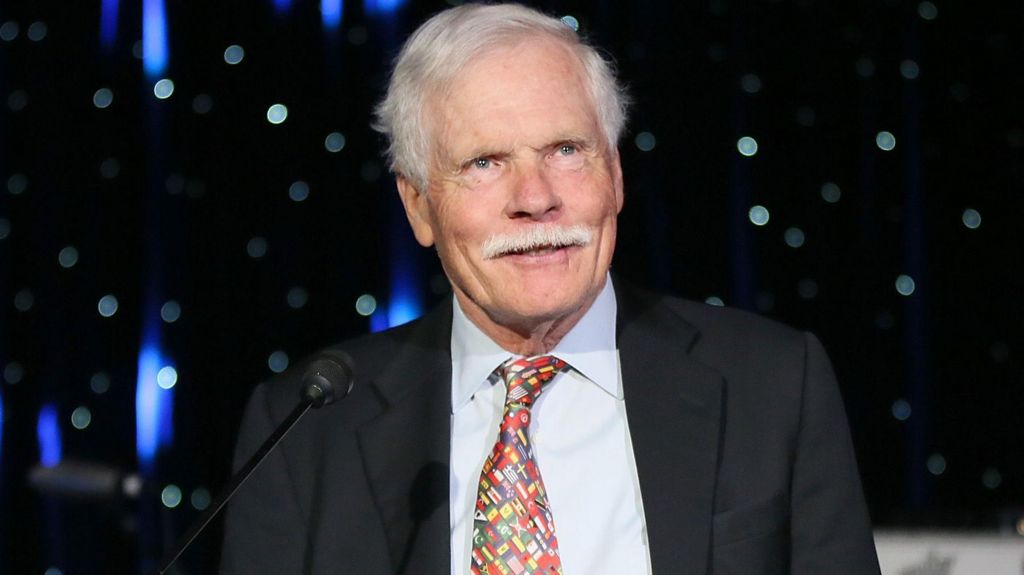
    Ted Turner, the pioneering American media mogul who revolutionized global journalism by creating the world’s first 24-hour rolling cable news network CNN, has passed away at the age of 87, CNN confirmed in an official announcement.

    Turner’s entry into the media industry came long before the launch of CNN. After his father’s death, he took over the family’s already successful billboard business at a young age, before expanding into broadcasting with the purchase of an Atlanta, Georgia radio station. Over 10 years, that single small station grew into the foundation of Turner Broadcasting System (TBS), establishing Turner as one of the most powerful media figures in the United States.

    In 1980, Turner made his most iconic mark on media history, launching CNN as the world’s first channel dedicated entirely to nonstop, up-to-date news coverage. The new network faced early financial and operational struggles, but it quickly proved the value of its 24-hour news model through high-stakes breaking coverage. It delivered fast, continuous updates on the 1981 assassination attempt on U.S. President Ronald Reagan and the 1986 Challenger space shuttle disaster, cementing its reputation as a go-to source for breaking news. CNN reached a new milestone during the 1990-1991 Gulf War, when it became the first outlet to provide live, on-the-ground rolling coverage from Iraq. Its reporting was so respected that even President George H.W. Bush once acknowledged he learned more about global events from CNN than from the Central Intelligence Agency.

    CNN’s trailblazing success reshaped the entire global media industry, inspiring a wave of competing 24-hour news channels, including Rupert Murdoch’s Fox News, which launched in 1996. Beyond CNN, Turner built a sprawling television empire that included basic cable channels TBS and TNT, the classic film-focused Turner Classic Movies, and children’s entertainment staple Cartoon Network. His business career included a number of high-profile moves as well: a 1985 $1.5 billion acquisition of MGM film studios that ultimately proved unsuccessful, followed by purchases of major production houses Castle Rock Entertainment and New Line Cinema in the 1990s, before TBS merged with media giant Time Warner.

    Outside of media, Turner led a diverse public life. A world-class competitive sailor, he took home sailing’s most prestigious prize, the America’s Cup, in 1977. He also owned three major Atlanta professional sports teams: the Atlanta Braves Major League Baseball team, the Atlanta Hawks NBA basketball team, and the Atlanta Thrashers NHL ice hockey team. From 1991 to 2001, he was married to renowned American actress Jane Fonda.

    In a statement following Turner’s death, CNN Chairman and CEO Mark Thompson paid tribute to the network’s founder, calling him an intensely dedicated, intrepid leader who was never afraid to trust his own instincts. “He was and always will be the presiding spirit of CNN,” Thompson said. “Ted is the giant on whose shoulders we stand, and we will all take a moment today to recognize him and his impact on our lives and the world.”

  • CNN founder Ted Turner: 20th century media giant

    CNN founder Ted Turner: 20th century media giant

    The world of 20th century media has lost one of its most transformative figures: Ted Turner, the brash, risk-taking visionary who launched the world’s first 24-hour cable news network CNN and reshaped global journalism forever, has died at the age of 87. His death was announced publicly on Wednesday, closing the book on a life that extended far beyond media into sports, high-stakes business, and large-scale philanthropic and environmental action.

    Born Robert Edward “Ted” Turner III in Cincinnati, Ohio in November 1938, Turner’s trajectory into media leadership began under tragic circumstances. After his father died by suicide amid crippling financial stress, a young Turner stepped in to salvage the family’s failing advertising business. He would not stop there: building a portfolio of local radio stations through the 1960s, he made his first foray into television in 1970 with the purchase of a struggling Atlanta-based broadcast station. A decade later, that small station became the cornerstone of his nationwide Turner Broadcasting System, and the profits from the growing network laid the groundwork for the project that would make his name: the launch of CNN in 1980.

    CNN revolutionized news consumption entirely. As the first non-stop 24-hour cable news outlet, it arrived at a moment when American audiences were already shifting from over-the-air broadcast to cable television, and it rose to global prominence during the 1990–1991 Gulf War, when it delivered unprecedented, continuous live coverage of the conflict via cutting-edge satellite technology. CNN’s runaway success sparked a global industry shift, inspiring the launch of competing 24-hour networks from Turner rivals and peers including Rupert Murdoch’s Fox News, MSNBC, and dozens of similar outlets across every continent.

    Turner’s media empire expanded far beyond breaking news. His portfolio grew to include entertainment and sports networks TBS and TNT, classic film outlet Turner Classic Movies, and children’s network Cartoon Network, among other properties. Along the way, he made a series of high-stakes business bets: a 1980s attempt to acquire broadcast giant CBS ended in failure, and he purchased MGM/UA Entertainment Co. studios for a short period before selling the studio back just months later, retaining the rights to most of its iconic film library.

    The 1990s brought the largest deal of Turner’s career: a 1996 merger between Turner Broadcasting and media giant Time Warner that elevated him to the role of vice chairman of the combined entertainment powerhouse. Five years later, internet pioneer AOL acquired Time Warner in a $165 billion deal that remains the largest corporate merger in history. But the combination quickly unraveled as AOL’s business fortunes collapsed, with the deal unwound entirely within a decade. As Time Warner’s largest individual shareholder, Turner lost billions of dollars in the failed combination.

    Beyond boardrooms and newsrooms, Turner was a towering figure in global sports. He purchased the MLB’s Atlanta Braves in 1976, leading the once-struggling franchise to multiple World Series appearances and a championship title in 1995. He also owned the NBA’s Atlanta Hawks and the NHL’s Atlanta Thrashers, with all three teams transferring to Time Warner as part of the 1996 merger; the Braves continued to play at the Turner-named Turner Field until 2016. On the water, Turner skippered the U.S. yacht *Courageous* to victory in the 1977 America’s Cup, and his decades-long rivalry with fellow media titan Rupert Murdoch intensified after a 1983 collision between Murdoch-sponsored and Turner-owned yachts during the Sydney-Hobart race sank Turner’s schooner, leading Turner to famously challenge Murdoch to a public fistfight.

    Against the backdrop of Cold War tensions and tit-for-tat Olympic boycotts between the U.S. and Soviet Union in the 1980s, Turner launched the Goodwill Games, an international multi-sport event designed to ease global tensions; the last Games were held in 2001.

    Turner was also a familiar public figure for his high-profile personal life, most notably his 10-year marriage to Academy Award-winning actress Jane Fonda, his third wife, which ended in divorce in 2001. By his own account, the split was driven by Fonda’s conversion to Christianity, while Fonda countered that Turner required constant, full-time attention that amounted to caregiving rather than a partnership. Turner was named Time Magazine’s Man of the Year in 1991, the same year the pair married.

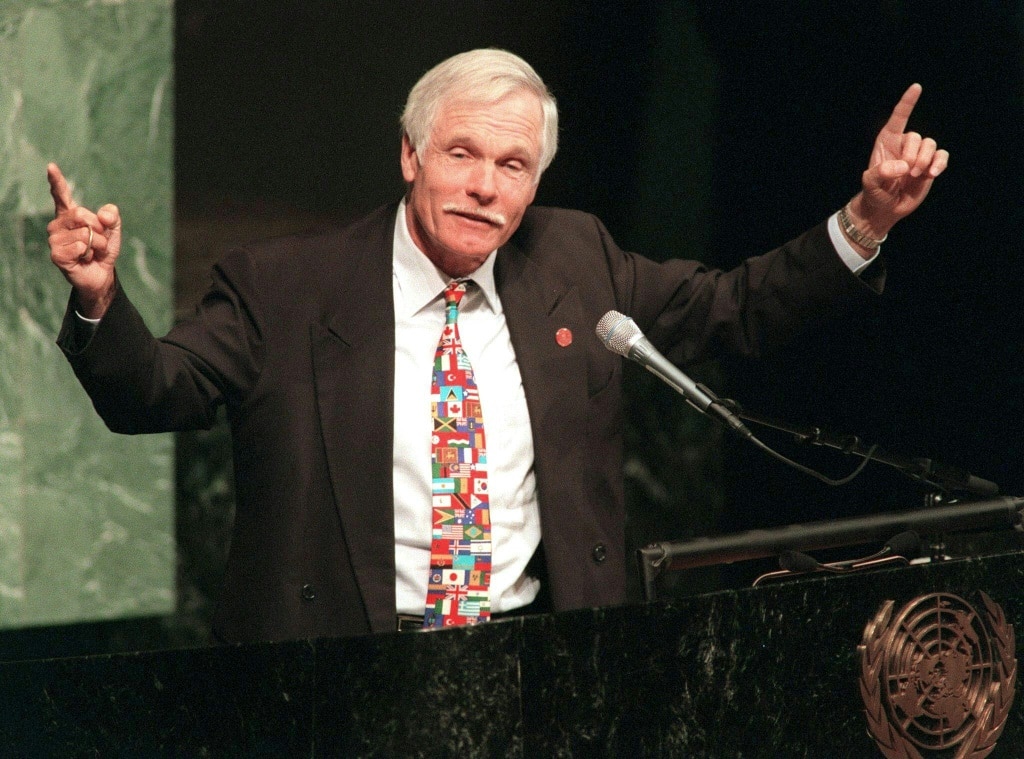
    In his later life, Turner dedicated himself nearly full-time to philanthropy and environmental conservation after stepping down from his role at Time Warner in 2003. A longtime critic of wealthy individuals who refused to give away their fortunes, he made a landmark $1 billion donation to the United Nations in 1998 to found the UN Foundation, which has since advanced work on climate action, sustainable development, public health, and technological equity. He had already founded the Turner Foundation in 1990, which has disbursed roughly $380 million to support climate action and improvements to global air and water quality. In 1997, he launched the Turner Endangered Species Fund, which partners with private landowners to protect at-risk species from gopher tortoises to monarch butterflies. Most recently, in 2015, he launched Ted Turner Reserves, an eco-tourism venture that gives visitors access to his four New Mexico properties to learn about on-site conservation work.

  • The Summer I Turned Pretty fans asked to stop visiting film set

    The Summer I Turned Pretty fans asked to stop visiting film set

    One of Prime Video’s biggest breakout hit series of recent years is wrapping up its run with a feature-length conclusion — but the massive, passionate fanbase that turned *The Summer I Turned Pretty* into a global phenomenon is now creating unexpected headaches for its production team.

    In an official public statement posted across social media channels, the creative team behind the coming-of-age romantic drama has urged fans to immediately stop visiting active filming locations and leaking on-set footage online, citing legitimate safety risks and constant disruptions to the production process.

    “We absolutely love how excited you are for this final chapter, but sharing unconfirmed location details and turning up on set derails our filming schedule,” the team explained in the post. The statement comes after dozens of unofficial clips purporting to show lead cast members on set have circulated widely across TikTok, Instagram, and other social platforms, with some short videos racking up hundreds of thousands of views in just days.

    To deliver a polished, seamless final product, the production team says they have worked for months to build a controlled, private production environment, calling this “protected bubble” critical to crafting the conclusion fans deserve. Jenny Han, the best-selling author who originally wrote the *The Summer I Turned Pretty* trilogy and is returning to write and direct the upcoming final film, echoed the team’s request in a post to her own Instagram Story.

    Han explained that overenthusiastic fan visits have forced production to repeatedly pause filming to clear crowds from shooting setups, breaking crew focus and throwing carefully planned shooting schedules off track. “This story means more to me than I can say, and I know it means just as much to all of you,” she wrote.

    First launched on Prime Video in 2022, *The Summer I Turned Pretty* quickly became a cultural juggernaut, drawing millions of viewers worldwide with its tender coming-of-age story and addictive love triangle at its core. The series follows Isabel “Belly” Conklin, played by rising star Lola Tung, as she navigates young adulthood and a years-long romantic connection with brothers Conrad and Jeremiah Fisher, portrayed by Christopher Briney and Gavin Casalegno. The show’s central romantic dynamic even spawned an internet-wide cultural divide, with passionate “Team Conrad” and “Team Jeremiah” factions that have occasionally spilled over into targeted harassment of cast members amid heated debates.

    At the peak of its third season run last year, *The Summer I Turned Pretty* claimed the title of Prime Video’s most-watched series in the United Kingdom, and hit the number one streaming spot in more than 120 countries around the globe, cementing its status as one of the platform’s most successful original series. This is not the first time production has been forced to rein in fan behavior, either: ahead of the third season’s emotional climax last year, creators issued a similar plea asking fans to “act normal online” after cast members faced sustained online abuse tied to plot developments.

    While the series is set at the iconic fictional Cousins Beach, on-location filming primarily takes place across coastal towns in North Carolina. Plot details for the upcoming feature film remain tightly under wraps, but Amazon MGM Studios has confirmed it will serve as the definitive final chapter closing out Belly’s coming-of-age journey, with all core lead cast members set to reprise their roles for the feature-length conclusion.

  • Protest groups block access to Russian pavilion at Venice Biennale

    Protest groups block access to Russian pavilion at Venice Biennale

    VENICE, Italy — A high-stakes demonstration rocked the prestigious Venice Biennale on Wednesday, as two prominent activist collectives—Russian punk protest group Pussy Riot and Ukrainian feminist organization FEMEN—joined forces to block the opening of Russia’s national exhibition space at the world’s most influential contemporary art event. Chanting slogans including “Russia’s art is blood” and “Disobey” amid a cloud of colored smoke matching the blue and yellow of Ukraine’s national flag mixed with pink associated with the groups’ feminist messaging, the masked activists, who covered their faces with pink balaclavas, advanced toward the Russian pavilion in the Biennale’s central Giardini exhibition district. Italian law enforcement officers quickly formed a line at the venue’s entrance, and the demonstration successfully halted access to the space for roughly 30 minutes, delaying Russia’s return to the Biennale after its years-long absence.

    Speaking after the protest, Nadya Tolokonnikova, founder of Pussy Riot, emphasized that only art created by Russian dissidents imprisoned on what she called absurd politicized charges deserves to represent Russia on the global stage. “Those people make art, and I want that art to represent Russia, because they represent the real face of Russia,” Tolokonnikova told reporters. She added that repeated attempts to open a dialogue with Biennale organizers about the controversy went unanswered, and she was forced to register for entry to the Giardini under a false name to pass security screening and join the demonstration.

    This year’s Biennale marks Russia’s first participation in the event since Moscow launched its full-scale invasion of Ukraine in 2022. The controversial decision to allow the Russian pavilion has already triggered sweeping fallout: the European Union stripped 2 million euros ($2.5 million) in funding from the art fair over the inclusion, and last week the entire international jury tasked with awarding the Biennale’s coveted Golden Lion prizes resigned in protest. The jury stated it would not issue awards to any countries under investigation by the International Criminal Court for alleged human rights abuses, a position that targets both Russia and Israel, drawing broader controversy to the 2024 event.

    Organizers of the Venice Biennale have stood by their decision to include Russia, releasing a statement noting that any country maintaining formal diplomatic relations with Italy is eligible to participate in the national pavilion program. While the Italian national government in Rome has publicly opposed the inclusion of Russia, it has acknowledged that the Venice Biennale operates as an independent cultural institution and has not moved to block the pavilion’s opening. For 2024, the Russian pavilion is centered around a series of live musical performances held in a lower-level gallery space, and it is currently only scheduled to operate during the first week of previews leading up to the Biennale’s official opening to the public on May 9.

  • Australia Post launches new Bluey ‘dollarbuck’ coins for fans and collectors after first set sold out

    Australia Post launches new Bluey ‘dollarbuck’ coins for fans and collectors after first set sold out

    Following the rapid sell-out of its first Bluey collectible coin range that left disappointed fans joking with the show’s iconic catchphrase “oh biscuits”, Australia Post has launched a highly anticipated second series of Bluey-inspired $2 coins – nicknamed “dollarbucks” after the young animated protagonist Bluey Heeler’s own playful term for currency.

    This new release marks the second time Australia’s most beloved animated canine family has been immortalized on legal tender collectible coins, two years after the first limited run of $1 and $2 coins drew massive global demand from fans and collectors. Launching for purchase from May 6, the new collection features seven unique designs, each pulled from the most iconic and fan-favorite episodes of the hit children’s series.

    Among the curated episode-themed designs are *Baby Race*, the widely acclaimed episode that explores Chilli Heeler’s heartfelt parenting lesson about letting children grow at their own pace, and *Granny Mobile*, the laugh-out-loud episode centered on Bluey and Bingo’s silly elderly character role-play. The crown jewel of the collection is a limited-run colored commemorative coin themed around the legendary *Sleepytime* episode, which depicts Bingo’s surreal viral dream sequence where she hatches out of a planet Earth egg.

    Unlike standard circulating currency, these collectible coins are not intended for general public circulation, but lucky customers making cash purchases at participating participating post offices may receive them as change. Pricing for the collection makes collecting accessible to most fans: individual coins are priced at AUD $20, while a complete five-coin tube and display folder set retails for AUD $34. Every fifth set carries a 1-in-10 chance of including the rare *Sleepytime* colored coin, adding an extra layer of excitement for collectors.

    Speaking on the new launch, Josh Bannister, Australia Post’s Executive General Manager of Retail, Brand and Marketing, highlighted the enduring cross-generational appeal of the Bluey franchise. “Bluey is loved by families across Australia and the world, and these first dedicated set of Bluey $2 coins are a fun way for fans to connect with the characters they love,” Bannister said. He also reminded customers to check their cash change from participating outlets, as random colored Bluey and Bingo coins are being distributed as change alongside regular currency.

    Sharon Wilson, Director of Brands and Licensing at BBC Studios, which owns and distributes Bluey globally, echoed this excitement, noting the collaboration fits perfectly with the franchise’s playful, distinctly Australian identity. “The Bluey Dollarbuck collection is a playful nod to Aussie culture, made even more special through our partnership with Australia Post,” Wilson said. “Bluey has become a beloved part of family life and the new range is a delightful way for fans to celebrate their favorite characters and stories. We can’t wait for fans of all ages to enjoy them.”

  • 100 years on Earth: Iconic naturalist Attenborough marks century

    100 years on Earth: Iconic naturalist Attenborough marks century

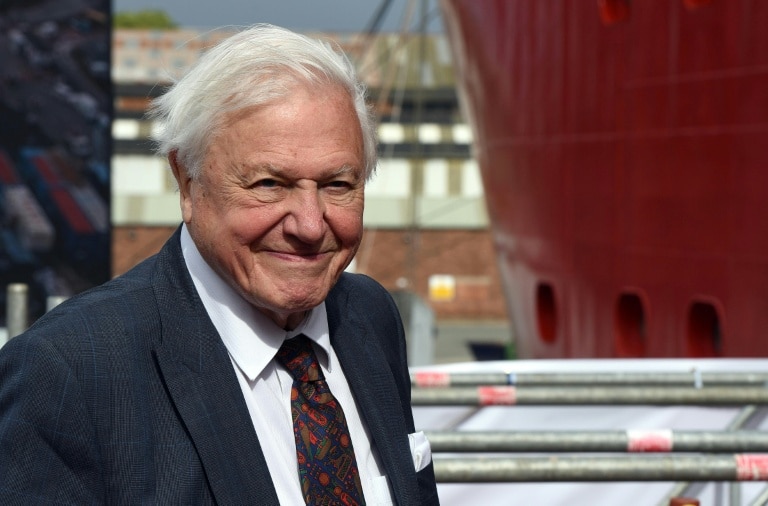
    As the clock ticks toward Friday, the global community is preparing to mark a historic milestone: the 100th birthday of David Attenborough, the legendary naturalist, broadcaster, and climate advocate whose decades of work have redefined how humanity understands the planet we call home. For nearly 80 years, Attenborough has been the guiding voice leading audiences into the most isolated, awe-inspiring corners of the Earth, turning far-flung wild landscapes into familiar fixtures in living rooms across every continent.

    Attenborough’s lifelong connection to the natural world took root in childhood, growing into an academic foundation with university studies in geology and zoology before he joined the BBC in the early 1950s to launch what would become an unparalleled broadcasting career. His 1979 magnum opus *Life on Earth* — which alone has drawn an audience of more than 500 million viewers worldwide — remains one of the most watched nature documentaries in history. It was in this series that Attenborough shared one of his most iconic personal encounters: a close, unplanned meeting with a family of mountain gorillas in the Rwandan wilderness, an experience he still calls “bliss” and “extraordinary” decades later. Recalling the moment ahead of his centenary, Attenborough described how an adult female gorilla gently twisted his head to meet his gaze, while two young gorillas settled on his lap as cameras rolled: “I was simply transported,” he said.

    Over the decades that followed, Attenborough built a catalog of landmark series including *Planet Earth II*, *Blue Planet II*, *Life in the Freezer*, and *Paradise Birds*, each capturing the fragile, extraordinary beauty of ecosystems from polar ice caps to tropical rainforests. Peers across academia and science communication say his impact extends far beyond entertainment. Sandra Knapp, research director at London’s Natural History Museum, told Agence France-Presse that Attenborough’s work “has expanded people’s horizons” and gifted global audiences access to places “we would never otherwise go” — a gift that has inspired generations of scientists, conservationists, and nature lovers. Jean-Baptiste Gouyon, a professor of science communication at University College London, notes that Attenborough achieved what few thought possible: he turned natural history programming into a cultural phenomenon as popular as mainstream football, fostering a widespread, unmatched sense of wonder and passion for the natural world among the general public.

    His influence has crossed generational and national boundaries, earning acclaim from figures across public life, royalty, and entertainment. Britain’s heir to the throne Prince William has hailed him as a “national treasure,” and the late Queen Elizabeth II knighted him in 1985. American pop star Billie Eilish, whose praise underscores Attenborough’s cross-generational appeal, has celebrated his “deep love and knowledge of our planet,” noting that “The animal kingdom brings out the childlike curiosity within us all.”

    In recent decades, Attenborough has pivoted from simply documenting the natural world to sounding the alarm about the existential threats it faces. In 2006, after waiting for conclusive scientific proof of human-caused climate change, he publicly dropped his earlier skepticism and joined the global movement calling for urgent action. Even well into his 90s, he continued to make hard-hitting, unflinching documentaries: his 2025 film *Ocean* saw him condemn the industrial fishing practices of wealthy nations, calling the exploitation “modern colonialism at sea.” Most recently, in early 2026, he released *Wild London*, which explores the unexpected wildlife thriving in his native British capital, from urban foxes and reintroduced beavers to tiny harvest mice and hedgehogs. At the 2021 UN Climate Summit in Glasgow, he shared a message of cautious hope that remains central to his public advocacy: “Perhaps the fact that the people most affected by climate change are no longer some imagined future generation, but young people alive today… will give us the impetus we need to rewrite our story, to turn this tragedy into a triumph. We are, after all, the greatest problem-solvers to have ever existed on Earth.”

    Now 100 years old, Attenborough no longer treks through remote jungles or crosses scorching deserts to film new content, but he has not stepped away from storytelling. After a lifetime of global travel, he still resides in the quiet, leafy southwest London suburb of Richmond — his favorite place on Earth, he has confided — in the family home he shared with his late wife Jane, where he raised their two children. Rejecting the label of celebrity even as he became a global household name, Attenborough has always focused attention on the natural world rather than his own fame, a trait Gouyon says has been key to his enduring connection with audiences.

    To celebrate the centenary of the British icon, the BBC is spearheading a week-long slate of special programming dedicated to Attenborough’s life and decades of work. Classic episodes of his most beloved series are being rebroadcast, with an extensive catalog of his work available to stream on the BBC’s iPlayer service. The celebration will culminate on his birthday with a 90-minute live event hosted at London’s iconic Royal Albert Hall, bringing together fans and admirers to honor the life and legacy of the man who taught the world to love the natural world.

  • Mexican BTS fans go wild as concerts grow near

    Mexican BTS fans go wild as concerts grow near

    As the highly anticipated return of South Korean K-pop supergroup BTS draws near, Mexican fans have erupted in collective excitement, turning public spaces across Mexico City into vibrant hubs of celebration ahead of the band’s first string of shows in the country following a nearly four-year hiatus.

    The countdown to the trio of concerts—scheduled for May 7, 9 and 10 in the Mexican capital—kicked off with a lively pep rally on Paseo de la Reforma, one of the city’s most iconic central thoroughfares. Hundreds of fans gathered here, bouncing in sync to BTS’s chart-topping hits, clapping along and cheering as they prepped for the upcoming shows. Attendees tried on band-themed temporary tattoos, posed for photos next to a towering black-and-white poster of all seven members, and bonded over their shared love for the group.

    Jude Pelaez, one of the dancers who participated in the May 3 pre-concert event, told Agence France-Presse that gatherings like this are more than just fun—they help fans build the right energy ahead of the shows. “Like everyone here, I’m so happy,” Pelaez said. “We do these types of events to emotionally and psychologically prepare ourselves, and to prepare the energy and vibe of the place. That makes Mexico different.”

    The BTS fervor that has taken hold of Mexico extends far beyond one-off public rallies, weaving its way into everyday life for fans of all ages. For many young supporters, the band’s message of self-acceptance and authenticity has created a welcoming community where anyone can be themselves. Sixteen-year-old Mare Sousa, who studies K-pop choreography at a local dance studio with roughly 30 other students, says BTS mania is defined by this open, inclusive spirit: “everyone is free to be who they are.” At the studio, students arrive early to rehearse choreography in front of the mirror before class even starts, and often spend break times helping each other perfect tricky steps, according to instructor Ginna Montoya, 22.

    Even many parents have embraced their children’s passion for BTS, drawn to the group’s positive messaging that stands out from some of Mexico’s most popular local music genres. Lucio Campos, a father whose 15-year-old daughter Ana is a devoted fan, decided to take Korean language classes at the South Korean cultural center after Ana asked to travel to Seoul for her birthday. Campos said he appreciates BTS’s core mission of encouraging healthy, intentional living among young people—a stark contrast he noted to the often violent or hypersexualized themes common in reggaeton and narcocorridos, a popular Mexican subgenre that glorifies drug trafficking. “BTS was born with the idea of transmitting healthy questions for young people,” Campos explained. “Their war cry is ‘let’s live life, let’s live it healthily, let’s live well,’ and obviously this fascinates me.” For Ana, the impact is even more personal: “BTS taught me to love myself,” she said, flipping through a photo album filled with band memorabilia and motivational quotes.

    Demand for BTS’s Mexico City shows has been unprecedented: all 135,000 tickets available to the public sold out in mere minutes, leaving tens of thousands of fans empty-handed and desperate for more dates. Even Mexican President Claudia Sheinbaum stepped in to help, urging her foreign ministry to send an official letter to South Korean President Lee Jae Myung to request that the band add additional performances in the country. Sheinbaum said the South Korean leader was “very open” to the request and agreed to forward it to BTS’s production team, but no new concert dates have been announced as of yet. On secondary ticketing platform StubHub, resold tickets are currently being scalped for as much as $13,000 apiece, a testament to the extreme demand for the shows.

    BTS’s global comeback, which launched in March 2025, comes after the group paused group activities for nearly four years to allow all seven members to complete their mandatory South Korean military service. For the South Korean government, the band’s global popularity has become a major soft power asset: officials cite a 26-nation study that found 82% of respondents hold a favorable view of South Korea, a shift widely attributed to the global spread of K-pop led by BTS.