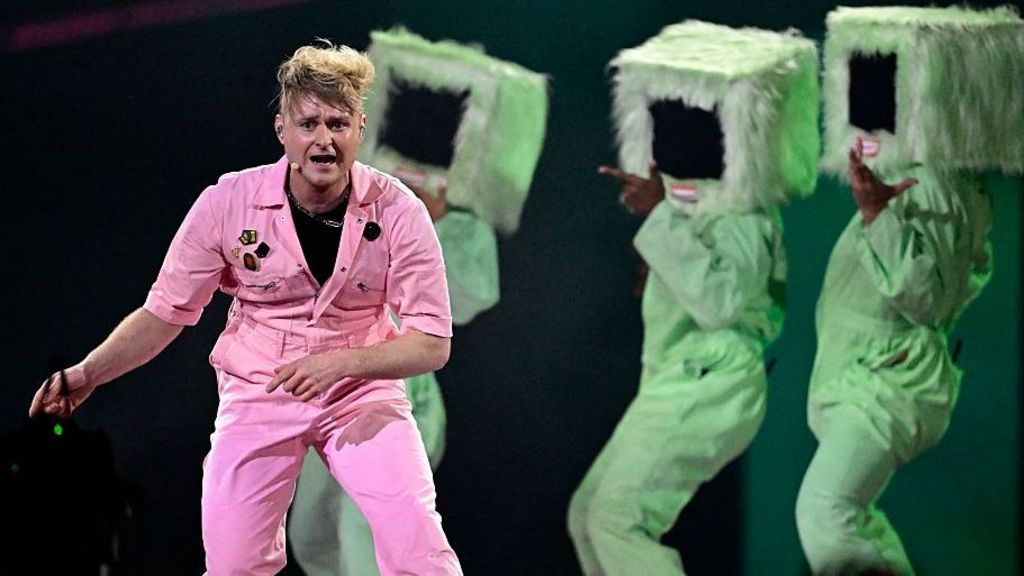
The United Kingdom’s long-running string of lackluster results at the Eurovision Song Contest has drawn official parliamentary scrutiny, after the nation’s 2026 entry landed firmly in last place with just a single point.
Sam Battle, performing under the stage name Look Mum No Computer, claimed the bottom spot at this year’s contest with his entry “Eins, Zwei, Drei”. His poor finish is far from an isolated outcome for the UK: in 2023, singer Mae Muller finished second-from-last, and in 2021, James Newman ended the competition in last place with zero points, often referred to in Eurovision circles as “nul points”. Over the past 15 years, only one UK entry has placed higher than 15th position: Sam Ryder’s 2022 performance of “Space Man”, which earned the UK a second-place finish, bested only by Ukraine’s winning entry from Kalush Orchestra.
Coming up in 2027, the contest will be hosted in Burgas, Bulgaria, and the event will mark a somber milestone for the UK: it will have been 30 full years since the nation last claimed Eurovision victory. That 1996? No, it was 1997, when Katrina and the Waves took the top prize with their hit “Love Shine A Light”, scoring 227 points to secure the win.
Currently, the selection of the UK’s Eurovision entry is handled primarily by the British Broadcasting Corporation (BBC), often in partnership with a major record label or music management firm. Unlike many other competing nations, which opt for public, televised national selection contests to choose their entry, the UK has not used this open selection format since 2019’s *Eurovision: You Decide*. Even that experiment failed to deliver better results: selected act Michael Rice went on to finish last in that year’s international contest held in Tel Aviv, Israel.
The cross-party parliamentary Digital, Culture, Media and Sport (DCMS) Committee has announced it will probe the roots of the UK’s poor performance. Committee chair Dame Caroline Dinenage outlined the inquiry’s core goals, saying: “We want to get to the bottom of who chooses our entrant, on what basis and whether our dismal record of achievement in recent years [Sam Ryder to one side] is the result of bad song choice, weak performance… or something else.”
The inquiry is part of the committee’s broader “State of Play” series, which allows members of the public and stakeholders to request evidence sessions on issues of public concern. Over the coming months, the committee is expected to call senior BBC leaders and leading music industry experts to give evidence in public hearings, alongside accepting written submissions from interested parties. No firm timeline for the first hearing has been announced, but after reviewing all testimony, the committee will likely publish a formal report with actionable recommendations for the BBC to revamp its selection process.
Dinenage highlighted the stark contrast between the UK’s global musical reputation and its Eurovision track record, noting: “This application interested us because of the UK’s reputation for scoring ‘nul points’, coming bottom, or close to bottom in recent years at Eurovision, despite having world-class song writers and musicians.” Despite the poor results, the Eurovision final remains one of the most-watched annual music events in the UK, with millions of viewers tuning in each year to watch the live broadcast and follow the final vote count.