分类: business

  • Threat of grounded planes nears as jet fuel supplies dwindle

    Threat of grounded planes nears as jet fuel supplies dwindle

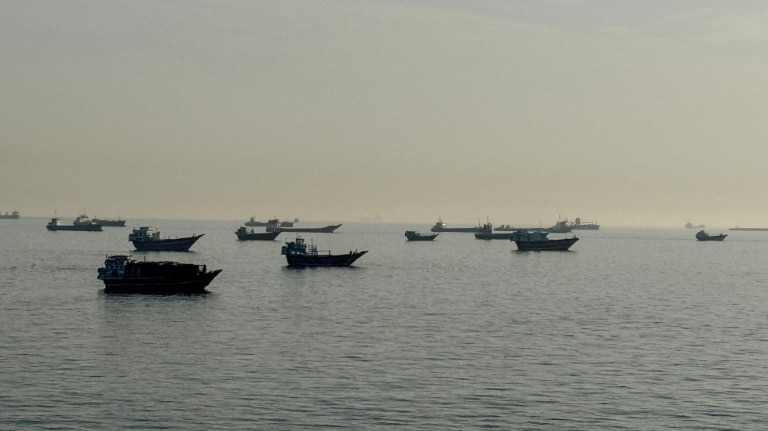
    The global aviation industry is facing growing uncertainty over imminent flight disruptions, as a prolonged blockade of the Strait of Hormuz continues to erode jet fuel supplies across key markets in Asia and Europe. Since the closure of the critical chokepoint on February 28 following the start of US and Israeli airstrikes on Iran, nearly 20% of the world’s daily crude oil and liquefied natural gas shipments – the core input for jet fuel production – have been cut off from global markets, raising urgent alarms about looming shortages.

  • Asian stocks mostly higher after Wall Street hits record and oil steadies

    Asian stocks mostly higher after Wall Street hits record and oil steadies

    Global financial markets kicked off Thursday with broad gains across most Asian equity benchmarks and stable oil prices, driven growing investor optimism that a temporary ceasefire between the U.S. and Iran will be extended and new diplomatic negotiations will move forward. The conflict, which began in late February, has roiled energy markets and raised widespread concerns over global supply chains, making any signs of de-escalation a major catalyst for risk assets.

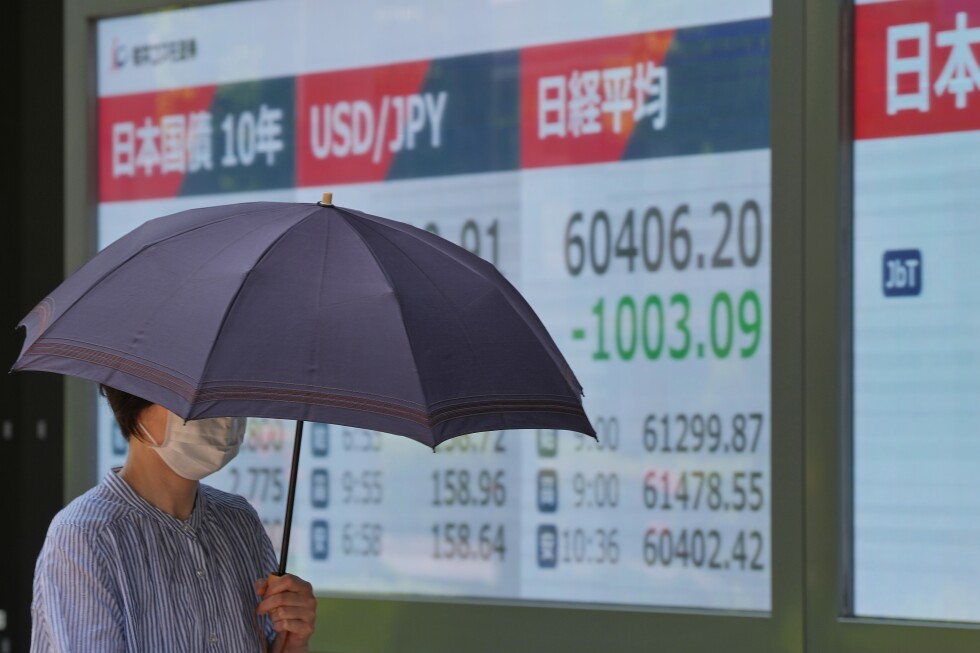
    In Tokyo, the Nikkei 225 surged 2.4% to close at 59,549.59, while South Korea’s Kospi climbed 2% to 6,215.38. Hong Kong’s Hang Seng index recorded a 1.2% uptick to 26,269.99, and mainland China’s Shanghai Composite edged 0.6% higher to 4,050.42. China’s latest quarterly economic data released Thursday showed 5% year-over-year growth for the first three months of the year, an acceleration from the final quarter of 2023. While most economists note that China’s economy has so far absorbed the initial spillover effects of the Iran conflict relatively well, some caution that the country’s large export-driven manufacturing sector could face more substantial headwinds in coming months as broader global economic growth slows. Elsewhere in the region, Taiwan’s Taiex gained 0.9% in midday trading, while Australia’s S&P/ASX 200 bucked the upward trend to edge 0.1% lower.

    The optimism around diplomacy stems from anonymous regional officials who told the Associated Press on Wednesday that Washington and Tehran have reached an “in principle” agreement to extend their existing two-week ceasefire, which is set to expire next week. The two sides are also reportedly making progress toward organizing a second round of formal negotiations. Additional diplomatic efforts are underway, with Pakistani army chief currently visiting Tehran to help broker further talks between the two parties.

    Even as hopes for peace grow, the U.S. is moving ahead with plans to increase economic pressure on Iran. U.S. Treasury Secretary Scott Bessent issued a warning this week that Washington is preparing to implement new secondary sanctions targeting any entities that continue business with Iran, including potentially Chinese companies that purchase Iranian crude oil.

    Global oil markets held steady on Thursday after months of extreme volatility tied to the conflict. Brent crude, the global benchmark for oil prices, ticked up less than 0.1% to settle at $94.94 per barrel, while U.S. benchmark West Texas Intermediate crude rose 0.4% to $91.66 per barrel. Oil prices spiked sharply immediately after the war began in late February, after the Strait of Hormuz — a critical global shipping chokepoint through which roughly 20% of the world’s daily oil supply passes — was effectively closed to commercial traffic. The U.S. implemented a new naval blockade of Iranian ports this week, aiming to force Tehran to reopen the strait as part of any negotiated ceasefire deal.

    Strategists at ING Bank warned in a client note Thursday that significant uncertainty remains for energy markets. “The key upside risk for the market is that peace talks between the US and Iran break down,” wrote analysts Warren Patterson and Ewa Manthey. “This isn’t an unrealistic scenario, given that US and Iranian demands remain fairly wide apart.”

    The positive momentum for risk assets already spilled over to U.S. markets on Wednesday, with Wall Street hitting new record highs on the ceasefire optimism. The benchmark S&P 500 climbed 0.8% to close at 7,022.95, surpassing its previous all-time high set back in January. The tech-heavy Nasdaq composite jumped 1.6% to 24,016.02, though the Dow Jones Industrial Average bucked the trend to dip 0.2% to 48,463.72.

    Several major U.S. banks outperformed the broader market after releasing stronger-than-expected first quarter earnings results. Bank of America shares rose 1.8%, with CEO Brian Moynihan noting ongoing signs of a resilient U.S. economy, including steady consumer spending. Morgan Stanley followed a similar trajectory, with shares gaining 4.5% after its own positive earnings report. In one of the most notable individual stock moves of the day, San Francisco-based footwear brand Allbirds saw its share price skyrocket 582% to nearly $17 per share after the company announced it would pivot its core business focus to artificial intelligence and rebrand as NewBird AI.

    In other commodity trading, safe-haven assets gold and silver both posted gains on Thursday. Gold climbed 0.5% to $4,846.40 per ounce, while silver rose 1.3% to $80.62 per ounce. In currency markets, the U.S. dollar weakened slightly against the Japanese yen, falling to 158.58 yen from 159 yen in the prior session. The euro also ticked higher, trading at $1.1814 up from $1.1799 on Wednesday.

  • Saudi Arabia on cusp of severing ties with LIV Golf: Report

    Saudi Arabia on cusp of severing ties with LIV Golf: Report

    Saudi Arabia’s $1 trillion sovereign wealth vehicle, the Public Investment Fund (PIF), is poised to end its financial backing of the breakaway LIV Golf league, according to multiple industry and media reports, as shifting geopolitical risks and delayed domestic megaprojects force a broad re-evaluation of the fund’s global investment priorities.

    The Financial Times first reported Wednesday that PIF could formally announce its withdrawal from LIV Golf as early as Thursday, a move that would force the fund to absorb a full write-down on its $5 billion commitment to the upstart circuit. PIF has served as LIV Golf’s sole primary financial backer since the league launched in 2021, and insiders widely view an exit as a fatal blow to the tournament series, which has accumulated steep operating losses since its founding.

    The LIV Golf investment was a core component of Saudi Arabia’s broader economic diversification strategy, which aims to reduce the kingdom’s long-term dependence on oil and gas exports by expanding its footprint in global sports and entertainment. The league was designed to compete directly with the established PGA Tour, shaking up the global golf landscape and drawing dozens of top players with unprecedented multi-year contract offers.

    PIF leadership had already been considering an exit from the golf project months before the outbreak of the US-Israeli war on Iran, but the conflict has accelerated the fund’s push to consolidate capital and refocus on domestic priorities, industry analysts note. The shift is already sending ripples through global sports and business circles, as many organizations that have grown reliant on large infusions of capital from Gulf sovereign wealth funds now face uncertainty about future funding.

    The pullback from LIV Golf is just one part of a broader scaling back of ambitious PIF projects that predates the current geopolitical crisis. Earlier this year, Saudi authorities paused construction on the Mukaab, a massive 400-meter cubic megastructure planned for central Riyadh, and shelved proposals for a desert indoor ski resort and a large artificial lake dam project. In a December 2025 address, Saudi Finance Minister Mohammed al-Jadaan emphasized that the government had “no ego” blocking necessary project reassessments as budget priorities shift.

    While Saudi Arabia has emerged as a rare beneficiary of the current conflict, able to export oil independently of Iranian control over the Strait of Hormuz via its East-West pipeline connecting the Persian Gulf to the Red Sea, and has profited from sustained elevated global crude prices, the war has created new headwinds for the kingdom’s economic agenda. The conflict has undermined efforts to position Gulf states as stable, secure hubs for international tourism and foreign direct investment, adding new fiscal pressure to reorient spending.

    In an interview with Al Arabiya Business published Wednesday, PIF Governor Yasir al-Rumayyan explicitly confirmed that the war on Iran has altered the fund’s strategic planning. “The war would add more pressure to reposition some priorities,” he told the outlet. He also confirmed for the first time that The Line, the iconic 170-kilometer car-free linear city that was the centerpiece of the $500 billion Neom futuristic development project, is no longer a near-term priority.

    “Everyone thinks The Line is NEOM, but The Line is one project in NEOM,” Rumayyan said. “Is it necessary to have The Line by 2030? I think no. It’s good to have, but not a must-have.”

    The exit from LIV Golf aligns with PIF’s new target to allocate 80 percent of its investment capital to domestic projects, with just 20 percent deployed to international holdings. That marks a sharp reduction from the 30 percent foreign investment share the fund held in recent years, as the kingdom prioritizes shoring up domestic economic activity amid growing regional uncertainty.

  • Fuel supply fears after blaze tears through crucial Australian refinery

    Fuel supply fears after blaze tears through crucial Australian refinery

    A devastating chain of explosions sparked by a gas leak has torn through one of Australia’s only two operating oil refineries, leaving authorities warning of imminent domestic fuel supply disruptions just months after regional conflict upended global energy markets. The blaze broke out late Wednesday at Viva Energy’s Geelong refinery, located roughly an hour’s drive southwest of Melbourne in Victoria state. At its peak, flames reached 60 meters into the sky, turning the sky over the industrial hub thick with acrid black smoke.

    Fire Rescue Victoria confirmed Thursday that the inferno had been contained, though emergency officials cautioned hotspots could continue to smolder for the rest of the day. Initial assessments confirm the fire was concentrated in the section of the facility dedicated to high-octane petrol production, Energy Minister Chris Bowen confirmed to reporters. Rapid action by plant personnel to trigger emergency isolation valves prevented the fire from spreading to adjacent units that produce jet fuel and diesel, sparing those critical operations from major damage.

    Owned by energy firm Viva Energy, the Geelong plant accounts for roughly 10% of Australia’s total domestic fuel output, with a maximum processing capacity of 120,000 barrels of crude oil per day. Combined with the only other operating refinery, Ampol’s Brisbane facility, the two plants produce just 10 to 20% of the nation’s total fuel demand, leaving Australia heavily dependent on imports to cover the gap. This geographic isolation and limited domestic refining capacity leaves the country uniquely vulnerable to global supply shocks, a risk that has been amplified by ongoing conflict in the Middle East.

    Incident controller Mark McGuinness described the blaze as unusually intense, saying “It was quite ferocious. It went from a small fire through several explosions to a large, intense fire” in short order. Viva Energy CEO Scott Wyatt emphasized that safety remained the company’s top priority in the aftermath of the incident, noting “Production is not our primary priority today. Today it is getting the site safe.” No casualties have been reported as of Thursday, but full assessments of damage and production shutdown timelines are still underway.

    Already strained by the halt of shipping traffic through the Strait of Hormuz—an artery that carries one-fifth of the world’s global oil and gas supply, which has been effectively closed since U.S. and Israeli strikes against Iran on February 28—Australia’s fuel markets are now facing a second major shock. Government data shows Australia currently holds just 38 days of petrol reserves, far below the 90-day minimum stockpile requirement set by the International Energy Agency. The federal government has not yet activated fuel rationing, but has urged motorists to conserve fuel where possible and switch to public transit for routine travel when they can.

    In a public address Thursday, Minister Bowen urged Australians to avoid panic buying that would exacerbate existing supply strains. “It’s important that people buy as much fuel as they need. But no more, no less,” he said, adding that the timing of the incident was particularly unfavorable given already tight market conditions. “It’s not great. It’s not great timing, is it?”

  • China’s economy grows faster than expected despite Iran war

    China’s economy grows faster than expected despite Iran war

    Against a backdrop of escalating global economic disruption fueled by the US-Israel-Iran conflict, China’s first-quarter economic growth has outperformed projections, offering a rare bright spot for the world economy while revealing deep-rooted and emerging challenges that continue to shape its trajectory.

    Official data released shows China’s gross domestic product expanded 5% year-on-year in the first three months of 2026, exceeding the 4.8% growth forecast by a consensus of economists. This stronger-than-expected result comes even as the Middle East conflict, which erupted in late February, has severely roiled global energy markets, hitting Asian economies particularly hard.

    The better-than-anticipated growth reading marks the first official GDP release since Beijing downgraded its 2026 full-year growth target to a range of 4.5% to 5% last month, the lowest annual growth goal China has set since 1991. The new target was formally announced alongside broader economic priorities for the latest Five-Year Plan in March, where Chinese leadership outlined commitments to heavy investment in innovation and high-tech manufacturing, paired with policy measures to stimulate flagging domestic consumer spending.

    The ruling Communist Party has been working to recalibrate China’s economic model, which has been grappling with a cascade of persistent headwinds for years: stagnant household consumption, a rapidly shrinking working-age population, and a years-long ongoing property sector crisis that has dampened investment across the real estate industry. This quarter’s growth was largely driven by expansion in manufacturing output, while the broader economy continues to be dragged down by falling investment in the property sector, according to the official data.

    Beyond domestic challenges, China also faces external pressure from energy market volatility tied to the Middle East conflict and ongoing global trade frictions, particularly long-standing tariff policies enacted by former US President Donald Trump. Currently, most Chinese goods exported to the US face a 10% US tariff, but US Treasury Secretary Scott Bessent indicated in comments Tuesday that the administration could restore tariffs to their pre-Supreme Court ruling levels by early July, after the high court struck down a large portion of Trump’s original import levies.

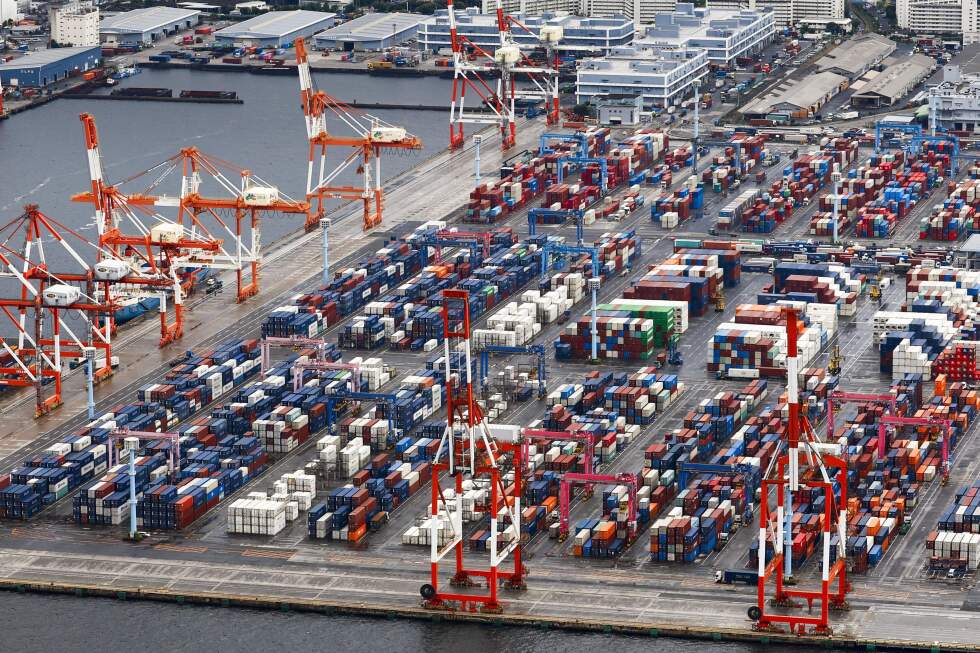
    Despite the positive GDP surprise, new trade data released Tuesday points to growing external strain on China’s economy. March export growth slowed sharply to just 2.5% year-on-year, down from a more than 20% combined surge in exports across January and February, and hitting a six-month low. China aggregates January and February trade data annually to account for shifting Lunar New Year holiday dates, which typically cause large seasonal fluctuations in trade activity. The earlier jump in exports had been fueled by strong global demand for Chinese electronics and manufactured goods.

    In a counterpoint to slowing exports, March imports surged nearly 28% year-on-year in value terms, driving China’s monthly trade surplus – the gap between total exports and total imports – down to just over $50 billion (£36.85 billion), the smallest surplus recorded in more than a year.

    Yixiao Zhou, an economics lecturer at the Australian National University, explained that the sharp rise in the value of imports is largely a reflection of higher global commodity costs driven by the Middle East conflict. Iran’s threats to block commercial traffic through the Strait of Hormuz, a critical chokepoint that carries roughly a fifth of the world’s daily oil supply, have pushed up global prices for crude oil and petroleum-derived products including plastics, which China imports in large volumes.

    For exports, Zhou added, slowing growth stems from reduced consumer spending power across global markets, as conflict-driven inflation erodes household budgets. “Export growth ultimately depends on your trading partners’ economies,” she noted. “It is hard to sustain that growth at a very high rate continuously.”

    Looking ahead, high-level diplomatic attention is already focused on an expected meeting between US President Donald Trump and Chinese President Xi Jinping scheduled to take place in China in May, where trade policy and tariff disputes are expected to top the agenda.

  • China’s economy grows at 5% in first quarter, shrugging off initial impact of Iran war

    China’s economy grows at 5% in first quarter, shrugging off initial impact of Iran war

    HONG KONG, April – Newly released official data shows China’s economy outperformed market projections in the first three months of 202X, logging a 5% year-on-year expansion that marked an acceleration from the 4.5% growth recorded in the final quarter of last year. The strong quarterly performance comes even as the ongoing Iran conflict, now in its seventh week, has roiled global energy markets and dragged on worldwide economic momentum, with China proving more resilient to short-term disruptions than many analysts initially predicted.

    Economists broadly agree that China is well-positioned to absorb the immediate shocks stemming from the Iran war, which has driven a sharp uptick in global energy costs and worsened already persistent inflationary pressures across major economies. Still, the conflict carries clear longer-term risks for China’s growth trajectory, particularly through its impact on global demand for Chinese manufactured exports.

    Fresh trade data published earlier this week already signaled a notable cooling in China’s outbound shipments: exports rose just 2.5% year-on-year in March, a sharp slowdown from the faster growth recorded in the first two months of the year. Cornell University economics and trade policy professor Eswar Prasad noted that as nations around the world prioritize shielding their domestic industries, households and economies from the Iran war’s spillover effects, global appetite for Chinese imports is clearly contracting. “A prolonged conflict, paired with elevated energy prices that stick around longer than expected, will dent overall global growth, and that will directly undermine other economies’ capacity to purchase Chinese goods,” Prasad explained.

    Last month, Chinese leadership set a 202X full-year growth target of 4.5% to 5%, the lowest official annual growth target the country has announced since 1991. The International Monetary Fund this week revised down its 2026 growth forecast for China to 4.4%, marking a downgrade from earlier projections. Even so, most economists believe China remains on track to hit this year’s growth target via targeted policy stimulus measures. However, additional structural risks persist beyond the Iran conflict’s spillover effects.

    The country has been grappling with a multi-year slump in its real estate sector, which has dragged down both consumer and investor confidence for the past several years. Despite this headwind, China still hit its “around 5%” growth target in 202X-(last year), powered by surprisingly robust export performance that pushed the country’s annual trade surplus to a new record of nearly $1.2 trillion – even in the face of elevated punitive tariffs imposed by the U.S. under former President Donald Trump.

    Lynn Song, chief economist for Greater China at ING Group, noted that while near-term disruptions are manageable, a drawn-out conflict and sustained higher energy prices will likely start to erode China’s growth by the second half of the year. Prasad added that while ramping up public sector investment can help stabilize headline growth to hit the official target this year, the approach carries its own downsides. Without a meaningful strengthening in household consumption demand, increased public investment could intensify underlying deflationary pressures and leave the Chinese economy even more dependent on export-driven growth in the long run.

  • Viva Energy halts trading after major fire engulfs Geelong oil refinery

    Viva Energy halts trading after major fire engulfs Geelong oil refinery

    A sudden out-of-control fire at Viva Energy’s Corio oil refinery near Geelong, Victoria, has prompted the Australian fuel giant to request a temporary suspension of its shares on the Australian Securities Exchange (ASX), sending ripples through domestic energy markets amid already volatile global supply conditions. The blaze erupted overnight following a reported equipment failure, with multiple eyewitness accounts confirming successive explosions at the site, one of only two operating oil refineries remaining in Australia.

    In an official filing to the ASX, Viva Energy, a leading domestic refiner, importer and distributor of petroleum products, confirmed it had applied for a trading halt that will remain in effect until either the company issues a detailed public update on the incident or markets open on Monday, 20 April 2026. The request comes at a time when Viva Energy’s shares have already seen significant upward momentum, surging 21.63% over the past month as escalating Middle East conflicts disrupt global oil production and shipping routes.

    Addressing reporters at a press conference on Thursday, Viva Energy chief executive Scott Wyatt confirmed that the fire has hit critical infrastructure within the refinery’s petrol production complex. “The units that are impacted are in the petrol complex and are part of the collection of units that do make petrol,” Wyatt said. He added that while some petrol production units remain undamaged, output of the fuel will almost certainly be affected in the coming period, with the full scale of disruption dependent on damage assessments and adjustments to refinery operations.

    The incident comes just one week after Australian Prime Minister Anthony Albanese announced a new government-backed support scheme for the nation’s two remaining refineries – owned by Viva Energy and competitor Ampol respectively. Under the scheme, Export Finance Australia will provide underwriting for domestic fuel imports, a policy designed to shore up national fuel security after decades of refinery closures across the country left Australia reliant on just two domestic production facilities. Analysts warn that any extended outage at the Corio refinery could put additional pressure on national fuel supplies and push petrol prices higher for Australian consumers, at a time when global energy markets are already facing significant uncertainty from geopolitical tensions.

  • Major fire at Australian oil refinery to impact nation’s petrol supplies

    Major fire at Australian oil refinery to impact nation’s petrol supplies

    A destructive fire sparked by equipment failure has broken out at Viva Energy’s Corio oil refinery, one of only two operating oil refineries in Australia, exacerbating existing strains on the country’s already tight petrol market against the backdrop of a global fuel crisis.

    Emergency response teams were dispatched to the Geelong-based facility, located roughly 75 kilometers southwest of Melbourne, shortly before midnight on Wednesday following multiple reports of explosions and visible large flames. Fortunately, all 50 to 100 workers on site at the time of the incident were evacuated without injury, though the intense blaze has continued to burn into the following day, forcing local authorities to issue urgent public warnings about degraded air quality for surrounding communities.

    As a critical fuel production hub, the Corio refinery accounts for 10 percent of Australia’s total fuel output and half of Victoria’s domestic fuel supply, processing 120,000 barrels of crude oil per day and supporting more than 1,100 local jobs. While the facility remains partially operational, with jet fuel and diesel production continuing at reduced capacity as a safety measure, Viva Energy officials confirmed the fire damaged two dedicated petrol production units. Scott Wyatt, chief executive of Viva Energy, emphasized that stabilizing the site and ensuring worker safety is the company’s top priority, rather than restoring full output immediately. “We’ll only start increasing production again once we’re confident we can do that safely,” Wyatt said, noting that some petrol-producing units remain undamaged but supply disruptions for the fuel are still likely.

    Geelong Mayor Stretch Kontelj described the incident as unprecedented for the facility, adding that the extreme intensity of the fire has left firefighters with little option but to allow it to burn out naturally, with the blaze expected to continue for multiple hours. “This has been a huge shock and has rocked [refinery management],” Kontelj told the Australian Broadcasting Corporation.

    Australian Energy Minister Chris Bowen noted that the fire comes at an exceptionally challenging time for national fuel security, as global oil markets have been thrown into chaos following the outbreak of war in Iran. Australia has already faced skyrocketing fuel prices in recent weeks, with diesel costs doubling, widespread reports of panic buying that have left many retail fuel stations struggling to maintain stock, and domestic airlines cutting back routes to offset spiking jet fuel costs.

    “This is not a positive development, but obviously there’s a long way to go in terms of working out just what the impact is,” Bowen told Nine Network’s *Today* program on Thursday. The minister added that he is in constant close coordination with Viva Energy leadership, as officials work to assess the full scope of production disruptions and potential impacts on retail fuel supplies across the country. Fire Rescue Victoria has confirmed the fire was caused by equipment failure, with a full formal investigation into the incident planned for after the blaze is fully contained.

  • Australia joins UK statement calling for Iran ceasefire, ‘responsible’ domestic response

    Australia joins UK statement calling for Iran ceasefire, ‘responsible’ domestic response

    As geopolitical tensions in the Middle East threaten to unravel a fragile ceasefire between Israel and Iran, 11 US-allied nations led by Australia have put out an extraordinary joint warning about the catastrophic economic fallout a wider conflict could trigger globally. Australian Treasurer Jim Chalmers, who is currently in Washington D.C. attending high-level talks with leaders from the International Monetary Fund and World Bank, was one of the first signatories to the statement, which also draws signatures from finance leaders of the United Kingdom, Japan, New Zealand, Sweden, the Netherlands, Finland, Spain, Norway, the Republic of Ireland, and Poland.

    The core message of the joint communique is clear: any collapse of the current ceasefire or escalation of hostilities in the region would inject severe new risks into already fragile global energy markets, cross-border supply chains, and broad-based economic stability. Even if the parties reach a lasting, durable resolution to the current standoff, the statement notes that lingering disruptions will continue to weigh on global fiscal growth, keep core inflation elevated, and generate volatility across international financial markets.

    Against this backdrop, the statement calls on all global governments to coordinate their post-crisis economic responses in a transparent, responsible, and responsive manner. With most national government balance sheets already stretched thin from recent global shocks, the signatories have committed to ensuring any domestic policy interventions to offset conflict impacts are fiscally prudent and targeted specifically at the most vulnerable populations and sectors.

    A key pillar of the statement is a reaffirmation of the signatories’ commitment to open, rules-based trade for global energy products. The group explicitly called on all nations to reject protectionist measures that could worsen supply chain disruptions, including unjustified export controls, excessive strategic stockpiling of energy resources, and new trade barriers that block the flow of hydrocarbons and other critical goods through crisis-affected supply chains.

    Long-term, the signatories also committed to accelerating global energy diversification efforts, including scaling up the clean energy transition and rolling out improvements to energy efficiency across all economies, to reduce long-term exposure to regional energy market shocks. The statement welcomed any steps individual nations take to advance these goals, and called for coordinated assessment work from the IMF, World Bank, and International Energy Agency to map the full scope of potential global economic impacts from the current conflict.

    The communique highlights that low-income and vulnerable nations face the worst consequences of market volatility, particularly small, remote island states that rely entirely on imported energy to meet basic domestic needs. In response, the group has called on the IMF and World Bank to roll out a coordinated emergency support package for at-risk countries, tailored to individual national circumstances and leveraging the full flexible toolkit of the global financial institutions. The signatories also urged the institutions to provide guidance on temporary, targeted, and effective domestic policy responses, while prioritizing actions that protect long-term sustainable global growth.

  • UAE’s Burj Al Arab to close for 18 months refurbishment after Dubai tourism drop-off

    UAE’s Burj Al Arab to close for 18 months refurbishment after Dubai tourism drop-off

    One of Dubai’s most recognizable global landmarks, the sail-shaped Burj Al Arab luxury hotel, will shut its doors for an 18-month phased refurbishment project, following steep drops in tourism driven by escalating Iranian attacks targeting the United Arab Emirates. The hotel’s parent company, hospitality firm Jumeirah, announced the long-planned renovation in an official statement Tuesday, confirming the project will be led by Paris-based renowned interior architect Tristan Auer. Though the original statement did not explicitly confirm a full closure during the construction period, an unnamed staff member disclosed to news outlet Reuters that the property will suspend operations entirely, and guests with existing bookings throughout the renovation window will be relocated to comparable accommodation at nearby Jumeirah properties. Completed in 1999, Burj Al Arab has stood as one of Dubai’s signature tourism calling cards alongside other iconic landmarks including the Burj Khalifa and the man-made Palm Islands, drawing high-net-worth travelers from across the globe for decades. However, the property suffered physical damage earlier this year when debris from an intercepted Iranian drone attack struck the site in March. While Jumeirah’s public statement did not explicitly link the renovation timeline to ongoing regional conflict or the drop in tourism, industry analysts and regional observers confirm that Iranian strikes against the UAE — which hosts key U.S. military bases in the Gulf — have triggered a sharp exodus of both foreign expatriate residents and international tourists from the emirate. The current conflict erupted in late February, after joint strikes by Israel and the United States targeted Iranian military positions. In just the first month of active hostilities, official data shows the combined market capitalization of the Dubai and Abu Dhabi stock exchanges plummeted by more than $120 billion, and over 18,400 commercial flights into and out of the UAE were canceled. This unrest has severely eroded the UAE’s carefully cultivated reputation as a stable, secure haven for tourism and international business in a historically volatile Middle Eastern region. Unlike neighboring Gulf states including Saudi Arabia and Oman, which have seen their stock markets gain value amid soaring global oil prices, the UAE’s diversified, globally integrated economy — built on four core pillars of tourism, real estate, logistics, and international finance — has faced direct, sustained damage from the ongoing security crisis. As of March 28, Iranian military forces have launched 398 ballistic missiles, 1,872 drones, and 15 cruise missiles at targets across the UAE, making the country the second-most targeted nation by Iranian strikes after Israel, which is Tehran’s longstanding primary adversary. While the vast majority of these incoming projectiles have been successfully intercepted by UAE and allied air defense systems, falling debris from intercepted weapons has caused widespread damage across multiple key sites in Abu Dhabi and Dubai, including Burj Al Arab, the Palm Jumeirah development, Dubai International Airport, and the Fujairah oil and industrial zone. This report is sourced from independent regional news outlet Middle East Eye, which specializes in unrivaled, original coverage of the Middle East and North Africa region.