Twelve months have passed since former U.S. President Donald Trump signed an executive order to jumpstart a commercial deep-sea mining industry from scratch, and the sector has already seen explosive investor activity, soaring stock valuations, and a rushed federal permitting push that could bring the first U.S.-approved commercial seabed mining projects to fruition within the next two years. An Associated Press investigation into the nascent industry reveals sharp divides over its economic viability, environmental risks, and legal legitimacy, even as regulators move aggressively to auction off access to seafloor deposits stretching from Alaskan waters to American Samoa by the end of 2025.
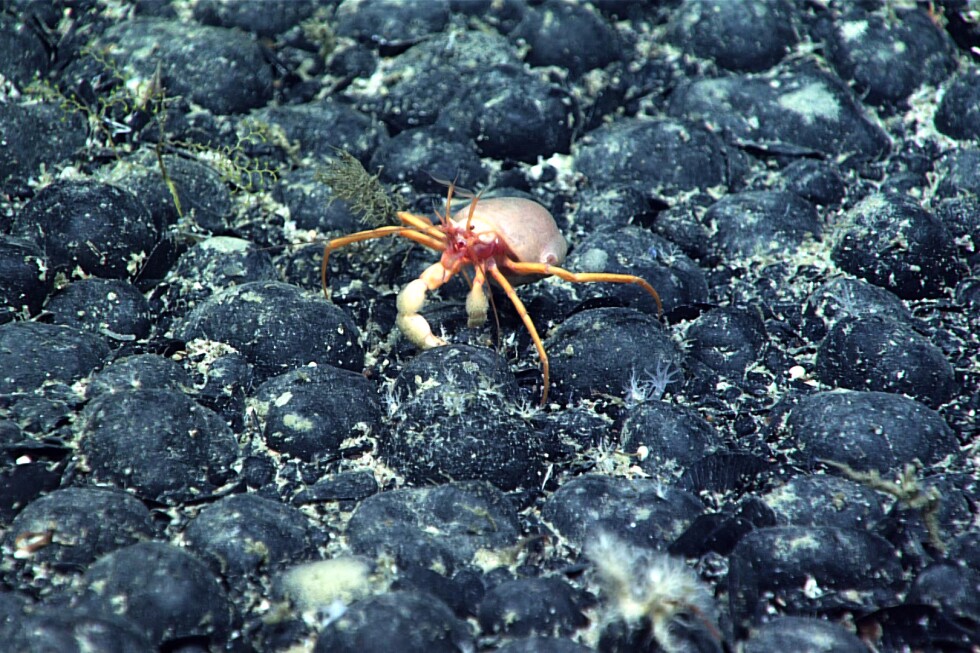
At least nine companies are currently in active discussions with federal regulators to secure exploration and commercial mining rights, marking a dramatic reversal of decades of U.S. policy that aligned with international agreements governing the global seabed. For context, deep-sea mineral deposits — most notably polymetallic nodules, fist-sized rock formations formed over millions of years that contain high concentrations of manganese, copper, nickel, cobalt and rare earth elements critical to clean energy technology — have drawn prospector interest for more than a century. Trillions of these nodules lie on the international seabed between Mexico and Hawaii, an area classified as the shared heritage of all humankind under the governance of the Jamaica-based International Seabed Authority (ISA). To date, the ISA has granted only exploration rights to 24 contractors, and has not finalized rules to allow commercial mining, a process that has dragged on for more than a decade.
Trump’s 2024 executive order broke with this international framework, reversing longstanding U.S. commitments to wait for ISA rules and directing federal agencies to accelerate domestic permitting. The order framed seabed mining as critical to U.S. economic prosperity and trade independence from China, a framing that has rallied industry and political support. Today, two federal agencies are leading the permitting push: the Bureau of Ocean Energy Management (BOEM), which regulates U.S. territorial waters, and the National Oceanic and Atmospheric Administration (NOAA), which oversees activity in international waters. Neither agency has ever approved a commercial deep-sea mining project, but political appointees installed during Trump’s second term have moved rapidly to rewrite rules and expand capacity. In June 2025, Interior Secretary Doug Burgum ordered BOEM to streamline its review process, announced plans to rebrand the agency as the Marine Minerals Administration, and scheduled the first lease auction for as early as August 2025, covering areas off Alaska, Virginia, American Samoa and the Northern Mariana Islands. NOAA, meanwhile, revised its rules in January 2025 to allow companies to apply for commercial and exploration permits simultaneously, and has requested expanded staffing to process 16 applications in the 2026 fiscal year. A White House spokesperson has defended all actions as legally sound.
But a closer look at the companies leading the race for seabed access reveals a pattern of legal disputes, failed past projects, and questionable track records that raise alarms for analysts and observers. The most high-profile contender is The Metals Company, widely viewed as the industry front-runner, which says it is prepared to launch commercial mining before the end of 2026 if it receives a permit. The firm conducted a 2022 test that pulled 3,000 metric tons of nodules from the seabed, and has close ties to the Trump administration: CEO Gerard Barron was at the White House for the signing of the executive order, has testified three times before Congress on deep-sea mining, and has received financial advice from Cantor Fitzgerald, the firm led by current Commerce Secretary and NOAA overseer Howard Lutnick. The company submitted its permit applications within a week of the executive order, and resubmitted under the new streamlined rules just one day after NOAA finalized the regulatory changes, leading Democratic Rep. Ed Case of Hawaii to accuse the firm of being improperly aligned with the agency. Barron has denied the accusation, noting the company spent nearly $800,000 on lobbying starting in 2024 to streamline permitting rules.
The Metals Company’s leadership also has a history of failed deep-sea mining projects: Barron got his start in the sector as an investor in Nautilus Minerals, which won the world’s first commercial seabed mining license from Papua New Guinea in 2011, only to collapse before production began, leaving the government holding more than $100 million in debt for its 15% stake in the project. In a statement, a company spokesperson said The Metals Company has 15 years of preparation and testing behind it, and faces no unfair advantages in the permitting process.
Other leading contenders bring similarly controversial track records. Tampa-based Odyssey Marine Exploration, which got its start in the 1990s hunting sunken shipwrecks for profit, pivoted to deep-sea mining after a years-long legal battle with the Spanish government over a 1804 wreck of a Spanish naval galleon loaded with gold and silver. After a high-profile dispute, Odyssey was forced to return the treasure, and turned its focus to coastal mineral sand mining. The company won a phosphate dredging permit in Mexico’s Gulf of Ulloa, but the Mexican government revoked the permit over fears of harm to marine habitats including critical habitat for endangered loggerhead turtles. Odyssey sued Mexico and won a $37 million settlement in 2024, and has since applied to BOEM to begin dredging off the coast of Virginia. In 2025, the company announced it would merge with American Ocean Minerals Corporation, a newly formed firm that has applied for a NOAA exploration license for deep-sea nodules. An Odyssey spokesperson said the company has selected its project area to avoid sensitive habitats and that dredging can be done safely.
Another startup, Impossible Metals, has targeted seabed deposits off American Samoa and the Northern Mariana Islands, despite widespread local opposition: American Samoa and nearby Guam have already banned deep-sea mining in territorial waters, and a similar ban is being considered in the Northern Mariana Islands. Because the federal government controls waters beyond three miles from shore, the final decision rests with Washington, not local leaders. Impossible Metals has marketed itself as an environmentally friendly alternative to traditional deep-sea mining, planning to use floating robots that only collect nodules free of marine life, and has offered local governments 1% of future profits. Critics, however, question whether the untested technology works, and whether any profits will ever materialize. The company declined to respond to AP’s requests for comment.
Smaller, newer entrants to the sector have also faced questions: Deep Sea Minerals Corp., a Canadian public company founded in 2022, recently acknowledged its marketing materials may have overstated its growth prospects, and confirmed it currently holds no mining rights and has no specialized deep-sea mining technology. Even among the small group of applicants, conflict has already emerged: The Metals Company and American Metal Resources are currently involved in mutual lawsuits alleging the misuse of confidential business information.
Beyond questions about corporate track records, deep-sea mining faces major unresolved economic and environmental challenges. Deep-sea ecologists have long warned that the deep ocean is one of the least studied ecosystems on Earth, and large-scale mining could drive fragile, unique deep-sea species to extinction. But economic analysts are also deeply skeptical that the promised profits from the sector will ever materialize.
Proponents of deep-sea mining have long anchored their business case on rising demand for battery minerals for electric vehicles, which drove a surge in cobalt and nickel prices five years ago. But battery technology has evolved rapidly, with modern designs relying far less on the two minerals, reducing projected demand. Even copper, the most consistently in-demand metal found in nodules, is being replaced by aluminum in some industrial applications. At the same time, analysts point out that abundant, lower-cost mineral reserves remain untapped on land: multiple copper, cobalt and nickel mines in the U.S. are already fully permitted but remain inactive, suggesting that permitting barriers are not the primary constraint on domestic mineral supply.
The Metals Company’s own 2024 pre-feasibility study, required for public mining companies by the U.S. Securities and Exchange Commission, projected that the firm would not break even on its first project until the eighth year of operation — the same year it projected all of its currently identified reserves would be fully mined. Mining industry analysts say that forecast is a clear red flag: no viable project expects to only break even when its reserves are exhausted. “Anyone with industry experience would conclude that the project should be abandoned at this stage,” said mining consultant Steven Emerman, who conducted an independent analysis of the study at the request of deep-sea mining opponents. The Metals Company argues that it will find additional economically viable reserves after the project launches, and that the unique mix of four minerals in nodules makes the project resilient to shifting demand. A spokesperson said the cost of surveying additional reserves is best incurred once operations are underway, and the company is confident additional reserves will prove viable.
Another major unaddressed barrier is processing capacity: the U.S. currently has no large-scale domestic processing facilities for nickel, manganese or cobalt, despite the executive order’s focus on trade independence. Building these facilities would require billions in capital and years of construction, meaning companies will initially have to rely on processing partners in Japan, South Korea and Indonesia. That reliance creates major legal risk, because most other countries are party to the ISA and could face legal action for assisting U.S. mining in international waters that is not authorized by the ISA. For example, The Metals Company relies heavily on Swiss firm Allseas, which owns the specialized mining ship and collection vehicles the company plans to use. Allseas has said it will only deploy its technology once all relevant national and international regulatory requirements are met, leaving the project’s core infrastructure in limbo.
Some companies, including Impossible Metals, have suggested the U.S. government could de-risk the sector by purchasing nodules for the National Defense Stockpile, creating a guaranteed buyer for early production. But the Defense Logistics Agency, which manages the stockpile, says there are currently no plans to acquire seabed nodules. Even if the government did step in, analysts note that unprocessed nodules stored in warehouses offer no strategic benefit.
Former senior regulators warn that current U.S. rules are not equipped to govern the novel industry, with insufficient requirements to ensure operators have the financial capacity and technical expertise to complete projects safely. “You want to make sure that the operators are financially capable … (that) they actually have the skills and the resources that would be required,” said Elizabeth Klein, who led BOEM during the final two years of the Biden administration. “The current regs don’t speak to much of that at all.” A BOEM spokesperson countered that current rules require companies to demonstrate financial capacity during the lease bidding process and require a security deposit, and that the agency is required to ensure projects are carried out safely and responsibly.
Despite the long list of unanswered questions and risks, industry supporters remain optimistic. Tony Romeo, founder of South Carolina-based startup Deep Sea Rare Minerals, which got its start searching for Amelia Earhart’s lost plane, says his firm expects to begin production by 2028. “There’s going to be some flops. There’s going be some failures. Some businesses aren’t going to make it, but somebody will,” he said. For now, industry leaders are pushing for long-term certainty, fearful that a future president less supportive of deep-sea mining could cancel their projects. At a January 2025 industry conference, top NOAA and BOEM officials declined to offer any long-term guarantees, noting no one can predict future policy changes. For the immediate future, they said, the door is open for business.