
In a landmark move to accelerate Abu Dhabi’s digital transformation, Comera Pay, a subsidiary of the Royal Group, has joined forces with TAMM, the Emirate’s unified digital platform for government services. The collaboration was formalized through a memorandum of understanding (MoU) signed during GITEX Global 2025 at the Dubai World Trade Centre. This partnership marks the official integration of Comera Pay as a direct payment option within the TAMM ecosystem, enabling residents and businesses to conduct seamless, secure, and cashless transactions for a wide range of government services. The initiative aligns with Abu Dhabi’s vision of building a world-class, cashless economy by leveraging homegrown innovation and technology. Comera Pay’s Managing Director and Group CEO, Akthar Saeed Hashmi, emphasized the shared mission of both organizations to advance the UAE’s digital economy. Beyond government payments, Comera Pay plans to expand its offerings within TAMM to include peer-to-peer (P2P) payments, international remittances, and local merchant transactions. Backed by the Royal Group, Comera Pay is also scaling its presence across retail, corporate, and government sectors with advanced wallet, POS, and gateway solutions. This integration underscores Abu Dhabi’s commitment to fostering a globally competitive, locally developed digital economy built on trust, simplicity, and innovation.
分类: business
-
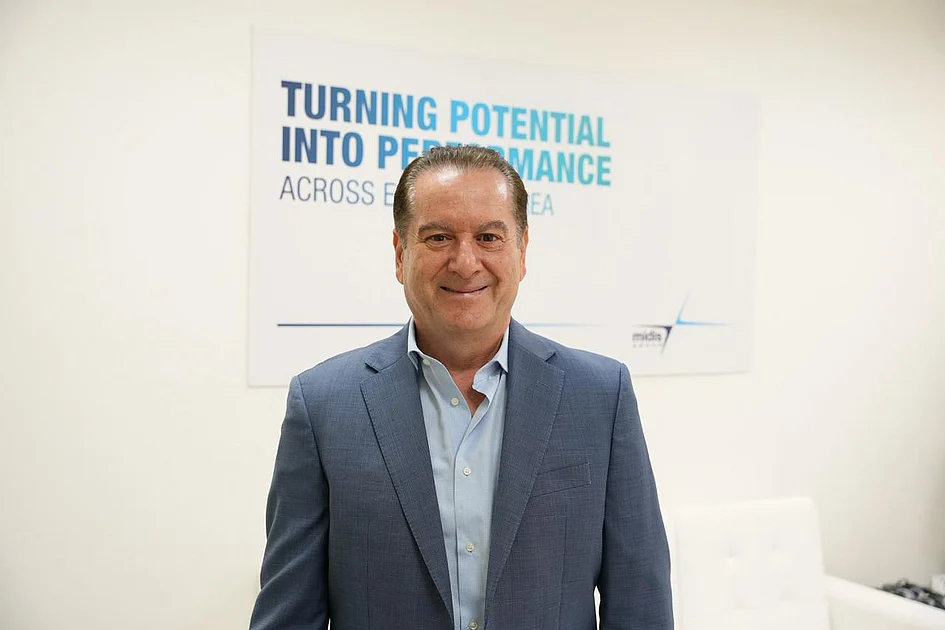
MDS SI seeks to play key role in region’s digital transformation
As the Middle East accelerates its digital transformation, MDS SI, a prominent digital system integrator with a presence in 13 countries and 20 major cities, is positioning itself as a pivotal enabler for businesses navigating this technological shift. With over two decades of dominance in the UAE’s IT services sector and a strong foothold in Saudi Arabia’s competitive market, MDS SI attributes its sustained success to a customer-centric approach, innovation, and consistent value delivery. The company’s President, Sami Abi Esber, emphasized that their focus on customer satisfaction and significant investments in talent and technology have been instrumental in maintaining their leadership. MDS SI’s strategy revolves around optimizing existing operations and enabling new digital business models, leveraging AI-powered solutions and predictive IoT systems to unlock measurable value for clients. Central to their approach is the proprietary “AI Path to Value” methodology, supported by a team of over 700 specialists, ensuring alignment with key business drivers such as revenue growth, cost efficiency, and ESG goals. The company has successfully implemented over 80 AI use cases, demonstrating the practical impact of artificial intelligence. MDS SI also prioritizes ethical considerations, embedding privacy and security into every AI engagement from the outset. In the realm of cybersecurity, the company offers robust defenses, including sovereign AI environments and cloud-based solutions, addressing threats at every level. Building on its legacy as the region’s first public cloud provider through its affiliate eHosting DataFort, MDS SI continues to lead in hybrid and multi-cloud solutions, offering services across platforms like Azure, AWS, GCP, and HPE GreenLake. Recognizing the tech talent gap, the company invests in workforce development through continuous training, certifications, and collaborations with governments and academia. Looking ahead, MDS SI believes the next phase of digital transformation will be defined by tangible outcomes, aligning innovation with measurable business results. The company is also expanding its regional presence through strategic acquisitions, such as Egypt-based cybersecurity firm SmplID and AIdeology, an NVIDIA Elite Solution Provider, while investing in startups focused on smart cities and advanced security technologies.
-

Gold prices in Dubai: Third record high in three days this week at Dh503 per gram
Gold prices in Dubai have soared to unprecedented levels for the third consecutive day this week, with 24K gold reaching a new all-time high of Dh503.5 per gram on Wednesday. This surpasses the previous record of Dh502.75 set on Tuesday, according to data from the Dubai Jewellery Group. Other variants, including 22K, 21K, and 18K, also achieved record highs, trading at Dh466.25, Dh447.0, and Dh383.25 per gram, respectively. Globally, spot gold was priced at $4,188 per ounce at 9:10 am UAE time. Market analysts attribute this surge to a combination of safe-haven demand, escalating US-China trade tensions, and expectations of Federal Reserve rate cuts. Frank Walbaum, a market analyst at Naga, noted that gold briefly surpassed $4,190 per ounce on Tuesday before a slight retreat as investors locked in profits. He highlighted that geopolitical risks, including US President Donald Trump’s tariff threats and Beijing’s retaliatory measures, have intensified market uncertainty. Additionally, the ongoing US government shutdown has further weighed on economic activity, bolstering gold’s appeal. Walbaum also mentioned that markets are anticipating 25-basis-point rate cuts in October and December, supported by Fed officials’ concerns over labour market risks. While tensions in Eastern Europe remain a factor, progress in the Middle East could potentially temper gold demand. This sustained rally underscores gold’s enduring role as a hedge against global economic and geopolitical instability.
-

Hong Kong lawmakers pass bill to regulate ride-hailing services like Uber
Hong Kong has taken a significant step toward regulating its ride-hailing industry with the passage of a new bill on Wednesday. The legislation mandates that platforms like Uber, along with their vehicles and drivers, must obtain licenses to operate legally. This move comes after years of tension between the city’s taxi industry and online ride-hailing services. The first licensed platforms are expected to launch by late 2026 at the earliest. Under the new rules, Hong Kong’s transport commissioner will evaluate applicants based on their experience, financial capacity, and planned investments in the region. Licensed companies must ensure their services are ‘proper and efficient’ and that all vehicles and drivers on their platforms hold valid permits. Drivers must meet specific criteria, including being at least 21 years old, holding a private car driving license for at least one year, and having no serious traffic convictions within the past five years. Additionally, they must pass a test and complete a pre-service course. The bill represents a pivotal moment in the development of ride-hailing services in Hong Kong, where private vehicles have been prohibited from offering paid services without a permit. Uber Hong Kong welcomed the decision, calling it a ‘significant milestone’ in integrating ride-sharing into the city’s transport system. However, the legislation also imposes strict penalties for non-compliance, including fines of up to 1 million Hong Kong dollars (approximately $128,600) and a maximum jail term of one year for unlicensed operators. The government plans to introduce a cap on the number of ride-hailing vehicles, with details to be outlined in subsidiary legislation next year. This framework aims to balance the interests of traditional taxi companies and the growing demand for modern, convenient transportation options.
-
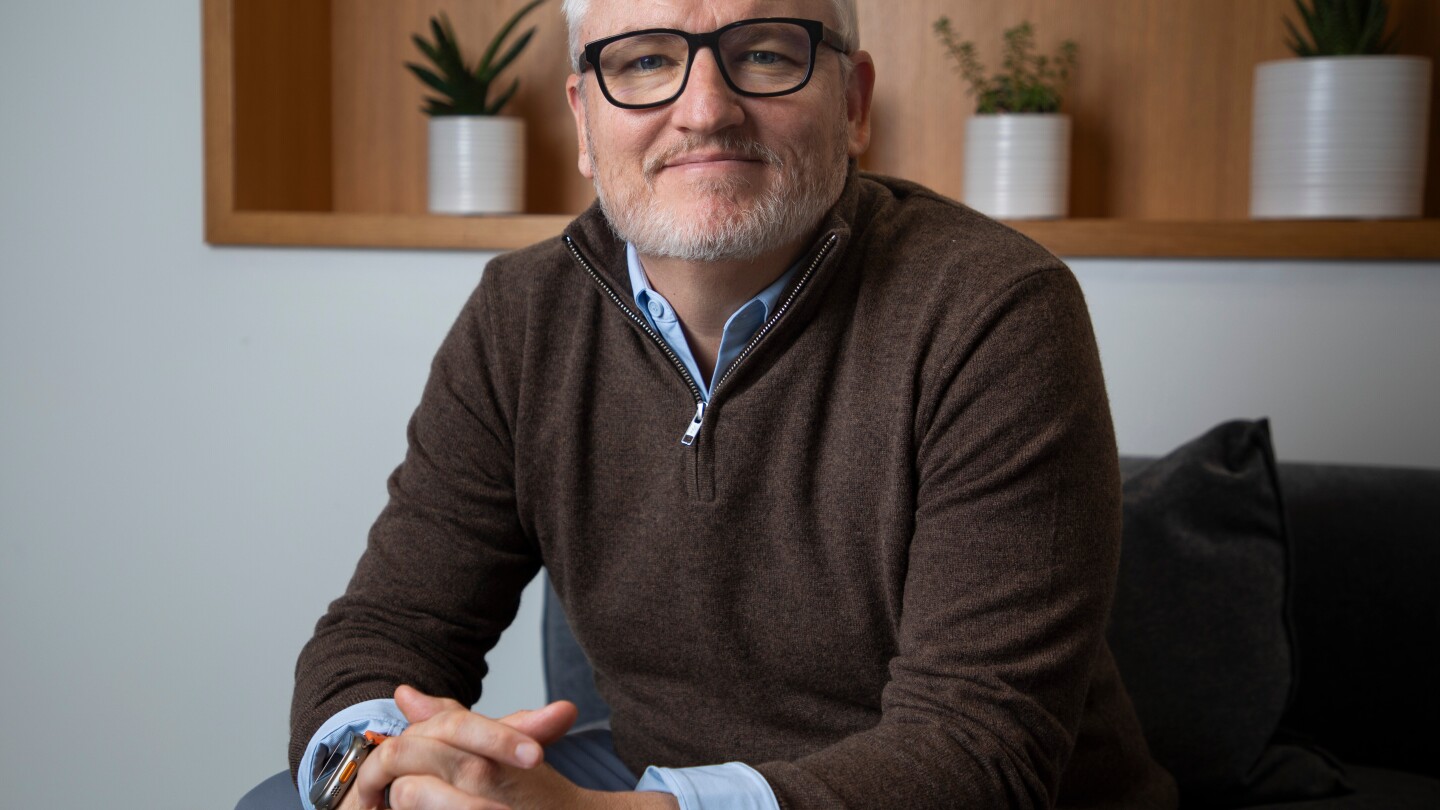
How Promote Giving, a new investment model, will raise millions for charities
Joel Holsinger, an investment manager and partner at Ares Management Corp., has launched Promote Giving, a groundbreaking initiative aimed at encouraging investment managers to integrate charitable donations into their business models. This initiative stems from Holsinger’s transformative experience during a 2019 visit to Dharavi, India’s largest slum, where he witnessed the impact of a tuberculosis prevention program hindered by funding shortages. Inspired to bridge the gap between profit and purpose, Holsinger created the Pathfinder family of funds, which donates at least 5% of performance fees to charities. Since its inception, the initiative has raised over $10 billion in investments and pledged more than $40 million to charitable causes. Promote Giving, launched with participation from nine firms including Ares Management, Pantheon, and Pretium, represents $35 billion in assets and could generate up to $250 million in donations over the next decade. Unlike ESG or impact investing, Promote Giving focuses on maximizing financial returns while allocating a portion of management fees to charities after investors receive their promised returns. This model addresses the funding challenges faced by nonprofits, particularly in the wake of cuts to U.S. foreign aid and the dismantling of USAID. Kammerle Schneider of PATH and Sal Khan of Khan Academy have praised the initiative for its potential to provide stable, long-term funding for critical global health and education programs. Holsinger envisions Promote Growing into a movement akin to the Giving Pledge, encouraging industries to embed philanthropy into their core operations. Research from Chief Executives for Corporate Purpose supports this approach, showing that companies with purpose-driven missions achieve higher revenue growth and employee engagement. Holsinger believes that by channeling more capital to nonprofits, Promote Giving can help solve global challenges that lack not solutions but funding.
-

Dubai’s VARA: Regulating the future of virtual assets
Dubai has solidified its position as a global leader in digital finance by establishing the Virtual Assets Regulatory Authority (VARA), the world’s first dedicated regulator for virtual assets. Since its inception in 2022, VARA has been at the forefront of shaping a regulatory framework that balances innovation, investor protection, and market integrity. Under the leadership of CEO Matthew White, VARA has evolved into a full-scale authority overseeing one of the most dynamic virtual asset markets globally.
VARA’s approach is rooted in principles rather than rigid prescriptions, ensuring flexibility and clarity for market participants. The framework emphasizes activity-specific requirements, data-driven supervision, and global alignment. White highlights the importance of leveraging technology-enabled supervision, scaling innovation through sandboxes, and fostering cross-border cooperation. Collaborations with entities like the UAE Securities and Commodities Authority further strengthen Dubai’s unified national framework.
Innovation remains a cornerstone of VARA’s strategy, but not at the expense of accountability. White asserts that compliance and innovation are complementary, benefiting investors, consumers, and innovators alike. The authority’s principles-based framework sets clear guardrails while allowing Virtual Asset Service Providers (VASPs) the flexibility to meet standards. Strict enforcement mechanisms, including fines up to Dh10 million, underscore VARA’s commitment to compliance.
Engagement with the industry is central to VARA’s operations. Regular consultations with VASPs, tech experts, and investors ensure that regulations remain relevant and effective. Workshops and participation in major events like GITEX and TOKEN2049 further enhance VARA’s connection with the ecosystem. Dubai’s appeal as a virtual asset hub is bolstered by its world-class infrastructure, business-friendly policies, and lifestyle advantages, attracting institutional investors and major players in the industry.
VARA is also pioneering the tokenization of real-world assets and exploring AI-powered Web3 platforms. The Dubai Land Department’s Property Token Ownership Certificate exemplifies this shift, linking tokenized assets to the land registry. Successful projects, such as Prypco Mint’s tokenized real estate, demonstrate the potential of these innovations. Additionally, VARA’s Pilot Framework allows for the safe testing of new products, ensuring responsible innovation.
Looking ahead, VARA is preparing for the next generation of digital assets, focusing on robust governance and tech oversight. The Technology & Information Rulebook ensures firms meet stringent cybersecurity and data protection standards. White envisions Dubai as a global hub for virtual assets, driving economic growth, creating jobs, and competing on the international stage.
-

A bitter harvest for California vintners
California’s wine industry, a cornerstone of the state’s agricultural economy, is grappling with one of its most challenging harvest seasons in decades. Vineyards across the Central Valley and Napa Valley are witnessing rows of unpicked grapes withering under the autumn sun, while bulldozers tear through once-thriving vineyards. This stark reality reflects the mounting pressures of oversupply, rising costs, and retaliatory tariffs that have left many growers in dire straits. Stuart Spencer, executive director of the Lodi Winegrape Commission, described the situation as a ‘crisis,’ with independent growers bearing the brunt of the fallout. Nearly 80% of California’s wine grapes are cultivated by independent farmers, many of whom are now abandoning their vineyards rather than face financial ruin. Jeff Bitter, president of Allied Grape Growers, echoed this sentiment, stating that the current crisis is the worst he has seen in his 30 years in the industry. The oversupply of wine, weakening consumer demand, and escalating costs due to inflation and labor shortages have compounded the industry’s woes. However, tariffs and trade policies have exacerbated these challenges, particularly in key export markets like Canada and China. Earlier this year, Canada imposed a 25% tariff on US wine in response to US tariffs on Canadian steel and aluminum, effectively shutting California producers out of their largest export market. While the retaliatory tariff was lifted in September, American wines have yet to return to Canadian shelves. Additionally, tariffs on imports such as glass bottles, corks, and packaging materials have driven up production costs, further squeezing wineries’ margins. Scott Meadows, CEO of Maxville Winery in Napa Valley, highlighted the long-term impact of these tariffs, noting that even essential equipment repairs have become prohibitively expensive. The industry’s struggles underscore the need for stable trade policies and a concerted effort to rebuild export markets, particularly in Asia, where trade tensions have hindered growth. As California’s wine growers navigate this turbulent period, the future of an industry that has long defined the state’s agricultural and cultural identity hangs in the balance.
-
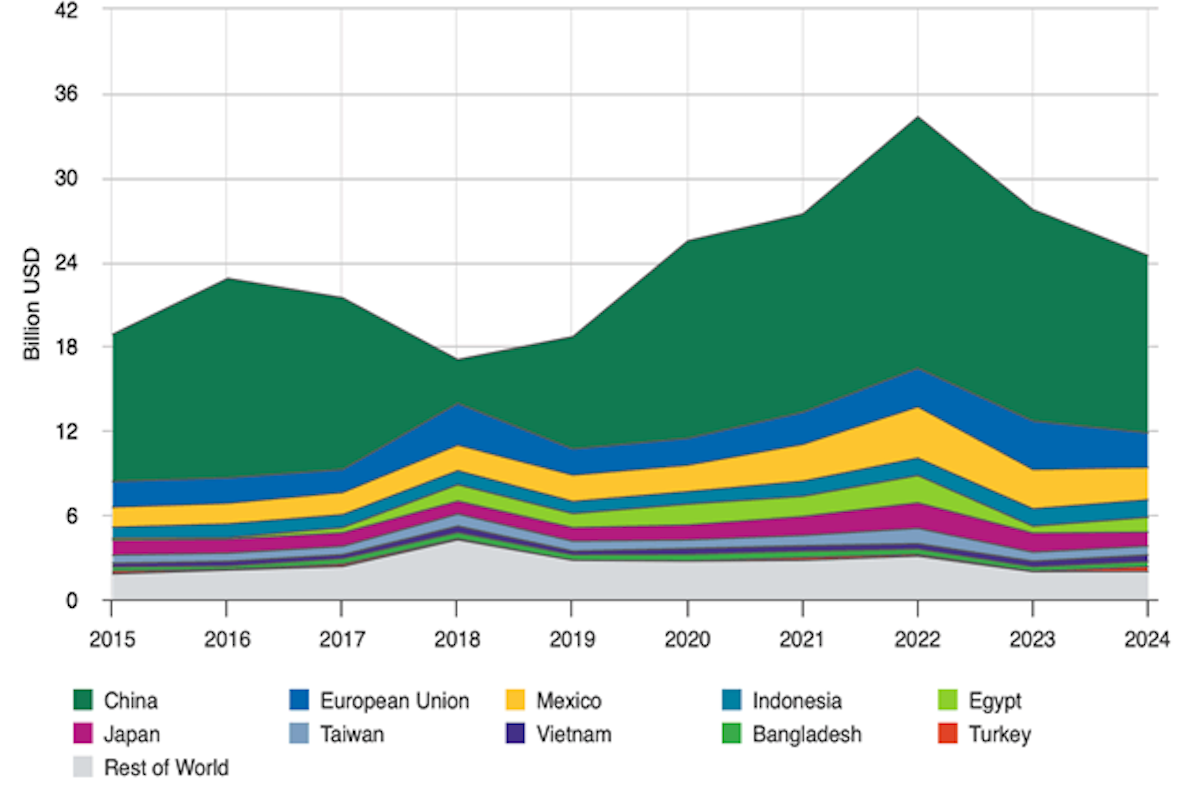
US soybean farmers are dangerously overdependent on China
In 2003, during my early days at DTN/The Progressive Farmer, I was invited to speak about China at a farmers’ meeting in Iowa. Though not an expert on Chinese agriculture, my 17 years living and working in Tokyo and Hong Kong allowed me to witness China’s extraordinary economic growth. I confidently declared, ‘China is the difference between $5 soybeans and $10 soybeans.’ This prediction proved accurate, as US soybean exports to China doubled in the following years, with prices soaring to $9–$15 per bushel. For decades, China has been the largest overseas buyer of US soybeans, accounting for over half of American exports in 2024, far surpassing the European Union’s 10% share. However, the trade war initiated by President Donald Trump in 2018 disrupted this relationship, prompting China to increasingly turn to Brazil as its primary supplier. Despite this shift, China continued to purchase significant quantities of US soybeans—until 2024. This year, China has drastically reduced its imports, buying only 200 million bushels in the first eight months, compared to 1 billion during the same period in 2023. In recent months, imports have dropped to zero. The American Soybean Association’s president, Caleb Ragland, expressed concern, stating, ‘The farm economy is suffering while our competitors supplant the United States in the biggest soybean import market in the world.’ While some analysts predict a potential rebound in Chinese purchases, the ongoing trade tensions, including Trump’s imposition of 100% tariffs on Chinese goods, cast doubt on this possibility. The situation underscores the urgent need for US farmers to diversify their markets and reduce reliance on China. Meanwhile, China is actively expanding its domestic soybean production and investing in alternative suppliers like Brazil and Russia. For US farmers, the loss of China as a major buyer is a stark reminder of the risks of overdependence on a single market. Developing new domestic and international markets is essential to ensure long-term stability and growth in the soybean industry.
-
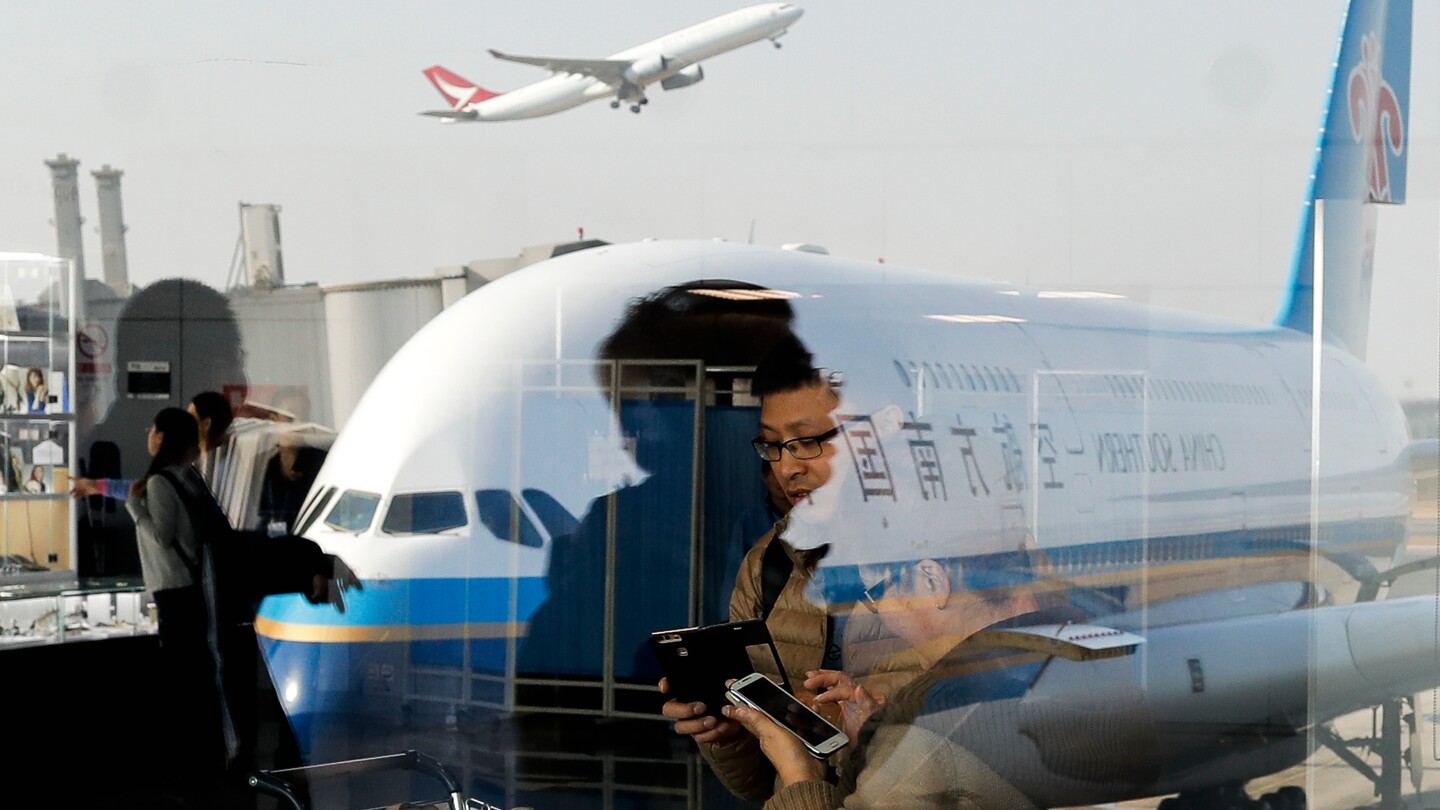
Chinese airlines protest US plan to ban their flights over Russian airspace
Major Chinese state-owned airlines have strongly opposed a U.S. proposal to prohibit them from flying over Russian airspace on routes to and from the United States. The U.S. argues that this restriction would level the playing field, as American carriers are barred from Russian airspace due to sanctions imposed after Russia’s invasion of Ukraine in 2022. Air China, China Eastern, and China Southern are among six carriers that have filed formal complaints against the proposed ban, warning of significant disruptions to travelers and increased costs. China Eastern emphasized that the ban would harm public interest and inconvenience passengers, leading to longer flight times, higher fuel consumption, and elevated airfares. China Southern highlighted the potential impact on thousands of travelers, while Air China estimated that over 4,400 passengers could be affected during the upcoming holiday season. The Chinese Foreign Ministry also criticized the proposal, labeling it as punitive to global passengers. Aviation expert David Yu noted that U.S. carriers face increased costs due to longer flight paths, while Chinese airlines benefit from cost savings by using Russian airspace. Despite these advantages, Chinese carriers have faced financial challenges, particularly since the COVID-19 pandemic. The U.S. Department of Transportation defended the proposal, citing ‘competitive imbalances’ caused by Chinese airlines’ access to more efficient routes. European carriers, including Air France-KLM, have also expressed concerns, while United Airlines urged that Cathay Pacific, Hong Kong’s flagship carrier, be excluded from the ban.
-
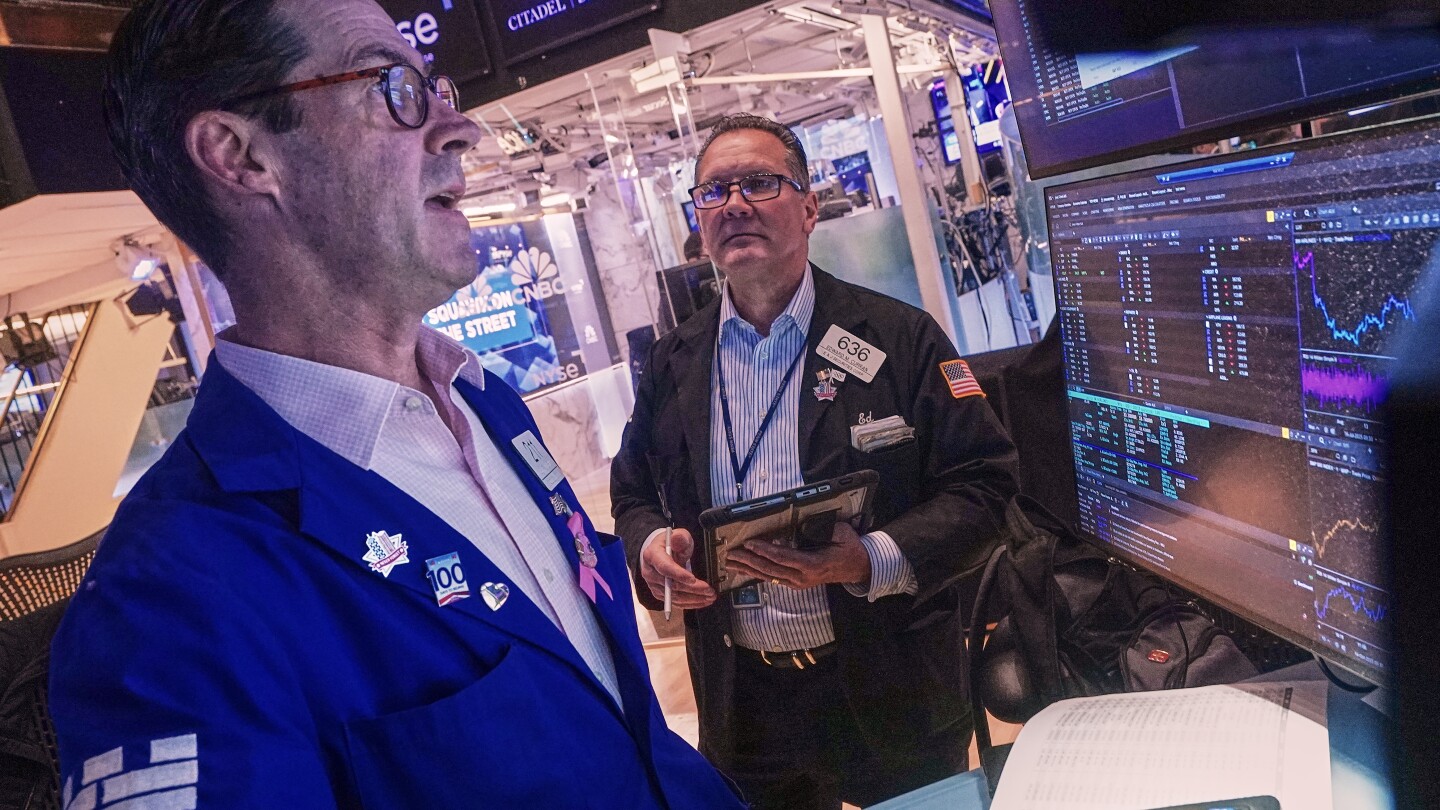
Most US stocks rise after swinging through another erratic day
Wall Street experienced another day of erratic trading on Wednesday, with major indices showing mixed results. The S&P 500 gained 0.4%, recovering from earlier fluctuations that saw it nearly erase a significant morning rally. The Nasdaq composite rose 0.7%, bouncing between a 0.4% drop and a 1.4% surge, while the Dow Jones Industrial Average dipped slightly by 17 points, or less than 0.1%. This volatility follows a turbulent Tuesday, where the Dow swung between a 615-point loss and a 455-point gain, reflecting ongoing market uncertainty. The recent instability traces back to President Donald Trump’s threat of higher tariffs on China, which disrupted a period of relative calm in the markets. Technology stocks led the charge on Wednesday, buoyed by a strong earnings report from ASML, a key player in the semiconductor industry. ASML projected a 15% revenue increase by 2025, with next year’s earnings expected to match or exceed this year’s. CEO Christophe Fouquet highlighted the growing momentum in AI investments, countering concerns of a potential bubble akin to the dot-com frenzy of 2000. Financial institutions also contributed to the market’s upward movement, with Bank of America and Morgan Stanley posting better-than-expected profits. However, PNC Financial and Abbott Laboratories faced declines due to underwhelming forecasts and revenue shortfalls. Corporate earnings are under heightened scrutiny as investors seek clarity on the U.S. economy’s health, especially with delayed government reports on inflation and other key indicators. The Federal Reserve’s recent rate cut and hints of further reductions add another layer of complexity, as policymakers balance inflation concerns with a slowing job market. In the bond market, the 10-year Treasury yield held steady at 4.03%, while gold prices surged 0.9% to over $4,200 per ounce, driven by global economic uncertainties. Overseas, Asian markets saw strong gains, with South Korea’s Kospi jumping 2.7%, while European indices showed mixed results.