分类: business

  • Middle East war: global economic fallout

    Middle East war: global economic fallout

    The ongoing military conflict in the Middle East has triggered severe disruptions across global energy markets and financial systems, with escalating tensions between the U.S., Israel, and Iran driving uncertainty and economic instability worldwide.

    European and Asian equity markets witnessed sharp declines at the start of the week. London’s FTSE 100 dropped 1.4%, while Paris and Frankfurt indices fell 1.7% and 2.0% respectively, reflecting investor anxiety over geopolitical risks and potential supply chain interruptions.

    Oil prices surged significantly amid the turmoil. West Texas Intermediate crude breached the $100 per barrel mark, while North Sea Brent crude climbed above $113. These increases follow warnings from U.S. and Israeli officials that military operations against Iran may extend for several more weeks, directly impacting the critical Strait of Hormuz shipping corridor.

    International Energy Agency Executive Director Fatih Birol issued a grave warning, stating the global economy faces a “major threat” from the energy crisis stemming from the conflict. He emphasized that “no country will be immune” to its effects, noting that at least 40 energy assets across nine regional nations have sustained severe damage.

    Multiple nations are implementing emergency measures to mitigate economic fallout. Indonesia plans fuel-conservation strategies including remote work policies for government employees, anticipating savings up to $4.7 billion. Australia and Singapore have agreed to strengthen cooperation ensuring stable supplies of oil, LNG, and diesel amid shared concerns about regional energy security.

    Industry leaders are gathering at the CERAWeek energy conference in Houston, where discussions are dominated by supply disruptions caused by the conflict. The event has taken on increased significance as fuel prices continue climbing since hostilities began in late February.

    U.S. Treasury Secretary Scott Bessent defended the temporary suspension of sanctions on Iranian and Russian oil, arguing that allowing discounted sales to China prevented prices from spiking to $150 per barrel. Meanwhile, TotalEnergies CEO Patrick Pouyanne warned that a prolonged conflict exceeding six months would damage all global economies, though existing inventories might buffer shorter-term impacts.

    In Southeast Asia, Cambodian energy supplier Sokimex announced it will temporarily suspend liquefied petroleum gas sales beginning April 1 due to supply chain disruptions caused by the war, highlighting the conflict’s far-reaching consequences on energy availability.

  • ASX 200 drops sharply after Donald Trump’s Middle East threat rattles investors

    ASX 200 drops sharply after Donald Trump’s Middle East threat rattles investors

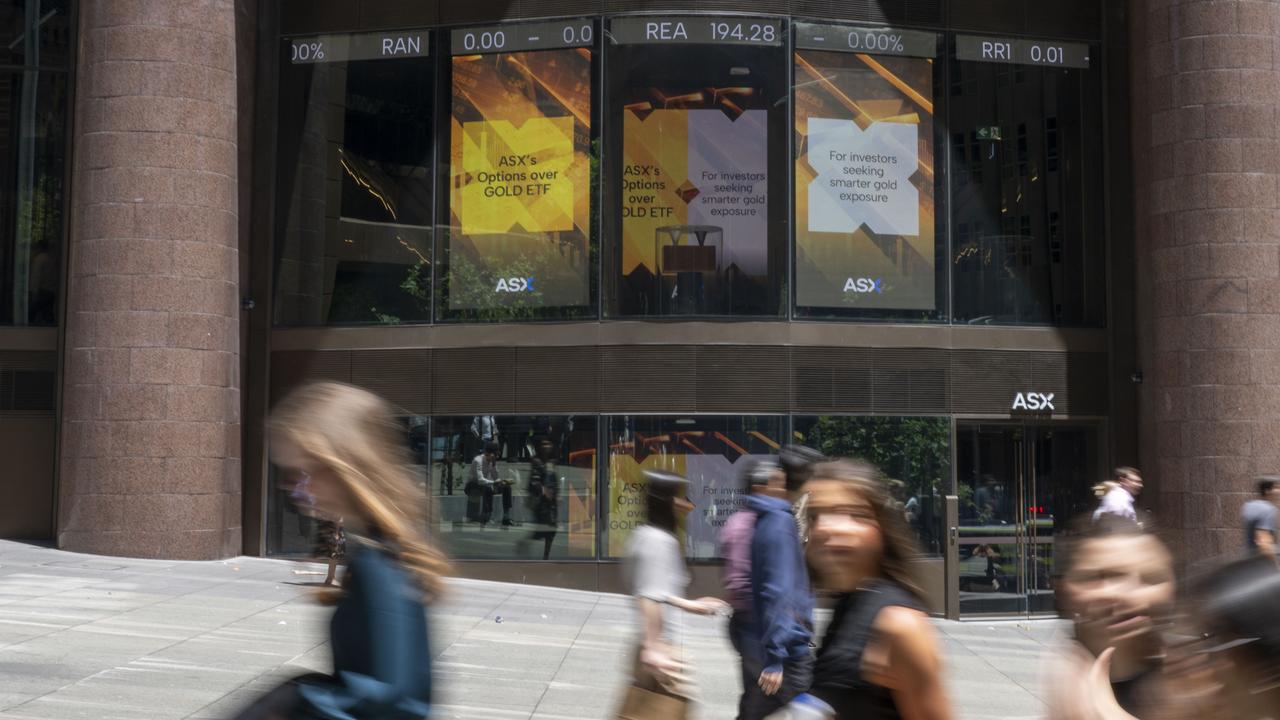
    Australian financial markets experienced significant volatility on Monday as geopolitical tensions triggered by former US President Donald Trump’s stark warning to Iran rattled investor confidence. The benchmark ASX 200 index declined 62.50 points (0.74%) to close at 8365.90, while the broader All Ordinaries index dropped 75.70 points (0.88%) to settle at 8552.60. The session opened with particularly heavy selling pressure, with early losses approaching 2% before a partial recovery emerged during afternoon trading.

    The market turbulence coincided with Trump’s social media ultimatum demanding Iran open the Strait of Hormuz without conditions within 48 hours, threatening military action against Iranian power facilities. This escalation in Middle East tensions amplified existing concerns about global fuel security, particularly affecting energy-dependent economies like Australia, Japan, and South Korea.

    Market analysts noted the disproportionate impact on Asian markets compared to other regions. IG market analyst Tony Sycamore characterized the trading session as ‘rocky,’ observing that ‘markets are being slapped for good reasons’ due to legitimate concerns about potential disruptions to fuel supplies.

    The materials sector bore the brunt of the selling pressure, declining 2.40% as rising fuel costs continued to impact resource companies. Mining giants BHP and Rio Tinto fell 0.76% and 1.71% respectively, while Fortescue Metals bucked the trend with a 0.47% gain. Gold producers also faced substantial selling despite the geopolitical uncertainty, with Northern Star Resources, Evolution Mining, and Newmont all declining between 6.97% and 7.45%.

    Australia’s major banking institutions contributed to the market weakness, with Commonwealth Bank, NAB, Westpac, and ANZ all closing lower between 0.79% and 1.82%. The Australian dollar retreated below the psychologically significant 70 US cent level, trading at 69.58 US cents.

    Energy stocks provided a counterbalance to the broader market decline as oil prices advanced. Woodside Energy gained 2.2%, Santos added 0.88%, and Ampol lifted 1% amid rising crude prices, which increased 0.65% to $112.84 per barrel.

    In corporate developments, Medibank shares advanced 2.38% despite a Federal Court ruling denying the insurer’s request to keep details of a 2022 cyberattack confidential. Meanwhile, ARN Media shares slumped 4.6% following legal action by radio host Kyle Sandilands over his dismissal.

  • BTS agency shares drop after comeback show turnout falls short

    BTS agency shares drop after comeback show turnout falls short

    Hybe Co., the entertainment powerhouse behind global K-pop phenomenon BTS, experienced a significant financial setback as its stock value plummeted nearly 15% on Monday. This sharp decline followed the highly anticipated reunion concert that attracted approximately 104,000 attendees—substantially fewer than the projected quarter-million fans.

    The event, held at Seoul’s Gwanghwamun Square on Saturday, marked the first collective performance by all seven BTS members since their 2022 hiatus began for mandatory military service. Jin, Suga, J-Hope, RM, Jimin, V, and Jung Kook returned to the stage performing tracks from their new album ‘Arirang’ alongside established hits including ‘Butter’ and ‘Dynamite’.

    Despite the lower physical attendance, the concert—which launched the group’s 82-date sold-out world tour—achieved massive digital reach through Netflix’s live streaming to over 190 countries. Industry analysts suggest the streaming availability, combined with stringent crowd control measures implemented by authorities, likely contributed to the reduced in-person turnout.

    The financial implications for Hybe are particularly significant given BTS’s role as the company’s primary revenue generator. During the group’s extended military service period, Hybe reported considerable declines in operating profit, highlighting the substantial dependence on the band’s commercial success.

    In a positive development for the label, Big Hit Music announced that ‘Arirang’ sold an impressive 3.98 million copies on its first day of release. However, this achievement was overshadowed by the stock market reaction to the attendance figures.

    The competitive landscape has evolved dramatically since BTS’s last tour concluded in 2019. The group now faces intensified competition from both real-world rivals including Blackpink, Seventeen, and Stray Kids, and fictional entities such as Netflix’s KPop Demon Hunters franchise. According to Reuters and Bloomberg reports, Netflix is planning a virtual world tour for its animated K-pop group, potentially launching next year to promote a sequel to its successful film.

  • Global economy under ‘major threat’ from Strait of Hormuz crisis: IEA chief

    Global economy under ‘major threat’ from Strait of Hormuz crisis: IEA chief

    The head of the International Energy Agency (IEA) has issued a stark warning that the global economy confronts a severe threat from the escalating energy crisis triggered by Middle East conflicts. Speaking at the National Press Club in Canberra, Australia, on Monday, IEA Executive Director Fatih Birol drew alarming parallels between the current situation and historic energy shocks, including the 1970s oil crises and the market disruption following Russia’s 2022 invasion of Ukraine.

    Birol characterized the present crisis as particularly severe, describing it as the equivalent of “two oil crises and one gas crash combined.” He emphasized that no nation would remain immune to the economic repercussions if the situation continues deteriorating. The crisis centers on the strategic Strait of Hormuz, where recent hostilities have severely restricted maritime traffic through this critical chokepoint for global energy supplies.

    The bottleneck has nearly halted petroleum shipments through the narrow waterway, which typically handles approximately 20% of global oil and gas transit. This disruption has already triggered significant market reactions, with US benchmark crude prices briefly reaching $100 per barrel in early Monday trading.

    According to Birol’s assessment, at least forty energy infrastructure assets across the region have sustained severe or very severe damage during the ongoing conflict. The IEA chief called for urgent global cooperation to address the escalating situation, expressing hope for a swift resolution to prevent further economic damage worldwide.

  • Asia stocks slide as US and Iran threaten to intensify war

    Asia stocks slide as US and Iran threaten to intensify war

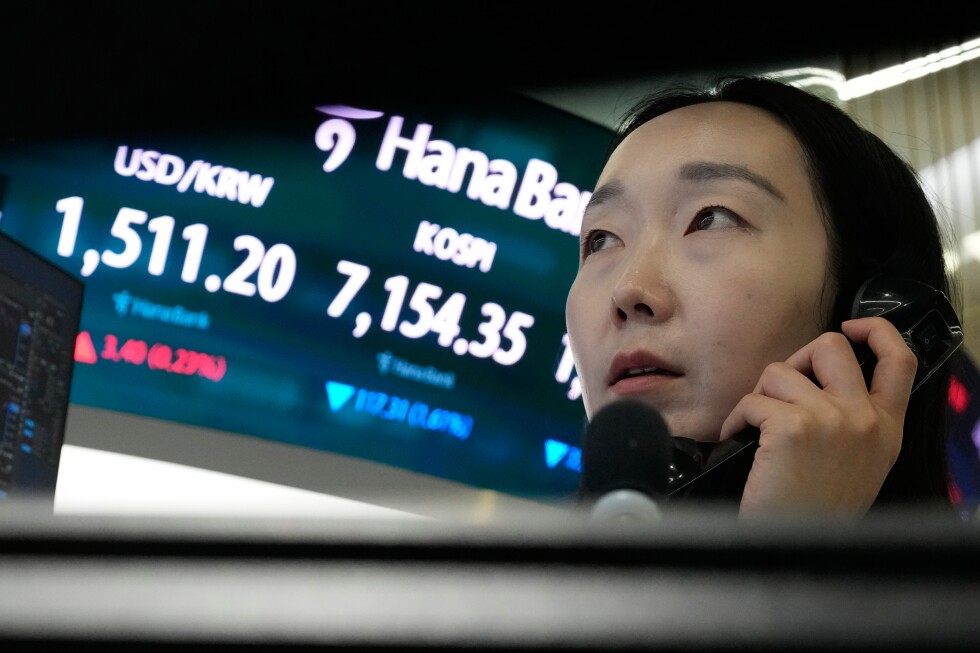
    Asian financial markets experienced severe declines on Monday as escalating threats between Washington and Tehran intensified concerns about the ongoing Iran conflict, now entering its fourth week. Japan’s Nikkei 225 benchmark plummeted 3.4% during morning trading sessions, while South Korea’s Kospi index witnessed a dramatic 5% drop. The regional selloff came in response to heightened geopolitical risks that threaten to destabilize global energy supplies.

    The market turbulence follows President Donald Trump’s stark ultimatum delivered via social media on Saturday, warning that the United States would “obliterate” Iranian power facilities unless Tehran reopened the strategically vital Strait of Hormuz within 48 hours. Iran’s parliamentary speaker Mohammad Bagher Ghalibaf responded with a counter-threat, vowing to target regional energy and desalination infrastructure if Iranian power plants faced attack.

    This exchange represents a significant escalation in the conflict that began with US-Israeli strikes on Iran on February 28th. Since then, Iran has effectively blockaded the Strait of Hormuz, a critical maritime passageway that typically handles approximately 20% of global oil shipments and substantial liquefied natural gas exports. The closure has triggered dramatic increases in worldwide fuel prices and raised concerns about supply shortages.

    International Energy Agency Executive Director Fatih Birol issued a grave assessment on Monday, comparing the current situation to the oil crises of the 1970s and the energy market disruption following Russia’s 2022 invasion of Ukraine. Speaking in Australia’s capital, Birol characterized the developing crisis as “two oil crises and one gas crash put all together,” suggesting the world could be facing its most severe energy emergency in decades.

    The economic impact extended beyond Japan and South Korea, with Hong Kong’s Hang Seng index declining 2.5% and Taiwan’s Weighted Index dropping 2%. Meanwhile, global oil prices remained relatively stable with Brent crude trading at $112 per barrel and US-traded oil at $98.57, suggesting markets had already priced in considerable risk premiums from the prolonged conflict.

  • Asian shares decline as hopes dim for resolution in Iran after Trump’s latest comments

    Asian shares decline as hopes dim for resolution in Iran after Trump’s latest comments

    Financial markets across Asia opened the week under severe pressure as escalating geopolitical tensions triggered a broad selloff. The catalyst was President Donald Trump’s weekend ultimatum threatening to ‘obliterate’ Iranian power plants if Tehran fails to reopen the Strait of Hormuz within 48 hours. This bellicose rhetoric effectively crushed market optimism for a near-term resolution to the conflict, sending shockwaves through global exchanges.

    Regional benchmarks reflected the bearish sentiment with pronounced declines. South Korea’s Kospi plummeted 5.1%, while Japan’s Nikkei 225 sank 3.3%. Hong Kong’s Hang Seng dropped 3.1%, with Taiwan’s Taiex falling 2.6% and China’s Shanghai Composite declining 2.1%. Australia’s S&P/ASX 200 showed relative resilience but still retreated 0.7%.

    The confrontation entered a dangerous new phase as Iranian officials vowed retaliatory strikes against U.S. and Israeli energy and infrastructure assets in response to any American military action. According to Mizuho Bank analyst Ng Jing Wen, ‘The exchange of threats indicates an expanding conflict that sustains energy disruption concerns and market volatility with no visible de-escalation pathway.’

    Beyond immediate security concerns, the crisis is reshaping monetary policy expectations. Soaring oil prices—with Brent crude recently touching $119.50 per barrel—have dramatically reduced prospects for Federal Reserve interest rate cuts this year. This represents a stark reversal from pre-war expectations of at least two reductions. Central banks in Europe, Japan, and the UK have similarly maintained steady rates amid the uncertainty.

    The volatility extended to Wall Street, where the S&P 500 concluded its fourth consecutive weekly decline—its longest losing streak in twelve months. Friday’s session saw the Dow drop 443 points (1%), while the Nasdaq composite tumbled 2%. Smaller companies bore the brunt of selling pressure, with the Russell 2000 index falling a market-leading 2.3%.

    Bond markets reflected the altered outlook, as the 10-year Treasury yield surged to 4.38% from its pre-conflict level of 3.97%. The two-year Treasury yield, which tracks Fed policy expectations, rose to 3.88%. Currency markets showed dollar strength against the yen and euro, underscoring the flight to safety amid heightened geopolitical risk.

  • Germany has a shortage of workers – so it’s turning to India for help

    Germany has a shortage of workers – so it’s turning to India for help

    A strategic migration partnership between Germany and India is rapidly expanding to address Germany’s critical shortage of skilled workers across multiple sectors. The collaboration, which began with a single email in 2021, has evolved into a structured program bringing hundreds of young Indian workers to Germany annually for vocational training and employment.

    The initiative originated when Handirk von Ungern-Sternberg, then working for the Freiburg Chamber of Skilled Crafts, received an unexpected email from Indian employment agency Magic Billion. The message offered young, motivated candidates seeking vocational training opportunities—a proposition that arrived at an opportune moment for German employers struggling with severe workforce shortages.

    Germany faces a demographic crisis with its workforce projected to shrink by 10% by 2040 unless it attracts approximately 288,000 foreign workers annually, according to a 2024 Bertelsmann Foundation study. The retirement of baby boomers combined with low birth rates has created critical vacancies across skilled trades including butchery, baking, construction, and transportation.

    The program’s pilot involved 13 young Indians who arrived in autumn 2022 to begin butchery apprenticeships in towns along the Swiss border. Among them was 21-year-old Anakha Miriam Shaji, who sought better social security and living standards. This initial group has since expanded to approximately 200 Indian workers in German butcher shops alone.

    The partnership’s success prompted von Ungern-Sternberg to establish India Works in collaboration with Magic Billion’s Aditi Banerjee. The agency now prepares to bring 775 young Indians to Germany this year for apprenticeships in diverse professions including road building, mechanics, stonemasonry, and baking.

    Policy changes have facilitated this migration flow. The 2022 Migration and Mobility Partnership Agreement between Germany and India streamlined the process, followed by Germany’s decision to increase skilled work visas for Indian citizens from 20,000 to 90,000 annually in late 2024. Official figures show Indian workers in Germany surged from 23,320 in 2015 to 136,670 in 2024.

    Indian participants cite multiple motivations: limited job opportunities in India, higher European salaries, and personal ambition. Ishu Gariya, a 20-year-old baker’s apprentice in the Black Forest region, abandoned plans for a computer degree in favor of German vocational training. Despite challenging hours and climate, he appreciates the competitive wages and clean environment.

    The program’s impact extends beyond private business to public services. The municipality of Weil am Rhein, led by Mayor Diana Stöcker, is recruiting Indian kindergarten teachers after failing to find candidates locally. Stöcker, a former Bundestag member, acknowledges that overseas recruitment represents Germany’s only viable solution to its comprehensive talent shortage.

    This bilateral arrangement benefits both nations: Germany gains essential workers to sustain its economy, while India channels its substantial youth demographic—600 million people under age 25—toward meaningful employment opportunities abroad.

  • Increased stability in Sino-US economic ties urged

    Increased stability in Sino-US economic ties urged

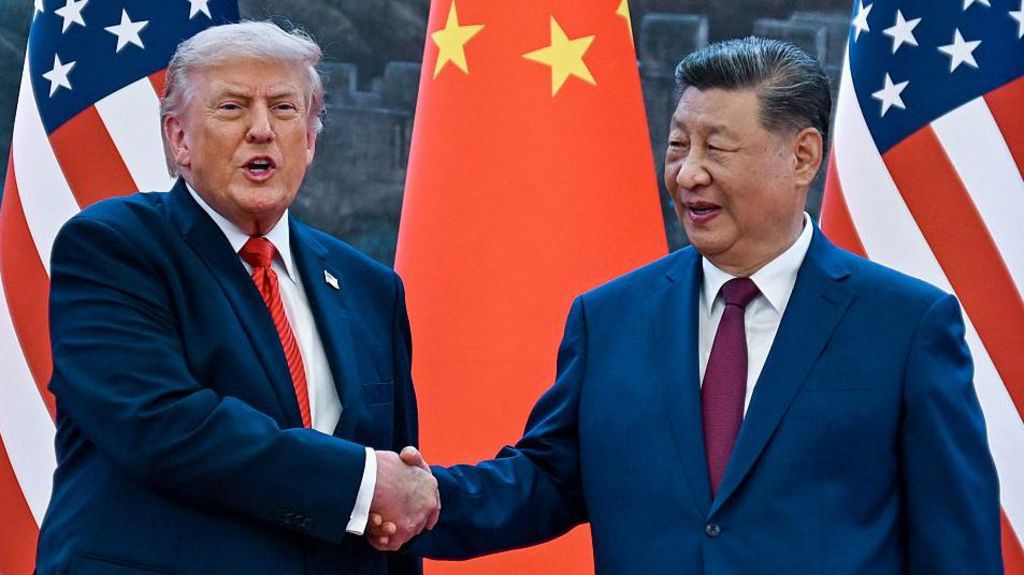
    In a significant diplomatic engagement, Chinese Vice-Premier He Lifeng convened with a high-level delegation from the US-China Business Council (USCBC) in Beijing on Sunday, emphasizing the critical importance of stabilizing bilateral economic relations. The meeting represents a concerted effort to reinforce commercial ties between the world’s two largest economies amid ongoing geopolitical complexities.

    He characterized China-US relations as the most consequential bilateral partnership globally and urged American corporations to serve as stabilizing forces within the economic relationship. He specifically encouraged USCBC members to leverage opportunities presented by China’s ongoing development and to explore the substantial potential of the Chinese consumer market.

    The American delegation, led by USCBC Board Chair Rajesh Subramaniam and Council President Sean Stein, responded with assurances of continued optimism regarding China’s economic trajectory. They confirmed the US business community’s commitment to expanding operations within China while advocating for deeper trade and investment cooperation between the nations.

    The meeting occurred alongside the China Development Forum, which listed both Stein and Subramaniam among its key participants for its 2026 annual gathering. This diplomatic exchange follows closely on the heels of Vice-Premier He’s two-day economic dialogue in Paris with US Treasury Secretary Scott Bessent and Trade Representative Jamieson Greer.

    Industry observers interpret this sequence of high-level engagements as demonstrating Beijing’s proactive approach to maintaining foreign business confidence despite challenging global economic conditions. The USCBC, representing approximately 270 American companies conducting business in China, recently reported in its spring 2025 survey that nearly all member firms consider their Chinese operations essential to maintaining global competitiveness.

  • Australian shares to sink as Donald Trump’s Iran threat smashes investor confidence

    Australian shares to sink as Donald Trump’s Iran threat smashes investor confidence

    Financial markets are bracing for significant volatility as Australian shares face substantial downward pressure at Monday’s opening bell. The primary catalyst stems from contradictory statements issued by former US President Donald Trump regarding the Middle East conflict, creating widespread investor uncertainty and rattling global market confidence.

    The market turbulence originated when Trump initially announced via Truth Social that tensions between US/Israeli forces and Iran were de-escalating. However, within hours, the former president issued a stark ultimatum demanding Iran fully open the Strait of Hormuz without conditions within 48 hours, threatening to ‘obliterate’ Iranian power plants if demands weren’t met.

    This geopolitical instability has directly impacted financial projections, with futures for Australia’s benchmark S&P/ASX 200 Index indicating a 156-point decline (1.8%) to 8,343 points. This follows a challenging period for Australian markets, with the ASX200 having already declined 2.2% last week and 7.2% over the past month.

    The Reserve Bank of Australia faces additional complications as Governor Michele Bullock confirmed the institution hasn’t yet completed modeling on the Iran conflict’s economic implications. According to Westpac chief economist Luci Ellis, this missing analysis could significantly alter the RBA’s assessment of how prolonged energy price increases and supply chain disruptions might affect inflation.

    Since hostilities began on February 28, more than $280 billion has been wiped from Australian markets amid rising oil prices. The strategically vital Strait of Hormuz transports approximately 20% of global oil and gas, and its potential closure has already driven prices from $56 per barrel in January to over $100 currently.

    AMP chief economist Shane Oliver notes that despite an 80% oil price increase since January, market reactions remain relatively moderate compared to historical oil shocks. However, he anticipates additional monetary policy tightening, forecasting another RBA rate hike in May as inflation concerns outweigh growth considerations.

  • Young Australians robbed of millions in unpaid superannuation

    Young Australians robbed of millions in unpaid superannuation

    A groundbreaking legislative shift is set to transform retirement savings for Australian workers as new laws mandate superannuation payments on payday starting July 1. The reform comes in response to alarming data revealing nearly 30,000 construction workers under 35 experienced delayed or missing super contributions last financial year, collectively losing millions in retirement savings.

    The current system allows employers to pay superannuation quarterly despite its appearance on payslips alongside regular wages. The Treasury estimates that for an average 25-year-old worker, timely super payments equate to approximately $6,000 in additional retirement savings in today’s dollars, representing a 1.5% improvement in retirement outcomes.

    Cbus Superannuation, which uncovered the widespread non-compliance, emphasizes that payday super will ensure contributions reach accounts immediately, generating compound returns and eliminating opportunities for negligent or dishonest employers. Tom Garcia, Chief Member Officer at Cbus Super, noted that construction industry workers are particularly vulnerable to superannuation shortfalls.

    While the changes promise significant benefits for workers, small business advocates warn of substantial cash flow implications. Employment Hero modeling suggests the average Australian business will face a $124,000 cash flow crunch, with 65% of small and medium enterprises anticipating moderate to severe operational impacts. Currently, 87% of businesses rely on quarterly super payments as interim cash flow.

    Business leaders urge employers to prepare immediately for the compliance changes, emphasizing the need to review payroll processes and cash flow management strategies ahead of the July implementation deadline.