TOKYO – In a surprising show of economic resilience against global energy market turmoil triggered by the war in Iran, Japan’s economy expanded at an annualized rate of 2.1% in the first three months of 2024, government data released Tuesday confirms. This marks the second consecutive quarter of positive growth for the world’s third-largest economy, defying analyst forecasts that had predicted a much slower expansion amid soaring energy costs.
Seasonally adjusted real gross domestic product (GDP), the broad measure of all goods and services produced in the country, grew 0.5% quarter-over-quarter, following a 0.2% moderate gain in the final quarter of 2023. The economy had contracted in the third quarter of last year, making back-to-back growth a welcome milestone for Japanese policymakers. The annualized figure represents what full-year growth would be if the current quarterly pace of expansion sustained across all four quarters.
Preliminary Cabinet Office data shows that broad-based spending gains across consumer, business, and public sectors drove the stronger-than-expected results. Private consumption, which makes up a large share of Japan’s GDP, rose 0.3% from the previous quarter, equal to an annualized growth rate of 1.1%. Public demand from government spending projects and initiatives also climbed 0.3% quarter-over-quarter, providing additional support to overall economic output.
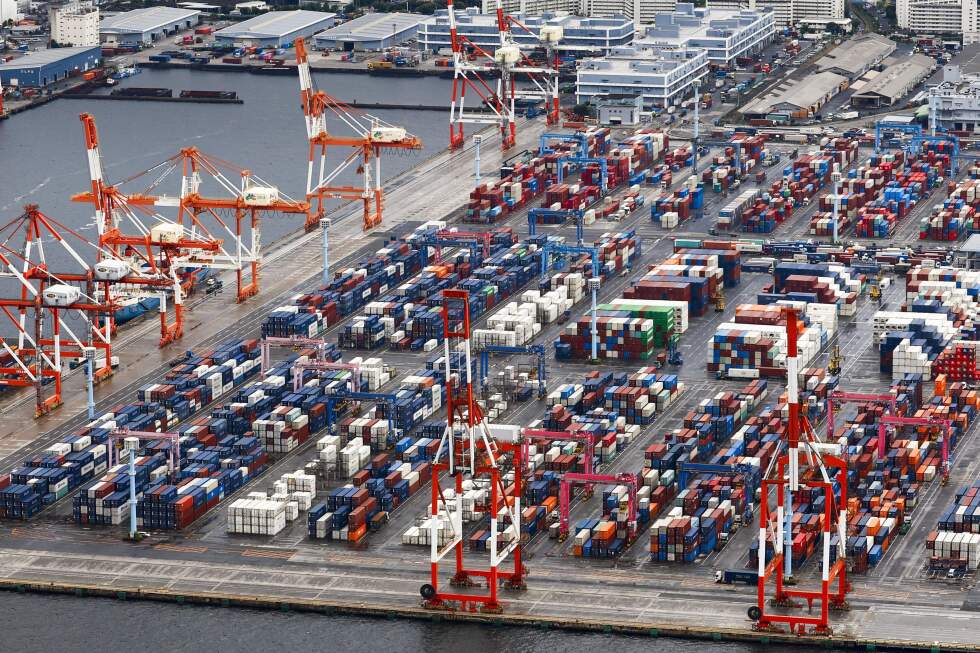
On the trade front, the latest quarter saw exports grow 1.7% outpacing a 0.5% increase in total imports, a net positive that further lifted GDP growth.
For resource-scarce Japan, the fallout from the Iran war has created significant headwinds, most notably in the form of skyrocketing global oil prices. Before the conflict began, Brent crude traded around $70 per barrel; current prices have surged to nearly $110 per barrel. The spike stems from effective disruptions to shipping through the Strait of Hormuz, a critical chokepoint for Persian Gulf oil exports bound for Asian markets including Japan. In response, Tokyo has already released portions of its national oil reserves and is actively developing alternative shipping routes to stabilize supply.
The energy supply squeeze has already begun to ripple through domestic Japanese industries, with shortages of naphtha — a versatile oil-based product used in manufacturing everything from plastic goods to construction materials — drawing widespread media attention in recent weeks. Prime Minister Sanae Takaichi has pledged to take decisive action to secure adequate supplies and sustain ongoing economic expansion, a commitment that will likely require substantial new government spending.
Most economic analysts remain cautiously optimistic about Japan’s growth trajectory in the coming quarters. A recent report from the Japan Center for Economic Research projected that the country will continue to log moderate growth, supported by rising corporate investment in artificial intelligence and increased government defense spending.
“The breadth of ongoing demand expansion points to a high-quality growth trajectory, which may reinforce evidence that inflationary pressures are broadening across the Japanese economy,” noted Naomi Fink, chief global strategist at Amova Asset Management.
Rising energy costs are already pushing domestic prices higher, and the stronger-than-expected first quarter growth could push the Bank of Japan to move forward with an interest rate hike. The central bank has spent years holding interest rates near or below zero to stimulate stagnant growth and weak inflation, but shifting economic conditions have sparked expectations of a policy pivot. While Japan’s current inflation rate remains lower than that of the United States, Japanese workers have yet to see wage gains keep pace with rising living costs.
Financial markets reacted modestly to the new GDP data on Tuesday. Tokyo’s benchmark Nikkei 225 index, which has hit repeated record highs in recent trading sessions, dipped 0.6% during morning trading following the data release.