分类: business

  • Fans overcharged by $1.72 each by ‘monopoly’ Ticketmaster owner

    Fans overcharged by $1.72 each by ‘monopoly’ Ticketmaster owner

    A federal jury has delivered a landmark ruling against entertainment conglomerate Live Nation Entertainment, finding that the company’s control of the live event ticketing space through its ownership of Ticketmaster constitutes illegal monopoly behavior that systematically overcharges music fans across the United States. The verdict comes after four days of closed-door deliberations in a high-stakes antitrust trial that industry analysts say could reshape the future of the $150 billion global live music sector. The case, first filed by the U.S. Department of Justice under former Attorney General Merrick Garland in May 2024, had long called for aggressive structural remedies, including forcing Live Nation to spin off parts of its business or fully separate from its Ticketmaster ticketing division.

    Prosecutors argued throughout the legal proceedings that Live Nation’s combined control of major concert venues, music festival brands, and primary ticketing infrastructure has created an insurmountable barrier to market entry for smaller competitors, driving up ticket costs and eroding service quality for millions of concertgoers. The jury’s specific findings included a determination that Ticketmaster overcharged customers by an average of $1.72 (approximately £1.27) per ticket sold, a figure that will serve as the baseline calculation for any future financial damages awarded in the case.

    Live Nation has consistently rejected the antitrust claims, maintaining during the trial that it faces fierce competition from a range of industry players, including independent sports teams, third-party concert promoters, and rival venue operators. The path to trial has been marked by unexpected procedural shifts: earlier this year, the Department of Justice announced it had reached a tentative settlement with Live Nation and Ticketmaster just two weeks before the trial was scheduled to begin. That sudden withdrawal drew sharp public criticism from presiding judge Arun Subramanian, who questioned the timing and substance of the deal. Along with the DOJ, three U.S. states — Arkansas, Nebraska, and South Dakota — also dropped out of the litigation following the settlement announcement.

    However, a bipartisan coalition of 36 state attorneys general chose to continue pushing the case to trial, rejecting the proposed federal settlement as insufficient to address the company’s anti-competitive practices. California Attorney General Rob Bonta, a lead figure in the state coalition, emphasized the significance of the jury’s decision in the face of reduced federal antitrust enforcement. “This verdict shows just how far states can go to protect our residents from big corporations that are using their power to illegally raise prices and rip-off Americans,” Bonta told reporters Wednesday. He added, “We are incredibly proud of today’s outcome — and especially proud of our coalition made up of red and blue states alike who understood we needed to come together to protect our consumers, businesses, and state economies from Live Nation’s illegal conduct.”

    The scrutiny of Live Nation’s market dominance exploded into public view in 2022, following the botched Ticketmaster ticket sale for Taylor Swift’s blockbuster Eras Tour. Unprecedented fan demand crashed the Ticketmaster platform, leaving millions of Swift’s loyal fans — known widely as Swifties — locked out of purchasing tickets and sparking widespread public outrage. Ticketmaster ultimately issued a public apology to both Swift and her fans, and the chaos led to a high-profile U.S. Senate hearing examining consolidation in the live music industry. As of Wednesday evening, Live Nation has not issued an official response to the jury verdict, and media requests for comment from the company have not yet been returned. Judge Subramanian will now preside over future proceedings to determine what remedies will be imposed, ranging from financial penalties to the forced break-up of the Live Nation-Ticketmaster merger.

  • RBA watching closely as first hard economic data released since the US/Israel war with Iran

    RBA watching closely as first hard economic data released since the US/Israel war with Iran

    Australia is set to release a landmark set of labor market data this Thursday, the first official hard economic indicator published since the escalation of the Israel-Iran conflict in the Middle East, a development that has sent global oil prices surging 60% in just four weeks. While leading projections point to a small decline in the national unemployment rate, dipping from February’s 4.3% to 4.2% for March, economists are sounding the alarm: the apparent improvement masks growing economic risks that have yet to fully register in official data.

    Westpac senior economist Ryan Wells explains that the March labor force figures only capture trends from the first fortnight of the conflict, which began on February 28. This means any tangible impacts from the oil price shock on Australian hiring trends will not appear in this release. “It is far too early to detect any meaningful shift in broad labour market conditions tied to the Middle East conflict,” Wells noted. Price shocks from energy markets work through the economy gradually, first hitting household disposable income, then eroding corporate margins, and finally prompting businesses to adjust their investment and staffing decisions. That cascade takes time to unfold, so the March jobs report will not reflect the full fallout of the conflict.

    The upcoming data follows a mixed set of labor outcomes in February. That month saw a surprisingly strong net gain of 48,900 new jobs, but nearly all of those gains came from part-time positions rather than full-time, stable roles. At the same time, labor force participation rose 22 basis points to 66.9% as more Australians re-entered the job search pool, a shift that pushed the official unemployment rate up from 4.1% in January to 4.3% in February.

    For the Reserve Bank of Australia (RBA), which holds a dual mandate of maintaining price stability between 2-3% inflation and delivering full employment consistent with low inflation, the labor data carries less immediate weight than persistent inflation pressures. RBA governor Michele Bullock has previously framed current risks as tilted toward rising inflation rather than rising unemployment. The central bank’s priority remains bringing inflation back to its target band without triggering a massive jump in joblessness or a recession, Bullock explained after lifting the cash rate to 4.10% earlier this year. “We don’t want to see a recession or a large rise in unemployment if we can avoid it,” she said, “but at the moment the risks just tip more to the inflation side given the position that the labour market is currently in.”
    With national inflation still sitting at 3.7%, well above the RBA’s 2-3% target band, Wells says the upcoming March jobs report is unlikely to shift the central bank’s near-term policy course. “Absent a significant surprise, March’s labour market data is not going to play a big role in the RBA’s next policy decision,” he added.
    Broader global economic risks are already mounting, with the International Monetary Fund (IMF) warning that the Middle East conflict has pushed the global economy to the edge of a new recession. In its latest Global Economic Outlook, the IMF has urged governments including Australia to hold back on large-scale fiscal stimulus to ease cost-of-living pressures, warning that expanded public spending makes it harder for central banks to tame persistent inflation. “While such measures are popular, evidence suggests they are often both poorly designed and very costly for the public purse,” said IMF chief economist Pierre-Olivier Gourinchas. “Avoiding fiscal stimulus is also critical when inflation is rising, so as not to complicate central banks’ task.”
    The IMF’s updated forecast paints a grim long-term picture for Australia, predicting that inflation will remain above the RBA’s target band for at least two more years, climbing to 4% in 2026 before cooling slightly to 3.2% in 2027. Real gross domestic product growth, which strips out inflation to measure actual economic expansion, is projected to slow to just 2% in 2026 and fall further to 1.7% in 2027.
    Australian Treasurer Jim Chalmers, who is traveling to Washington DC for the G20 and IMF Spring Meetings, has acknowledged that global events are already weighing heavily on Australian households. “The costs and consequences of the conflict in the Middle East will be felt for some time, in Australia and around the world,” Chalmers said in a statement. The Albanese government has already flagged potential new cost-of-living relief measures in its May 12 federal budget, responding to domestic price hikes driven by the global fuel shock. Chalmers outlined that the government is taking targeted action: halving the fuel excise to reduce consumer costs, holding petrol retailers accountable for price gouging, working to secure additional fuel supplies for domestic markets, and coordinating international action to address the supply crunch. The Treasurer stressed that the upcoming budget will remain fiscally responsible despite pressure to expand spending.

  • Chinese motorcycle brand ZXMOTO debuts at CICPE

    Chinese motorcycle brand ZXMOTO debuts at CICPE

    The 2026 China International Consumer Products Expo (CICPE), one of the country’s most high-profile global trade events for consumer goods, opened its doors this week, and among the standout domestic exhibitors making their first appearance at the prestigious gathering was Chinese motorcycle manufacturer ZXMOTO.

    At its exhibition booth, the brand drew steady crowds of industry observers, trade partners and motorcycle enthusiasts by showcasing three all-new production models, with the 820 RR — a track-focused sport bike that has already claimed championship titles in international racing competition — taking center stage as the brand’s flagship offering.

    The debut of ZXMOTO and its cutting-edge lineup marks a notable turning point for China’s two-wheeler industry. For decades, Chinese motorcycle manufacturers were largely seen as producers of low-cost, entry-level models for emerging markets, overshadowed by European, Japanese and American brands that dominated the premium and performance segments. Today, that narrative is shifting rapidly. From precision manufacturing processes and advanced material engineering to competitive results on global racing circuits, Chinese motorcycle brands have evolved enough to go head-to-head with the world’s most established motorcycle manufacturers on equal footing.

    Industry analysts note that this milestone extends far beyond the motorcycle sector. As Chinese manufacturing continues to move up the global value chain, appearances at high-visibility international expos like CICPE give homegrown brands a platform to showcase their upgraded technical capabilities, design innovation and competitive strength to a global audience. For ZXMOTO specifically, the CICPE debut is expected to open new doors for both domestic market expansion and international export opportunities, helping cement the reputation of Chinese high-performance two-wheelers among consumers worldwide.

  • Explore new opportunities: Hainan FTP International Services portal debuts at CICPE

    Explore new opportunities: Hainan FTP International Services portal debuts at CICPE

    The 6th iteration of the China International Consumer Products Expo (CICPE) is currently drawing industry leaders, global investors, and international visitors from across the world to Haikou, the capital city of China’s Hainan Province. Among the event’s most buzz-worthy and highly attended activations is the debut of the brand-new Hainan Free Trade Port (Hainan FTP) International Services portal, whose booth has seen a constant flow of curious attendees stopping to learn about its offerings since the expo opened.

    Designed as a unified, comprehensive digital gateway for global stakeholders, the new platform fills a critical gap for international users seeking to engage with Hainan across multiple aspects of life and business. Unlike scattered information sources that often create barriers for non-Chinese visitors and investors, the portal delivers fully integrated one-stop access to specialized services and up-to-date information for anyone looking to work, travel, study, reside, or shop in the Hainan Free Trade Port.

    To address the needs of its global user base, the portal is built with robust multi-language compatibility and a suite of intelligent service tools. These features are intentionally engineered to cut through administrative and informational friction, delivering a smooth, seamless experience for international talents and overseas investors eager to explore the unique commercial and lifestyle opportunities the Hainan Free Trade Port has to offer.

    Attendees at the 6th CICPE can visit the portal’s on-site booth to scan a QR code and browse the platform’s latest updates immediately, while users around the world can access its full suite of services at any time via the official URL: https://en.hainan.gov.cn/. As Hainan continues to expand its global outreach and position itself as a leading open free trade hub, the new portal marks a key step in lowering entry barriers and welcoming global participation in the port’s growing ecosystem.

  • Ningbo-Hong Kong young entrepreneurs deepen innovation ties

    Ningbo-Hong Kong young entrepreneurs deepen innovation ties

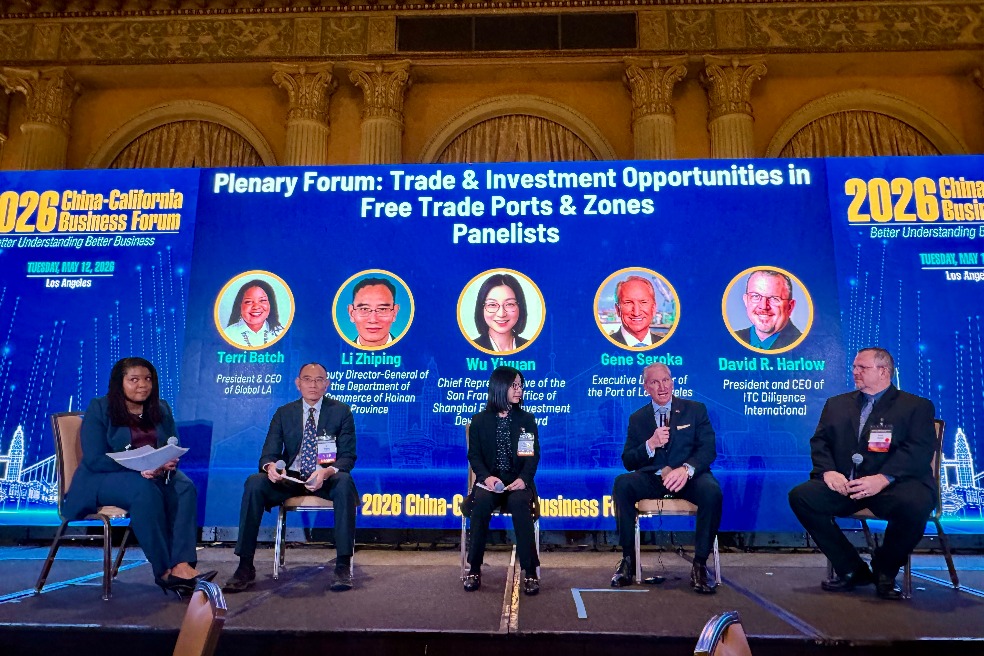
    On April 13, 2026, the 16th annual Ningbo-Hong Kong Young Entrepreneurs Roundtable convened in Hong Kong, gathering over 70 young business leaders, industry experts, and institutional representatives to advance collaborative dialogue on cross-boundary innovation and industrial development. Co-hosted by the Ningbo Hong Kong Fellowship Association and the Chinese Manufacturers’ Association of Hong Kong, this year’s forum centered on two high-priority themes: the commercialization of scientific research outputs and the expansion of new quality productive forces, an emerging growth driver for China’s modern economy.

    During the event, officials from Ningbo’s municipal investment promotion bureau — the East China coastal city located in Zhejiang province — delivered a comprehensive overview of Ningbo’s recent economic and social progress, highlighting its business-friendly regulatory environment and competitive industrial ecosystem. Representatives from the Chinese Manufacturers’ Association of Hong Kong also outlined the organization’s range of support services for cross-region enterprises, setting the stage for in-depth discussions among attendees on innovation alignment, complementary industrial strengths, and expanded youth-driven collaboration.

    Rita Fan Hsu Lai-tai, former president of Hong Kong’s Legislative Council, opened the keynote segment by noting that China’s 15th Five-Year Plan (2026-2030) explicitly supports Hong Kong’s development as a global innovation and technology hub, creating unprecedented new opportunities for cross-city partnership. She emphasized that Ningbo and Hong Kong possess uniquely complementary strengths that can be leveraged for mutual growth, urging participants to deepen cooperative ties and jointly expand into international markets.

    Philip Sohmen, director of World-Wide Shipping Agency Limited and president of HKUE Limited, noted that decades of collaboration between the two regions have evolved into a dynamic, mutually reinforcing partnership. He pointed out that Ningbo’s robust manufacturing base and diverse industrial landscape provide an ideal real-world testing ground for Hong Kong-based technology firms seeking to scale their innovations.

    Gillian Yu, founder and chief executive officer of Hong Kong AI startup SPIN AGI Limited, shared her first-hand experience building a cross-region business spanning both Ningbo and Hong Kong. She revealed that her team recently deployed embodied intelligence models in industrial robots at a major automaker, a milestone that has already drawn significant interest from leading global research and industry institutions. Drawing inspiration from Wang Yangming’s (1472-1529) influential philosophy of the unity of knowledge and action, Yu framed Hong Kong as a knowledge and innovation hub, while positioning Ningbo as the practical application base where innovations can be tested, refined, and scaled for commercial success.

    To formalize expanded cooperation, the two host associations signed a memorandum of understanding during the roundtable. The agreement paves the way for deeper joint work across technology commercialization, industrial upgrading, and youth entrepreneurship support.

    Now in its 16th consecutive year, the Ningbo-Hong Kong Young Entrepreneurs Roundtable has become a foundational platform for cross-region youth engagement, attracting nearly 1,000 participants since its launch. Long-term investment data underscores the deepening economic ties between the two regions: in 2025 alone, Hong Kong investors backed more than 110 newly approved projects in Ningbo, with total investment approaching $2 billion. To date, more than 1,000 Ningbo-based enterprises and institutions have established operations in Hong Kong, with cumulative investment exceeding $10 billion.

  • Iran war putting China’s economy in a tight spot

    Iran war putting China’s economy in a tight spot

    In early April 2026, new trade data from China laid bare the growing economic fallout of the ongoing Iran conflict, adding severe new headwinds to an economy already grappling with deep-seated structural challenges. The figures showed just a 2.5% year-on-year expansion in Chinese exports during March, a sharp drop from the 21.8% combined surge recorded in the first two months of the year. Economists broadly agree this slowdown is the first clear signal that the Iran war’s disruption to global energy markets and demand is now hitting Asia’s largest economy directly.

    The International Monetary Fund (IMF) has already trimmed its 2026 growth projection for China to 4.4%, and warned that a prolonged conflict could push 2027 growth down to 4.0% — a forecast many independent analysts view as overly optimistic. For context, Beijing has set an official 2026 growth target of 4.5% to 5%, a goal that has become increasingly difficult to hit as new shocks accumulate.

    While multiple analysts note China holds unique advantages to buffer the impact of the conflict compared to other major global economies, the underlying risks remain severe. China’s close diplomatic and economic ties to both Iran and Russia have allowed it to secure crude oil at below-market rates, and the country’s persistent deflationary pressures have left it with far more monetary and fiscal policy space than most Western economies facing high inflation and stretched public balance sheets.

    Gustavo Medeiros, an emerging markets analyst at global asset manager Ashmore, explained that unlike major economies grappling with high inflation and elevated debt, China’s deflationary trend has kept its bond markets less exposed to global volatility. Lower long-term yields have also translated to far smaller financial conditions tightening in China than in peer economies, he added. Some analysts also point to a potential silver lining: the energy supply shocks driven by the Iran war could create long-term tailwinds for China’s fast-growing renewable energy sector, while sustained global demand for Chinese semiconductors and green tech could keep export performance from collapsing entirely.

    But these advantages are outweighed by pre-existing vulnerabilities that have been simmering for years, even before the outbreak of hostilities in late February 2026. China’s multi-year property sector crisis, widely described as the most severe in a century, continues to erode domestic consumer confidence. Strained local government balance sheets, weighed down by trillions of dollars in outstanding debt, have limited the ability of municipalities to expand robust social safety nets, encouraging households to hoard savings rather than increase consumption. Pre-war China already faced slowing productivity, a declining working-age population, and flagging returns on infrastructure investment, all of which have put downward pressure on long-term growth.

    The Iran conflict amplifies these challenges dramatically. As sustained disruptions to tanker traffic through the Strait of Hormuz drive up global prices for energy, fertilizers and core commodities, these higher costs are passed directly to Chinese manufacturers. Unlike previous economic downturns, the 2026 scenario brings a toxic combination of rising input costs and collapsing global demand, which squeezes corporate profit margins and undermines China’s export competitiveness at the worst possible moment.

    The IMF has warned that a prolonged war in the Middle East could tip the entire global economy into recession, and independent analysts share this downbeat assessment. Ben May, lead analyst at Oxford Economics, noted that the IMF’s growth projections are based on a more favorable oil price forecast than his firm’s baseline, and that downside risks remain extremely large. “The higher energy prices rise and the longer they remain elevated, the greater the likelihood of severe non-linear spillover effects,” May explained. In a severe scenario where Brent crude averages well above $100 per barrel in 2026, the global economy will almost certainly fall into recession, he added.

    Zazral Purewsuren, an analyst at Fitch Ratings, confirmed that the energy shock is already showing up in global inflation data. Major developed economies recorded an average 0.8% month-on-month rise in consumer prices in March 2026, the steepest monthly increase since 2022, while annual inflation ticked up 0.3 percentage points across global markets. The full impact of the energy shock has not yet filtered through to end consumers, she noted, leading to broad-based increases in government bond yields as markets price in more aggressive monetary tightening. This trend has already played out in Singapore, which became the first Asian central bank to raise interest rates in direct response to the Iran war-driven inflation shock — a move widely seen as a bellwether for broader regional policy shifts that will only add to China’s growth pressures.

    China’s March trade data already reflects these strains: the country’s total trade surplus shrank 3% year-on-year to $264.3 billion, following a record high surplus in January and February. Zhiwei Zhang, CEO of Pinpoint Asset Management, noted that China cannot fully pass higher energy costs onto foreign buyers, which will continue to compress trade surpluses in coming quarters. Even China’s top customs official, vice minister Wang Jun, acknowledged that extreme volatility in global oil prices has created an extremely complex, hard-to-predict trade environment.

    Beyond the immediate cyclical shock, the Iran conflict threatens to derail the long-term structural reforms that China’s economy desperately needs to return to sustained growth. For years, Beijing’s focus on hitting annual GDP growth targets has incentivized local governments to rely on large, debt-fueled infrastructure stimulus to juice short-term growth, rather than implementing painful long-term reforms to fix property sector debt, restructure local government finances, expand social safety nets, reduce youth unemployment, and level the playing field for private businesses. President Xi Jinping and Premier Li Qiang have made some progress on deleveraging in recent years, and the Made in China 2025 industrial strategy has delivered notable wins in sectors from electric vehicles to artificial intelligence, with BYD and AI firm DeepSeek standing out as major global success stories. But the financial system continues to hold back the country’s tech ambitions, thanks to slow-moving regulatory and structural reforms.

    As new external headwinds intensify, Beijing is far more likely to prioritize short-term growth stabilization over the long-term retooling the economy needs. In the worst case, the Iran conflict will push reform onto the back burner at exactly the moment when delaying change carries the highest cost, potentially opening the door to a prolonged period of slower growth that economists describe as a missed opportunity China can ill afford.

  • Qinghai–Xizang Railway hits 100 million ton cargo milestone

    Qinghai–Xizang Railway hits 100 million ton cargo milestone

    Two decades after cutting through the world’s highest plateau to connect the Xizang Autonomous Region to the rest of China, the Qinghai–Xizang Railway has hit a historic transportation milestone: it has moved more than 100 million metric tons of cargo into and out of the plateau region since launching commercial operations in 2006, according to official data from China Railway Qinghai–Xizang Group.

    When the railway first opened to traffic on July 1, 2006, it achieved a feat once thought impossible by engineering standards. It ended Xizang’s centuries-long history of being disconnected from the country’s national rail network, turning the long-held dream of a rail link across the “Roof of the World” into tangible reality. The landmark infrastructure project immediately ushered in a new era of seamless connectivity between the plateau region and China’s inland provinces.

    Over the 20 years since opening, freight volume along the line has grown at a steady, robust pace. Official statistics from the operator show that annual cargo throughput stood at just 361,000 tons in the railway’s first year of operation. By 2025, that figure had surged to 8.31 million tons, marking an average annual growth rate of 18 percent.

    The growth has been seen across both inbound and outbound cargo flows. Inbound freight, which consists primarily of essential commodities including coal, cement, construction materials, and grain, has jumped from 340,000 tons in 2006 to 6.9 million tons in 2025. Outbound cargo has expanded even faster, climbing from just 21,000 tons two decades ago to more than 1.4 million tons in 2025.

    Zeng Qiang, deputy director of the operator’s Passenger and Freight Management Department, explained the transformative role the railway plays for the regional economy. “The railway ensures efficient delivery of essential supplies to the plateau while enabling specialty products such as highland barley and Tibetan beverages to reach national markets,” Zeng said.

    Beyond growing cargo volumes, the rail network around the Qinghai–Xizang line has expanded dramatically in both capacity and coverage. The core Golmud–Lhasa section now operates 58 stations, can handle maximum traction loads of 2,880 tons, and runs 17 pairs of freight and passenger trains daily. Following the completion and integration of the Lhasa–Shigatse and Lhasa–Nyingchi rail lines, a Y-shaped regional rail backbone network has been fully established across Xizang.

    Today, Xizang’s total rail network exceeds 1,000 kilometers, featuring five dedicated freight stations and strengthened freight hubs in the major cities of Lhasa, Shigatse, and Nyingchi. The operator reports that a comprehensive logistics system made up of seven regional freight centers and 47 service outlets now covers Qinghai, Gansu, and Xizang, streamlining cargo movement across the vast plateau region.

    The railway’s impact is no longer limited to domestic connectivity: it is now expanding cross-border trade links to serve international markets. Since 2021, combined rail-road intermodal transport services have launched new routes connecting Xizang to South Asia and Central Asia, with total export volumes via these cross-border routes already reaching 113,000 tons as of the milestone announcement.

  • Shanghai, Almaty deepen ties with $2.7 billion deals

    Shanghai, Almaty deepen ties with $2.7 billion deals

    Against a backdrop of deepening bilateral economic cooperation between China and Central Asia, Shanghai and Kazakhstan’s largest city Almaty have cemented their partnership through a landmark round of deals, with 12 cooperation pacts totaling more than $2.7 billion signed at the Almaty-Shanghai Business Forum held in Almaty on April 7, 2026.

    Nearly 200 participating enterprises and institutions from both China and Kazakhstan gathered for the forum, where the signed agreements spanned a diverse range of high-growth and core sectors, including cross-border trade and direct investment, biopharmaceutical research and production, automotive manufacturing, construction and architectural design, hospitality management, and commercial complex development. This broad portfolio of deals underscores the wide-ranging mutual interest and untapped potential for collaboration between the two business communities.

    Leading a Shanghai municipal delegation to the forum, Shanghai Mayor Gong Zheng outlined the eastern Chinese megacity’s strategic priorities for expanding cooperation with Almaty. Gong noted that Shanghai aims to deepen existing partnerships in finance, industrial machinery manufacturing, modern logistics, and renewable energy, while supporting Shanghai-based firms to expand their footprint in Kazakhstan’s growing market. He added that Shanghai also prioritizes expanding joint engagement in innovation-driven and high-tech fields, which are viewed as key engines to power the next phase of bilateral partnership growth.

    Gong reaffirmed Shanghai’s ongoing commitment to refining its business environment, and voiced the city’s support for enterprises from both sides to pursue mutual investment, particularly in cutting-edge and future-focused sectors such as green energy, artificial intelligence, and advanced manufacturing. He also encouraged Kazakh enterprises to leverage the China International Import Expo, one of the world’s largest import-focused trade platforms hosted annually in Shanghai, to access the vast Chinese consumer market and expand their cross-border cooperative networks.

    For its part, Almaty has outlined clear priorities to draw on Shanghai’s development expertise to advance its own urban and economic growth. The Kazakh city is currently studying Shanghai’s accumulated experience in integrated regional development and the implementation of modern, efficient urban transportation systems. It is also actively seeking investment and technical partnership from Shanghai’s construction companies, architectural design institutes, and engineering enterprises for its key ongoing infrastructure projects.

    Looking ahead, both cities have aligned their long-term development goals to expand high-value collaborative opportunities. Almaty’s plans to develop a full-service, fully operational artificial innovation park and expand its regional data center network open new doors for partnership with Shanghai’s robust tech and digital sectors. The city’s flagship Almaty mountain cluster project, which is designed to become Central Asia’s largest international-standard year-round tourism destination, also creates space for collaboration in tourism infrastructure development and hospitality operations. Additional untapped potential lies in the joint development of modern cross-border logistics hubs, regional distribution centers, and digital e-commerce infrastructure, laying the groundwork for more sustained, mutually beneficial growth in the coming years.

  • China offers 2,613 national standards in foreign languages for free online

    China offers 2,613 national standards in foreign languages for free online

    BEIJING – In a landmark step to enhance regulatory transparency and facilitate global cross-border commerce, China has launched a new public online platform that grants full, free access to more than 2,600 national standards translated into major foreign languages, the State Administration for Market Regulation announced on Tuesday, April 15, 2026.

    This new digital service allows users from around the world to freely browse, read, and download 2,613 national standards that have been translated into multiple languages including English, Russian, and French. According to Wei Hong, a senior official with the State Administration for Market Regulation, this initiative marks the first time that a full collection of China’s translated national standards has been made available to the public free of charge via online channels.

    “Users can access the newly released foreign-language versions of national standards anytime, anywhere, which guarantees the timeliness, convenience, and authoritative credibility of the resources,” Wei explained.

    As of the end of March 2026, China had completed translation and official publication of all 2,613 standards covered in the release. The collection spans more than 20 key economic and industrial sectors, ranging from advanced equipment manufacturing to international contracted infrastructure projects, covering areas critical to global trade and cross-border investment.

    Administration officials emphasized that opening free access to these translated standards delivers tangible benefits for global businesses and trade partners. By making clear, publicly accessible regulatory and technical specifications available, the initiative will help eliminate unnecessary technical trade barriers, cut institutional transaction costs for enterprises operating across borders, and further strengthen China’s appeal as an attractive destination for global investment and business cooperation.

  • Excess supply lowers prices of blueberries

    Excess supply lowers prices of blueberries

    Once considered a premium luxury item reserved for special occasions, blueberries have quickly become an accessible everyday snack for Chinese consumers, driven by a massive expansion in domestic cultivation that has flooded the market and pushed prices sharply downward. This price shift has not only reshaped consumer access to the popular fruit but also underscored China’s rapid ascent to become the world’s top blueberry producer, while creating new conversations about future industry innovation and growth.