分类: business

  • Growth focused on quality over speed

    Growth focused on quality over speed

    Against a backdrop of surging global protectionism and escalating geopolitical friction, China’s 2026 economic growth target of 4.5 to 5 percent, framed by a deliberate shift toward high-quality development over rapid expansion, is positioning the country as an irreplaceable market, production base and innovation test bed for multinational corporations worldwide, top policymakers and global business leaders have confirmed.

    After decades of prioritizing speed above all else, the world’s second-largest economy has transitioned to a new growth model centered on “new quality productive forces”, anchored in rising consumer demand, robust manufacturing foundations and accelerating homegrown innovation. The shift aligns with policy priorities laid out by Premier Li Qiang in mid-March, who outlined targeted, urgent policy measures to deliver on growth goals and advance work across all key economic priority areas.

    Expanding domestic demand by stimulating consumer spending has been named the top policy priority for 2026 in China’s Government Work Report, a reorientation designed to insulate the economy from external volatility and build a more sustainable, consumer-led growth trajectory. Han Wenxiu, executive deputy director of the Office of the Central Commission for Financial and Economic Affairs, emphasized at the late-March China Development Forum that steadily lifting consumption’s contribution to GDP is both the most critical priority and the most pressing challenge facing China’s push for coordinated, balanced economic development.

    “We must promote the formation of a development model driven more by domestic demand, propelled by consumption, and powered by endogenous growth,” Han said.

    Current data underscores the untapped potential of China’s consumer market: household spending accounted for just 39.9 percent of China’s GDP in 2024, 10 to 30 percentage points lower than the average rate seen in major developed economies. “China’s advantages as a super-sized market have not been fully leveraged,” Han noted, adding that enormous room remains for consumption growth, particularly in service sectors. A third-quarter 2025 survey from the People’s Bank of China found that Chinese households rank tourism, education, healthcare and cultural entertainment as the four categories where they most plan to increase spending in the near term, placing goods consumption fifth.

    To meet rising consumer expectations and diversify service offerings, China is rolling out pilot opening-up programs for key service sectors, including value-added telecommunications, biotechnology and wholly foreign-owned hospitals. For global enterprises, this opening creates expanded opportunities to connect with Chinese consumers and integrate into the country’s evolving market ecosystem.

    Ramon Laguarta, chairman and CEO of global food and beverage giant PepsiCo, noted that China’s 15th Five-Year Plan (2026-2030) places clear focus on expanding high-quality consumption, accelerating innovation and boosting domestic demand — priorities that align perfectly with PepsiCo’s long-term global strategy. Today, PepsiCo operates more than 70 farms, over 50 beverage bottling plants, 10 food manufacturing facilities and a dedicated R&D center in China focused on understanding local consumer preferences.

    “Many innovations inspired by traditional Chinese food culture and consumer insights have now successfully entered markets across Asia, and have even reached the United States and Europe,” Laguarta said. “China not only drives our growth — it is shaping our global future. China’s digital ecosystem allows us to test our bold ideas with far greater efficiency than anywhere else — from AI-powered supply chains to e-commerce platforms. We are constantly exploring new ways to serve consumers more effectively.”

    PepsiCo is far from an outlier. Senior industry executives across sectors report a growing cohort of multinationals now view China as more than just a large, profitable end market — it has become a critical production base for strengthening global supply chain resilience and a dynamic innovation hub for collaborative product development.

    “Whenever I come to China, I am impressed by the dynamism of this market. New technologies move quickly into practical use. Products reach the market fast. And in many industries, development takes place with remarkable speed,” said Stefan Hartung, chairman of the board of management at German industrial multinational Bosch Group.

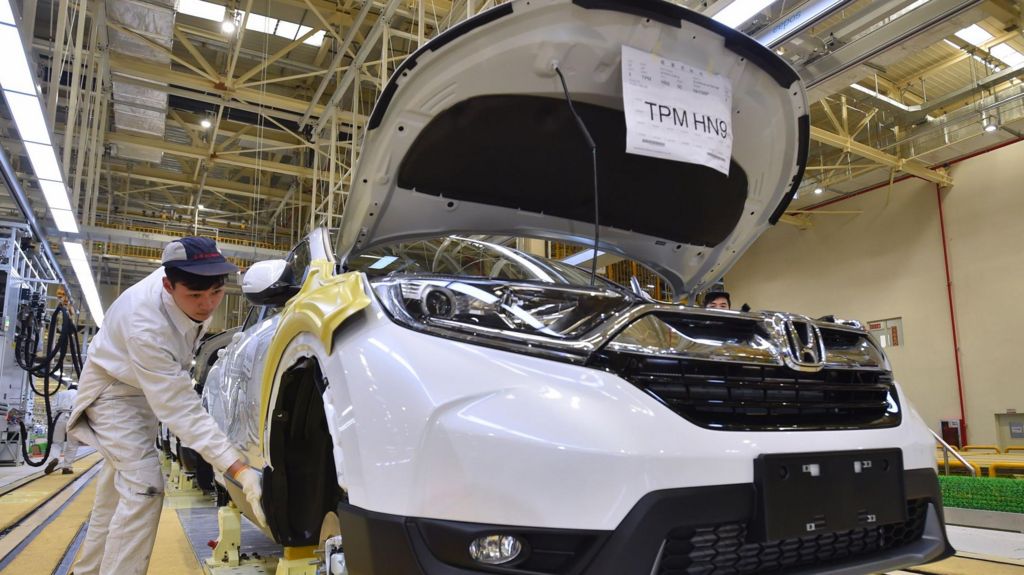
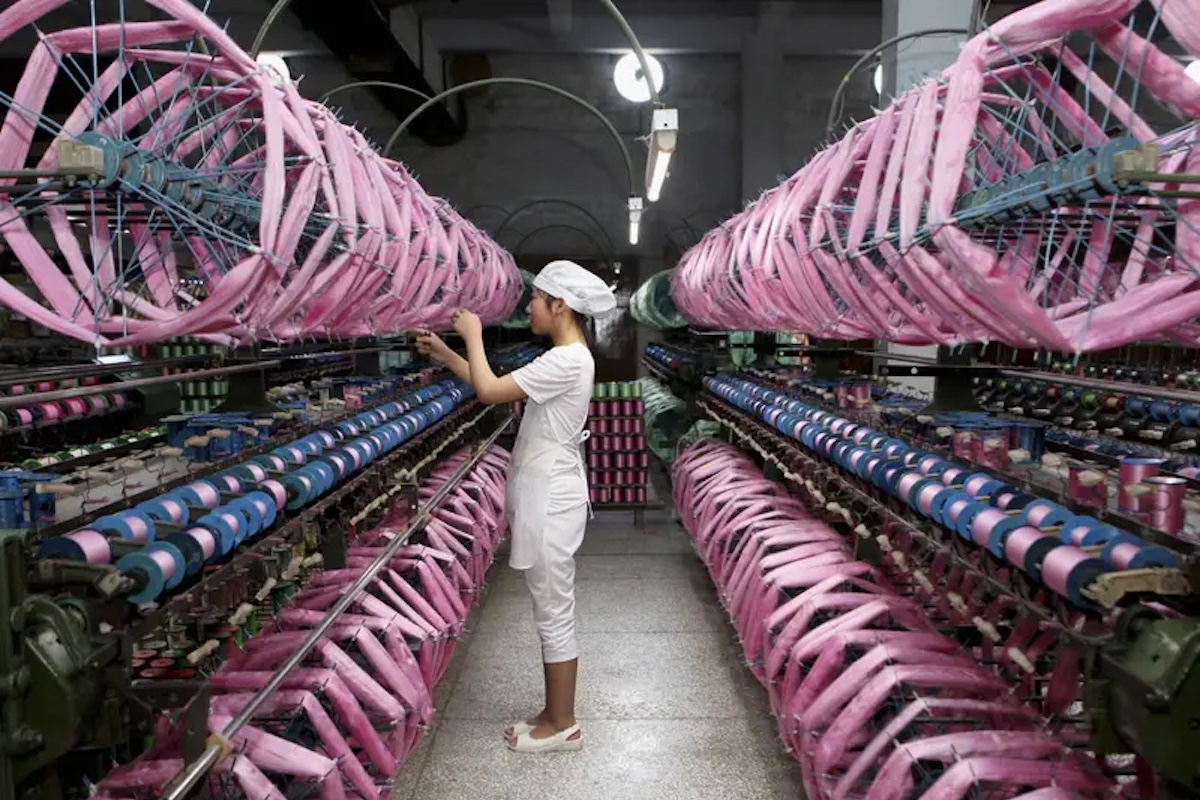
    Commerce Minister Wang Wentao highlighted that China’s economic scale is supported by one of the world’s most comprehensive industrial systems, which includes more than 200 mature industrial clusters spanning sectors from consumer electronics to advanced materials and new energy vehicles. Beyond industrial infrastructure, Wang noted China’s human capital pool is undergoing a transformative shift: the country now boasts the world’s largest community of scientists and engineers, with its full-time equivalent R&D personnel ranking first globally.

    This growing innovation capacity has earned global recognition: the 2025 Global Innovation Index released by the World Intellectual Property Organization last September marked the first time China broke into the global top 10 for innovation performance.

    Han emphasized that after years of sustained investment, China’s indigenous innovation capacity has passed a critical inflection point, and external pressure cannot reverse its development trajectory. “In areas where gaps remain, we will accelerate efforts to catch up and run alongside,” Han said. “In areas where we have strengths, we will achieve running alongside and ultimately leading — striving to realize higher-level technological self-reliance.”

    China’s push to cultivate new quality productive forces represents a fundamental paradigm shift, prioritizing scientific breakthroughs, green transition and digital integration over the traditional factor-driven growth model of the past. At the same time, the country is actively expanding international collaboration in these high-growth fields, targeting foreign investment in advanced manufacturing, modern services, high-tech industries and environmental protection and energy conservation.

    Roland Busch, CEO of German industrial conglomerate Siemens, pointed out that while the 15th Five-Year Plan emphasizes independent innovation, it also recognizes the critical role of foreign technology and capital in achieving China’s ambitious development goals. Busch described the new five-year blueprint as an open invitation for foreign companies to deepen their participation in China’s domestic production system, adding that China serves as both a core market and a key source of innovation for Siemens. In late March, the company launched 26 new products developed and manufactured in China for distribution to global markets.

    Ola Kaellenius, chairman of the Board of Management of Mercedes-Benz Group, echoed this sentiment, noting that China is an indispensable innovation hub, particularly for electric and intelligent vehicle technology. “We are accelerating the next level of localization in China, tapping even more into the potential of its unique local ecosystem,” he said.

    Denis Depoux, global managing director of global management consultancy Roland Berger, compared China’s dynamic, competitive market to a fitness club for foreign investors: “Foreign companies have to be competitive, have to move quickly, and have to bring the most cutting-edge innovations to China,” he explained.

    Recent investment data reflects growing multinational confidence in China: the number of newly established foreign-invested enterprises in the first two months of 2026 reached 8,631, marking a 14 percent year-on-year increase, according to Ministry of Commerce data.

  • IMF report shows global economy in dangerous time, says Australian treasurer

    IMF report shows global economy in dangerous time, says Australian treasurer

    CANBERRA, April 15 — The world has entered a perilous new phase for the global economy, rocked by persistent downside risks tied to the ongoing conflict in the Middle East, Australia’s top finance official has warned, following downbeat new projections from the International Monetary Fund.

    Australian Treasurer Jim Chalmers told public broadcaster Australian Broadcasting Corporation (ABC) Radio on Wednesday that the IMF’s latest World Economic Outlook, published Tuesday, is sounding a clear alarm over the far-reaching economic fallout of the regional conflict. The multilateral lender slashed its 2026 global growth forecast to 3.1 percent, down from earlier more optimistic projections, and outlined a severe downside scenario where sustained energy supply disruptions through 2027 could drag global growth all the way down to 2.0 percent.

    “This is a really dangerous time for the global economy. The International Monetary Fund is expecting slower growth and higher inflation, and we are too,” Chalmers said, ahead of his trip to Washington D.C. this week to attend the spring meetings of the IMF and World Bank.

    Chalmers emphasized that the conflict’s economic spillovers are already being felt by ordinary Australian households, even though the country is not a party to the hostilities. “From an economic point of view, the end of this war can’t come soon enough. Australians didn’t choose the circumstances of that war, but they are paying a very hefty price for it,” he added.

    The IMF also revised down its growth projections for Australia’s domestic economy. The lender now expects the Australian economy to expand by just 2.0 percent in 2026, a 0.1 percentage point downgrade from its January forecast, followed by 1.7 percent growth in 2027 — a sharp 0.5 percentage point cut from its earlier projection.

    On the inflation front, the IMF projects that Australian consumer price growth will tick back up from 2.9 percent in 2025 to 4.0 percent in 2026, eroding recent progress on taming rising cost of living pressures. It also issued a caution to policymakers, warning that any new government support programs introduced to ease household cost burdens would likely add additional fuel to inflationary pressures across the economy.

  • Consumer trends tied to ’emotional value’

    Consumer trends tied to ’emotional value’

    Against a backdrop of rising living standards and shifting consumer priorities, the concept of “emotional value consumption” has evolved from a cultural buzzword to a core policy focus and fast-growing economic driver across multiple Chinese provinces. The movement first gained formal recognition this year when it was officially written into Hubei province’s 2026 government work report, paving the way for a surge in consumer spending centered on personal well-being, stress relief, and experiential joy.

    Wuhan, Hubei’s capital, has emerged as a leading example of how this trend translates into tangible economic gains, with its world-famous “cherry blossom economy” driving record tourism and business activity. In late March, the city played host to the annual Wuhan Marathon, drawing more than 30,000 runners from 69 countries around the globe. Race organizers designed the course to highlight the city’s most iconic landmarks—from the ancient Yellow Crane Tower to the historic Yangtze River Bridge—and wove the region’s famous spring cherry blossoms into the route, with competitors passing more than 3,500 blooming trees and finishing on a 760-meter stretch lined with falling pink petals. “The scenery kept me energized mile after mile,” shared Fang Bo, a Beijing-based runner who took first place in the men’s half-marathon.

    That widespread enthusiasm for the seasonal floral spectacle has translated into a massive financial windfall for local businesses. Roughly 55 percent of Wuhan’s leading catering companies rolled out cherry blossom-themed menus, featuring creative offerings ranging from cherry blossom-infused noodles to limited-edition floral rice wine. Data from Wuhan Customs shows the spring blossom season triggered a 110.99 percent year-on-year jump in inbound international visitors from major source markets including South Korea, Malaysia, Singapore, and the United States. During the April 4–6 Qingming Festival holiday, searches for “Wuhan cherry blossoms” on Chinese travel platform Tongcheng Travel nearly quadrupled compared to the previous month, reflecting sustained, growing demand for the seasonal experience.

    Beyond large-scale tourism events, the emotional economy also thrives in small, relatable everyday comforts that resonate with modern consumers. One viral local success story is the “Suan Niao” (literally “forget it”) plush toy, a creation of designer Li Mangguo who drew inspiration from a sprouted garlic bulb. The soft toy is paired with a slogan in local Wuhan dialect: “Forget it, life isn’t easy for any of us.” The down-to-earth, relatable message struck a chord with online audiences, and the toy has already sold more than 200,000 units to date.

    This shift toward “self-pleasing consumption”—purchases prioritizing personal emotional satisfaction over practical utility—is particularly pronounced among Generation Z consumers. At a popular recreational sports center on bustling Jianghan Road in Wuhan, young people fill the facility every day, participating in activities from bowling to indoor horse riding. “These activities meet a specific need for self-indulgence and social connection,” explained Gu Wei, the center’s manager, in an interview with Xinhua News Agency.

    Industry experts note that this consumer shift marks a clear break from traditional spending patterns. “Consumers are moving past the ‘practical utility’ of goods,” explained Hu Fen, a professor in the School of Tourism Management at Hubei University. “The core drivers are a rigid demand for stress relief and the desire for ‘social currency.’ The younger generation prioritizes how a purchase makes them feel.”

    What makes this trend particularly notable is its formal integration into regional government policy. When the fourth session of the 14th Hubei Provincial People’s Congress opened in Wuhan, Governor Li Dianxun announced that the province would prioritize responding to new consumer demand for practical, emotional, and knowledge-based value in 2026. Wang Shenghui, a deputy to the Hubei Provincial People’s Congress and deputy director of Suizhou Museum, noted that including “emotional value” in the government work report underscores the province’s growing focus on public spiritual needs and represents an innovative breakthrough in governance. Wang added that sectors across Hubei have already begun exploring emotional value-driven offerings: “Suizhou Museum’s immersive chime bells and dance show offers visitors a journey through ancient times, while the Yellow Crane Tower’s night tour uses lighting and poetry to inspire visitors’ cultural empathy.”

    Ge Tiancai, a provincial congress deputy and chairman of Wuhan Mulan Flower Township Tourism Development, framed the trend as a natural outcome of broader economic progress. “People’s living standards have improved and the problem of food and clothing has been solved,” he said, explaining why consumers are now prioritizing emotional fulfillment over basic needs. During this year’s regional “two sessions” (annual legislative and political consultative conferences), emotional value, the emotional economy, and the self-pleasing economy became top buzzwords, and the concept has since been included in government work reports for multiple other provinces, including Jiangxi and Guizhou.

    Industry projections underscore the massive scale and future growth of this market. According to an insight report on China’s emotional economy spending trends covering 2025 to 2029, the national market for emotional value consumption reached 2.31 trillion yuan (approximately $330 billion) in 2024, and is on track to surpass 4.5 trillion yuan by 2029. Jia Xiaoling, account director of consumer insights firm Worldpanel China, offered a strategic recommendation for local policymakers and businesses: by integrating local natural resources and unique cultural features to build distinctive consumption experiences, stakeholders can form genuine emotional bonds with consumers and unlock long-term growth in this fast-expanding sector.

  • ASX 200 gives back strong early gains amid ongoing oil market disruption

    ASX 200 gives back strong early gains amid ongoing oil market disruption

    After a promising morning rally fueled by optimism over potential diplomatic progress in the Middle East, Australia’s benchmark sharemarket surrendered nearly all its early advances on a choppy day of trading, as investors recalibrated their expectations for a swift resolution to ongoing regional tensions. By the closing bell, the ASX 200 posted only a marginal gain of 7.90 points (0.09%) to settle at 8978.70, while the broader All Ordinaries index fared slightly better, climbing 16 points (0.17%) to 9181.10. The Australian dollar also saw a bump, rising to 71.40 US cents against its American counterpart.Trading across the benchmark’s 11 sectors was deeply mixed, with just five closing in positive territory. The information technology, healthcare and materials sectors led the modest uptick, with standout performers including logistics tech firm WiseTech, which gained 3.63% to reach $39.96, accounting software provider Xero that climbed 2.62% to $75.10, and enterprise tech provider Technology One that rose 2.86% to $28.81. In healthcare, global biotech leader CSL added 0.98% to $139.44, sleep apnea device maker ResMed gained 1.52% to $32.70, and medical imaging technology firm Pro Medicus jumped 4.09% to $137.42.The day’s bullish opening came on the heels of another strong overnight session on Wall Street, which had pushed the ASX 200 as high as 9015.4 points early in the day. Over the prior 10 trading days, both the S&P 500 and tech-focused Nasdaq had notched gains of more than 10% each, driven largely by early hopes that new peace talks between the U.S. and Iran would ease regional conflict. Kyle Rodda, senior financial market analyst at Capital.com, explained that the overnight global equity rally was sparked by falling oil prices tied to news that fresh U.S.-Iran negotiations would move forward as ceasefire talks progressed. Even so, Rodda warned that underlying risks of a renewed escalation of conflict remain largely unaddressed. “Superficially, the markets appear to be holding onto hopes rather than anchoring themselves in reality,” he noted, adding that ongoing blockades in the region continue to disrupt global oil supplies, leaving the global economy in a precarious position.Those underlying risks dragged on investor sentiment through the second half of Australia’s trading session, erasing most of the morning’s gains even amid confirmation that U.S.-Iran talks could resume in Pakistan within 48 hours. Benchmark Brent crude prices reversed earlier falls, rising 0.8% to $US95.58, a development that reinforced investor jitters over energy market volatility.In individual corporate news, several companies posted notable gains on the day. Virgin Australia shares jumped 7.23% to $2.52 after the airline announced it had hedged most of its exposure to rising fuel costs, offsetting projected half-year cost increases of $30 million to $40 million with a planned 1% cut to domestic flight capacity to reduce further expenses. Gold explorer Evolution Mining rallied 9.55% to $14.45 following the release of strong positive drill results from its Mungair and Cowal operations. Agricultural chemical maker Nufarm surged 11.26% to $2.47 after an upbeat trading update forecast underlying earnings before interest, depreciation and amortization between $239 million and $244 million, marking a 17% increase from the prior year. The day’s largest corporate loss came from Telix Pharmaceuticals, whose shares fell 4.21% to $14.80 after the company announced a $US600 million convertible note offering set to mature in 2031.

  • Aussie finance giant Latitude Finance Australia hit with $3.96m fine after 2.7m anti-spam law breaches

    Aussie finance giant Latitude Finance Australia hit with $3.96m fine after 2.7m anti-spam law breaches

    One of Australia’s major financial services providers has been handed a substantial eight-figure penalty for persistent violations of the nation’s spam marketing regulations, marking the second time in as many years the firm has been punished for identical misconduct. The Australian Communications and Media Authority (ACMA), the country’s independent communications regulator, announced this week that Latitude Finance Australia will pay $3.96 million in penalties after an investigation uncovered more than 2.7 million breaches of Australian spam legislation.

    Of the millions of unauthorized and non-compliant marketing messages distributed by the firm, more than 2.3 million failed to include accurate contact information for the company as required by law. Additionally, 344,416 of these commercial messages lacked a working unsubscribe mechanism that would allow recipients to opt out of future communications, according to ACMA’s official findings. Most of the non-compliant messages were sent to promote Latitude’s line of credit card products and other consumer financial services. While many messages instructed users to reply with the word ‘STOP’ to opt out of future mailings, the regulator confirmed that a large share of these requests were never processed correctly due to broken systems.

    Samantha York, a sitting member of the ACMA authority, emphasized that the size of the penalty was directly tied to both the staggering scale of the violations and the fact that this is a repeat offense. Back in 2022, Latitude was already ordered to pay $1.55 million in penalties for nearly identical spam law breaches. “Latitude is now a two-time offender and it is disappointing that it let consumers down again,” York said in a formal statement. “The spam laws have been in place for more than 20 years, there is simply no excuse for ongoing noncompliance, particularly after previous enforcement action. Given Latitude’s history of noncompliance, we will be very closely monitoring how it meets its obligations going forward.”

    In an official disclosure filed with the Australian Stock Exchange on Wednesday morning, Latitude acknowledged the regulator’s findings and the imposed penalty. The company noted that as soon as internal teams identified that it had sent potentially non-compliant SMS marketing messages, it self-reported the issue to ACMA and immediately moved to update and strengthen its internal spam compliance protocols. As part of an enforceable undertaking agreed to with the regulator, Latitude will now hire an independent third-party compliance expert to audit and verify that its updated processes meet all legal requirements moving forward.

  • Australia’s richest person must share part of her mining fortunes, court rules

    Australia’s richest person must share part of her mining fortunes, court rules

    After more than a decade of bitter legal wrangling over one of Australia’s most profitable iron ore projects, the Supreme Court of Western Australia has delivered a split decision in the high-profile lawsuit against Gina Rinehart, the country’s wealthiest individual, granting partial wins to both sides of the dispute. Rinehart, who holds an estimated personal net worth of A$38 billion, inherited her father Lang Hancock’s iron ore holdings in 1992 and grew the portfolio into a dominant mining force across Western Australia’s resource-rich Pilbara region, anchored in part by the massive Hope Downs iron ore development. At the heart of the legal conflict is a decades-old joint venture agreement forged between Hancock and his close business partner Peter Wright, founders of the iron ore pioneering Hanwright partnership that first laid claim to the Pilbara’s mineral reserves decades ago. The heirs to Wright’s stake, organized under Wright Prospecting, launched the legal challenge alongside two of Rinehart’s own children – Bianca Rinehart and John Hancock – arguing that Rinehart had breached the original partnership agreement and wrongfully withheld rightful shares of profits and control from the claimants. The 51-day 2023 trial centered on competing claims to royalties and mining rights for the Hope Downs project, which is currently jointly operated by global mining giant Rio Tinto and Rinehart’s flagship company Hancock Prospecting. In 2023 alone, the site generated A$832 million in revenue for Hancock Prospecting, with Rio Tinto paying a 2.5% royalty on production to Rinehart’s firm. Justice Jennifer Smith, presiding over the case, ruled that half of all past and future royalties from the project must be awarded to the Wright family, upholding their core claim that they were entitled to a share of the project’s ongoing profits. However, the judge rejected the Wright family’s demand for a split of formal mining rights, leaving full ownership of those critical assets with Rinehart. The court also dismissed claims from Rinehart’s two children, who had argued that their mother moved lucrative Hope Downs mining rights out of a family trust to intentionally cut them off from an inheritance their grandfather intended for them. Rinehart’s defense had argued the transfer was made over legitimate concerns about irregularities in her father’s business dealings, while her children countered the move was designed to exclude Rinehart’s stepmother, Rose Porteous, from accessing the family fortune. A separate claim for royalties brought by the family of late engineer Don Rhodes was partially granted by the court. In responses to the ruling, representatives from both sides characterized the outcome as a victory. Jay Newby, executive director of Hancock Prospecting, noted that the judgment confirmed the company’s full ownership of the Hope Downs mining rights and firmly rejected the broader ownership claims brought by the Wright family and Rinehart’s children. Meanwhile, a spokesperson for Wright Prospecting said the organization was “pleased to finally receive a result in our favour” after 13 years of litigation. Beyond her control of Australia’s largest private mining empire, Rinehart is known as one of the country’s most influential private donors, contributing heavily to conservative political parties, national sports programs, and charitable causes across Australia.

  • IMF warns Trump’s Iran war could unleash global recession

    IMF warns Trump’s Iran war could unleash global recession

    As international financial leaders gather in Washington D.C. for the International Monetary Fund’s annual Spring Meetings, the institution has issued a stark warning: the ongoing US-Israeli military conflict in Iran threatens to derail global economic momentum, trigger a new energy crisis, and push vulnerable economies into deep recession. The grim update, included in the IMF’s latest *World Economic Outlook*, comes as independent analysts and policy experts warn the long-term financial cost of the conflict to US taxpayers alone could top $1 trillion, with disproportionate harm falling on low-income and vulnerable communities worldwide.

    Prior to the outbreak of hostilities, the IMF had upgraded its 2026 global growth forecast to 3.4%, buoyed by private sector adaptation to ongoing trade shifts, lower-than-expected US tariffs, targeted fiscal support, favorable financing conditions, and a productivity boom driven by emerging artificial intelligence technologies. That positive momentum has now come to a sudden halt, according to Pierre-Olivier Gourinchas, the IMF’s director of research. The conflict has already closed the Strait of Hormuz, a critical chokepoint through which roughly 20% of the world’s daily oil supplies pass, and damaged key energy infrastructure across the hydrocarbon-rich Middle East. If hostilities continue, the region’s central role in global energy markets makes a full-blown energy crisis increasingly likely.

    Even in the best-case scenario of a quick end to fighting, the IMF projects lasting damage to the global economy. Under a limited conflict framework, global growth is forecast to hit just 3.1% in 2026 and 3.2% in 2027, figures that fall below recent growth outcomes and sit well below pre-pandemic averages. Global inflation, which had been on a downward trajectory, is projected to tick back upward in 2026 before resuming its decline in 2027. The brunt of the impact will fall on emerging market and developing economies, particularly commodity-importing nations that already faced preexisting financial vulnerabilities. Downside risks dominate the forecast: a prolonged conflict, deepening geopolitical fragmentation, underperformance of AI-driven productivity gains, or renewed trade tensions could further weaken growth and roil global financial markets. High public debt levels and eroded policy space leave many nations with little buffer to absorb new shocks. The IMF urges policymakers to prioritize economic adaptability, policy credibility, and strengthened international cooperation to mitigate harm.

    The severity of the ultimate economic shock will depend on how long the conflict lasts and its geographic scale, as well as how quickly global energy production and shipping normalize once hostilities cease, the IMF notes. Impacts will vary sharply across regions: net energy-importing nations face the highest exposure, while low-income countries will see reduced tourism, slowing business activity, and falling remittances from migrant workers employed in the conflict region. Eric LeCompte, executive director of Jubilee USA Network and a United Nations finance expert, called the IMF’s new forecast deeply alarming, noting that the world’s poorest and most vulnerable populations will bear the worst of the crisis. “World leaders coming to Washington are receiving a very dark picture of the global economy,” LeCompte said. “The war is causing greater poverty and increases in our fuel and food costs.”

    Beyond macroeconomic disruptions, a leading Harvard public policy expert who specializes in calculating the true long-term costs of US military conflicts says the total price tag for American taxpayers will almost certainly reach at least $1 trillion once all indirect and long-term expenses are accounted for. Linda Bilmes, the Daniel Patrick Moynihan senior lecturer at Harvard Kennedy School who co-authored *The Three Trillion Dollar War: The True Cost of the Iraq Conflict* with Nobel Prize-winning economist Joseph Stiglitz, estimates that just the first several days of the US-Israeli assault cost US taxpayers a minimum of $16 billion, nearly $5 billion higher than the Pentagon’s official $11.3 billion estimate.

    Bilmes explains that the Pentagon understates short-term costs by valuing used munitions and equipment at their historical book value, rather than the much higher current cost to replace depleted stockpiles. She also points to multi-year, multibillion-dollar contracts the Trump administration has already signed with major defense contractors including Lockheed Martin that will add to long-term costs. Most significantly, the long-term costs of veterans’ care will create a decades-long financial burden. Roughly 55,000 deployed US troops have been exposed to toxins, burning fuel residues, and other environmental hazards linked to chronic long-term illness. Even if only one-third of these troops file for disability and medical benefits, Bilmes projects those costs alone will reach tens to hundreds of billions of dollars. “We are borrowing to finance this war at higher interest rates, on top of a much larger national debt base,” Bilmes explained. “The result is that the interest costs alone will add billions of dollars to the total cost of this war. And unlike the upfront costs, these are costs we are explicitly passing on to the next generation.” She added that she would not be surprised if the total cost has already surpassed the $1 trillion mark.

    The Washington Post reports the Trump administration is expected to request between $80 billion and $100 billion in emergency war funding from Congress, as part of a broader fiscal 2027 budget proposal that calls for $1.5 trillion in annual military spending. If the request is fully approved, Bilmes notes, total US military spending will rise to levels roughly 20% higher than the peak spending of World War II. Even if Congress rejects the full increase, she projects the conflict will lock in a permanent $100 billion annual increase to the baseline defense budget – a change that compounds to $1 trillion in additional spending over the next decade.

    Other independent economic analysts share the IMF’s warnings of severe global harm. A recent report from Oxford Economics analysts Ben May, Bridget Payne, and Paul Moroz found that an extended conflict in Iran could push the entire global economy into recession. In that scenario, Gulf economies would contract by more than 8% in 2026 before a gradual recovery, while advanced Asian economies heavily dependent on Gulf oil would face steep cost increases from more expensive energy imports and widespread supply chain disruptions. Europe would face a painful squeeze on natural gas and electricity prices, while the US – though buffered by its own domestic energy production – would still see a nearly 20% drop in equity markets that would weigh heavily on consumer spending.

    Domestically, US policy experts have highlighted the conflict’s toll on American household finances and social spending. Dean Baker, senior fellow at the Center for Economic Policy Research, emphasized that the massive military spending required by the conflict comes at the expense of critical domestic social programs. “To be clear, the main reason to oppose this pointless war is its impact on the people of Iran and elsewhere in the region. But it also has a huge economic cost that is seriously underappreciated,” Baker said. Trump’s proposal to spend 5% of US GDP – or $1.5 trillion annually – on the military works out to $12,000 per household annually, he noted. To offset this record military spending, the Trump administration has proposed $73 billion in cuts to non-defense domestic spending, on top of historic cuts to Medicaid and the Supplemental Nutrition Assistance Program that already serve tens of millions of low-income Americans. “It is striking to see that Congress might be willing to quickly cough up this money for military funding when it has refused far smaller sums that could have made a huge difference in the lives of tens of millions of people,” Baker added.

  • China and US can together shape global consumer trends, says business leader

    China and US can together shape global consumer trends, says business leader

    Against the backdrop of ongoing shifts in global trade and cross-border commercial relations, a leading U.S. business leader has articulated a forward-looking vision for collaborative growth between the world’s two largest economic powers, arguing that China and the United States hold unique combined influence to shape the future of global consumer markets. Speaking in an exclusive interview with China Daily on the sidelines of the ongoing China International Consumer Products Expo in Hainan, Sean Stein, president of the US-China Business Council, emphasized that the two countries’ dual status as the world’s largest economies and largest consumer markets gives them unparalleled sway over global industry trends, research and development (R&D) trajectories, and cross-border supply chains. That combined market power, Stein noted, opens up vast untapped potential for collaboration across consumer sectors spanning from premium cosmetics to cutting-edge life sciences — a potential that is on full public display at this year’s Hainan expo. “The US and China together play an incredibly big role in determining trends and what products roll out globally. What’s really interesting is seeing US and Chinese companies collaborate and take things global,” Stein said. He pointed to the successful expansion of Chinese lifestyle brand Pop Mart in San Francisco as a tangible example of this collaborative future in action, noting that the brand’s global success grew directly out of strategic international partnerships with established industry players. “I was incredibly happy to see Chinese brands doing well globally. Their success comes from international partnerships with established brands,” he said. “As the world’s two largest consumer markets, we should have the world’s largest consumer brands working together.” Stein also pushed back firmly against persistent speculation that U.S. firms are accelerating a full exit from the Chinese market, stressing that ongoing investment flows and long-term strategic commitments tell a far different story. “American companies are continuing to invest. American companies aren’t going anywhere,” he said. He added that the core value proposition China offers to international businesses has shifted dramatically over the past three decades: where 25 years ago firms entered the market primarily to access low-wage labor, today they are drawn to China’s growing pool of highly skilled workers and its unmatched ability to scale new products and technologies quickly for global markets. “Twenty-five years ago, no one came to China to do R&D. Now, what I’m seeing is that the best companies are coming and doing some of their most important R&D in China,” he said. Several exhibitors at this year’s expo illustrate that evolution firsthand. Beauty giant Estee Lauder now designs fully customized products specifically for Chinese consumers, a process that extends far beyond simple packaging changes to core product formulation and in-market R&D. Tapestry Inc., the parent company of luxury brands Coach and Kate Spade, has established a dedicated full-fledged R&D center in Dongguan, Guangdong province, where teams design new products locally for distribution to global consumers. This fundamental shift in how global firms engage with China has led Stein to redefine the country’s role in the global economy. “It’s not the China market anymore — it’s the China platform,” he said. “That platform includes consumers, the business-to-business market, partnerships with Chinese firms, R&D, supply chain, and supply chain resilience. All of those are part of it, and that’s only becoming more important.” To unlock the full potential of this collaborative platform, Stein argued that policymakers on both sides need to approach national security concerns in a deliberate, measured way to support more resilient and healthy bilateral trade relations. “We should rationalize security concerns and make it the right size, not over-blow it,” he said. His comments align with recent official statements from Chinese trade authorities: He Yadong, a spokesman for China’s Ministry of Commerce, noted last week at a Beijing press conference that China remains committed to maintaining open communication with the U.S. through existing economic and trade consultation mechanisms to address issues of mutual concern. Despite ongoing macroeconomic and geopolitical headwinds in bilateral relations, Stein said that progressive policy opening initiatives such as the Hainan expo have made China a more profitable and lower-risk destination for foreign direct investment, noting that new policy adjustments from Chinese regulators are continuously removing barriers to market entry. He offered a recent concrete example from Hainan: before new policy changes, a major U.S. firm that specializes in refurbishing pre-owned goods sourced from Southeast Asia and Japan was unable to operate this business model within China. Following the launch of Hainan’s island-wide special customs supervision regime in December 2025, the company has begun establishing a regional refurbishment and re-export base in the province. “That’s a big, encouraging change,” Stein said. The positive impact of Hainan’s policy opening is already visible across a range of foreign firms operating in the province. U.S. electric vehicle maker Tesla has reported a sharp surge in customer activity across its Hainan retail locations. A Tesla spokesperson told China Daily that Hainan’s unique ecological advantages and open policy environment make it “an ideal base for promoting green mobility worldwide”. Driven by new favorable customs policies and local government support incentives, Haikou-based Tesla stores have recorded a 20% month-on-month increase in in-store customer foot traffic, the spokesperson added. Joanne Crevoiserat, CEO of Tapestry Inc., echoed Stein’s optimistic outlook on the Chinese market, noting that Chinese consumers have set a high bar for global brands. “The Chinese consumer is very discerning. They expect high quality and innovation, and that’s why I love being part of this market,” she said. Delivering on those expectations by developing innovative, high-quality products locally for Chinese consumers doesn’t just benefit the company’s domestic performance, Crevoiserat explained — it also strengthens its competitive standing across global markets. Looking ahead, she added, Tapestry sees significant room for further expansion across China, extending beyond established core markets in first- and second-tier cities to fast-growing smaller urban centers across the country.

  • Iran war wreaks havoc on global economy and could spark recession, says IMF

    Iran war wreaks havoc on global economy and could spark recession, says IMF

    The simmering conflict that erupted after U.S. and Israeli attacks on Iran in late February has upended years of gradual economic recovery, casting a sudden, dark shadow over global growth prospects, the International Monetary Fund (IMF) has warned in its latest semiannual World Economic Outlook. The institution has cut nearly all of its 2026 growth projections, stressing that prolonged conflict in the energy-rich Middle East could push the global economy into a full recession, a scenario not seen since the immediate aftermath of the COVID-19 pandemic.

    Prior to the outbreak of hostilities, the global economy had been on a steady upward trajectory. The IMF notes that strengthening growth was fueled by a booming global tech sector, easing trade policy frictions between major economies, targeted fiscal stimulus in multiple large markets, and generally accommodative global financial conditions. That momentum has now been completely derailed by the conflict, according to IMF Chief Economist Pierre-Olivier Gourinchas.

    “The global outlook has abruptly darkened following the outbreak of war,” Gourinchas stated in the report. He highlighted the unique strategic importance of the Middle East to global energy security, warning that any prolonged closure of the Strait of Hormuz or widespread damage to regional oil and gas production infrastructure could spark an energy crisis of a scale never seen before in modern economic history.

    The Strait of Hormuz, a narrow shipping lane that narrows to just 33 kilometers at its thinnest point between Oman’s Musandam Peninsula and Iran, is widely recognized as the world’s most critical energy chokepoint. Roughly 20% of total global crude oil production and one-third of the world’s liquefied natural gas (LNG) supplies pass through the waterway daily, making any disruption to traffic there a major shock to global energy markets.

    In its baseline projection for a short-lived conflict, the IMF now forecasts global gross domestic product (GDP) will grow by just 3.1% in 2026. That marks a 0.3 percentage point downgrade from the 3.4% growth prediction the institution released just three months ago, before the war began.

    Growth downgrades have hit every corner of the global economy, with some regions facing far steeper cuts than others. Among G7 advanced economies, the United Kingdom saw the sharpest downward revision, with its 2026 growth forecast cut by half a percentage point to just 0.8%. The U.S. saw a more modest 0.1 percentage point cut, bringing its projected growth to 2.3% for the year. Emerging market economies are also bracing for significant headwinds: sub-Saharan Africa’s growth forecast was lowered by 0.3 percentage points to 4.3%, while the Middle East and North Africa region suffered the steepest overall downgrade of 2.8 percentage points, dropping to just 1.1% growth. That sharp cut reflects direct damage to regional infrastructure and risks of prolonged disruption to the Strait of Hormuz.

    Inflation projections have also been revised sharply upward as energy prices soar in the wake of the conflict. The IMF now projects global inflation will hit 4.4% in 2026, up significantly from its earlier forecast of 3.7%. Since the conflict began, global crude oil prices have surged above $100 per barrel, while natural gas prices have jumped more than 80% compared to pre-war levels.

    The IMF has mapped a range of possible outcomes depending on how the conflict unfolds, from a relatively mild best-case scenario to a catastrophic worst-case scenario. In the most severe outcome, a protracted, long-running war would drag global growth down to just 2% and push global inflation to 6%. The IMF notes that global growth has fallen below the 2% threshold only four times since 1980, with the most recent instances being the 2008 global financial crisis and the 2020 COVID-19 pandemic – events widely classified as global recessions.

    Even the most optimistic scenario, in which the war ends quickly and the Strait of Hormuz returns to full operational capacity immediately, would still deliver a major shock to the global economy. Under this best-case outcome, the IMF still projects global oil prices will rise by 21.4% in 2026, while overall global energy commodity prices – which were previously forecast to fall this year – will instead rise by 19%.

    Gourinchas explained that this jump in commodity prices represents a classic negative supply shock that will ripple through every sector of the global economy. “Raising the cost of all energy-intensive goods and services – including fertilisers, chemicals, food, transportation, and heating – disrupting supply chains, feeding into headline inflation, and reducing purchasing power,” he said of the impact.

    One notable outlier in the revised forecasts is Russia, which the IMF identifies as the biggest relative beneficiary of the conflict. The institution now projects Russia’s economy will grow by 1.1% in 2026, which is 0.3 percentage points higher than its previous forecast, and slightly up from the 1% growth Russia recorded in 2025. The IMF attributes this upgrade to higher global oil prices boosting Russia’s export revenues, alongside temporary U.S. sanctions relief for some Russian oil shipments that has allowed Moscow to expand its market share.

    This report was originally covered by Middle East Eye, an independent publication specializing in unrivaled reporting and analysis on the Middle East, North Africa, and broader global affairs. For information on republishing this content and associated fees, interested parties can contact the organization via their official website.

  • Australia’s economy in “weakened state”, Bridget McKenzie says, as IMF delivers recession warning

    Australia’s economy in “weakened state”, Bridget McKenzie says, as IMF delivers recession warning

    As escalating tensions in the Middle East fuel mounting global recession fears, a senior Australian conservative senator has issued a stark warning that the nation enters this period of economic volatility in a significantly weakened position. The warning comes on the heels of a bleak updated economic outlook from the International Monetary Fund (IMF), which cautions that the ongoing energy crisis sparked by Middle East hostilities could push the entire global economy into a sustained downturn.

    In its latest quarterly assessment, the IMF projects that Australia’s inflation rate will remain stubbornly above the Reserve Bank of Australia’s (RBA) target range of 2 to 3 percent for at least two more years. Forecasts put national inflation at 4 percent in 2026, with a gradual cooling to only 3.2 percent by 2027—still above the RBA’s policy goal. The Fund also predicts that Australia’s inflation-adjusted real gross domestic product (GDP) growth will decelerate sharply to just 2 percent in 2026, before sliding further to 1.6 percent in 2027.

    The international financial body emphasized that the ongoing Middle East conflict has created unprecedented new stress tests for interconnected global economies. Beyond the devastating humanitarian toll and destruction of critical regional infrastructure, the conflict has severely disrupted key global shipping lanes and air transit routes, the IMF noted, with spillover effects that will push commodity and consumer prices upward across every major region.

    Appearing on Seven Network’s morning current affairs program *Sunrise* alongside federal Housing Minister Clare O’Neil, Nationals Senator Bridget McKenzie framed the current economic landscape as deeply worrying. “We have entered this new global crisis already stuck in a high inflation, low growth scenario, which has left us in a far weaker position to absorb new shocks,” McKenzie argued. She echoed the IMF’s implicit call for fiscal discipline, stating that the Fund’s outlook confirms what opposition figures have argued for months: the current federal government must rein in its runaway spending to shore up the nation’s resilience.

    “The defining test for Treasurer Jim Chalmers in the upcoming May federal budget will be whether he makes the tough, necessary fiscal decisions that the Australian economy needs—decisions he has failed to make in three years in office—to protect our country from the worst impacts of this global crisis,” McKenzie added.

    Minister O’Neil pushed back on the criticism, acknowledging the profound uncertainty facing Australian households but outlining the federal government’s approach to balancing urgent relief for struggling families with responsible fiscal management. O’Neil pointed to Prime Minister Anthony Albanese’s recent diplomatic outreach across Asia as proof the government is already taking proactive steps to secure critical fuel supplies and insulate Australia from global energy market disruptions.

    “You’ve seen the Prime Minister travel across Asia, hold discussions with world leaders to guarantee our supply security and ensure Australia is prioritized for energy exports when markets are strained,” O’Neil said. She added that supporting Australian households is the government’s top priority heading into the budget, noting that many families were already facing severe cost-of-living pressures long before the latest outbreak of Middle East conflict pushed fuel prices higher.

    The IMF’s sobering report arrives just one day before Treasurer Chalmers departs for Washington D.C., where he is set to join G20 finance ministers and central bank governors for emergency talks focused on addressing spreading global economic uncertainty. When asked Wednesday whether the IMF’s projections align with internal forecasts from the Australian Treasury, Chalmers acknowledged the gravity of the moment.

    “This is an extraordinarily dangerous period for the global economy,” Chalmers told the Australian Broadcasting Corporation. “The IMF is forecasting prolonged slow growth and persistent high inflation, and our own internal forecasts match that outlook. We will reflect these global developments in our official budget projections when we hand down the budget in May.”

    Chalmers emphasized that the IMF’s warning is a clear alarm bell for the most severe downside scenarios of the ongoing conflict. “What this tells us, over and over, is that an end to this war cannot come soon enough. We need a durable, lasting ceasefire, and we need the Strait of Hormuz—one of the world’s most critical energy shipping lanes—to be fully reopened,” he said. “Even once the conflict ends, we have to accept that many of its economic consequences will be felt around the world, including here in Australia, for months to come. Australians did not create this war, but they are already paying a heavy price for it.”

    In its report, the IMF urged advanced economies around the world to implement fiscal restraint, noting that many governments have run overly loose budgetary policies in recent years, worsening inflationary pressures. Critics, including dozens of prominent Australian economists, have argued that the Albanese government’s expansive spending agenda is itself a key driver of domestic inflation.

    Chalmers pushed back against that criticism Wednesday, noting that the IMF acknowledges different countries face different economic contexts. “We have already made substantial progress on budget repair over the past three and a half years,” he said. “We acknowledged even before the Middle East conflict broke out that more work needs to be done, and Australians will see the results of that work in the upcoming budget.”

    He acknowledged that the outbreak of hostilities in the Middle East has shifted budget priorities, but confirmed the May 12 budget will center on two core pillars: building economic resilience to external shocks and delivering targeted structural economic reform. Chalmers also left the door open to a potential extension of temporary fuel excise cuts if energy prices continue to climb in the coming months, stopping short of ruling out the policy change.