分类: business

  • China’s exports grew 2.5% in March in a sharp slowdown as Iran war raises uncertainty

    China’s exports grew 2.5% in March in a sharp slowdown as Iran war raises uncertainty

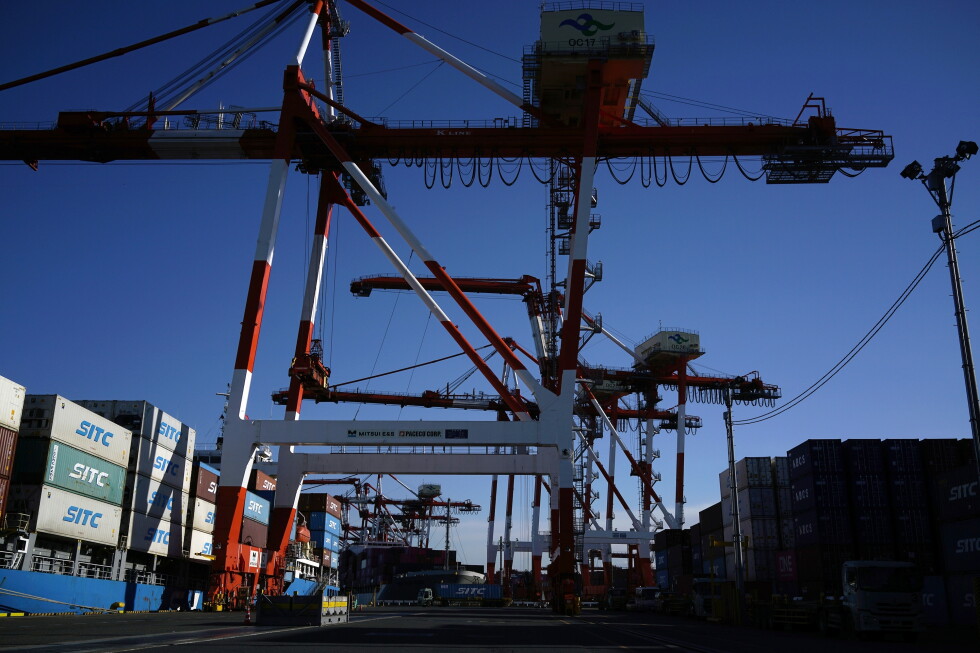
    HONG KONG – Newly released trade data from China’s General Administration of Customs reveals a marked deceleration in the country’s export growth for March 2026, a shift that economists largely attribute to growing geopolitical instability stemming from the ongoing Iran conflict and its cascading effects on global energy prices and cross-border demand.

    Last month, Chinese exports expanded by just 2.5% year-on-year, a sharp slowdown from the 21.8% aggregate growth recorded across January and February, and a figure that fell short of consensus forecasts from financial analysts. In a striking contrast, import growth jumped to 27.8% year-on-year in March, up from the 19.8% growth seen in the first two months of the year.

    The strong export performance that China recorded in early 2026 was largely fueled by technology-related shipments, with semiconductor exports surging in particular amid the global boom in artificial intelligence development. But economists warn that the protracted Iran conflict could dampen overall global appetite for Chinese goods through the rest of the year.

    “China’s exports have decelerated as the Iran war starts to affect global demand and supply chains,” explained Gary Ng, senior economist for Asia Pacific at Natixis, the French investment bank.

    Economists at Bank of America, led by chief economist Helen Qiao, echoed that assessment in a recent research note. They noted that even after the robust rebound in export growth through the first two months of 2026, the energy price shock triggered by the Iran conflict is likely to pull overall demand downward. If the conflict extends longer than current market projections, the Bank of America team added, the greatest risk will come from a sustained broad-based slowdown in global demand.

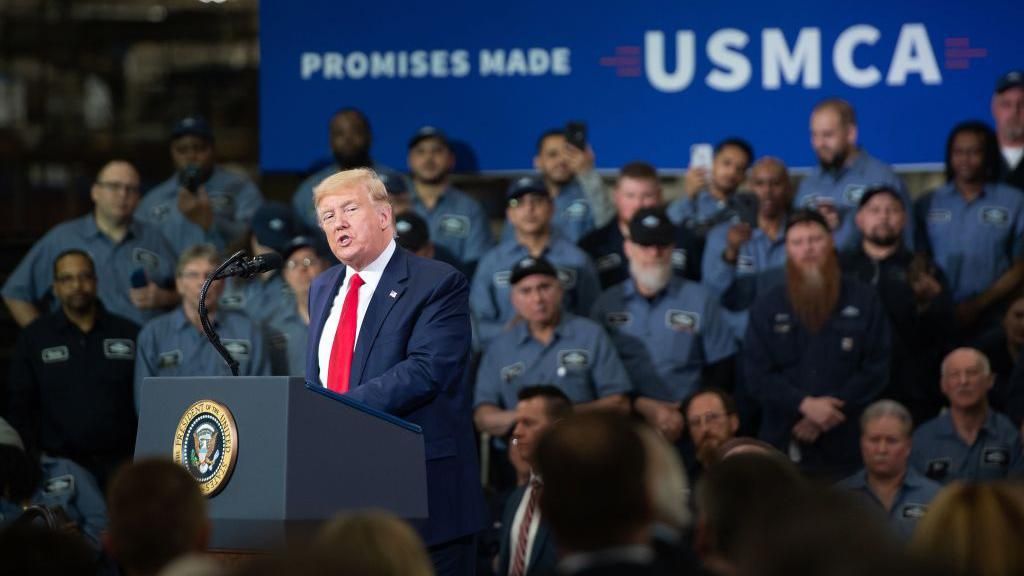
    Long-standing trade frictions have also added pressure on Chinese export performance in recent months. U.S. President Donald Trump’s elevated tariffs on Chinese goods have continued to weigh on China’s shipments to the United States, pushing Chinese exporters to reorient their trade flows toward other markets. Over the past quarter, the country has ramped up exports to Europe, Southeast Asia, and Latin America to offset lost U.S. sales.

    Beyond trade flows, geopolitical observers are closely tracking upcoming diplomatic engagement between the two largest global economies. Trump’s planned visit to Beijing for a meeting with Chinese President Xi Jinping, originally scheduled for earlier this spring, was delayed due to the outbreak of the Iran war, and a new timeline for the high-stakes summit is still pending.

    Looking at China’s broader economic outlook for 2026, Beijing has set an annual growth target of 4.5% to 5% — the lowest official target the country has announced since 1991. China hit its 2025 target of “around 5% growth” last year, powered in large part by strong export performance that delivered a record $1.2 trillion annual trade surplus. Analysts broadly agree that exports will remain a critical engine for maintaining China’s economic expansion this year, as a years-long slump in the country’s property sector continues to drag on domestic consumption and private investment.

  • ‘Blindsided’: US farmers strained as fertilizer costs surge on war

    ‘Blindsided’: US farmers strained as fertilizer costs surge on war

    As spring planting gets underway across the United States, agricultural producers in major farm belts are facing an unprecedented crisis, driven by geopolitical unrest thousands of miles away. The conflict that followed US-Israeli strikes on Iran, which prompted Tehran to block the Strait of Hormuz — a critical global chokepoint for fertilizer and energy shipments — has sent input costs soaring and left growing numbers of farmers waiting for delayed orders they urgently need for this year’s growing season.

    On Andy Corriher’s North Carolina corn and soybean operation, the timing could not be worse. Spring is the period when most American farmers apply the bulk of their fertilizer for the year, and Corriher is among the many who found themselves forced to buy supplies just as prices skyrocketed and shipments stalled. “We got hit at the worst possible time, because we’re trying to buy fertilizer when it skyrockets and when the supply also gets cut,” the 47-year-old grower told AFP. He noted he placed orders for multiple loads of liquid nitrogen weeks ago, but suppliers still cannot give him a firm delivery date. Since the blockage of the strait, Corriher estimates the price of his nitrogen fertilizer has jumped by at least 40 percent, while urea — a widely used nitrogen-based fertilizer — has seen a roughly 50 percent price spike at the Port of New Orleans. To cope, he has cut his fertilizer application by a third, a move he fears will lead to lower crop yields at harvest.

    Corriher is far from alone in facing this sudden squeeze. Russell Hedrick, a 40-year-old farmer who grows corn and soy across 1,000 acres near Hickory, North Carolina, said around three-quarters of his fertilizer purchases for this season happened after prices rocketed. Unlike large industrial agricultural operations, most small to mid-sized American farmers lack the on-farm storage capacity and upfront capital to stock up on bulk fertilizer months ahead of planting season, leaving them exposed to sudden market shocks. Even before the current conflict, Hedrick noted, steadily rising input costs had forced farmers to carefully ration every pound of fertilizer to maximize output. Now, he has cut application rates down to the “bare minimum,” holding off on additional applications in the hopes prices will cool later in the season. “This year, we just kind of got blindsided,” he said, comparing the unexpected disruption to pre-planned export restrictions that caused fertilizer shortages in 2021, shortages that farmers had time to prepare for.

    The crisis has put political pressure on the Trump administration, as farmers make up a core support base that delivered 78 percent of the vote in agricultural-dependent counties to Trump in the 2024 election. Over the weekend, Trump blamed the price hikes on “price gouging from the fertilizer monopoly,” and reassured producers that “American Farmers, we have your back!” US Agriculture Secretary Brooke Rollins attempted to downplay the severity of the crisis, noting that 80 percent of American farmers had already purchased their spring fertilizer before the conflict broke out. But that assessment offered little comfort to the 20 percent of producers who lacked the funds or storage to buy early. For Derrick Austin, a 55-year-old grower based in Marshville, Rollins’ comments were a “gut shot.” After hearing news of the Strait of Hormuz blockage, Austin immediately called his supplier to lock in supply before prices rose. “Thankfully, he let me buy three loads of nitrogen at the old price per ton so I could at least fertilize my wheat crop,” he said. “It was devastating.”

    For many long-time Trump supporters in farm country, the crisis has sparked new questions about the administration’s handling of the Middle East conflict, even as most remain hesitant to abandon their support. Corriher, who has backed Trump in past elections, said the crisis “didn’t seem like we had really thought out all the consequences to the American people. I feel like these things were kind of overlooked as part of collateral damage.” The surge in fertilizer costs has been paired with simultaneous spikes in gasoline and diesel prices, hitting both farmers and ordinary American households: “Everybody seems to be suffering.” Austin said the conflict has left him questioning the administration’s decision-making, though he still believes the current administration “still beats some of the alternatives.” Hedrick, who has voted for Trump three times, struck a similar balance: “He’s human like the rest of us. I think he makes good calls, I think he makes mistakes. If the conflict’s resolution brings long-term peace and a reopened Strait of Hormuz, that’s all I can hope for.”

    Agricultural economists warn that the long-term impact of the crisis will depend on how quickly the conflict is resolved. The US agricultural sector has already been locked in a prolonged recession for the past two years, noted Chad Hart, an agricultural economist at Iowa State University, with net farm income declining while overall business costs remain persistently high. For 2025, the overall impact may be muted, as many producers who bought fertilizer early will avoid the worst of the price hikes, keeping overall margin losses lower than initially feared. But if the conflict drags on and the Strait of Hormuz remains blocked, Hart warned the 2027 crop cycle could face far more severe disruptions that would send ripple effects through global food markets.

  • Australians brace for ‘cost of living shock’ as confidence plunges

    Australians brace for ‘cost of living shock’ as confidence plunges

    Australia’s economic sentiment has suffered its sharpest contraction since the height of the COVID-19 pandemic, driven by a crippling new cost of living shock that has left both households and bracing for severe economic headwinds, new industry surveys show.

    The monthly Westpac-Melbourne Institute Consumer Sentiment Index, a key measure of Australian household economic outlook, recorded a dramatic 12.5% nosedive in April, dragging the headline reading down to 80.1. By standard survey conventions, any score above 100 signals a net optimistic outlook among consumers, while readings below 100 reflect widespread pessimism. The latest result sits near all-time historic lows, though it remains slightly above the extreme troughs recorded during peak COVID-19 lockdowns and the early 1990s Australian recession.

    “Australian consumers are being hit by another cost of living shock,” explained Matthew Hassan, Westpac’s head of Australian macro forecasting. Surging fuel prices have emerged as the single biggest drain on household budgets, dragging the corresponding survey subindex down 16.7% year-on-year to 66.8. The sharp decline follows a record jump in national average petrol prices, which hit $2.40 per litre in early April – a 77-cent increase from February that marks the largest percentage price spike in the survey’s decades-long history.

    All five of the index’s core subindicators deteriorated sharply in April, with measures of current economic conditions faring the worst. Near-term expectations for both national economic performance and personal household finances also fell steeply, a trend Hassan says signals consumers see almost no chance of near-term relief and are preparing for ongoing hardship.

    Fears of another interest rate increase from the Reserve Bank of Australia (RBA) are also weighing heavily on consumer sentiment, Hassan added. Global energy market volatility stemming from international conflicts has stoked inflation concerns, leading many consumers to bet the RBA will implement another rate hike to cool price growth. The Westpac-Melbourne Institute Mortgage Rate Expectations Index, which tracks household forecasts for variable mortgage rates over the coming 12 months, rose 3.9% in April to 177.2, returning to the recent cycle’s multi-year highs.

    Money markets are currently pricing in a 65% probability that the RBA will raise the official cash rate when its board meets on May 4-5. If the hike goes through, it will mark the third interest rate increase in 2026 and fully undo the four rate cuts the central bank implemented in 2025, leaving households facing even higher mortgage repayment costs.

    The economic uncertainty has also spiked fears of job losses, pushing unemployment expectations to their most pessimistic level since August 2020 – one of the darkest periods of the COVID-19 pandemic, shortly before the federal government expanded the JobKeeper wage subsidy program to prevent mass layoffs. Data shows the jump in job insecurity is most acute among workers in sectors directly exposed to energy and interest rate volatility, particularly construction and hospitality.

    The bleak sentiment is not limited to households: separate monthly survey data from the National Australia Bank (NAB) shows Australian business confidence has suffered its second-largest one-month drop in 37 years. The plunge comes on the back of the recent outbreak of conflict in the Middle East and soaring domestic fuel prices, which have combined to amplify existing price pressure pressures across the economy.

    In the first full survey reading collected after the Middle East conflict began, NAB’s business confidence index plummeted 29 points to a negative reading of minus 29. Falls of this magnitude have only been recorded twice before in the survey’s history: during the 2008 Global Financial Crisis and at the onset of the COVID-19 pandemic in 2020.

    Unlike consumer sentiment, however, actual business activity has so far held relatively steady. NAB’s measure of business conditions fell just one point to six index points in March, indicating that while geopolitical and inflationary shocks have hit business outlook, the real impact on day-to-day operations has yet to fully materialize. “It is still early days in terms of the flow through to activity,” noted Gareth Spence, NAB’s head of Australian economics. Confidence is now negative across every Australian state and territory, though business conditions remain positive in most regions.

    The sharp synchronized drop in both consumer and business sentiment marks one of the most significant weakening in Australian economic outlook outside of formal recession periods, reinforcing warnings from top RBA officials about ongoing economic instability and persistent inflationary risks.

  • Interest rates could rise as RBA flags ‘big income shock’ for Australians

    Interest rates could rise as RBA flags ‘big income shock’ for Australians

    Six weeks after the outbreak of new conflict in the Middle East, global oil prices have doubled, triggering stark warnings from top Australian central bank officials that the country could face what many call the “central banker’s nightmare” — a toxic combination of rising inflation and slowing economic activity. The unfolding economic shock is already casting uncertainty over household finances and interest rate trajectories for Australian mortgage holders.\n\nReserve Bank of Australia (RBA) Deputy Governor Andrew Hauser outlined the grave risks during a public fireside chat with the Money Marketeers group in New York, speaking as national consumer sentiment indexes have slumped to all-time historic lows across Australia. While Hauser noted that weak sentiment readings do not always guarantee a corresponding drop in consumer spending, he cautioned that if the surveys accurately reflect underlying trends, Australia is heading for a significant income shock.\n\n“That is the central banker’s nightmare, you know, inflation up, activity down and judging the balance between the two is how we earn our money,” Hauser told the audience. This worst-case outcome, known as stagflation, creates an intractable policy dilemma for central banks: raising interest rates to curb inflation can further drag on already slowing growth, while cutting rates to stimulate activity can make soaring price pressures even worse.\n\nThe disruption to global energy markets from the Middle East conflict has already complicated the RBA’s long-running push to bring inflation back down to its target range of 2 to 3 percent, Hauser added. “I wouldn’t say we have high confidence that we’ve set interest rates at the right level because you never do have that high confidence. But we’re going to have to monitor this new shock pretty carefully,” he said. “I think it is easy to see that upside inflation pressure. More important for us now is to think through what the medium-term impact might be.”\n\nHauser emphasized that inflation is already “too high” in Australia, and the energy price spike spurred by the Gulf conflict is delivering a “big income shock for Australia” that ripples through every sector of the economy. The conflict has disrupted shipping through the Strait of Hormuz, the strategic global oil chokepoint that typically carries roughly one-fifth of the world’s daily oil trade, cutting off key supply routes for global energy markets.\n\nBefore the conflict began six weeks ago, benchmark oil traded at roughly $US56 per barrel; as of this week, prices hover around $US100 per barrel. For Australian motorists, this surge translates directly to higher fuel costs: every $US10 per barrel increase in oil prices adds approximately 10 Australian cents to the price of fuel at the pump, piling extra pressure on already stretched household budgets.\n\nPrior to the outbreak of conflict on February 28, Australia’s annual Consumer Price Index (CPI) fell 0.1 percentage points to 3.7 percent in February, but that figure still remained well above the RBA’s 2-3 percent target range. Already, federal Treasurer Jim Chalmers has updated the government’s economic modelling to account for worsening supply disruptions: early projections showed that prolonged fuel market disruption could push Australian inflation close to 5 percent, and Chalmers recently noted that even that grim forecast “look pretty conservative now.”\n\n“ We’ve asked for some more, challenging circumstances to be modelled,” Chalmers said. The two core variables shaping the government’s scenario planning, he added, are the duration of the conflict and how long it will take for global energy markets and the Australian economy to “get back on track after the hot part of hostilities.”\n\nWhile Hauser stopped short of predicting that Australia will enter a full recession, even with consumption already running at relatively low levels, financial markets are already bracing for further interest rate hikes. The RBA has already raised interest rates twice in 2025, pushing the official cash rate back to 4.1 percent — undoing two of the three rate cuts implemented in 2024, and leaving rates at their highest level since April 2012. As of the latest market pricing, investors see a roughly 65 percent chance of another rate increase when the RBA holds its next policy meeting in May, just one week ahead of the release of the federal government’s annual budget.

  • Qantas cuts flights and hikes fares blaming soaring Middle East fuel costs

    Qantas cuts flights and hikes fares blaming soaring Middle East fuel costs

    The ongoing geopolitical turbulence stemming from the Middle East conflict has sent global oil markets into a state of extreme volatility, triggering cascading disruptions for Australia’s aviation industry and leaving leisure and business travellers facing steeper costs and fewer travel options. Australia’s flag carrier Qantas Airways has become the first major airline to roll out sweeping operational adjustments to offset the unexpected surge in jet fuel expenses, announcing deep cuts to domestic flight capacity, targeted changes to its international route network, and immediate passenger fare increases.

    Before the outbreak of the latest hostilities in the Middle East, global benchmark crude traded at roughly $56 per barrel, equivalent to around 80 Australian dollars. In just weeks of escalating tensions, that price has jumped to trade near the $100 per barrel mark, or 143 Australian dollars. Most dramatically, Qantas reports that jet fuel refinery margins have exploded from an already elevated $20 per barrel ($28 AUD) to as high as $120 per barrel ($169 AUD). Looking ahead to the June quarter, the airline now projects that unhedged jet fuel prices will sit between 185 and 200 Australian dollars per barrel.

    The revised fuel cost projection for the second half of Qantas’ current financial year now lands between $3.1 billion and $3.3 billion, representing a $600 million to $800 million increase from the company’s earlier guidance. In an official media statement, Qantas noted that its leadership team continues to closely monitor the fast-evolving geopolitical and market environment, maintaining flexible contingency plans to implement additional cost mitigation measures if oil prices continue their upward trend.

    To balance its budgets amid the price shock, Qantas is cutting domestic flight capacity by 5% and reshuffling its international network. The airline confirmed it is reallocating aircraft and crew capacity pulled from U.S. routes and the shrunken domestic network to boost flight frequencies to Paris and Rome, where it has recorded sustained strong demand from international travellers. Despite the capacity cuts, Qantas emphasized that overall travel demand remains robust across its network, and projects that revenue per available seat kilometre will double from prior period levels.

    Passengers booked on affected Qantas and Jetstar (Qantas’ low-cost subsidiary) flights will be contacted directly by the airline, with options to rebook onto alternative services or claim a full refund for unused tickets. On the supply front, Qantas says it is coordinating closely with federal government regulators and its network of jet fuel suppliers, who have guaranteed consistent fuel availability through the rest of April and well into May. Even so, the airline cautioned that ongoing uncertainty surrounding global energy supply chains means the situation remains fluid.

    In additional financial adjustments released alongside the operational changes, Qantas announced that it will cap its total capital expenditure for the 2026 financial year at or below $4.1 billion, which falls at the lower end of its previously released guidance range. The airline confirmed that its previously announced $300 million interim dividend, equal to 19.8 cents per share, will still be distributed to shareholders on April 15, as scheduled. However, the company has scrapped a planned $150 million share buyback program to preserve cash amid heightened market uncertainty.

  • Aussie shoppers offered free One Pass membership and delivery to help with fuel crisis, cost of living relief

    Aussie shoppers offered free One Pass membership and delivery to help with fuel crisis, cost of living relief

    As Australia continues to navigate spiraling cost-of-living pressures amplified by the global fuel crisis, five of the nation’s largest retail brands under the Wesfarmers umbrella have launched a landmark consumer relief initiative to ease household financial strain. From Tuesday, new members of the group’s shared OnePass subscription program will gain access to six months of completely free delivery with no minimum purchase requirements, plus waived membership fees for the duration of the trial.

    The offer applies to customers of iconic Australian brands Bunnings Warehouse, Kmart, Target, Officeworks and Priceline, and is open to all new sign-ups completed before the May 14 deadline. After the six-month trial period concludes, monthly memberships will automatically resume at the existing rate of just $4 AUD per month, with no hidden fees or unexpected price hikes locked into the terms.

    For Australian households and small business owners already stretched thin by rising fuel and everyday commodity costs, the initiative has already been met with widespread enthusiasm. Anthony Koutroulis, a Melbourne-based restaurant owner and father of three, shared that he will immediately sign up for the offer, noting that overlapping business operating costs and rising household bills have created unprecedented financial stress in recent months. “By the end of each month you can see which bills you have to pay, but it is tougher to co-ordinate which ones to pay first and which ones to pay a week later,” Koutroulis explained. “Anything that can help at the moment we would love. You have to be strong, but there’s some days when you’re mentally not there, but you just have to pull through and do it for the family.”

    Melbourne mother Angelique Oliver echoed those sentiments, saying her family has already adjusted their lifestyle to cut non-essential spending amid rising costs, including reducing unnecessary driving to save on fuel. For Oliver, who lives a 30-minute drive from the nearest Kmart location, the free delivery benefit directly cuts down on both fuel and delivery expenses that have eaten into her family’s monthly budget. “It suits us,” she said.

    Retail leaders behind the initiative say the program is a targeted response to the growing financial strain felt across Australian communities. Bunnings Managing Director Michael Schneider noted that free, no-minimum delivery is one of the most direct ways large retail brands can help stretch household budgets further. “We know that every dollar counts right now. Being able to shop online and have your order delivered for free makes a real difference to the weekly household budget,” Schneider said.

    Aleks Spaseska, Managing Director of Kmart Group, added that the relief package complements the group’s longstanding commitment to everyday low prices across Kmart and Target, providing additional practical support when household budgets are at their tightest. “We know many families are facing ongoing cost pressures. Alongside our commitment to delivering everyday low prices across Kmart and Target, this is another practical way we can help our customers,” Spaseska said.

  • Consumer expo draws global exhibitors keen on China’s vast market

    Consumer expo draws global exhibitors keen on China’s vast market

    The sixth iteration of the China International Consumer Products Expo (CICPE) officially opened its doors on Monday in Haikou, the capital city of China’s southern Hainan Province, bringing together more than 3,400 brands from more than 60 countries and regions around the world who are eager to tap into China’s enormous consumer market.

  • Takeaways from AP and Lee’s report on how soybean farmers were impacted by tariffs, Iran war

    Takeaways from AP and Lee’s report on how soybean farmers were impacted by tariffs, Iran war

    For years, soybean producers across the U.S. Midwest have navigated a steady stream of financial challenges, and two recent global disruptions have pushed their profit margins to a breaking point, a joint investigation by Lee Enterprises and The Associated Press has found. What began as slow, long-term shifts in commodity markets and production costs has been compounded by trade policy conflicts and a new Middle East war, leaving many producers in precarious financial positions.

    As one of the United States’ most valuable agricultural exports, soybeans form the backbone of Midwest farm incomes, with uses ranging from livestock feed and human food products to clean energy biofuels. But for years, market conditions have worked against American producers. Global soybean supplies have hit consecutive record production levels in recent seasons, driven largely by Brazil’s rise to overtake the U.S. as the world’s top soybean producer years ago. This global glut has kept soybean prices consistently depressed, according to agricultural economists.

    “Global production just keeps hitting record after record after record,” explained Chad Hart, an agricultural economist at Iowa State University. “Large supplies across the global market have directly pushed prices down.”

    At the same time that selling prices have stayed low, production costs for Midwest soybean farmers have climbed steadily. U.S. Department of Agriculture (USDA) data shows that core farm expenses, including seed and pesticide, have risen incrementally for years. Operating costs for soybean production have remained at elevated levels since 2020, and are projected to climb again by 2026, the agency reports. Beyond input costs, skyrocketing Midwest cropland values have added extra pressure: most regional producers rent at least a portion of their farmland, according to Joana Colussi, a research assistant professor in agricultural economics at Purdue University, meaning higher land values translate directly to higher annual rental costs.

    These pre-existing financial strains were severely worsened by the 2025 U.S.-China trade war sparked by sweeping tariffs imposed by the Trump administration in April of that year. China, which was the top purchaser of U.S. soybeans for decades, responded with retaliatory tariffs and effectively halted purchases of American soybean shipments, cutting off a critical export market for Midwest producers and dragging soybean prices even lower.

    By late 2025, the two world powers reached a trade agreement that required China to purchase 12 million metric tons of U.S. soybeans by January 2026, followed by annual purchases of at least 25 million metric tons over the subsequent three years. China has met its initial purchase target, and the Trump administration rolled out a $12 billion temporary aid package in December to support farmers affected by the trade dispute. Even with these interventions, however, lasting damage has already been done, according to producers and analysts.

    The American Soybean Association estimates that even after accounting for federal assistance, Midwest farmers lost nearly $75 per harvested acre of soybeans from the 2025 crop. Beyond immediate near-term losses, the trade conflict also accelerated a long-term shift that has weakened U.S. market share: China has increasingly turned to Brazil and other competing soybean exporters to meet its demand, eroding the U.S.’s longstanding dominance in the global soybean export market.

    “Global competitors of U.S. soybean producers were the clear winners from the trade war,” noted Joseph Glauber, former chief economist at the USDA between 2008 and 2014. “The U.S. no longer holds the dominant position in global soybean exports that it once did.”

    Just as farmers began adjusting to the aftermath of the trade war, the outbreak of conflict between the U.S., Israel and Iran created a second wave of cost shocks. After joint attacks on Iran on February 28, shipping traffic through the Strait of Hormuz — a critical global chokepoint for oil and commodity shipping — came to a near-standstill, sending global oil prices soaring. The disruption also halted exports of nitrogen fertilizers produced in the Persian Gulf, cutting off access to key fertilizer ingredients and sending prices skyrocketing. Urea, the most widely traded nitrogen fertilizer, saw particularly steep price increases.

    While soybeans do not require nitrogen fertilizer to grow, nearly all Midwest soybean producers rotate their crops with corn, which relies heavily on nitrogen inputs. The Middle East supplies roughly half of the world’s urea, and Qatar and Saudi Arabia rank among the top sources of U.S. fertilizer imports, according to the American Farm Bureau Federation.

    A two-week ceasefire between the U.S. and Iran was announced on April 7, including an agreement to reopen the Strait of Hormuz. However, shipping traffic has remained slow amid ongoing disagreements over Israeli military actions in Lebanon, and urea prices still remain far higher than pre-conflict levels. While many producers purchased fertilizer ahead of the 2026 spring planting season, farmers who delayed their purchases are now stuck paying premium prices.

    The conflict also pushed gasoline and diesel prices sharply higher, adding extra costs for farm equipment and transportation of crops. While oil prices have fallen slightly since the ceasefire was announced, the disruption will have long-lasting financial impacts for farmers, according to Seth Goldstein, senior equity analyst at investment research firm Morningstar. Critical export facilities for oil, chemicals and other key commodities in the Middle East were damaged or destroyed during the conflict, he explained, and it will take months if not years for global supply chains to return to normal operations. For Midwest soybean farmers already operating on razor-thin or negative margins, every additional cost increase adds to the growing financial pressure.

  • US stocks finish higher amid hopes for US-Iran deal as oil price gains moderate

    US stocks finish higher amid hopes for US-Iran deal as oil price gains moderate

    Global financial markets saw mixed trading on Monday, with U.S. equities reversing early losses to close higher as hopes of a diplomatic breakthrough between Washington and Tehran cooled runaway crude oil prices. The upward momentum on Wall Street followed comments from former U.S. President Donald Trump claiming that Iranian officials had reached out to express an urgent desire for a negotiated settlement, just days after weekend discussions in Pakistan ended without any tangible agreement.

    Crude oil prices, which had spiked back above the $100 per barrel threshold after the U.S. tightened its blockade on Iranian energy imports, pulled back from their intraday highs by the end of the trading session. Both benchmark Brent North Sea crude and West Texas Intermediate finished the day higher but below the psychologically important $100 mark, settling at $99.36 and $99.08 per barrel respectively.

    “The market is betting that Trump will get some sort of a deal,” noted Peter Cardillo, chief market analyst at Spartan Capital Securities. Even as Trump issued a stark warning that any Iranian patrol boats approaching U.S. naval forces enforcing the blockade would be destroyed — defying growing international calls for a ceasefire — investors latched onto his signal that Tehran is seeking to de-escalate.

    Shortly after Trump’s midday comments from outside the Oval Office, major U.S. indices picked up clear upward momentum. The broad S&P 500 closed 1.0 percent higher at 6,886.24, the Dow Jones Industrial Average added 0.6 percent to finish at 48,218.25, and the tech-heavy Nasdaq Composite gained 1.2 percent to close at 23,183.74.

    Analysts at Briefing.com said the rally reflects growing market confidence that an end to the US-Iran conflict could be imminent, which would remove a major headwind for global equities. However, lingering risks of sustained inflation and a sharp global economic slowdown are expected to take center stage this week as top finance officials and central bankers gather in Washington for the annual spring meetings of the International Monetary Fund and the World Bank.

    Last Friday, official U.S. data showed annual consumer inflation accelerated to 3.3 percent in March, the highest reading since May of last year, putting additional pressure on the Federal Reserve to balance price stability and growth. Russ Mould, investment director at UK-based wealth manager AJ Bell, pointed out that talk of stagflation has reemerged as geopolitical turmoil threatens to suppress global output while pushing up energy and food prices.

    Unlike the uptick on Wall Street, most major Asian and European markets ended the session in negative territory. London’s FTSE 100 slipped 0.2 percent, Paris’ CAC 40 fell 0.3 percent, Frankfurt’s DAX dropped 1.3 percent, Tokyo’s Nikkei 225 declined 0.7 percent, and Hong Kong’s Hang Seng Index lost 0.9 percent. Only Shanghai’s Composite index posted a marginal 0.1 percent gain.

    David Morrison, senior market analyst at Trade Nation, observed that reopening the Strait of Hormuz — a critical global energy chokepoint — remains the key prerequisite for a sustained rally in risk assets. Even so, many traders hold the conviction that the conflict will conclude sooner rather than later: futures contracts for crude oil deliveries in the second half of the year are currently priced well below spot market rates, indicating expectations that reduced geopolitical risk will bring down energy costs.

    “As far as oil traders are concerned, this war may be in its seventh week, but it should be resolved by summer,” Morrison said.

    Still, European leaders are bracing for long-term economic fallout from the energy shock. Friedrich Merz, Chancellor of Germany — Europe’s largest economy — warned on Monday that the impacts of the conflict will be felt “for a long time to come, even after it is over”, as his administration unveiled new relief measures including a temporary cut to fuel taxes.

    In central European political news that moved local markets, Hungarian stocks jumped 5 percent on Monday after conservative opposition leader Peter Magyar’s Tisza party secured a landslide majority in Sunday’s parliamentary elections, ending 16 years of rule by Viktor Orban. The election result paves the way for improved relations between Budapest and the European Union, and economists at ING predict the new pro-EU government could soon set a target date to adopt the euro.

    “If timed perfectly, this could boost market confidence and give the Tisza party more time to work on the Hungarian economy with some tailwinds,” ING analysts wrote in a recent research note.

  • UAE-China conference boosts trade and investment ties

    UAE-China conference boosts trade and investment ties

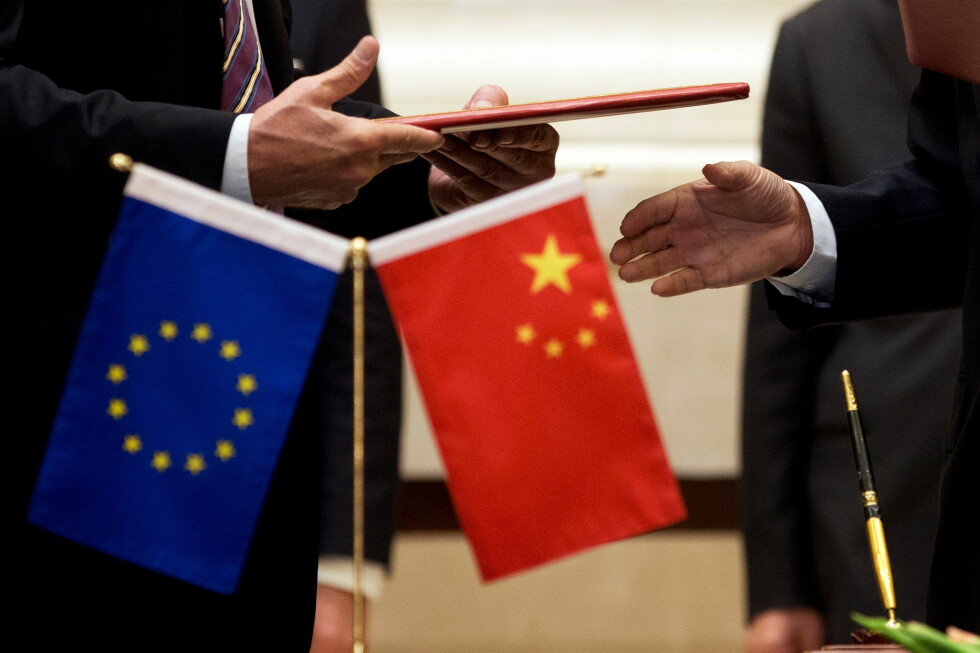
    On April 13, 2026, the UAE-China Business Promotion Conference kicked off in China under the theme “From Vision to Value”, bringing together cabinet ministers, senior government officials and top industry executives from both nations to chart new paths for cross-border collaboration, investment and innovation. The high-level gathering was held alongside the official visit of Sheikh Khaled bin Mohamed bin Zayed Al Nahyan, Crown Prince of Abu Dhabi, who led a senior UAE delegation to the country.

    As a landmark outcome of the conference, delegates from the two sides signed 24 bilateral Memorandums of Understanding, a move widely expected to deepen and expand the already robust economic, trade and investment partnership between the UAE and China.

    In his keynote opening address, Thani bin Ahmed Al Zeyoudi, the UAE’s Minister of Foreign Trade, highlighted the critical role of the conference in fortifying bilateral cooperation and unlocking untapped growth opportunities for both economies. “The UAE and China share a decades-long, deeply rooted economic partnership, forged over years of collaboration and anchored in a shared commitment to shared prosperity,” Al Zeyoudi stated.

    The minister also shared an encouraging milestone for bilateral trade: non-oil bilateral commerce between the two nations crossed the $100 billion threshold for the first time in 2025, surging by a record 24.5 percent year-over-year to hit $111.5 billion. “We will continue advancing close coordination across priority sectors to deliver sustainable economic outcomes that benefit the people and businesses of both our countries,” he added.

    Current trade data underscores the strength of the bilateral relationship: China has retained its position as the UAE’s largest trading partner, contributing roughly 11 percent of the UAE’s total non-oil trade volume and holding the top spot as a source of UAE imports. For its part, the UAE remains China’s largest single trading partner across the Middle East and Africa, accounting for more than one-fifth of China’s total non-oil trade with the entire region over the past 10 years.

    The conference was co-hosted by the UAE Ministry of Foreign Trade and China’s Ministry of Commerce, with co-organization support from the Embassy of the United Arab Emirates in Beijing and the China Chamber of Commerce for Import and Export of Machinery and Electronic Products.