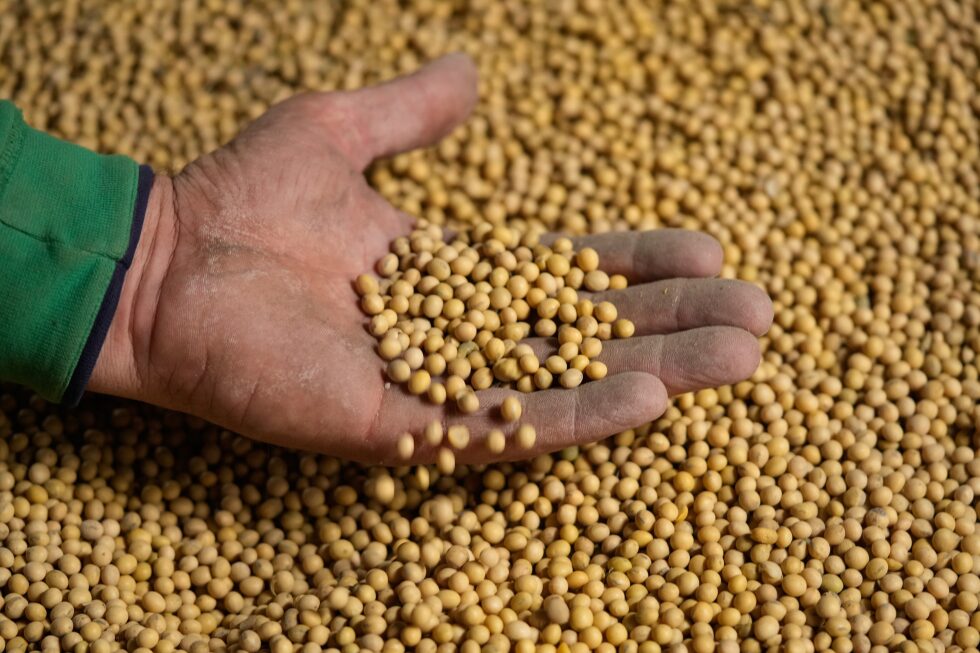
For years, soybean producers across the U.S. Midwest have navigated a steady stream of financial challenges, and two recent global disruptions have pushed their profit margins to a breaking point, a joint investigation by Lee Enterprises and The Associated Press has found. What began as slow, long-term shifts in commodity markets and production costs has been compounded by trade policy conflicts and a new Middle East war, leaving many producers in precarious financial positions.
As one of the United States’ most valuable agricultural exports, soybeans form the backbone of Midwest farm incomes, with uses ranging from livestock feed and human food products to clean energy biofuels. But for years, market conditions have worked against American producers. Global soybean supplies have hit consecutive record production levels in recent seasons, driven largely by Brazil’s rise to overtake the U.S. as the world’s top soybean producer years ago. This global glut has kept soybean prices consistently depressed, according to agricultural economists.
“Global production just keeps hitting record after record after record,” explained Chad Hart, an agricultural economist at Iowa State University. “Large supplies across the global market have directly pushed prices down.”
At the same time that selling prices have stayed low, production costs for Midwest soybean farmers have climbed steadily. U.S. Department of Agriculture (USDA) data shows that core farm expenses, including seed and pesticide, have risen incrementally for years. Operating costs for soybean production have remained at elevated levels since 2020, and are projected to climb again by 2026, the agency reports. Beyond input costs, skyrocketing Midwest cropland values have added extra pressure: most regional producers rent at least a portion of their farmland, according to Joana Colussi, a research assistant professor in agricultural economics at Purdue University, meaning higher land values translate directly to higher annual rental costs.
These pre-existing financial strains were severely worsened by the 2025 U.S.-China trade war sparked by sweeping tariffs imposed by the Trump administration in April of that year. China, which was the top purchaser of U.S. soybeans for decades, responded with retaliatory tariffs and effectively halted purchases of American soybean shipments, cutting off a critical export market for Midwest producers and dragging soybean prices even lower.
By late 2025, the two world powers reached a trade agreement that required China to purchase 12 million metric tons of U.S. soybeans by January 2026, followed by annual purchases of at least 25 million metric tons over the subsequent three years. China has met its initial purchase target, and the Trump administration rolled out a $12 billion temporary aid package in December to support farmers affected by the trade dispute. Even with these interventions, however, lasting damage has already been done, according to producers and analysts.
The American Soybean Association estimates that even after accounting for federal assistance, Midwest farmers lost nearly $75 per harvested acre of soybeans from the 2025 crop. Beyond immediate near-term losses, the trade conflict also accelerated a long-term shift that has weakened U.S. market share: China has increasingly turned to Brazil and other competing soybean exporters to meet its demand, eroding the U.S.’s longstanding dominance in the global soybean export market.
“Global competitors of U.S. soybean producers were the clear winners from the trade war,” noted Joseph Glauber, former chief economist at the USDA between 2008 and 2014. “The U.S. no longer holds the dominant position in global soybean exports that it once did.”
Just as farmers began adjusting to the aftermath of the trade war, the outbreak of conflict between the U.S., Israel and Iran created a second wave of cost shocks. After joint attacks on Iran on February 28, shipping traffic through the Strait of Hormuz — a critical global chokepoint for oil and commodity shipping — came to a near-standstill, sending global oil prices soaring. The disruption also halted exports of nitrogen fertilizers produced in the Persian Gulf, cutting off access to key fertilizer ingredients and sending prices skyrocketing. Urea, the most widely traded nitrogen fertilizer, saw particularly steep price increases.
While soybeans do not require nitrogen fertilizer to grow, nearly all Midwest soybean producers rotate their crops with corn, which relies heavily on nitrogen inputs. The Middle East supplies roughly half of the world’s urea, and Qatar and Saudi Arabia rank among the top sources of U.S. fertilizer imports, according to the American Farm Bureau Federation.
A two-week ceasefire between the U.S. and Iran was announced on April 7, including an agreement to reopen the Strait of Hormuz. However, shipping traffic has remained slow amid ongoing disagreements over Israeli military actions in Lebanon, and urea prices still remain far higher than pre-conflict levels. While many producers purchased fertilizer ahead of the 2026 spring planting season, farmers who delayed their purchases are now stuck paying premium prices.
The conflict also pushed gasoline and diesel prices sharply higher, adding extra costs for farm equipment and transportation of crops. While oil prices have fallen slightly since the ceasefire was announced, the disruption will have long-lasting financial impacts for farmers, according to Seth Goldstein, senior equity analyst at investment research firm Morningstar. Critical export facilities for oil, chemicals and other key commodities in the Middle East were damaged or destroyed during the conflict, he explained, and it will take months if not years for global supply chains to return to normal operations. For Midwest soybean farmers already operating on razor-thin or negative margins, every additional cost increase adds to the growing financial pressure.