分类: business

  • Hainan to expand intl opening-up

    Hainan to expand intl opening-up

    China’s southern island province of Hainan has unveiled an ambitious five-year strategy to deepen its international engagement and cement its role as a critical link between China and the broader global economy, marking a key new phase for its groundbreaking Free Trade Port (FTP) initiative just months after the launch of full island-wide special customs supervision.

    Speaking at a State Council Information Office press conference held in Haikou on April 10, 2026, Hainan Governor Liu Xiaoming laid out the province’s trade and opening-up priorities for the 15th Five-Year Plan period spanning 2026 to 2030, framing this stage as a turning point for the FTP project. The milestone launch of island-wide special customs operations on December 18, 2025, formally concluded the FTP’s initial infrastructure and regulatory framework development, clearing the way for the next phase of expansion.

    To advance this new phase of opening, Liu explained that Hainan will prioritize institutional liberalization by aligning its regulatory frameworks with high-standard global trade rules. The province will align its practices with major multilateral frameworks including the Regional Comprehensive Economic Partnership (RCEP), the Comprehensive and Progressive Agreement for Trans-Pacific Partnership (CPTPP), and the Digital Economy Partnership Agreement (DEPA), while also supporting ongoing negotiations to upgrade the China-ASEAN Free Trade Area to its 3.0 iteration.

    The province enters this new planning period on the heels of robust trade growth over the 14th Five-Year Plan (2021-2025), when both goods and services trade posted average annual growth rates exceeding 20 percent. For the coming five years, Hainan has set clear, ambitious targets: 10 percent average annual growth for goods trade, 20 percent annual growth for services trade, and 10 percent annual expansion in actually utilized foreign direct investment.

    Already, the new regulatory framework and policy incentives are driving tangible on-the-ground growth across Hainan’s processing and trade sectors, with the local coffee industry offering a clear illustration of the benefits of the FTP’s model.

    On the same day the special customs regime launched last December, a shipment of blended roasted coffee beans produced by Charoen Pokphand Group (Hainan) Xinglong Coffee Industry Development Co, a Sino-Thai joint venture based in Wanning city, departed Qionghai Boao International Airport for the Chinese mainland market. The beans, imported raw from Colombia, were roasted, blended and packaged at the company’s automated processing facility in Xinglong Coffee Valley, adding more than 30 percent to their value before shipment. This marked the first shipment from Wanning to qualify for Hainan FTP’s value-added tariff exemption policy for domestic sales, cutting costs significantly for the producer.

    The joint venture already operates under a cross-border model unique to the Hainan FTP: importing low-cost raw materials from global producers, processing them into finished high-value products, then selling finished goods both domestically and internationally. During the company’s first export shipment to Australia, the firm saved 8 percent on import tariffs for raw beans and 13 percent on value-added tax, directly boosting its profit margin and global competitiveness.

    “The most transformative change we have seen stems from Hainan’s institutional opening-up,” noted Ye Jian, general manager of the Sino-Thai joint venture. “Hainan is rapidly emerging as a strategic node in the global coffee supply chain.”

    Ye added that Hainan’s geographic proximity to major coffee-producing nations in Southeast Asia, paired with unimpeded access to China’s 1.4 billion-person consumer market, gives the island an unrivaled competitive advantage. The new special customs regime, he explained, is cutting cross-border logistics costs, streamlining supply chain clearance processes, and attracting skilled industry talent, helping reshape Hainan’s role from a simple entry point for raw materials into a fully fledged global processing hub.

    “A single cup of Xinglong coffee might use beans grown in Colombia, processed and packaged in Hainan, and end up sold to consumers in Australia — that is a perfect, tangible example of how the Hainan FTP connects China’s market and production capacity with the entire world,” Ye said.

    Policy support for the new trade and processing model has expanded in lockstep with the launch of the special customs regime. Ahead of the December 2025 launch, Hainan updated its zero-tariff raw material list in February 2025, expanding the roster to roughly 6,600 eligible products and adding unroasted coffee beans alongside 296 other commodity items. By the end of 2025, the number of companies eligible to access the FTP’s preferential policies had grown by more than 11,000 from pre-expansion levels, signaling widespread business uptake of the new regime.

  • Asia outlook cautious amid Mideast conflict

    Asia outlook cautious amid Mideast conflict

    The ongoing escalation of conflict in the Middle East has cast a long shadow over economic prospects for developing economies across the Asia-Pacific, prompting the Asian Development Bank (ADB) to downgrade its 2026 growth forecast and warn of rising inflationary pressure, according to the bank’s flagship annual publication, the *Asian Development Outlook (ADO)*, released on 11 April 2026.

    The ripple effects of the regional crisis have already disrupted global energy markets, pushing international crude prices above $100 per barrel in recent weeks. As of Friday, the global benchmark Brent crude traded above $96 per barrel, driven by supply uncertainty tied to the conflict. The situation worsened earlier this week, when Iran’s state-run Press TV reported the full closure of the Strait of Hormuz, the strategic maritime chokepoint through which roughly a third of global oil and gas exports flow, most bound for Asia-Pacific markets.

    In a webinar launching the ADO report, ADB principal economist John Beirne explained that the vast majority of developing Asian economies rely on net energy imports from Gulf nations, meaning sustained higher energy prices will translate into direct, material income losses for the region. But the spillover impacts stretch far beyond energy and shipping, he noted, extending to core inputs for agricultural and industrial supply chains that also pass through the Strait of Hormuz. Middle Eastern economies are leading global suppliers of critical commodities including petrochemicals, fertilizers, industrial gases and base metals, all of which have seen upward price pressure amid the supply disruption.

    “High fertilizer and diesel prices raise agricultural costs, which could lead to less input use and lower yields next year, and this could contribute to food insecurity,” Beirne warned.

    ADB economists emphasized that the severity of the conflict’s impact will vary widely across emerging Asian economies, with large emerging markets such as China and India projected to remain broadly resilient despite the external headwinds. ADB senior economist Yothin Jinjarak noted that China’s economy faces limited exposure to the crisis, thanks to multiple built-in buffers against global energy price shocks: substantial strategic petroleum reserves, a highly diversified supply base for energy imports, and a rapidly expanding renewable energy sector that reduces reliance on foreign fossil fuels.

    For India, domestic consumption remains the primary engine of economic growth, supported by rising household incomes and recent tax cuts. Still, the ADB forecast that accelerating food and fuel prices will likely moderate consumption growth in the coming year.

    Across the rest of South Asia, the conflict has hit regional economies on two fronts: not only through higher energy import costs, but also through severe disruption to the tourism sector, explained Rana Hasan, ADB’s regional lead economist for South Asia. “We are already seeing our two large tourism-dependent economies, the Maldives and Sri Lanka, take a hit,” Hasan said. Flight disruptions and the closure of Gulf airspace, a critical transit hub for travelers from Europe and North America heading to South Asia, have cut tourist arrivals sharply in both island nations.

    In Southeast Asia, the risk of persistent, high inflation is concentrated in economies that face overlapping vulnerabilities: high energy import dependence, greater exchange rate pass-through to domestic prices, and limited policy buffers to offset shocks, according to Dulce Zara, ADB’s senior regional cooperation officer for Southeast Asia. Laos, Myanmar and the Philippines rank among the most vulnerable, she said, pointing to Laos as an example: the country has very limited fiscal space to roll out relief measures to cushion consumers from rising fuel prices. By contrast, economies such as Brunei, Indonesia and Malaysia face far lower risk, thanks to existing fuel subsidy programs, dedicated oil price stabilization funds, and diversified domestic energy supplies.

    Another underrecognized drag on regional growth will come from falling remittance inflows, the ADB noted. Remittances from migrant workers employed in the Middle East are a key pillar of household consumption for many South and Southeast Asian economies, including Bangladesh, Indonesia, Nepal, the Philippines and Sri Lanka, all of which rely heavily on labor exports to Gulf nations.

    Hasan added that the ultimate scale of the economic damage will hinge entirely on how the conflict unfolds: “A lot is going to depend on the duration of this Middle East conflict and how long it takes for the economies of the Middle East to recover from the conflict.”

  • Hubei launches hotel-like tourist train with private rooms

    Hubei launches hotel-like tourist train with private rooms

    As China’s domestic tourism market continues to diversify and mature, Central China’s Hubei province has introduced a groundbreaking new travel product that reimagines the traditional rail travel experience. China Railway Wuhan Group has launched the region’s first fully upgraded “comfortable tourist train”, a renovated service that trades the cramped, budget-focused layout of conventional green passenger trains for high-end, hotel-like private and shared accommodations tailored to modern travelers.

    Beyond the core sleeping arrangements that include deluxe double rooms, twin private cabins, and shared three- or four-bed berths, the custom train is packed with resort-style amenities designed for multi-day leisure trips. Passengers have access to dedicated entertainment spaces including KTV lounges and game rooms for chess and card activities, alongside private en-suite bathrooms in all accommodation units. Safety and accessibility have also been prioritized, with non-slip flooring throughout the carriages, reinforced safety handrails, and direct emergency call buttons installed in every room to support travelers with mobility needs.

    A key design focus of the new service is catering to the fast-growing “silver-hair economy” — the large and expanding market of senior travelers seeking comfortable, guided leisure experiences. To meet the specific needs of elderly passengers, the operator has assembled three specialized on-board teams: a full-time medical group that provides 24/7 emergency and routine care, a professional tour guide team that delivers in-depth cultural interpretation at each stop, and a dedicated butler team that handles one-on-one personalized requests from passengers throughout the journey.

    The train’s maiden 12-day voyage is scheduled to depart on April 15, winding through some of southwest China’s most popular scenic destinations, including Kunming, Dali, Lijiang in Yunnan province and Anshun in Guizhou province. Fares are all-inclusive, covering all train travel, destination attraction entry fees, off-train accommodation, all meals, and full on-board services. Pricing ranges from 10,999 yuan (approximately $1,600) for an upper berth in a four-person shared cabin to 26,999 yuan for a private deluxe double room on the inaugural route. For travelers seeking a longer adventure, a 17-day summer tour to the far western region of Xinjiang is also available, with top-tier pricing reaching 58,999 yuan per person.

    Early market demand has far exceeded initial expectations, reflecting strong consumer appetite for this niche luxury travel product. Of the 15 planned itineraries scheduled for 2026, around 70 percent of all available berths have already been sold. For the much-anticipated April 15 debut trip, only 10 percent of passenger spots remain available as of the launch date, indicating strong market traction for this innovative combination of rail travel and leisure hospitality.

  • Karasu Port sees double-digit growth in travelers, cargo

    Karasu Port sees double-digit growth in travelers, cargo

    Nestled along the mountainous China-Tajikistan border in China’s Xinjiang Uygur Autonomous Region, Karasu Port, a key land gateway for bilateral trade and people-to-people connections, has delivered robust double-digit growth in both cross-border traveler volumes and cargo throughput in the first quarter of 2026, new official data shows. The strong expansion comes as bilateral exchanges between China and Tajikistan continue to deepen, overcoming challenging winter weather conditions that tested operational capacity at the high-altitude border checkpoint.

    Official statistics from local border inspection and customs authorities reveal that between January and March, the port recorded more than 7,300 inbound and outbound traveler visits, marking a 23% year-on-year increase. Of this total, tourist visits alone surged by 58.1% to over 900, reflecting a sharp rebound in cross-border tourism demand after years of restricted movement. For trade activity, customs data puts total import and export cargo volume at 118,300 metric tons for the quarter, a 30% jump compared to the same period last year.

    Wen Zhihua, director of the border inspection division at the Karasu Exit-Entry Border Inspection Station, outlined the two core drivers fueling this sustained growth. First, Tajikistan has ramped up large-scale infrastructure development in recent years, while a steady recovery in external demand has created strong momentum for bilateral trade expansion. Second, cross-border travel for non-trade purposes, including business trips, work engagements, and academic exchanges, has continued to climb steadily as connectivity between the two neighboring countries improves.

    What makes this growth even more notable is that it was achieved against the backdrop of severe winter weather that created persistent operational challenges. Located in Tashikurgan Tajik Autonomous County, the port experienced 20 days of snowfall across the first quarter, bringing repeated disruptions to outdoor inspection work and overland access routes. The region also recorded extreme temperature swings, with a quarterly record low of -22.9°C and a high of just 9.1°C, alongside large day-night temperature differences that further complicated daily operations.

    To mitigate the impact of adverse weather and keep clearance moving efficiently, local border authorities adjusted their operational framework proactively. The inspection station extended daily service hours, increased the frequency of safety patrols across port areas, and streamlined on-site inspection procedures to cut waiting times. These adjustments ensured that all inbound and outbound travelers and commercial vehicles could complete clearance processes quickly and without unnecessary delays, laying a solid foundation for the strong growth performance recorded in the first quarter.

  • Macao’s annual tourism expo opens, drawing global industry representatives

    Macao’s annual tourism expo opens, drawing global industry representatives

    One of Asia’s most anticipated annual tourism industry gatherings, the 14th Macao International Travel (Industry) Expo (MITE), officially opened its doors at the Cotai Expo venue in the Macao Special Administrative Region (SAR) on Friday, launching a three-day event packed with global destination showcases, cross-sector industry forums, and professional development workshops.

    Hosted by the Macao Government Tourism Office (MGTO), the 2026 expo carries the forward-looking theme “Global Convergence, Future Horizons,” and has drawn a record-level group of participants: more than 700 tourism-focused businesses and government agencies spanning 59 countries and regions, alongside over 600 pre-vetted hosted buyers ready to forge new commercial partnerships.

    Speaking at the expo’s opening ceremony, Tai Kin Ip, Secretary for Economy and Finance of the Macao SAR Government, framed the event as a cornerstone of Macao’s international tourism outreach. He noted that MITE has grown into one of the city’s largest and most widely respected international tourism trade exhibitions, creating a shared space where global industry leaders can connect, exchange insights, and advance collaborative initiatives that benefit the worldwide tourism sector.

    Tai also shared an encouraging update on Macao’s 2026 tourism recovery: the city has sustained steady growth in visitor arrivals through the first quarter of the year, with total incoming visitors surpassing the 10 million mark. Of that total, international visitor volumes are estimated to exceed 750,000, signaling a strong rebound in cross-border tourism to the region.

    As part of this year’s expanded global engagement effort, MITE organizers extended a special invitation to tourism representatives from five Central Asian nations — Kazakhstan, Uzbekistan, Kyrgyzstan, Tajikistan, and Turkmenistan — to join a tailored familiarization tour of Macao. The initiative is designed to strengthen people-to-people and industry ties between Macao and Central Asia, while boosting Macao’s profile and visibility as a premier travel destination across Central Asia and the broader global tourism landscape.

    In a post-opening interview, Maria Helena de Senna Fernandes, Director of the MGTO, highlighted growing collaborative momentum across the Guangdong-Hong Kong-Macao Greater Bay Area (GBA). She explained that GBA cities are actively deepening cross-regional coordination to develop more integrated multi-destination travel itineraries for international visitors. Building on the strong foundation of existing partnership work across the region, Fernandes noted that collective strengths can be further leveraged to position the GBA as a must-visit global travel hub, drawing more international tourists to the entire area.

    The 14th MITE will remain open to participants and visitors through Sunday, with scheduled B2B matching sessions, cultural showcase events, and policy roundtables planned across the remaining days of the expo.

  • US inflation surges to 3.3% as Iran war impact bites

    US inflation surges to 3.3% as Iran war impact bites

    New government data released Wednesday has confirmed a sharp acceleration in United States inflation for March, driven by skyrocketing energy costs stemming from ongoing conflict between Iran and a US-Israeli military coalition. The sudden price surge has piled political pressure on the Trump administration, just months ahead of November’s critical midterm elections, as Washington pursues new peace talks with Tehran.

    The US Bureau of Labor Statistics (BLS) reported that annual inflation reached 3.3% in March, a notable jump from the 2.4% year-on-year reading recorded in February. Most striking was the unprecedented leap in gasoline prices: between February and March, pump prices surged 21.2%, marking the largest single-month increase since the agency started tracking this metric in 1967. For American drivers, the impact is immediate: the national average price for a gallon of regular gasoline now stands at $4.15, up from roughly $3 before the outbreak of hostilities in late February. Even as the world’s top crude oil producer, the US has not escaped the market shock of disrupted global energy supplies.

    The conflict traces back to February 28, when US and Israeli forces launched airstrikes on Iran. In retaliation, Tehran blocked shipping traffic through the Strait of Hormuz, the strategic global waterway that carries roughly one-fifth of the world’s daily oil and gas trade. While financial markets had largely anticipated this inflationary spike, per consensus forecasts published by MarketWatch, the long-term economic outlook remains deeply uncertain amid ongoing violence.

    Administration officials have sought to downplay concerns, framing the price disruptions as a temporary side effect of the conflict. White House spokesperson Kush Desai emphasized that the US economy “remains on a solid trajectory” in comments following the data release. Top economic advisor Kevin Hassett highlighted small wins for the administration during a Fox News appearance, pointing to falling prices for eggs, beef, and concert tickets. Ahead of upcoming US-Iran peace talks set to take place this weekend in Pakistan, Vice President JD Vance said he was optimistic for a “positive” outcome from the negotiations.

    However, independent economists warn that more financial strain is on the horizon, particularly for low- and middle-income households already stretched thin by rising living costs. Heather Long, chief economist at Navy Federal Credit Union, noted that March’s inflation rate is the highest the US has seen in nearly two years. “This is only the beginning. Food prices, travel and shipping costs are all going up in April and will exacerbate the pain,” Long said. Christopher Low, senior analyst at FHN Financial, added that the failure of both sides to uphold an announced ceasefire has kept the Strait of Hormuz largely blocked, extending the energy market disruption. “There’s still very little traffic through the Strait of Hormuz,” Low told AFP.

    Independent estimates suggest the sustained oil price increase will cost the average US household at least $350 in additional annual expenses. Consumer sentiment has already taken a hit, with a closely watched University of Michigan survey recording an 11% drop in consumer confidence this month. Federal Reserve Chairman Jerome Powell warned in mid-March that the conflict would likely slow the central bank’s work to bring inflation back to its long-term 2% target – a goal the Fed has missed for five consecutive years, due to lingering post-Covid supply chain disruptions, the ongoing war in Ukraine, and international trade tariffs.

  • EU airline industry fears fuel shortages if Strait of Hormuz stays closed

    EU airline industry fears fuel shortages if Strait of Hormuz stays closed

    Europe’s leading aviation industry trade group has issued an urgent alert that the continent could face a widespread, systemic jet fuel shortage within three weeks if normal, stable passage through the strategic Strait of Hormuz is not restored.

    Airports Council International (ACI) Europe, which represents hundreds of airports across the continent, revealed in a formal letter dated April 9 to the European Union’s energy and tourism commissioners that member organizations are growing increasingly alarmed over jet fuel accessibility as the peak summer travel and tourism season approaches. Smaller regional airports, the group emphasizes, face particularly severe vulnerability to any supply disruption.

    The Persian Gulf, which the Strait of Hormuz connects to global shipping lanes, is the single largest source of Europe’s jet fuel imports, supplying roughly half of the continent’s total incoming volume. In the letter, ACI Europe Director-General Olivier Jankovec warned that a sudden supply crunch would trigger severe disruptions to airport operations and cross-continental air connectivity. These disruptions, he added, would carry sharp economic risks for local communities across the bloc and for the European economy as a whole.

    “At this stage, we understand that if the passage through the Strait of Hormuz does not resume in any significant and stable way within the next three weeks, systemic jet fuel shortage is set to become a reality for the EU,” Jankovec wrote.

    The warning comes amid mounting industry pressure already driven by fuel supply uncertainty. Airlines around the globe have already responded to tightening fuel outlooks by slashing scheduled flight capacity and raising passenger surcharges to offset higher costs. Last week, the benchmark European jet fuel price hit an unprecedented all-time high of $1,838 per tonne — more than double the $831 per tonne recorded before the outbreak of the latest Iran conflict.

    Jankovec pushed back against the idea that market forces alone can resolve the looming crisis, arguing that “relying on market forces and adaptation alone is not an option.” He also criticized the European Union for lacking a bloc-wide framework to assess and monitor jet fuel production and supply levels.

    To head off the shortage, ACI Europe has put forward a series of policy demands: the bloc should pursue collective jet fuel purchasing to stabilize supplies and prices, and temporarily suspend existing restrictions and regulatory barriers on jet fuel imports. The trade group also used the crisis to argue for accelerated, expanded support for sustainable aviation fuel (SAF) production, noting that the current crisis will likely keep conventional jet fuel prices elevated over the medium to long term, making scalable affordable SAF a critical long-term solution for European aviation.

    Jankovec added that smaller regional airports — those handling fewer than one million passengers annually — were already facing major viability challenges before the threat of fuel shortages emerged. The current crisis, he warned, could push these already fragile facilities into greater instability, threatening the economic well-being of local communities and undermining broader European social and economic cohesion.

    The stakes of any prolonged disruption are high for the European economy: commercial air travel contributes more than €851 billion to the bloc’s annual GDP and supports 14 million jobs across the continent, according to industry data. The letter was first reported by the Financial Times following its submission.

  • US inflation jumps to highest level in almost two years

    US inflation jumps to highest level in almost two years

    The United States saw inflation accelerate sharply in March, reaching its highest pace in almost two years, as rising energy costs spurred by Middle East geopolitical tensions began to ripple through the broader national economy, according to the latest official data.

    The U.S. Bureau of Labor Statistics reported Wednesday that the consumer price index (CPI), a key benchmark for inflation, rose 3.3% year-over-year last month, up from a 2.4% annual gain recorded in February. This abrupt jump, which economists had largely anticipated, represents one of the most significant single-month shifts in inflation since 2022, when the global economy grappled with a historic energy shock following Russia’s full-scale invasion of Ukraine.

    The report pins March’s unexpected inflation acceleration on a dramatic spike in fuel prices, driven by disruptions to oil shipping through the Strait of Hormuz linked to the ongoing US-Israel conflict with Iran. From February to March, gasoline prices surged by 21.2% — the steepest one-month increase recorded since the federal government began tracking this metric in 1967. Fuel oil prices saw an even more dramatic jump, climbing more than 30% month-over-month to mark the largest surge since February 2000.

    The burden of these soaring energy costs has fallen disproportionately on regions that already faced elevated fuel prices, such as the state of California. Data from the American Automobile Association (AAA) released Thursday puts the average price of a gallon of regular gasoline in California at $5.93, far above the current national average of $4.16.

    For everyday commuters and workers who rely on personal vehicles to make a living, the price jump has upended monthly household budgets. Annel Villegas, a 23-year-old truck driver, described the current cost of fuel as “terrible”, emphasizing her frustration with strong language. “I drive a truck, so I fill it up every half tank, and now it’s like, $70 (£52), $80,” Villegas explained. She said she has already cut back on non-essential driving to offset costs, but acknowledged that many trips are unavoidable. “I have to do what I have to do to live …. I’m just dealing with whatever it brings to me – so, paying more,” she added.

    This new inflation data complicates the outlook for U.S. monetary policy, which has focused on taming price growth over the past three years. The geopolitical origins of this current inflation surge also signal ongoing global economic uncertainty, as energy market disruptions continue to drive cost-of-living increases for households across the country.

  • Over 800 events to be staged at Xuhui West Bund in 2026

    Over 800 events to be staged at Xuhui West Bund in 2026

    Shanghai’s iconic Xuhui West Bund, one of China’s fastest-growing mixed-use urban hubs, is set to host more than 800 events spanning culture, tourism, commerce, sports and exhibitions across 2026, officials announced during a recent media briefing held at the district’s West Bund Orbit venue.

    Deputy General Manager Chen Anda of Shanghai West Bund Development Group Co. shared details of the year’s headline event lineup, kicking off with the popular Jazz Spring West Bund music festival scheduled for the May Day national holiday. Later in the year, the district will welcome the Shanghai stop of the global FISE World Series extreme sports competition alongside a city-wide urban sports carnival in October, concluding with the annual West Bund Art & Design Week in November, a major draw for international art collectors and creative industry professionals.

    In addition to the packed events calendar, the district is accelerating its infrastructure and commercial expansion. West Bund Central’s Phase II commercial complex is on track to open to the public by the end of April 2026. The multi-purpose development integrates premium retail, Grade-A office space, residential units and open public gathering areas, and will introduce a curated collection of first-of-their-kind stores for the Chinese market. Notable incoming outlets include the Asia Pacific flagship location for Swiss luxury chocolate brand Läderach, China’s first full-series Issey Miyake flagship store, and the first Leica House to launch on the Chinese mainland.

    Further public space development is also underway: the western portion of the new West Bund Nature Art Park will open to visitors in the first half of 2026, while construction on the park’s eastern section continues in parallel. When fully completed, the park will serve as a large integrated public green space that blends recreational sports facilities, open-air art installations and native ecological landscaping.

    Chen also highlighted the hub’s explosive growth over the past five years. Between 2021 and 2025, the number of annual events hosted at Xuhui West Bund surged from 100 to more than 400, while annual visitor numbers skyrocketed from 3.71 million to 21 million, marking a more than five-fold increase in just five years.

    Beyond cultural and commercial development, Xuhui West Bund has also emerged as a leading national hub for artificial intelligence innovation. Yang Jingjing, another deputy general manager of Shanghai West Bund Development Group Co., noted that the Shanghai Foundation Model Innovation Center, launched less than three years ago, has already expanded to occupy more than 50,000 square meters of dedicated office and incubation space, and currently supports more than 200 early-stage AI-focused enterprises through its incubation program.

  • Kenya anticipates export boom as it awaits crucial tax waiver

    Kenya anticipates export boom as it awaits crucial tax waiver

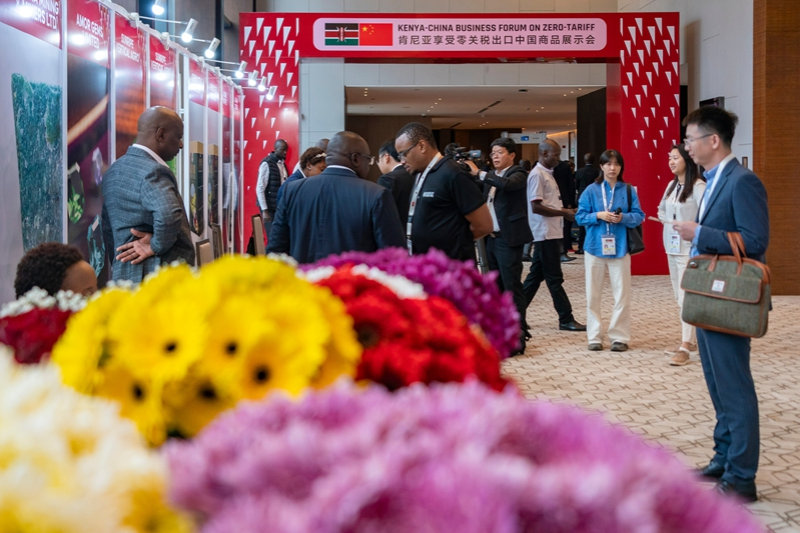
    Across Kenya’s vibrant agricultural export sector, anticipation has reached a fever pitch as May 1 approaches — the date when China will implement a sweeping zero-tariff policy covering a broad range of eligible African exports. Industry leaders and producers across the country are framing this policy shift as an unprecedented opportunity that could reshape long-standing trade dynamics between Africa and the world’s second-largest economy, opening access to a massive, fast-evolving consumer market that many had only partially tapped into before.

    On March 23, Kenya took its first formal step under the new framework, flagging off an inaugural zero-tariff consignment from the Standard Gauge Railway Nairobi Terminus. According to the country’s Ministry of Investments, Trade and Industry, the shipment included 54 containers loaded with fresh avocados, processed avocado oil, roasted Kenyan coffee, and green beans, bound for the Port of Mombasa before sailing for China. This symbolic departure marked the start of what many hope will be a new era of bilateral trade between the two nations.

    Joel Mwiti Kobia, managing director of Kenyan exporter Nutri Nuts and Fruits, noted that shifting consumer trends in China have already created ideal conditions for African agricultural products to thrive. China’s rapidly expanding middle class, driven by rising incomes, rapid urbanization, and growing public awareness of health and nutrition, is increasingly seeking out premium, nutrient-dense food products. “African products, often positioned as natural, organic, and sustainably sourced, are perfectly placed to meet this growing demand,” Kobia explained.

    Kobia’s own company has already seen explosive growth in Chinese demand for its products, even before the zero-tariff policy took effect. When Nutri Nuts and Fruits began exporting macadamia nuts to China in 2021, it shipped just one 16-metric-ton container. By 2025, annual exports had surged to 120 tons, a clear reflection of how quickly Chinese consumer appetite for Kenyan agricultural goods has grown. With import tariffs set to drop from 15 percent to zero, Kobia projects that exports will more than double again in the near term, potentially hitting 250 tons annually. Beyond boosting corporate revenue, he added, the growth will create new jobs in local processing facilities and raise household incomes for smallholder farmers across Kenya’s production belts.

    Margaret Njoki, head of commercial for fresh and frozen produce at Vertical Agro Group, echoed that optimism, particularly for Kenya’s fast-growing avocado sector. Her company became the first Kenyan firm to export frozen avocados to China in 2021, followed by fresh avocado shipments in 2022. What started as a cautious, small-scale entry into an unfamiliar new market has quickly transformed into a major growth stream, as Chinese demand for Kenyan avocados has skyrocketed over just a few years.

    Currently, Vertical Agro Group exports dozens of containers of avocados to China during peak production season, but Njoki said the real industry breakthrough will come once zero tariffs are implemented. “Right now, we compete with established suppliers from Peru and Mexico, but lower tariffs will let us offer more competitive pricing, allowing us to grow both the volume and quality of our exports to China,” she said. Like Kobia, she emphasized that the benefits will spread across the entire avocado value chain: more farmers will be incentivized to expand avocado production, creating new employment opportunities and lifting rural incomes across the country.

    Even Kenyan tea producers, who have long been sidelined from the Chinese market despite Kenya’s status as one of Africa’s largest tea exporters, are expressing newfound optimism. For decades, Kenya’s top tea export destinations have been European nations and South Asian markets such as Pakistan, with price competitiveness keeping most producers out of China’s large consumer market. That could soon change, according to Kelvin Mbugi of Kenya Tea Packers Limited.

    “Currently, we cannot meaningfully enter the Chinese market because our prices are not competitive,” Mbugu explained. “But with zero tariffs, we will not only be able to deliver our high-quality Kenyan tea — we will also gain a clear pricing advantage.” Kenyan tea exporters are already positioning specialty, health-focused teas to capture Chinese consumer interest: products such as antioxidant-rich purple tea and anti-aging marketed white tea align perfectly with the growing preference for wellness-oriented products among China’s middle class. While the market is still in early stages of development, Mbugi projects that annual Kenyan tea exports to China could gradually climb to 100 tons as consumer awareness grows.

    For larger established exporters such as Kenya Nut Company Limited, the zero-tariff policy opens the door to a strategic shift beyond low-margin bulk commodity exports, toward higher-value branded finished products. Currently, the company exports premium macadamia nuts, dried fruits, and coffee to major global markets, and executives say zero tariffs will make it easier to pursue strategic partnerships to build market share in China’s premium retail segment. Instead of shipping raw unprocessed produce, the company plans to focus on value-added goods such as roasted nuts, packaged healthy snacks, and specialty coffee — products tailored to meet the demands of China’s growing upscale consumer market.

    The opportunities created by the new policy are not limited to traditional food and agricultural exports either. Smaller manufacturers are already exploring entry into China with niche specialty products. Irene Nzovo, a producer of pet food including beef hide dog chews and camel-derived pet products, already has a strong foothold in European and U.S. markets, and said zero tariffs will remove a key barrier to scaling up supplies and reaching more Chinese customers.

    The zero-tariff policy covers 53 African countries that maintain diplomatic relations with China. By eliminating import duties, the framework is designed to deliver mutual benefits: it will lower retail prices for Chinese consumers while boosting the competitiveness of African goods and driving growth in African export volumes.

    Still, industry leaders have highlighted key steps Kenya must take to fully capitalize on the opportunity. Erick Rutto, president of the Kenya National Chamber of Commerce and Industry, emphasized that smallholder farmers and new exporters need targeted training to help them meet China’s strict sanitary and phytosanitary standards, which are required to access the Chinese market. Rutto also called for closer collaboration between the private sector and financial institutions, to make affordable financing accessible to exporters looking to scale up production and increase bulk export capacity.