分类: business

  • China-Laos mega power project put into operation

    China-Laos mega power project put into operation

    A landmark cross-border energy infrastructure partnership between China and Laos has reached a major milestone, with the 500-kilovolt China-Laos power interconnection project officially entering commercial operation on Monday, April 21, 2026. Developed to deepen bilateral energy cooperation, this new facility stands as the largest and highest-voltage cross-border power grid project ever constructed between the two neighboring nations.

    According to data released by China Southern Power Grid Lancang-Mekong International, the project delivers a transformative upgrade to bilateral energy exchange capacity. Prior to the launch of this new infrastructure, the maximum power transmission capacity between China and Laos stood at just 50,000 kilowatts. The newly commissioned project pushes this capacity to 1.5 million kilowatts — a 30-fold increase over the previous interconnection line.

    Beyond expanding capacity, the project is designed to facilitate large-scale cross-border exchange of clean energy. Project operators project that the interconnection will support the annual transmission of approximately 3 billion kilowatt-hours of low-carbon electricity between the two countries, helping to balance energy supply and demand while supporting decarbonization goals on both sides of the border.

    The project’s completion comes amid growing regional cooperation on energy infrastructure across the Lancang-Mekong region, where cross-border interconnection projects are increasingly seen as a tool to improve energy security, expand access to affordable clean power, and strengthen economic ties between participating nations.

  • Oil and stocks steady as US-Iran truce expiry looms

    Oil and stocks steady as US-Iran truce expiry looms

    Global financial markets traded in a narrow range on Tuesday, with crude oil prices dipping slightly and most equities posting modest gains, as investors clung to cautious optimism that Washington and Tehran would reach a breakthrough to de-escalate tensions and reopen the strategically critical Strait of Hormuz, even as a two-week truce is set to expire on Wednesday. As of Tuesday, Iran had not yet deployed a negotiating delegation to Pakistan, the venue for the new round of US-Iran peace talks, while the US side has confirmed it is ready to proceed with discussions, leaving Tehran’s participation in the negotiations unclear.

    The international benchmark Brent North Sea crude held largely steady after a sharp rally the previous session triggered by Iran’s temporary closure of the Strait of Hormuz, falling just 0.3 percent to $95.22 per barrel by 1330 GMT. US West Texas Intermediate crude similarly edged down 0.2 percent to $87.23 per barrel, with both benchmarks holding below the psychologically important $100 per barrel threshold that has historically stoked broad inflation fears.

    Equity markets painted a mixed but broadly upbeat picture across major global hubs. On Wall Street, all three main indices opened higher, with the Dow Jones Industrial Average rising 0.5 percent to 49,706.29 points, the S&P 500 gaining 0.2 percent to 7,125.89, and the Nasdaq Composite adding 0.3 percent to 24,467.29. The gains were supported by stronger-than-expected March retail sales data, which showed a 0.6 percent month-on-month rise even when stripping out volatile gasoline purchases, defying concerns that spiking energy costs would drag down consumer spending. In Europe, London’s FTSE 100 dipped 0.4 percent and Paris’ CAC 40 fell 0.5 percent, while Frankfurt’s DAX closed flat. Most major Asian markets finished the trading day higher: Japan’s Nikkei 225 gained 0.9 percent to close at 59,349.17, Hong Kong’s Hang Seng Index added 0.5 percent, and Shanghai’s Composite Index edged up 0.1 percent.

    Market analysts note that investors have so far refused to price in a worst-case scenario of intensified conflict, with widespread expectations that the current ceasefire will be extended beyond its Wednesday expiry. “There is a reluctance for investors to price in the worst-case scenario for the conflict in the Middle East, and there is optimism within the market that the US/Iran ceasefire will be extended,” explained Kathleen Brooks, research director at global trading group XTB.

    US President Donald Trump expressed confidence in the US’ negotiating position during a Tuesday interview with CNBC, as his administration prepared envoys for the Pakistan-hosted talks. The White House confirmed that Vice President JD Vance is prepared to return to Pakistan for the new round of negotiations aimed at ending the standoff, which has already driven crude prices higher and reignited global inflation concerns.

    Despite the market optimism, significant uncertainty remains over the outcome of the talks. Iran has already accused Washington of violating the fragile truce through its blockade of Iranian ports and seizure of an Iranian vessel, while Trump has similarly accused Tehran of truce violations over the harassment of commercial vessels transiting the Strait of Hormuz, the chokepoint that carries roughly one-fifth of all globally traded oil.

    Russ Mould, investment director at UK-based asset management firm AJ Bell, noted that while sub-$100 oil prices signal market optimism that conflict will not escalate, prolonged elevated prices carry significant economic risks. “However, the longer oil remains in the 90s (dollar per barrel) range… the higher the chance of an inflationary shock and a wobble to global economic activity,” Mould said.

    The solid March retail sales data has reinforced views of a resilient US consumer, a key pillar of American economic growth. “The data echoes what we heard from the big banks last week, with management teams largely pointing to a resilient consumer despite soaring gas prices and a barrage of geopolitically charged headlines,” said Bret Kenwell, US investment analyst at fintech platform eToro. Kenwell added that US stocks, which have already recovered all pre-conflict losses and are trading near record highs, reflect not just hopes for de-escalation in the Middle East but also growing optimism around upcoming corporate earnings. If US companies deliver solid first-quarter results, he said, it could reinforce investor confidence that the current market rally still has room to run.

    Beyond geopolitics, investors are also closely watching the confirmation hearings for Kevin Warsh, former Federal Reserve governor and US President Donald Trump’s nominee to lead the central bank. Warsh’s testimony is expected to offer clear signals about the future path of US interest rates, at a time when the world’s largest economy is navigating persistent inflation risks and slowing growth headwinds.

  • Iran war is turbocharging China’s Africa pivot

    Iran war is turbocharging China’s Africa pivot

    Against a backdrop of mounting global geoeconomic instability – driven by the second Donald Trump U.S. presidency and escalating hostilities in the Middle East – China’s evolving strategic approach to economic cooperation with Africa has grown increasingly critical for both sides. This strategic shift, which first began taking shape in 2019, is centered on a new investment-focused framework anchored in central China’s Hunan Province, developed to address longstanding flaws in earlier cooperation models and adapt to shifting domestic and global demands.

    The old Angola Model, which paired Chinese infrastructure construction in African nations for access to natural resource extraction, ran into significant sustainability challenges. Many African economies, inherently vulnerable to external market shocks, struggled to keep pace with growing debt repayment obligations under this framework. Simultaneously, shifting domestic economic priorities in China and rising trade barriers on traditional global trade routes pushed Beijing to pursue a new path. The country selected Hunan as the core implementation hub for this next era of China-Africa trade and development, giving rise to what analysts now call the Hunan Model. Its strategic importance grew further following the formal approval of the China-Africa Economic and Trade Deep Cooperation Pilot Zone in early 2024, building on the momentum of the China-Africa Economic and Trade Exhibition launched that same year.

    At its core, the Hunan Model aims to deepen balanced trade and industrial integration between China and African nations. It is designed to directly address three of the most persistent barriers to African development: chronic shortages of capital, skilled labor, and reliable infrastructure, while also providing China with a stable, expanding supply of critical natural resources.

    ### The Structural Framework of the Hunan Model
    The model is built around two flagship national policy initiatives: the China-Africa Economic and Trade Exhibition, and the integrated logistics, trade, and investment system of the China-Africa Economic and Trade Deep Cooperation Pilot Zone, which is designed to align Chinese and African supply chains for mutually beneficial development.

    Hunan’s capital city Changsha hosts China’s third-largest wholesale market, the Gaoqiao Grand Market, which serves as the primary distribution hub for non-commodity imports from Africa. The market operates expedited “green lanes” that speed African exports to Chinese consumers, and hosts a permanent trade facilitation hall where African nations can directly showcase their goods and access targeted trade support services.

    To connect landlocked Hunan to global markets with a focus on African trade, the model leverages three geographically focused functional hubs:
    1. The Changsha Free Trade Airport Zone, a national airfreight hub that added the direct Changsha-Addis Ababa cargo route in 2022 to expand direct connectivity between China and East Africa.
    2. Yueyang Chenglingji Port, which links Hunan’s heavy industrial sectors – including timber processing and machinery manufacturing – to global shipping routes via the Yangtze River.
    3. The Changsha Jinxia Economic Zone, which supports combined sea-rail trade corridors from Hunan to southern China’s Guangdong province, before goods continue onward to Africa.

    Five specialized industry clusters drive targeted trade, investment, and industrial development across both regions, focusing on sectors where Hunan already holds strong competitive advantages that align with African industrialization goals. Key sectors include construction machinery, mining equipment, and precious metals processing. Beyond the permanent exhibition space in Changsha, the China-Africa Economic and Trade Exhibition now hosts regular expos in both China and African nations, with events already launched in key African economies including Kenya and Nigeria in recent years.

    ### Global Shocks Accelerate the Model’s Expansion
    Analyst Lauren Johnston, an associate professor at the University of Sydney’s China Studies Centre who has studied China-Africa trade relations for years, argues that recent geopolitical shocks – particularly the ongoing Middle East tensions and their cascading global economic disruptions – are speeding two key Chinese policy shifts that play directly to the Hunan Model’s strengths: China’s accelerated transition to renewable energy and economy-wide electrification, and its push to open new emerging markets for Chinese goods. Both shifts carry profound implications for Africa.

    Already, the second Trump presidency and escalating U.S.-China trade tensions have boosted the Hunan Model’s importance. As Western markets have grown increasingly restrictive for Chinese exports, China has rapidly pivoted toward deeper economic engagement with the Global South, and Africa has been a major beneficiary. In 2025, while China’s total global foreign trade grew by just 3.8%, bilateral China-Africa trade surged by 17.7%.

    Disruptions to global energy supply chains from Middle East hostilities are only intensifying China’s push for renewables and electrification. That has driven skyrocketing global demand for electric vehicle (EV) technology – and Hunan is home to one of the world’s largest EV manufacturers, Chinese giant BYD. Hunan’s central role in China’s domestic renewables industry, from electric mobility to critical minerals processing and infrastructure construction, positions the Hunan Model to lead a new renewable-powered phase of China-Africa cooperation.

    This shift is already visible in trade data: In 2025, the fastest growing segment of Changsha’s exports to Africa was the so-called “new three items” – lithium batteries, electric vehicles, and photovoltaic products. Year-on-year, Hunan’s exports of these goods to Africa jumped 160.4%, 840.4%, and 62.1% respectively, earning them the status of a new calling card for Hunan’s trade with the continent. Beyond EV maker BYD, Hunan is also headquarters for rail giant CRRC, which is leading a surge in exports of green electric railway infrastructure to African nations. Following recent supply disruptions linked to Middle East tensions, China also announced plans to establish a new national rare minerals research and innovation hub in Changsha, further strengthening Hunan’s position in critical global supply chains.

    ### Addressing Remaining Risks for Mutually Beneficial Growth
    While the Hunan Model represents a clear improvement over older extraction-focused frameworks, and prioritizes reducing non-tariff barriers to balanced trade, notable risks remain. The divergent growth rates of bilateral trade – China’s exports to Africa rose 17.7% in 2025, while African exports to China grew by just 5.4% – highlights a growing trade imbalance that needs to be addressed to ensure long-term sustainability.

    For long-term inclusive growth, African nations and sub-regions need to build out their own domestic industrial supply chains, following the path China took when it attracted foreign investment to build its own industrial base. While the Hunan Model already supports a research alliance of Chinese scholars and industry experts to guide its development, African nations need to develop equivalent local research and governance capacity to shape cooperation on their own terms.

    In an era of repeated global economic shocks that have upended traditional trade and growth frameworks, the Hunan Model is no longer just an experimental policy idea. It is already driving tangible economic transformation across China and Africa, and carries significant potential for shared, sustained growth for both regions in the decades ahead.

  • Rise in pet ownership creates economic opportunities

    Rise in pet ownership creates economic opportunities

    Driven by shifting generational attitudes that position pets as beloved family members rather than simple companions, China’s pet sector is undergoing rapid expansion, with cities in northern Shanxi province emerging as a key example of the industry’s evolution beyond basic retail into a diversified, professionalized ecosystem.

    Across Taiyuan, the provincial capital of Shanxi, this growing demand for high-quality pet care has spawned a wave of new specialized services, ranging from standardized in-home pet sitting and high-speed rail pet transport to advanced veterinary care for aging animals. One of the professionals at the heart of this booming market is Chen Hong, a 40-year-old full-time in-home pet sitter who turned her years of personal pet ownership experience into a full-time career last winter.

    During a recent service call, Chen followed strict industry hygiene protocols: putting on disposable shoe covers and gloves, and spraying disinfectant throughout the entryway before entering the client’s home, where two friendly cats immediately greeted her with affectionate attention. As she played gently with the animals, Chen explained the core driver of rising demand for her work. “More and more people consider their pets as family members and emotional anchors, ” she said. “As a result, pet owners are increasingly demanding higher quality services that put their pets’ comfort first.”

    Chen’s work focuses on supporting pet owners who travel for work or leisure, providing in-home services that include feeding, litter box cleaning, and dedicated playtime. On an average day, she travels between Taiyuan’s residential communities to complete five to six appointments, with peak demand during national holiday seasons pushing her daily schedule to more than a dozen bookings.

    Chen’s career transition mirrors a much larger national trend, as skyrocketing pet ownership across China creates thousands of new professional roles and opens up major new economic opportunities. Data from the 2026 China Pet Industry White Paper underscores the scale of this growth: urban China is now home to nearly 126 million pet dogs and cats, pushing the national pet industry market size to 312.6 billion yuan, equivalent to roughly $45.5 billion. Industry forecasts project that total consumer spending on pet-related products and services will climb to 405 billion yuan by 2028.

    Unlike traditional pet boarding facilities that require owners to leave their animals at an off-site location, in-home pet sitting aligns far better with pets’ natural routines and reduces the stress animals often experience when separated from their owners in unfamiliar environments. That benefit has made the service increasingly popular among younger pet owners like Zhang Zining, a 28-year-old Taiyuan resident who owns an Abyssinian cat. Zhang says she always books in-home sitting services whenever she plans to travel for more than two days, citing the peace of mind it gives her knowing her pet is comfortable in its own home.

    Local authorities in Shanxi have also moved to standardize this fast-growing sector, introducing formal guidelines to ensure service quality and consumer protection, laying the groundwork for the pet economy’s sustained long-term growth across the region.

  • Stable grain output, lower soybean imports forecast for nation in 2026

    Stable grain output, lower soybean imports forecast for nation in 2026

    Against a backdrop of rising global food security uncertainties fueled by geopolitical turbulence, a landmark long-term agricultural outlook report released Monday projects that China will record a modest but steady uptick in domestic grain output in 2026, while seeing the first decline in imports of major agricultural commodities – most notably soybeans – in recent years.

    The *China Agricultural Outlook (2026-2035)*, compiled by the agricultural market analysis and early-warning team under China’s Ministry of Agriculture and Rural Affairs, forecasts total national grain production will hit 716 million metric tons this year, a 0.2% year-on-year increase. Oilseed output is also set for stronger growth, projected to rise 2.6% to 42.04 million tons. The expansion is driven by consistent improvements in crop productivity, with average national grain yields expected to cross the 6,000 kilograms per hectare threshold in 2026.

    “Large-scale improvements in crop productivity will continue to support a stable grain supply,” noted Xu Shiwei, head of the Ministry of Agriculture and Rural Affairs’ key laboratory of agricultural monitoring and early warning technology. Alongside rising domestic output, the report forecasts a pullback in imports of several major agricultural goods, paired with ongoing growth in exports of China’s competitive agricultural products. Xu confirmed that soybean imports will fall 6.1% year-on-year in 2026, marking the first drop for that metric in recent years. Pork imports are projected to decline 8.2%, while dairy imports will see a 4.1% decrease, per the report.

    At the same time, exports of high-demand Chinese agricultural products are on track to expand: vegetable exports are forecast to grow 6.4% in 2026, and fruit exports are set to rise 5%. Even with the projected decline in some import volumes, the report stresses that global agricultural markets will remain a critical supplement to China’s domestic supply, noting that imports of goods including poultry are still expected to increase this year.

    The report comes as global agricultural markets face mounting headwinds from global geopolitical instability. Li Ganqiong, head of the agricultural monitoring and early-warning research center at the Chinese Academy of Agricultural Sciences, pointed out that rising geopolitical risks – including ongoing conflict in the Middle East – have driven up global oil prices, fertilizer costs and shipping expenses, creating greater uncertainty for global agricultural production and trade. “These factors could heighten risks to global food security,” Li said, adding that shoring up domestic agricultural production remains the most critical strategy for buffering against external volatility.

    Beyond 2026, the report outlines a decades-long trajectory of steady growth for China’s agricultural sector. Total national grain output is projected to climb gradually to 733 million tons by 2030 and 753 million tons by 2035, with average grain yields per hectare expected to rise 6.3% over the next 10 years. On the demand side, national grain consumption is forecast to grow slowly before peaking at 842 million tons around 2032, after which it will stabilize and enter a gradual decline.

    As domestic productivity improves and China’s agricultural goods gain stronger global competitiveness, the country’s reliance on imports for major agricultural commodities will continue to decrease over the long term, Xu explained. By 2035, total grain imports are projected to drop to 115 million tons, a 25.5% reduction from the 2023-2025 average. Soybean imports are set to fall to 82.55 million tons by 2035, a 21.5% drop from current average levels.

    Other agricultural sectors are also set for structural adjustment and steady growth. The Chinese dairy industry will continue expanding, with domestic milk production projected to reach 45.07 million tons by 2030 and 51.17 million tons by 2035, for an average annual growth rate of 2%. This growth aligns with shifting domestic consumer demand: the report notes rising demand for fresh milk, alongside growing use of cheese and butter in beverages and baked goods across China.

    For the pork sector, the report forecasts a gradual output decline over the next decade, as the industry transitions from a period of rapid expansion to a focus on higher-quality, more efficient production. By 2035, pork output is projected to reach 55.11 million tons, with an average annual decline of roughly 0.5%.

    First launched in 2014, the annual China Agricultural Outlook report has become a core authoritative platform for evaluating China’s agricultural trends, supporting more accurate market forecasting and guiding evidence-based policy planning, the Ministry of Agriculture and Rural Affairs said.

  • Australian shares stall as investors await outcome of US-Iran ceasefire talks

    Australian shares stall as investors await outcome of US-Iran ceasefire talks

    On Tuesday, Australian equity markets settled into a cautious holding pattern, with benchmark indices closing nearly unchanged as investors paused major moves ahead of a key Middle East ceasefire expiration set for Wednesday’s trading open. The benchmark S&P/ASX 200 slid a marginal 3.9 points, a 0.04% dip, to close at 8949.4, while the wider All Ordinaries index gained a matching fractional 0.03%, adding 3.1 points to finish the session.

    The day began with an early upward push for stocks, but those initial gains evaporated as market participants braced for potential volatility linked to the pending expiration of the ceasefire between the United States and Iran. Industry analyst Tony Sycamore of trading firm IG flagged the Wednesday opening bell as a critical juncture for the local market, noting that the timing of the deadline could spark sharp price swings in early trading when markets reopen.

    Sycamore explained that Tuesday’s muted session followed modest overnight declines on major U.S. equity markets, where resurfaced geopolitical tensions between the U.S. and Iran interrupted a multi-day winning streak for major American indices. He added that the relatively muted declines seen in both U.S. and Australian markets stem from a balancing act among traders: they are pricing in the new geopolitical risk while holding out hope that diplomatic negotiations will result in an extended or even permanent ceasefire agreement.

    Six of the 11 tracked sectors on the ASX 200 closed in positive territory on Tuesday. Consumer staples led all gainers with a 0.67% uplift, while the energy sector was the session’s weakest performer, dropping 1.03% overall. The decline in energy stocks aligned with a recent pullback in global crude prices: Brent Crude has fallen more than 5% over the past month and dipped below the $95 per barrel threshold.

    Among individual energy names, Viva Energy recovered 0.87% to close at $2.32, rebounding slightly from a steep drop in the prior session that came after a fire broke out at the company’s Geelong refinery during its first day of trading post-incident. By contrast, major oil and gas producer Woodside Energy fell 1.76% to $31.21, and competitor Santos lost 1.46% to close at $7.44.

    Australia’s big four national banks delivered a mixed performance, matching the market’s overall flat tone. National Australia Bank gained 0.46% to close at $41.21, and Westpac Banking Corporation rose 0.57% to finish at $40.25, putting both in positive territory. On the losing side, Commonwealth Bank of Australia slipped 0.32% to $179.58, and Australia and New Zealand Banking Group dropped 1.71% to close at $37.28.

    Some individual stocks posted strong gains on the back of positive corporate news. Vulcan Energy climbed 6.5% to $3.76 after announcing a €40 million engineering services agreement with Siemens for its planned lithium and renewable energy project. Counter-drone technology firm Droneshield rose 5.54% to close at $3.81.

    On the downside, investment platform HUB24 slid 8.33% to $87.50 following the release of its third-quarter operational update. Medical technology firm 4DMedical pulled back 6.15% to $5.34 in its first session as an official constituent of the ASX 200 index. Even with the pullback, long-term shareholders in 4DMedical have little cause for concern: the stock has posted a gain of more than 1800% over the past 12 months.

  • Jetstar axes number of New Zealand flights by 12 per cent as soaring fuel costs continue to bite

    Jetstar axes number of New Zealand flights by 12 per cent as soaring fuel costs continue to bite

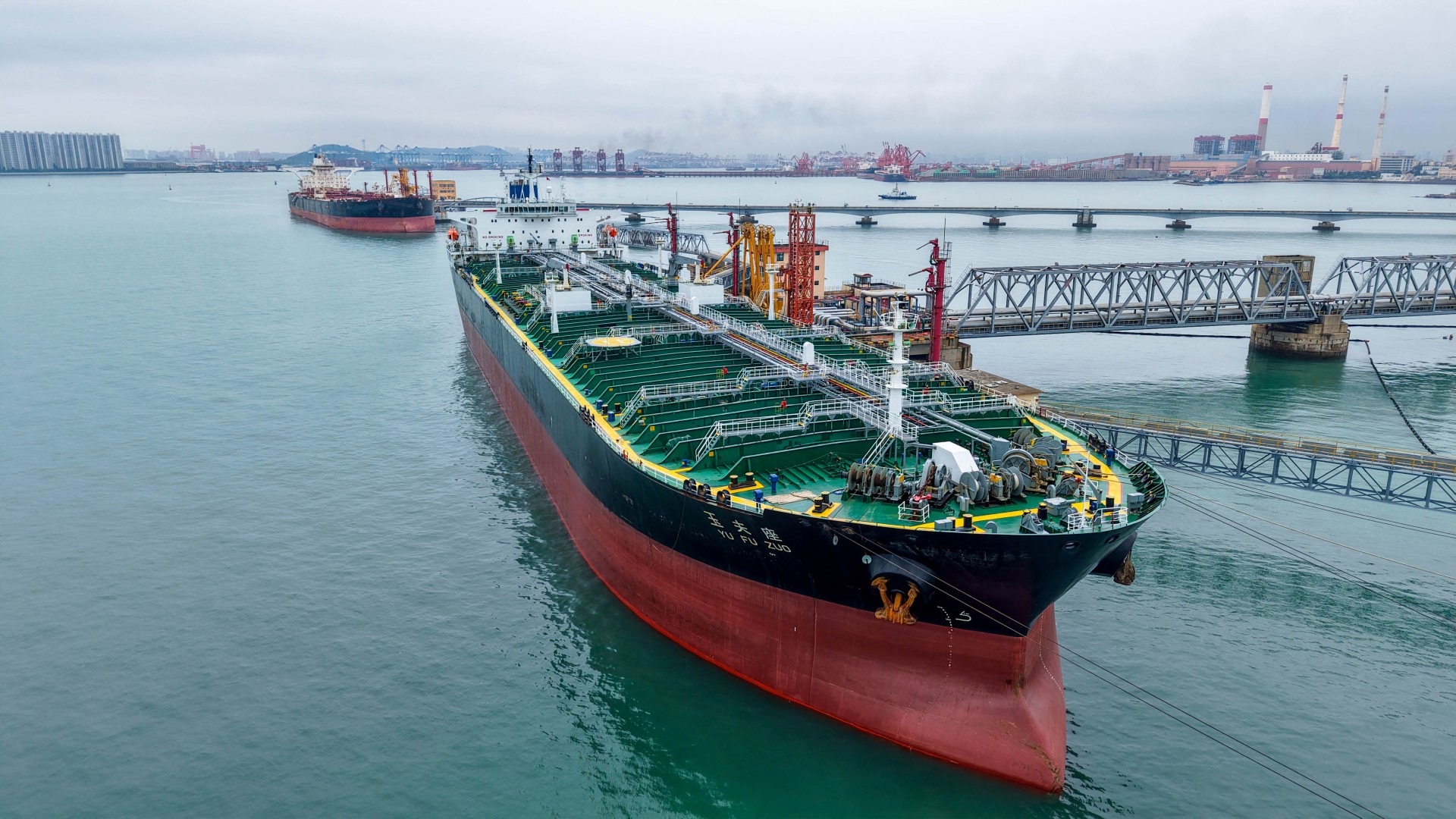
    Skyrocketing jet fuel costs, triggered by the effective closure of the Strait of Hormuz seven weeks ago, have forced Australian budget carrier Jetstar and its parent company Qantas to slash thousands of flights across Australia and New Zealand through the end of June, with New Zealand domestic routes bearing the brunt of the cuts. New data compiled by aviation industry publication AeroRoutes details the scale of the capacity cuts between May 18 and June 30, revealing stark disparities in how the reductions impact different regions. Jetstar is trimming just 2.7% of its domestic Australian flight capacity over the period, bringing total scheduled services to 10,237, while cutting 12% of its domestic New Zealand operations, dropping total flights to just 1,564 – a relative cut more than four times larger than the cuts to Australian domestic routes. The deep cuts to New Zealand domestic capacity mean local travelers will face far greater disruption than their Australian counterparts. For trans-Tasman routes connecting Australia and New Zealand, the largest reductions are concentrated on services running to and from Auckland and Christchurch, both operating out of Australia’s Gold Coast. On Australian domestic routes, two planned services have been pushed back or cancelled entirely: the scheduled June 17 resumption of Gold Coast to Darwin flights has been delayed until October, and all Sydney to Busselton (Western Australia) services are scrapped between June 1 and September 21. Across the entire seven-week cut period in Australia, most Jetstar routes see fewer than five cancelled trips per route, but domestic New Zealand sees far larger cuts to key intercity routes: 55 Auckland to Christchurch flights are axed, dropping total scheduled services to 310, and 53 Auckland to Wellington trips are removed from the schedule, leaving 142 remaining flights. Qantas, Jetstar’s parent company, has also implemented its own capacity cuts, trimming 3.6% of its total scheduled flights in the same May 18 to June 30 window. Qantas’s cuts fall most heavily on busy domestic trunk routes: 43 Brisbane to Melbourne flights, 31 Melbourne to Brisbane flights, 23 Melbourne to Adelaide flights, 27 Perth to Sydney flights, 50 Sydney to Brisbane flights, and 76 Sydney to Melbourne flights have all been cancelled. The root cause of the capacity pullback is a historic surge in jet fuel prices, that has seen costs for buyers in Asia and Oceania jump as much as 150% since the Strait of Hormuz, a critical global energy chokepoint, was closed seven weeks ago. Last week, Qantas issued a formal update to the Australian Securities Exchange (ASX) warning that its total fuel bill for the second half of the 2024 financial year would be between $600 million and $800 million higher than initial projections. The steep rise in fuel costs comes even as the airline group’s core profitability metric, revenue per passenger kilometre, continues to climb as carriers push through higher ticket prices to offset growing costs. Neither Jetstar nor Qantas has issued a public statement responding to questions about the new capacity cut details from AeroRoutes. The widespread cuts highlight how global energy market disruptions are directly impacting regional aviation capacity across Oceania, putting additional pressure on travelers already facing rising airfares.

  • Inside the world of ultra-luxury wedding cakes

    Inside the world of ultra-luxury wedding cakes

    When A-list celebrity Jennifer Lopez took the stage at a star-studded Indian wedding last November, few expected the highlight of the evening to be anything but her performance. But in a lavish celebration for 500 guests in Udaipur, it was a towering, meters-tall multi-tiered cake, inspired by traditional Rajasthani architecture, that captured the attention of attendees and dominated subsequent media coverage. The architect of this edible masterpiece? 34-year-old French celebrity pastry chef Bastien Blanc-Tailleur, whose custom creations occupy the same rarefied space in confectionery that haute couture holds in global fashion — one-of-a-kind, handcrafted, and accessible only to clients willing to make extraordinary investments of time and money.

    Speaking to AFP from his studio just outside Paris, where five of his latest edible sculptures sat on display, Blanc-Tailleur notes that his studio rarely takes on weddings with a total cake budget under one million euros. The November wedding, which united billionaire heiress Netra Mantena and tech entrepreneur Vamsi Gadiraju, carried a total reported price tag of $6.7 million, with Lopez reportedly earning $2 million for her 30-minute set. While the chef declines to disclose exact pricing for individual projects, he confirms that his most modest custom creations start at €20,000 ($23,500), and his most elaborate signature pieces cost multiple times that entry point.

    For the Udaipur event, the order included five separate cakes: the showstopping centerpiece decorated with cascading sugar orchids, hand-sculpted sugar elephants and domed pavilion structures crafted from white sugar paste, two additional cakes for the couple’s families, and two more designed to be lowered from the venue’s ceiling for display. In total, the project required an estimated 3,500 hours of labor from the team. “We probably hit the top limit of what we’re capable of,” Blanc-Tailleur says, adding that the Indian commission remains one of the projects he is most proud of.

    Blanc-Tailleur’s craft draws on centuries-old French pastry traditions that date back to the 1700s, before spreading to Britain and the Americas. But his exclusive art form relies entirely on patronage from the global ultra-wealthy, including Middle Eastern royals, wealthy American heirs and European aristocrats, who all compete for his limited availability. With a full-time staff of only 10 people, his studio can produce just 20 to 25 custom cakes per year, leading to waitlists that stretch for months.

    In recent months, regional geopolitical unrest has upended the carefully laid plans of many of his clients. The US-Israeli attack on Iran on February 28, which sparked widespread conflict across the Middle East, has forced dozens of couples to reschedule their events. “Lots of weddings have been pushed back to next year or the year after,” he explains. “Several clients who were going to get married in Israel or in Lebanon or in Saudi Arabia have changed and are going to get married in France instead.”

    Geopolitical uncertainty is far from the only challenge Blanc-Tailleur has faced in the eight years since he launched his independent business. The 2020-2021 Covid-19 pandemic shut down large-scale events globally, forcing him to pivot to smaller projects to keep his team employed. Even in stable times, transporting his fragile, intricate creations to ultra-luxury venues across the globe carries constant risk. For the Udaipur wedding, last-minute logistical complications left the team scrambling to source fresh local eggs and butter for the cake’s base just days before the event. “Right up until the last minute we were not sure we were able to deliver the project in the best way,” he says. On another occasion, an overzealous customs official in Saudi Arabia opened the custom shock-absorbent packaging designed to protect the cake in transit, but failed to reseal the boxes properly, leaving the delicate icing damaged and requiring on-site repairs just hours before the reception.

    Blanc-Tailleur’s path to becoming one of the world’s most exclusive wedding cake designers began as a teenage baking apprentice. By his late twenties, he had worked his way up to kitchen management roles at Paris’ iconic Four Seasons George V hotel, before joining the team of legendary French chef Yannick Alleno, who holds 18 Michelin stars across his global restaurant portfolio. It was from Alleno that Blanc-Tailleur says he retained his core creative philosophy: “He used to say that when you’re thinking about a project, you shouldn’t think about how you’re going to do it. Otherwise, you limit yourself in the creative process.”

    True to that ethos, Blanc-Tailleur still hand-draws every design by hand on plain white card, rejecting artificial intelligence-generated designs and hyper-realistic digital renderings that he says rob clients of the joy of discovering the finished cake in person. A lifelong collector of natural curiosities and vintage trinkets — including butterflies, seashells, rough stones, and hand-carved wooden figurines sourced from flea markets across Europe — he has amassed a collection of between 2,000 and 3,000 custom molds to craft prototypes and the intricate icing decorations that define his work. Every detail is tailored to the couple’s vision: “The flowers are the bit that take the most time,” he says, with roses, orchids, and hydrangeas all built from hand-sculpted layers of icing to match the mood board provided by the wedding planner.

    The demands of running his exclusive business leave Blanc-Tailleur with almost no personal time. He attends nearly every one of his clients’ weddings to oversee setup and delivery, requiring constant international travel that keeps him on the road for weeks at a time. In a rare personal aside, he confides that he has been engaged for four years, but has yet to set a date for his own wedding — fitting proof that for the world’s most in-demand luxury cake designer, serving his elite clients always comes first.

  • Exploring global goods at Linyi RCEP expo

    Exploring global goods at Linyi RCEP expo

    On April 20, 2026, one of East Asia’s most anticipated regional trade events kicked off at the Linyi International Expo Center: the fifth iteration of the RCEP (Shandong) Import Expo. This year’s gathering has drawn participation from more than 400 international product suppliers and over 5,300 domestic and overseas buyers, marking one of the largest and most high-profile editions of the expo since its launch.

    Running for three days, the exhibition space is organized into 18 dedicated national pavilions spanning a total of 1,200 individual booths, showcasing a vast, diverse assortment of goods sourced from markets across the globe. China Daily Website’s foreign expert Douglas Dueno is on-site to guide audiences through the wide range of international products on display, highlighting the expo’s role in bringing global merchandise directly to Chinese and regional buyers.

    Conceived as a strategic platform to advance trade cooperation under the Regional Comprehensive Economic Partnership agreement, the expo fills a key niche in strengthening cross-border connectivity between RCEP member economies and global trading partners. By bringing international suppliers face-to-face with bulk and retail buyers from China and beyond, the event fosters new commercial partnerships, expands market access for imported goods, and reinforces Linyi’s growing reputation as a vital hub for regional trade in northern China.

  • Lanzhou lily takes nine years to grow, expands into global markets

    Lanzhou lily takes nine years to grow, expands into global markets

    In a sunbaked, freshly harvested field on the outskirts of Lanzhou, the capital of northwestern China’s Gansu province, 54-year-old veteran lily farmer Jin Yougang kneels in dark loamy soil, gently prying apart a plump, ivory-hued bulb he has just unearthed. “This isn’t the bitter ornamental lily most people know,” Jin explains, brushing flecks of dirt from the layered scales. “Lanzhou lily is naturally sweet — crisp enough to eat fresh, just like a piece of fruit.”

    Jin makes his home in Agan Town, Qilihe District, a region celebrated as the most ecologically ideal growing area for this unique crop, which thrives in the district’s cool, well-drained loess soil and dramatic diurnal temperature shifts. In 2025 alone, Qilihe District’s total Lanzhou lily output hit 33,000 metric tons, with a total output value reaching 1 billion yuan, equal to roughly $140 million.

    Widely acclaimed as the only naturally sweet edible lily in China — and potentially the entire world — the Lanzhou lily’s one-of-a-kind flavor and delicate texture come at a remarkable cost of time. Unlike common agricultural crops that reach maturity in a single growing season, the journey from a tiny bulblet to a harvest-ready, full-sized Lanzhou lily takes up to nine full years. Local growers summarize this patient process in a simple proverb: “Three years to sprout, three years to grow, three years to mature.”

    With more than four centuries of documented cultivation history rooted in local agricultural tradition, the Lanzhou lily has evolved far beyond a small regional specialty. Today, it has grown into a robust, multi-billion-yuan industry that sustains the livelihoods of tens of thousands of rural farming households across Gansu. A wide range of value-added products — from dried lily slices for traditional Chinese cuisine to lily-infused health supplements and snacks — have pushed the total national market value of the Lanzhou lily industry over 6.1 billion yuan, according to new data from the Qilihe District Agricultural Industrialization Office. What is more, the premium crop has expanded beyond China’s borders, finding loyal consumers in export markets including Japan, South Korea, the United States, and multiple countries across Southeast Asia, as international demand for unique, high-quality Chinese agricultural goods continues to climb.

    Yet alongside growing global demand and rising market opportunities, the industry faces pressing structural challenges. Decades of reliance on traditional propagation methods have led to gradual variety degradation, with bulbs accumulating pathogens over generations that drag down both product quality and overall crop yield. To address these bottlenecks and support the industry’s long-term growth, local agricultural experts have turned to cutting-edge propagation technology to revitalize the iconic crop.

    “Through lab-based propagation techniques such as virus-free seedling cultivation, we remove harmful pathogens from Lanzhou lily germplasm, then purify and rejuvenate the stock to restore the crop’s natural vitality,” explained Li Bin, a senior agronomist at the Qilihe District Agricultural Technology Extension Station. “This process improves overall bulb quality and lays a solid foundation for the industry’s shift toward high-end, value-focused development.”

    Li added that researchers are combining both sexual and asexual breeding strategies, paired with rapid propagation protocols, to systematically upgrade the Lanzhou lily variety. “By integrating these different methods, our goal is to build a far more stable and efficient cultivation system that meets the needs of large-scale commercial production,” he said.

    Most notably, optimized propagation systems could cut the crop’s notoriously long growing cycle from nine years down to approximately six — without sacrificing the signature sweetness and dense nutritional profile that makes Lanzhou lily so sought-after. “Our ultimate goal is to leverage agricultural technology to boost both quality and productivity,” Li noted. “That means higher incomes for local farmers, and a consistent, premium product for consumers around the world.”