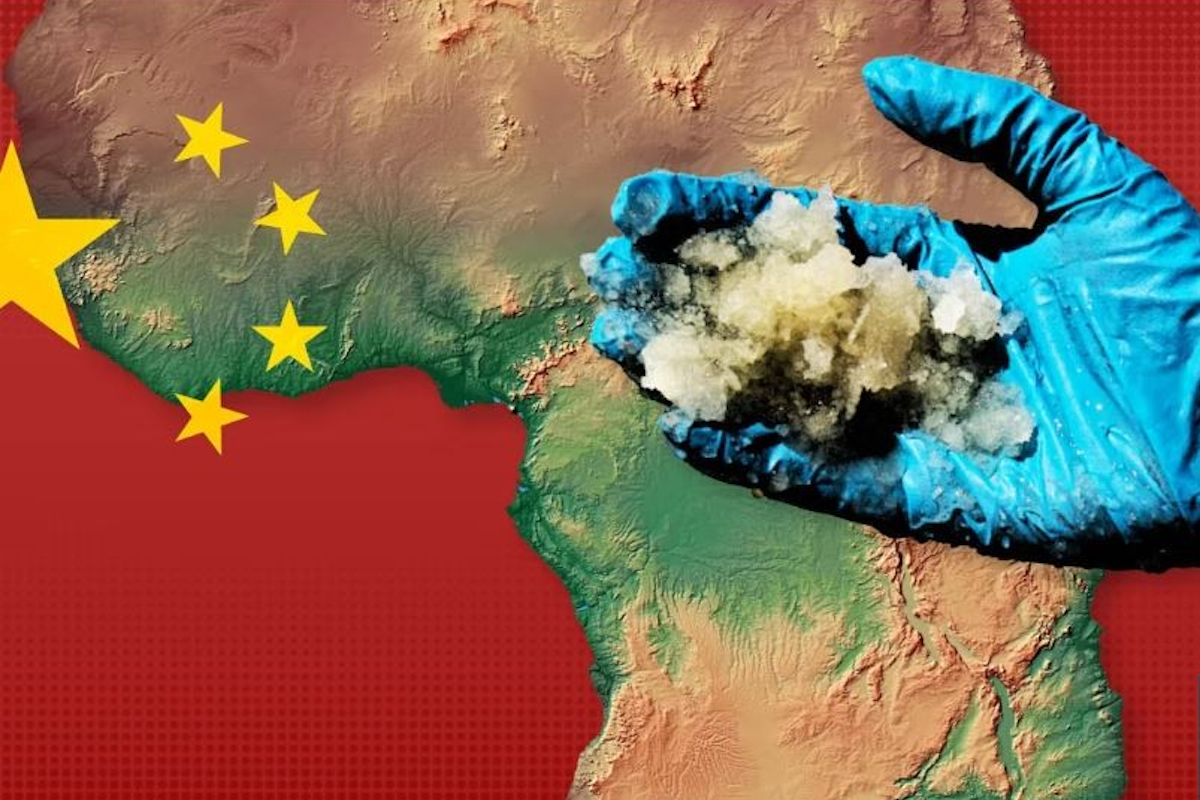
Against a backdrop of mounting global geoeconomic instability – driven by the second Donald Trump U.S. presidency and escalating hostilities in the Middle East – China’s evolving strategic approach to economic cooperation with Africa has grown increasingly critical for both sides. This strategic shift, which first began taking shape in 2019, is centered on a new investment-focused framework anchored in central China’s Hunan Province, developed to address longstanding flaws in earlier cooperation models and adapt to shifting domestic and global demands.
The old Angola Model, which paired Chinese infrastructure construction in African nations for access to natural resource extraction, ran into significant sustainability challenges. Many African economies, inherently vulnerable to external market shocks, struggled to keep pace with growing debt repayment obligations under this framework. Simultaneously, shifting domestic economic priorities in China and rising trade barriers on traditional global trade routes pushed Beijing to pursue a new path. The country selected Hunan as the core implementation hub for this next era of China-Africa trade and development, giving rise to what analysts now call the Hunan Model. Its strategic importance grew further following the formal approval of the China-Africa Economic and Trade Deep Cooperation Pilot Zone in early 2024, building on the momentum of the China-Africa Economic and Trade Exhibition launched that same year.
At its core, the Hunan Model aims to deepen balanced trade and industrial integration between China and African nations. It is designed to directly address three of the most persistent barriers to African development: chronic shortages of capital, skilled labor, and reliable infrastructure, while also providing China with a stable, expanding supply of critical natural resources.
### The Structural Framework of the Hunan Model
The model is built around two flagship national policy initiatives: the China-Africa Economic and Trade Exhibition, and the integrated logistics, trade, and investment system of the China-Africa Economic and Trade Deep Cooperation Pilot Zone, which is designed to align Chinese and African supply chains for mutually beneficial development.
Hunan’s capital city Changsha hosts China’s third-largest wholesale market, the Gaoqiao Grand Market, which serves as the primary distribution hub for non-commodity imports from Africa. The market operates expedited “green lanes” that speed African exports to Chinese consumers, and hosts a permanent trade facilitation hall where African nations can directly showcase their goods and access targeted trade support services.
To connect landlocked Hunan to global markets with a focus on African trade, the model leverages three geographically focused functional hubs:
1. The Changsha Free Trade Airport Zone, a national airfreight hub that added the direct Changsha-Addis Ababa cargo route in 2022 to expand direct connectivity between China and East Africa.
2. Yueyang Chenglingji Port, which links Hunan’s heavy industrial sectors – including timber processing and machinery manufacturing – to global shipping routes via the Yangtze River.
3. The Changsha Jinxia Economic Zone, which supports combined sea-rail trade corridors from Hunan to southern China’s Guangdong province, before goods continue onward to Africa.
Five specialized industry clusters drive targeted trade, investment, and industrial development across both regions, focusing on sectors where Hunan already holds strong competitive advantages that align with African industrialization goals. Key sectors include construction machinery, mining equipment, and precious metals processing. Beyond the permanent exhibition space in Changsha, the China-Africa Economic and Trade Exhibition now hosts regular expos in both China and African nations, with events already launched in key African economies including Kenya and Nigeria in recent years.
### Global Shocks Accelerate the Model’s Expansion
Analyst Lauren Johnston, an associate professor at the University of Sydney’s China Studies Centre who has studied China-Africa trade relations for years, argues that recent geopolitical shocks – particularly the ongoing Middle East tensions and their cascading global economic disruptions – are speeding two key Chinese policy shifts that play directly to the Hunan Model’s strengths: China’s accelerated transition to renewable energy and economy-wide electrification, and its push to open new emerging markets for Chinese goods. Both shifts carry profound implications for Africa.
Already, the second Trump presidency and escalating U.S.-China trade tensions have boosted the Hunan Model’s importance. As Western markets have grown increasingly restrictive for Chinese exports, China has rapidly pivoted toward deeper economic engagement with the Global South, and Africa has been a major beneficiary. In 2025, while China’s total global foreign trade grew by just 3.8%, bilateral China-Africa trade surged by 17.7%.
Disruptions to global energy supply chains from Middle East hostilities are only intensifying China’s push for renewables and electrification. That has driven skyrocketing global demand for electric vehicle (EV) technology – and Hunan is home to one of the world’s largest EV manufacturers, Chinese giant BYD. Hunan’s central role in China’s domestic renewables industry, from electric mobility to critical minerals processing and infrastructure construction, positions the Hunan Model to lead a new renewable-powered phase of China-Africa cooperation.
This shift is already visible in trade data: In 2025, the fastest growing segment of Changsha’s exports to Africa was the so-called “new three items” – lithium batteries, electric vehicles, and photovoltaic products. Year-on-year, Hunan’s exports of these goods to Africa jumped 160.4%, 840.4%, and 62.1% respectively, earning them the status of a new calling card for Hunan’s trade with the continent. Beyond EV maker BYD, Hunan is also headquarters for rail giant CRRC, which is leading a surge in exports of green electric railway infrastructure to African nations. Following recent supply disruptions linked to Middle East tensions, China also announced plans to establish a new national rare minerals research and innovation hub in Changsha, further strengthening Hunan’s position in critical global supply chains.
### Addressing Remaining Risks for Mutually Beneficial Growth
While the Hunan Model represents a clear improvement over older extraction-focused frameworks, and prioritizes reducing non-tariff barriers to balanced trade, notable risks remain. The divergent growth rates of bilateral trade – China’s exports to Africa rose 17.7% in 2025, while African exports to China grew by just 5.4% – highlights a growing trade imbalance that needs to be addressed to ensure long-term sustainability.
For long-term inclusive growth, African nations and sub-regions need to build out their own domestic industrial supply chains, following the path China took when it attracted foreign investment to build its own industrial base. While the Hunan Model already supports a research alliance of Chinese scholars and industry experts to guide its development, African nations need to develop equivalent local research and governance capacity to shape cooperation on their own terms.
In an era of repeated global economic shocks that have upended traditional trade and growth frameworks, the Hunan Model is no longer just an experimental policy idea. It is already driving tangible economic transformation across China and Africa, and carries significant potential for shared, sustained growth for both regions in the decades ahead.