分类: business

  • UAE investors view China as an attractive market

    UAE investors view China as an attractive market

    At a bilateral China-UAE business promotion convened in Beijing this week, senior business leaders and industry experts from the United Arab Emirates have publicly affirmed their enduring confidence in China’s market, framing the world’s second-largest economy as an increasingly attractive hub for cross-border capital.

    The delegation of UAE investors highlighted three core strengths that set China apart for foreign capital: a stable, predictable regulatory framework that delivers a safe and reliable operating environment for overseas firms, fast-growing world-leading high-tech industrial ecosystems that drive new growth opportunities, and a deep pool of skilled, professional talent across key sectors from advanced manufacturing to digital innovation.

    The remarks come amid growing bilateral economic ties between China and the UAE, with two-way trade and cross-border investment flows hitting new records in recent years. For UAE investors, expanding exposure to China’s market is not just a short-term opportunity, but a long-term strategic priority that aligns with both global diversification goals and China’s ongoing opening-up to foreign business.

  • The US backs a South Africa project to extract rare earths despite a diplomatic clash

    The US backs a South Africa project to extract rare earths despite a diplomatic clash

    In the small South African town of Phalaborwa, two massive, sand-like dunes of industrial waste have become the focal point of a high-stakes U.S.-supported initiative to unlock a new supply of rare earth elements — minerals critical to modern high-tech manufacturing that the U.S. currently relies heavily on its top economic rival, China, to provide.

    The Phalaborwa Rare Earths Project, led by UK-founded firm Rainbow Rare Earths, secured a $50 million equity investment from the U.S. International Development Finance Corporation (DFC), a U.S. government agency established during the first Trump administration. The commitment was formalized in 2023 under the Biden administration, but the current second Trump administration has opted to advance the work despite a sharp recent diplomatic rift between the U.S. and South Africa. Shortly after Trump returned to office in February this year, he issued an executive order freezing all U.S. financial aid to South Africa, but strategic economic priorities have overridden that diplomatic friction for the project. The DFC has framed its involvement in Phalaborwa as part of a broader goal to unlock Africa’s untapped mineral wealth while advancing core U.S. strategic interests.

    Rare earth elements, a group of 17 chemically similar metals, are a key subset of the dozens of critical minerals that major global economies have identified as irreplaceable for manufacturing everything from smartphones and robotics to defense systems, electric vehicle motors and wind turbine generators. Expanding domestic and allied access to these critical minerals has been a signature policy priority for Trump across both of his presidential terms, with the current administration announcing this year it will allocate nearly $12 billion to establish a U.S. strategic reserve of these materials.

    Unlike most rare earth projects that develop new ore deposits, Phalaborwa plans to extract its target minerals from 35 million tons of phosphogypsum, a waste byproduct left behind from decades of phosphate rock processing for fertilizer and industrial acid production at the site. Extraction is targeted to launch in 2028, with construction of the on-site processing facility scheduled to begin in early 2027 — and the $50 million DFC investment will only be disbursed once construction gets underway. The project is projected to operate for 16 years, producing high-demand rare earths including neodymium, praseodymium, dysprosium and terbium, all core components of high-performance magnets for clean energy and defense technologies.

    Rainbow Rare Earths chief executive George Bennett told the Associated Press the project’s output will be primarily destined for the U.S. market, noting that American interest in the initiative is heavily tied to national defense supply chains. Project director Alberto Bruttomesso explained that the pre-processing of the waste material by former owners of the site eliminates one of the most costly steps in rare earth extraction, meaning the project can operate as a low-cost producer on par with Chinese mining operations. The firm also says up to 90% of the energy used for extraction will come from renewable sources, bringing the project’s environmental footprint far below that of traditional rare earth mining.

    While rare earth elements are geologically relatively common around the world, they typically appear in very low concentrations and require complex, expensive separation and processing, which has left the global market dominated by China for decades. Industry analysts note that the Phalaborwa project is unique in its experimental approach of extracting minerals from existing above-ground waste, but its long-term potential remains unproven.

    Neha Mukherjee, research manager at industry analyst firm Benchmark Mineral Intelligence, noted that the project’s low operational and capital costs are a major advantage, adding that it fills a pressing gap in global supply. “We do not have enough projects to meet the entire demand outside of China,” Mukherjee explained.

    The Phalaborwa initiative is just one part of a broader, sustained push by the U.S. to expand its access to rare earth and critical mineral supplies, both at home and abroad. Beyond domestic mining investments, the Trump administration has pursued critical mineral deals in Ukraine, and has repeatedly signaled interest in acquiring Greenland largely due to the Arctic island’s large untapped rare earth reserves. In Africa, where China has long held the position of the dominant foreign investor in mining, the U.S. is actively working to catch up, according to mining specialist Patience Mususa of the Nordic Africa Institute in Sweden.

    Other recent U.S.-backed rare earth projects on the continent include a $1.8 million feasibility study grant from the U.S. Trade and Development Agency for the Monte Muambe rare earth project in Mozambique, signed in February. The Trump administration is also continuing to fund the Lobito Corridor, a Biden-era infrastructure initiative to build a 1,290-kilometer railway connecting the mineral-rich interior of the Democratic Republic of Congo and Zambia to the Atlantic coast, designed to open up new export routes for African critical minerals to Western markets.

  • What consumers can do as the Iran war impacts the cost and availability of flights

    What consumers can do as the Iran war impacts the cost and availability of flights

    The ongoing military conflict between the U.S. and Israel against Iran has created unprecedented pressure on global oil markets, sending shockwaves through the international aviation sector and leaving summer travel planners facing uncertainty over ticket costs and flight availability.

    The head of the International Energy Agency has issued an urgent warning: European nations could face critical jet fuel shortages in as little as a matter of weeks, a shortfall that would force both domestic European carriers and international airlines flying into the continent to slash flight numbers dramatically. Already, the global benchmark price of jet fuel has more than doubled in just over a month, jumping from roughly $99 per barrel at the end of February to a peak of $209 per barrel in early April. In response, airlines across the globe have moved quickly to offset these rising costs, implementing higher checked bag fees and adding new fuel surcharges to passenger tickets.

    In one of the most high-profile examples of the conflict’s impact on commercial air travel, Air Canada announced Friday that it will temporarily suspend all service to New York City’s John F. Kennedy International Airport from June 1 through October 25, a move designed explicitly to cut the carrier’s overall fuel consumption and reduce cost exposure. Air Canada is far from alone: major U.S. carriers including United Airlines and Delta Air Lines, alongside pan-European giant Air France-KLM, Scandinavian carrier SAS, Asian operators Philippine Airlines and Cathay Pacific, have all trimmed route networks, lifted ticket prices, and warned that further hikes will be implemented if the conflict disrupts oil shipments through the critical Strait of Hormuz, a chokepoint through which roughly 20% of global oil supplies pass daily.

    Industry analysts note that the extreme volatility of current oil markets makes long-term planning nearly impossible for airlines, prompting a cautious approach that will keep fares elevated until geopolitical tensions ease. “It’s very hard for the airlines to make predictions in this environment, so they’re going to be conservative, and that’s why it’s likely that their prices will remain elevated for some time until things really stabilize,” explained Shye Gilad, a former commercial airline captain and current professor at Georgetown University’s McDonough School of Business.

    While upward pressure on fares and fees is unavoidable for 2025 late spring and summer travel, industry experts emphasize that consumers still have actionable strategies to limit the impact on their travel budgets, ranging from smart booking practices to flexibility and loyalty program utilization.

    ### Act Early and Avoid Restrictive Fares
    Travel experts warn that the common “wait-and-see” approach to booking, where consumers hold out for lower fares hoping for a quick end to the conflict, carries unusual risk this year. The longer the conflict drags on, the closer it gets to the peak summer travel season, when demand already outpaces available capacity.

    Even if a lasting ceasefire or full peace agreement is reached in the coming weeks, restoring jet fuel production and distribution to normal levels will take months, meaning price relief will not be immediate, according to Henry Harteveldt, airline industry analyst and president of the Atmosphere Research Group. Recent geopolitical shifts have only underscored this uncertainty: Iran’s sudden reversal of an earlier decision to reopen the Strait of Hormuz, paired with former U.S. President Donald Trump’s commitment to maintaining a tight blockade on Iranian oil exports, have left reliable oil flow from the Persian Gulf far from guaranteed.

    “My advice to travelers is this: If you find a flight whose schedule fits yours, with a fare you can afford, and on an airline you can at least tolerate, book it,” Harteveldt said. “But — and I cannot emphasize this enough — do not book a Basic Economy fare.”

    Basic Economy tickets, the cheapest fare class offered by most airlines, come with severe restrictions that leave little flexibility for changing plans. For most North American carriers, Basic Economy tickets cannot be changed or canceled for a refund or travel credit after the standard 24-hour booking window closes, meaning travelers are left with no recourse if their plans shift. Paying a slightly higher fee for a standard Economy ticket unlocks far more flexibility to adjust travel plans, Harteveldt added. Gilad echoed this advice, noting that paying a small premium for a fully refundable ticket gives travelers an additional advantage: if fares drop significantly after booking, passengers can cancel their original reservation and rebook at the lower rate.

    For travelers looking to lock in the lowest possible fares, longstanding industry guidance still holds: international flights typically hit their lowest price point between two and five months before departure, while domestic trips are cheapest when booked three to six weeks in advance. Last-minute bookings, which already command a premium under normal market conditions, will see even steeper price increases this year, Gilad said. “Remember, especially if you’re traveling on the major airlines, they’re going to have more ability to adjust fares. If you book too close to your travel date, you’re going to pay more. The farther out you can book, the better.”

    ### Stay Flexible To Unlock Lower Fares
    Travelers who are not tied to a specific departure date or destination can unlock significant savings by adjusting their plans. Shifting departure or return dates by just one or two days, moving from peak travel periods like weekends and holidays to less popular midweek slots, often cuts hundreds of dollars off the total ticket price.

    Being open to alternate destinations can also yield major savings. For example, a flight departing from the U.S. to one major European city can be hundreds of dollars cheaper than a flight to a neighboring capital. Thanks to extensive low-cost carrier networks and high-speed rail connections across most of Europe, flying into a cheaper, alternate airport still leaves travelers easy access to their intended final destination. For travelers open to exploring new options, flight search tools like Skyscanner’s “Explore Everywhere” feature let users compare fares across all possible destinations from their departure airport to find the lowest available prices.

    Similarly, considering alternate departure airports can lead to major savings. Major international hub airports typically offer more competition and lower fares than small regional airports. In many cases, booking a short connecting flight or taking a train to a major hub, then flying long-haul from there, still results in a lower total cost than flying directly from a local regional airport — for example, taking a short train from Milwaukee to Chicago’s O’Hare International Airport before a long-haul international flight.

    ### Pack Light To Avoid Added Fees
    Many major U.S. airlines have raised checked bag fees in recent months in response to rising operating costs, so sticking to a carry-on bag whenever possible eliminates this extra expense entirely. For travelers who cannot pack light, planning ahead is critical: most airlines charge significantly higher fees to add checked bags closer to the departure date, especially within the 24 hours before a flight.

    ### Leverage Loyalty Points And Credit Card Rewards
    As fares rise, the value of unused airline and credit card loyalty points has increased, and most airlines have not raised the number of points required for award tickets at the same pace as cash fares, according to Adam Morvitz, CEO of points.me, a leading travel rewards redemption search platform. Airlines still need to fill empty seats, Morvitz explained, and offering award seats at attractive point pricing is a proven strategy to boost load factors.

    Even travelers who do not have enough points to cover a full round-trip ticket can redeem points to cover one leg of the journey, freeing up cash for other travel expenses. Morvitz noted that most travelers redeem points directly through their credit card’s booking portal, where points are typically worth roughly 1 cent per point. Transferring credit card points to an airline’s own loyalty program almost always unlocks better value, as most major credit card issuers partner with a wide range of global airlines.

    For example, American Express Membership Rewards points can be transferred to Air France-KLM’s Flying Blue program. Even travelers who do not intend to fly Air France can use those points to book award tickets on Flying Blue partner carriers, including Delta Air Lines, Morvitz explained. “Points are a form of wealth, and consumers should recognize that those points increase spending power,” he said.

    For travelers who do not already have a travel-focused credit card, new cardmember sign-up bonuses can often provide enough points to cover an entire summer flight after meeting the card’s minimum spending requirement. Even for occasional travelers, the sign-up bonus alone typically delivers more points than the incremental points earned from flying regularly, Morvitz said. Points can be earned on everyday spending, from groceries and dining out to gas purchases, and many travel cards include additional perks like free or discounted checked bags that cut down on extra travel costs.

  • Around 600 delegates attend opening ceremony of 2026 Henan Entrepreneurs Convention

    Around 600 delegates attend opening ceremony of 2026 Henan Entrepreneurs Convention

    China’s central Henan province launched its 2026 Henan Entrepreneurs Convention on Saturday, with an opening ceremony held in the provincial capital Zhengzhou that brought together nearly 600 industry leaders and business representatives from across the country and beyond. Centered on the official theme “New Development of Henan, New Opportunities”, the annual gathering is designed to highlight the province’s evolving economic landscape and unlock new collaborative growth opportunities for domestic and international stakeholders.

    Attendees at the opening ceremony included top representatives from China’s Fortune 500 enterprises, leading sector entrepreneurs, and senior figures from national and global investment institutions, all gathering to explore partnership prospects and gain insight into Henan’s latest policy and market developments.

    In a keynote address delivered at the opening ceremony, Liu Ning, Secretary of the Communist Party of China Henan Provincial Committee, outlined Henan’s strategic progress in integrating into regional and global economic cooperation frameworks. Liu noted that the province has embedded itself deeply into both the Belt and Road Initiative and Regional Comprehensive Economic Partnership (RCEP) cooperation mechanisms, developing a coordinated multimodal transport network that links air, land, and maritime Silk Road routes. This interconnected infrastructure has empowered local and foreign enterprises operating in Henan to access global markets more efficiently and secure stable positions in international industrial and supply chains, ultimately realizing the goal of “buy globally, sell globally” for businesses based in the region.

    Beyond infrastructure and global connectivity, Liu emphasized that Henan’s provincial government has made continuous, targeted efforts to upgrade the province’s business environment, rolling out a series of supportive policies designed to foster the sustainable long-term growth of Henan-based merchants and enterprises. The convention is expected to serve as a key platform to showcase these improvements, attract new investment, and strengthen ties between Henan and business communities nationwide.

  • Ireland’s bank bailout era draws to a close

    Ireland’s bank bailout era draws to a close

    Fifteen years ago, Ireland’s devastating banking collapse handed Irish taxpayers an unwanted new asset: a controlling stake in small domestic lender Permanent TSB (PTSB). What was once a symbol of systemic rot and public fiscal burden is now set to return to full private ownership, marking the definitive end of a painful chapter in Ireland’s post-2008 economic history. This week, Austria’s leading regional bank BAWAG announced a binding agreement to acquire the Irish government’s majority holding in PTSB for a total of €931 million (£812 million).

    The 2011 PTSB bailout was not an isolated event. It came amid a full-blown collapse of Ireland’s property-fueled banking sector, where reckless lending on overinflated real estate assets left most major lenders on the brink of insolvency. At the time, a government-ordered probe revealed that the systemic damage ran far deeper than policymakers had initially acknowledged, and PTSB required an emergency €4 billion (£3.49 billion) cash injection just to avoid total collapse. No private commercial investor was willing to take on the ailing bank’s toxic assets and liabilities, leaving Irish taxpayers to foot the entire bailout bill. That €4 billion injection was just one small slice of the hundreds of billions in public funds committed to stabilizing Ireland’s collapsing banking system after the 2008 global financial crisis.

    Irish Deputy Prime Minister and Finance Minister Simon Harris has framed the PTSB sale as the most transformative shift in Ireland’s retail banking sector in more than 10 years. Beyond marking the state’s exit from its final major bank shareholding, Harris has expressed clear expectations that BAWAG’s entry will inject much-needed competition into a market long dominated by just two institutions: Bank of Ireland and AIB, the two other large lenders that survived the crisis via state bailouts.

    Harris also stressed that the transaction delivers a strong fiscal outcome for public finances. When combined with earlier asset sales of PTSB holdings and various regulatory and transaction fees collected by the state over the past 15 years, total public funds recovered from the PTSB bailout will top €3.7 billion (£3.23 billion) – putting the government within touching distance of recouping the full 2011 emergency injection. More broadly, Harris noted that taxpayers have actually come out roughly €1.3 billion (£1.13 billion) ahead across the combined bailouts of PTSB, AIB, and Bank of Ireland.

    Yet even as this chapter closes, the debate over the legacy of Ireland’s banking bailouts remains far from clear-cut. While the three surviving major lenders have returned to profitability and private ownership, the catastrophic collapse of Anglo Irish Bank – the most reckless of Ireland’s crisis-era lenders – casts a long shadow over any narrative of full success. That single collapse cost Irish taxpayers an estimated €30 billion (£26 billion) in bailout funds, wiping out any overall net gain from the sector’s rescue.

    Dan O’Brien, chief economist at the Institute of International and European Affairs (IIEA) and a leading analyst of Ireland’s financial crisis, points out that Ireland’s 15-year path to full market stabilization mirrors the trajectory of Sweden’s 1980s banking crisis, which followed a near-20-year cycle to restore full market health. Excluding the outlier of Anglo Irish Bank, O’Brien argues the Irish bailout strategy would align with the Swedish model and be widely deemed a success story.

    The end of state ownership has also reignited long-running debates around one of the most controversial decisions of the crisis: the choice to protect international bondholders who lent to failing Irish banks, rather than forcing them to share part of the losses – a policy approach widely referred to at the time as “burning the bondholders.” O’Brien explains that the decision to shield bondholders came under overwhelming external pressure from Eurozone authorities. At the time, European Central Bank leadership insisted that any haircut for bank bondholders would drive up borrowing costs for every euro area bank, triggering widespread financial contagion across the bloc. This pressure culminated in a notorious ultimatum from then-ECB President Jean-Claude Trichet, who warned that “a bomb would go off in Dublin” if Ireland did not back down from any plan to impose losses on bondholders.

    One striking outcome of the crisis that O’Brien highlights is the lack of sustained Euroscepticism in Ireland, despite the harsh economic constraints and external pressure the country endured during the bailout era. Today, opinion polling consistently ranks Ireland among the most pro-EU member states across all key metrics, from public support for the euro to trust in the European Commission and wider EU institutions.

  • Changsha snack store earns Guinness record with 35,000 products

    Changsha snack store earns Guinness record with 35,000 products

    In a milestone blending retail innovation and experiential consumption, a one-of-a-kind massive snack retailer has officially opened its doors in the central Chinese city of Changsha, Hunan, earning an immediate spot in the Guinness World Records for its unprecedented scale and selection.

    Named Snack Kingdom, the sprawling retail space clocks in at 12,000 square meters — an area roughly equivalent to 30 standard basketball courts. Stocking more than 35,000 distinct snack products from across the globe, the store sources one-third of its inventory from nearly 70 countries and regions, creating a truly global snack destination under one roof.

    The selection ranges from beloved domestic Chinese specialties — such as Hunan’s iconic Pingjiang spicy strips and Chongqing’s classic Tianfu Cola — to internationally coveted treats, from Hokkaido, Japan’s premium chocolate to Russia’s famous purple-wrapped hard candies. To put the enormous selection in perspective: if a customer sampled one new product every day, it would take approximately 96 years to try every item in the store.

    Luo Qiong, a Guinness World Records adjudicator who officiated the certification, confirmed the new record and noted that the shop’s achievement extends far beyond its physical size. “It is not only a leader in size; what is even more impressive is how it transforms a vast array of global products into an explorable, interactive, immersive experience,” Luo said.

    Breaking away from the traditional display-focused sales model common to grocery and snack retailers, Snack Kingdom is structured like a large-scale treasure map, divided into themed zones designed to encourage exploration. Visitors can wander through dedicated areas including the kilometer-long Snack Corridor, Instant Noodle City, Beverage Town, the Global Snack Station, and even an on-site Snack Museum. Additional sections highlight oversized novelty snacks and pocket-sized mini treats, turning a routine shopping trip into a recreational activity where guests can shop, sightsee, snap photos, and enjoy leisure time with friends and family.

    Yang Wei, marketing center director for Busy Ming Group, the operator behind Snack Kingdom, explained that the concept was built around reimagining snack consumption as a recreational experience rather than a purely transactional errand. “We hope to bring snacks of all kinds from around the world here for consumers,” Yang said. “We hope this will be a place that adults and children will want to visit at least once. Consuming snacks should not be a purpose-driven act, but a pleasure of browsing. We want to create a ‘snack amusement park’, a maze-like space where visitors will react with a sense of wonder as soon as they step in. As they explore and wander, they will discover surprises and experience pure, simple happiness.”

    Yang added that Changsha was the ideal location for the concept, as the city has emerged as a national hub for innovative new consumption models, with a thriving culture of experiential shopping, a large population of young consumers, and abundant urban vitality and entrepreneurial energy.

    Long lines of excited snack lovers formed outside the venue as early as 11 a.m. on opening day, with thousands of visitors turning out to explore the new space. Wu Yitang, a 22-year-old consumer who was among the first guests to enter, shared his enthusiasm for the unprecedented selection. “I think the selection here is amazing, and the atmosphere is really nice. There are so many people here, all sharing the same love for snacks,” Wu said. “Most of the items are the kinds I enjoys, including lots of novel flavors, some of which are imported and hard to find. For example, my favorite thing here is instant noodles. They have a huge range of foreign brands from places like Japan and South Korea. When I saw that entire wall covered with noodles, I was absolutely shocked. I’d never seen anything like it. It really took me by surprise.” For Wu, snacks are a go-to comfort for everyday leisure time, making the store a particularly exciting new destination.

    To mark the opening, more than 500 new snack products made their global or regional debut at Snack Kingdom. Over 20 leading food and beverage manufacturers — including top domestic brands Yankershop Food, Master Kong, and Want-Want — hosted in-store product launches, live-streaming marketing events, and public tasting sessions for guests.

    Industry analysts note that the concept aligns perfectly with shifting consumer trends in China’s fast-growing retail sector. Jolin Guan, deputy partner of global brand consultancy Prophet, pointed out that Snack Kingdom successfully blends Changsha’s widely recognized “City of Entertainment” identity with favorable local commercial real estate costs. The store’s highly photogenic layout and unique attractions make it a natural draw for social media content creators, Guan added, predicting it will spark a widespread trend of influencer visits and social media check-ins that will drive further foot traffic.

    The launch of the Guinness record-breaking snack store marks the latest example of how Chinese retailers are innovating to meet growing consumer demand for unique experiential leisure activities, blending shopping with entertainment to create new destinations that resonate with young domestic consumers.

  • China Shock 2.0 jolts global economy as Trump does Xi’s work

    China Shock 2.0 jolts global economy as Trump does Xi’s work

    Against a backdrop of persistent global economic volatility driven by tariffs, regional conflicts, and stubborn inflation, a new preoccupation is dominating discussions in corporate boardrooms across the United States and beyond: which technology and advanced manufacturing player will be the next to be outpaced by Chinese competition, much as Tesla was overtaken by China’s BYD as the world’s top electric vehicle producer.

    The once-widely held belief that BYD’s rise was an isolated anomaly has been thoroughly dismantled in recent years. The so-called “DeepSeek shock” that upended the global artificial intelligence landscape, paired with major breakthroughs from Chinese startups ranging from chip designer Horizon Robotics to autonomous driving developer Qcraft, have made clear that Chinese innovation is spreading across multiple high-value sectors.

    As we move through 2026, despite aggressive tariffs and trade restrictions imposed by the second Trump administration, which has prioritized trade confrontation over domestic investment to boost U.S. technological competitiveness, China has been steadily and quietly capturing global market share across advanced industries. This shift is no rhetorical talking point: it is a tangible economic reality forged by the 11-year-old “Made in China 2025” strategy first launched in 2015, now widely referred to as the arrival of “China Shock 2.0” that is reorienting global commerce.

    To understand the significance of this new wave, economists draw a clear distinction between the first and second China shocks. The original disruption followed China’s 2001 accession to the World Trade Organization, when a flood of low-cost Chinese manufactured imports and a surge in inbound foreign direct investment turned China into the world’s factory floor. By the start of Trump’s first term in 2017, China accounted for 22% of all U.S. goods imports. While this dynamic helped suppress global inflation, it also gutted large swathes of U.S. manufacturing, leading to widespread job losses.

    Today’s second shock stems from a very different set of dynamics, Nomura Holdings chief economist Rob Subbaraman explains. After years of government-led industrial upgrading that expanded China’s production capacity, paired with stubbornly weak domestic consumer demand in the wake of a prolonged property sector crisis, China now faces significant overcapacity in key high-tech sectors. This has triggered intense domestic price competition, pushing highly competitive Chinese manufacturers to redirect excess output to global markets, squeezing profit margins for foreign competitors worldwide.

    Beijing has moved to curb excessive cutthroat domestic pricing, a policy economists describe as “anti-involution” efforts. But weak domestic consumption means production continues to outpace domestic demand, says Brookings Institution economist Jon Czin. “So a lot of that is getting pushed to Europe, to the United States, maybe less so to the United States over the past year due to trade barriers, but to other parts of the world.”

    The electric vehicle sector offers the clearest case study of this trend. Buoyed by rising global oil prices amplified by the U.S.-Iran conflict, global demand for EVs has surged, and Chinese manufacturers have capitalized. In March alone, exports of new energy vehicles and plug-in hybrids from China hit a record 349,000 units, jumping 140% year-on-year, with BYD accounting for a third of that growth. Geely and Chery rounded out the top three Chinese exporters.

    This picture reveals a stark divide for China: while exports boom, domestic demand remains muted. The ongoing property sector crisis continues to drag on consumer confidence, leading to the third consecutive monthly drop in domestic EV and hybrid sales in March, which fell 14% year-on-year. Even BYD recorded a domestic sales decline, while Tesla saw its own China sales drop 24% over the same period.

    EVs are just the leading edge of this new wave of Chinese competitiveness, which is challenging long-standing U.S. dominance across cutting-edge industries. Harvard economist Gordon Hanson notes that China has shifted from a global underdog to a top contender, aggressively competing in sectors the U.S. has led unchallenged for decades: aerospace, artificial intelligence, telecommunications, microprocessors, robotics, nuclear and fusion energy, quantum computing, biotechnology, pharmaceuticals, renewable energy, and advanced batteries. To counter this shift, Hanson argues, the U.S. needs far more than tariffs: it requires a comprehensive new trade and innovation strategy that prioritizes targeted investment in key high-growth sectors.

    This second China shock is also dramatically reshaping economic dynamics across Southeast Asia, which is now China’s largest trading partner. Former Indian prime minister economic adviser Arvind Subramanian warns that the region should prepare for intensifying competitive pressure from China’s push into higher-value-added sectors, which will squeeze out existing market opportunities for developing economies.

    As China moves up the technological value chain, it is crowding out lower-income developing economies from the low-skilled manufacturing sectors that historically allowed emerging Asian economies like South Korea and Taiwan to grow. The traditional “flying geese” development model that drove Asian growth for decades is being rendered obsolete, Subramanian argues, raising the risk of premature deindustrialization across many South and Southeast Asian economies. As Chinese goods undercut foreign competitors on price and increasingly compete on innovation, many local manufacturing sectors across emerging markets may not survive the pressure.

    The threat of being “BYD-ed” – out-innovated and outcompeted by Chinese firms – is now a widespread anxiety across corporate leadership from Tokyo to Detroit. U.S. automakers General Motors and Ford are already among the most exposed. In June 2025, Ford CEO Jim Farley warned that China’s combination of low production costs and high product quality far outpaces that of Western automakers, calling his deep dive into China’s auto sector “the most humbling thing I’ve ever seen.” “We are in a global competition with China, and it’s not just EVs,” Farley said. “And if we lose this, we do not have a future at Ford.”

    Policy shifts under the second Trump administration have only weakened U.S. automakers’ competitive position. The rollback of the $7,500 federal EV tax credit for new purchases and $4,000 credit for used models completely reordered Detroit’s strategic priorities. The trade war launched by Trump in early 2025 disrupted long-standing integrated supply chains that relied on Canadian and Mexican production. Meanwhile, the rollback of fuel efficiency standards has encouraged Detroit to refocus on high-margin gas-powered SUVs and trucks that struggle to compete in global markets, rather than scaling EV production.

    As U.S. automakers pulled back from the battery research and development that Chinese firms are currently pioneering, BYD, Geely, Chery and other Chinese competitors aggressively expanded market share across Australia, Brazil, India, Mexico, Thailand and other regions. This incremental expansion has eroded U.S. automakers’ global market share in ways that Washington policymakers are only now beginning to fully grasp.

    For now, 100% U.S. tariffs, layered regulatory barriers, and growing political pushback ahead of the 2026 midterm elections and 2028 presidential campaign have kept BYD from entering the U.S. consumer market directly. But that has not stopped Chinese EV makers from building robust global market share elsewhere, producing affordable, technologically advanced models with price tags starting as low as $10,000.

    William Li, CEO of Chinese premium EV maker Nio, notes that the entire Chinese EV supply chain has been transformed since 2018. “Costs across the supply chain, including batteries, have plummeted,” Li says. “In the past, we only needed to focus on making products. Now, everyone is confused, asking what is happening and why we’ve been sucked into a downward spiral of price competition.”

    China’s recently released 2026-2030 five-year economic plan signals that Beijing plans to ramp up state support for advanced industries even further, spanning biotechnology, robotics, and other cutting-edge sectors. Mingda Qiu, analyst at Eurasia Group, explains that Beijing is doubling down on technologies with clear, scalable industrial applications. AI, semiconductors, and quantum technology remain central priorities, while newly elevated sectors include industrial robots, brain-computer interfaces, commercial aerospace, satellite internet, low-altitude drones, and building out a domestic advanced computing ecosystem. Previously prioritized areas like virtual reality and “internet plus” have been deprioritized, while cloud computing, big data and blockchain are now treated as enabling infrastructure rather than standalone strategic goals.

    This shift reflects a clear preference for technologies that can achieve large-scale industrial deployment quickly, rather than unproven concepts, Qiu says. The plan also upgrades China’s industrial transformation goal from simple “digitization” to “intelligentization,” embedding AI, big data and autonomous systems into manufacturing, machinery and corporate management to advance Beijing’s priority of developing “new quality productive forces.” Beijing’s strategy prioritizes real-world AI deployment to drive demand for AI hardware and software, while reducing the risk of an unproductive AI investment bubble.

    Even as China faces significant domestic economic headwinds, from the property crisis to weak consumer demand, Beijing has no plans to slow down implementation of the Made in China 2025 vision. As a recent Financial Times series on China Shock 2.0 details, this shift is challenging the traditional “flying geese” development model that Japan pioneered in the 20th century, in which a leading advancing economy would move up the value chain and leave lower-value manufacturing to poorer follower economies.

    Goldman Sachs economist Andrew Tilton argues that this new dynamic means many Asian economies will need to completely reevaluate their long-term growth models. “China’s lopsided economic structure — muscular manufacturing, enervated consumption — is a feature of its macro policy and is set to have even bigger global consequences in the years ahead,” Tilton says. Historically, advancing Asian economies passed lower-value manufacturing down to poorer neighbors as they moved up the value chain, following the flying geese model that saw Japan lead, followed by South Korea, Taiwan, Southeast Asia, and then China.

    But China breaks this historical pattern, Tilton argues: “Dragons don’t fly in formation: China is far larger and its policymakers intend to build as large a manufacturing ecosystem as they can, and to limit the flow of technologies and core manufacturing out of China even as it moves up the value chain.” While low-value sectors like apparel and basic assembly have moved to Southeast Asia, particularly Vietnam, in part to avoid U.S. tariffs, China’s policy prioritizes retaining as much control over core manufacturing and technology as possible.

    “Together with a protectionist shift by the single largest export market — the United States – and growing discomfort with the hollowing out of manufacturing in Europe, this has major implications for economic models elsewhere in Asia,” Tilton says. For emerging Asian economies without a clear differentiated competitive advantage – such as India’s services sector, Indonesia and Malaysia’s commodity reserves, or South Korea and Taiwan’s established high-tech sectors – export-led growth will become increasingly difficult.

    It is important to note that China’s high-tech ambitions are held back by slow progress on domestic financial and economic reforms, and ongoing domestic headwinds mean the Chinese government is prioritized short-term growth support over long-term structural reform. The regional volatility sparked by the Iran war has further delayed much-needed economic rebalancing toward higher domestic consumption. Even so, Beijing remains focused on its long-term goal of accelerating its move up the global value chain. As the Trump administration prioritizes 1980s-style protectionist trade policy, China is positioning itself not just to compete in the future global economy, but to lead it.

  • China set to deliver 2nd homegrown cruise ship in November

    China set to deliver 2nd homegrown cruise ship in November

    China’s growing domestic cruise ship manufacturing sector has hit a new milestone, with the country’s second entirely homebuilt large cruise liner, Adora Flora City, scheduled for handover on November 6 — two months ahead of its originally projected delivery timeline. The builder and future operator of the vessel made the official announcement on April 16.

    This achievement comes on the heels of the 2023 launch of Adora Magic City, China’s first domestically constructed large cruise ship, and marks a clear leap forward in the country’s shipbuilding expertise. Compared to its predecessor, the Adora Flora City project has recorded a 20 percent improvement in overall construction efficiency, putting the vessel solidly on track to begin its scheduled sea trials in mid-May.

    The cruise ship successfully completed its undocking process on March 20, and as of the mid-April announcement, 96 percent of total construction and outfitting work has been finalized. The vessel is currently undergoing dock mooring debugging at the Shanghai Waigaoqiao Shipbuilding Co Ltd facility, a subsidiary of China State Shipbuilding Corp (CSSC), the lead enterprise behind the project.

    Measuring 341 meters in total length and boasting a gross tonnage of 141,900, the Adora Flora City is larger than China’s first homegrown cruise ship, stretching 17.4 meters longer than Adora Magic City. In terms of passenger capacity, the new liner will feature 2,130 individual cabins, with space to accommodate up to 5,232 guests on board when it enters commercial operation.

    The accelerated delivery timeline for the second domestic cruise ship underscores China’s rapid mastery of the complex, high-value large cruise ship manufacturing sector, an industry long dominated by European shipbuilders. This progress signals the emergence of China as a competitive new player in the global cruise ship construction market, while also supporting the growth of China’s domestic cruise tourism industry.

  • Oil plunges, stocks jumps as Iran declares Hormuz open

    Oil plunges, stocks jumps as Iran declares Hormuz open

    Global financial markets swung dramatically on Friday, triggered by a key announcement from Iranian Foreign Minister Abbas Araghchi that the Strait of Hormuz, the world’s most critical chokepoint for global oil supplies, will remain fully open to commercial shipping for the duration of the ongoing ceasefire between Iran and the United States. The news sent crude oil prices tumbling more than 10 percent and pushed major U.S. stock indices to uncharted record territory, capping a rapid two-week rebound from conflict-driven losses.

    The Strait of Hormuz, which carries roughly one-fifth of the world’s daily crude oil shipments, had seen growing supply disruption risks after the outbreak of regional hostilities linked to the U.S.-Israeli offensive. Those tensions pushed oil prices to a peak of nearly $120 a barrel earlier this month, stoking widespread fears of inflationary pressure that could destabilize the global economy. Within hours of Araghchi’s statement posted on X, both benchmark Brent Crude and U.S. West Texas Intermediate fell below the $90 per barrel threshold, recording their largest single-day drop in years. By 1330 GMT, Brent traded at $89.56 a barrel, down 9.9 percent, while WTI fell 10.2 percent to settle at $81.88.

    “This news is having an immediate impact on markets,” noted Kathleen Brooks, research director at XTB. The development marks the most significant breakthrough since the ceasefire went into effect, she added, saying “it gives hope that the war will end soon, and supply chains will return to some normality.”

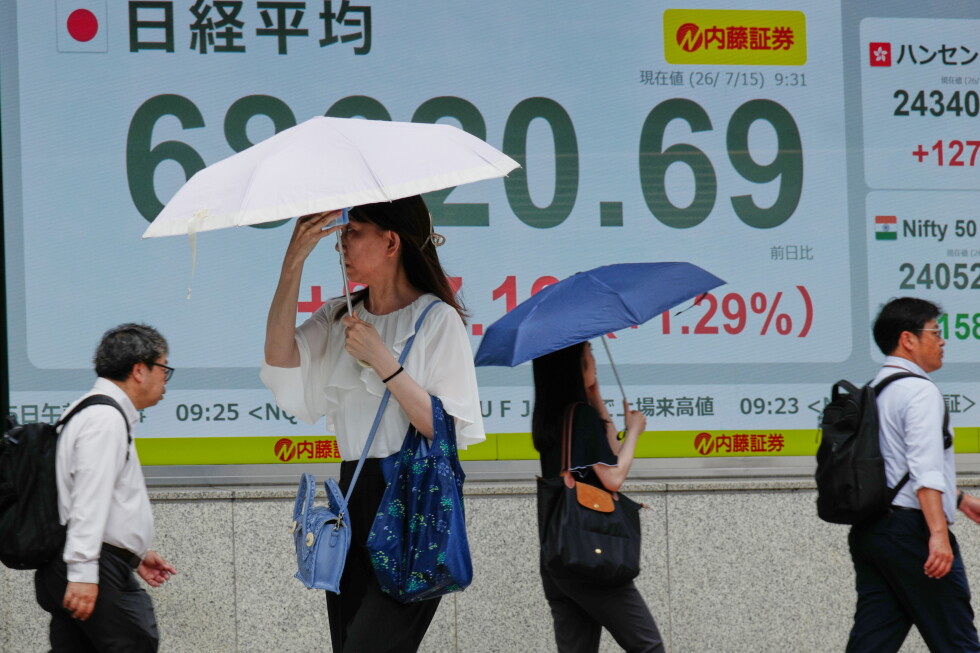
    Wall Street opened sharply higher on the news, with the Dow Jones jumping 1.3 percent to 49,221.56 points, while the S&P 500 gained 0.7 percent to hit a new record of 7,092.15. The Nasdaq Composite also climbed 0.9 percent to 24,317.32, extending all-time highs set the previous trading session. In Europe, major benchmarks followed the upward trend: Frankfurt’s DAX gained 2.2 percent, while Paris’ CAC 40 rose 2 percent, and London’s FTSE 100 added 0.5 percent. Asian markets mostly closed lower, however, after recent record-setting runs, with Tokyo’s Nikkei 225 falling 1.8 percent and Hong Kong’s Hang Seng Index dropping 0.9 percent.

    The speed of the U.S. stock rally has surprised many market participants. David Morrison, a senior analyst at Trade Nation, pointed out that the S&P 500 has bounced nearly 12 percent in just over two weeks, a move that caught many investors off guard. “Many investors sold during the first few weeks of the war, either to flatten their exposure or go net short,” he explained. “Now these investors are having to pay up to re-establish their existing positions, or cover their shorts and suffer painful losses.” The rally has also been fueled by a resurgent “fear of missing out” as indices hit new records, supported by stronger-than-expected earnings growth during the first-quarter reporting season.

    Uncertainty remains over the exact scope of the ceasefire referenced in Araghchi’s announcement. It remains unclear whether he was referring to the 10-day Israel-Lebanon truce that took effect at midnight or the earlier two-week Iran-U.S. truce that began on April 8. Even with the positive announcement, U.S. President Donald Trump reaffirmed that the American blockade of Iranian ports remains in force. Still, the declaration has boosted market hopes for extended ceasefire negotiations and long-term de-escalation.

    Meanwhile, Western leaders were moving forward with contingency planning Friday: French President Emmanuel Macron and UK Prime Minister Keir Starmer chaired an alliance meeting to discuss the deployment of a multinational naval task force to guarantee free navigation through the strait once the conflict concludes. Currency markets also reflected the improved risk sentiment, with the euro and pound gaining against the U.S. dollar, while the dollar softened against the Japanese yen.

  • Tensions lift prices, reshape farm trade

    Tensions lift prices, reshape farm trade

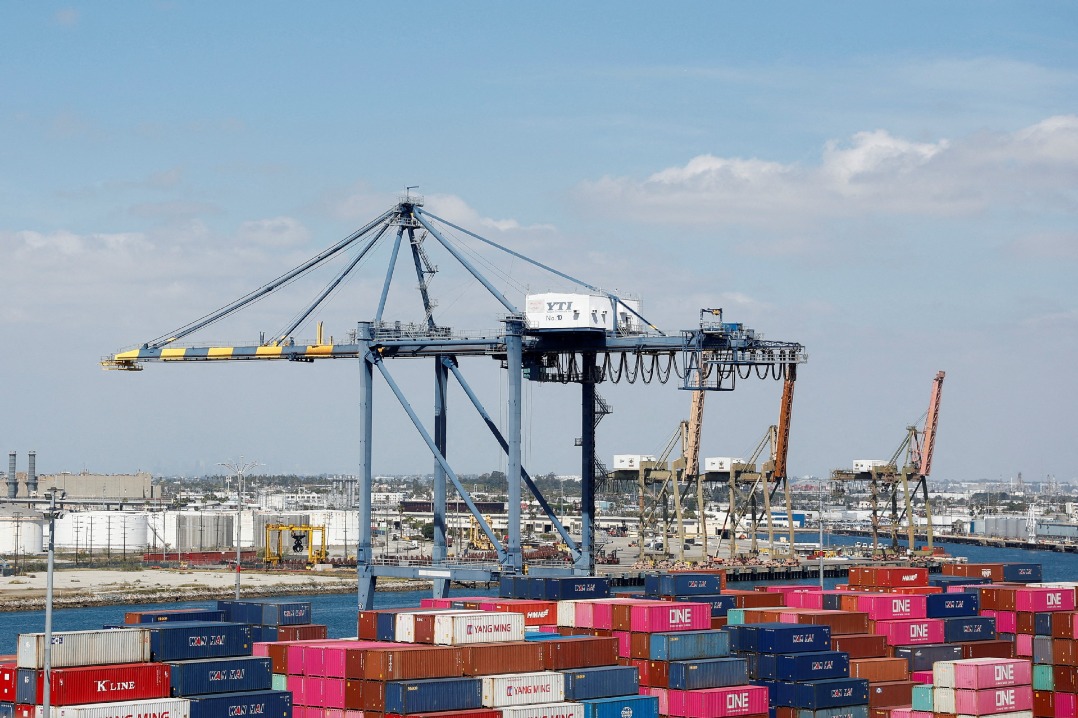
    Global agricultural markets and everyday consumers across the world are facing growing strain from two overlapping sources of instability: escalating geopolitical tensions in the Middle East and persistent uncertainty around United States trade policy, industry and policy experts warned during a recent media briefing held at the Port of Los Angeles. The event brought together top port leadership and international relations scholars to examine how regional conflict, disrupted shipping corridors, and unpredictable tariff policies are sending new ripple effects through economies far beyond coastal cargo terminals and port infrastructure.