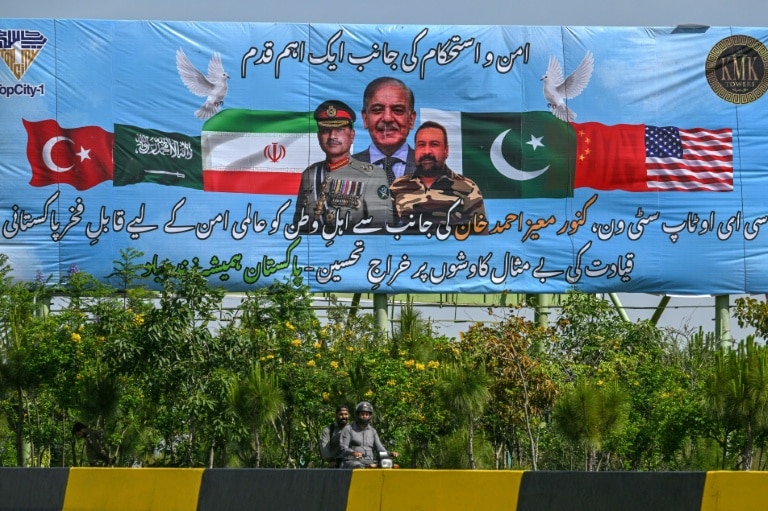
Global financial markets traded in a narrow range on Tuesday, with crude oil prices dipping slightly and most equities posting modest gains, as investors clung to cautious optimism that Washington and Tehran would reach a breakthrough to de-escalate tensions and reopen the strategically critical Strait of Hormuz, even as a two-week truce is set to expire on Wednesday. As of Tuesday, Iran had not yet deployed a negotiating delegation to Pakistan, the venue for the new round of US-Iran peace talks, while the US side has confirmed it is ready to proceed with discussions, leaving Tehran’s participation in the negotiations unclear.
The international benchmark Brent North Sea crude held largely steady after a sharp rally the previous session triggered by Iran’s temporary closure of the Strait of Hormuz, falling just 0.3 percent to $95.22 per barrel by 1330 GMT. US West Texas Intermediate crude similarly edged down 0.2 percent to $87.23 per barrel, with both benchmarks holding below the psychologically important $100 per barrel threshold that has historically stoked broad inflation fears.
Equity markets painted a mixed but broadly upbeat picture across major global hubs. On Wall Street, all three main indices opened higher, with the Dow Jones Industrial Average rising 0.5 percent to 49,706.29 points, the S&P 500 gaining 0.2 percent to 7,125.89, and the Nasdaq Composite adding 0.3 percent to 24,467.29. The gains were supported by stronger-than-expected March retail sales data, which showed a 0.6 percent month-on-month rise even when stripping out volatile gasoline purchases, defying concerns that spiking energy costs would drag down consumer spending. In Europe, London’s FTSE 100 dipped 0.4 percent and Paris’ CAC 40 fell 0.5 percent, while Frankfurt’s DAX closed flat. Most major Asian markets finished the trading day higher: Japan’s Nikkei 225 gained 0.9 percent to close at 59,349.17, Hong Kong’s Hang Seng Index added 0.5 percent, and Shanghai’s Composite Index edged up 0.1 percent.
Market analysts note that investors have so far refused to price in a worst-case scenario of intensified conflict, with widespread expectations that the current ceasefire will be extended beyond its Wednesday expiry. “There is a reluctance for investors to price in the worst-case scenario for the conflict in the Middle East, and there is optimism within the market that the US/Iran ceasefire will be extended,” explained Kathleen Brooks, research director at global trading group XTB.
US President Donald Trump expressed confidence in the US’ negotiating position during a Tuesday interview with CNBC, as his administration prepared envoys for the Pakistan-hosted talks. The White House confirmed that Vice President JD Vance is prepared to return to Pakistan for the new round of negotiations aimed at ending the standoff, which has already driven crude prices higher and reignited global inflation concerns.
Despite the market optimism, significant uncertainty remains over the outcome of the talks. Iran has already accused Washington of violating the fragile truce through its blockade of Iranian ports and seizure of an Iranian vessel, while Trump has similarly accused Tehran of truce violations over the harassment of commercial vessels transiting the Strait of Hormuz, the chokepoint that carries roughly one-fifth of all globally traded oil.
Russ Mould, investment director at UK-based asset management firm AJ Bell, noted that while sub-$100 oil prices signal market optimism that conflict will not escalate, prolonged elevated prices carry significant economic risks. “However, the longer oil remains in the 90s (dollar per barrel) range… the higher the chance of an inflationary shock and a wobble to global economic activity,” Mould said.
The solid March retail sales data has reinforced views of a resilient US consumer, a key pillar of American economic growth. “The data echoes what we heard from the big banks last week, with management teams largely pointing to a resilient consumer despite soaring gas prices and a barrage of geopolitically charged headlines,” said Bret Kenwell, US investment analyst at fintech platform eToro. Kenwell added that US stocks, which have already recovered all pre-conflict losses and are trading near record highs, reflect not just hopes for de-escalation in the Middle East but also growing optimism around upcoming corporate earnings. If US companies deliver solid first-quarter results, he said, it could reinforce investor confidence that the current market rally still has room to run.
Beyond geopolitics, investors are also closely watching the confirmation hearings for Kevin Warsh, former Federal Reserve governor and US President Donald Trump’s nominee to lead the central bank. Warsh’s testimony is expected to offer clear signals about the future path of US interest rates, at a time when the world’s largest economy is navigating persistent inflation risks and slowing growth headwinds.