分类: business

  • UK inflation rises in March as prices at the pump spike higher after Iran war

    UK inflation rises in March as prices at the pump spike higher after Iran war

    LONDON – New official data released Wednesday confirms that United Kingdom inflation ticked upward in March, driven by a dramatic surge in fuel prices triggered by widespread energy supply disruptions stemming from the ongoing conflict in Iran.

    The Office for National Statistics (ONS) reported that the annual consumer price inflation rate climbed to 3.3% this March, up from 3% recorded in February. This upward shift aligned exactly with projections shared by financial market analysts ahead of the data release.

    Market observers now confirm that this unexpected (but widely forecast) inflation spike has erased any remaining hopes that the Bank of England would move to lower borrowing costs in the near term. Before the Iran conflict erupted on February 28, financial circles widely predicted that the central bank would cut its benchmark main interest rate from the current 3.75%. That forecast was built on expectations that inflation would gradually fall back toward the Bank of England’s 2% target by the spring months.

    A breakdown of the inflation data shows that higher motor fuel prices were the single largest contributor to the overall increase. Fuel prices jumped 8.7% between February and March, marking the steepest monthly rise since June 2022 – a period that saw similar energy market volatility shortly after Russia’s full-scale invasion of Ukraine. Beyond pump prices, secondary upward pressure came from airfares and grocery costs, both of which tracked higher as a knock-on effect of the broader energy price spike.

  • Asian benchmarks are mixed in cautious trading amid uncertainty about US-Iran ceasefire talks

    Asian benchmarks are mixed in cautious trading amid uncertainty about US-Iran ceasefire talks

    Global financial markets traded with caution on Wednesday, as investors held their breath for developments in U.S.-Iran diplomatic efforts following a last-minute extension of a temporary ceasefire that was scheduled to expire.

    The day of trading kicked off in Asian markets, where benchmark indexes delivered a mixed performance amid ongoing uncertainty. Japan’s Nikkei 225 notched a 0.3% uptick to close at 59,530.64, while South Korea’s Kospi followed suit with a 0.4% gain to reach 6,413.62. Mainland China’s Shanghai Composite also edged up 0.3% to end the session at 4,096.59. On the downside, Australia’s S&P/ASX 200 dropped 1.2% to 8,841.00, and Hong Kong’s Hang Seng Index fell 1.3% to settle at 26,140.05.

    Sentiment shifted lower across the Atlantic in U.S. trading after U.S. Vice President JD Vance announced the cancellation of a planned trip to Pakistan, where he was set to lead a U.S. negotiating delegation in talks with Iranian representatives aimed at extending the ceasefire. The S&P 500 wiped out early gains to finish 0.6% lower at 7,064.01, while both the Dow Jones Industrial Average and the Nasdaq Composite also recorded 0.6% drops, closing at 49,149.38 and 24,259.96 respectively. Less than 10 minutes after the U.S. market closed for the day, former President Donald Trump confirmed he would extend the ceasefire to give Iran additional time to draft and submit a formal proposal to end the ongoing conflict.

    Energy markets also saw muted movement after weeks of volatility tied to the conflict. Benchmark U.S. crude slipped 19 cents to trade at $89.48 per barrel during Wednesday’s Asian session, while Brent crude, the global benchmark for oil pricing, lost 12 cents to settle at $98.36 per barrel. These small shifts stand in sharp contrast to the extreme swings that roiled markets in the early days of the conflict, when Brent crude briefly spiked above $119 per barrel and the S&P 500 dropped nearly 10% below its previous all-time high.

    Much of the market’s focus has centered on the Strait of Hormuz, the critical narrow waterway running along Iran’s coast that carries a large share of the world’s daily oil shipments out of the Persian Gulf. Net oil importers such as Japan, which sources nearly all of its crude through global shipping lanes, have already taken proactive steps: the Japanese government has released strategic petroleum reserves and is evaluating alternative shipping routes to mitigate potential supply disruptions.

    Despite the lingering uncertainty, U.S. stocks remain near the record high set just the previous Friday, a signal that investors still hold cautious optimism that Washington and Tehran will avoid a full-scale escalation that would trigger severe economic damage. Tim Waterer, chief market analyst at KCM Trade, noted that Trump’s last-minute extension preserves the current uneasy standoff rather than resolving the underlying conflict. “While the pause has reduced immediate tail risks, the absence of a genuine breakthrough means traders remain inclined to tiptoe rather than trade with real conviction,” Waterer explained.

    In other asset classes, the 10-year U.S. Treasury yield rose to 4.31%, up from 4.26% recorded at the close of Monday’s session, with gains accelerating through the day alongside modest movement in oil prices. In foreign exchange markets, the U.S. dollar edged slightly lower against the Japanese yen, falling to 159.33 yen from 159.38 yen. The euro also slipped marginally to $1.1740, down from $1.1744 in the previous session.

  • Japan records 5th straight fiscal year of trade deficits as Trump’s tariffs hit auto exports

    Japan records 5th straight fiscal year of trade deficits as Trump’s tariffs hit auto exports

    TOKYO – Japan has extended its streak of annual trade deficits to five consecutive fiscal years, according to official data released Wednesday by the Japanese government. The nation recorded a 1.7 trillion yen ($10.7 billion) deficit in the 12-month period ending March 2025, marking the fifth straight shortfall despite modest growth in exports across the full year.

    Finance Ministry figures show that overall Japanese exports climbed 4% year-over-year in the full fiscal year, while import volumes edged up by only 0.5% amid shifting global demand and commodity price stabilization. The biggest drag on annual export performance came from the United States market, where former U.S. President Donald Trump’s legacy of elevated tariffs on Japanese and other Asian imports has hit the country’s key manufacturing sectors particularly hard. Total Japanese exports to the U.S. dropped 6.6% over the full fiscal year, with auto shipments — one of Japan’s flagship export categories — plummeting 16% amid the ongoing tariff regime.

    To mitigate the impact of U.S. trade policy shifts, most of Japan’s largest automotive manufacturers, including industry leader Toyota Motor Corp., have shifted the bulk of their production to North American and other regional facilities to build vehicles close to their end markets. Even with this strategic relocation, a number of Japanese automakers still ship a large share of their specialty and high-volume models directly from Japan to the U.S., leaving them exposed to ongoing tariff costs.

    Encouragingly, latest monthly data points to an emerging turnaround for Japan’s export sector. In March alone, the country’s trade surplus jumped 26% from the same month a year earlier, with overall exports surging nearly 11.7% year-over-year and imports rising by 10.9%. The strong March performance signals that Japanese exporters are gradually bouncing back from the macroeconomic shocks that dampened trade over the previous year.

    Beyond trade policy headwinds, Japan also faces growing energy security risks tied to ongoing conflict in the Middle East. As a nation that imports nearly 100% of its oil and natural gas to power its economy, Japan is deeply vulnerable to any disruptions to Middle Eastern energy shipments, particularly amid the Iran conflict that has threatened traffic through the Strait of Hormuz — the strategic chokepoint that carries the bulk of Asia’s energy supplies, which is effectively closed to commercial traffic due to the fighting.

    Energy disruptions would carry ripple effects beyond just power generation for Japan: reduced oil supplies would cut production of naphtha-derived products, a core input for manufacturing medical supplies and a wide range of plastic goods critical to both industrial and consumer sectors. To ease public anxiety over potential shortages, the Japanese government has highlighted that the country holds 254 days of strategic oil reserves, a system established after the 1970s global oil crisis to prepare for exactly such supply emergencies. Authorities have already begun releasing portions of these reserves to keep global and domestic markets stable, and are also accelerating work to develop alternative oil shipping routes that bypass the Strait of Hormuz.

  • World’s biggest condom maker to raise prices due to Iran war

    World’s biggest condom maker to raise prices due to Iran war

    The ongoing conflict between Iran and the US-Israel coalition is rippling far beyond global energy markets, now threatening to push up consumer prices for a critical everyday product: condoms. Goh Miah Kiat, chief executive officer of Malaysia-based Karex — the world’s largest condom manufacturer — has announced that the company could raise retail prices by as much as 30%, with even steeper increases possible if hostilities continue to disrupt key raw material supplies.

    Karex is an industry powerhouse, churning out more than five billion condoms annually to supply major global brands including Durex and Trojan, as well as public health systems such as the UK’s National Health Service. In recent interviews with Reuters and Bloomberg, Goh explained that production costs have skyrocketed since the outbreak of the conflict, driven by widespread disruptions to oil and petrochemical supplies that the company depends on.

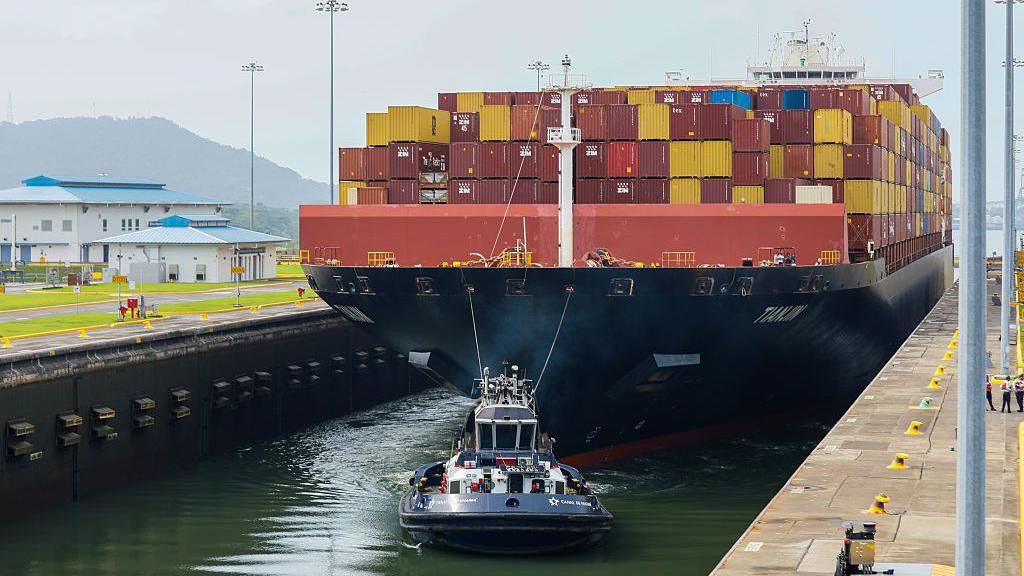
    The crisis centers on the Strait of Hormuz, one of the world’s most vital maritime chokepoints. After Iran responded to US and Israeli airstrikes by threatening to target commercial shipping passing through the waterway, the strait has effectively been closed to regular traffic. Approximately 20% of the world’s crude oil, liquefied natural gas, and key petrochemical products normally move through this route, so the closure has sent shockwaves through global supply chains.

    For Karex, this disruption hits directly at its core production inputs. The manufacturer relies on petroleum-derived materials for its products: ammonia, a petrochemical byproduct used to preserve latex, and silicone-based lubricants, both of which have seen sharp price increases and supply shortages since the strait closure.

    Compounding the issue, demand for condoms has already jumped by roughly 30% globally this year. Elevated freight costs and widespread shipping delays have further tightened supplies, creating a perfect storm of constrained production and rising consumer need. Goh noted that this demand surge follows a clear trend during periods of economic and geopolitical uncertainty: when people face unclear job prospects and future instability, they are far more likely to prioritize avoiding unplanned pregnancies. “In bad times, the need to use condoms is even more because you’re uncertain with your future, whether you’d still have a job next year,” he told Bloomberg. “If you have a baby right now, you’ll have one more mouth to feed.”

    The impending price increase at Karex highlights a little-discussed downstream impact of the Iran conflict: while much of the global focus has been on rising energy prices, the disruption to petrochemical supply chains is pushing up costs for a huge range of consumer goods that few people connect to oil markets.

    As of Wednesday, the outlook for de-escalation remains uncertain. US President Donald Trump has announced he will extend a bilateral ceasefire between the US and Iran while peace negotiations progress, but there has been no clear update on the status of talks or a timeline for a lasting resolution.

  • Young Chinese use AI to launch one-person firms over job anxiety

    Young Chinese use AI to launch one-person firms over job anxiety

    Against a backdrop of persistent workplace anxiety and widespread age discrimination, a growing number of young Chinese professionals are turning to artificial intelligence to launch independent one-person companies, reshaping China’s startup landscape and offering a new path to address soaring youth unemployment.

    The so-called “curse of 35” has long been a source of unease for Chinese workers: in competitive sectors ranging from tech to government roles, an unspoken “invisible line” at age 35 often leaves workers facing re-evaluation, layoffs, or stalled career growth. Compounding this anxiety is the rapid advancement of AI itself, which many young professionals fear will displace their traditional corporate roles. This confluence of pressures has pushed a new cohort to strike out on their own, leveraging AI to build viable solo ventures.

    Karen Dai, founder of Shanghai-based entrepreneur community SoloNest and author of *One Person Company*, explains that AI has fundamentally lowered the barrier to entry for solo entrepreneurship. “In the past, it was nearly impossible to run an entire business alone,” she notes. “Now AI can handle a huge range of routine tasks, making the model not just feasible, but accessible.” Every weekend, Dai hosts sold-out idea-swapping events for aspiring solo founders; her most recent gathering drew nearly 20 attendees in their 20s and 30s, all eager to chart their own independent paths.

    For many, the model is already delivering tangible results. Wang Tianyi, a 26-year-old who quit his corporate product manager role at a major Chinese internet firm last year, now earns up to 40,000 yuan ($5,800) per month creating AI-generated commercial advertisements for small and medium businesses. He frames the rise of one-person AI-powered companies as an inevitable shift, pointing to transformative efficiency gains from technological empowerment. “AI lets one person do the work that once required an entire team,” he says, predicting solo entrepreneurship will become a major trend in China’s economy in the coming years.

    Wei Xin, a 34-year-old Shanghai resident who previously worked as a document reviewer at a foreign consulting firm, began preparing for her transition before AI displaced her role. After returning to China from completing a degree in the United States, she trained on Google’s Gemini AI model, experimented with building an AI-generated digital twin of herself, and ultimately launched a social media content creation business. “There is a bit of AI anxiety, but I see it as an opportunity,” she explains. “If I avoided learning and using it, I would be eliminated sooner or later.”

    This grassroots shift has aligned neatly with both national policy goals and local government efforts to tackle youth unemployment. Beijing has prioritized advancing technological self-reliance, and local municipalities across China have rolled out targeted incentives to support these AI-powered ventures, officially dubbed “OPCs” (one-person companies) — a rare use of English initialism in official Chinese policy.

    In November, Suzhou, a major manufacturing and tech hub in eastern China, announced plans to cultivate more than 10,000 OPC talents by 2028, with 700 million yuan ($100 million) in earmarked funding for AI robotics, healthcare, smart transportation, and other AI-focused sectors. Last month, Chengdu, the capital of southwestern Sichuan province, launched a subsidy program offering up to 20,000 yuan for new college graduates who launch AI-driven one-person firms.

    Kyle Chan, a fellow at the Brookings Institution and an expert on China’s technology development, describes these incentives as “carrots to help these startups get off the ground and be successful.” For local governments, supporting OPCs is a low-cost strategy to address China’s persistent youth unemployment crisis, where roughly one in six people aged 16 to 24 remain out of work. “The cost of supporting an OPC for local governments is very low compared to attracting large corporate investments,” Chan notes, making the model an attractive policy option.

    Still, challenges remain for these new solo ventures. Wang notes that while launching a business has become far easier with AI, many new founders struggle to commercialize their offerings and turn a consistent profit. “Getting started isn’t the hard part — the hard part is learning how to sell your work,” he says.

    Despite these hurdles, for many young founders, the model offers something traditional corporate roles cannot: autonomy. “Young people are building backup plans, and asking themselves: can I, with my own two hands and the help of AI, explore the things I actually want to do?” Dai says. “This comes with a real sense of control, and of creativity that you can’t find in a traditional job.”

    The trend mirrors a broader global shift: small, AI-powered solo startups have already grown popular in Silicon Valley and other global tech hubs, where AI is both a threat to traditional corporate jobs and a catalyst for a new wave of small-scale entrepreneurship. In China, the combination of grassroots anxiety, technological advancement, and government support has accelerated this shift, turning the one-person AI company from a niche experiment into a growing economic force.

  • Delicate extraction: Malaysia offers rare earths alternative to China

    Delicate extraction: Malaysia offers rare earths alternative to China

    Against a backdrop of growing global anxiety over China’s control of the global rare earths market, Australian mining giant Lynas is expanding its rare earth refining operations in eastern Malaysia, positioning itself as a leading alternative supplier for the critical minerals that underpin modern technology and clean energy.

  • Why police are seeking to arrest billionaire K-pop mogul behind BTS

    Why police are seeking to arrest billionaire K-pop mogul behind BTS

    South Korean police have formally asked prosecutors to secure an arrest warrant for Bang Si-hyuk, the legendary entertainment industry executive who built global K-pop supergroup BTS and founded HYBE, one of the world’s most valuable entertainment conglomerates. The charges stem from allegations of fraudulent stock manipulation ahead of HYBE’s $7.3 billion initial public offering on the Korea Exchange (KRX) in 2020.

    Investigators allege that in 2019, while Bang was secretly advancing plans to take HYBE public, he intentionally misled early investors and venture capital stakeholders by claiming an IPO was off the table. This deception, police claim, induced early stakeholders to sell their HYBE shares to a private equity fund with undisclosed ties to Bang. After HYBE debuted on the Kospi index in October 2020 – with its IPO price doubling on the first day of trading – the private equity fund sold its stake for massive gains, and Bang is alleged to have taken a 30% cut of the illicit profits, totaling roughly 200 billion won ($136 million).

    Bang, 53, has repeatedly and vehemently denied all wrongdoing, maintaining his actions were fully legal and transparent. His legal team released a statement this week saying, “We regret the police’s decision to request an arrest warrant. We will continue to cooperate fully with all legal procedures and make every effort to clearly demonstrate the legitimacy of our position.” HYBE has also pushed back against the allegations, noting that a copy of the disputed profit-sharing agreement was provided to IPO underwriters, who advised that no public disclosure was required.

    The investigation into Bang is not a new development. It has dragged on for months, with police executing search raids at HYBE’s Seoul headquarters, freezing a portion of Bang’s personal assets, and imposing a travel ban that has barred him from leaving South Korea since August. Industry calls for him to step down as HYBE chairman have also circulated amid the probe.

    The news of the arrest warrant request comes at a pivotal moment for HYBE, just weeks after BTS – the group that drove the company’s explosive growth and global fame – launched their first world tour in nearly four years following an extended group hiatus. The tour, which will stop at 34 cities across the globe, is already completely sold out, with industry analysts projecting HYBE will earn more than $1 billion from ticket sales, merchandise, and associated tour revenue. When the tour was announced in January, HYBE shares surged to a four-year high, adding more than 1 trillion won to the company’s total market capitalization. In a recent interview with Billboard, Bang reflected on BTS’s unprecedented cultural impact, calling the group “a tourist attraction… widely recognised and embraced by the global public.”

    Bang’s journey to becoming one of the most powerful figures in global entertainment began decades ago, rooted in an early love of music. He performed his own original compositions as a member of a middle school band, and honed his songwriting craft during his university years. In 1997, he co-founded JYP Entertainment, now one of South Korea’s “Big Four” K-pop powerhouses, alongside Park Jin-young, earning the iconic nickname “Hitman Bang” after producing a string of chart-topping hits for early K-pop act g.o.d.

    He left JYP in 2005 to launch his own independent label, Big Hit Entertainment, the precursor to today’s HYBE. In 2010, he began developing a seven-member hip-hop focused boy group, eventually shifting to a traditional K-pop idol model to align with industry market demands. That group, launched in 2013 as BTS, would go on to redefine global pop music: the act became the first Korean group to top Billboard’s Hot 100 chart and the first Asian act to surpass 5 billion streams on Spotify, cementing their status as one of the most successful musical groups in history. Today, HYBE also represents other top global K-pop acts including Seventeen, Le Sserafim, and newest breakout group Katseye.

    When Big Hit launched its IPO in 2020, shares debuted at $235, more than double the original $110 offering price, and Bang’s net worth skyrocketed as a result. A 2019 Bloomberg estimate pegged his net worth at $770 million; as of last month, data from Seoul-based corporate research firm Korea CXO Research Institute shows Bang holds more than 13 million HYBE shares, worth roughly 5 trillion won, pushing his total net worth past $2 billion.

    In December 2024, South Korea’s financial regulator launched a formal probe into the undisclosed profit-sharing agreements between Bang and private equity funds ahead of the IPO, expanding the existing investigation. Following the announcement of the arrest warrant request this week, HYBE shares closed 2.3% lower on Tuesday, defying a 2.7% gain in the benchmark Kospi index. Shares of the other three major K-pop conglomerates also fell in tandem with HYBE’s drop.

    The case against Bang comes amid a broader government crackdown on stock market manipulation in South Korea. In recent years, penalties for illicit trading have historically been relatively lenient, limited mostly to administrative fines and formal warnings. But current President Lee Jae Myung has pushed for far harsher sanctions for market misconduct. In August, authorities launched a new joint task force staffed by officials from national financial regulators and the Korean Stock Exchange, tasked exclusively with investigating illegal trading activity. The task force operates under a strict “one strike and you’re out” policy, which mandates immediate suspension of any accounts linked to illegal activity, and allows for fines of up to twice the value of illicit gains.

    Bang is not the first high-profile South Korean figure to face stock manipulation charges. In recent years, other prominent public figures including Samsung chairman Lee Jae-yong, Kakao founder Kim Beom-su, and former first lady Kim Keon-hee have all been indicted on separate stock rigging charges, and all were ultimately acquitted. Under current South Korean law, however, anyone convicted of illicit gains totaling 5 billion won or more faces a minimum of five years in prison, up to a maximum sentence of life imprisonment.

  • Hotpot, bubble tea and sportswear: China’s new exports take on the world

    Hotpot, bubble tea and sportswear: China’s new exports take on the world

    Walk through any major shopping center in Singapore today, and you will almost certainly encounter long, winding queues outside brightly branded stores with catchy, memorable names. Bubble tea chains from China, including Mixue, Chagee, and Molly Tea, are drawing massive crowds not only across Southeast Asia, but also in far-flung global hubs from Sydney and London to Los Angeles. This growing global footprint is part of a far larger trend: Chinese companies are evolving beyond their historic role as low-cost contract manufacturers for Western firms, and building globally recognized consumer brands that compete directly with long-dominant industry leaders.

    Many of these new global players cut their teeth in China’s massive, fast-growing consumer market – the second largest in the world – building impressive scale and operational expertise early on. But cutthroat domestic competition, combined with a slowing domestic economy and shifting consumer demographics, has turned global expansion from an opportunity into a strategic necessity for most large Chinese consumer firms. As they enter international markets, these brands are pushing past the long-held stereotype that “Made in China” equals low-quality, low-cost goods.

    “China has moved beyond a replication economy,” explains Tim Parkinson, a consultant at Storyteller China. “Its products now meet the expectations of a new generation of demanding global consumers.” For decades, China served as the world’s workshop, producing goods for Western brands to market and sell globally. In that process, local suppliers and manufacturers learned far more than just assembly: they mastered large-scale branding, global distribution networks, and mass-market sales strategies that now power their own global growth.

    Retail giant Miniso, which produces licensed toys and merchandise for entertainment brands including Disney, Marvel, and Warner Bros., has leveraged this institutional knowledge to build a presence in more than half of the world’s countries. “Consumers aren’t particularly concerned about where the brand comes from,” says Vincent Huang, Miniso’s general manager for overseas markets. “They’re more focused on the shopping experience – the designs, value for money, and enjoyment.” Fast turnaround from factory to shelf and strategic global licensing partnerships sit at the core of Miniso’s successful global model.

    The shift toward globally competitive Chinese brands extends far beyond fast-moving consumer goods. Electric vehicle manufacturer BYD recently overtook Tesla to become the world’s largest EV producer by volume. The company gained its edge by betting on core EV technology early in the global transition, then used China’s huge domestic market to scale production and drive dramatic cost efficiencies. Today, BYD is expanding beyond vehicle manufacturing, developing ultra-fast charging infrastructure that can add hundreds of kilometers of range in minutes, as it works to build a full mobility ecosystem around its brand.

    China’s central government helped accelerate the EV sector’s growth through targeted subsidies and consumer incentives that boosted domestic demand, but that support has drawn fierce criticism from policymakers in Europe and the United States, who argue it gives Chinese firms an unfair competitive advantage. Beijing rejects these claims, noting the sector’s growth is a reflection of China’s industrial innovation and manufacturing leadership, not unfair support.

    Sportswear giant Anta offers another example of this global rise. The firm now operates nearly 13,000 stores worldwide, and has climbed to become the third-largest sportswear brand on the planet, trailing only Nike and Adidas. After dominating China’s domestic market, Anta expanded its global footprint through strategic acquisitions of established international brands including Salomon and Wilson, and most recently purchased a 29% stake in German sportswear brand Puma.

    For many Chinese brands eyeing Western markets, Southeast Asia has served as a critical testing ground for global expansion. The region is home to more than 650 million young, increasingly affluent consumers, offering both scale and market diversity, while intense competition from established Western brands pushes companies to maintain high quality standards. Leading hotpot chain Haidilao opened its first overseas location in Singapore back in 2012, and today is the world’s largest hotpot operator with 1,300 restaurants across 14 countries.

    “Haidilao’s story is not just a restaurant success,” says Zhou Zhaocheng, vice chairman of Haidilao International. “It reflects China’s 30 years of economic transformation and internationalization.” Zhou notes the chain’s global success relies on a strong core brand, a robust operational ecosystem, and a loyal global customer base. Each overseas market brings unique complexities shaped by different cultures, legal frameworks, and consumer preferences, he says, making intentional localization of menus, ingredients, and service non-negotiable for success. To that end, Haidilao is currently pursuing halal certification for its operations in Indonesia and Malaysia, a move that will open the door to expansion across Muslim-majority markets in the Middle East.

    Other Chinese consumer brands are expanding at a staggering pace. Mixue, the budget bubble tea and ice cream chain, now operates more global store locations than either McDonald’s or Starbucks, while competitor Molly Tea has built an international footprint just a few years after its founding. Market research firm Euromonitor International reports that more than 70% of Chinese firms already operating in Southeast Asia plan to expand their regional footprint further in coming years.

    Southeast Asia is also home to some of the world’s fastest-growing smartphone markets, and widespread social media adoption has supercharged the popularity of Chinese consumer brands, often with almost no traditional advertising. Collectible toy brand Pop Mart’s Labubu figurines, for example, became a global viral sensation through organic social media engagement. Since 2024, Pop Mart’s sales in the United States have grown by a staggering 900%. Even as the company’s share price has dropped sharply in recent months amid investor questions about long-term growth sustainability, Pop Mart still boasts a higher market valuation than the combined worth of U.S. toy giants Hasbro and Mattel, plus Japanese entertainment firm Sanrio, the owner of the Hello Kitty brand.

    This outward push, known in Chinese as “chuhai” or “going out to sea”, has been accelerated by mounting pressure at home. A sluggish domestic economy, saturated consumer markets, intense competition, and a declining birth rate have all squeezed domestic growth margins, pushing companies to seek new customer bases abroad. Even long-established global brands operating in China are feeling the impact of rising local competition. Starbucks’ domestic market share in China has more than halved since 2019, as local chain Luckin Coffee now operates almost four times as many stores across the country as its U.S. rival. Luckin’s mobile-first business model keeps overhead costs low and service speeds high, resonating with domestic consumers.

    In November 2025, Starbucks announced a deal to sell a controlling stake in its China operations to Hong Kong-based private equity firm Boyu Capital. Even after a major accounting scandal in 2020 that forced Luckin to delist from the Nasdaq exchange, the brand has continued rapid expansion both at home and abroad, opening new locations in Singapore, Malaysia, and New York, and is reportedly preparing to relist on a U.S. stock exchange.

    Industry analysts note that global consumer perceptions of Chinese brands are shifting dramatically. Where “Made in China” once carried an automatic association with low-cost, low-quality goods, Chinese brands are increasingly seen as innovative, design-forward, and competitive with established Western players. “Brands like BYD combine superior quality with emotional storytelling and local adaptation,” says marketing expert Foo Siew-Ting.

    Even with this progress, significant challenges remain for Chinese brands expanding globally. Tariffs, political scrutiny, and ongoing debates over data security continue to complicate expansion efforts, as seen in high-profile cases of Chinese technology firms like Huawei and TikTok. Questions also linger over whether fast-growing cross-border platforms like Shein and Temu can maintain their rapid growth momentum in competitive Western markets over the long term.

    Despite these headwinds, the broader trajectory is unambiguous: Chinese companies are no longer defined by low prices alone. Today, they are innovating rapidly, capitalizing on emerging global consumer trends, building recognizable global brands, adapting their offerings to fit local market needs, and competing directly with – and in some cases outpacing – long-established legacy global players.

  • Traditional earthen buildings revitalized through boutique hospitality, culture

    Traditional earthen buildings revitalized through boutique hospitality, culture

    Nestled in the mountainous regions of East China’s Fujian province, centuries-old circular Tulou earthen buildings, a UNESCO World Heritage Site inscribed in 2008, are undergoing a remarkable transformation that blends centuries of cultural heritage with 21st-century traveler demands. What once drew casual day-trippers for quick sightseeing stops is now evolving into a high-end experiential tourism destination, breathing new economic life into these historic architectural treasures.

    For modern tourists like Ju, who traveled to Zhangzhou with her family to stay at Changrong Building, a converted Tulou boutique homestay, the appeal lies in stepping into living history rather than just observing it from a distance. “I really wanted to experience what it’s like to live in a Tulou,” Ju explained. “It is quiet and unique.”

    Completed in 2023 through a renovation project led by a team from Xiamen University, Changrong Building strikes a careful balance between preservation and modern comfort. The structure’s handcrafted earthen exterior and historic layout remain fully intact, while the interior has been upgraded to meet contemporary traveler expectations: 12 custom-designed modern-themed rooms now feature sound insulation, smart home technology, and dedicated public reading spaces. Beyond accommodation, the homestay offers immersive cultural activities, including guided tea picking in surrounding plantations and traditional Chinese costume photo experiences, giving visitors hands-on engagement with local culture.

    Huang Zhihui, secretary-general of the local Tulou homestay association and a native who grew up in a Tulou cluster, has witnessed the sector’s steady evolution. He recalled that the earliest Tulou homestays suffered from a lack of professional management and basic private amenities, failing to meet the growing expectations of domestic travelers who now prioritize cultural depth and service quality over low prices.

    To address this shift, Huang developed an intangible cultural heritage market near the iconic Huaiyuan Building, one of the most famous historic Tulou sites. Since opening in May 2025, the market has already drawn more than 700,000 domestic and international visitors. To resonate with younger travelers who value interactive, shareable experiences, Huang’s team introduced tech-integrated creative souvenirs: NFC-enabled sound postcards and gypsum Tulou models that let visitors access and play their own personal travel clips by tapping the souvenir with a smartphone, turning a simple memento into a personalized keepsake.

    The revitalization movement extends beyond Nanjing County to neighboring Hua’an County, where traditional Tulou structures have been repurposed for a wide range of cultural and commercial uses. Empty historic buildings have been converted into bamboo art galleries showcasing local craft traditions, specialty coffee shops, and community libraries, creating new public spaces for both tourists and local residents.

    Local tourism authorities have also leaned into modern cultural trends to attract younger audiences. During the 2026 Spring Festival holiday, Hua’an launched an immersive China-chic interactive game that invited tourists to take on character roles, interact with non-player actors, and complete themed challenges centered on traditional folk dances and historic Chinese sports. The innovative activation delivered impressive results: official data shows Hua’an’s Tulou scenic area welcomed more than 100,000 tourists during the holiday week, with ticket revenue rising 23% year-on-year to more than 6.2 million yuan (approximately $904,000). Driven by popular intangible heritage night parades, nighttime visitor numbers surged by 73.72% compared to the previous year, turning a former half-day sightseeing spot into a multi-day destination.

    Lin Ying, director of the Hua’an Cultural, Sports, and Tourism Bureau, outlined the long-term vision for the region’s Tulou tourism transformation. “We aim to transform Tulou tourism from a half-day trip into a full-day, overnight experience,” Lin said. “Our goal is to move beyond visiting a single building to creating a regional destination where visitors can experience a life that begins with nature and returns to the warmth of the hearth.”

    This adaptive reuse model has turned declining historic structures into economic drivers, proving that cultural heritage can thrive when paired with innovative hospitality and thoughtful modernization, rather than being locked away as static museum pieces.

  • Shanghai’s first Yangtze-crossing rail transit line completes track laying, boosting delta integration

    Shanghai’s first Yangtze-crossing rail transit line completes track laying, boosting delta integration

    A landmark milestone for regional connectivity in eastern China was reached Tuesday, as construction crews finished full track-laying for Shanghai Metro Line 22, the city’s first ever rail transit project that crosses the Yangtze River. The completion marks a critical leap forward in advancing the long-term integrated development strategy for the Yangtze River Delta, one of China’s most economically dynamic urban clusters.

    Also widely referred to as the Chongming Line, this new transit link is set to drastically shrink travel times between Chongming Island and central Shanghai, expand regional accessibility, and unlock fresh growth potential across the entire delta region. Chongming Island, China’s third-largest island, is a geographic formation created entirely by sediment carried and deposited by the Yangtze River over thousands of years, and has long faced connectivity gaps with mainland Shanghai that have limited its economic and social development.

    Stretching 42 kilometers from Jinji Road Station in Pudong New Area to Yu’an Station at the northern end of Chongming Island, the new line is designed to handle operating speeds of up to 120 kilometers per hour. Its route crosses the Yangtze River twice, passing through mid-route Changxing Island, and includes eight stations along its full alignment. Once the line enters full commercial operation, it is expected to reshape regional mobility patterns, support balanced economic development across Shanghai’s riverine regions, and strengthen interconnectedness between major cities across the Yangtze River Delta, supporting coordinated growth in trade, tourism, and industry.