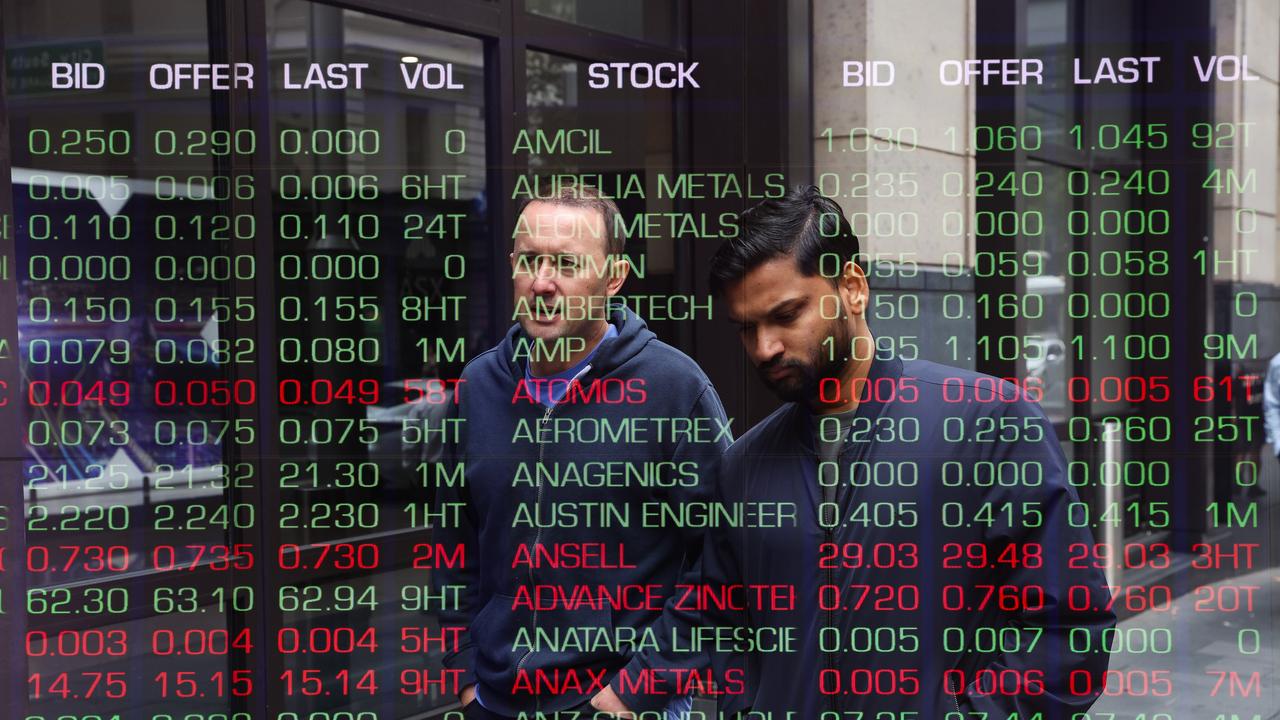
On Tuesday, Australian equity markets settled into a cautious holding pattern, with benchmark indices closing nearly unchanged as investors paused major moves ahead of a key Middle East ceasefire expiration set for Wednesday’s trading open. The benchmark S&P/ASX 200 slid a marginal 3.9 points, a 0.04% dip, to close at 8949.4, while the wider All Ordinaries index gained a matching fractional 0.03%, adding 3.1 points to finish the session.
The day began with an early upward push for stocks, but those initial gains evaporated as market participants braced for potential volatility linked to the pending expiration of the ceasefire between the United States and Iran. Industry analyst Tony Sycamore of trading firm IG flagged the Wednesday opening bell as a critical juncture for the local market, noting that the timing of the deadline could spark sharp price swings in early trading when markets reopen.
Sycamore explained that Tuesday’s muted session followed modest overnight declines on major U.S. equity markets, where resurfaced geopolitical tensions between the U.S. and Iran interrupted a multi-day winning streak for major American indices. He added that the relatively muted declines seen in both U.S. and Australian markets stem from a balancing act among traders: they are pricing in the new geopolitical risk while holding out hope that diplomatic negotiations will result in an extended or even permanent ceasefire agreement.
Six of the 11 tracked sectors on the ASX 200 closed in positive territory on Tuesday. Consumer staples led all gainers with a 0.67% uplift, while the energy sector was the session’s weakest performer, dropping 1.03% overall. The decline in energy stocks aligned with a recent pullback in global crude prices: Brent Crude has fallen more than 5% over the past month and dipped below the $95 per barrel threshold.
Among individual energy names, Viva Energy recovered 0.87% to close at $2.32, rebounding slightly from a steep drop in the prior session that came after a fire broke out at the company’s Geelong refinery during its first day of trading post-incident. By contrast, major oil and gas producer Woodside Energy fell 1.76% to $31.21, and competitor Santos lost 1.46% to close at $7.44.
Australia’s big four national banks delivered a mixed performance, matching the market’s overall flat tone. National Australia Bank gained 0.46% to close at $41.21, and Westpac Banking Corporation rose 0.57% to finish at $40.25, putting both in positive territory. On the losing side, Commonwealth Bank of Australia slipped 0.32% to $179.58, and Australia and New Zealand Banking Group dropped 1.71% to close at $37.28.
Some individual stocks posted strong gains on the back of positive corporate news. Vulcan Energy climbed 6.5% to $3.76 after announcing a €40 million engineering services agreement with Siemens for its planned lithium and renewable energy project. Counter-drone technology firm Droneshield rose 5.54% to close at $3.81.
On the downside, investment platform HUB24 slid 8.33% to $87.50 following the release of its third-quarter operational update. Medical technology firm 4DMedical pulled back 6.15% to $5.34 in its first session as an official constituent of the ASX 200 index. Even with the pullback, long-term shareholders in 4DMedical have little cause for concern: the stock has posted a gain of more than 1800% over the past 12 months.