China’s agricultural sector has maintained consistent growth, with steady production expansion and increasing rural household incomes logged in the first three months of 2026, according to official data released by government authorities.
分类: business
-

Brazil’s VP Alckmin, a negotiator of the Mercosur-EU deal, sees it as relief in a turbulent world
After 25 years of on-again, off-again negotiations that faced multiple last-minute hurdles, the landmark trade agreement between South American trade bloc Mercosur and the European Union is set to enter into provisional force on May 1, according to Brazil’s Vice President Geraldo Alckmin, one of the deal’s chief architects. In an era defined by rising unilateralism and protectionist trade policies across the globe, Alckmin framed the world’s largest trade bloc-to-bloc agreement as a critical beacon for open international commerce during a wide-ranging media interview at Brazil’s presidential palace in Brasilia Wednesday.
Covering a combined market that boasts a $22 trillion gross domestic product and 720 million consumers, the agreement fills a gap that would have left Mercosur falling behind global competitors as other nations locked in new trade pacts, Alckmin argued. Striking a win-win tone, he noted that both populations across Mercosur’s four member states — Brazil, Argentina, Paraguay, Uruguay — and the EU’s 27 member nations will reap economic rewards, projecting Brazil’s annual exports to the EU will jump by roughly 13% once the deal is fully phased in. The agreement was formally signed on January 17, and European Commission President Ursula von der Leyen has repeatedly credited the administration of Brazilian President Luiz Inácio Lula da Silva for pushing the deal across the finish line despite stiff domestic opposition in Europe. As Mercosur’s undisputed economic heavyweight, Brazil accounts for the vast majority of the bloc’s total output, with a projected 2025 GDP of more than $2.3 trillion.
The path to provisional implementation was far from smooth. Fierce pushback from European farm lobbies and environmental activists first derailed a planned finalization in December 2024. The deal hit an additional snag when European parliamentary lawmakers referred the agreement to the EU’s judiciary for review, prompting the EU executive branch to move forward with provisional implementation without formal parliamentary approval. Under the current framework, the agreement will be suspended immediately if the European Court of Justice ultimately rules against it.
A notable political shift paved the way for the deal’s advancement. Two decades ago, Alckmin — then the governor of Brazil’s economic powerhouse Sao Paulo state — and Lula were political rivals on opposite sides of nearly every policy debate, including the EU-Mercosur negotiations. Alckmin supported an early trade pact, while Lula opposed the terms. That dynamic shifted dramatically ahead of Brazil’s 2022 general election, when the two former opponents aligned to unseat far-right President Jair Bolsonaro, whom they cast as a threat to Brazilian democratic institutions. Both politicians moved toward the political center, and Lula appointed Alckmin to his cabinet as trade and industry minister, tapping him to lead negotiations on the trade deal. While Lula’s 2022 election victory (securing him a third non-consecutive term) did not guarantee the deal would move forward, talks gained urgent new momentum after U.S. President Donald Trump took office in 2024 and imposed new tariffs on a range of nations including Brazil.
French President Emmanuel Macron has remained one of the deal’s most high-profile critics, demanding new safeguards to prevent disruptive import surges in the EU, stricter environmental regulations including pesticide limits in Mercosur countries, and enhanced border inspections for South American goods. Alckmin pushed back against widespread claims from EU farming and environmental groups that Mercosur nations lack robust environmental protections, arguing that Brazil stands as a global model for conservation, pointing to a 50% reduction in Amazon deforestation achieved under the current administration. He added that built-in safeguard mechanisms already address concerns about sudden import booms, allowing either bloc to trigger protective measures if imports spike unexpectedly.
Full implementation of the agreement will be phased in over up to 12 years, a timeline Alckmin says is intentional to give Mercosur producers time to boost productivity and upgrade quality across thousands of product lines. Early gains are expected for the bloc’s fruit, beef, and sugar export sectors, with broader benefits expected to spread to other industries over the phase-in period. “It is better to do it gradually than not do it at all,” Alckmin said, calling the agreement “a very well-built deal.” Alckmin also confirmed that Brazil is currently engaged in active negotiations for additional new trade deals with the United Arab Emirates and Canada.
-

HK financial secretary calls for closer Asia-Oceania market alignment to draw global capital
At the 40th General Assembly of the Asian and Oceanian Stock Exchanges Federation (AOSEF), hosted this week by Hong Kong Exchanges and Clearing Limited (HKEX), top financial leaders from Hong Kong have called for deeper cross-market coordination across the Asia-Oceania region to unlock greater access to international capital. The three-day gathering, which concluded this week, brought more than 100 delegates from 18 regional stock exchanges together to address pressing industry priorities: expanding cross-border connectivity, improving market liquidity, and strengthening the resilience of regional capital markets amid shifting global investment flows.
Paul Chan, Financial Secretary of the Hong Kong Special Administrative Region (HKSAR) Government, laid out the core case for alignment in his opening keynote address on Wednesday. He noted that AOSEF’s 17 member exchanges collectively account for roughly one-third of total global stock market capitalization and are home to more than half of the world’s publicly listed companies. Despite this massive scale and economic significance, Chan pointed out that global institutional investors still face unnecessary complexity navigating fragmented regional markets when engaging with individual jurisdictions separately. “Our diversity is our strength, but only if we build the bridges that turn complexity into seamless accessibility,” Chan told assembled delegates.
Carlson Tong, Chairman of HKEX, echoed this vision, emphasizing that the ongoing global reallocation of capital toward Asian markets creates a one-of-a-kind window for regional collaboration. “By working together, we can create richer product ecosystems, advance market access and develop efficient infrastructure that helps build liquidity within Asia,” Tong said. Bonnie Y Chan, Chief Executive Officer of HKEX, added that the Hong Kong bourse is prioritizing the development of tailored products, integrated platforms, and strategic cross-border partnerships designed to simplify two-way market access for both investors and issuers across the region. These efforts, she noted, are aligned with the collective goal of advancing the overall development and global standing of Asia’s financial markets.
Founded to facilitate information sharing and collaborative action among member exchanges, AOSEF’s core mission is to drive sustainable growth of regional securities markets. In a closing announcement, delegates confirmed that the federation’s 41st General Assembly will be hosted in Beijing in 2027 by the National Equities Exchange and Quotations, marking another milestone in coordinated regional capital market development.
-

Skyrocketing diesel costs squeezing US truckers
A months-long military conflict in the Middle East, launched by the United States and Israel against Iran in late February 2026, has sent diesel prices soaring across the United States, creating unprecedented financial strain for an industry that underpins the entire domestic supply chain: trucking. From independent owner-operators to large national fleet operators, businesses across the sector are being forced to rewrite operating plans, rethink pricing structures, and even abandon previously profitable routes entirely. The ripple effects of this crisis are already spreading beyond truck stops and fueling stations, dragging down presidential economic approval ratings and stoking fears of broader economic disruption.
Diesel is the literal lifeblood of American freight transportation. More than 3.5 million truck drivers move more than 70 percent of all goods consumed and distributed across the United States, meaning any shock to fuel prices hits trucking first, and the rest of the national economy feels the impact shortly after. As of April 21, 2026, data from the American Automobile Association puts the national average price of diesel at $5.53 per gallon. That spike is far more acute in California, the nation’s largest state economy, where preexisting strict air quality regulations already kept fuel prices above the national average. On the same date, the average diesel price in California hit $7.53 per gallon, a burden that industry leaders call the most severe they have ever seen.
For drivers on the ground, the price surge has turned once-profitable runs into money-losing propositions. At a Los Angeles-area truck stop, independent operator T. Stromsted summed up the widespread frustration in an interview with Xinhua, noting, “With these diesel prices, we’re all in for a world of hurt.” Another unnamed driver at a fuel station in Monrovia, Los Angeles County, shared that just two and a half months prior, a full tank for his rig cost roughly $700. Today, that same fill-up runs to more than $1,100. Like many drivers, he blames the ongoing military conflict in Iran for the sudden cost shock, saying, “It’s hard to make a run, but there’s no money in it. It’s all because of the war.”
Eric Sauer, chief executive of the California Trucking Association, confirmed that the current crisis is the most widespread and damaging the industry has faced in his decades of work. “This is the worst I’ve seen nationwide since I’ve been here,” Sauer said. “The war in the Middle East is creating real hardship for our members, and that trickles down to everyone.”
Data from industry analysts underscores the severity of the crisis. A March 2026 poll from DAT Freight & Analytics found that 18 percent of all surveyed trucking companies have already paused operations entirely, driven directly by the unanticipated spike in fuel costs. For smaller, independent operators that lack the financial buffer of large national fleets, the choices are increasingly bleak. Sauer explains that many small business owners are forced to turn down higher-weight loads that consume more fuel, cut back on the total number of miles they drive each month, or park their trucks entirely and stop working until prices retreat to sustainable levels.
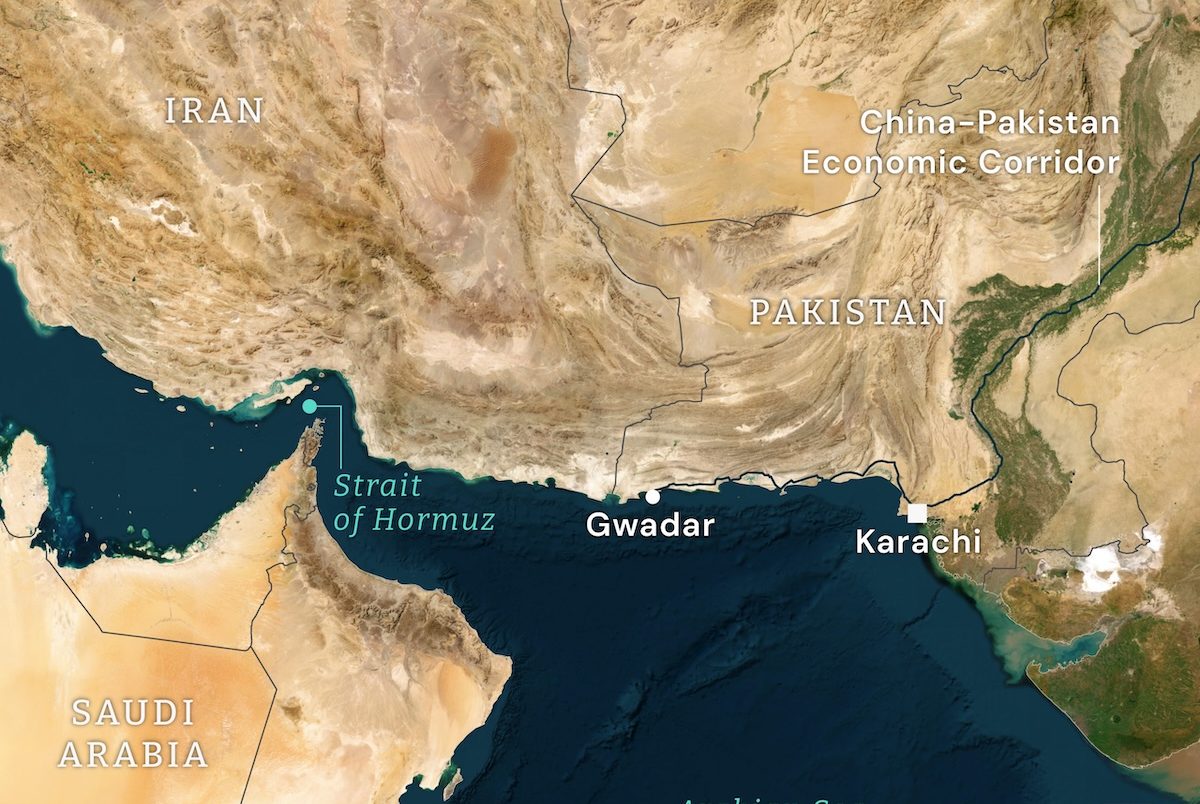
The crisis is already spilling over into national politics and the broader U.S. economy. A new poll from the AP-NORC Center for Public Affairs Research shows that President Donald Trump’s economic approval rating has slumped sharply over the past month, dropping from 38 percent in March to 30 percent in April. That drop tracks directly with the volatility caused by the Iran conflict, which has disrupted global energy markets, particularly around the critical Strait of Hormuz. During the April 16-20 polling period, Iran first reopened the key shipping lane, then closed it again, a pattern of whiplash that has become a defining characteristic of the ongoing conflict and amplified uncertainty in global energy markets.
Longer-term metrics already showed weakening U.S. standing even before the conflict began. A January 2026 report from global brand consultancy Brand Finance found that U.S. soft power scores dropped a steep 4.6 points to 74.9 in its annual Global Soft Power Index, one of the sharpest declines recorded in the survey. Many analysts argue the conflict has accelerated that decline. In a New York Times analysis titled “Four Ways Trump’s War is Weakening America”, the outlet noted that one of the most significant losses has been U.S. moral authority on the global stage.
That assessment is shared by Jeffrey Taliaferro, chair of the political science department at Tufts University. In an analysis of how the Iran conflict has eroded U.S. global standing, Taliaferro wrote, “Trump’s willingness to abandon talks to go to war, and the contradictory rhetoric he has employed throughout the Iran conflict, have weakened the perception of the US as an honest broker.”
Industry leaders warn that if elevated diesel prices persist, the economic damage will deepen for all Americans, as higher transportation costs are eventually passed through to consumers in the form of higher prices for food, consumer goods, and nearly every product that travels to market via truck. Reporting for this story was contributed by May Zhou in Houston, Texas.
-

Samsung workers rally in South Korea, demanding higher pay and threatening to strike
In the heart of Samsung Electronics’ flagship Pyeongtaek chip manufacturing complex in South Korea, tens of thousands of unionized workers gathered in a mass public rally on Thursday, throwing their weight behind demands for transparent compensation and higher performance bonuses amid an unprecedented AI-driven surge in global memory chip profits. Organizers said around 40,000 union members participated in the demonstration, where attendees carried hand-painted signs and unfurled large banners, chanting calls for the removal of arbitrary bonus caps while a large contingent of local police monitored the gathering to maintain order. Official crowd estimates from law enforcement were not released immediately after the event.
The demonstration came just hours after Samsung’s cross-country competitor SK Hynix announced jaw-dropping quarterly financial results, posting all-time record highs for both revenue and operating profit in the first three months of the year. SK Hynix leadership directly attributed the explosive growth to soaring global demand for high-end memory chips, fueled by widespread investments in artificial intelligence infrastructure, including data centers that power large language models and generative AI services.
Together, Samsung and SK Hynix control roughly two-thirds of the entire global memory chip market, placing the two South Korean firms at the center of the AI boom reshaping the global technology economy. Earlier this month, Samsung forecast its own first-quarter operating profit would hit a record 57.2 trillion South Korean won, equal to roughly $38.6 billion, outstripping the 37.6 trillion won ($25.4 billion) that SK Hynix reported Thursday. Samsung’s larger profit forecast also reflects its more diversified business portfolio, which includes leading market positions in consumer smartphones and home electronics beyond its semiconductor division.
The Samsung Electronics union, which represents 74,000 workers across the company’s operations, has argued that frontline employees have been shut out of the massive windfall generated by the AI boom. Union leaders have rejected management’s current compensation proposal, which includes restricted stock as part of bonus packages, and are pushing hard to eliminate the formal cap the company places on performance-based bonus payouts.
If negotiations between the union and Samsung management fail to resolve the dispute by mid-May, the union has threatened to launch an unprecedented 18-day full strike starting May 21. Union officials estimate that a sustained work stoppage would cost the company more than 1 trillion won, or roughly $676 million, in lost revenue every single day the strike continues. Speaking to the crowd from an elevated platform mounted on a crane, union leader Choi Seung-ho reaffirmed the group’s commitment to its demands, telling attendees, “We won’t stop this fight until our fair demands are met.”
While the AI boom has delivered unprecedented profits to the world’s leading memory chip manufacturers, industry leaders still face growing uncertainty in the months ahead. Ongoing conflict in the Middle East has disrupted global supply chains for critical chipmaking inputs, most notably helium, and has pushed up global energy costs, casting a shadow over the strong short-term growth outlook for the sector.
-

Asian stocks retreat and oil tops $100 despite fresh records on Wall St
Asian financial markets pulled back into negative territory on Thursday, erasing early session gains that had pushed Japan’s benchmark Nikkei 225 across the historic 60,000 threshold for the first time in trading history. The retreat came as growing uncertainty over the future of peace negotiations to end the ongoing Iran war drove up global crude oil prices, creating a cautious mood across international trading floors.
The downturn in Asian markets followed a record-setting rally on Wall Street a day earlier, where strong quarterly corporate earnings lifted all three major U.S. indexes to new all-time highs. Early momentum across Northeast Asian markets had been fueled by broad buying activity in technology stocks, which pushed both Japanese and South Korean benchmarks to fleeting record peaks before selling pressure pulled them lower.
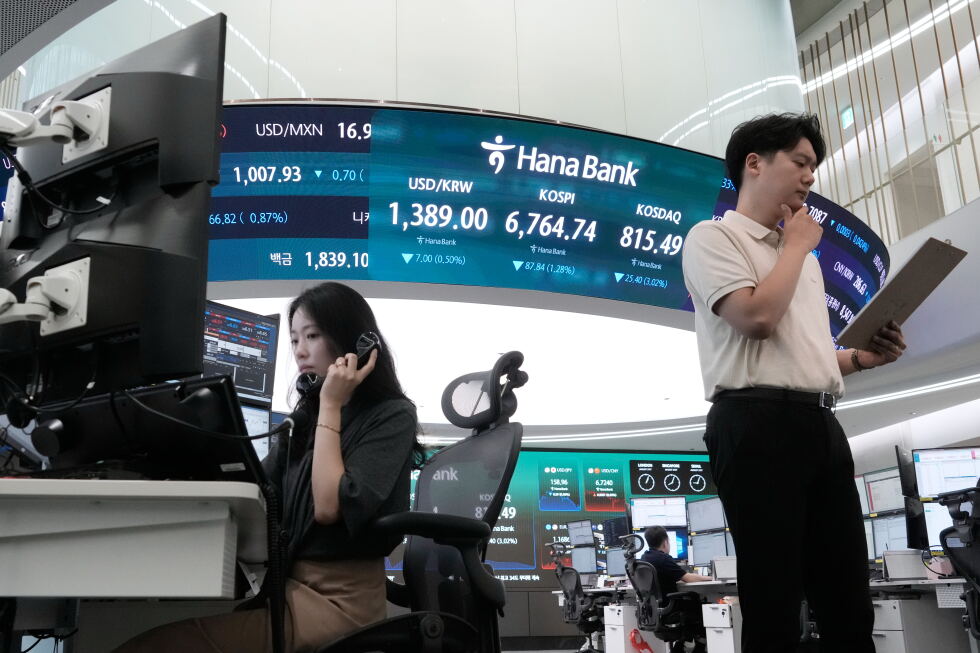
Tokyo’s Nikkei 225 climbed as high as 60,013.90 in early trading to claim its first ever close above the 60,000 psychological mark, but ended the session down 1.5% at 58,707.60. In South Korea, the Kospi index also gave up early gains that had pushed it briefly above 6,500, closing 0.1% lower at 6,414.57. The South Korean government released upbeat first-quarter gross domestic product data Thursday morning, reporting a 1.7% year-over-year growth rate that outperformed analyst expectations, powered by strong exports driven largely by demand for semiconductors for the global artificial intelligence boom.
Other major regional indexes also closed in negative territory: Hong Kong’s Hang Seng Index dropped 1.1% to 25,865.88, while mainland China’s Shanghai Composite fell 0.8% to 4,073.71. Australia’s S&P/ASX 200 declined 0.8% to 8,770.70, Taiwan’s Taiex sank 1.6%, and India’s benchmark Sensex lost 0.6%. U.S. stock futures also moved lower in early Thursday trading, following the previous day’s record close on Wall Street.
The fading prospects for a peaceful resolution to the eight-week-long Iran war have emerged as a key headwind for global investor sentiment, even after former U.S. President Donald Trump extended a temporary ceasefire. There remains no clear timeline for a new round of peace talks between parties to the conflict, and recent escalations in the Strait of Hormuz have further darkened outlooks.
On Wednesday, Iran fired on three commercial vessels transiting the Strait of Hormuz, one week after the U.S. implemented a sea blockade of Iranian ports. Iran’s Revolutionary Guard went on to seize two of the three attacked vessels, dimming already low hopes that critical global energy shipping lanes through the strait could reopen soon. Before the war began, roughly 20% of the world’s daily oil supply passed through the key chokepoint, but traffic has remained largely frozen since the conflict escalated.
The ongoing supply disruption from the Iran war has sent global energy prices soaring, and crude benchmarks added further gains on Thursday. Brent crude, the global benchmark for oil prices, rose 1.5% to $103.39 per barrel, up from roughly $70 per barrel before the war began in late February. U.S. benchmark West Texas Intermediate crude climbed 1.8% to $94.66 per barrel.
“As hopes for a resolution between the U.S. and Iran fade and peace talks stall, the oil market is having to reprice expectations,” ING Bank strategists Warren Patterson and Ewa Manthey wrote in a client research note Thursday. “As hopes fade, the reality of the supply disruption will set in, leaving further upside for prices. If no progress is made, the market will become increasingly numb to the noise and headlines that have dictated price action recently.”
The prior day on Wall Street, strong corporate earnings results and temporary optimism over the extended Iran ceasefire pushed major indexes to new records. The broad S&P 500 jumped 1% to 7,137.90, beating its previous all-time high set the prior Friday. The Dow Jones Industrial Average climbed 0.7% to 49,490.03, while the tech-heavy Nasdaq composite gained 1.6% to 24,657.57, also notching a new record high.
Several major U.S. companies posted outsized gains after releasing better-than-expected quarterly results. Shares of energy equipment manufacturer GE Vernova jumped 13.7% after the firm reported stronger-than-forecast profits, noting that it is also benefiting from the global AI boom via robust order growth for equipment destined for new data centers. Boeing added 5.5% and tobacco giant Philip Morris International rose 7% following their own positive earnings reports.
In other commodity trading early Thursday, precious metals prices moved lower: spot gold fell 0.6% to $4,722.70 per ounce, while silver dropped 2.3% to $76.17 per ounce. In currency markets, the U.S. dollar edged slightly higher to 159.53 Japanese yen, up from 159.48 yen late Wednesday. The euro dipped slightly to $1.1696, down from $1.1705 in the prior session.
AP Business Writer Stan Choe contributed reporting to this article.
-

Westpac hikes fixed rates twice in 3 weeks, 6.29 per cent starting point
One of Australia’s four largest domestic banks has taken the unusual step of raising fixed mortgage interest rates for a second time in just three weeks, piling additional financial pressure on home loan borrowers just days ahead of a highly anticipated monetary policy meeting from the Reserve Bank of Australia (RBA).
On Thursday, Westpac Banking Corporation confirmed it would lift its fixed interest rates across all loan terms spanning one to five years by 0.15 percentage points, marking its second upward adjustment in 21 days. Following the change, the bank’s lowest available fixed rate now sits at 6.29% for a two-year fixed home loan. Cumulatively, Westpac has increased its fixed mortgage rates by a total of 45 basis points over the three-week period. Even after the consecutive hikes, analysis from financial comparison platform Canstar confirms Westpac still offers the most competitive fixed rate pricing among Australia’s big four banking institutions.
Industry analysts note this move is far from an isolated adjustment, pointing to a widespread trend of repricing across the Australian lending sector driven by growing expectations of persistently high inflation and additional RBA rate increases. Sally Tindall, Canstar’s director of data insights, explained that most major and minor lenders have been revising their pricing upward repeatedly in recent weeks as concerns mount over a resurgence in Australia’s annual inflation rate. “Our analysis shows more than 90 per cent of lenders have adjusted fixed rates higher since the RBA’s last policy decision, including all four of the major banks. Westpac and the National Australia Bank have both implemented two separate hikes in this window,” Tindall noted.
The scale of the repricing shift is stark: just 19 Australian lenders currently offer at least one fixed home loan product with a rate below 6%, down from 83 lenders offering sub-6% fixed rates at the same time last year. For home borrowers already struggling with soaring borrowing costs, this rapid round of adjustments sends a clear message: the window for locking in a relatively competitive fixed rate is rapidly closing, Tindall added.
Westpac’s rate hikes come as the bank’s economic team forecasts three more official RBA cash rate increases in 2026, starting with a hike at the central bank’s upcoming May policy meeting. Luci Ellis, Westpac’s chief economist, linked the expected monetary policy tightening to ongoing geopolitical instability in the Middle East, specifically the conflict that has disrupted shipping through the Strait of Hormuz — a strategic waterway that carries roughly 20% of global oil trade. Since the outbreak of hostilities in late February 2026, global crude oil prices have nearly doubled, climbing from roughly US$56 per barrel to around US$100 per barrel. For Australian motorists, this translates to an extra 10 cents per litre of fuel for every US$10 per barrel increase in crude prices.
Ellis explained that Westpac’s updated forecast accounts for extended fuel supply disruptions, as the Strait of Hormuz has remained effectively closed for eight weeks, with shipping only gradually returning to normal volumes. She added that the pass-through of higher fuel and energy costs to broader consumer prices in Australia has happened far faster than many economists previously projected. “We believe the RBA will respond to this accelerated pricing behavior by tightening monetary policy more aggressively than it would have if these cost increases had not filtered into broader inflation so quickly,” Ellis said.
-

Albanese warns of Iran war ‘tail’ as fuel reserves reach 46 days
In the wake of the recent ceasefire between Iran, Israel and the United States, Australia’s top political leaders gathered for the first post-ceasefire national cabinet meeting on Thursday, where Prime Minister Anthony Albanese issued a stark warning: the nation will face a long-drawn economic “tail” from the ongoing Middle East conflict, even with domestic fuel reserves now sitting higher than they were before hostilities erupted.
Albanese told reporters following the meeting that while Australia’s near-term fuel supply outlook remains secure, the federal government is actively developing contingency plans to counter potential future disruptions to both fuel and fertilizer imports. He credited voluntary behavior changes from Australian motorists and consumers for the steady growth in national petrol reserves, which now stand at 46 days of coverage. While this is still only 51% of the 90-day minimum reserve requirement set by the International Energy Agency, it marks a notable improvement from the 36-day reserve level recorded when the conflict first began in late February.
Even a complete, immediate end to hostilities and a full reopening of the strategically critical Strait of Hormuz would not erase the lingering economic impacts, Albanese explained. There is an inevitable time lag before global supply chains reset after two months of disrupted trade: clearing the waterway to restore safe passage, repositioning dozens of diverted or stuck cargo vessels from the Persian Gulf, unloading shipments, and returning vessels to their collection points to restart the regular supply cycle will take weeks of coordination. “So, there will be a long economic tail here,” the prime minister emphasized.
Currently, six fuel cargo vessels are en route to Australia carrying more than 300,000 litres of diesel, and the federal government is exploring options to secure additional cargoes through the global spot market. Albanese also highlighted that the government has made significant progress in diversifying Australia’s import sources to reduce reliance on traditional Middle Eastern suppliers: the U.S., which has historically not been a major fuel provider to Australia, now accounts for roughly 18% of the nation’s fuel imports, while Argentina – once a negligible supplier – now contributes double-digit percentages of imports, and Algeria has also joined the list of active fuel exporters to Australia.
Climate and Energy Minister Chris Bowen echoed the prime minister’s caution, noting that Australia still faces strong international headwinds, ongoing risks, and persistent market uncertainty over the medium term, but added that the government is leaving no stone unturned to position the nation to withstand any future shocks.
Amid the broader economic concerns, there are small signs of relief for Australian motorists heading into the upcoming Anzac Day long weekend. Wholesale fuel prices have been falling steadily for several weeks, and these declines are now being passed on to consumers at the pump, according to Peter Khoury, a spokesperson for the NRMA motoring association. Over the past three weeks, wholesale diesel prices have dropped by one Australian dollar per litre, while wholesale unleaded petrol has fallen by 70 cents per litre.
“Some good news finally for motorists,” Khoury said Thursday from Sydney. NRMA price tracking shows the majority of Australian retailers are now in the lower half of the national price range, with half of all Sydney service stations selling unleaded petrol for less than $1.90 per litre. “It is very clear that we’re in a better position than we were a couple of weeks ago, and that should continue into the long weekend, although looking at what is going on over the Middle East who knows how long that will last,” he added, urging motorists to compare prices using dedicated fuel price apps to lock in the lowest possible rates.
Even with recent price declines, however, industry analysts warn that the threat of sky-high fuel prices has not passed. New modelling from Primera Research shows that Australian diesel prices were on track to hit $3.90 per litre earlier this month, a crisis that was only averted by two temporary interventions. First, the federal government implemented a temporary cut to fuel excise and paused 32 cent-per-litre heavy vehicle road user charges for three months. Second, fuel retailers voluntarily absorbed massive losses to keep prices from spiking, collapsing their average profit margins to just 1.7% – far below the standard 9.8% margin.
“The $3.90 moment passed. But the costs that prevented it didn’t disappear; they were deferred,” said Robert Beerworth, managing director of Primera Research. The temporary federal excise cut is set to expire on July 1, which will trigger an overnight 32-cent-per-litre price increase that will ripple through the entire national economy. “Diesel moves every truck and every delivery in the country. When its price goes up, so does everything on the shelf,” Beerworth explained. Already, retailer profit margins are starting to recover to pre-crisis levels, pushing already absorbed costs back onto pump prices gradually – and the July excise cut expiry will bring all deferred costs to consumers at once. “The threat of $3.90-per-litre diesel had not evaporated,” he added.
-

Australian private sector cost inflation hits highest point since August 2022
Freshly released purchasing managers’ index (PMI) data from S&P Global has painted a mixed but largely concerning picture of Australia’s private sector economy, revealing stubborn and faster-than-expected inflationary pressures fueled by ongoing conflict in the Middle East. The April survey, which polls 400 manufacturers and 400 service providers across the country, shows that business activity stabilized this month following a contraction in March, but cost and consumer price inflation have both surged to 3.5-year highs, far outpacing economist forecasts.
Supply chain disruptions stemming from the Iran-centered war that broke out in late February have been the primary driver of rising costs, with the closure of the Strait of Hormuz cutting off roughly 20% of global oil supplies and choking off shipments of key raw materials from the Persian Gulf, including fertilizer and medical-grade helium for MRI machines. S&P Global economist Eleanor Dennison explained that Middle East conflict has put intense strain on manufacturing supply chains, pushing supplier lead times out to their longest since mid-2022. “Greater outlays on fuel and freight also pushed cost inflation to its highest in just under four years,” she added.
The data confirms that rising input costs are not being absorbed by businesses, but are instead being passed directly to end consumers, pushing “charge inflation” – the rate at which businesses increase prices for customers – to its highest level since late 2020. While the overall manufacturing benchmark edged back into growth territory in April after contracting in March, both manufacturing output and service sector activity registered sub-50 readings (the threshold that separates growth from contraction), with manufacturing output falling from 49.4 to 48.2. The service sector, meanwhile, bounced back from March’s sharp decline to stabilize near neutral, driven by modest job creation even as demand remains soft.
The biggest takeaway from the data, according to Judo Bank senior economist Matt De Pasquale, is that inflation is becoming more broad-based across the Australian economy than most analysts predicted. That outcome significantly increases the likelihood that the Reserve Bank of Australia will implement additional interest rate hikes to curb price growth, he argued. “What the data suggests is that inflation could be picking up broadly and more than was initially anticipated given that growth is holding up. That would support the RBA focusing on inflation, getting ahead of it with further interest rate rises,” De Pasquale told NewsWire.
There are limited bright spots in the latest snapshot: the overarching composite PMI, which measures combined private sector activity, bounced back into neutral territory after contracting in March, when the outbreak of war first sent shockwaves through global markets. New business orders did decline for the second consecutive month in April, as widespread economic uncertainty dented domestic sales, but export orders to key markets including North America, Asia, and New Zealand saw a small uptick.
Dennison warned against overstating the modest growth in the headline manufacturing index, noting that underlying indicators remain weak. “To understand how manufacturers are faring, we must look beneath the positive headline index print, as output, new orders, employment and stocks all fell at modest rates,” she said. “Despite growing price pressures and persistent weakness in domestic demand, latest data saw output stabilise following March’s decline.”
The conflict-driven supply shock is also rippling through regional trade networks, affecting Japan – Australia’s third-largest import supplier, which shipped $23 billion worth of goods to Australia in 2025, according to UN trade data. Japanese manufacturing output surged from 52.1 to 55.4 in April, hitting its fastest pace of growth in 12 years, as manufacturers rushed to produce goods ahead of expected further supply chain disruptions. That surge has however amplified input cost competition and extended delivery times, pushing Japanese business inflation to its highest in nearly four years. S&P economist Annabel Fiddes noted that “there were reports that some manufacturing firms boosted output due to concerns and uncertainty surrounding the war in the Middle East and the potential for further supply chain disruptions. The latter contributed to not only a much sharper rise in costs but the most pronounced increase in average delivery times for manufacturers’ inputs for nearly four years.”
-

How a pivot to hair accessories led to business success
Against the backdrop of post-pandemic small business turbulence and shifting consumer fashion trends, San Francisco-based artist and entrepreneur Jenny Lennick has built a thriving retail brand around one surprisingly specific niche: food-themed hair accessories. What began as a pivot away from a struggling brick-and-mortar clothing business has evolved into Jenny Lemons, a profitable accessories label that posted $2 million in revenue in 2025 and earned a cult customer following across the United States and beyond.