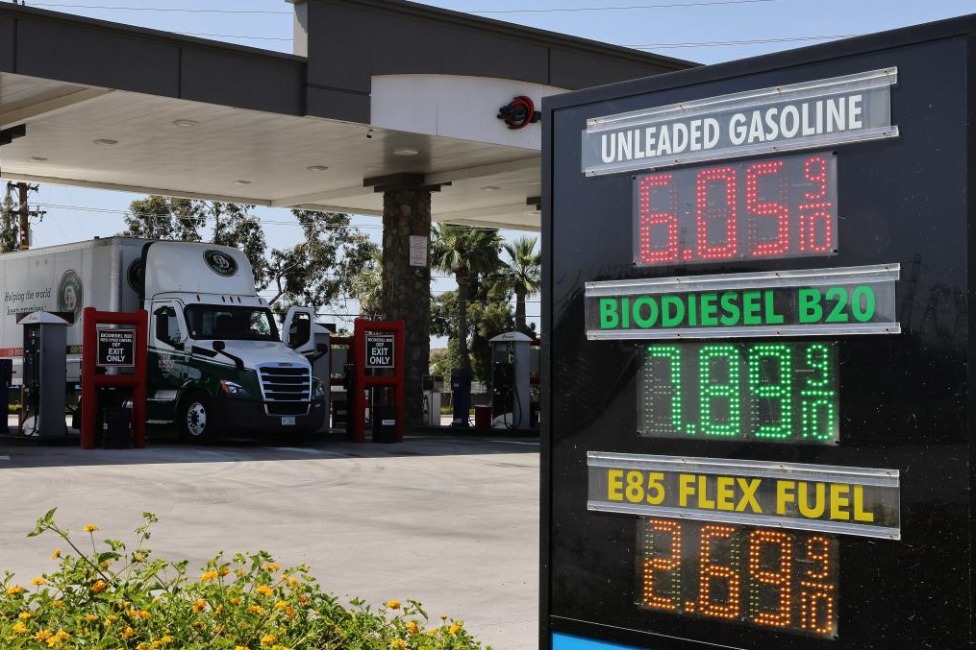
A months-long military conflict in the Middle East, launched by the United States and Israel against Iran in late February 2026, has sent diesel prices soaring across the United States, creating unprecedented financial strain for an industry that underpins the entire domestic supply chain: trucking. From independent owner-operators to large national fleet operators, businesses across the sector are being forced to rewrite operating plans, rethink pricing structures, and even abandon previously profitable routes entirely. The ripple effects of this crisis are already spreading beyond truck stops and fueling stations, dragging down presidential economic approval ratings and stoking fears of broader economic disruption.
Diesel is the literal lifeblood of American freight transportation. More than 3.5 million truck drivers move more than 70 percent of all goods consumed and distributed across the United States, meaning any shock to fuel prices hits trucking first, and the rest of the national economy feels the impact shortly after. As of April 21, 2026, data from the American Automobile Association puts the national average price of diesel at $5.53 per gallon. That spike is far more acute in California, the nation’s largest state economy, where preexisting strict air quality regulations already kept fuel prices above the national average. On the same date, the average diesel price in California hit $7.53 per gallon, a burden that industry leaders call the most severe they have ever seen.
For drivers on the ground, the price surge has turned once-profitable runs into money-losing propositions. At a Los Angeles-area truck stop, independent operator T. Stromsted summed up the widespread frustration in an interview with Xinhua, noting, “With these diesel prices, we’re all in for a world of hurt.” Another unnamed driver at a fuel station in Monrovia, Los Angeles County, shared that just two and a half months prior, a full tank for his rig cost roughly $700. Today, that same fill-up runs to more than $1,100. Like many drivers, he blames the ongoing military conflict in Iran for the sudden cost shock, saying, “It’s hard to make a run, but there’s no money in it. It’s all because of the war.”
Eric Sauer, chief executive of the California Trucking Association, confirmed that the current crisis is the most widespread and damaging the industry has faced in his decades of work. “This is the worst I’ve seen nationwide since I’ve been here,” Sauer said. “The war in the Middle East is creating real hardship for our members, and that trickles down to everyone.”
Data from industry analysts underscores the severity of the crisis. A March 2026 poll from DAT Freight & Analytics found that 18 percent of all surveyed trucking companies have already paused operations entirely, driven directly by the unanticipated spike in fuel costs. For smaller, independent operators that lack the financial buffer of large national fleets, the choices are increasingly bleak. Sauer explains that many small business owners are forced to turn down higher-weight loads that consume more fuel, cut back on the total number of miles they drive each month, or park their trucks entirely and stop working until prices retreat to sustainable levels.
The crisis is already spilling over into national politics and the broader U.S. economy. A new poll from the AP-NORC Center for Public Affairs Research shows that President Donald Trump’s economic approval rating has slumped sharply over the past month, dropping from 38 percent in March to 30 percent in April. That drop tracks directly with the volatility caused by the Iran conflict, which has disrupted global energy markets, particularly around the critical Strait of Hormuz. During the April 16-20 polling period, Iran first reopened the key shipping lane, then closed it again, a pattern of whiplash that has become a defining characteristic of the ongoing conflict and amplified uncertainty in global energy markets.
Longer-term metrics already showed weakening U.S. standing even before the conflict began. A January 2026 report from global brand consultancy Brand Finance found that U.S. soft power scores dropped a steep 4.6 points to 74.9 in its annual Global Soft Power Index, one of the sharpest declines recorded in the survey. Many analysts argue the conflict has accelerated that decline. In a New York Times analysis titled “Four Ways Trump’s War is Weakening America”, the outlet noted that one of the most significant losses has been U.S. moral authority on the global stage.
That assessment is shared by Jeffrey Taliaferro, chair of the political science department at Tufts University. In an analysis of how the Iran conflict has eroded U.S. global standing, Taliaferro wrote, “Trump’s willingness to abandon talks to go to war, and the contradictory rhetoric he has employed throughout the Iran conflict, have weakened the perception of the US as an honest broker.”
Industry leaders warn that if elevated diesel prices persist, the economic damage will deepen for all Americans, as higher transportation costs are eventually passed through to consumers in the form of higher prices for food, consumer goods, and nearly every product that travels to market via truck. Reporting for this story was contributed by May Zhou in Houston, Texas.