Against the backdrop of a widespread cost-of-living squeeze hitting households across Australia, retail giant Wesfarmers has delivered an unexpectedly resilient full-year financial performance, with its two flagship discount-focused brands Bunnings and Kmart attracting growing numbers of budget-conscious shoppers. The Perth-based conglomerate, which operates across multiple retail and industrial segments, released its full-year earnings report on Thursday, revealing a net profit of $2.87 billion — a marginal 1.8% decline from the prior financial year.
Wesfarmers Managing Director Rob Scott attributed the company’s solid performance to its deliberate long-term strategy of prioritizing everyday low prices, a positioning that has resonated strongly with consumers navigating rising inflation and stagnant wage growth. “Bunnings and Kmart Group’s everyday low prices continued to drive sales and earnings growth,” Scott stated in the company’s official release. “Disciplined execution of strategies helped offset broad-based cost pressures and delivered operating leverage across both businesses.”
Heading into future trading periods, Scott confirmed that price competitiveness will remain a core strategic pillar, as the company acknowledges that persistent inflation continues to stretch household and business budgets across the country. “While Australian consumer demand remains resilient, cost-of-living pressures continue to affect many households across the economy,” he added. “Uncertainty regarding the outlook for inflation, house prices, interest rates and tax settings are affecting consumer sentiment, while higher costs of doing business are weighing on business confidence and spending.”
Breaking down segment performance, Bunnings, Wesfarmers’ home improvement and outdoor living retail chain, once again carried the bulk of the group’s earnings growth, posting a 5.1% rise in earnings to reach $2.455 billion for the 12 months ending June 30. Discount department store chain Kmart Group matched that momentum, with earnings climbing 6% to hit $1.11 billion, while total sales for the brand rose 2.8% to $11.7 billion.
The strong results from Bunnings and Kmart were partially offset by a sharp downturn at office supplies retailer Officeworks, where earnings fell 22.2% to just $165 million, reflecting softer business and consumer demand for office goods post-pandemic. Across the entire Wesfarmers group, total annual revenue rose 3.4% year-on-year to $47.27 billion. Excluding one-off significant items, earnings before interest and tax increased by 7.3% to $4.49 billion.
In a positive signal to shareholders, the company confirmed it will issue a fully franked final dividend of $1.20 per share, payable to investors on October 7.
分类: business
-
Bunnings and Kmart sales grow as shoppers hunt for lower prices
-
Qantas profit slumps $330m as US-Iran war doubles fuel prices
The ongoing US-Iran conflict has sent global jet fuel prices skyrocketing, delivering a severe financial hit to Australia’s largest air carrier Qantas that has forced the company to trim domestic flight capacity and put a planned $150 million share buyback on hold, the airline confirmed in its latest market update.
In the report released this week, Qantas detailed that its underlying annual profits have fallen 13.1% year-on-year to $2.06 billion, representing a $330 million drop from the same 12-month period last year. Statutory after-tax profits saw an even steeper decline, dropping 19.7% to $1.289 billion. The airline directly attributed much of this downturn to the market volatility triggered by the US-Iran conflict, noting that the conflict has pushed jet fuel prices to more than double their levels from February, adding more than $420 million in unplanned costs to the company’s balance sheet.
Qantas executives note that the final $610 million in total cost impacts would have been realized without swift intervention. To offset these rising expenses, the carrier has already implemented a series of adjustments, including raising passenger fares, reallocating aircraft to high-demand international routes, and cutting underperforming domestic capacity to match shifting travel demand.
Despite the major headwinds from fuel costs, the airline reported stronger-than-expected revenue growth across both its Qantas mainline and low-cost Jetstar brands, driven by resilient customer travel demand. Underlying earnings before interest and taxes rose to $1.44 billion in the reporting period, outperforming some analyst projections.
Qantas Chief Executive Vanessa Hudson framed the company’s current operating landscape as split between two vastly different economic environments: the stable, high-demand period before the outbreak of the US-Iran conflict, and the uncertain climate that has followed. “The final four months of the year saw business and consumer confidence fall as the conflict and broader economic headwinds created widespread uncertainty,” Hudson explained in the update. “Some large corporates and government agencies responded by managing their costs more tightly, which directly reduced demand for premium business travel.”
“In response to the surge in fuel prices, we quickly adjusted fares and capacity and redeployed aircraft to give customers more options to fly to Europe, where demand for leisure travel remains strong,” Hudson added.
In addition to capacity cuts, Qantas confirmed it is pausing the $150 million share buyback program first announced in April, as the company prioritizes preserving cash to buffer ongoing fuel price volatility. The airline’s board has approved a final dividend of 19.8 cents per share for shareholders, a payout that reflects the company’s continued effort to balance investor returns with cost stability amid global uncertainty.
-

Rental vacancy rates ease but expert warns housing supply crisis to worsen
Australia’s national rental market has hit a key milestone not seen in two and a half years, but the modest uptick in available properties is unlikely to bring the meaningful relief that millions of Australian renters have been waiting for, according to new data from the REA Group. In July, the national rental vacancy rate rose 0.2 percentage points to reach 1.5%, the highest reading recorded since February 2022. While this marks a modest easing of the extreme tightness that has defined Australia’s rental market for years, the rate still sits far below the 2.5% to 3% range that economists and housing analysts identify as a balanced market where renters have meaningful choice and pricing pressure stabilizes.
Anne Flaherty, senior economist at REA Group, told NewsWire that two key shifts have driven the recent small increase in available rental properties: a surge in first-home buyer activity that drew many long-term renters out of the market to purchase their first properties, and a boom in property investment activity that brought more new stock into the rental pool. Flaherty explained that elevated first-home buyer purchasing at the end of 2023 pulled thousands of households out of the rental market, while 12-month data for new property investor loans shows activity is currently at the highest level since the Australian Bureau of Statistics began tracking this metric in 2019, driven largely by a wave of new investor purchases at the start of 2024.
Breaking down the data by capital city, Canberra recorded the nation’s highest vacancy rate in July at 1.67%, and also notched the largest monthly growth in available rental stock. Melbourne and Sydney followed Canberra in overall vacancy rates, while Darwin and Hobart remain the two tightest rental markets across the country’s capitals, with very few available properties for prospective renters to choose from.
Despite this short-term improvement, Flaherty warned that the market could tighten again in coming months, following changes to Australia’s property tax rules included in this year’s federal budget that are already dragging on investor demand. The budget scrapped the previous 50% capital gains tax discount for properties purchased after the changes, replacing it with an inflation-linked index model, and also eliminated negative gearing tax benefits for all new property purchases except for newly built homes. Existing properties and their owners remain grandfathered in under the old rules, but the changes have discouraged new investors from entering the market.
Flaherty noted that the core challenge facing Australia’s entire housing market – for both buyers and renters – remains a persistent, nationwide shortage of total housing supply. “Right now, both homebuyers and renters are facing significant struggles, and the root cause of both problems is that we simply do not have enough housing stock to meet demand,” she said. “It is true that surging investor demand can push property prices up and price first-home buyers out of the market, but if investor demand falls sharply, that leaves fewer properties available for rent, worsening conditions for renters. It is an incredibly tricky balance to strike.”
New building approval data from the Australian Bureau of Statistics offers a mixed picture of how supply will evolve in coming years. Overall building approvals jumped sharply in June, hitting their highest level since August 2021, driven by a 17.8% surge in approvals for private sector multi-unit apartment developments, which offset an 11% drop recorded in May. Approvals for standalone private houses also edged up 0.4% in June, marking six straight months where approval volumes have stayed above 10,000 homes nationally.
The Australian government, under Prime Minister Anthony Albanese’s Labor administration, launched the National Housing Accord (NHA) in response to the country’s housing affordability and supply crisis, bringing together federal, state and local governments to deliver a target of 1.2 million new homes over five years ending June 2029, or 240,000 new homes per year. While total approval volumes have risen since the middle of 2024, adjusted for population growth, the numbers still paint a far weaker picture. In the 2025-26 financial year, just nine new dwellings are approved per 1,000 Australian residents. That is substantially lower than the 12 approvals per 1,000 residents recorded in early 2015, and only a tiny improvement from the eight approvals per 1,000 residents recorded in June 2023.
Flaherty added that headwinds facing developers are likely to keep supply growth constrained for the foreseeable future. “Developers are dealing with a long list of constraints including rising construction costs, higher interest rates that increase borrowing costs, and persistent labour shortages across the construction sector,” she said. “On top of that, developers typically prefer to break ground on new projects when home prices are rising, and the current environment of softening home prices adds another layer of concern for new development. That means housing supply is more likely to worsen than improve in the near term.”
The next batch of monthly building approval data, covering July 2024, is scheduled for release by the Australian Bureau of Statistics on September 1.
-

Why India is importing sugar for the first time in nearly a decade
As the globe’s largest consumer and second-largest producer of sugar, India is navigating a tense supply crunch that has sent domestic sugar prices surging nearly 40% in just two months, forcing New Delhi to approve 1 million tonnes of imports for the first time in almost a decade. The crisis has unfolded ahead of the country’s peak demand season, which kicks off in August with a string of major religious festivals including Ganesh Chaturthi, Dussehra and Diwali, followed by the annual busy wedding period. This time of year already sees food and beverage manufacturers ramp up bulk stockpiling to prepare for high consumer sales, adding extra upward pressure on wholesale market prices.
Projections for the 2025-2026 production season, which runs from October 2025 to September 2026, have now been slashed to 30.6 million tonnes – an 11% drop from the government’s initial forecast of 34.3 million tonnes. The production shortfall translated directly to skyrocketing retail costs: by August, a kilogram of sugar that retailed for 40 to 45 Indian rupees ($0.42 to $0.47) between May and June was selling for more than 58 to 60 rupees across most major markets, though prices have seen a minor easing in recent weeks.
The situation has raised a pressing question: how did one of the world’s top sugar-producing nations end up needing to import the commodity for domestic consumption? Indian officials have pointed to three core drivers: reduced sugarcane output tied to El Niño-driven lower monsoon rainfall, unregulated hoarding by traders, and tightening global sugar supplies triggered by adverse weather hitting other major producing nations. But industry analysts and experts argue that a key contributing factor was the government’s overestimation of domestic production, which led to approval of large exports before the full scale of the shortfall became apparent.
New Delhi initially greenlit 1.5 million tonnes of sugar exports for the 2025-2026 season, then approved an additional 500,000 tonnes in February. By the time exports were halted in May, nearly 800,000 tonnes had already been shipped out of the country. “From allowing exports at the start of the season to ending with an import of a million tonnes is a large variation on production estimates – and that’s a big surprise,” explained Vikram Suryavanshi, senior analyst at PhillipCapital India.
The gap between production and demand is particularly acute for India because the country operates with very little excess sugar buffer. Domestic consumption hit more than 28 million tonnes in the previous season, a figure that already comes close to this season’s projected total output. On top of that, roughly 3 million tonnes of sugar is expected to be diverted to ethanol production this year, leaving almost no room to absorb any production shortfall. Atul Chaturvedi, non-executive director of Shree Renuka Sugars – India’s largest sugar refiner and a major ethanol producer – noted that the newly approved imports will act as a critical buffer to fill this gap.
To further ease domestic supply constraints, the government has introduced additional policy adjustments. For a three-month period starting September 1, sugar refineries operating in port-adjacent special economic zones – which normally import raw sugar for refining and re-export – will be allowed to sell refined sugar duty-free into the domestic market. The last time India imported sugar for domestic consumption was nearly a decade ago, during a severe national drought. The Indian Sugar Mills Association (ISMA) has also asked member mills to start sugarcane crushing two weeks earlier than the standard schedule to begin building inventory ahead of the new October harvest.
Unfortunately, the upcoming 2026-2027 production season also faces significant risks tied to erratic monsoon patterns across India’s key growing regions. Sugarcane is an extremely water-intensive crop, and uneven rainfall, paired with prolonged dry spells in top producing states including Maharashtra, Uttar Pradesh and Karnataka, has already damaged standing crops. Current projections point to lower overall yields, and thinner cane with reduced sucrose content will translate to even less processed sugar per harvested tonne. “Looking at the climate conditions, the next season is also not going to be a bumper crop, although it is too early for actual assessment,” Chaturvedi added.
Export restrictions when domestic supplies tighten and prices rise are a longstanding policy for India, most recently seen in a 2023 ban on non-basmati white rice exports that lasted more than a year after crop damage pushed up domestic food prices. But this year’s misstep – approving large exports before identifying the production shortfall – has sparked questions about the accuracy of the government’s agricultural forecasting frameworks. Siraj Hussain, a former secretary at India’s federal agriculture ministry, noted that “this year, the initial projections for sugarcane production did not materialise due to unusual weather in some parts and disease in certain varieties.” The government has not publicly explained why the full scale of the shortfall was not detected before exports were halted on May 13, only stating that production fell short of estimates due to sugarcane disease and waterlogging from excessive late rainfall. The BBC has reached out to India’s agriculture ministry for additional comment.
Some industry observers have also pinned part of the blame on India’s expanding ethanol blending program, which diverts sugarcane away from sugar production. Historically, mills diverted roughly 10% of sugar output to ethanol production, a policy designed to absorb excess supply and stabilise prices during years of bumper harvests. But this year, India rolled out E20 fuel – petrol blended with 20% ethanol – as the standard for retail pumps, coming at exactly the same time as a domestic sugar production shortfall, creating extra pressure on supplies, according to experts.
The government has pushed back on claims that the ethanol policy is a core driver of the crisis, noting that the share of sugarcane diverted to ethanol has actually fallen from 12% in 2022-23 to around 9% in 2025-26. Officials maintain that weak production, hoarding, and tighter global supplies are the sole causes of the current price surge. That position is shared by some industry groups: Deepak Ballani of ISMA, which represents private mills that produce nearly half of India’s total sugar output, argues that current market stocks and monthly release quotas are sufficient, and that speculation and hoarding – rather than a genuine structural shortage – are driving price hikes. In response to hoarding concerns, the government has capped trader and wholesaler sugar stockpiles at 400 tonnes for a three-month period to curb speculative stockpiling.
Suryavanshi disagrees with that assessment, noting that India has implemented similar stock caps in past supply crunches, and prices continued to climb even after the latest restrictions were announced. To him, the trajectory of prices confirms that a genuine supply squeeze is underway.
India’s import announcement also comes at a time of tightening sugar supplies across the globe. El Niño has disrupted rainfall in key producer Thailand, while unseasonably heavy rain has delayed sugarcane harvesting in Brazil – the world’s top sugar producer – where mills are also diverting a growing share of cane to ethanol production. Severe heatwaves have damaged Europe’s sugar beet crop, with France projecting its worst harvest in four years. U.S. government forecasters expect global sugar production to fall to 184.9 million tonnes this season, down from the previous season’s record high of 186.1 million tonnes. Global markets have already reacted: London white sugar futures hit $541 a tonne in mid-August, their highest level since April 2025, while New York raw sugar futures jumped 4% on the day India announced its import plan.
Looking ahead, some industry leaders say India’s sugar availability could improve next year if current high prices incentivise mills to divert less sugarcane to ethanol production. “At current sugar prices, it simply doesn’t make economic sense for mills to divert cane juice to ethanol, so India’s sugar scenario should be quite all right going forward,” Chaturvedi said. But he added that the 2025-2026 crunch carries a clear warning for future policy: it is a “warning that going forward, we need to be a lot more careful in estimating our sugar crop numbers.”
-

Asian shares mostly rise as oil prices fall and hope grows for AI
In early trading on Wednesday, most Asian equity markets posted gains, as investors closely monitored diplomatic negotiations aimed at reopening the Strait of Hormuz — a critical global shipping chokepoint that remains largely closed following the outbreak of war in Iran.
Global enthusiasm around artificial innovation continued to lift a number of regional technology stocks, while sliding crude oil prices injected fresh optimism into major oil-importing economies including Japan, which relies on foreign purchases for nearly 100% of its energy needs. Japan’s benchmark Nikkei 225 climbed 0.6% to 66,227.55 during morning session trading. Meanwhile, South Korea’s Kospi outperformed regional peers with a 1.6% jump to 6,849.92, Hong Kong’s Hang Seng gained 0.8% to 25,712.29, and China’s Shanghai Composite posted a modest 0.7% rise to 3,917.04. Australia’s S&P/ASX 200 was the only major index to trend downward, dipping 0.2% to 9,142.60.
Oil prices extended their downward trend through early Wednesday, with benchmark U.S. crude falling $2.06 to settle at $80.30 per barrel. International benchmark Brent crude dropped $2.31 to $86.27 a barrel. Brent saw extreme volatility last month, swinging between $72 and $102 per barrel as investor hopes for a U.S.-Iran negotiated deal rose and fell amid escalating tensions. Tensions between Washington and Tehran climbed higher recently after the Trump administration unveiled a new round of economic sanctions designed to further pressure Iran’s struggling economy.
Diplomatic efforts to de-escalate conflict and reopen the strategic waterway gained momentum this week. Top diplomats from Iran and Oman met Tuesday to discuss a phased plan for restoring commercial ship traffic through the strait. The talks followed a recent attack that left an oil tanker disabled off the coast of Oman, a stark reminder of the persistent safety risks facing shipping operators that attempt to traverse the waterway while it remains under Iranian control. In a parallel diplomatic push, a Pakistani delegation held discussions with Iran’s president to restart negotiations aimed at ending the U.S.-Iran conflict. Pakistan’s Interior Minister Mohsin Naqvi described the meeting with Iranian President Masoud Pezeshkian as “very positive and productive,” per comments shared by the Pakistani military.
Beyond energy and geopolitics, the global AI sector remained a key driver of market momentum. On U.S. markets, chipmaker Nvidia — one of the biggest beneficiaries of the AI boom, which is scheduled to release its latest quarterly earnings report Wednesday — led gains with a 2.2% rise. The uptick came one day after a 2.9% drop for the stock, which had been the largest drag on the S&P 500 in the prior session.
Eric Schiffer, CEO of the Los Angeles-based investment firm Patriarch Organization, argued that long-term demand for AI technology will continue to grow despite near-term market fluctuations, as both private companies and governments view AI investment as a non-negotiable requirement to maintain global competitiveness. “There’s a lot of fear about AI. Those fears are based on the financing side, meaning that there is so much money that needs to be raised. What it’s underrating, in my opinion, is the fact that this technology is so incredible,” Schiffer said. AI stocks have seen sharp volatility through the summer, as investors weigh concerns that valuations have risen too quickly and that the AI boom may prove unsustainable over the long term.
U.S. bond markets also saw movement this week, with the yield on 10-year Treasury notes falling to 4.63%, down from 4.70% on Monday and 4.74% at the end of last week. While this represents a notable shift for the bond market, the 10-year yield remains well above the 3.97% level recorded before the Iran war sent oil prices and inflation concerns soaring. By the close of trading, the S&P 500 gained 24.42 points to reach 7,677.28, the Dow Jones Industrial Average added 160.24 points to hit 53,577.40, and the Nasdaq composite climbed 171.11 points to 26,151.30.
In foreign exchange markets, the U.S. dollar edged slightly lower against the Japanese yen, falling to 159.02 yen from 159.20 yen in the prior session. The euro also slipped modestly, trading at $1.1669 compared to $1.1675 at the previous close.
-
Reserve Bank signals further rate pain possible to crush persistent inflation
Australia’s multi-year battle against elevated inflation appears to be turning a corner on paper, but leading economic analysts are sounding a stark warning: Australian households carrying mortgages should prepare for more financial pain, as any apparent progress is unlikely to translate to imminent cash rate cuts. In fact, further interest rate hikes remain on the table ahead of the Reserve Bank of Australia’s (RBA) September monetary policy meeting.
-
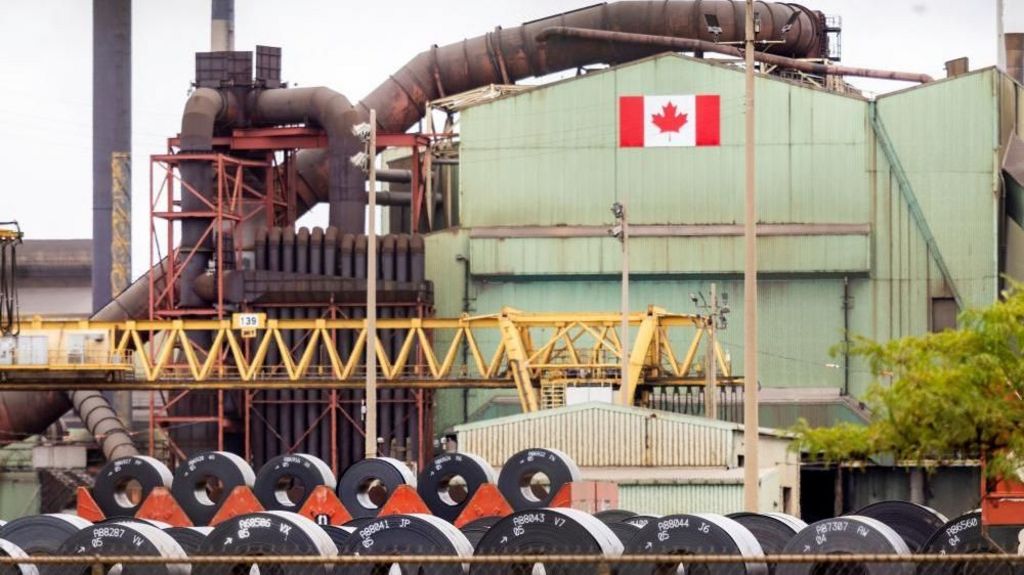
Canada announces ‘dollar-for-dollar’ retaliatory tariffs on US as high as 50%
Trade tensions between the United States and Canada have spiraled into a full-blown tariff conflict after Ottawa announced sweeping retaliatory levies in response to new trade barriers imposed by the Trump administration last weekend. The dramatic escalation comes just days after high-stakes bilateral trade negotiations collapsed late last week, with both leaders trading sharp accusations of unreasonable last-minute demands.
On Tuesday, Canadian officials confirmed that new counter-tariffs ranging from 15% to 50% will go into effect on September 8, targeting approximately C$28 billion ($20 billion) in American goods, matching the value of Canadian products hit by recent U.S. tariffs. The 700-item targeted list includes significant hikes on key industrial and consumer goods: previously 25% counter-tariffs on U.S. steel and aluminum will rise to 50%, while the same 50% rate will apply to American honey, furniture, clothing, makeup, and perfume. A 25% tariff will apply to U.S. appliances, dairy products including cheese, seafood, and select steel and aluminum derivative products, and a 15% levy will fall on industrial tools and machinery such as forklifts and air conditioning units.
Canadian Finance Minister François-Philippe Champagne framed the retaliatory measures as both necessary and measured. “The 50% tariffs imposed by the Trump administration after trade talks fell apart on Friday will have real, tangible consequences for Canadian workers, businesses, and communities across our country,” Champagne said in a statement. “Canada must respond.” He characterized Ottawa’s actions as “proportionate” and “strategic,” adding that the federal government is allocating an additional C$7.5 billion to support programs for Canadian businesses and workers impacted by U.S. tariffs, designed to curb job losses and keep struggling companies operational.
The breakdown in trade talks and subsequent tariff tit-for-tat marks the most severe downturn in U.S.-Canada trade relations in modern history. The two neighbors have maintained deeply integrated cross-border supply chains built up over decades of free trade, but the new barriers will raise trade costs for businesses on both sides of the border, which will ultimately translate to higher prices for consumers and squeezed margins for small and large enterprises alike.
Former U.S. President Donald Trump, who imposed the initial new tariffs on Canadian imports, has not directly commented on Canada’s countermeasures. However, in a series of posts to his Truth Social platform on Tuesday, Trump doubled down on his anti-Canada rhetoric, claiming the country has been “ripping off” the United States for decades by imposing steep tariffs on American farmers. “I deal with many countries, and Canada is easily the most difficult and unreasonable,” Trump wrote. “They feel entitled, but they are not a State, and will be entitled no longer!” In a bizarre addendum to his trade grievances, Trump also suggested he would rename the shared Great Lake Lake Ontario to “Lake America,” claiming that the U.S. “don’t expect to be doing much business with Ontario any longer.”
The tensions have ramped up even further following a threat Trump made Monday to raise U.S. tariffs on imported Canadian automobiles to 50% effective January 1 next year. Canadian Prime Minister Mark Carney responded sharply, accusing Trump of deliberately seeking to “destroy” key Canadian industries, including auto manufacturing, steel, and aluminum.
While public rhetoric from both sides hit a fever pitch on Monday, some political leaders have struck a more moderate tone this week, leaving open the door to a resumption of negotiations. Ontario Premier Doug Ford, who called Trump a “loser” during a Monday press conference, walked back the harsh language in a CNN interview Tuesday, acknowledging that “things got a little heated.” “But I want to make a deal — a good deal for the American people, a good deal for Canadians,” Ford said.
The escalating conflict also throws the future of the United States-Mexico-Canada Agreement (USMCA), the trilateral North American free trade pact that replaced NAFTA, into serious question. After U.S.-Canada trade talks collapsed, Mexican President Claudia Sheinbaum has already dispatched Economy Secretary Marcelo Ebrard to Washington for emergency consultations to address the unfolding crisis.
-
Whistleblower claims KPMG partners took millions of dollars in secret commissions
A series of explosive confidential documents, submitted by anonymous whistleblowers, detailing grave allegations of secret commission payments, widespread tax avoidance, and misuse of client funds at major global accounting firm KPMG have been formally presented to an Australian parliamentary committee. The submissions, which form part of an ongoing parliamentary inquiry into KPMG audit leaks, bring a wave of new scrutiny to the firm’s internal conduct over decades of operation in Australia. At the heart of the submissions is a heavily redacted whistleblower letter dated August 8, 2023, which claims that former senior partners at KPMG’s Australian division collectively received $2.4 million in off-the-books secret commissions that rightfully belonged to the firm as corporate income. A separate earlier whistleblower submission, dated July 19, 2021, similarly alleges that former partners accepted hidden kickbacks in exchange for arranging aggressive, potentially illegal tax schemes for the firm’s high-net-worth clients. Unredacted versions of the correspondence, first reported by Australian media, name Chris Jordan, the former head of the Australian Taxation Office (ATO), as one of the former partners implicated in the claims. The whistleblower alleges Jordan received secret commissions during his tenure as a KPMG partner prior to leading the national tax agency, and additionally claims he failed to file a personal tax return for more than 25 years. A second former partner, Phillip Henry, is also named in the submissions. The documents allege Henry misappropriated client funds to cover personal expenses, including home renovations and the purchase of a private jet ski, and also engaged in repeated inappropriate conduct toward female colleagues and clients. Beyond the personal and financial misconduct allegations, the submitted documents also detail additional institutional failures at KPMG Australia. The whistleblower claims the 1997 internal partner election outcome for the firm’s New South Wales division was deliberately falsified, and that one partner illegally smuggled cash from Singapore into Australia to help a client evade tax obligations. Further allegations center on misuse of confidential client data, claiming sensitive client information was improperly shared among KPMG teams working for competing client companies, and that the firm mishandled prior internal whistleblower complaints about misconduct. It is important to note that the submissions only represent allegations made by anonymous whistleblowers, and no findings of wrongdoing have been proven against any of the named partners or KPMG as an institution at this stage of the parliamentary inquiry.
-
ASX brushes off US ‘economic D-Day’ threat against Iran
Geopolitical tensions triggered by the Trump administration’s inflammatory threat of an “economic D-Day” targeting Iran and its commercial partners failed to derail a bullish rally on Australia’s primary stock exchange on Tuesday, pushing the benchmark index to its highest level in two weeks.
The S&P/ASX 200 closed the trading session at 9164.6 points, climbing 61.5 points or 0.68% after late-session buying from traders locked in solid gains across most market sectors. While newly announced US sanctions targeting companies, individuals and oil tankers facilitating Iranian crude exports pulled the local energy sector into negative territory, only the real estate segment joined energy in closing lower. Healthcare, technology and consumer staples all posted strong double-digit gains to lead the upward trend, with nine out of the ASX’s 11 sectors finishing the day in positive territory.
Carol Kong, a senior economist at Commonwealth Bank of Australia, noted that market participants are increasingly skeptical that US Treasury Secretary Steven Mnuchin will follow through on the sweeping sanction threats. “We do not expect China – Iran’s largest trade partner – to bow to US pressure to cease all commerce with Iran,” Kong explained. “Our analysis suggests the US will prioritize regional market stability over further escalation ahead of the planned Trump-Xi summit scheduled for next month.”
Major Australian energy producers bore the brunt of geopolitical jitters: Woodside Energy dropped 1.4%, Santos fell 1.3%, and Viva Energy slid 3.2%. Against this backdrop, technology stocks staged a broad rally. Embattled logistics software firm Wisetech Global rebounded 4.6%, cloud accounting platform Xero gained 2.6%, and communications technology firm Codan added 2.7%. IT services provider Data#3 extended a huge previous-day rally triggered by strong full-year financial results, climbing an additional 5.8% on Tuesday. DroneShield, a leading drone defense technology firm, rose 7.4%, while buy now pay later provider Zip Co gained 5.6%.
The consumer staples sector got a major boost from supermarket giant Coles Group, whose shares jumped 4.9% after the release of its annual report that exceeded market expectations. Josh Gilbert, a market analyst at eToro, noted that Coles has spent years urging investors to wait for returns from its large-scale automation investment program, and the latest results confirm that patience has paid off. “The most encouraging element of this result is that Coles delivered higher profits without relying on excessive price increases for consumers,” Gilbert said. The chain’s automated distribution centers are now profitable, and while liquor division earnings fell nearly 50% year-on-year, the bank secured $311 million in annual cost savings, while project and dual-running warehouse costs fell by $103 million. Gilbert added that even with the strong result, some investors have expressed mild caution as the chain prepares to enter a new capital spending cycle before distributing full returns from the last round of investment.
Healthcare stocks also posted strong gains, with the sector climbing 1.4% overall. Global biotech leader CSL gained 2.7% after a challenging 12-month period, while safety product manufacturer Ansell led the sector with an 8.2% jump, extending a 9.6% rally from the previous trading day following the release of solid full-year earnings. Analysis from Morgan Stanley shows that active Australian fund managers continue to hold healthcare as their largest overweight position, while they have also expanded their overweight holdings in the IT sector – a bet that paid off handsomely in Tuesday’s trading.
In the commodities segment, mining giant BHP added 0.8% to hit a second consecutive all-time closing high. Gold is on track for its best monthly performance since 1999, with prices up 19% month-to-date amid rising global geopolitical uncertainty. Global oil prices edged higher on the back of US-Iran tensions, offsetting early market concerns about supply disruptions.
A handful of smaller caps also posted striking gains on Tuesday. Off-road accessories manufacturer ARB saw its shares surge 13.9% even after the firm reported a 3.8% drop in annual sales revenue to $702 million and a 5.2% fall in after-tax net profit to $92.4 million compared to the prior financial year. Sustainable investment firm Australian Ethical saw its shares rocket 14.8% after announcing that total funds under management rose 4% to a record $14.5 billion, while full-year net profit after tax jumped 29% to $25.7 million for the 12 months ending June 30. The company confirmed it had delivered both record assets under management and double-digit earnings growth for the reporting period.
-

World shares mostly gain and oil prices slip as the US raises pressure on Iran
Global equity markets across Europe and Asia mostly notched gains on Tuesday, building on a mixed close for US stocks one day prior, as investors braced for a week packed with high-stakes events that could reshape near-term market trajectories.
Benchmark European indexes all edged into positive territory to kick off the trading day: Germany’s DAX climbed 0.5% to settle at 26,240.76, France’s CAC 40 added 0.3% to reach 8,480.52, and the UK’s FTSE 100 posted a modest 0.1% uptick to hit 10,869.93. Futures tied to major US indexes also pointed to a positive open, with S&P 500 futures up 0.3% and Dow Jones Industrial Average futures rising 0.2%.
Across Asian trading sessions, most major benchmarks followed the upward trend. Japan’s Nikkei 225 gained 0.5% to close at 65,856.43, led by a 2.3% jump for technology investment conglomerate SoftBank Group. South Korea’s Kospi reversed early session losses to climb 0.7% to 6,742.74, as traders stepped back into tech stocks to capitalize on discounted valuations following recent pullbacks. Hong Kong’s Hang Seng Index held nearly steady at 25,511.10, while China’s Shanghai Composite Index added 0.2% to 3,889.44. Australia’s S&P/ASX 200 rose 0.7% to 9,164.60, Taiwan’s Taiex gained 0.9%, and India’s Sensex bucked the regional trend with a 0.2% dip.
The upbeat day for global stocks came after a choppy Monday session on Wall Street, where the Dow Jones Industrial Average added 0.3% but the S&P 500 slipped 0.3% and the Nasdaq Composite fell 0.8%. Tech stocks led the downside move on Monday, as ongoing volatility persists around concerns that the AI-driven hype has pushed share prices unsustainably high, and that massive demand for AI-focused chips could soften if the technology fails to deliver projected profit gains. Chipmaking giant Nvidia, the biggest corporate winner of the AI boom so far, dropped 2.9% in Monday trading. The company is set to release its highly anticipated quarterly earnings report on Wednesday, a result widely expected to set the next big trend for AI-linked equities globally. Other major chipmakers also fell, with Micron Technology sliding 5.8% and Broadcom dropping 2.6%.
One bright spot for markets on Monday came from the US bond market, where pressure that has built through the summer of this year eased slightly after the US Treasury Department took emergency steps to calm volatility. The 10-year Treasury yield pulled back to 4.69%, down from 4.74% late Friday, returning to levels seen before the Treasury surprised markets with an announcement of expanded planned bond buybacks. Longer-term yields have surged through the summer, driven by investor concerns over persistent inflation, growing US government debt loads, and broader macroeconomic uncertainty. Elevated yields push borrowing costs higher for all sectors of the economy, not just the federal government, and have already driven mortgage rates higher and weighed on the US housing market.
Stephen Innes, managing partner at SPI Asset Management, noted in a Monday research note that recent discussions about using funds from the Treasury General Account to finance longer-dated bond purchases gave markets a temporary boost. “The latest discussion about using Treasury General Account cash to help finance purchases of longer-dated bonds gave the market something to chew on Monday, and it initially liked the taste. Long yields fell, and the curve flattened,” Innes wrote. However, he added that temporary market support does not resolve the deeper issues driving bond volatility: “But there is a difference between forcing the bond market to blink for an afternoon and solving the underlying problem.”
All market eyes are now turning to Friday, when new Federal Reserve Chairman Kevin Warsh is scheduled to deliver a keynote address at the central bank’s annual economic symposium in Jackson Hole, Wyoming — a venue that has historically hosted major US monetary policy announcements. Analysts widely expect Warsh to address persistent inflation and outline the Fed’s next policy moves to address rising price pressures.
In energy markets, oil prices retreated sharply on Tuesday after US Treasury Secretary Scott Bessent announced a new round of sanctions against Iran, and issued a warning that any countries continuing to conduct business with Tehran would face retaliatory measures. International benchmark Brent crude fell 2% to $88.74 per barrel in early Tuesday trading, while US benchmark West Texas Intermediate crude shed 2.2% to $83.14 per barrel. Oil has emerged as a major contributor to global inflationary pressures in recent months, and Brent has traded well above the $72 per barrel level it held before the outbreak of conflict involving Iran in late February. Last month, Brent swung wildly between $72 and $102 as investors shifted between optimism and pessimism over the potential for a US-Iran deal that would reopen the Persian Gulf to unimpeded oil tanker traffic. The new sanctions announced Monday already pushed Iran’s currency, the rial, to a new all-time low against the US dollar.
In foreign exchange markets, the US dollar edged higher against the Japanese yen, rising to 159.30 yen from 159.10 yen in prior trading. The euro held relatively steady, inching up slightly to $1.1670 from $1.1667.