作者: admin

  • ASX 200 slips as Middle East caution outweighs strong tech surge

    ASX 200 slips as Middle East caution outweighs strong tech surge

    On Friday, a strong five-day rally in Australia’s technology sector failed to offset broader investor caution tied to unresolved Middle East peace negotiations, leaving the country’s key sharemarket benchmark in negative territory. The benchmark S&P/ASX 200 closed down 8.10 points, or 0.09%, at 8946.90, while the wider All Ordinaries index retreated 5 points, or 0.05%, to settle at 9168.60.

    Trading was split across the market’s 11 sectors, with six closing in positive territory and five ending the session lower. Technology stocks emerged as the clear outperformer, with the sector’s index notching a 12.99% gain over the previous five trading days, and extending upward momentum into Friday. Standout gainers in the space included logistics software firm WiseTech Global, which rose 2.85% to $46.18, data center operator Next DC Limited, which climbed 1.58% to $14.12, and communications technology firm Codan, which added 0.89% to $33.97.

    These gains were more than offset by pullbacks in consumer discretionary shares and financial stocks. Retail conglomerate Wesfarmers, the country’s largest retailer by revenue, dropped 1.63% to $72.85, electronics retailer JB Hi-Fi fell 0.50% to $76.07, and home goods chain Harvey Norman slid 2.97% to $4.57. Australia’s big four banks also posted a mixed performance: Commonwealth Bank of Australia eked out a 0.07% gain to $178.23, and ANZ Group added 0.50% to $37.92, while Westpac Banking Corporation fell 0.72% to $39.73, and National Australia Bank slumped 1.98% to $42.55.

    Beyond equities, the Australian dollar saw slight downward movement after hitting a four-year high in the previous session. During Thursday’s Asian trading window, the currency briefly touched a peak of 71.97 U.S. cents before retreating marginally to 71.63 U.S. cents by Friday’s close. Commonwealth Bank senior economist Kristina Clifton projected that the local currency could receive a short-term 1-2 U.S. cent boost if the Strait of Hormuz, a critical global oil chokepoint currently disrupted by regional tensions, reopens to full commercial traffic. Clifton noted that a full reopening remains 3 to 4 weeks away based on current projections.

    Investor anxiety over the trajectory of Middle East peace talks and the ongoing uncertainty around maritime access through the Strait of Hormuz has left market strategists warning of elevated downside risk for Australian and global equities. AMP chief economist and head of investment strategy Shane Oliver noted that while major markets have likely absorbed the worst impacts of the regional conflict and associated oil price shock if oil shipments resume quickly, the unresolved uncertainty around peace talks and Strait access means a full 15% peak-to-bottom market correction remains a distinct possibility. Oliver also flagged stretched equity valuations, U.S. political uncertainty tied to former President Donald Trump and upcoming midterm elections, growing concerns over the private credit sector, and unquantified risks tied to artificial intelligence adoption as additional headwinds for markets in the coming months.

    In individual company news, buy now, pay later provider Zip emerged as the session’s top gainer, jumping 13.66% to $2.33 after reporting a 41.5% year-over-year surge in third-quarter cash earnings before interest and tax, driven primarily by strong revenue growth across its U.S. operations. Civil contractor NRW Holdings also climbed 2.18% to $6.10 after announcing its fully owned subsidiary Fredon had secured A$160 million in new electrical and mechanical infrastructure contracts. On the downside, online furniture retailer Temple & Webster was the session’s largest loser, sliding 6.45% to $6.66 despite no new public announcements from the company to explain the pullback.

  • 10-day Israel-Lebanon truce begins as Lebanese army warns of ‘violations’

    10-day Israel-Lebanon truce begins as Lebanese army warns of ‘violations’

    A 10-day bilateral ceasefire between Lebanon and Israel officially entered into force at midnight local time Friday, creating a fragile window for diplomatic progress even as the Lebanese military immediately reported multiple breaches of the truce by Israeli forces. The agreement, which comes more than two months after full-scale fighting erupted between the two sides, has drawn thousands of displaced Lebanese residents to rush back toward their southern homes despite official warnings to delay their return.

    The truce, which took effect at 2100 GMT, triggered an immediate exodus of civilians who had fled southern Lebanon after Israel issued mass evacuation orders earlier in the conflict. While the Lebanese Armed Forces urged residents to hold off on heading back, citing ongoing Israeli aggressive acts in the border zone, visual evidence from Agence France-Presse shows convoys of packed cars traveling south along Lebanon’s coastal highway before dawn, with some crossing the damaged remains of a bridge that was destroyed by Israeli airstrikes during the fighting. By sunrise, traffic stretched for kilometers at the only crossing connecting the coastal region south of the Litani River to the rest of the country, with residents waiting hours for their chance to return to properties they were forced to abandon.

    Alaa Damash, one of the thousands of displaced residents, told reporters that despite official calls to wait out the initial days of the truce, attachment to one’s homeland and home overrides fears of ongoing risk. “The people’s love for their lands and houses, and their attachment to them, pushed them to go back there despite the fire threats,” she explained. In Beirut, unconfirmed reports and footage show celebratory gunfire in the southern suburbs, the Hezbollah stronghold, as residents marked the announcement of the truce. Sixty-one-year-old Beirut housewife Jamal Shehab echoed that widespread sentiment, saying, “We are very happy that a ceasefire has been reached in Lebanon because we are tired of war and we want safety and peace.”

    The ceasefire marks a critical milestone in U.S.-led diplomatic efforts to broker a broader peace deal between Washington and Tehran, with Iran having long insisted that any bilateral agreement must include a halt to hostilities between Israel and Lebanon-based Hezbollah. Pakistan has led international mediation efforts to restart face-to-face negotiations between the United States and Iran, with former U.S. President Donald Trump noting he is willing to travel to Pakistan to sign a final deal, adding that the two sides are “very close” to reaching a comprehensive agreement.

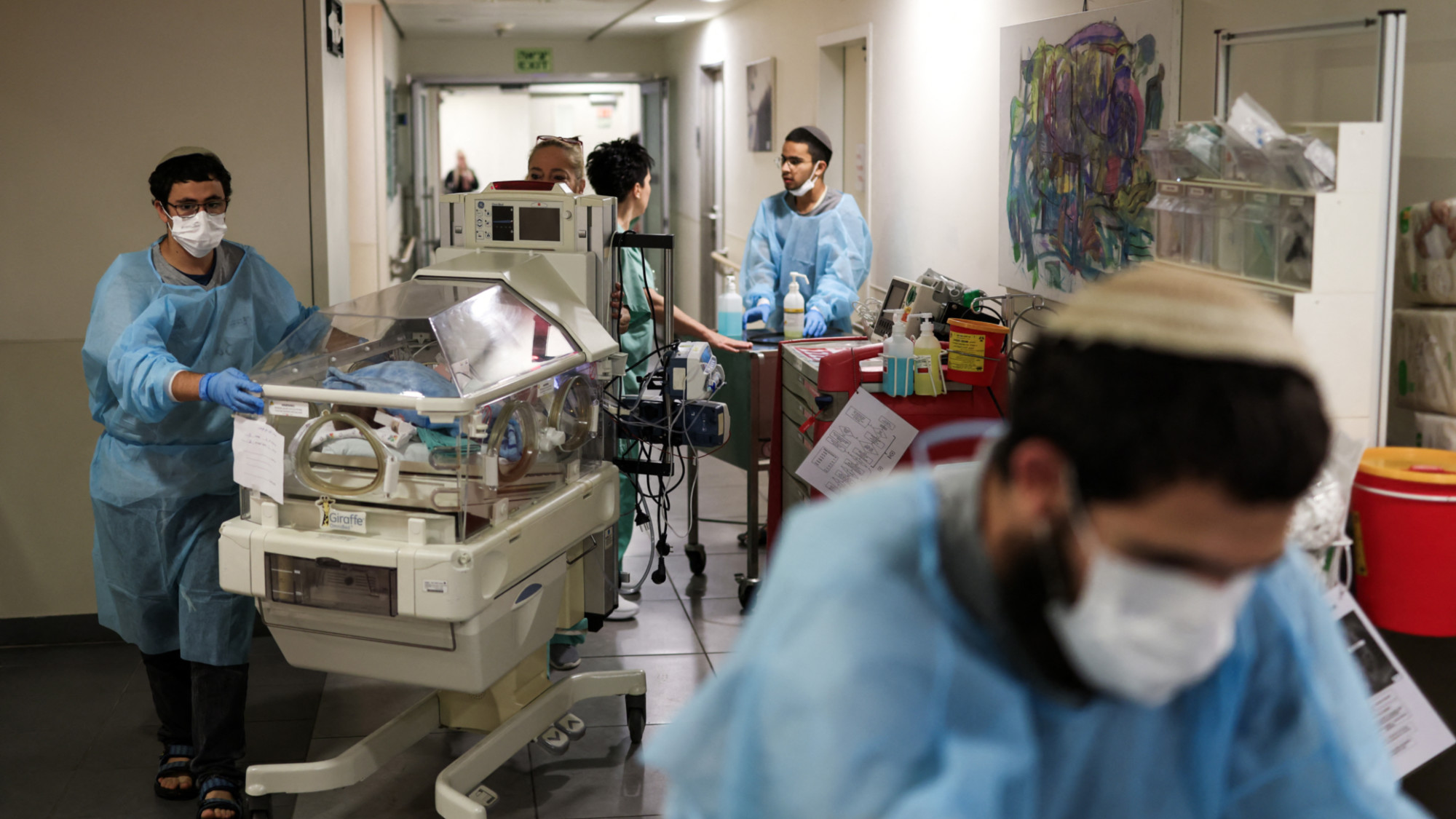
    Fighting first erupted in Lebanon on March 2, when Iran-backed Hezbollah launched rocket attacks against Israel just days after the start of the broader regional Middle East war, in retaliation for the death of Iranian Supreme Leader Ali Khamenei in the opening wave of U.S.-Israeli strikes. Ahead of the ceasefire taking effect, lethal violence continued: Lebanon’s health ministry confirmed at least seven civilians were killed and more than 30 wounded in an Israeli airstrike on the southern town of Ghazieh on Thursday, while an Israeli hospital spokesperson reported three Israelis were injured in cross-border attacks the same day.

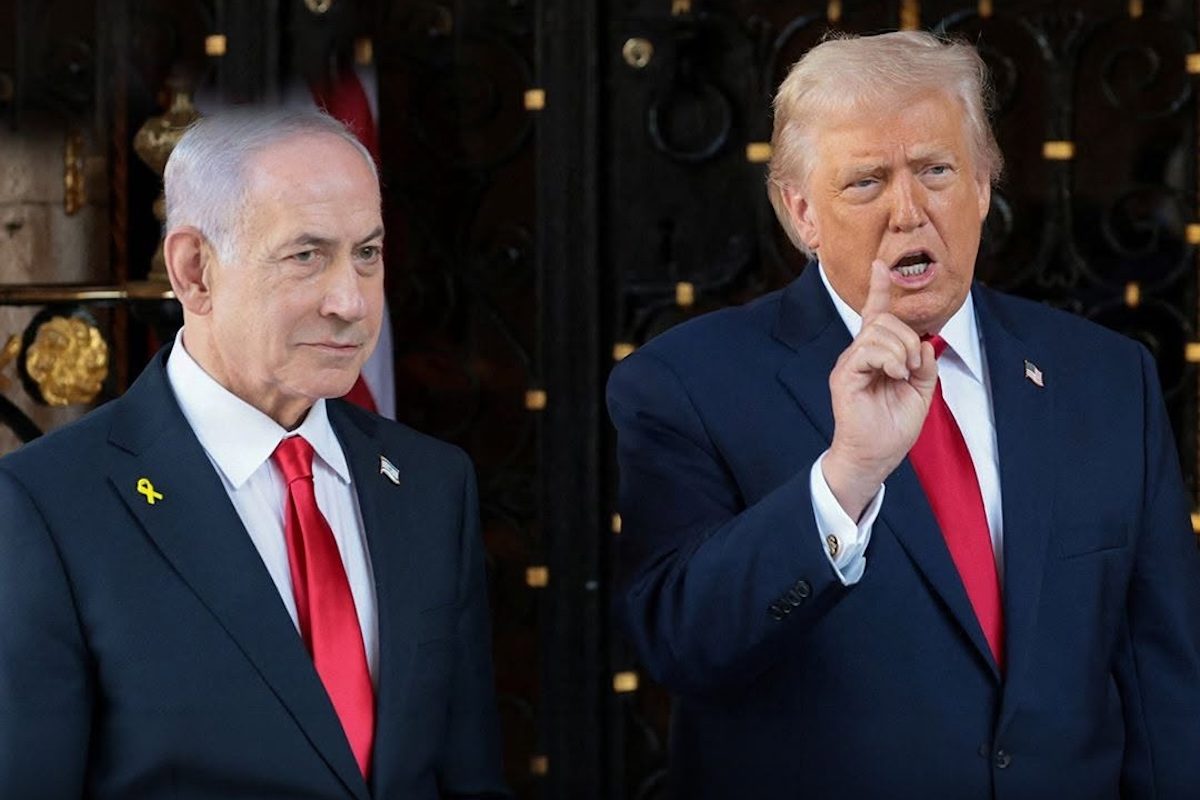
    Following the truce’s entry into force, the Israel Defense Forces confirmed it had struck more than 380 Hezbollah targets across southern Lebanon in the lead-up to the ceasefire, and said it remains on high alert to resume offensive operations if the truce is broken. Trump confirmed he spoke to both Israeli Prime Minister Benjamin Netanyahu and Lebanese President Joseph Aoun ahead of the deal’s announcement, saying both leaders agreed to the truce “in order to achieve PEACE between their Countries.” The U.S. president also said he expects both leaders to visit the White House within the next four to five days to discuss next steps, a development that would mark a watershed moment for regional diplomacy if it proceeds.

    Netanyahu framed the truce as an opportunity to reach a “historic peace agreement” with Beirut, but reaffirmed that any long-term deal requires the full disarmament of Hezbollah, the Iran-aligned militant group that holds significant political and military power in Lebanon. While Trump confirmed Hezbollah is bound by the ceasefire, the U.S. State Department says the truce requires the Lebanese government itself to fully dismantle the militant organization. Lebanese Prime Minister Nawaf Salam welcomed the ceasefire, calling it a “key Lebanese demand that we have pursued since the very first day of the war.” However, an anonymous official source confirmed Lebanese President Aoun has rejected Trump’s request for a direct call with Netanyahu, creating an early point of tension in post-ceasefire diplomacy.

    A senior Hezbollah lawmaker told AFP the group would “cautiously adhere” to the truce as long as Israel halts all offensive operations. Ibrahim al-Moussawi thanked Iran for its diplomatic and political pressure on Lebanon’s behalf, noting that “the ceasefire would not have happened without Iran considering the ceasefire as equal to closing the Strait of Hormuz,” a reference to Iranian leverage over global oil shipping lanes. Netanyahu confirmed Israel will maintain a 10-kilometer security zone along the entire Lebanon-Israel border for the duration of the truce, a measure already criticized by Lebanese officials as a violation of its territorial sovereignty.

  • Russia trains teenage influencers to churn out pro-war content

    Russia trains teenage influencers to churn out pro-war content

    Since launching its full-scale invasion of Ukraine in 2022, the Russian Kremlin has expanded its efforts to shape domestic public opinion from traditional offline spaces into the digital realm, with a new, targeted focus on cultivating a new generation of pro-war content creators. Through specialized youth camps and national competitions, teenage influencers are receiving formal training to spread the Kremlin’s hardline anti-Western narrative and build broader support for its military offensive across younger Russian demographics.

    This ideological campaign is no grassroots initiative — it is directed from the very highest levels of the Russian government. In a 2023 televised press conference, Russian President Vladimir Putin publicly framed youth education as a core pillar of Russia’s national strategy, quoting 19th-century Prussian statesman Otto von Bismarck to emphasize his priorities: “Wars are not won by generals, but by schoolteachers and parish priests.” He went on to stress that “educating young people in the spirit of patriotism is crucial” — a statement that laid out the clear mission of the nationwide youth outreach effort.

    To carry out this mission, the Kremlin has revived and expanded Soviet-style state-aligned youth organizations, including the Young Army (known as Yunarmiya in Russian) and the Movement of the First. The Movement of the First alone claims 14 million online members and more than 1,100 regional projects across the country, giving the state extensive reach into teenage communities. At a Young Army content creation camp held in Moscow this past April, more than 120 teenagers dressed in matching green sweaters and red berets gathered for days of instruction from sitting soldiers and veteran state media journalists. Trainees learned core technical skills: how to shoot engaging short-form videos, leverage artificial intelligence for content production, and grow social media audiences to maximize their reach.

    Vladislav Golovin, a former soldier who serves as chief of the Young Army’s general staff, framed the initiative as a values-building project. “We have created a huge team of kids, who understand how to broadcast government values and our organisation’s values,” he said in an official statement from the movement. Promotional footage from the camp shows teenagers cheering on a speed competition, where a cadet and Golovin raced to reload a sniper rifle — blending digital content training with explicit military-themed ideological engagement. Parallel to the Young Army camps, the Movement of the First runs national competitions that award prizes to teenagers who produce the top pro-Kremlin blogs and build the largest online followings for their content.

    Independent analysts who study Russian disinformation and ideological strategy warn that this targeted campaign carries significant long-term risks. Keir Giles, director of the UK-based Conflict Studies Research Centre, describes the initiative as a “concentrated campaign to restore the prestige of the Russian military.” He notes that teenagers aged 14 to 16 currently growing up in Russia have never experienced any political system outside of Putin’s governance, making them particularly receptive to the state’s messaging. “This is their reality, and so we should not be surprised if these new efforts to spread information reflect that reality,” Giles explained to AFP.

    Veronika Solopova, an artificial intelligence and disinformation researcher at the Technological University of Berlin, points out that social media platforms are uniquely suited to the Kremlin’s outreach goals. Platform algorithms are designed to deliver tailored content that sparks emotional engagement, creating an ideal environment for the state to push its narrative to young users. “Young people are famously easy to radicalise, easy to jump to conclusions on the nature of injustices, which, for Russia, is then all conveniently converted into army enrolments,” Solopova added.

    Data from independent Russian pollster Levada Centre backs up the focus on social media: a March 2024 poll found that more than half of Russians between the ages of 18 and 24 rely on social media as their primary source of daily news. Giorgi Revishvili, a former Senior Advisor to the National Security Council of Georgia, argues that the format of short-form digital content is inherently well-suited to shaping youth opinion. Young people’s “shorter attention spans, combined with the effortless shareability of clips and reels, make digital content an exceptionally powerful tool,” Revishvili noted.

    Dietmar Pichler, a disinformation and propaganda analyst at the European research network INVED, added that the content produced by these young influencers does not always take an overtly pro-war tone. Some content is “direct and radical,” while other pieces are “very subtle, aimed not at generating support for Russia, but at decreasing solidarity with Ukraine” among global audiences, he explained.

    For the teenagers participating in the program, the training has already shaped their understanding of their own role in spreading the Kremlin’s message. In one promotional clip published by camp organizers, a female teenage trainee summed up the core of what she had learned: “When you are the one behind the camera filming the entire process, making audiences happy, you realise … you are the one who has aroused these emotions in people. The truth lies in a frame, and we are operating the camera.”

  • Ten photos from across China: April 10 – 16

    Ten photos from across China: April 10 – 16

    Since 1994, all intellectual property rights to the content hosted on this digital platform have been held exclusively by China Daily Information Co (CDIC). This broad copyright protection extends to every form of content published on the site, including but not limited to written articles, photographic imagery, and multimedia resources. No portion of CDIC’s content may be reproduced, republished, or utilized in any format without the explicit advance written consent of the organization.

    To deliver the optimal browsing experience for visitors, the platform recommends using a display resolution of 1024*768 or higher. Additional administrative documentation for the platform includes an online multimedia publishing license numbered 0108263 and an official registration number 130349.

    The platform also hosts a range of navigation links for visitor convenience, including an informational page about China Daily, resources for brands interested in purchasing advertising space, contact details for the organization, open vacancy listings for general employment, and dedicated sections for expat job opportunities. Visitors are also invited to follow China Daily’s official accounts across multiple social and digital channels to stay updated on the latest content.

  • Chinese carmaker patents voice-controlled ‘in-vehicle toilet’

    Chinese carmaker patents voice-controlled ‘in-vehicle toilet’

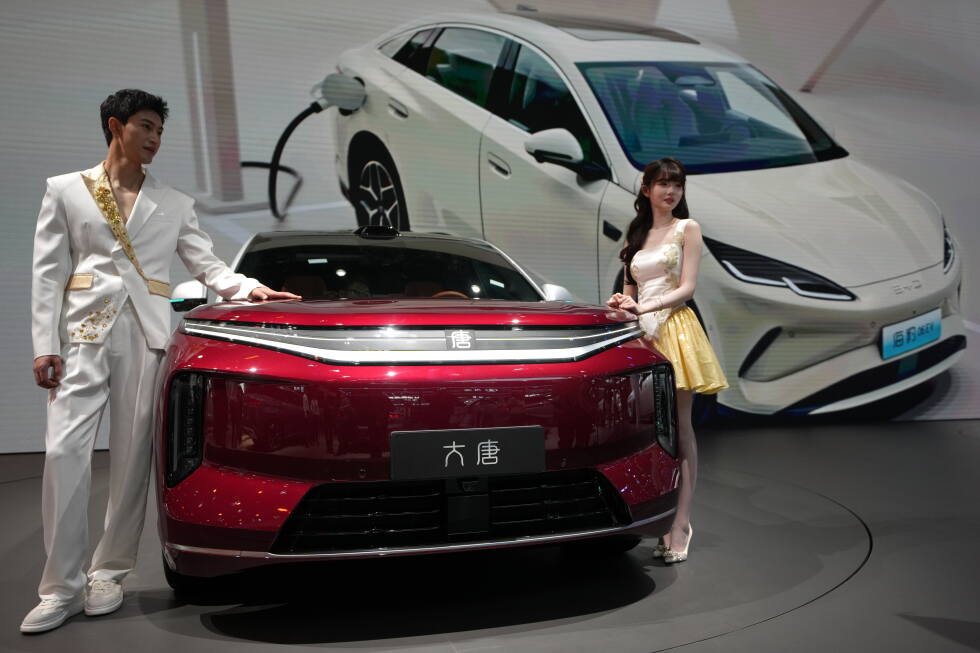
    In a move that highlights the fierce innovation race unfolding in China’s hyper-competitive electric vehicle market, Chongqing-based automaker Seres has submitted a patent application for a novel, space-efficient in-vehicle toilet designed to meet driver and passenger needs during long trips, roadside camping, and extended stays inside the vehicle.

    Filed with China’s National Intellectual Property Administration on April 10, the patent outlines a compact toilet system that stows completely beneath a passenger seat when not in use, eliminating the need for extra cabin space that would compromise vehicle design. The unit can be deployed either via a manual push or hands-free voice activation, and comes equipped with built-in ventilation features: a connected fan and exhaust pipe that redirect unpleasant odors outside the vehicle. For waste management, the system uses a removable collection tank that requires manual emptying, alongside a rotating heating component that evaporates liquid waste and speeds up drying of solid waste.

    Seres, a manufacturer best known for its electric sport utility vehicles (SUVs) sold under its core brand and subsidiary Aito, has not yet announced any production models that will integrate this toilet feature. As of press time, it remains unclear whether the concept will ever move from patent filing to mass-produced vehicle integration.

    The new patent is far from an outlier in China’s fast-growing EV sector, where manufacturers have been rolling out a wave of unconventional, comfort-focused features to differentiate their offerings in an increasingly saturated market. Many new Chinese electric vehicles already come equipped with premium add-ons including heated massage seats, in-car karaoke entertainment systems, built-in refrigerators, and other lifestyle-focused features designed to appeal to domestic consumers.

    While on-board toilets are a standard fixture in long-distance commercial coaches, they remain extremely rare in passenger cars – though not unprecedented. Automotive history records show that a custom 1950s Rolls-Royce Silver Wraith included an under-seat toilet alongside a built-in television, according to auction house Sotheby’s.

    Seres currently sells the vast majority of its vehicles in mainland China, but has already expanded its international footprint to markets across Europe, the Middle East, and Africa. China’s overall EV market has become heavily saturated in recent years, sparking a brutal price war that has eroded profit margins for most industry players. Notably, Seres is one of the small handful of domestic EV manufacturers that currently turn a profit, joining global industry leader BYD. Many market analysts have warned that a large share of smaller Chinese EV firms face significant risk of collapse amid the ongoing industry shakeout.

  • Rift between Italy and US, Israel widens over Iran war

    Rift between Italy and US, Israel widens over Iran war

    A growing diplomatic split over the ongoing U.S.-Israeli military campaign against Iran has widened dramatically this week, after Italian Prime Minister Giorgia Meloni announced Rome would suspend its long-standing bilateral military agreement with Israel. The decision marks a significant shift from a leader once viewed as one of Israel and former U.S. President Donald Trump’s closest allies in Europe, and underscores a broader trend of European leaders distancing themselves from the escalating Middle East conflict.

    Meloni confirmed the move during a press briefing on Tuesday, noting that her cabinet had made the call to halt the automatic five-year renewal of the 2003 defense cooperation pact “in consideration of the current situation” across the region. The agreement, which has been renewed regularly since it first took effect, enabled joint military equipment sharing and collaborative defense research between the two nations. In recent months, however, human rights legal advocates had pressured the Italian government to abandon the pact over legal and ethical concerns tied to Israel’s military actions in Gaza and its expanding offensive strikes against targets in Iran and Lebanon.

    Multiple recent incidents have already strained bilateral relations between Rome and Tel Aviv beyond the Iran war disagreement. Earlier this month, the Israel Defense Forces fired warning shots toward an Italian peacekeeping convoy operating near Beirut, Lebanon, an incident Meloni labeled “completely unacceptable.” The provocation prompted Italian Foreign Minister Antonio Tajani to summon Israel’s top diplomatic representative to Rome for a formal reprimand.

    Tensions rose further last month when Israeli authorities blocked a delegation of Italian Catholic religious leaders from holding a traditional Palm Sunday ceremony at the Church of the Holy Sepulchre in Jerusalem. Meloni condemned the interference, calling it “an offense to religious freedom.”

    The rift has also extended to U.S.-Italy relations, as Meloni has openly pushed back against Trump’s handling of the conflict. Most recently, she criticized Trump for his public attacks on Pope Leo XIV, who has delivered multiple public statements denouncing the war on Iran. Meloni has also repeatedly clarified that Italian military forces will not take part in any offensive strikes against Iran, nor will they assist in efforts to re-open the Strait of Hormuz amid regional blockades.

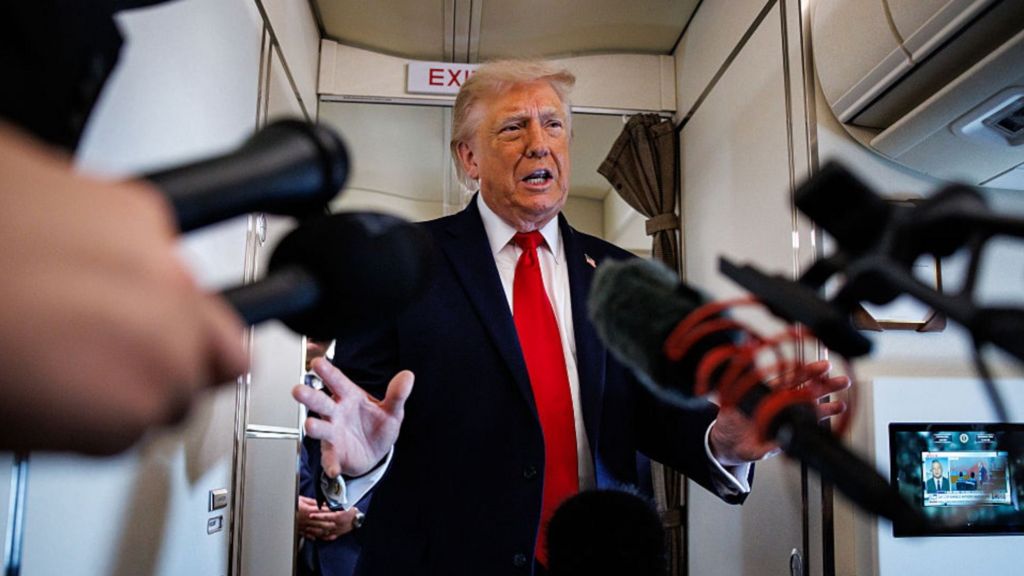
    Trump responded to Meloni’s position with sharp criticism during an interview published Tuesday with leading Italian daily *Corriere della Sera*. The former president said he was “shocked at her” actions, claiming, “I thought she had courage, but I was wrong. She’s unacceptable because she doesn’t mind that Iran has a nuclear weapon and would blow up Italy in two minutes if they had the chance.” Trump added that Meloni “doesn’t help us with NATO” and “doesn’t want to help get rid of a nuclear-weaponed Iran,” concluding, “Very sad … She’s much different than I thought.”

    Trump’s frustration extends far beyond Italy, as the former president has grown increasingly infuriated by the widespread refusal of European leaders to join U.S. and Israeli military operations against Iran. He has even publicly derided the NATO alliance as a “paper tiger,” despite the organization’s core founding mandate as a strictly defensive defensive pact, not an offensive military coalition.

    Meloni’s decision to suspend the military pact with Israel is the latest high-profile step in a growing movement of European governments pushing back against escalatory action in the Middle East, as European publics and policymakers alike grow more anxious over the risk of the conflict spiraling into a wider regional war that could have global economic and security repercussions.

  • More than a half-million people expected at Pope Leo XIV’s Mass in Cameroon

    More than a half-million people expected at Pope Leo XIV’s Mass in Cameroon

    As Pope Leo XIV, the first American pope in history, approached the midpoint of his 11-day four-nation African tour on Friday, his schedule in Cameroon centered entirely on lifting up and engaging the Central African nation’s massive youth population, a demographic that sits at the heart of growing political and economic friction in the country.

    The day kicked off with a high-profile trip to Douala, Cameroon’s largest commercial port city, where Leo planned to lead an open-air Mass and visit a local hospital. Vatican organizers projected that as many as 600,000 worshippers and attendees would gather for the liturgy — a turnout that would mark the largest crowd the pontiff has drawn over the entire course of his African journey, his first visit to the continent since assuming the papacy.

    After the Douala events, Leo returned to Cameroon’s capital Yaoundé to meet with students, faculty and senior leadership at the Catholic University of Central Africa. For popes visiting developing nations, these campus encounters have long served as a key platform to urge young people to persist through systemic challenges ranging from entrenched poverty to widespread public corruption.

    Cameroon offers a striking case study of the gap between Africa’s burgeoning youth population and its long-tenured aging leadership. Roughly 29% of the nation’s 29 million residents identify as Catholic, and the country has one of the youngest age profiles in the world, with a median age of just 18 years old. At the same time, Cameroon is led by 93-year-old President Paul Biya, the world’s oldest sitting head of state, who has held uninterrupted power since 1982 and secured an eighth consecutive term in deeply contested presidential elections held last October.

    In his opening address to Biya and senior government officials shortly after arriving in Cameroon, Leo did not shy away from the country’s most pressing tensions. He called for the immediate dismantling of what he termed the “chains of corruption” that have held back widespread progress, and emphasized that Cameroon’s young people are the sole source of the nation’s future and lasting hope.

    While Cameroon is an oil-rich state that has recorded modest economic growth in recent years, the vast majority of young Cameroonians report that economic benefits have never trickled down beyond a small circle of political and business elites. Official World Bank data puts the country’s overall unemployment rate at 3.5%, but more than half — 57% — of workers between the ages of 18 and 35 are stuck in unstable, unregulated informal employment that offers little to no job security or social benefits.

    Widening economic frustration has triggered two interconnected crises for the nation: widespread brain drain, and a catastrophic shortage of skilled workers in critical public sectors including healthcare. According to Cameroon’s Ministry of Higher Education, roughly one-third of all newly graduated trained doctors left the country in 2023 alone, lured by higher-paying roles and better working conditions in Europe and North America. The outflow of medical professionals has left already under-resourced public hospitals and clinics critically understaffed.

    In his address to government leaders, Leo warned of the risks of leaving youth grievances unaddressed. “Of course, when unemployment and social exclusion persist, frustration can lead to violence,” the pontiff said. “Investing in the education, training, and entrepreneurship of young people is, therefore, a strategic choice for peace. It is the only way to curb the outflow of wonderful talent to other parts of the world.”

    Tensions over Biya’s decades-long rule boiled over after last October’s election, when main opposition candidate Issa Tchiroma Bakary challenged the official election results, sparking deadly protests across the country. The visit comes as Cameroon continues to grapple with nearly a decade of armed conflict in its Anglophone regions, with many local residents hoping the papal tour will bring progress toward national healing.

  • Millions to shiver through coldest nights of 2026 as cold snap hits southeastern Australia, temperatures plunge

    Millions to shiver through coldest nights of 2026 as cold snap hits southeastern Australia, temperatures plunge

    As Australia enters the deep chill of its southern winter, a sweeping, intense cold front is advancing across large swathes of the country, pushing millions of residents toward what forecasters confirm will be some of the coldest overnight temperatures recorded this year. The sharp temperature drop is primarily focused on the nation’s southeastern corner this weekend, with sub-zero and near-freezing conditions projected for multiple populated and regional areas, leading weather service Weatherzone has confirmed.

    Meteorologist Anthony Sharwood notes that the alpine ski resort town of Thredbo is on track to log the country’s lowest temperature, with a forecast low of -5 degrees Celsius set for Saturday morning. Neighboring Victoria’s alpine region will also see overnight minimums drop well below the freezing mark. For Australia’s second-largest city, Melbourne, Saturday will open with a crisp, brisk 5-degree Celsius morning, while the South Australian southeast and national capital Canberra are both projected to drop to 0 degrees Celsius, bringing heavy frost across exposed areas.

    Unlike the frozen southeast, Australia’s tropical northern regions and parts of the inland are facing an entirely different set of weather hazards, as a separate band of unstable weather brings heavy rain, thunderstorms, and elevated flood risk. Formal flood warnings are currently active for the far western Queensland towns of Birdsville, Roseberth Station, and Glengyle. Heavy downpours and thunderstorm activity are forecast across the Eyre Creek and upper catchment areas of the Diamantina River, the primary water systems in this remote part of the state.

    Across Western Australia, unstable conditions are bringing mixed weather across the length of the state’s western coast. Gale-force winds are scheduled to impact the southern WA coast around Leeuwin and Albany on Friday, with the strong wind band moving north to reach Perth by overnight. Overnight rain is expected in Perth, but Bureau of Meteorology (BOM) forecasters project that showers will clear by Saturday morning, with the rain band shifting further north to reach Geraldton by Saturday afternoon.

    BOM meteorologist Angus Hines explained that ongoing wet season patterns, which have fluctuated through this week, remain active across the northern half of the country. “From Darwin all the way through the northern east coast and south as far as Tennant Creek, we’re seeing continued unstable conditions,” Hines said. “There is a small chance of light rain across parts of the northern Kimberley, but most other areas outside the northern flood zone will stay dry, with clear, sunny conditions across most of the country this weekend.”

  • Pope visits Cameroon city hit by post-vote protest deaths

    Pope visits Cameroon city hit by post-vote protest deaths

    On a high-stakes 11-day tour of Africa that has already captured global attention, Pope Leo XIV is set to hold a massive open-air mass Friday in Douala, Cameroon’s bustling economic capital and one of Central Africa’s busiest deep-water ports. The event is expected to draw more than one million worshippers, marking the largest gathering of the pontiff’s trip, which has been defined by bold calls for global peace and an unprecedented public clash with former U.S. President Donald Trump.

    Six months prior to the visit, Douala was the site of a brutal government crackdown on protests following the disputed re-election of 93-year-old incumbent President Paul Biya, the world’s oldest sitting head of state who has held authoritarian control over Cameroon since 1982. Witnesses confirm security forces opened fire on unarmed demonstrators, with authorities admitting dozens of deaths amid widespread unrest, though an exact casualty count has never been released. By Thursday evening, thousands of devoted Catholic pilgrims were already streaming into the city to claim viewing spots on the esplanade outside the 50,000-seat Japoma Stadium, where the mass will take place. After the service, the Pope is scheduled to visit Saint Paul’s Catholic Hospital in the city.

    This landmark African tour has marked a clear shift for Pope Leo, who has set aside prior diplomatic restraint to deliver impassioned, unflinching remarks on conflict, inequality, and political corruption. The high-profile dispute with Trump erupted after the Pope called for an immediate end to the ongoing war in the Middle East, drawing a sharp rebuke from the former American president. During a solemn address Thursday at Saint Joseph’s Cathedral in Bamenda, the heart of a nearly 10-year separatist insurgency that has killed thousands of Cameroonians, Pope Leo declared, “The world is being ravaged by a handful of tyrants.”

    Trump responded hours later, stating the Pope was free to share his views but needed to grasp the realities of what he called a “nasty world.” Despite the transatlantic political drama, the pontiff has been met with jubilant, singing crowds across every stop of his Cameroon itinerary, with locals turning out in massive numbers to welcome the leader of the world’s 1.4 billion Catholics.

    Even ahead of the visit, the trip sparked quiet controversy among some Cameroonian Catholics, who raised concerns that a high-profile papal visit could inadvertently help Biya rebrand his authoritarian rule on the global stage. Pope Leo has not shied away from sharp critique, however, avoiding direct naming of Biya or Trump but delivering pointed remarks that hit at both domestic and global issues. He pushed back against calls from U.S. Vice President JD Vance, a Catholic, to limit his public remarks to purely moral issues, instead using his platform to condemn exploitation and corruption.

    “Woe to those who manipulate religion and the very name of God for their own military, economic and political gain, dragging that which is sacred into darkness and filth,” the Pope told crowds in Bamenda. During a Thursday mass, he also targeted foreign and elite exploitation of the continent, saying: “those who, in the name of profit, continue to lay their hands on the African continent to exploit and plunder it.” Cameroon boasts abundant natural resources, including oil, timber, cocoa, coffee, and rare minerals, which have drawn foreign investment and been exploited by local and global elites for decades.

    Shortly after arriving in Cameroon’s capital Yaoundé Wednesday, the Pope delivered his critique directly to Biya and other top government officials, urging leaders to root out systemic corruption and human rights abuses committed in the name of national security. “Security is a priority, but it must always be exercised with respect for human rights,” he said, speaking within earshot of the long-ruling president.

    Samuel Kleda, Archbishop of Douala and one of the most prominent clerical critics of Biya’s government, shared cautious optimism ahead of the mass, saying he hopes the papal visit will catalyze progress toward resolving the country’s multiple ongoing crises. “Our country has gone through many crises; some crises are still ongoing. The fruit we must draw from this visit is to commit ourselves as architects of peace,” Kleda said. Catholicism holds a major social and cultural role in Cameroon, where more than one-third of the country’s 30 million residents identify as Catholic.

    The African tour began in Algeria, a majority-Muslim nation, where the visit was marred by two deadly suicide bombings. After leaving Cameroon Saturday, Pope Leo will travel to Angola, before concluding the 18,000-kilometer tour in Equatorial Guinea.

  • Iran war energy shock drives nuclear power plans in hard-hit Asia and Africa

    Iran war energy shock drives nuclear power plans in hard-hit Asia and Africa

    The ongoing conflict between Iran and Western powers has sent shockwaves through global fossil fuel markets, triggering ripple effects that are reshaping long-term energy policy across two of the world’s fastest-growing regions: Africa and Asia. Disruptions to key shipping lanes for Middle Eastern oil and natural gas – which supplied the bulk of Asia’s energy demand – have sent energy prices soaring worldwide, with both developing Asian and African economies feeling the strain earliest and most acutely. Even wealthy Western nations including the United States and across Europe have not escaped the pressure of inflated energy costs driven by the conflict.

    Against this backdrop of market volatility, nations across both continents are moving rapidly to expand nuclear power generation. Countries with existing nuclear infrastructure are ramping up output to address immediate short-term energy gaps, while nations with no operational nuclear capacity are accelerating long-term nuclear development plans to insulate themselves against future fossil fuel supply shocks. Experts note that while nuclear energy cannot resolve the current energy crisis overnight, as new nuclear projects can take decades to complete for first-time nuclear nations, today’s policy commitments will permanently embed atomic power in many countries’ future energy portfolios.

    “The war has accelerated a global ‘nuclear renaissance,’ as countries seek an escape from the volatility of global fossil fuel markets,” explained Rachel Bronson, executive director of the Bulletin of the Atomic Scientists. Data from the International Atomic Energy Agency underscores this growing momentum: 31 countries currently operate nuclear power plants, which generate roughly 10% of the world’s total electricity, and an additional 40 nations are either exploring nuclear technology or actively preparing to break ground on their first facilities.

    In hard-hit Asia, the shift toward nuclear power is already well underway. Across the region, where governments have turned to emergency measures from increased coal burning to discounted Russian crude imports to shore up supplies, nations with existing reactors are maximizing output from their current fleets. South Korea has boosted generation at all operational plants and fast-tracked maintenance work on five idled reactors, with restarts scheduled for May. Both Taiwan and Japan are rolling back post-Fukushima policies that shuttered large numbers of nuclear facilities after the 2011 earthquake and tsunami that triggered the catastrophic Fukushima Daiichi meltdown.

    Taiwan is now launching the multi-year process of restarting two mothballed reactors, a move that requires extensive safety inspections, system upgrades and regulatory approval. In Japan, Prime Minister Sanae Takaichi has moved aggressively to expand nuclear power since the outbreak of the Iran war, signing a $40 billion reactor development deal with the United States, a nuclear fuel recycling agreement with France, and a new cooperation pact with Indonesia. Japan also restarted the world’s largest nuclear facility, the Kashiwazaki-Kariwa plant, in January. While the conflict has also boosted public and policy support for renewable energy, historically high electricity prices have swung Japanese public opinion firmly in favor of nuclear acceptance, according to Michiyo Miyamoto of the U.S.-based Institute for Energy Economics and Financial Analysis. Critics, however, note that renewables remain a more affordable and secure long-term solution.

    Further south in Asia, Bangladesh is rushing to commission two new reactors built by Russia’s state-owned nuclear giant Rosatom, with plans to connect 300 megawatts of capacity to the national grid by summer to ease crippling domestic gas shortages. Vietnam signed an agreement with Moscow in March to develop two Russian-designed reactors, while the Philippines – which declared a national energy emergency earlier this year – is weighing plans to activate a half-built nuclear plant constructed after the 1973 oil crisis but never brought online. “The Iran war is providing a needed push for nuclear,” said Alvie Asuncion-Astronomo of the Philippine Nuclear Research Institute.

    Across Africa, the energy crisis triggered by the Iran conflict has reinvigorated long-dormant nuclear energy plans, with more than 20 of the continent’s 54 nations now advancing atomic energy projects. Global nuclear powers including the United States, Russia, China, France and South Korea have identified Africa as a key growth market for nuclear technology, and are pitching small modular reactors (SMRs) as a flexible solution to the continent’s widespread energy shortages. Unlike large conventional nuclear plants, SMRs offer a cheaper, more compact alternative that can be scaled to meet weak grid capacity.

    While proponents frame SMRs as a faster path to nuclear deployment, projects still require years of planning and regulatory work: Kenya for example, which launched its first nuclear planning phase in 2009, targets bringing an SMR online only by 2034. Even so, African leaders frame nuclear power as an urgent strategic priority. “Nuclear energy is no longer a distant aspiration for African countries; it is a strategic necessity,” said Justus Wabuyabo of Kenya’s Nuclear Power and Energy Agency. Speaking at a March summit hosted by the U.N.’s nuclear watchdog, Rwandan President Paul Kagame predicted Africa will become “one of the most important global markets” for small modular reactors in the coming decades. SMRs are seen as a particularly strong fit for Africa, as they can deliver low-emission baseload power that matches the continent’s rapidly rising electricity demand, addresses underdeveloped national grids, and reduces overreliance on expensive imported diesel. South Africa, which hosts the continent’s only operational nuclear plants, plans to grow nuclear’s share of its energy mix from roughly 5% today to 16% by 2040, with SMRs playing a central role.

    The race to develop nuclear energy in Africa has also intensified great power competition between the United States and Russia, which are both vying for market share as leading nuclear exporters. Russia’s Rosatom already holds a dominant position, building Egypt’s first operational reactor and signing cooperation agreements with Ethiopia, Burkina Faso, Ghana, Tanzania and Niger covering everything from full-scale plant construction to research facilities and workforce training. The U.S., which has only secured commitments from Kenya and Ghana to join its American-led modular reactor initiative, is working to close the gap, hosting a high-level nuclear development conference in Nairobi last month alongside South Korea. “Washington is working with African nations to rapidly develop secure and safe civil nuclear reactors,” said Ryan Taugher of the U.S. State Department.

    Despite the growing momentum for nuclear expansion, critics and experts continue to highlight the significant risks that accompany the technology. Beyond the persistent threats of catastrophic meltdowns and long-term radioactive waste management, nuclear development also carries proliferation risks, as civilian nuclear programs can provide a pathway to developing nuclear weapons. Advocacy groups also note that most countries remain reliant on imported enriched uranium for nuclear generation, keeping them exposed to global supply chain volatility. “Nuclear is very risky,” said Ayumi Fukakusa of Japanese environmental advocacy group Friends of the Earth Japan.

    Critics add that because nuclear projects take decades to deliver, governments should prioritize rapid expansion of renewable energy to achieve long-term energy security. Bronson also notes that nuclear plants themselves are vulnerable targets during conflict, pointing to targeted attacks on reactors during both the ongoing Iran war and the Russia-Ukraine conflict as a stark reminder of this risk. Even so, Bronson acknowledged that for many developing nations facing immediate fossil fuel disruptions, the tradeoffs are clear: “Countries are now weighing those kinds of risks against the other risks, which Asia and Africa are seeing first and foremost, about what happens when gas and oil stops.”

    This reporting from the Associated Press, with contributions from correspondents based in Bangkok, Seoul, Tokyo and Hanoi, is supported by private foundation grants, with the AP retaining full editorial control over all content.