作者: admin

  • Iran strikes American military assets in Gulf and Jordan, after US hits Iranian cities

    Iran strikes American military assets in Gulf and Jordan, after US hits Iranian cities

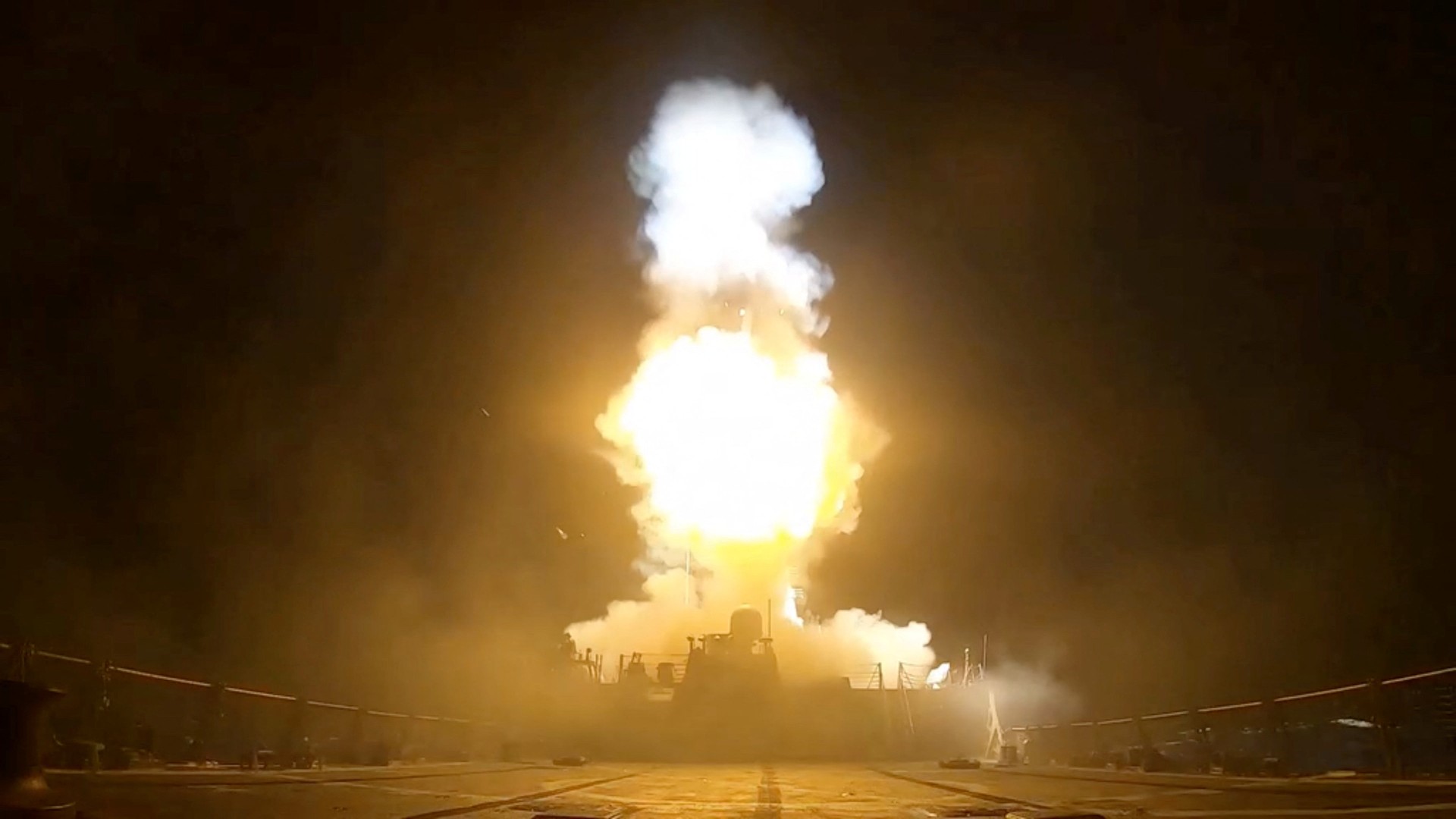
    A rapidly escalating cycle of retaliatory violence has plunged the Persian Gulf into chaos this week, after the United States launched a third consecutive night of airstrikes targeting Iranian assets across Iranian territory, prompting Tehran to launch sweeping missile and drone counterattacks across multiple Gulf states and announce the immediate closure of the strategic Strait of Hormuz.

    The latest escalation traces back to an early Sunday strike by U.S. forces, launched after Iran’s Islamic Revolutionary Guard Corps (IRGC) opened fire on a Cyprus-flagged container vessel that the Iranian force claimed was traversing the Strait of Hormuz via an unapproved shipping route. The IRGC confirmed shortly after that it had targeted a second commercial vessel, accusing it of also violating regional maritime regulations.

    Local Iranian media reported multiple large explosions across key Iranian locations within hours of the U.S. Sunday strike, including the southern port city of Bandar Abbas, the coastal towns of Sirik and Jask, Qeshm Island off Iran’s southern coast, and the southwestern Khuzestan province — regions that host critical Iranian military and energy infrastructure.

    The conflict quickly spilled across national borders as air raid sirens blared across Bahrain and the United Arab Emirates (UAE) just hours after the initial strikes. Qatar reported that it had intercepted incoming Iranian missile fire, with three people including one child wounded in the attack. Kuwait confirmed it was also working to intercept incoming hostile projectiles, while Jordan announced that three Iranian missiles had impacted inside its territory.

    In official statements carried by Iranian state media, the IRGC claimed responsibility for all cross-border attacks, stating it had destroyed a command and control center and drone storage hangars in Jordan, targeted a U.S. radar installation in Kuwait, and taken out a fighter jet maintenance hub and command facility in Qatar. The force also claimed it had destroyed U.S. naval logistics support centers and aircraft carrier refueling infrastructure at Oman’s Port of Duqm. The UAE later clarified that all missile threats detected earlier in the day had fallen outside its national borders, causing no damage or casualties on its territory.

    Per Iran’s official state news agency IRNA, the IRGC issued a formal announcement of the Strait of Hormuz closure shortly after the initial vessel attacks, stating: “Following this incident … the Strait of Hormuz will be closed until further notice and until the end of American interventions in this region.” The U.S. Central Command (Centcom) pushed back against this announcement immediately, confirming that commercial shipping traffic continues to move through the critical waterway, which handles roughly 20% of global oil trade.

    Details of the initial vessel attack have slowly emerged: Centcom confirmed the Cyprus-registered container ship GFS Galaxy was disabled by fire and structural damage to its engine room, with one crew member unaccounted for. The United Kingdom Maritime Trade Operations (UKMTO) agency reported the entire crew abandoned the damaged vessel and took shelter on a life raft, noting the incident occurred roughly 17 kilometers east of Omani territorial waters. India’s Ministry of External Affairs later confirmed that the missing crew member is an Indian national; of the 11 Indian citizens on board the vessel, 10 have been successfully rescued, and the Indian government has formally condemned the attack.

    U.S. defense officials laid out the scope of the three-night campaign this week, noting that U.S. forces struck 140 Iranian targets on Saturday alone, bringing the total number of targets hit to more than 300. Centcom says the strikes are intended to degrade Iran’s capacity to attack civilian mariners and commercial vessels moving freely through the strait. U.S. Defense Secretary Pete Hegseth issued a blunt warning following the counterattacks, stating: “Iran made a poor choice. Now they pay.”

    The rapid escalation of violence has effectively ended a weeks-long ceasefire between the U.S. and Iran, a development confirmed by U.S. President Donald Trump. The breakdown of the truce has thrown deep uncertainty over ongoing diplomatic efforts to reach a long-term ceasefire and de-escalation agreement, which had been progressing slowly in recent weeks.

    Iran’s top parliamentary speaker and leading nuclear negotiator Mohammad Bagher Ghalibaf reinforced Tehran’s hardening stance in a post on the social platform X, writing: “The era of one-sided deals is OVER. We told you: keep your word or pay the price. Reality is knocking.”

    Interestingly, the large-scale fighting broke out just one day after a round of diplomatic talks held in Oman on Saturday, which brought together Iranian Foreign Minister Abbas Araghchi and his Omani counterpart Badr Albusaidi. Iranian foreign ministry spokesperson Esmail Baqaei confirmed Sunday that the talks were focused on coordinating new shipping and transit rules for the Strait of Hormuz, with legal and technical delegations from both sides discussing maritime security and safety standards. A Qatari delegation also attended the talks, and Baqaei added that both sides agreed to continue political and technical talks to reach a shared understanding on the issues.

    The escalation also comes on the heels of a formal statement from Iran’s new supreme leader, Ayatollah Mojtaba Khamenei, who issued a written threat Saturday to avenge the death of his father and predecessor, Ali Khamenei.
  • Israel elections to be held on October 27: parliament

    Israel elections to be held on October 27: parliament

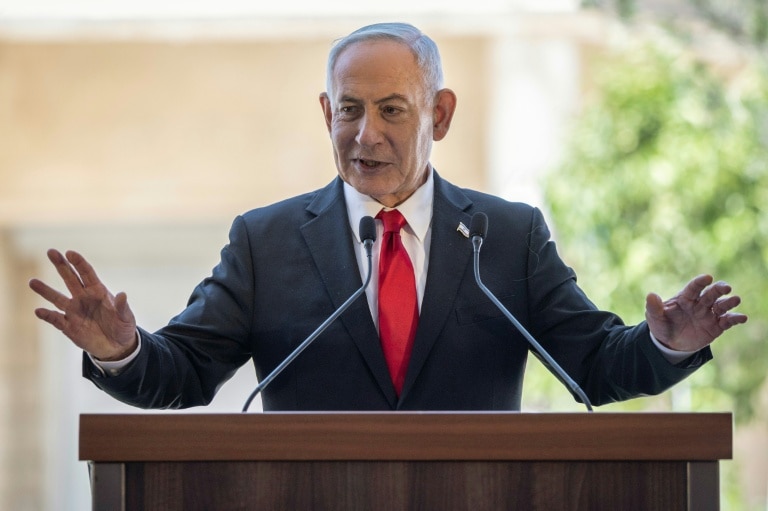
    Israel’s parliament, the Knesset, announced Sunday that the country’s next national general election will take place on October 27 — the final date permitted under Israeli law — in a vote that is widely framed as a public referendum on Prime Minister Benjamin Netanyahu’s tenure in office, shaped heavily by the fallout of the ongoing Gaza conflict. This election will mark the first time in decades that a sitting Israeli legislature has completed its full four-year term, with the current Knesset’s mandate set to expire on July 17.

    In an official statement, the Knesset clarified that no dissolution legislation would be required to pave the way for the vote, noting that “since the current Knesset is expected to serve its full term and the next general election is already set by law for October 27, with no intention of shortening the legislature’s tenure, there is no need to enact a Knesset Dissolution Law in the usual sense.”

    At 76 years old, Netanyahu — Israel’s longest-serving prime minister, who has held office across multiple non-consecutive terms — has already confirmed he will seek re-election, declaring publicly that he “intends to win” the upcoming contest. Political analysts widely view this election as the most consequential race of his decades-long political career.

    In recent weeks, Netanyahu’s ruling coalition, one of the most right-wing governments in Israel’s history, has rushed to advance a slate of priority legislation to shore up support within his alliance and position the government strongly ahead of the vote. In a shift from his previous ideological alignment, Netanyahu revealed last month that he aims to form a broad cross-party national unity government after the election, stating it would be “not a right-wing, not a left-wing government that depends on Arab parties, but a broad national government.” The move appears designed to reframe his campaign around national cohesion rather than partisan ideology, a pivot intended to broaden his appeal to centrist voters.

    Despite these strategic adjustments, recent public opinion polling paints a grim picture for the incumbent prime minister. Most Israeli voters currently support removing Netanyahu from office, with former Israeli military chief Gadi Eisenkot emerging as his most formidable challenger. A recent poll conducted by the Hebrew University of Jerusalem found that over 92% of Israeli respondents believe Iran emerged as the winner from recent regional conflict, while public support for Netanyahu’s leadership has plummeted from 40.5% in early March to just 29.4% in June.

    Widespread public criticism has centered on the February ceasefire between Israel and Iran, brokered with U.S. involvement, which resulted in a bilateral agreement between Tehran and Washington that many Israelis view as disadvantageous to their country’s security interests. Persistent public anger also continues over the major security failures that preceded the October 7 Hamas attacks, a controversy that has steadily eroded Netanyahu’s public standing over the past year.

    Several other divisive issues will shape voter sentiment ahead of the October vote. A bitter, long-running dispute over mandatory military service for ultra-Orthodox Jewish men has emerged as a major flashpoint. Netanyahu’s key ultra-Orthodox coalition allies have repeatedly threatened to bring down the current government if their community members are not granted continued exemption from military service, while the Israel Defense Forces and a large share of the general public argue that expanded conscription is critical amid years of ongoing conflict that have left the armed forces stretched thin. Other contentious issues include the controversial judicial overhaul package Netanyahu proposed before the Gaza war began, the prime minister’s ongoing personal corruption trials, and persistent uncertainty over long-term governance plans for the Gaza Strip post-conflict.

    Regional conflicts against the Lebanese militant group Hezbollah and Iran have created a uniquely volatile political backdrop for the election. Still, Netanyahu has framed his post-election agenda as advancing Israel’s regional strategic goals, arguing that a new unity government will help the country cement its military gains. “After we have removed the Iranian existential threat, the broad national government can make peace within ourselves, deal with the remnants of the Iranian axis and reap the fruits of our victory in political agreements like the one we are making with Lebanon — and there are a few more on the way,” he said in a recent statement.

    Netanyahu’s comments confirm that his campaign will center on Israel’s recent military campaigns against Iran and Hezbollah, as he shifts from governing through a narrow ideologically aligned right-wing coalition to campaigning for a broader, security-focused governing mandate from Israeli voters.

  • Zelensky orders new PM in major government reshuffle

    Zelensky orders new PM in major government reshuffle

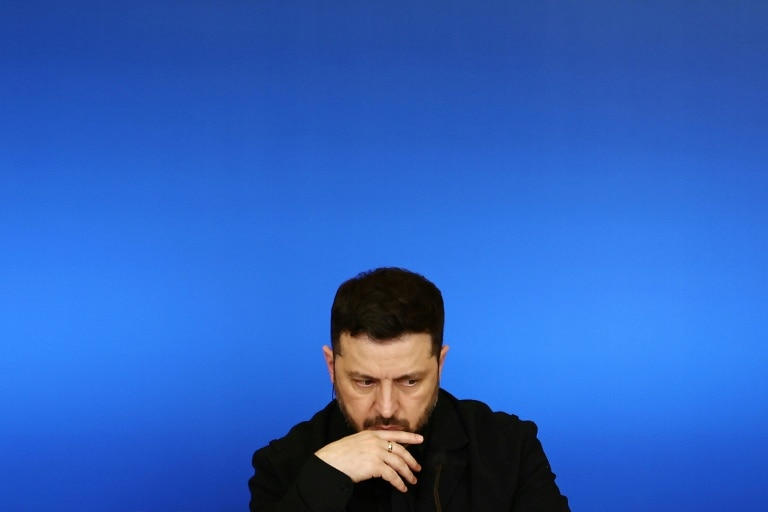
    Ukrainian President Volodymyr Zelensky has announced a sweeping overhaul of the country’s top government bodies, confirming plans to replace sitting Prime Minister Yulia Svyrydenko and shake up leadership at several key law enforcement agencies, in an announcement made Sunday. As of the initial statement, the Ukrainian leader has not disclosed the identity of Svyrydenko’s successor, nor has he offered detailed public reasoning for the planned leadership changes.

    The shakeup arrives at a defining juncture in Ukraine’s more than four-year full-scale conflict with Russia. In recent weeks, Moscow has ramped up its campaign of lethal ballistic missile attacks across Ukrainian territory, while Kyiv is moving forward with plans to begin domestic manufacturing of U.S.-developed Patriot air defense systems — a capability that could drastically bolster Ukraine’s ability to fend off Russian airstrikes.

    In a public post on the social platform X, Zelensky outlined the core urgent priorities driving the need for cabinet-level changes. These included advancing Ukraine’s accession negotiations with the European Union, advancing the domestic Patriot production program (for which the U.S. has already promised to grant a manufacturing license), and completing critical pre-winter preparations. Annual Russian strikes on Ukraine’s critical energy infrastructure have become a regular feature of the conflict, putting immense pressure on energy systems as temperatures drop each year. “We determined that these changes require a renewal of the Cabinet of Ministers,” Zelensky stated, offering no additional context for the decision.

    Beyond the prime ministerial shift, Zelensky confirmed that Svyrydenko has been offered a new leadership role overseeing “relations with a key partner.” The outgoing prime minister previously led Ukrainian negotiations with the U.S. on a high-stakes minerals and investment agreement, though there has been no official confirmation that the new position is tied to that partnership. In her own response on X, Svyrydenko thanked Zelensky for the trust placed in her and affirmed she remains “ready to serve the Ukrainian state.” Zelensky also confirmed that leadership changes are planned for the heads of several law enforcement agencies, but declined to share further details on those adjustments.

    Under Ukrainian parliamentary rules, all cabinet reshuffle moves require formal approval from the country’s legislature. However, since the 2022 Russian full-scale invasion, Ukrainian lawmakers have consistently unified behind Zelensky’s policy and personnel proposals, and rarely move to block his agenda. Ukrainian media outlets have already circulated two early potential candidates for the prime minister post: Sergiy Koretsky, chief executive officer of Ukraine’s state-owned energy giant Naftogaz, and Denys Shmygal, who previously held the prime minister role before Svyrydenko. It should be noted that the office of Ukrainian prime minister does not typically hold authority over military strategy or frontline combat operations, which remain under the direct control of Zelensky and his top military command.

  • Former Qatari emir Sheikh Hamad dies at 74

    Former Qatari emir Sheikh Hamad dies at 74

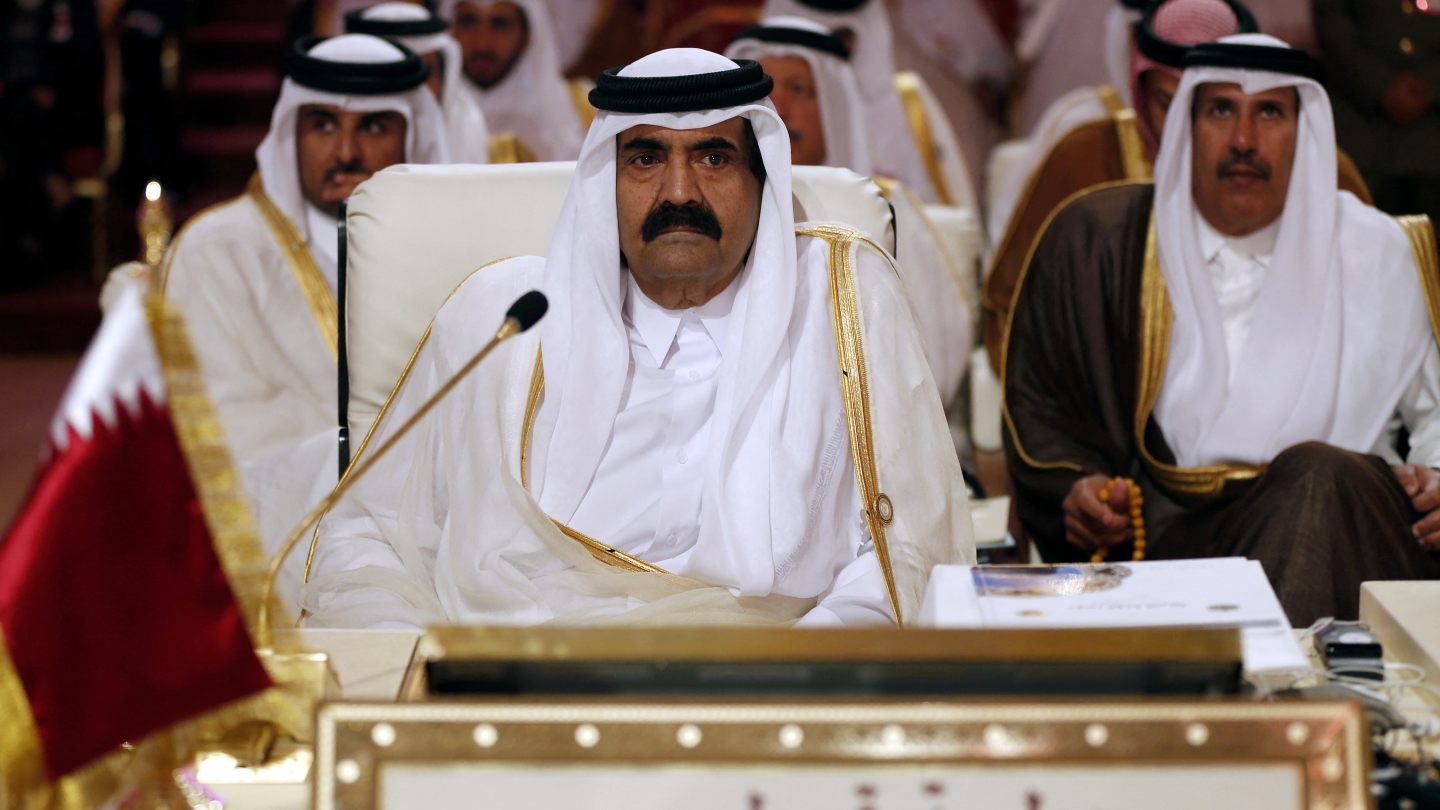
    Qatar’s royal court announced Sunday the passing of former Emir Sheikh Hamad bin Khalifa Al Thani, the transformative leader who turned a small Gulf state into a consequential global player across energy, diplomacy, and media. He was 74 years old, and no official cause of death has been released to the public.

    In an official statement, the Amiri Diwan expressed: “With hearts steadfast in faith in God’s decree and destiny, the Amiri Diwan mourns the great loss to the nation of the late – may God have mercy on him – His Highness the Father Amir Sheikh Hamad bin Khalifa Al Thani, who passed away this morning.”

    Sheikh Hamad held power from 1995, when he rose to the position via a bloodless palace coup that ousted his father Sheikh Khalifa bin Hamad Al Thani, until 2013. In a move that shocked observers across the Middle East and beyond, he made the unprecedented choice to voluntarily abdicate the throne in favor of his son, Sheikh Tamim bin Hamad Al Thani. This peaceful handover of power marked a first in modern Arab history, a rare departure from a regional pattern where leadership transitions only follow the death of a ruler or violent political upheaval. At the time of his resignation, Sheikh Hamad framed the shift as a new chapter for the nation, saying: “The future lies ahead of you, the children of this homeland, as you usher in a new era where young leadership hoists the banner.”

    Over his 18-year tenure, Sheikh Hamad engineered a radical transformation of Qatar’s global and domestic standing. He guided the small state to become the world’s top exporter of liquefied natural gas, turning its vast energy reserves into outsized geopolitical influence that stretched far beyond the country’s tiny borders. Domestically, his administration oversaw a series of landmark changes: the launch of influential global media network Al Jazeera in 1996, the adoption of Qatar’s first permanent constitution in 2004, and the introduction of municipal elections that extended voting and candidacy rights to women, a progressive step for the region.

    Sheikh Hamad also built Qatar’s reputation as a trusted regional mediator, with the country playing key diplomatic roles to resolve conflicts spanning Lebanon, Sudan, Afghanistan, and the Palestinian territories. For the Gaza Strip, his government committed hundreds of millions of dollars in infrastructure investment, including major coastal road projects, and a hospital in Gaza City still carries his name in recognition of his contributions.

    Beyond diplomacy and energy, Sheikh Hamad’s administration pursued aggressive international investments across aviation, infrastructure, business, and sports. These long-term investments laid the critical groundwork for Qatar’s successful hosting of the 2022 FIFA World Cup, an event that cemented the country’s status on the global stage. Even after stepping back from official rule, Sheikh Hamad remained a widely respected public figure in Qatar, and received a warm welcome during the opening ceremony of the 2022 tournament in Doha.

    Following the announcement of his death, tributes quickly poured in from leaders across the Middle East and beyond. Egyptian President Abdel Fattah el-Sisi offered condolences to Qatar’s ruling family and public, while Pakistani President Asif Ali Zardari commended Sheikh Hamad’s “visionary leadership” and his far-reaching contributions to Qatar’s development and cross-regional cooperation. United Arab Emirates President Sheikh Mohamed bin Zayed Al Nahyan also shared his respects, writing on X: “I extend my sincere condolences and sympathy to my brother Sheikh Tamim bin Hamad Al Thani and his family on the passing of his father, Sheikh Hamad bin Khalifa Al Thani.”

    Sheikh Hamad is survived by Sheikh Tamim and his extended family. Today, the Qatar that his family governs is a country whose enormous influence across global energy markets, international diplomacy, and global affairs is almost entirely the product of the vision and policies Sheikh Hamad put in place during his rule. For context, Qatar is one of the smallest Arab states, with a total population of roughly 3 million, the majority of whom are migrant workers. It was a British protectorate for 55 years until gaining independence in 1971, and has been governed by the Al Thani royal family since the mid-19th century.

  • Van der Poel powers to victory on 9th stage of Tour de France and Pogacar keeps yellow jersey

    Van der Poel powers to victory on 9th stage of Tour de France and Pogacar keeps yellow jersey

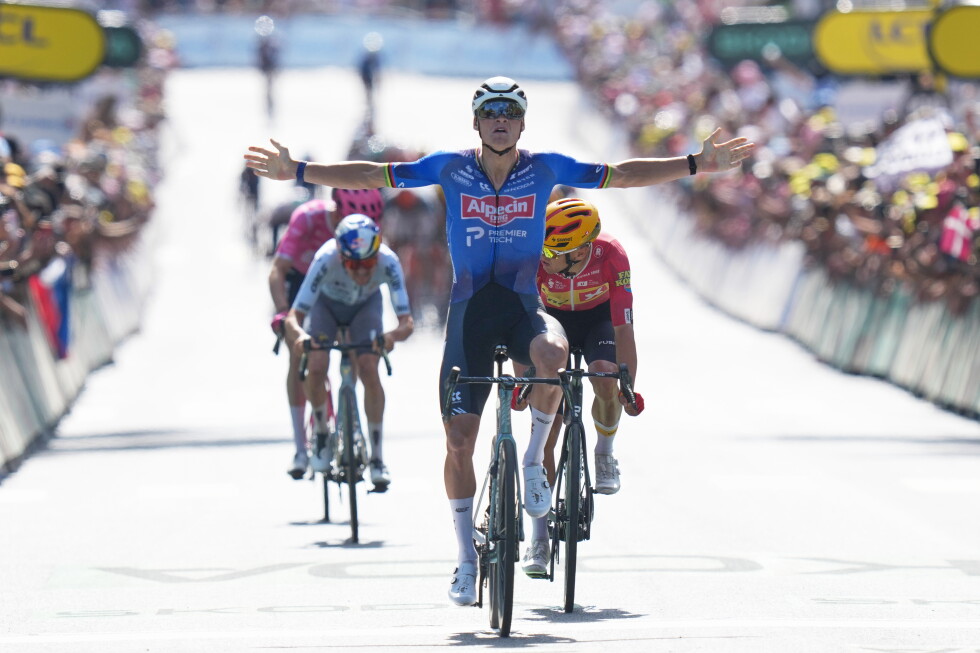
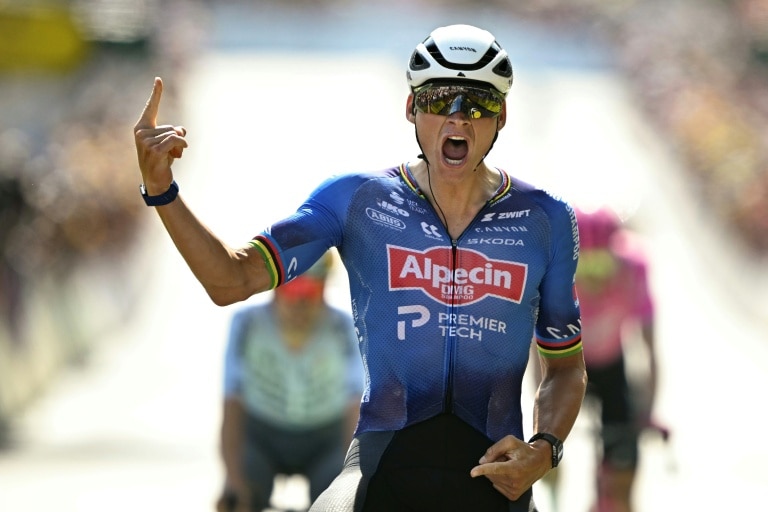
    The 2024 Tour de France’s ninth stage delivered a thrilling climax in Ussel, France on Sunday, as Dutch cycling star Mathieu van der Poel executed a perfectly timed late attack to secure victory in a reduced sprint, while defending champion Tadej Pogacar successfully defended his overall race lead and retained the iconic yellow jersey.

    Originally planned as a 184.6-kilometer journey across central France’s hilly terrain from Malemort to Ussel, the stage was cut short by roughly 30 kilometers after organizers opted for a revision amid a red extreme heat alert issued by French meteorological services. The revised 154.6-kilometer undulating route played to the strengths of versatile all-around riders known in cycling circles as *baroudeurs*—hard-riding competitors capable of thriving across varied terrain.

    An early breakaway of five riders, including two-time world road race champion Julian Alaphilippe, was reeled in by the peloton early on. With 80 kilometers remaining in the stage, a new 8-rider breakaway group formed, featuring fan favorites van der Poel, two-time Olympic mountain bike champion Tom Pidcock of Great Britain, and Italian star Filippo Ganna. Though none of the breakaway riders threatened the overall standings of top general classification contenders, defending champion Pogacar positioned himself near the front of the chasing pack to protect his lead, drawing on his well-known reputation for aggressive attacks from any point on the course.

    Van der Poel made his decisive move with 25 kilometers left to race, whittling the leading breakaway group down to just four riders as rivals including Ganna were dropped. Entering the final sprint, the Dutch champion unleashed his acceleration with only 200 meters between him and the finish line, powering past Norway’s Tobias Johannessen and Britain’s Tom Pidcock to cross the line with arms outstretched in celebration. All three top finishers clocked the same official time of 3 hours 27 minutes and 51 seconds.

    The victory marks van der Poel’s third career Tour de France stage win, adding another accolade to a already legendary resume that includes multiple Cyclo-cross world championships, multiple one-day classic victories, and a former world road race title. Cycling is a multigenerational legacy for the 31-year-old: his maternal grandfather was beloved French cycling icon Raymond Poulidor, who competed in the Tour de France through the 1960s and 1970s, finishing second overall three times and third five times to earn the nickname “The Eternal Runner-up” and a permanent place in French cycling fans’ hearts. Poulidor died in 2019, and when asked if he thought of his grandfather during Sunday’s stage, van der Poel told French television: “Always. Every day on the Tour is special.”

    Speaking after the finish, van der Poel acknowledged the extreme heat that has marked the opening week of the race had taken a major toll on his fitness. “It was a really hard stage after a hard week for the team. The heat takes away a lot of energy and I had the feeling that I wasn’t recovering properly in the first few days. Today was the first stage when I felt I had the legs (to win),” he explained.

    Pogacar, a four-time Tour champion, crossed the finish line six seconds behind van der Poel in a front chasing group that also included his primary general classification rival, two-time champion Jonas Vingegaard of Denmark. The result left Pogacar’s overall lead unchanged: he holds a 2 minute 42 second advantage over Vingegaard going into the first rest day, with his teammate Isaac del Toro sitting 3 minutes 27 seconds back in third place overall.

    Monday marks the first of two scheduled rest days for the 21-day race. Competition will resume on Tuesday with the challenging mountain stage 10, and the 2024 Tour will conclude with its traditional ceremonial finish on the Champs-Élysées in Paris on July 26.

  • Macron warns of resurgent demons of antisemitism as France honors Alfred Dreyfus

    Macron warns of resurgent demons of antisemitism as France honors Alfred Dreyfus

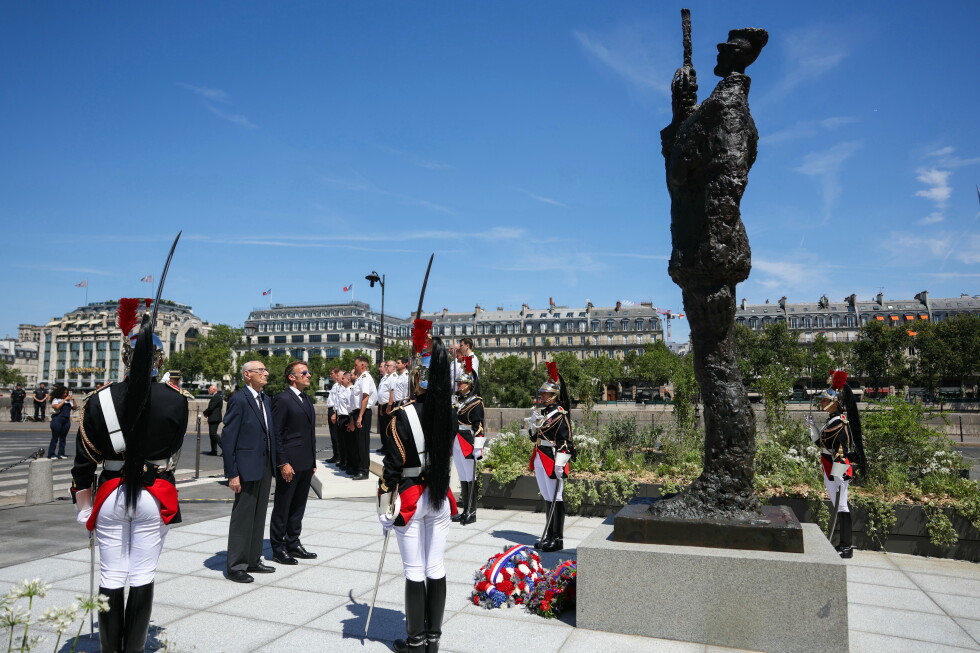
    PARIS – On the 120th anniversary of Alfred Dreyfus’s full exoneration, French President Emmanuel Macron used a landmark inauguration Sunday to sound the alarm over a dangerous resurgence of antisemitic sentiment that has haunted the nation for centuries. The event, held outside France’s highest court where Dreyfus was cleared of false treason charges in 1906, honored the Jewish army captain whose wrongful conviction laid bare the deep-seated anti-Jewish prejudice embedded in 19th-century French institutions.

    The somber commemoration came hours after authorities disrupted a potential terror threat targeting France’s Jewish community: police evacuated roughly 300 residents from the Paris suburb of Sarcelles, a neighborhood with a large Jewish population, after intelligence flagged a suspicious vehicle holding a military-grade long weapon near a local synagogue. French prosecutors have launched a full terrorism investigation into the incident, and Interior Minister Laurent Nunez told reporters that authorities have not yet confirmed whether the weapon was intended to attack Jewish community sites.

    France is home to the largest Jewish population in Europe, and the country has recorded a sharp spike in antisemitic incidents—including threats, property vandalism, and physical assaults—since the October 7, 2023, Hamas attacks on Israel and the outbreak of the Gaza war. The ceremony also comes amid ongoing international criticism of Macron’s 2024 decision to recognize Palestinian statehood: Israeli Prime Minister Benjamin Netanyahu and U.S. Ambassador to France Charles Kushner have both argued that the move has emboldened antisemitic attitudes across France.

    Speaking to the assembled crowd that included Dreyfus’s 99-year-old grandson Charles, Macron stressed that the “old demons of antisemitism” have never fully been eradicated from French society. “We need constant vigilance to stop acts that target people simply because of who they are,” the president said, announcing that starting this year, July 12 will be recognized as a national day of commemoration for Dreyfus’s exoneration.

    The Dreyfus affair remains one of the most defining episodes of injustice in modern French history. In 1894, the Jewish captain was falsely accused of passing French military secrets to Germany, wrongfully convicted of treason, and sentenced to life imprisonment. Prominent writer Emile Zola and a cohort of leading intellectuals rallied to his defense, exposing that the French military had scapegoated Dreyfus because of his Jewish identity. After 12 years of public campaigning and legal battles, the Court of Cassation—France’s highest judicial body—cleared Dreyfus of all charges on July 12, 1906. He later rejoined the French army, served with distinction in World War I, and died in 1935.

    Charles Dreyfus, who attended Sunday’s inauguration of the bronze statue depicting his grandfather holding a broken sword, a symbol of his overturned conviction, reflected on the unsettling parallels between the 19th-century affair and 2024. “I must sadly admit that I would not have imagined, at my age, seeing antisemitism resurface with such virulence in our country,” he said. That sorrow, he added, was balanced by “deep joy” at seeing his grandfather’s legacy honored at the site of his exoneration.

  • Van der Poel stays calm in the heat to win Tour de France stage nine

    Van der Poel stays calm in the heat to win Tour de France stage nine

    The 2025 Tour de France’s ninth stage delivered a thrilling display of endurance and tactics on Sunday, as Dutch cycling star and former world champion Mathieu van der Poel secured his third career Tour de France stage victory, overcoming extreme heat and grueling road conditions to claim the top spot on the podium. The stage, originally scheduled for a 184.6-kilometer route from Malemort to Ussel in France’s central Correze region, was cut by 30 kilometers after officials issued a red alert heat warning, bringing the total race distance down to 154.6 km. Temperatures across the stage climbed as high as 40 degrees Celsius, testing the limits of every rider in the peloton.

    A fierce fight for a spot in the day’s breakaway unfolded from the opening kilometer, with dozens of riders launching attacks to get clear of the main group. It was not until the midpoint of the stage, on the steep 3.8-kilometer Suc au May climb, that an eight-man breakaway finally managed to establish a gap over the peloton. Though their lead never stretched beyond one minute 30 seconds, the breakaway group cooperated smoothly to hold off the chasing main field.

    With 25 kilometers remaining on the day’s final categorized climb, the steep 900-meter Mont Bessou, van der Poel launched a decisive attack out of the breakaway. Only three riders could match his pace: Norway’s Tobias Johannessen, France’s Alex Baudin, and British standout Tom Pidcock. The leading quartet pushed hard to the finish, opening a 50-second gap over a sharply reduced peloton by the final kilometer. In a classic display of sprint tactics, the breakaway slowed in the final 1000 meters for a tense cat-and-mouse game, but when van der Poel kicked off his final sprint, his strength proved unmatchable. Johannessen crossed the line in second, with Pidcock taking third place.

    The win marked a satisfying turning point for van der Poel and his Alpecin Premier Tech team. In the two days prior to stage nine, the cobbled classics specialist had put his own ambitions aside to serve as lead-out man for teammate Jasper Philipsen, who notched fourth and fifth place finishes in previous sprint stages. “The start of the Tour was not great for our team, but like always, we stayed calm,” van der Poel told reporters after the race. “We have a really nice group here and we kept believing that it would turn around… it’s really nice to go to the first rest day with a win.”

    Van der Poel, a three-time winner of both the Tour of Flanders and Paris-Roubaix – the sport’s most prestigious one-day cobbled classics – previously won Tour de France stages in 2021 and earlier this 2025 edition. He acknowledged the extreme challenges of Sunday’s stage, noting: “I spent a lot of energy trying to keep the break alive. There was a lot of pressure from the bunch. The roads were horrible for a breakaway with a headwind the whole day. We fought for it and I’m happy to finish it off.”

    Reigning Tour champion Tadej Pogacar maintained his grip on the general classification lead, finishing in the chasing peloton just six seconds behind van der Poel ahead of Monday’s first scheduled rest day. The four-time champion holds a 2 minute 42 second lead over two-time winner Jonas Vingegaard, with Mexico’s Isaac del Toro sitting third overall, a further 45 seconds behind Vingegaard.

  • ‘This landscape is completely charred’: Inside the village at epicentre of Spain’s wildfires

    ‘This landscape is completely charred’: Inside the village at epicentre of Spain’s wildfires

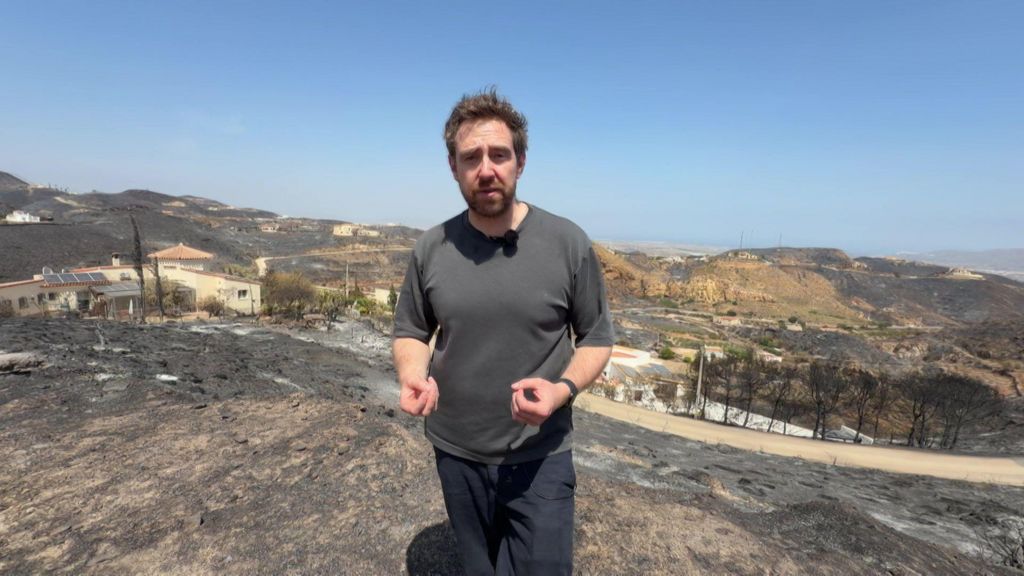
    When BBC correspondent Nick Beake stepped into the small Andalusian village of Bédar this week, the first thing that hit him was the overwhelming silence — and the uniform layer of black that stretched as far as the eye could see. Once a picturesque rural settlement dotted with terracotta-roofed homes and rolling Mediterranean scrubland, Bédar now stands as the epicenter of one of Spain’s most destructive recent wildfire outbreaks, leaving little trace of the lush landscape that defined the community for generations.

    Beake’s on-the-ground reporting reveals a scene of total destruction: dozens of residential properties have been reduced to nothing more than smoldering ash and twisted metal, with entire neighborhoods leveled by the fast-moving blaze. “This landscape is completely charred,” Beake described from the ground, surveying a vista that has been transformed from a thriving rural village into what he calls an endless “sea of black.” What were once green hillsides dotted with olive groves and native oak trees are now barren, blackened stretches of earth, with even deep-rooted vegetation consumed by the extreme heat of the fire.

    The wildfire, which was fanned by record-breaking early summer heat waves and strong gusty winds that have gripped southern Spain in recent weeks, spread rapidly across the Almería region, forcing hundreds of local residents to evacuate their homes with little more than the clothes on their backs. Firefighting crews have been working around the clock to contain the blaze, but dry conditions and unseasonably high temperatures have hampered containment efforts, allowing the fire to expand across thousands of hectares of land.

    As crews continue to battle the blaze, Bédar’s destruction offers a stark reminder of the growing wildfire risk facing Mediterranean nations amid accelerating climate change. Regional officials have already warned that this fire season could be one of the worst on record, as higher average temperatures and prolonged drought create tinder-like conditions across much of southern Spain.

  • Brothers who ran 33 marathons to spotlight dementia spend a day in the Royal Box at Wimbledon

    Brothers who ran 33 marathons to spotlight dementia spend a day in the Royal Box at Wimbledon

    For two British brothers facing a near-certain future of neurodegeneration, a dream invitation to Wimbledon’s iconic Royal Box was more than a VIP experience — it was a chance to build tangible, lasting memories that their loved ones will cherish long after symptoms of their genetic condition set in. Thirty-one-year-old Jordan Adams and 25-year-old Cian Adams carry a rare MAPT gene mutation that gives them a 99.9% chance of developing frontotemporal dementia (FTD), a cruel, incurable brain disease that already claimed their mother Geraldine at 52 in 2016, and has killed 12 members of their mother’s Irish family.

  • David Willey, esteemed BBC foreign correspondent, dies aged 93

    David Willey, esteemed BBC foreign correspondent, dies aged 93

    Pioneering British journalist David Willey, whose more than 50-year career as a BBC foreign correspondent spanned global conflicts, historic diplomatic milestones and five papal reigns, has died of heart failure at his adopted home in Italy at the age of 93.

    Willey’s career in international news began shortly after World War II, when he joined Reuters as a trainee. One of his earliest and most consequential assignments came in 1957, when he witnessed the signing of the Treaty of Rome – the foundational agreement that created the European Economic Community, the precursor to the modern European Union. Writing on the 50th anniversary of the historic accord in 2007, Willey recalled the atmosphere inside the frescoed Roman hall where the document was signed, noting the unexpected presence of a single red-hatted Vatican cardinal among crowds of politicians, civic leaders and journalists.

    After cutting his teeth at Reuters, Willey launched his freelance career with a posting to Algeria before joining the BBC full-time as East Africa correspondent in 1964. Over the following decades, he filed on-the-ground reports from some of the most high-profile global beats of the 20th century: he covered the height of the Vietnam War from Southeast Asia, and was one of the few Western journalists to report from post-revolution China. But it was his decades-long tenure as the BBC’s Vatican correspondent in Rome that cemented his legacy as one of the most authoritative journalistic voices on the Catholic Church.

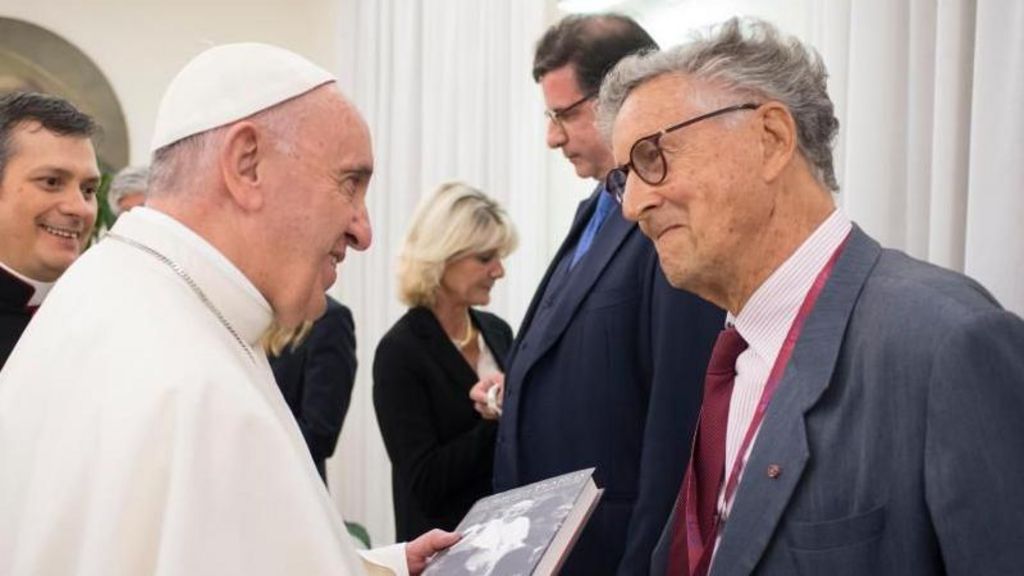
    Over his decades in Rome, Willey covered the tenures of five popes, from the mid-20th century through the 2020s. One of his most high-profile assignments was the 1981 assassination attempt on Pope John Paul II, which he covered as it unfolded. He shared a 2002 flight from Bulgaria to Rome with John Paul II, and in 2016, he presented Pope Francis with a copy of his full-length book *The Promise of Francis: The Man, the Pope, and the Challenge of Change* during a private audience. Even after turning 90, Willey continued working: following the death of Pope Francis last year, he published a widely read reflection on the institutional shifts the Vatican underwent during Francis’ papacy, and met newly elected Pope Leo shortly after his appointment.

    In that 2025 reflection, Willey marveled at the span of his own life and career, writing: “I have suddenly realised with something of shock that I am already not only four years older than the late Pope Francis, but that my own life now extends through no fewer than eight successive papal reigns.” He also recalled the early days of Vatican reporting in the 1950s, when journalists relied on underground connections to advance access to papal texts. He described one Easter Sunday morning, when he traveled by bus to a café opposite Vatican City’s main workers’ entrance to secretly pick up a smuggled copy of an important papal speech from a corrupt Vatican insider.

    Colleagues across the industry have remembered Willey not just for his journalistic rigor and institutional expertise, but for his mentorship of younger reporters. Mark Lowen, a current BBC correspondent and presenter who began his own Rome posting in 2019, wrote that Willey was “an incredible authority on the Vatican, reporting and travelling with five Popes, and was so kind, giving me insight and encouragement when I started.”

    For his decades of contributions to international broadcast journalism, Willey was awarded an OBE (Officer of the Order of the British Empire). He remained a sharp incisive analyst and generous mentor to emerging journalists until his death, leaving behind a decades-long legacy of accurate, insightful reporting on some of the most important global and religious events of the modern era.