作者: admin

  • South Africa says more than 53,000 foreigners deported in migration campaign

    South Africa says more than 53,000 foreigners deported in migration campaign

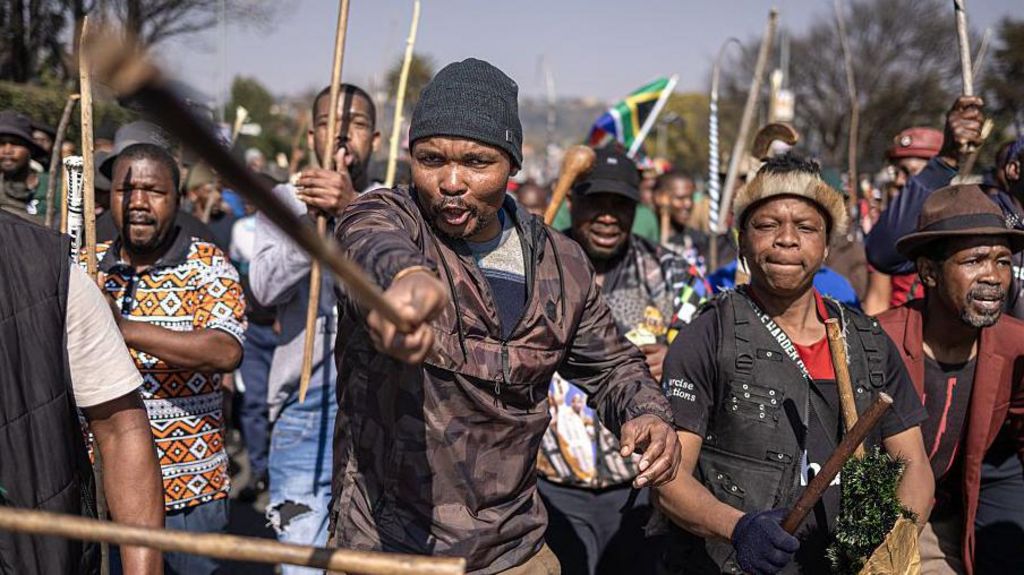
    Five weeks into a national migration management operation, South Africa has confirmed that more than 53,000 undocumented foreign nationals have been deported or repatriated, in one of the broadest crackdowns on irregular migration in the country in recent years. The operation was triggered by weeks of large-scale anti-immigration protests that have been marked by sporadic violence, targeted intimidation, and widespread looting of migrant-owned properties.

    Protesters across the country have poured into streets demanding tightened border security and mass expulsions, blaming undocumented migrants for South Africa’s persistent socioeconomic crises: sky-high national unemployment, surging violent crime, and the steady breakdown of core public services from healthcare to education. Demonstrators set an unofficial 30 June deadline for all irregular migrants to self-deport, a threat that has already pushed thousands of foreign residents to flee the country to avoid rising hostility. Multiple African nations including Ghana, Nigeria, Uganda and Kenya have organized emergency repatriation flights to bring their vulnerable citizens home in recent weeks.

    Anti-migration activists have not softened their demands, threatening to hold weekly demonstrations until the government clears all undocumented migrants from the country. Observers and global bodies have raised growing alarms that the unrest could escalate into broader, more widespread violence against foreign communities.

    Justice and Constitutional Development Minister Mmamoloko Kubayi officially confirmed the deportation figures in a Pretoria press conference Sunday, noting that the vast majority of those repatriated are from three neighboring Southern African states: Malawi, Zimbabwe, and Mozambique. She added that the count will continue to climb as immigration enforcement operations proceed across the country.

    Kubayi emphasized that the government’s campaign aims to establish orderly, regulated migration that addresses public anxieties while upholding international human rights standards and preserving the dignity of all people within South Africa’s borders, regardless of their citizenship or immigration status. She also confirmed that the deportation operation has assisted law enforcement in apprehending individuals wanted on criminal charges, a secondary win for national security.

    Going forward, Kubayi said authorities will continue to enforce the country’s existing immigration laws, but issued a sharp warning to protesters: vigilante actions including unauthorised searches of private homes and businesses suspected of housing undocumented migrants violate the law and will not be tolerated. President Cyril Ramaphosa has echoed this stance, acknowledging that the public has legitimate concerns about unregulated migration but explicitly condemning targeted attacks on migrant communities and warning citizens against taking enforcement into their own hands.

    As the most economically developed nation on the African continent, South Africa has long drawn migrants from across the region seeking improved employment prospects and higher living standards. A portion of these migrants cross the border without formal authorization, a reality that has fueled long-running public resentment that boiled over into open protest in recent months. The United Nations has previously spoken out against the crackdown, warning South African leaders against scapegoating migrants for the country’s deep-rooted socioeconomic challenges.
  • World Cup semifinals: Four previous champions, a bitter rivalry, Mbappé vs Yamal and Messi vs Kane

    World Cup semifinals: Four previous champions, a bitter rivalry, Mbappé vs Yamal and Messi vs Kane

    The 20XX FIFA World Cup has delivered a semifinal lineup unmatched in modern soccer history, bringing together the world’s top four ranked nations, all previous tournament champions, and a cast of global soccer royalty that has fans across the globe buzzing with anticipation. Only two matches now stand between Argentina, Spain, France, and England from lifting the sport’s most coveted trophy, and analysts agree that every matchup is too close to call. This year’s final four marks the first time since 1990 that every remaining contender has previously claimed the World Cup title, echoing a historic parallel that adds even more drama to the upcoming fixtures. France will face off against Spain in Arlington, Texas on Tuesday, a fixture that falls on France’s national Bastille Day holiday, before England and Argentina meet in Atlanta on Wednesday to cap off the semifinal round.

    The England-Argentina matchup is far more than a game for a spot in the World Cup final: it reignites one of the bitterest and most storied rivalries in international soccer, with tensions that have spilled beyond the pitch for decades, rooted in the 1982 Falklands Islands conflict between the two nations. The rivalry’s history on soccer’s biggest stage is littered with iconic controversial moments that are still debated by fans today. In the 1966 World Cup quarterfinals, Argentina captain Antonio Rattin — whose passing was announced just days before this year’s semifinal — was sent off in a fractious match that ended in a 1-0 English win; after the final whistle, then-England manager Alf Ramsey refused to let his players swap shirts with their Argentine opponents in a show of disrespect. Two decades later at the 1986 World Cup, Diego Maradona’s infamous illegal “Hand of God” goal secured a 2-1 quarterfinal win for Argentina, who went on to win the tournament that year. In 1998, David Beckham was sent off after kicking Argentina’s Diego Simeone, a moment that sparked widespread media fury in England, and Argentina won the match on penalties. Beckham earned his revenge four years later, scoring a match-winning penalty to knock Argentina out of the tournament in the group stage. Adding a new layer of history to this long-running rivalry: this will be Lionel Messi’s first ever competitive match against England at any World Cup.

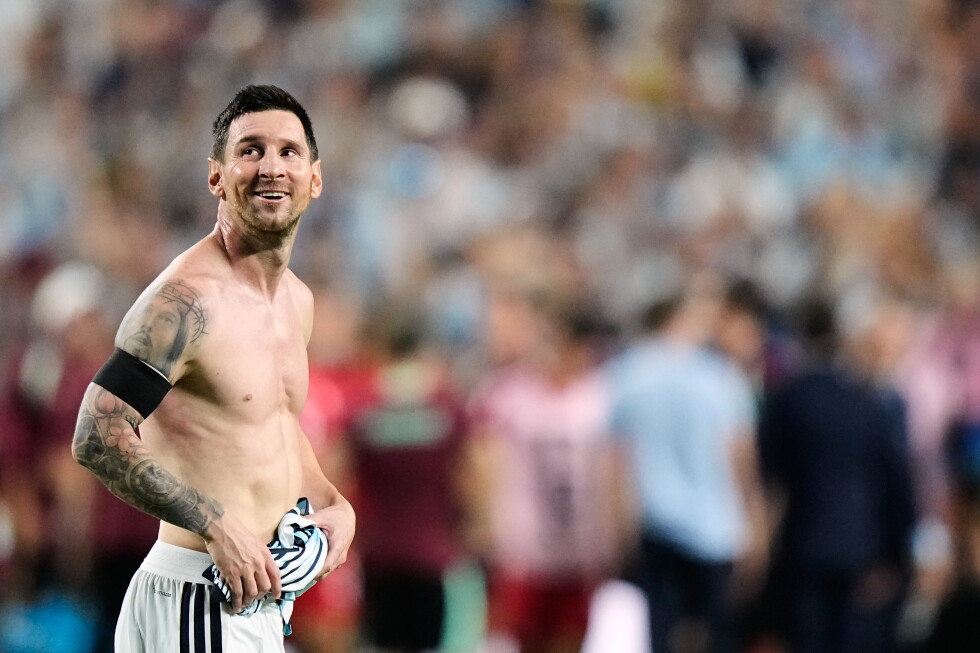
    Widely described as soccer’s greatest of all time (GOAT), the 39-year-old Messi is widely expected to be playing in his final World Cup, and his performances this tournament have only cemented his legacy. If he guides Argentina to a second consecutive title, he will surpass Maradona by becoming the second Argentine men’s player to win two World Cups, and Argentina will become the first national men’s team to win back-to-back World Cup titles since Brazil’s legendary squads of 1958 and 1962 led by Pelé. As the defending 2022 World Cup champions, Argentina already enters this semifinal with a historic parallel to the 1990 tournament, when Argentina was also the defending champion and reached the final before falling to West Germany.

    In the other semifinal, France will chase quick revenge against a Spanish side that knocked them out of the 2024 European Championship in a 2-1 semifinal win two years ago. That 2024 match saw 16-year-old prodigy Lamine Yamal score for Spain, who went on to lift the Euro title after beating England in the final. For France, that match was hampered by a broken nose injury that blunted star striker Kylian Mbappé’s impact, while young emerging talents Michael Olise and Désiré Doué had not yet broken into the senior national squad. Today, France enters this World Cup semifinal as the tournament’s most impressive team, boasting a deep, dynamic attacking roster that has overwhelmed opponents throughout the knockout stage.

    In contrast, Spain entered this World Cup already dealing with major injury setbacks, losing both Yamal and winger Nico Williams before the tournament began. The Spanish side has nonetheless fought its way to the semifinals, clinching narrow late wins against Portugal and Belgium, both off goals from substitute Mikel Oyarzabal. The two nations have a long tournament history: France defeated Spain to claim the Euro 1984 title.

    Beyond the race for the World Cup trophy, the tournament also features a thrilling tight race for the Golden Boot, awarded to the tournament’s top goalscorer. Five of the world’s six top goalscorers remain in the competition, with Erling Haaland the only eliminated top contender after Norway fell to England in the quarterfinals. Mbappé and Messi currently share the lead with eight goals each, followed by Jude Bellingham and Harry Kane with six, Ousmane Dembélé with five, and Oyarzabal with four, putting multiple players within striking distance of the award. The two superstars are also competing for the title of the all-time leading World Cup goalscorer: Messi has 21 career World Cup goals, just one ahead of Mbappé’s 20.

    If both France and Argentina advance to the final, the 2026 World Cup will host a rematch of the iconic 2022 final, adding another historic chapter to what is already the most anticipated final four in recent World Cup memory.

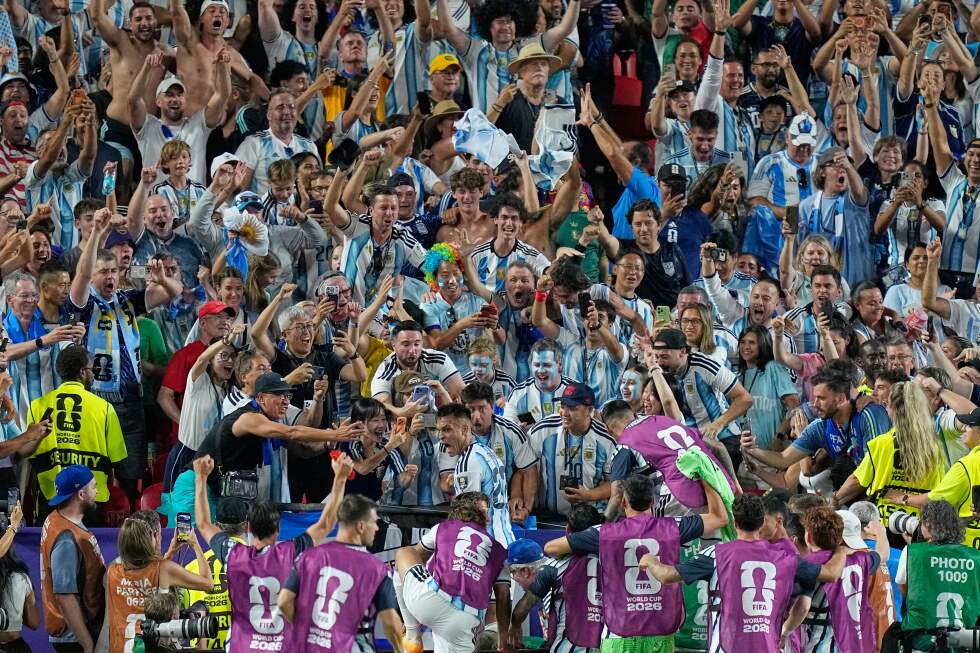
  • One Extraordinary Photo: Argentina’s Lautaro Martinez in the stands celebrating his goal with fans

    One Extraordinary Photo: Argentina’s Lautaro Martinez in the stands celebrating his goal with fans

    For award-winning Associated Press photographer Ashley Landis, the 21-year veteran of visual journalism based in Houston, Texas, capturing those once-in-a-tournament split-second moments is what makes sports photography unforgettable. Over six of her two decades in the industry, Landis has built her career covering everything from breaking hard news to intimate human interest features, with a core focus on sports storytelling. In a behind-the-scenes breakdown, Landis has opened up about how she captured one of the most vivid images from the 2022 FIFA World Cup: the celebration of Argentina’s match-winning goal against Switzerland.

    It was a decisive overtime contest that would send Argentina through to the next round of the tournament, and when Inter Milan striker Lautaro Martinez slotted the game-winning goal past the Swiss defense, he reacted in a way few players do in the heat of the moment. Rather than immediately running back to join his teammates on the pitch, Martinez lept over the sideline’s LED advertising boards to share his joy with the Argentine fans packed into the front row of the stands. Recognizing that this unscripted, emotional moment would not come again, Landis made the split-second call to keep her lens locked on Martinez rather than panning back to the rest of the team’s celebration. As she recounts, Martinez stopped to share high-fives with the cheering fans in the front row before turning back to the pitch to join his squad, creating a candid frame that blends player joy and fan passion into one iconic shot.

    Landis explains the technical choices that allowed her to nail the shot from her position across the pitch. She had already captured the moment of the goal from her vantage point, and kept Martinez tracked through the celebration with a long 400mm f/2.8 telephoto lens — the go-to tool for sports photographers needing to isolate action from a distance. With crowds of players and fans swarming around the striker, Landis deliberately kept her camera’s focus locked on Martinez to ensure he stayed sharp amid the chaos.

    Looking at why the image resonates so strongly with viewers, Landis notes that Martinez’s unfiltered, explosive reaction was so clear it read even from her distant position across the field. Even with dozens of fans and teammates all clad in Argentina’s iconic albiceleste jersey filling the frame, Martinez stands out sharply thanks to his overjoyed facial expression and raw, peak emotion. The surrounding fans, their arms thrown high in celebration as they surround the striker, create a natural frame that draws the viewer’s eye directly to Martinez in the bottom center of the composition, anchoring the moment’s energy. This shot, which captures both the elation of a star player and the joy of the fans who supported him, stands as a perfect example of how sports photography can distill the raw emotion of global football into a single, unforgettable frame. More of The Associated Press’ full coverage of the World Cup is available to view on their official platform.

  • Lindsey Graham, staunch backer of Israel and US wars, dies aged 71

    Lindsey Graham, staunch backer of Israel and US wars, dies aged 71

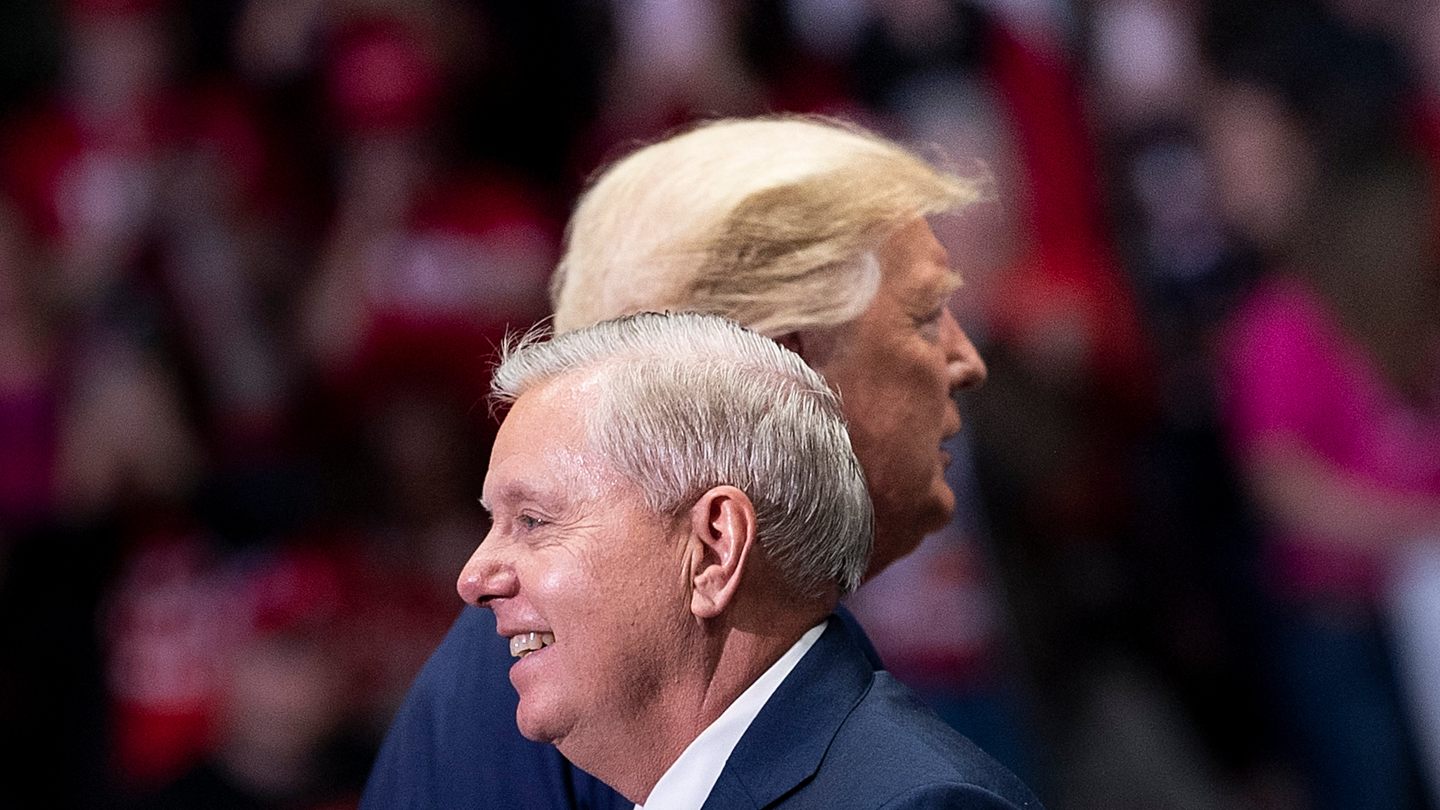
    Veteran South Carolina Republican Senator Lindsey Graham, one of the most consequential figures shaping modern U.S. foreign policy and a polarizing long-time political associate of former President Donald Trump, has passed away at 71 after a short illness. His Senate office confirmed the news in an official statement released Sunday, noting that Graham died Saturday evening and that his family has asked for privacy during this period.

    First elected to the U.S. Senate in 2002, Graham built a decades-long career defined by unapologetically interventionist foreign policy stances that drew both fierce support and widespread international condemnation. He chaired the Senate Budget Committee and emerged as a leading voice on nearly every major global conflict of the 21st century, from the wars in Afghanistan and Iraq to ongoing tensions in Ukraine and Iran, and most notably, Israel’s military campaign in Gaza.

    Just days before his death, Graham returned from a high-profile visit to Kyiv, where he met with Ukrainian President Volodymyr Zelensky to discuss new legislation to ramp up pressure on Russia. A leading congressional backer of continued U.S. military aid to Ukraine, Graham warned in a 2023 interview with the BBC that Russian President Vladimir Putin’s territorial ambitions extended far beyond Ukraine, arguing that “To be weak in Ukraine means that you lose in Taiwan.”

    Graham’s political relationship with Donald Trump was marked by notable public tension before an eventual reconciliation that solidified his status as one of Trump’s most prominent allies. Though he publicly broke with Trump in the immediate aftermath of the January 6, 2021 attack on the U.S. Capitol, telling a Senate session “All I can say is count me out. Enough is enough,” he reversed course within years. In a 2023 BBC interview, Graham acknowledged “there is a dark side to Donald Trump” but confirmed he would back Trump’s 2024 presidential campaign, arguing “he was a very good president. But I am sticking with him because I saw what he did.” Trump paid tribute to Graham in a social media post following his death, calling the senator a “true American patriot.”

    Across more than two decades in Congress, Graham was one of the most unwavering pro-Israel voices in U.S. politics, consistently pushing for expanded military aid to Tel Aviv and open U.S. support for Israeli illegal settlements in occupied territories. Israeli Prime Minister Benjamin Netanyahu remembered Graham as a close friend of Israel, while Israeli President Isaac Herzog noted his support for the country had never wavered throughout his career.

    Throughout Israel’s ongoing military campaign in Gaza, Graham repeatedly defended Israeli military actions and opposed any congressional or international efforts to limit U.S. military support for Israel, stances that drew harsh condemnation from Palestinian rights groups, human rights organizations, and Muslim civil rights communities. In July 2024, a social media post from Graham describing the Palestinian population of Gaza as “the most radicalized population on the planet who are taught to hate Jews from birth” sparked widespread international outcry. The Council on American-Islamic Relations condemned the comments, accusing Graham of spreading dangerous racist stereotypes about Palestinians and labeling his remarks “hateful and absurd.”

    Graham also faced heavy criticism for comments suggesting Israel could consider measures analogous to the U.S. atomic bombings of Japan in World War II, with opponents dismissing the remarks as dangerously inflammatory. During a 2019 visit to the illegally occupied Golan Heights, Graham argued that Israeli security and prosperity were core to U.S. national interests and formally called for the U.S. to recognize Israeli sovereignty over the territory. Earlier this year, International Criminal Court chief prosecutor Karim Khan confirmed Graham was among U.S. officials who threatened him over the ICC’s pursuit of arrest warrants for senior Israeli leaders over alleged war crimes in Gaza.

    A vocal proponent of hardline policy toward Iran, Graham repeatedly urged successive White House administrations to deploy military force to secure the Strait of Hormuz during periods of heightened U.S.-Iran tension, even comparing the confrontation with Tehran to Britain’s fight against Nazi Germany during World War II. His uncompromising stances on Middle East policy drew pushback from Gulf nations; in March of this year, he publicly blamed Saudi Arabia for refusing to join a potential U.S.-Israeli military campaign against Iran and warned of unspecified “consequences” for any nation that declined to back military action against Tehran.

    Graham’s confrontational diplomatic style also sparked controversy in Europe. As recently as 2025, Norwegian officials were forced to de-escalate diplomatic tensions after Graham threatened repercussions for Norway over a decision by the country’s sovereign wealth fund to divest from companies linked to Israel’s military campaign in Gaza.

  • Iran strikes American military assets in Gulf and Jordan, after US hits Iranian cities

    Iran strikes American military assets in Gulf and Jordan, after US hits Iranian cities

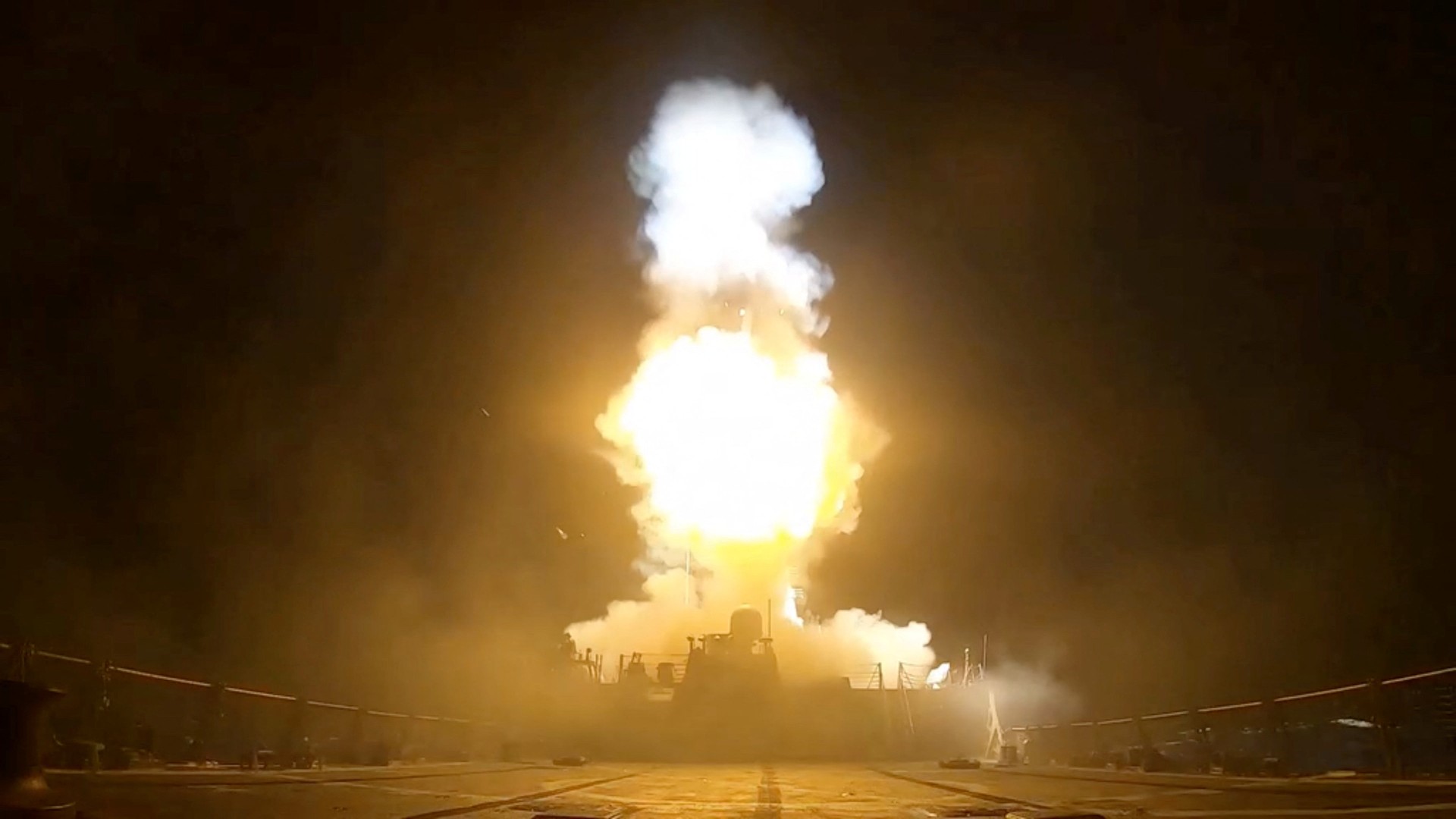
    A rapidly escalating cycle of retaliatory violence has plunged the Persian Gulf into chaos this week, after the United States launched a third consecutive night of airstrikes targeting Iranian assets across Iranian territory, prompting Tehran to launch sweeping missile and drone counterattacks across multiple Gulf states and announce the immediate closure of the strategic Strait of Hormuz.

    The latest escalation traces back to an early Sunday strike by U.S. forces, launched after Iran’s Islamic Revolutionary Guard Corps (IRGC) opened fire on a Cyprus-flagged container vessel that the Iranian force claimed was traversing the Strait of Hormuz via an unapproved shipping route. The IRGC confirmed shortly after that it had targeted a second commercial vessel, accusing it of also violating regional maritime regulations.

    Local Iranian media reported multiple large explosions across key Iranian locations within hours of the U.S. Sunday strike, including the southern port city of Bandar Abbas, the coastal towns of Sirik and Jask, Qeshm Island off Iran’s southern coast, and the southwestern Khuzestan province — regions that host critical Iranian military and energy infrastructure.

    The conflict quickly spilled across national borders as air raid sirens blared across Bahrain and the United Arab Emirates (UAE) just hours after the initial strikes. Qatar reported that it had intercepted incoming Iranian missile fire, with three people including one child wounded in the attack. Kuwait confirmed it was also working to intercept incoming hostile projectiles, while Jordan announced that three Iranian missiles had impacted inside its territory.

    In official statements carried by Iranian state media, the IRGC claimed responsibility for all cross-border attacks, stating it had destroyed a command and control center and drone storage hangars in Jordan, targeted a U.S. radar installation in Kuwait, and taken out a fighter jet maintenance hub and command facility in Qatar. The force also claimed it had destroyed U.S. naval logistics support centers and aircraft carrier refueling infrastructure at Oman’s Port of Duqm. The UAE later clarified that all missile threats detected earlier in the day had fallen outside its national borders, causing no damage or casualties on its territory.

    Per Iran’s official state news agency IRNA, the IRGC issued a formal announcement of the Strait of Hormuz closure shortly after the initial vessel attacks, stating: “Following this incident … the Strait of Hormuz will be closed until further notice and until the end of American interventions in this region.” The U.S. Central Command (Centcom) pushed back against this announcement immediately, confirming that commercial shipping traffic continues to move through the critical waterway, which handles roughly 20% of global oil trade.

    Details of the initial vessel attack have slowly emerged: Centcom confirmed the Cyprus-registered container ship GFS Galaxy was disabled by fire and structural damage to its engine room, with one crew member unaccounted for. The United Kingdom Maritime Trade Operations (UKMTO) agency reported the entire crew abandoned the damaged vessel and took shelter on a life raft, noting the incident occurred roughly 17 kilometers east of Omani territorial waters. India’s Ministry of External Affairs later confirmed that the missing crew member is an Indian national; of the 11 Indian citizens on board the vessel, 10 have been successfully rescued, and the Indian government has formally condemned the attack.

    U.S. defense officials laid out the scope of the three-night campaign this week, noting that U.S. forces struck 140 Iranian targets on Saturday alone, bringing the total number of targets hit to more than 300. Centcom says the strikes are intended to degrade Iran’s capacity to attack civilian mariners and commercial vessels moving freely through the strait. U.S. Defense Secretary Pete Hegseth issued a blunt warning following the counterattacks, stating: “Iran made a poor choice. Now they pay.”

    The rapid escalation of violence has effectively ended a weeks-long ceasefire between the U.S. and Iran, a development confirmed by U.S. President Donald Trump. The breakdown of the truce has thrown deep uncertainty over ongoing diplomatic efforts to reach a long-term ceasefire and de-escalation agreement, which had been progressing slowly in recent weeks.

    Iran’s top parliamentary speaker and leading nuclear negotiator Mohammad Bagher Ghalibaf reinforced Tehran’s hardening stance in a post on the social platform X, writing: “The era of one-sided deals is OVER. We told you: keep your word or pay the price. Reality is knocking.”

    Interestingly, the large-scale fighting broke out just one day after a round of diplomatic talks held in Oman on Saturday, which brought together Iranian Foreign Minister Abbas Araghchi and his Omani counterpart Badr Albusaidi. Iranian foreign ministry spokesperson Esmail Baqaei confirmed Sunday that the talks were focused on coordinating new shipping and transit rules for the Strait of Hormuz, with legal and technical delegations from both sides discussing maritime security and safety standards. A Qatari delegation also attended the talks, and Baqaei added that both sides agreed to continue political and technical talks to reach a shared understanding on the issues.

    The escalation also comes on the heels of a formal statement from Iran’s new supreme leader, Ayatollah Mojtaba Khamenei, who issued a written threat Saturday to avenge the death of his father and predecessor, Ali Khamenei.

  • Israel elections to be held on October 27: parliament

    Israel elections to be held on October 27: parliament

    Israel’s parliament, the Knesset, announced Sunday that the country’s next national general election will take place on October 27 — the final date permitted under Israeli law — in a vote that is widely framed as a public referendum on Prime Minister Benjamin Netanyahu’s tenure in office, shaped heavily by the fallout of the ongoing Gaza conflict. This election will mark the first time in decades that a sitting Israeli legislature has completed its full four-year term, with the current Knesset’s mandate set to expire on July 17.

    In an official statement, the Knesset clarified that no dissolution legislation would be required to pave the way for the vote, noting that “since the current Knesset is expected to serve its full term and the next general election is already set by law for October 27, with no intention of shortening the legislature’s tenure, there is no need to enact a Knesset Dissolution Law in the usual sense.”

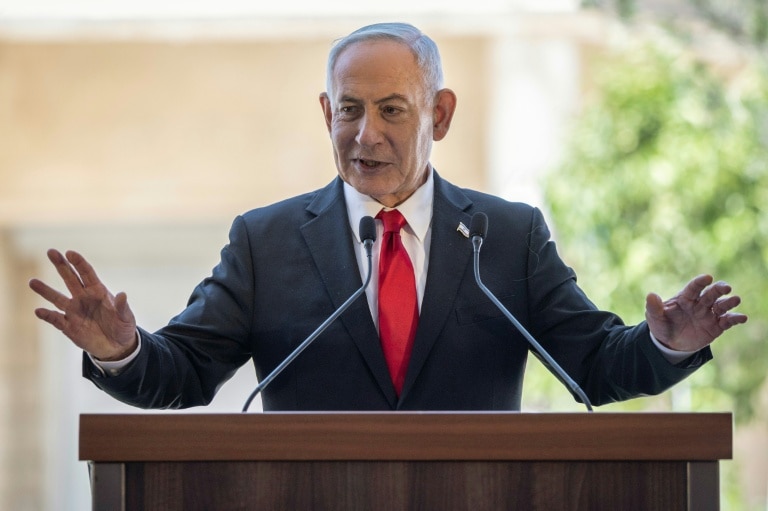
    At 76 years old, Netanyahu — Israel’s longest-serving prime minister, who has held office across multiple non-consecutive terms — has already confirmed he will seek re-election, declaring publicly that he “intends to win” the upcoming contest. Political analysts widely view this election as the most consequential race of his decades-long political career.

    In recent weeks, Netanyahu’s ruling coalition, one of the most right-wing governments in Israel’s history, has rushed to advance a slate of priority legislation to shore up support within his alliance and position the government strongly ahead of the vote. In a shift from his previous ideological alignment, Netanyahu revealed last month that he aims to form a broad cross-party national unity government after the election, stating it would be “not a right-wing, not a left-wing government that depends on Arab parties, but a broad national government.” The move appears designed to reframe his campaign around national cohesion rather than partisan ideology, a pivot intended to broaden his appeal to centrist voters.

    Despite these strategic adjustments, recent public opinion polling paints a grim picture for the incumbent prime minister. Most Israeli voters currently support removing Netanyahu from office, with former Israeli military chief Gadi Eisenkot emerging as his most formidable challenger. A recent poll conducted by the Hebrew University of Jerusalem found that over 92% of Israeli respondents believe Iran emerged as the winner from recent regional conflict, while public support for Netanyahu’s leadership has plummeted from 40.5% in early March to just 29.4% in June.

    Widespread public criticism has centered on the February ceasefire between Israel and Iran, brokered with U.S. involvement, which resulted in a bilateral agreement between Tehran and Washington that many Israelis view as disadvantageous to their country’s security interests. Persistent public anger also continues over the major security failures that preceded the October 7 Hamas attacks, a controversy that has steadily eroded Netanyahu’s public standing over the past year.

    Several other divisive issues will shape voter sentiment ahead of the October vote. A bitter, long-running dispute over mandatory military service for ultra-Orthodox Jewish men has emerged as a major flashpoint. Netanyahu’s key ultra-Orthodox coalition allies have repeatedly threatened to bring down the current government if their community members are not granted continued exemption from military service, while the Israel Defense Forces and a large share of the general public argue that expanded conscription is critical amid years of ongoing conflict that have left the armed forces stretched thin. Other contentious issues include the controversial judicial overhaul package Netanyahu proposed before the Gaza war began, the prime minister’s ongoing personal corruption trials, and persistent uncertainty over long-term governance plans for the Gaza Strip post-conflict.

    Regional conflicts against the Lebanese militant group Hezbollah and Iran have created a uniquely volatile political backdrop for the election. Still, Netanyahu has framed his post-election agenda as advancing Israel’s regional strategic goals, arguing that a new unity government will help the country cement its military gains. “After we have removed the Iranian existential threat, the broad national government can make peace within ourselves, deal with the remnants of the Iranian axis and reap the fruits of our victory in political agreements like the one we are making with Lebanon — and there are a few more on the way,” he said in a recent statement.

    Netanyahu’s comments confirm that his campaign will center on Israel’s recent military campaigns against Iran and Hezbollah, as he shifts from governing through a narrow ideologically aligned right-wing coalition to campaigning for a broader, security-focused governing mandate from Israeli voters.

  • Zelensky orders new PM in major government reshuffle

    Zelensky orders new PM in major government reshuffle

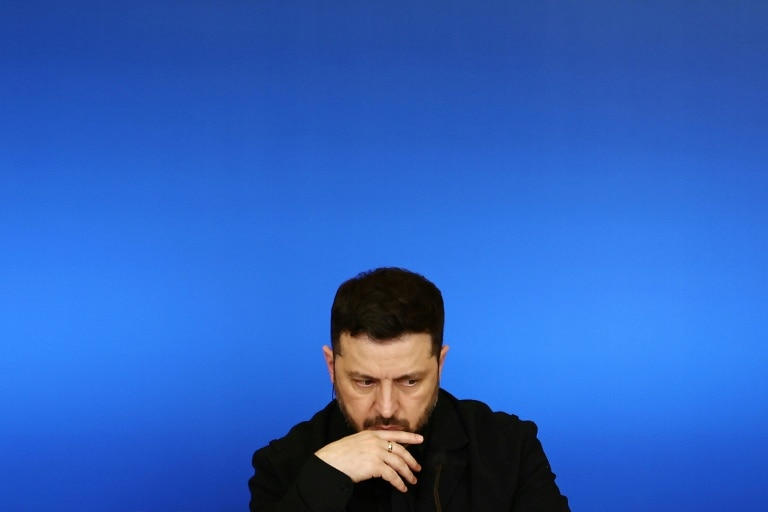
    Ukrainian President Volodymyr Zelensky has announced a sweeping overhaul of the country’s top government bodies, confirming plans to replace sitting Prime Minister Yulia Svyrydenko and shake up leadership at several key law enforcement agencies, in an announcement made Sunday. As of the initial statement, the Ukrainian leader has not disclosed the identity of Svyrydenko’s successor, nor has he offered detailed public reasoning for the planned leadership changes.

    The shakeup arrives at a defining juncture in Ukraine’s more than four-year full-scale conflict with Russia. In recent weeks, Moscow has ramped up its campaign of lethal ballistic missile attacks across Ukrainian territory, while Kyiv is moving forward with plans to begin domestic manufacturing of U.S.-developed Patriot air defense systems — a capability that could drastically bolster Ukraine’s ability to fend off Russian airstrikes.

    In a public post on the social platform X, Zelensky outlined the core urgent priorities driving the need for cabinet-level changes. These included advancing Ukraine’s accession negotiations with the European Union, advancing the domestic Patriot production program (for which the U.S. has already promised to grant a manufacturing license), and completing critical pre-winter preparations. Annual Russian strikes on Ukraine’s critical energy infrastructure have become a regular feature of the conflict, putting immense pressure on energy systems as temperatures drop each year. “We determined that these changes require a renewal of the Cabinet of Ministers,” Zelensky stated, offering no additional context for the decision.

    Beyond the prime ministerial shift, Zelensky confirmed that Svyrydenko has been offered a new leadership role overseeing “relations with a key partner.” The outgoing prime minister previously led Ukrainian negotiations with the U.S. on a high-stakes minerals and investment agreement, though there has been no official confirmation that the new position is tied to that partnership. In her own response on X, Svyrydenko thanked Zelensky for the trust placed in her and affirmed she remains “ready to serve the Ukrainian state.” Zelensky also confirmed that leadership changes are planned for the heads of several law enforcement agencies, but declined to share further details on those adjustments.

    Under Ukrainian parliamentary rules, all cabinet reshuffle moves require formal approval from the country’s legislature. However, since the 2022 Russian full-scale invasion, Ukrainian lawmakers have consistently unified behind Zelensky’s policy and personnel proposals, and rarely move to block his agenda. Ukrainian media outlets have already circulated two early potential candidates for the prime minister post: Sergiy Koretsky, chief executive officer of Ukraine’s state-owned energy giant Naftogaz, and Denys Shmygal, who previously held the prime minister role before Svyrydenko. It should be noted that the office of Ukrainian prime minister does not typically hold authority over military strategy or frontline combat operations, which remain under the direct control of Zelensky and his top military command.

  • Former Qatari emir Sheikh Hamad dies at 74

    Former Qatari emir Sheikh Hamad dies at 74

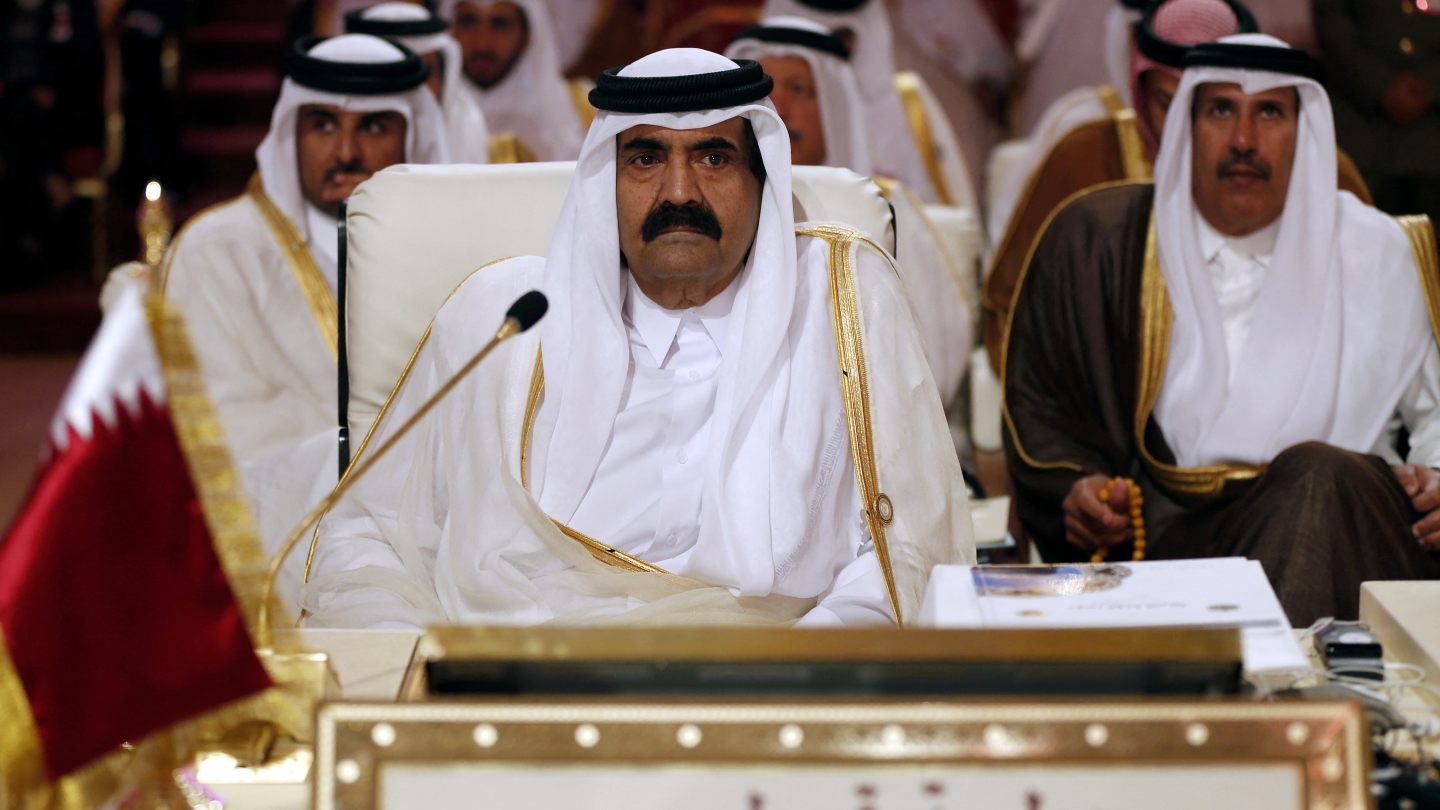
    Qatar’s royal court announced Sunday the passing of former Emir Sheikh Hamad bin Khalifa Al Thani, the transformative leader who turned a small Gulf state into a consequential global player across energy, diplomacy, and media. He was 74 years old, and no official cause of death has been released to the public.

    In an official statement, the Amiri Diwan expressed: “With hearts steadfast in faith in God’s decree and destiny, the Amiri Diwan mourns the great loss to the nation of the late – may God have mercy on him – His Highness the Father Amir Sheikh Hamad bin Khalifa Al Thani, who passed away this morning.”

    Sheikh Hamad held power from 1995, when he rose to the position via a bloodless palace coup that ousted his father Sheikh Khalifa bin Hamad Al Thani, until 2013. In a move that shocked observers across the Middle East and beyond, he made the unprecedented choice to voluntarily abdicate the throne in favor of his son, Sheikh Tamim bin Hamad Al Thani. This peaceful handover of power marked a first in modern Arab history, a rare departure from a regional pattern where leadership transitions only follow the death of a ruler or violent political upheaval. At the time of his resignation, Sheikh Hamad framed the shift as a new chapter for the nation, saying: “The future lies ahead of you, the children of this homeland, as you usher in a new era where young leadership hoists the banner.”

    Over his 18-year tenure, Sheikh Hamad engineered a radical transformation of Qatar’s global and domestic standing. He guided the small state to become the world’s top exporter of liquefied natural gas, turning its vast energy reserves into outsized geopolitical influence that stretched far beyond the country’s tiny borders. Domestically, his administration oversaw a series of landmark changes: the launch of influential global media network Al Jazeera in 1996, the adoption of Qatar’s first permanent constitution in 2004, and the introduction of municipal elections that extended voting and candidacy rights to women, a progressive step for the region.

    Sheikh Hamad also built Qatar’s reputation as a trusted regional mediator, with the country playing key diplomatic roles to resolve conflicts spanning Lebanon, Sudan, Afghanistan, and the Palestinian territories. For the Gaza Strip, his government committed hundreds of millions of dollars in infrastructure investment, including major coastal road projects, and a hospital in Gaza City still carries his name in recognition of his contributions.

    Beyond diplomacy and energy, Sheikh Hamad’s administration pursued aggressive international investments across aviation, infrastructure, business, and sports. These long-term investments laid the critical groundwork for Qatar’s successful hosting of the 2022 FIFA World Cup, an event that cemented the country’s status on the global stage. Even after stepping back from official rule, Sheikh Hamad remained a widely respected public figure in Qatar, and received a warm welcome during the opening ceremony of the 2022 tournament in Doha.

    Following the announcement of his death, tributes quickly poured in from leaders across the Middle East and beyond. Egyptian President Abdel Fattah el-Sisi offered condolences to Qatar’s ruling family and public, while Pakistani President Asif Ali Zardari commended Sheikh Hamad’s “visionary leadership” and his far-reaching contributions to Qatar’s development and cross-regional cooperation. United Arab Emirates President Sheikh Mohamed bin Zayed Al Nahyan also shared his respects, writing on X: “I extend my sincere condolences and sympathy to my brother Sheikh Tamim bin Hamad Al Thani and his family on the passing of his father, Sheikh Hamad bin Khalifa Al Thani.”

    Sheikh Hamad is survived by Sheikh Tamim and his extended family. Today, the Qatar that his family governs is a country whose enormous influence across global energy markets, international diplomacy, and global affairs is almost entirely the product of the vision and policies Sheikh Hamad put in place during his rule. For context, Qatar is one of the smallest Arab states, with a total population of roughly 3 million, the majority of whom are migrant workers. It was a British protectorate for 55 years until gaining independence in 1971, and has been governed by the Al Thani royal family since the mid-19th century.

  • Van der Poel powers to victory on 9th stage of Tour de France and Pogacar keeps yellow jersey

    Van der Poel powers to victory on 9th stage of Tour de France and Pogacar keeps yellow jersey

    The 2024 Tour de France’s ninth stage delivered a thrilling climax in Ussel, France on Sunday, as Dutch cycling star Mathieu van der Poel executed a perfectly timed late attack to secure victory in a reduced sprint, while defending champion Tadej Pogacar successfully defended his overall race lead and retained the iconic yellow jersey.

    Originally planned as a 184.6-kilometer journey across central France’s hilly terrain from Malemort to Ussel, the stage was cut short by roughly 30 kilometers after organizers opted for a revision amid a red extreme heat alert issued by French meteorological services. The revised 154.6-kilometer undulating route played to the strengths of versatile all-around riders known in cycling circles as *baroudeurs*—hard-riding competitors capable of thriving across varied terrain.

    An early breakaway of five riders, including two-time world road race champion Julian Alaphilippe, was reeled in by the peloton early on. With 80 kilometers remaining in the stage, a new 8-rider breakaway group formed, featuring fan favorites van der Poel, two-time Olympic mountain bike champion Tom Pidcock of Great Britain, and Italian star Filippo Ganna. Though none of the breakaway riders threatened the overall standings of top general classification contenders, defending champion Pogacar positioned himself near the front of the chasing pack to protect his lead, drawing on his well-known reputation for aggressive attacks from any point on the course.

    Van der Poel made his decisive move with 25 kilometers left to race, whittling the leading breakaway group down to just four riders as rivals including Ganna were dropped. Entering the final sprint, the Dutch champion unleashed his acceleration with only 200 meters between him and the finish line, powering past Norway’s Tobias Johannessen and Britain’s Tom Pidcock to cross the line with arms outstretched in celebration. All three top finishers clocked the same official time of 3 hours 27 minutes and 51 seconds.

    The victory marks van der Poel’s third career Tour de France stage win, adding another accolade to a already legendary resume that includes multiple Cyclo-cross world championships, multiple one-day classic victories, and a former world road race title. Cycling is a multigenerational legacy for the 31-year-old: his maternal grandfather was beloved French cycling icon Raymond Poulidor, who competed in the Tour de France through the 1960s and 1970s, finishing second overall three times and third five times to earn the nickname “The Eternal Runner-up” and a permanent place in French cycling fans’ hearts. Poulidor died in 2019, and when asked if he thought of his grandfather during Sunday’s stage, van der Poel told French television: “Always. Every day on the Tour is special.”

    Speaking after the finish, van der Poel acknowledged the extreme heat that has marked the opening week of the race had taken a major toll on his fitness. “It was a really hard stage after a hard week for the team. The heat takes away a lot of energy and I had the feeling that I wasn’t recovering properly in the first few days. Today was the first stage when I felt I had the legs (to win),” he explained.

    Pogacar, a four-time Tour champion, crossed the finish line six seconds behind van der Poel in a front chasing group that also included his primary general classification rival, two-time champion Jonas Vingegaard of Denmark. The result left Pogacar’s overall lead unchanged: he holds a 2 minute 42 second advantage over Vingegaard going into the first rest day, with his teammate Isaac del Toro sitting 3 minutes 27 seconds back in third place overall.

    Monday marks the first of two scheduled rest days for the 21-day race. Competition will resume on Tuesday with the challenging mountain stage 10, and the 2024 Tour will conclude with its traditional ceremonial finish on the Champs-Élysées in Paris on July 26.

  • Macron warns of resurgent demons of antisemitism as France honors Alfred Dreyfus

    Macron warns of resurgent demons of antisemitism as France honors Alfred Dreyfus

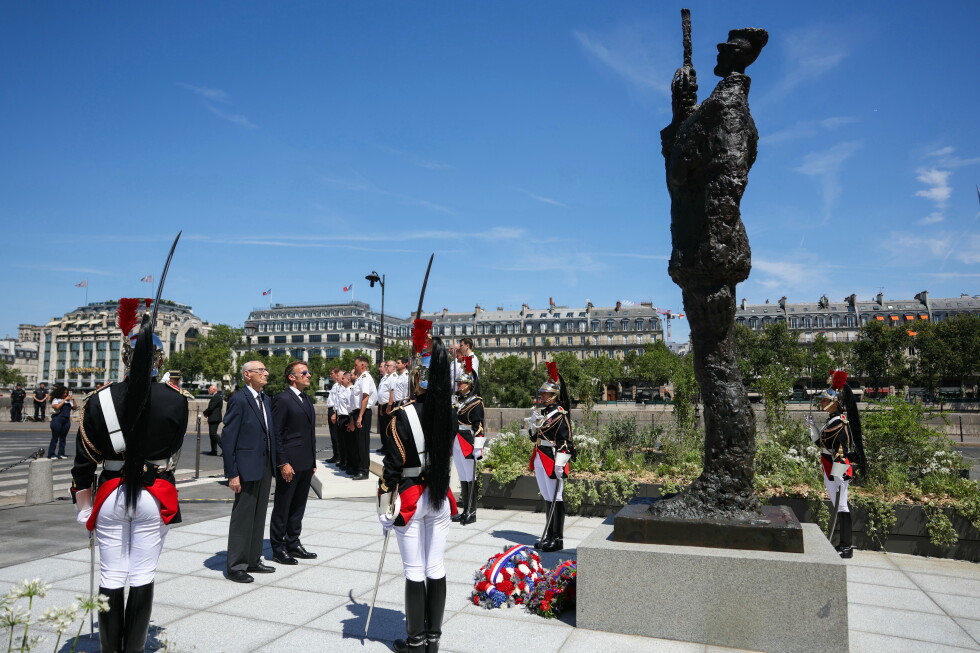
    PARIS – On the 120th anniversary of Alfred Dreyfus’s full exoneration, French President Emmanuel Macron used a landmark inauguration Sunday to sound the alarm over a dangerous resurgence of antisemitic sentiment that has haunted the nation for centuries. The event, held outside France’s highest court where Dreyfus was cleared of false treason charges in 1906, honored the Jewish army captain whose wrongful conviction laid bare the deep-seated anti-Jewish prejudice embedded in 19th-century French institutions.

    The somber commemoration came hours after authorities disrupted a potential terror threat targeting France’s Jewish community: police evacuated roughly 300 residents from the Paris suburb of Sarcelles, a neighborhood with a large Jewish population, after intelligence flagged a suspicious vehicle holding a military-grade long weapon near a local synagogue. French prosecutors have launched a full terrorism investigation into the incident, and Interior Minister Laurent Nunez told reporters that authorities have not yet confirmed whether the weapon was intended to attack Jewish community sites.

    France is home to the largest Jewish population in Europe, and the country has recorded a sharp spike in antisemitic incidents—including threats, property vandalism, and physical assaults—since the October 7, 2023, Hamas attacks on Israel and the outbreak of the Gaza war. The ceremony also comes amid ongoing international criticism of Macron’s 2024 decision to recognize Palestinian statehood: Israeli Prime Minister Benjamin Netanyahu and U.S. Ambassador to France Charles Kushner have both argued that the move has emboldened antisemitic attitudes across France.

    Speaking to the assembled crowd that included Dreyfus’s 99-year-old grandson Charles, Macron stressed that the “old demons of antisemitism” have never fully been eradicated from French society. “We need constant vigilance to stop acts that target people simply because of who they are,” the president said, announcing that starting this year, July 12 will be recognized as a national day of commemoration for Dreyfus’s exoneration.

    The Dreyfus affair remains one of the most defining episodes of injustice in modern French history. In 1894, the Jewish captain was falsely accused of passing French military secrets to Germany, wrongfully convicted of treason, and sentenced to life imprisonment. Prominent writer Emile Zola and a cohort of leading intellectuals rallied to his defense, exposing that the French military had scapegoated Dreyfus because of his Jewish identity. After 12 years of public campaigning and legal battles, the Court of Cassation—France’s highest judicial body—cleared Dreyfus of all charges on July 12, 1906. He later rejoined the French army, served with distinction in World War I, and died in 1935.

    Charles Dreyfus, who attended Sunday’s inauguration of the bronze statue depicting his grandfather holding a broken sword, a symbol of his overturned conviction, reflected on the unsettling parallels between the 19th-century affair and 2024. “I must sadly admit that I would not have imagined, at my age, seeing antisemitism resurface with such virulence in our country,” he said. That sorrow, he added, was balanced by “deep joy” at seeing his grandfather’s legacy honored at the site of his exoneration.