作者: admin

  • Irish actor and Banshees of Inisherin star dies aged 61

    Irish actor and Banshees of Inisherin star dies aged 61

    Renowned Irish stage and screen actor Gary Lydon, widely celebrated for his standout roles in beloved films including *Calvary*, *The Guard*, and *The Banshees of Inisherin*, has passed away at the age of 61. Tributes from across Ireland’s arts community and local circles have honored his decades-long career and warm personal legacy.

    Born Gary O’Brien in London in 1964 to Irish parents, Lydon moved with his family to Wexford in childhood, where he grew up and developed his connection to the local arts scene. For his professional acting career, he adopted his mother’s maiden name, Lydon, launching a multi-decade journey that saw him perform across both theater and major film productions.

    Lydon first rose to public and critical acclaim in the mid-1980s, when he took the stage in Billy Roche’s iconic *Wexford Trilogy* of plays, a production that cemented his reputation as a rising talent in Irish theater. Over the following decades, he would go on to build a resume that included memorable on-screen performances alongside some of Ireland’s most celebrated actors.

    In a statement released Sunday on behalf of Wexford Arts Centre, executive director Elizabeth Whyte expressed profound shock and sorrow at the news of Lydon’s passing. “Gary honed his craft as one of Ireland’s finest actors right here on the Wexford Arts Centre stage, in many of Billy Roche’s most beloved works,” Whyte said. “He built an extraordinary career performing across Ireland and the United Kingdom, leaving an indelible mark on every production he joined.”

    Notably, Whyte shared that Lydon’s final performance at the Wexford venue was a particularly meaningful moment: he shared the stage alongside his son, James Doherty O’Brien. “The lights of the global theater community burn dimmer with Gary’s passing, but we will forever hold the memory of his extraordinary performances in reverence,” she added.

    Beyond his acting career, Lydon maintained close ties to his local community in Wexford, including his former Gaelic Athletic Association club, St Michael’s. The club paid tribute to Lydon on social media, noting that he often joined the team to play when his busy acting schedule allowed, and remained a dedicated supporter in later years. “In the years after his playing days, he was a constant presence on the sidelines cheering on the club, especially when his son James was competing,” the club’s statement read. “May he rest in peace.”

    Irish national broadcaster RTÉ confirmed that James Doherty O’Brien released a formal statement on behalf of the Lydon family, describing the actor’s passing as a sudden and devastating loss. “The loss of our dad is a huge shock and a deep grief for all of our family,” the statement said. “He will be sorely missed by me, my brother Seanluke, our mother Kara, his beloved partner Paula and her daughter Aoife, all of his brothers, and our entire extended family.”

    The statement added that despite Lydon’s widespread acclaim and numerous professional achievements, his greatest source of joy and pride was his role as a father. “We will miss the countless ways he loved and protected us. All of our wonderful memories with him will stay in our hearts forever,” the family shared.

  • Inter Milan win Italian title for third time in six seasons

    Inter Milan win Italian title for third time in six seasons

    In a jubilant celebration at the iconic San Siro stadium on Sunday, Inter Milan locked in their 21st Serie A championship, marking the club’s third top-flight Italian title across just six seasons. The milestone came via a confident 2-0 victory over Parma, putting the Scudetto out of reach for competitors with three regular-season matches still remaining on the calendar.\n\nIt was Marcus Thuram who got the title charge off to a ideal start, netting a composed side-footed finish on the stroke of halftime to break the deadlock. Second-half substitute Henrikh Mkhitaryan doubled Inter’s lead just after the break, erasing any lingering doubt about the final outcome and triggering wild celebrations among the sold-out home crowd.\n\nWith the full-time whistle blown, Inter hold an unassailable 12-point lead over 2023-24 title holders Napoli, while third-placed city rivals AC Milan sit a full 15 points adrift of the new champions. This triumph caps a remarkable redemption arc for the club, coming less than 12 months after a devastating 2023-24 campaign that saw Inter miss out on the title by a single point and suffer a crushing 5-0 defeat to Paris Saint-Germain in the UEFA Champions League final.\n\nMuch of the credit for the rapid turnaround goes to first-year head coach Cristian Chivu, a former Inter player who was a surprise appointment last June. Chivu stepped into the role after former boss Simone Inzaghi — who delivered six trophies and two Champions League final appearances across four seasons in charge — departed for a lucrative coaching role in Saudi Arabia’s domestic league. When Chivu took over, he was widely considered a novice at the top-tier head coaching level, but the 44-year-old has systematically rebuilt the squad’s confidence and tactical structure, breathing new energy into the side through steady, incremental improvements.\n\nThe Serie A crown is already a historic achievement for Inter, but the club still has a chance to add another chapter to this successful season. On May 13, Inter will face Lazio in the Coppa Italia final at Rome’s Stadio Olimpico, where a win would deliver the third league-and-cup double in the club’s long history.

  • Kenya’s rainy season turns deadly again, with 18 killed and 54,000 households hit over a week

    Kenya’s rainy season turns deadly again, with 18 killed and 54,000 households hit over a week

    NAIROBI, KENYA — A new week of relentless heavy rainfall has brought catastrophic devastation across Kenya, leaving 18 people dead in just seven days, national police confirmed in an update released Sunday. Authorities say most of the recent fatalities were caused by drowning, as swollen waterways and saturated terrain have turned everyday landscapes into life-threatening hazards.

    According to data from Kenya’s Interior Ministry, the crisis has disrupted the lives of more than 54,000 households spread across every region of the East African nation. The capital city of Nairobi has not been spared, with 6,000 local households already impacted by rising floodwaters that have submerged neighborhoods and blocked access to basic services.

    Across the country, critical public infrastructure has suffered extensive damage. Dozens of primary and secondary schools have been flooded, forcing widespread school closures that have put thousands of students out of classrooms. Multiple healthcare facilities have also been inundated, disrupting access to medical care for vulnerable communities. Seventeen major roads connecting regions across Kenya are now impassable, cutting off supply routes and emergency access to hard-hit areas.

    Beyond flooding, the saturated soil has triggered destructive mudslides in the western Rift Valley region, forcing thousands of residents to flee their homes for safer ground. Authorities have also issued evacuation orders for communities living downstream along the Tana and Athi rivers, where water levels behind the nation’s hydroelectric dams have climbed to dangerous heights, raising the risk of downstream flooding.

    Kenya’s national Meteorological Department is warning that the crisis is far from over, forecasting that intensified rainfall will persist through the first half of May. This ongoing downpour is part of an unusually severe rainy season that began in March, which has already left a wide path of destruction across the country. By the end of March, the early weeks of the rainy season had already claimed the lives of more than 100 Kenyans, making this one of the deadliest rainy season events in recent years for the nation.

  • Anti-Semitism royal commission begins hearings months after 15  killed in alleged Bondi terror attack

    Anti-Semitism royal commission begins hearings months after 15 killed in alleged Bondi terror attack

    Sydney, Australia – The first round of public hearings for Australia’s Royal Commission on Anti-Semitism and Social Cohesion is set to get underway Monday in Sydney’s central business district, launching a historic national inquiry that will center Jewish Australian voices and their firsthand accounts of rising anti-Jewish hatred across the country. The inquiry was called in the wake of a devastating December 2025 terror attack at a Bondi Beach Chanukah celebration that left 15 people dead, and a sharp nationwide uptick in anti-Semitic incidents following the October 7 2024 Hamas attacks in Israel.

    The attack, which targeted the annual Chanukah By The Sea gathering, unfolded when Naveed Akram and his father Sajid allegedly opened fire on attendees, killing 15 people and wounding dozens more. Sajid Akram was fatally shot by responding police, while Naveed Akram has not yet entered pleas to 59 criminal charges, including 40 counts of attempted murder. Australian authorities allege the pair were radicalized and inspired by the extremist group ISIS, marking one of the deadliest anti-Semitic attacks in the nation’s modern history.

    Pressure on the federal Albanese government to launch a sweeping public inquiry built steadily in the weeks following the attack, after the government initially commissioned a classified internal review of security agency performance led by former Australian Security Intelligence Organisation director Dennis Richardson. Prime Minister Anthony Albanese announced the royal commission on January 8, 25 days after the attack, reversing the government’s earlier position to meet demands from the Australian Jewish community for a transparent, public examination of systemic gaps in addressing anti-Semitism.

    “I’ve listened, and in a democracy, that’s a good thing to listen to what people are saying,” Albanese told reporters at the time of the announcement. “I’ve taken the time to reflect, to meet with leaders in the Jewish community, and most importantly, I’ve met with many of the families of victims and survivors of that horrific attack. It’s clear to me that a royal commission is essential to achieving this.”

    Presided over by royal commissioner Virginia Bell, the opening two-week block of hearings will focus on core foundational questions: how anti-Semitism is defined in the Australian context, its current prevalence across Australian society and public institutions, and how best to measure the scope of the problem. Over the course of the hearings, dozens of witnesses will testify, including community leaders and everyday Jewish Australians who will share their lived experiences of anti-Semitic harassment, discrimination, and violence.

    Peter Wertheim, co-chief executive of the Executive Council of Australian Jewry, described the inquiry as the most significant national examination of anti-Semitism in Australia’s history. “Over the next fortnight, the country will hear from the people who lead our community alongside ordinary Australians who have lived through what happens when words of hatred go unchallenged long enough that they stop being only words,” Wertheim said in a statement. “The Jewish community is approaching this as Australians asking Australian institutions to look honestly at what has happened in this country and what needs to change.”

    Due to limited capacity at the Sydney CBD hearing venue, public attendance will be restricted, and the proceedings will be streamed live for audiences around the country to access remotely.

    The opening of public hearings comes just days after Bell released an interim report containing 14 urgent recommendations to address immediate gaps in anti-Semitism protection and counter-terrorism preparedness, all of which Albanese has pledged to fully implement. Five of the recommendations remain classified for national security reasons, but public measures include boosting security resourcing for Jewish High Holy Days and major Jewish festivals, strengthening cross-agency counter-terrorism information sharing between federal and state governments, upgrading national gun control regulations, and prioritizing a national gun buyback program to update the outdated national firearms agreement. Bell also called for the commonwealth counter-terrorism coordinator role to be converted to a full-time position, and mandated that the prime minister and all National Security Committee ministers participate in counter-terrorism exercises within nine months of every federal election.

    Albanese has committed to responding swiftly to the interim recommendations. The royal commission will ultimately examine four core mandate areas over the course of its inquiry: mapping the nature, prevalence, and root drivers of anti-Semitism across Australian society and institutions, including ideologically and religiously motivated extremism; advising law enforcement, border control, and security agencies on policy and operational changes to counter anti-Semitic violence and hatred; investigating the full circumstances of the December 14 2025 Bondi Beach attack; and proposing broader reforms to strengthen national social cohesion and counter the spread of violent extremist ideology across the country.

    “A Royal Commission is not the beginning or the end of what Australia must do to eradicate anti-Semitism, protect ourselves from terrorism or strengthen our social cohesion,” Albanese said when announcing the inquiry. “That is an ongoing national effort, for all of us. Because an attack on Jewish Australians is an attack on all Australians.”

    The royal commission’s final report, including full findings and long-term policy recommendations, is scheduled to be delivered to the government on December 14 2026, marking the one-year anniversary of the Bondi Beach atrocity.

  • A suspected hantavirus outbreak on a cruise ship in the Atlantic Ocean kills 3 people, WHO says

    A suspected hantavirus outbreak on a cruise ship in the Atlantic Ocean kills 3 people, WHO says

    Three people have died and at least three others have fallen ill in a suspected hantavirus outbreak aboard an Atlantic Ocean cruise ship, the World Health Organization (WHO) confirmed in a statement to the Associated Press on Sunday.

    As investigations into the incident continue, global health officials have already verified at least one positive case of the rodent-borne pathogen. Hantavirus, which is distributed across every inhabited continent, is primarily transmitted to humans through direct contact with urine or feces from infected rodents, most commonly common rats and mice. While human-to-human transmission is rare, the virus is capable of spreading between people and can trigger life-threatening respiratory illness if left unaddressed.

    According to the United Nations’ health agency, one affected patient is currently receiving intensive care at a hospital in South Africa. Teams are collaborating with national and local authorities to evacuate two other symptomatic passengers from the vessel to receive appropriate medical care.

    “Detailed investigations are ongoing, including further laboratory testing, full epidemiological mapping, and genetic sequencing of the virus to confirm its origin and strain,” the WHO said in its official statement. “Medical care and support are being provided to all affected passengers and crew members currently on the ship.”

    Unlike many common viral illnesses, hantavirus infection has no specific targeted treatment or approved cure. However, WHO notes that prompt, early clinical intervention drastically improves a patient’s odds of survival.

    While the WHO declined to publicly name the vessel in its initial statement, local South African media outlets have identified the ship as the MV Hondius, a passenger cruise liner sailing from Argentina to Cape Verde off the western coast of Africa. Global shipping tracking platform MarineTraffic confirmed the vessel is a Dutch-flagged cruise ship, and showed it docked in Praia, Cape Verde’s capital, on Sunday evening.

    South African health department spokesperson Foster Mohale, quoted in local reporting, shared additional details on the fatalities: the first victim, an elderly male passenger, died directly on board the ship, while his wife later succumbed to the infection after being admitted to a South African hospital.

    This recent outbreak marks a return of hantavirus to public attention, just over a year after Betsy Arakawa, wife of legendary late actor Gene Hackman, died from a hantavirus infection in New Mexico. Hackman passed away one week after his wife’s death at their shared home.

  • Three dead in suspected virus outbreak on Atlantic cruise ship

    Three dead in suspected virus outbreak on Atlantic cruise ship

    A suspected hantavirus outbreak on an Atlantic Ocean cruise vessel has left three people dead, with multiple additional cases under active investigation, the World Health Organization (WHO) has confirmed to the BBC. The outbreak is centered on the MV Hondius, a polar expedition cruise ship operated by Dutch tour operator Oceanwide Expeditions, which was en route from Ushuaia, Argentina to Cape Verde when illnesses began to spread.

    According to official briefings, WHO has verified one case of hantavirus, with five other symptomatic passengers awaiting final testing to confirm infection. One British national remains in intensive care in South Africa following emergency medical evacuation. Tracking of the outbreak shows the first fatality was a 70-year-old passenger who developed symptoms and died on board the vessel. His remains have been taken to Saint Helena, a British overseas territory in the South Atlantic, pending next steps. The man’s 69-year-old wife also contracted the illness, was evacuated to a medical facility in Johannesburg, South Africa, and later died in hospital care. A third fatality, a 69-year-old British citizen, was also confirmed, while another British passenger remains in intensive care at the same Johannesburg hospital.

    Hantavirus infections are most commonly transmitted through environmental exposure, typically contact with rodent urine, feces or saliva from infected animals. While person-to-person transmission is rare, the virus can cause life-threatening respiratory illness in severe cases, making the on-board outbreak a significant public health concern.

    Initial reports from South Africa’s Ministry of Health had pegged the death toll at two, which was later updated to three by WHO. The ship departed on its scheduled voyage on March 20, with a planned arrival in Cape Verde on May 4. The MV Hondius is a 107.6-meter polar-class cruise ship that can accommodate up to 170 passengers across 80 cabins.

    WHO has activated its cross-border public health response framework to manage the event, which it has classified as a formal public health event. The global health body is coordinating between affected countries, South African public health authorities and the ship’s operator to organize medical evacuations for remaining symptomatic passengers, conduct a comprehensive risk assessment of the outbreak, and deliver medical and public health support to all people still on board the vessel.

  • Green Party leader Zack Polanski condemns ‘vile antisemitic caricature’ in The Times

    Green Party leader Zack Polanski condemns ‘vile antisemitic caricature’ in The Times

    A major political and media controversy has swept the United Kingdom this week, centered on a deeply divisive cartoon published by The Times of London depicting Green Party leader Zack Polanski, who is openly Jewish. Polanski and his party have lambasted the national newspaper for running what they describe as a blatantly antisemitic caricature, echoing harmful age-old tropes about Jewish people.

    The cartoon depicts Polanski with an exaggerated hooked nose — a visual trope long used to dehumanize Jewish people in antisemitic propaganda — kicking police officers who were in the process of arresting Essa Suleiman, the 45-year-old Somali-born British suspect in a recent stabbing attack in Golders Green, a heavily Jewish neighborhood in northwest London. Suleiman stands accused of stabbing two Jewish men in the attack, alongside a separate charge of attempted murder for a separate incident earlier the same day where he allegedly targeted a Muslim acquaintance of 20 years, Ishmail Hussein.

    The illustration references circulating cell phone footage that appears to show arresting officers repeatedly kicking Suleiman in the head during his apprehension. After the attack, Polanski publicly condemned the stabbings, but later retweeted a post on the social platform X that raised questions about the officers’ use of force during the arrest. That retweet sparked immediate backlash from senior political and law enforcement figures across the UK.

    Metropolitan Police Commissioner Mark Rowley released an open public letter to Polanski expressing his disappointment with the Green leader’s response, a move that prompted its own criticism from observers who questioned the police’s commitment to political impartiality and called for the letter to be withdrawn.

    Top politicians have levied harsh criticism at Polanski in the wake of the incident. Former Conservative minister and current Reform UK figure Robert Jenrick went so far as to accuse Polanski of being “on the side of terrorists”, while UK Prime Minister Keir Starmer labeled Polanski’s criticism of officer conduct “disgraceful” and claimed he was “not fit to lead any political party”.

    Polanski has hit back at these attacks, noting that he is the only Jewish leader of a national political party in the UK, and accusing Starmer of weaponizing antisemitism to score cheap political points. He added that he already faces persistent antisemitic abuse on a daily basis, revealing that two separate people have been arrested for antisemitic actions targeting him in just the last six weeks. He also shared that he was targeted with a Nazi salute by a Reform UK supporter at a recent rally in Hastings.

    The Green Party has confirmed it filed an official complaint with The Times editor Tony Gallagher over the cartoon, saying it is “astonishing” that a major national outlet would choose to publish such imagery at a time when antisemitic sentiment and violence are rising across the UK. In a statement, the party condemned what it called the “deeply irresponsible” rhetoric from both senior politicians and media outlets, arguing that their attacks open Polanski up to further targeted harm in the aftermath of a violent attack on the Jewish community he is part of.

    Speaking in an interview with BBC’s Laura Kuenssberg on Sunday, Polanski confirmed that The Times has yet to issue an apology or withdraw the offensive caricature. He later issued an apology for sharing the retweet questioning officer conduct, acknowledging that X was not an appropriate forum to raise concerns about police behavior. He did, however, stand by his view that all public servants, including police officers, should be open to scrutiny, and noted he has requested a meeting with Rowley to resolve the tensions between him and the Met.

    In further developments related to the case, the Metropolitan Police confirmed last Friday that Suleiman — who had only been released from a psychiatric hospital days before the attacks — would not face terrorism charges. He has instead been charged with three counts of attempted murder and one count of illegal possession of a bladed weapon in public.

    The Golders Green attack has already become a flashpoint in ongoing national debates about pro-Palestine protests, which have been held across the UK since the outbreak of the 2023 Israel-Gaza war. Starmer and other senior politicians have seized on the attack to call for greater restrictions on pro-Palestine marches, even suggesting that some demonstrations could be banned entirely, and that offensive language used during protests should be policed.

    When Kuenssberg asked Polanski whether he agreed with Starmer’s labeling of the common protest chant “globalise the intifada” as racist, Polanski rejected the prime minister’s framing. He reaffirmed his support for freedom of speech and freedom of protest in the UK, arguing that policing protest language would do nothing to improve safety for Jewish communities. Noting that the term intifada originally refers to uprisings against Israeli occupation in the 1980s, Polanski pointed out that the occupation remains ongoing, making public discussion of the issue a legitimate and necessary part of public discourse. He added that he opposed creating new laws to restrict protest, and instead called for protections for peaceful protest activity.

    On the question of whether the Green Party takes the threat of antisemitism seriously, Polanski noted that Jewish safety is not an abstract issue for him as a Jewish community member. He acknowledged that no political party has fully eliminated antisemitism within its ranks, and agreed that all parties need to expand anti-racism training and improve candidate vetting to address antisemitism, Islamophobia and all other forms of racism across the political spectrum.

  • Iran says US has responded to its latest peace proposal

    Iran says US has responded to its latest peace proposal

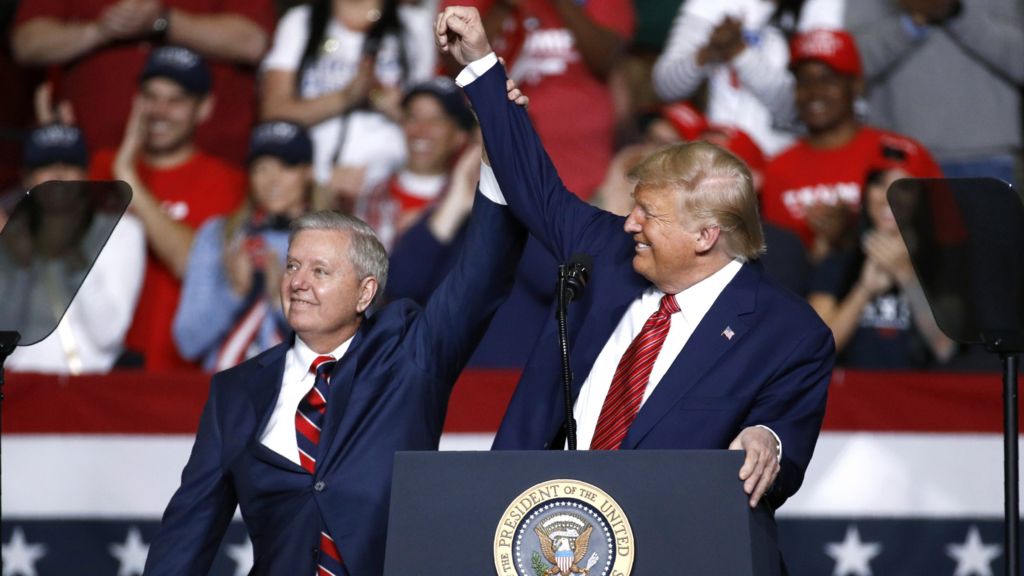
    Tensions between the United States and Iran remain at a fragile standstill this weekend, as President Donald Trump confirmed that renewed military action against Iranian targets remains on the table, even as Tehran has tabled a new 14-point peace proposal to de-escalate the ongoing conflict.

    According to Iranian state-linked media, Washington has delivered its formal response to Tehran’s overture through diplomatic channels in Pakistan, and Iranian officials are currently reviewing the document. The U.S. government has not yet officially confirmed that it issued a response to the Iranian proposal.

    Trump, speaking to reporters in Palm Beach, Florida on Saturday, noted that he had only received a broad overview of the plan and was waiting to review its full text. He added that he already expects the proposal to fall short of Washington’s requirements. In a subsequent post on his social media platform Truth Social, Trump doubled down on his long-standing criticism of the Iranian government, writing that Tehran “has not yet paid a big enough price for what they have done to Humanity, and the World, over the last 47 years.”

    Tehran’s 14-point framework puts forward three core demands for a lasting deal: the full withdrawal of U.S. military forces from regions bordering Iran, an end to the ongoing U.S. naval blockade of Iranian ports, and a complete ceasefire to all hostilities across the region, including Israel’s military campaign in Lebanon. The proposal also calls for a final bilateral agreement to be finalized within 30 days, and prioritizes ending the full conflict rather than just extending the temporary ceasefire that has been in place since early April.

    Iran’s latest proposal was drafted in response to an earlier nine-point U.S. plan that called for a two-month temporary ceasefire, according to Iranian state sources.

    When asked directly by a BBC reporter whether new U.S. military strikes inside Iran remained a possibility, Trump did not rule out the action, saying “it’s a possibility. If they misbehave. If they do something bad. But right now we’ll see.” The president also made clear he has no intention of a full U.S. withdrawal from the conflict in the near term, arguing that a sustained U.S. presence is needed to prevent the need for future military intervention years down the line. “We’re not leaving,” he said. “We’re going to do it, so nobody has to go back in two years or five years.”

    The ongoing standoff has already had tangible global economic impacts: in response to earlier U.S. and Israeli strikes on Iranian targets, Tehran has imposed sweeping new restrictions on commercial shipping through the Strait of Hormuz, one of the world’s most critical chokepoints for global oil supplies.

    The developments come as Trump faces growing cross-partisan pressure from Congress over his handling of the conflict, which entered its 60th day on Friday following the formal notification of U.S. military action on March 2. Under U.S. law, the president is required to secure congressional approval for ongoing military action within 60 days of notification, or end hostilities. In a letter to congressional leaders sent Friday, Trump argued that the April 8 ceasefire had “terminated” active conflict, pausing the legal clock on the approval requirement. He also dismissed concerns over the ongoing naval blockade, calling it “a very friendly blockade” that “nobody is even challenging.” The president repeated his long-standing red line on Iranian nuclear policy Friday, reaffirming that “Iran can never have a nuclear weapon” — a position Tehran has rejected, saying its nuclear program is entirely for peaceful civilian uses, despite international reports that Iran has enriched uranium to near-weapons grade levels.

    Growing numbers of congressional Republicans have joined Democrats in publicly expressing frustration with the conflict, criticizing it as costly, open-ended, and lacking clear strategic goals. Missouri Republican Senator Josh Hawley called on the administration to begin withdrawing U.S. forces and said any continuation of the war would require congressional authorization — a step he says he opposes. “I don’t really want to do that,” Hawley said. “I want to wind it down.”

    Alaska Republican Senator Lisa Murkowski, a frequent critic of Trump, struck a more nuanced tone, saying she doubts the success of ongoing negotiations and that an abrupt U.S. withdrawal would leave critical Iranian military capabilities intact. But she added that she also opposes granting the administration unlimited authority to continue the conflict. “While the administration may point to ongoing negotiations, events on the ground and the rhetoric coming out of Tehran tell a different story,” she said. “But if the U.S. steps back abruptly and prematurely, we almost certainly leave their critical capabilities intact. And those are not risks that I’m willing to take. But the answer is not a blank check for another endless war.”

  • Japanese PM reaffirms intention to revise Constitution

    Japanese PM reaffirms intention to revise Constitution

    On Japan’s Constitution Memorial Day, Prime Minister Sanae Takaichi publicly reaffirmed her long-stated goal to amend the nation’s 1947 pacifist Constitution, a step that would mark the first change to the country’s founding legal framework since it took effect more than 70 years ago, according to reports from local Japanese media.

    Takaichi delivered her remarks via pre-recorded video at a rally organized by supporters of constitutional revision, framing the push for change as a necessary update for modern Japan. She argued that the post-World War II supreme law, which has anchored the nation’s governance for decades, needs periodic adjustments to align with shifting contemporary societal and geopolitical demands, Kyodo News reported.

    As leader of the ruling Liberal Democratic Party (LDP), Takaichi noted her administration will push forward with substantive deliberations in the Diet, Japan’s national parliament, and work to secure cross-party buy-in to advance the amendment process toward a final vote. The LDP has prioritized constitutional reform for years, with the most contentious proposed change centered on Article 9, the iconic clause that formally renounces war as a tool of state policy and prohibits Japan from maintaining formal offensive military capabilities.

    This clause has been the cornerstone of Japan’s pacifist foreign and defense policy since the end of World War II, and any alteration to its text would represent a seismic shift in the nation’s global security posture. Takaichi first ramped up public pressure for reform at an LDP party convention held on April 12, where she declared that the moment for constitutional change has arrived. She told attendees at that event that the party aims to have a concrete constitutional amendment proposal ready for presentation at the 2027 LDP annual convention. That announcement has already triggered widespread public pushback, with large-scale protests drawing crowds of opponents to the Japanese parliament building in Tokyo as recently as mid-April, where demonstrators called for the preservation of Article 9 in its original form.

  • Rubio to visit Rome, meet Pope Leo after Trump row

    Rubio to visit Rome, meet Pope Leo after Trump row

    Weeks after a high-profile public clash between U.S. President Donald Trump and Pope Leo XIV exposed deep rifts in U.S.-Vatican relations and strained transatlantic alliances, U.S. Secretary of State Marco Rubio is scheduled to travel to Rome this week for a planned meeting with the pontiff, a senior Vatican source confirmed to AFP on Sunday.

    The planned gathering, first reported by Italian media outlets, is set to take place Thursday with the explicit goal of de-escalating tensions between the White House and the Holy See, according to local newspaper coverage. The meeting comes just ahead of a key milestone for Pope Leo, who will mark one year in office as the head of the global Catholic Church this Friday. Elected by the College of Cardinals on May 8, 2025 following the passing of Pope Francis, the 70-year-old Leo made history as the first American-born pope in the Church’s 2,000-year history.

    His unique origin has positioned his statements to carry unusual weight in U.S. political discourse, a platform he has not shied away from using: he has previously criticized the Trump administration’s hardline immigration policies, but it was his sharp anti-war rhetoric in the wake of U.S.-Israeli strikes on Iran that triggered Trump’s fierce public backlash. Leo drew Trump’s wrath after calling the president’s open threat to destroy Iran “unacceptable” and urging U.S. citizens to pressure their elected representatives to prioritize diplomatic peace efforts.

    Trump responded with a blistering social media post attacking the pope as “WEAK on Crime, and terrible for Foreign Policy”, adding that he was “not a big fan of Pope Leo” and falsely claiming the pontiff supported Iran acquiring nuclear weapons. Leo countered that he held a “moral duty to speak out” against war, and later made headlines with a speech in Cameroon that condemned “tyrants” for destabilizing the global order. The pope later clarified the speech had been written months before the public row, and he had no intention of reigniting conflict with Trump.

    Global Christian communities quickly voiced solidarity with Pope Leo, and the backlash extended to Italian Prime Minister Giorgia Meloni, one of Trump’s closest European allies. When Meloni called Trump’s criticism of the pope “unacceptable”, the U.S. president turned his ire on her, attacking her in an interview with Italian daily Corriere della Sera. Trump said he was “shocked at her. I thought she had courage, but I was wrong”, and accused the far-right Italian leader, who has long positioned herself as a bridge between competing U.S. and European interests, of failing to support the U.S. within NATO.

    Trump has gone even further, threatening to withdraw all U.S. troops from Italy, claiming Rome has “not been of any help to us” in the Iran conflict. He has issued identical threats against Spain, and the Pentagon has already formally announced it will withdraw 5,000 U.S. troops from Germany. As of the end of 2025, the U.S. maintains 12,662 active-duty troops in Italy, 3,814 in Spain, and 36,436 in Germany, according to official data.

    Alongside his planned meeting with Pope Leo, Rubio is scheduled to hold talks with Vatican Secretary of State Pietro Parolin and Italian Foreign Minister Antonio Tajani. The U.S. secretary of state had previously requested a meeting with Meloni, but that gathering will not go forward following Trump’s break with the Italian prime minister, the source confirmed. Additional media reports also indicate Rubio will meet Italian Defense Minister Guido Crosetto, as divisions over the Middle East war continue to deepen long-running frictions across transatlantic ties.