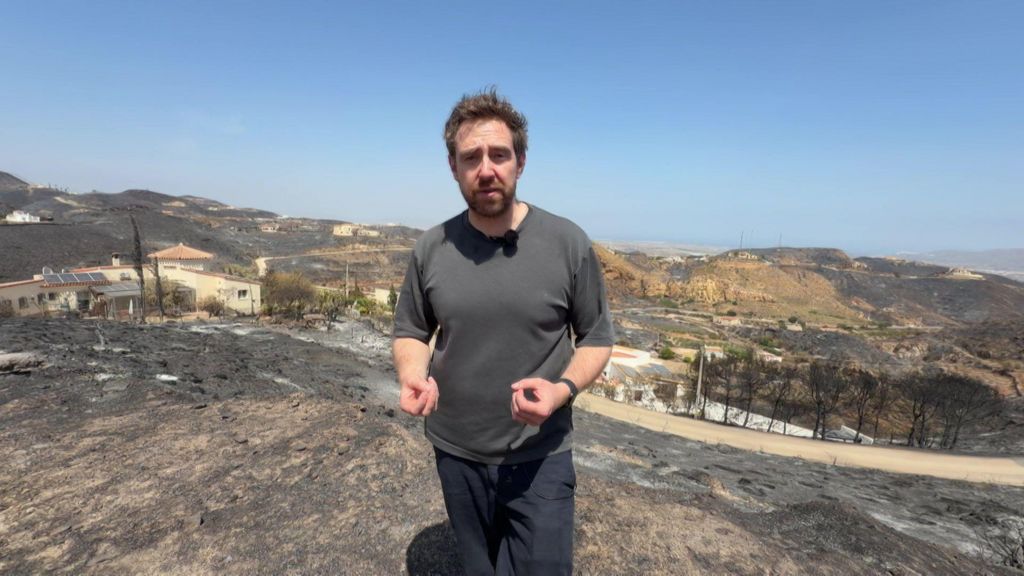
When BBC correspondent Nick Beake stepped into the small Andalusian village of Bédar this week, the first thing that hit him was the overwhelming silence — and the uniform layer of black that stretched as far as the eye could see. Once a picturesque rural settlement dotted with terracotta-roofed homes and rolling Mediterranean scrubland, Bédar now stands as the epicenter of one of Spain’s most destructive recent wildfire outbreaks, leaving little trace of the lush landscape that defined the community for generations.
Beake’s on-the-ground reporting reveals a scene of total destruction: dozens of residential properties have been reduced to nothing more than smoldering ash and twisted metal, with entire neighborhoods leveled by the fast-moving blaze. “This landscape is completely charred,” Beake described from the ground, surveying a vista that has been transformed from a thriving rural village into what he calls an endless “sea of black.” What were once green hillsides dotted with olive groves and native oak trees are now barren, blackened stretches of earth, with even deep-rooted vegetation consumed by the extreme heat of the fire.
The wildfire, which was fanned by record-breaking early summer heat waves and strong gusty winds that have gripped southern Spain in recent weeks, spread rapidly across the Almería region, forcing hundreds of local residents to evacuate their homes with little more than the clothes on their backs. Firefighting crews have been working around the clock to contain the blaze, but dry conditions and unseasonably high temperatures have hampered containment efforts, allowing the fire to expand across thousands of hectares of land.
As crews continue to battle the blaze, Bédar’s destruction offers a stark reminder of the growing wildfire risk facing Mediterranean nations amid accelerating climate change. Regional officials have already warned that this fire season could be one of the worst on record, as higher average temperatures and prolonged drought create tinder-like conditions across much of southern Spain.