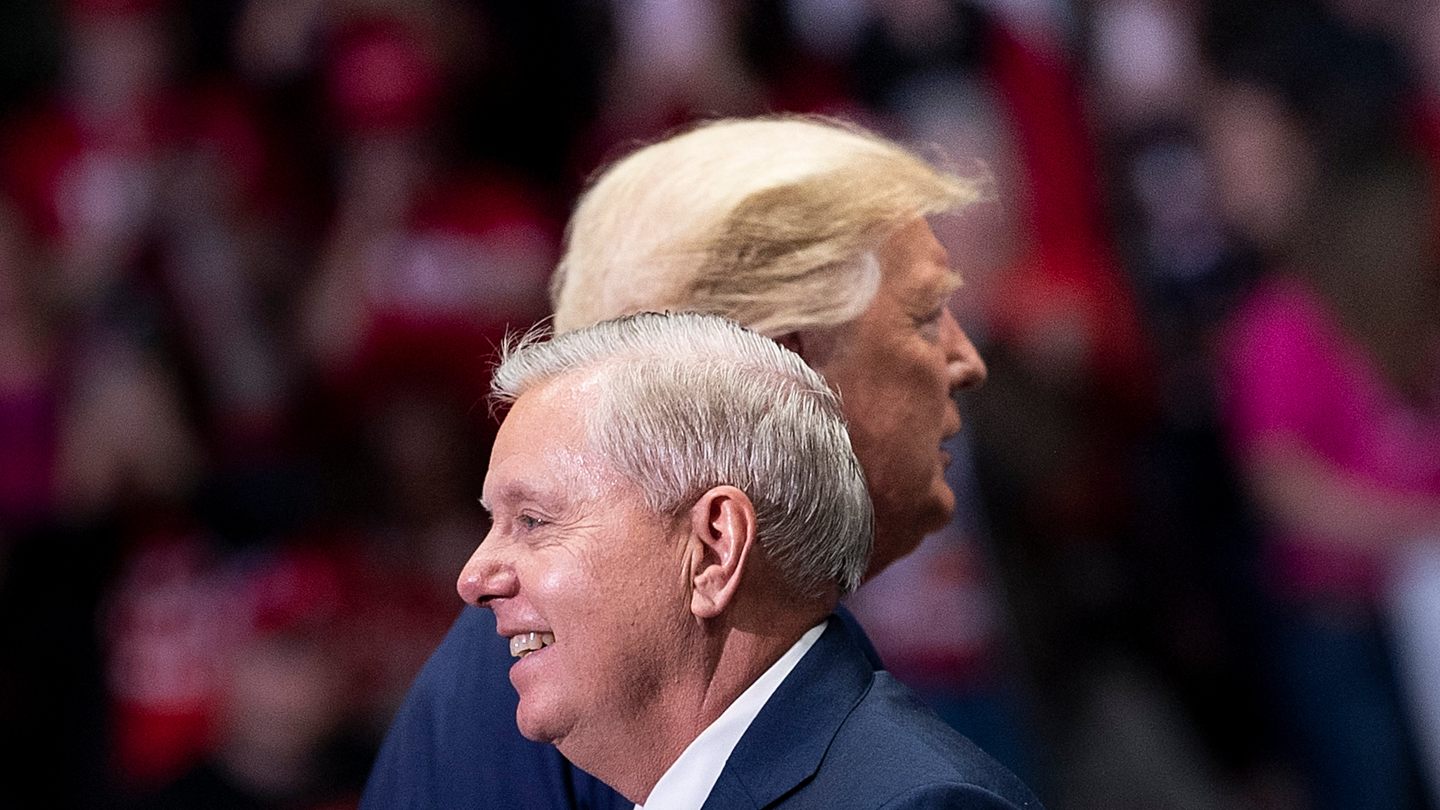
Veteran South Carolina Republican Senator Lindsey Graham, one of the most consequential figures shaping modern U.S. foreign policy and a polarizing long-time political associate of former President Donald Trump, has passed away at 71 after a short illness. His Senate office confirmed the news in an official statement released Sunday, noting that Graham died Saturday evening and that his family has asked for privacy during this period.
First elected to the U.S. Senate in 2002, Graham built a decades-long career defined by unapologetically interventionist foreign policy stances that drew both fierce support and widespread international condemnation. He chaired the Senate Budget Committee and emerged as a leading voice on nearly every major global conflict of the 21st century, from the wars in Afghanistan and Iraq to ongoing tensions in Ukraine and Iran, and most notably, Israel’s military campaign in Gaza.
Just days before his death, Graham returned from a high-profile visit to Kyiv, where he met with Ukrainian President Volodymyr Zelensky to discuss new legislation to ramp up pressure on Russia. A leading congressional backer of continued U.S. military aid to Ukraine, Graham warned in a 2023 interview with the BBC that Russian President Vladimir Putin’s territorial ambitions extended far beyond Ukraine, arguing that “To be weak in Ukraine means that you lose in Taiwan.”
Graham’s political relationship with Donald Trump was marked by notable public tension before an eventual reconciliation that solidified his status as one of Trump’s most prominent allies. Though he publicly broke with Trump in the immediate aftermath of the January 6, 2021 attack on the U.S. Capitol, telling a Senate session “All I can say is count me out. Enough is enough,” he reversed course within years. In a 2023 BBC interview, Graham acknowledged “there is a dark side to Donald Trump” but confirmed he would back Trump’s 2024 presidential campaign, arguing “he was a very good president. But I am sticking with him because I saw what he did.” Trump paid tribute to Graham in a social media post following his death, calling the senator a “true American patriot.”
Across more than two decades in Congress, Graham was one of the most unwavering pro-Israel voices in U.S. politics, consistently pushing for expanded military aid to Tel Aviv and open U.S. support for Israeli illegal settlements in occupied territories. Israeli Prime Minister Benjamin Netanyahu remembered Graham as a close friend of Israel, while Israeli President Isaac Herzog noted his support for the country had never wavered throughout his career.
Throughout Israel’s ongoing military campaign in Gaza, Graham repeatedly defended Israeli military actions and opposed any congressional or international efforts to limit U.S. military support for Israel, stances that drew harsh condemnation from Palestinian rights groups, human rights organizations, and Muslim civil rights communities. In July 2024, a social media post from Graham describing the Palestinian population of Gaza as “the most radicalized population on the planet who are taught to hate Jews from birth” sparked widespread international outcry. The Council on American-Islamic Relations condemned the comments, accusing Graham of spreading dangerous racist stereotypes about Palestinians and labeling his remarks “hateful and absurd.”
Graham also faced heavy criticism for comments suggesting Israel could consider measures analogous to the U.S. atomic bombings of Japan in World War II, with opponents dismissing the remarks as dangerously inflammatory. During a 2019 visit to the illegally occupied Golan Heights, Graham argued that Israeli security and prosperity were core to U.S. national interests and formally called for the U.S. to recognize Israeli sovereignty over the territory. Earlier this year, International Criminal Court chief prosecutor Karim Khan confirmed Graham was among U.S. officials who threatened him over the ICC’s pursuit of arrest warrants for senior Israeli leaders over alleged war crimes in Gaza.
A vocal proponent of hardline policy toward Iran, Graham repeatedly urged successive White House administrations to deploy military force to secure the Strait of Hormuz during periods of heightened U.S.-Iran tension, even comparing the confrontation with Tehran to Britain’s fight against Nazi Germany during World War II. His uncompromising stances on Middle East policy drew pushback from Gulf nations; in March of this year, he publicly blamed Saudi Arabia for refusing to join a potential U.S.-Israeli military campaign against Iran and warned of unspecified “consequences” for any nation that declined to back military action against Tehran.
Graham’s confrontational diplomatic style also sparked controversy in Europe. As recently as 2025, Norwegian officials were forced to de-escalate diplomatic tensions after Graham threatened repercussions for Norway over a decision by the country’s sovereign wealth fund to divest from companies linked to Israel’s military campaign in Gaza.