作者: admin

  • China’s ‘Green Great Wall’ tames desert growth, but scientists warn the fight is not over

    China’s ‘Green Great Wall’ tames desert growth, but scientists warn the fight is not over

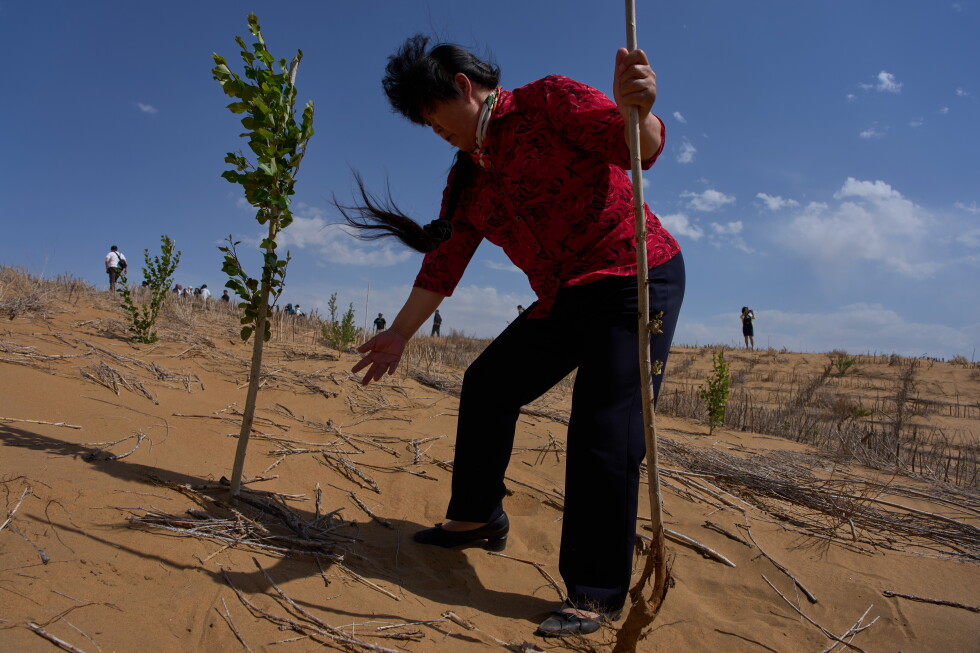
    In the arid sandscapes of northern China’s Kubuqi Desert, a quiet, decades-long revolution against one of the world’s most persistent ecological threats has unfolded. For half a century, millions of workers have carved order into shifting dunes one grid at a time: driving forearm-length straw sticks into loose sand in intersecting lines to create a widespread checkerboard pattern, then planting native saplings at the center of each small square. This low-tech but highly effective technique, called straw checkerboarding, stabilizes dunes against strong desert winds, traps moisture, and gives young seedlings the stable environment they need to put down roots.

    This vast greening effort is the backbone of the Three-North Protective Forest Program, more widely known globally as China’s Green Great Wall. Launched in 1978, the ambitious initiative is designed to roll back the steady expansion of desertification, a process driven by centuries of drought, overgrazing, and unsustainable farming that stripped northern China of vegetation, degraded soil, and left communities vulnerable to devastating wind and sandstorms.

    Generations of steady work have delivered striking, measurable results. Official state data shows that desertified land across northern China peaked in 2000, and has shrunk by more than 1,000 square kilometers every year since that turning point. As of 2024, the cumulative forest area established through the program covers more than 500,000 square kilometers — an area roughly the size of Spain. Long-term monitoring from a team of researchers at the Chinese Academy of Sciences’ Institute of Applied Ecology found that overall desertified land in China has fallen by roughly 10% since 2000, while areas of severe and extreme desertification have dropped by more than 40%. Forest coverage across the program’s working area has jumped from just 5% in 1978 to 14% in 2022.

    For frontline workers like 60-year-old Yin Yuzhen, who has spent four decades fighting sand near the Mu Us Desert adjacent to Kubuqi, that transformation is personal. Yin recalled her early years on the sand line as a time of profound isolation: when even a single bird passing overhead was enough to lift her spirits, and blowing sand often blocked visibility just a few feet ahead. Today, she says the horizon is clear, greenery stretches for miles, and permanent roads cut through landscapes that were once unnavigable shifting dunes. Even after 40 years, she still works from dawn to midday every day tending saplings and repairing worn checkerboards, a task now joined by her children and occasional local volunteers. Researchers estimate more than 300 million rural laborers have contributed to the program over its history, mostly as paid part-time participants.

    Scientists and environmental experts across the globe have hailed the program as a landmark model for landscape restoration. Barron Joseph Orr, chief scientist for the United Nations Convention to Combat Desertification, noted that the Three-North Program’s greatest contribution goes beyond the sheer scale of land restored. What sets it apart, he says, is the sustained political and financial commitment that has kept the initiative running for five decades. “Reversing desertification is possible when it becomes part of long-term development strategies,” Orr explained in comments to the Associated Press. The Green Great Wall has inspired similar large-scale efforts worldwide, including the Great Green Wall initiative launched across 11 African nations in 2007 to hold back the expanding Sahara Desert.

    Yet despite the remarkable progress, experts stress that the work is far from finished. Preserving the hard-won gains of the past 50 years will require decades more consistent investment and management, researchers say. Restored dryland ecosystems can become increasingly self-sustaining over time, but they remain dependent on long-term monitoring, careful management, and favorable conditions including adequate water access and healthy soil.

    Many Chinese environmental advocates and researchers also point to a key ongoing challenge: aligning ecological restoration with local community livelihoods, to avoid framing conservation and economic development as opposing goals. Zhao Zhong, founder of Gansu-based environmental advocacy group Green Camel Bell, which works with local farmers and herders to plant native vegetation and educate communities on desertification risks, notes that projects that deliver tangible economic benefits to local populations have far higher long-term success rates. Orr echoed this assessment, noting that community buy-in through shared economic benefit is a critical predictor of restoration success.

    For Dr. Zhu Jiaojun, the Chinese Academy of Sciences ecologist who has spent decades studying the program, the biggest open question remains how to sustain conservation gains if future levels of state investment and human intervention decrease. “This is what we are very concerned with and this is also the biggest challenge,” he said. For frontline workers like Yin, the solution lies in passing the work on to coming generations, and cultivating a shared sense of stewardship for the land. “We need to teach young people to love this Earth,” Yin said. “If we love it with all our hearts, nature will love us in return.”


  • British couple return to village at heart of deadly Spanish wildfire

    British couple return to village at heart of deadly Spanish wildfire

    When our vehicle wound up the steep, curved mountain road leading to Bédar, a small Andalusian town in Spain’s southeastern Almeria province, we stepped out into a scene of utter devastation. Twisted, molten fragments of burned cars littered the roadside, and every hillside stretching toward the horizon was blanketed in a thick, ashy black coating of charred vegetation. This is the aftermath of Thursday’s catastrophic wildfire, already ranked as one of the deadliest wildfire events in modern Spanish history.

    As of Sunday, the official death toll has climbed to 13, with five of the victims believed to be British citizens. The latest fatality was a 93-year-old British woman who succumbed to her burn injuries in a hospital over the weekend. Official confirmation of all victims’ identities is still pending, while emergency teams have now fully contained the blaze after it consumed roughly 7,000 hectares (17,300 acres) of forest and residential land. Fanned by gusty winds reaching 50 km/h, the flames spread with a speed and ferocity that caught many local residents off guard.

    Yet amid the widespread destruction, pockets of survival offered small, bittersweet moments of relief. Driving deeper into Bédar’s residential neighborhoods, it became clear that dozens of the region’s distinctive bright white stucco homes escaped the blaze unscathed. For British expats Emma and Simon Mitchell, who moved to the town three years ago, that escape felt nothing short of a miracle. “This is our house and it survived,” Emma told reporters, breathing a heavy sigh of relief. When the couple returned to their property Sunday as part of the first wave of evacuees allowed back into the zone, they found all 15 of their chickens alive, and power and water still running, despite the inferno that burned right up to their property line.

    That relief quickly gave way to grief and anger, however, as Emma looked across the valley to the homes of friends that were reduced to ash. The Mitchells are among 600 of the nearly 1,500 evacuated residents permitted to return to their properties to assess damage, and their experience has laid bare critical gaps in the region’s emergency alert system. The couple told reporters they received no formal advance notice of the spreading fire, despite living just a quarter kilometer from the blaze’s path. “We get an alert for earthquakes that are 50 miles away but we don’t get an alert for a fire that is a quarter of a kilometre away,” Simon Mitchell explained. “Next time it would be good to get an alert on our phones.”

    Emma Mitchell has also pushed back against claims from some local officials that victims, including the British citizens killed, failed to follow official evacuation instructions. She lashed out at authorities for engaging in victim-blaming, noting that many victims never received any instructions at all. “You need to get your act sorted and please don’t try and victim-blame afterwards,” she said. “These people that died, they had no instructions to follow, they did the best they could in the circumstances they could and they paid the price.”

    Local officials have defended their response, explaining they chose not to issue a broad phone alert Thursday night out of concern that it would reach residents outside the danger zone and create unnecessary congestion that would complicate evacuation efforts. They added that police instead relied on door-to-door notifications and phone calls to warn at-risk residents. As of Sunday night, neither the Andalusian regional government nor Spain’s national Civil Guard had responded to requests for additional comment on the response criticism.

    The disaster has had a disproportionate impact on the region’s large community of foreign expats, who have settled in the Los Gallardos area surrounding Bédar for its warm climate and scenic landscapes. Among the injured are a British couple who were out hiking when the fire spread rapidly Thursday. Local media reports say the pair was found badly burned and semi-conscious in a ravine, and they remain in intensive care after being evacuated to a major hospital.

    Spanish Prime Minister Pedro Sánchez has scheduled a visit to the devastated fire zone on Monday to meet with first responders and affected residents. This wildfire already ranks among the deadliest in recorded Spanish history: only two other major wildfires have recorded higher death tolls, a 1979 blaze near Lloret de Mar that killed 21 people, including nine children, and a 1984 fire on the Canary Island of La Gomera that killed 20.

    Climate scientists have repeatedly warned that rising global temperatures driven by anthropogenic climate change are increasing the frequency and intensity of summer heatwaves across Southern Europe, creating ideal dry, warm conditions for extreme, fast-spreading wildfires like the Almeria blaze. First responders and local leaders across the Mediterranean have called for updated emergency infrastructure and more robust alert systems to adapt to the growing risk of catastrophic wildfire events.

  • How Indian scientists are mapping the brain’s last frontier

    How Indian scientists are mapping the brain’s last frontier

    For over 100 years, neuroscience has progressed like early geographic exploration: researchers have pieced together fragments of the human brain’s complex structure from scattered, isolated observations, leaving vast uncharted territory still waiting to be explored. Even today, when clinicians diagnose neurodegenerative conditions such as Alzheimer’s disease, they typically only examine a tiny handful of tissue samples from an organ that contains roughly 86 billion neurons – meaning most of the brain’s landscape remains unseen.

    Now, a team of scientists at the Sudha Gopalakrishnan Brain Centre (SGBC) based at the Indian Institute of Technology, Madras (IIT-M) have announced a breakthrough that addresses one of the largest gaps in modern neuroscience. The team has created what they call the world’s most detailed three-dimensional cellular-resolution atlas of the human brainstem, a fully digital mapping tool that allows researchers to navigate seamlessly from full-brain MRI scans all the way down to the level of individual nerve cells.

    Named Anchor, short for *Atlas of Neurochemical Characterisation of the Human Brainstem with 3D Reconstruction*, the new resource integrates data from more than 500 tissue samples harvested from foetal, childhood, and adult human brains. Unlike high-resolution brain mapping projects that rely on expensive molecular sequencing techniques, Anchor is constructed from high-magnification microscope images of thin tissue slices, enabling it to generate a comprehensive 3D map of the brainstem that identifies more than 200 distinct cell clusters and neural pathways. Eight targeted chemical markers are used to differentiate between cell types, producing one of the clearest portraits ever compiled of this critical but vastly understudied brain region.

    Though the brainstem makes up only a tiny fraction of the brain’s total volume, it is indispensable to human survival. Serving as the physical and functional link between the cerebral cortex and the spinal cord, the brainstem regulates core involuntary processes that sustain life: breathing, heart rate, sleep-wake cycles, and basic movement control. Even small lesions to tiny cell clusters within the brainstem can cause catastrophic, fatal damage, but the region’s tightly packed, intricate architecture has long stymied efforts to map it in fine detail.

    The true significance of Anchor extends far beyond adding another anatomical reference to neuroscience. For decades, two core branches of brain research have operated largely in isolation: whole-brain medical imaging, which provides a broad overview of brain structure but lacks fine cellular detail, and cellular pathology, which examines individual cells one slice at a time but cannot contextualize those observations within the brain’s overall 3D architecture. Anchor bridges this long-standing divide.

    Shubha Tole, a leading neuroscientist at the Tata Institute of Fundamental Research, described the project as a visionary achievement that places India at the forefront of global neuroscience, calling it an unprecedented integration of engineering, neuroscience, and clinical medicine.

    Rebecca Folkerth, a neuropathologist affiliated with Harvard Medical School and New York University who collaborated on the project, explained the long-standing limitations of traditional brain research practices. “As a neuropathologist, I begin by examining an entire brain with the naked eye before looking at small pieces under the microscope,” she said. “For Alzheimer’s disease, we may examine only 15 to 20 sections – just a fraction of a percent of the whole organ.” This fragmented approach has been the standard since the pioneering work of Santiago Ramón y Cajal, the father of modern neuroscience, more than a century ago. Modern MRI can capture the full structure of a living brain, but cannot resolve individual cells; microscopes can show individual neurons, but only in disconnected, thin tissue slices.

    “What the Indian centre has created is essentially what I dreamed of early in my career – to have brain scans match the brain’s microscopic anatomy,” said Folkerth, who has examined thousands of human brains over a 30-year career in research.

    Anchor’s interactive design allows users to zoom continuously from a full-resolution MRI view of the entire brainstem down to individual neurons, while preserving the precise spatial relationships between all structures. To advance global research, the SGBC team has made the full atlas freely accessible online, with the goal of it becoming a standard reference tool for neuroscientists, neurologists, and neurosurgeons around the world.

    The potential applications of the atlas reach far beyond basic anatomical research. By comparing healthy mapped brainstem tissue to samples from patients with neurological conditions, researchers can gain new insights into a wide range of disorders including Parkinson’s disease, stroke, Alzheimer’s disease, and sudden infant death syndrome (SIDS). A more accurate 3D map of the brainstem will also allow neurosurgeons to navigate this delicate, high-stakes region with greater precision and lower risk during procedures.

    Importantly, Anchor is not designed to be a direct clinical diagnostic tool. Instead, its greatest value lies in enabling researchers to ask and answer new questions that were previously impossible to address. Partha Mitra, a leading brain scientist at Cold Spring Harbor Laboratory in New York who has collaborated with SGBC, notes that detailed cell-level atlases like Anchor could have a transformative impact on neurological disease research. By comparing cell-by-cell structure between healthy brains and those affected by conditions such as Alzheimer’s or autism, researchers can identify previously unrecognized pathological changes. Mitra also added that the atlas could help unpack how viral infections such as Covid-19 trigger long-term neurological damage in patients suffering from long Covid.

    Using stroke as an example, Folkerth explained that the new atlas has already revealed previously unrecognized anatomical features that could help clinicians preserve brain tissue that is injured but not yet permanently damaged, ultimately improving patient outcomes. The resource’s accessible design also makes large-scale brain mapping far more affordable for research institutions around the world, as it relies on standard high-resolution microscopy rather than costly molecular techniques. This affordability allowed the SGBC team to map the human brainstem at an unprecedented scale that would have been out of reach for many projects using alternative approaches.

    The project reflects a broader shift in modern neuroscience, where progress now depends as much on advances in engineering and computational science as it does on biological research. Around 20 SGBC scientists spent 18 months manually analyzing more than 200 brain sections, integrating MRI data, microscopic anatomy, and 3D reconstruction into a single unified digital resource. Today, the SGBC brings together more than 200 researchers, engineers, and technicians working with international collaborators across the globe to advance human brain mapping.

    Mohanasankar Sivaprakasam, head of SGBC, noted that while the brains of several common animal model species have been mapped in extraordinary detail, the human brain remains vastly under-charted due to the limited availability of well-preserved human tissue for detailed research. While many brain atlases already exist, each fills a unique niche: MRI-based atlases capture broad structure but not cellular detail, histological atlases offer cellular resolution but lack 3D context, and newer molecular atlases identify cell types but do not yet map large-scale 3D architecture at scale. Anchor fills a critical gap that no existing resource has addressed.

    Even with this breakthrough, much remains unknown about the human brain: researchers still have very little understanding of how the brain’s roughly 20,000 proteins are distributed across different regions and cell types, a frontier that will define the next generation of brain mapping research. As Folkerth puts it, “Every brain is a treasure chest of new knowledge.”

    Looking ahead, SGBC plans to continue its work by imaging more than 100 whole human brains spanning different life stages and neurological conditions, including Alzheimer’s disease and dementia, to build a comprehensive reference library that will reveal how disease reshapes the human brain one cell at a time. While the new Anchor atlas will not solve all the mysteries of the human brain overnight, it gives researchers a far more detailed map to guide their work, helping them ask better questions – and ultimately find the answers that could transform neurological care.

  • The Chinese graduate accused of being Mexico’s ‘fentanyl king’

    The Chinese graduate accused of being Mexico’s ‘fentanyl king’

    The US justice system is preparing to try a 39-year-old Chinese national identified by US authorities as Zhang Zhidong, who is accused of building the critical supply chain that funneled deadly fentanyl precursor chemicals from Chinese factories to Mexican cartel labs, fueling a public health crisis that has killed tens of thousands of Americans annually.

    Nicknamed “Brother Wang” in criminal circles, Zhang has entered a plea of not guilty to charges of large-scale drug trafficking and money laundering. For the first time, current members of Mexico’s Sinaloa cartel, one of the world’s most powerful transnational criminal organizations, and former colleagues of Zhang have spoken anonymously to the BBC, offering an unprecedented look at how a top Chinese university graduate pivoted from legitimate business to become one of the world’s most sought-after drug brokers.

    Zhang’s path to international infamy began in 2010, when he graduated from Peking University, China’s most elite higher education institution, with a degree in Spanish. Just one year later, he relocated to Mexico to take a senior role at a Chinese-owned iron ore mining firm. Former university classmate and mining colleague Alex, who requested anonymity for security reasons, described Zhang as a sharp, adaptable young professional with a knack for negotiation. Fluent in Spanish with a keen grasp of local street slang, Zhang quickly built connections with both government officials and criminal groups that control large swathes of Mexican territory, Alex said. Drawn to risk, Zhang showed little fear of consequences, Alex recalled, sharing anecdotes of reckless behavior including crashing his boss’s car and shooting at road signs on empty late-night highways.

    When the mining company collapsed in 2013, Alex returned to China, but Zhang chose to stay. Within a few years, he began offering below-market currency exchanges to alumni on a Peking University WeChat group, activity Alex believes was a front for early money laundering operations. US court documents allege Zhang launched his full-scale global narcotics trafficking enterprise in June 2016. According to Sinaloa cartel coordinator Enrique, also speaking under a pseudonym, Zhang solidified his position in the cartel’s inner circle through a romantic relationship with a female relative of a top cartel leader.

    Luis, a former cartel fentanyl cook who also requested anonymity, recalled a 2019 meeting where Zhang first offered to supply the cartel with the chemical precursors required to manufacture fentanyl — a synthetic opioid 50 times more potent than heroin, with a lethal dose equal to just a few grains of salt. Luis described Zhang as the catalyst that launched the cartel’s large-scale fentanyl production, and he later became a cook himself, witnessing at least five colleagues die from accidental chemical exposure that seeped through their inadequate protective gear.

    Per Enrique’s account of the supply chain Zhang built, the cartel would place precursor orders with Zhang, who used his extensive industry connections in China to source the chemicals. The ingredients were then shipped thousands of miles by air or sea to Mexico, where the cartel distributed them to clandestine labs across Sinaloa for processing into finished fentanyl, most of which was eventually trafficked across the border into the United States.

    When asked about the thousands of deaths tied to the illicit fentanyl trade, Enrique acknowledged the trade weighs on his conscience — a relative of his died from a fentanyl overdose — but said he has no other way to earn a living. For Luis, leaving the lab was not an option: he was given a choice between continuing to cook fentanyl or joining armed cartel patrols, a near-certain death sentence.

    By the time of his capture, Mexican security agencies allege Zhang ran illegal operations spanning the Americas, Europe, China and Japan. US authorities accuse him of moving more than 1,000 kilograms of cocaine, 1,800 kilograms of fentanyl and 600 kilograms of methamphetamine into the US, while laundering more than $150 million in criminal proceeds annually. To move illicit funds, the US Department of Justice says Zhang recruited individuals to open bank accounts for more than 100 shell companies, who collected cash across the US, deposited it into the accounts, then wired the funds overseas to complete the laundering process.

    Victoria Dittmar, a senior researcher at think tank InSight Crime who has spent years investigating precursor chemical flows to Mexico, said Zhang occupied a uniquely critical role in the global drug trade. As a broker connecting Chinese chemical producers, Mexican cartels, and US distribution networks, Dittmar noted that few individuals can operate across all three regions, making Zhang’s position key to the entire fentanyl supply chain. “He was a broker that connected Mexican trafficking organisations with Chinese suppliers of precursor chemicals, a world that is incredibly hard for outsiders to navigate,” Dittmar explained.

    The case also shines a light on longstanding debates around chemical regulation in China, the world’s largest producer and exporter of the industrial chemicals used to make fentanyl. A 2025 US State Department report argues that while Chinese authorities have implemented some controls, the country’s massive 160,000-firm chemical industry lacks sufficient staffing and resources for effective oversight. However, the Chinese Embassy in Washington told the BBC that China is “one of the world’s toughest countries on counternarcotics”, noting that all fentanyl-related substances were placed under strict government control in 2019. The substances are not fully banned, the embassy explained, because many have widespread legitimate industrial uses, and added that China’s “extensive and in-depth” counternarcotics cooperation with the US has been “highly productive”.

    Zhang’s run as a top drug broker came to an end in October 2024, when he was first arrested in Mexico. A controversial court decision ordered him placed under house arrest, but Zhang staged a dramatic escape, cutting a hole through a wall and fleeing via private jet to Cuba, then on to Russia. Russian border officials detected his forged travel documents and sent him back to Cuba, which returned him to Mexican authorities, who extradited him to the US in 2025. The arrest shocked Zhang’s Peking University alumni network, former colleague Alex said: “It was such a shocking story and he’s probably one of the most famous people Peking University produced.”

    In Sinaloa, cartel members felt Zhang’s absence immediately. Enrique said that with Zhang gone, the cartel lost its primary Chinese connection, making it far harder to source precursors and forcing the group to rebuild its supply network from scratch. This disruption aligned with US Drug Enforcement Administration observations that fentanyl purity dropped significantly after Zhang’s arrest, consistent with widespread shortages of key precursor chemicals among Mexican producers.

    However, experts and cartel members agree that the disruption is likely temporary. Dittmar describes the global drug trade as a “constant game of cat and mouse”: when key brokers are arrested or chemicals are regulated, producers quickly adapt by switching to alternative chemical inputs and developing new manufacturing processes. Even well-connected brokers like Zhang can be replaced, cartel members say. Enrique confirmed that a new broker has already stepped into Zhang’s role, and another senior cartel coordinator noted that Zhang left behind an extensive network of connections that will keep the trade running. “If he’s gone, someone else will step in… the business will not stop,” the coordinator said.

  • New era for Gibraltar with removal of 118-year-old border controls with Spain

    New era for Gibraltar with removal of 118-year-old border controls with Spain

    Perched at the crossroads of the Atlantic Ocean and Mediterranean Sea, just nine miles from North Africa, the iconic Rock of Gibraltar has stood for centuries as a flashpoint of geopolitical tension, sovereignty disputes and divided communities. Now, a landmark post-Brexit agreement is set to erase one of Europe’s most politically charged border checks, bringing sweeping change for tens of thousands of cross-border workers and businesses on both sides of the divide.

    For Shilpi Chotrani, one of 15,000 Spanish commuters who cross into Gibraltar for work each day, the coming change cannot come soon enough. Every weekday, she rides her bicycle from her home in La Línea de la Concepción, a Spanish town that hugs Gibraltar’s northern border, to her human resources role at a Gibraltarian shipping and tourism firm. What should be a five-minute ride often stretches to 30 minutes or more, as rush-hour queues snarl the international border crossing. “The fact that there is a border between us is ridiculous,” Chotrani says. “I don’t think a fence should separate people from one place and another. This is going to be a great step forward for both sides, and this should have been done decades ago.”

    Starting July 15, that border fence will be gone, as part of a painstakingly negotiated agreement between the United Kingdom, the European Union and Spain that resolves one of the most intractable challenges of Brexit. As a British Overseas Territory sharing a land border with the EU member Spain, Gibraltar faced unique uncertainty after the UK voted to leave the bloc in 2016. Ninety-six percent of Gibraltarians voted to remain in the EU, driven by longstanding fears that Brexit would strengthen Spanish sovereignty claims over the territory and disrupt the close economic and social ties that bind the Rock to the rest of Europe.

    After years of back-and-forth negotiations, the agreement aligns Gibraltar with the EU’s Schengen Area of free movement and the European Customs Union, eliminating routine border checks for people and goods moving between Spain and Gibraltar. Only travelers arriving directly from non-Schengen countries, such as the UK itself, will still need to present passports for checks at Gibraltar’s airport and port.

    Local leaders say the change is historic, more than a century after the first border fence was erected in 1908 and more than 40 years after Francisco Franco’s 13-year blockade of the territory was lifted. For La Línea de la Concepción, one of the most economically deprived regions of southern Spain with an unemployment rate hovering near 30 percent, the border opening is expected to unlock major economic opportunity. Roughly a third of all revenue for local businesses in the town comes from Gibraltarian clients, and faster cross-border movement is expected to help narrow the stark economic gap between wealthy Gibraltar—one of the highest per-capita income jurisdictions in the world—and its poorer Spanish neighbor.

    “This is something historic,” said Juan Franco, mayor of La Línea de la Concepción. “After a decade of uncertainty over Gibraltar’s future after Brexit, this solution will end up having a positive effect for us.”

    Fabian Picardo, Chief Minister of Gibraltar, framed the agreement as a stark reversal of centuries of division. “One of the key things which has defined the past eight generations of Gibraltarians is the restrictions at the frontier,” he said from the Gibraltarian government’s headquarters. The new framework will bring “complete and utter fluidity of people and goods” between Gibraltar, Spain and the wider EU, he explained, eliminating the rush-hour delays that have long suppressed visitor numbers and business activity. “This will be huge for human relations, it will be huge for business, it will be huge for frontier workers. It will be a new dawn for Gibraltar’s relationship with Spain and the EU.”

    Spain’s foreign minister José Manuel Albares has echoed that optimism, calling the agreement the start of “a new era” for the territory. That said, the deal comes with new obligations for Gibraltar: all goods sold on the Rock must now comply with EU product regulations, and a new transaction tax will replace the current import duty regime. Starting at 15 percent in 2026 before rising to 17 percent, the new tax addresses longstanding EU concerns about Gibraltar’s zero-VAT regime creating unfair competitive advantages, though it has sparked some nervousness among local businesses.

    John Isola, managing director of the Anglo Hispano Company which operates multiple restaurants and bars across Gibraltar, says the Gibraltarian business community feels widespread relief that years of post-Brexit uncertainty have finally ended without the imposition of a hard border. He calls the framework “a good compromise” that will boost visitor numbers and trade, but acknowledges that the new regulations and tax rules bring growing pains. “For anybody importing goods the scenario changes completely in terms of the paperwork that one is going to have to present to get the goods in,” Isola said. Adhering to EU product standards for imports from the UK and other non-EU countries is also a notable new challenge, he added.

    In recent weeks, crews have worked overnight to tear down the remaining sections of the border fence in preparation for the July 15 launch, though the agreement still awaits final approval from the UK and European Parliaments before it is fully formalized. For a territory that has been defined by centuries of conflict and division, the coming opening marks one of the most significant turning points in its modern history.

  • Massive fire in Bangkok bar kills at least 27

    Massive fire in Bangkok bar kills at least 27

    A devastating fast-spreading fire that tore through a popular bar-restaurant on the outskirts of Bangkok, Thailand, late Sunday has left at least 27 people dead and dozens more injured, senior Thai officials have confirmed. The blaze, which erupted shortly before 10 p.m. local time, triggered chaotic scenes as panicked patrons rushed for exits, with eyewitness footage verified by Agence France-Presse (AFP) showing flames pouring from the venue’s entrance and fleeing guests, some with their clothing already alight.

    By early Monday morning, when emergency responders brought the fire under control, first responders and AFP correspondents on scene counted 27 black body bags lined up outside the Rong Beer Na Lat Phrao venue, while more than 130 emergency personnel worked to clear the site and assist survivors. In a media briefing shortly after the blaze, Bangkok Governor Chadchart Sittipunt explained that the fire spread rapidly to the building’s ceiling, and toxic smoke inhalation is believed to be the leading cause of death for most victims. As of Monday, 63 injured people remain hospitalized, 22 of whom are in critical condition, and official investigations into the cause and any safety failures have been launched.

    Chadchart added that multiple victims were found clustered near the venue’s secondary fire exit, leading investigators to suspect that exit was blocked by obstructions that prevented trapped guests from escaping. For many trapped inside, the panic of the rapid spread only worsened the outcome, Thai Prime Minister Anutin Charnvirakul told reporters during his early Monday visit to the disaster site.

    “Most of the victims ran to the back, to toilets with no exit. It could be because of panic because there was fire and smoke in the restaurant,” the prime minister said, confirming the 27-death toll that has been verified by both national and local Thai police. According to accounts from musicians performing at the venue that night, the incident began when smoke started billowing from a faulty circuit breaker near the stage, followed by a total power cut and a small explosion.

    One eyewitness, Laotian tourist Kan Kutirat, who was drinking alone at the venue when the fire broke out, told AFP he noticed smoke near the stage before chaos erupted. “I heard loud screaming from a lot of people inside — chaos happened,” he said. He managed to escape the building and helped carry an injured woman out to safety, but shared his grief in a public Facebook post after the incident: “I could only get one person out. I tried my best. I’m sorry.” Kan added that the traumatic experience has left haunting images that he cannot shake: “I never experienced anything like this before. The images are still stuck in my mind.”

    Hours after the fire was contained, an AFP tour of the damaged venue showed beer bottles and stools still arranged at tables, now covered in a layer of white ash, with all of the bar’s windows blown out by the force of the early explosion. The acrid smell of burnt plastic lingered across the cordoned-off site, where local residents and friends of those missing gathered behind police tape, many still in their nightwear, waiting for updates.

    The tragedy has once again drawn attention to longstanding concerns over lax enforcement of health and safety regulations at entertainment venues across Thailand. This is not the first fatal nightclub fire to hit the country in recent decades: in 2009, a blaze at Bangkok’s Santika Club during a New Year’s Eve celebration killed 67 people and injured more than 200, and a 2022 fire at the Mountain B nightclub in eastern Chonburi province claimed 25 lives.

  • US Senator Mitch McConnell says absence due to fall and pneumonia

    US Senator Mitch McConnell says absence due to fall and pneumonia

    After four weeks of public speculation following his mid-June hospitalization, 82-year-old Senate Minority Leader Mitch McConnell, the longest-serving Senate party leader in U.S. history, has released his first detailed public statement addressing his health condition, confirming he will not return to Capitol Hill to resume his voting duties in the near term.

    The Kentucky Republican, who has long dealt with lingering mobility challenges stemming from a childhood case of polio, opened up about the difficulties of aging in the public eye in the written statement released by his office on Sunday. “You all know how folks of my generation often hesitate to share the vulnerability that comes with growing older,” McConnell wrote. “Even in the public eye, I feel that same instinct – I can’t help it.”

    McConnell detailed the sequence of events that led to his hospitalization, which was admitted on June 14. He explained that his long-standing mobility issues have become increasingly difficult to manage with age, and last month he suffered a fall that left him briefly unconscious, prompting an emergency trip to the hospital. In the statement, he addressed widespread rumors about serious underlying health issues, clarifying that medical tests ruled out the most severe outcomes: “My doctors have confirmed that I didn’t break any bones or suffer a concussion. I didn’t have a heart attack or a stroke. I don’t have any tumors or hemorrhages.”

    Despite the reassuring news on major health scares, McConnell confirmed that during his weeks of care, he was diagnosed with and has been treating a mild case of pneumonia. He has since transitioned from acute hospital care to an inpatient rehabilitation facility to continue his recovery.

    Acknowledging the frustration of the delayed recovery process, McConnell said he will follow his medical team’s guidance and delay his return to the Senate floor. “As much as it frustrates me, this process takes time. And on the advice of my doctors, I won’t be able to return to the Senate floor to vote quite yet,” he added.

    Public and congressional pressure for transparency around McConnell’s health grew steadily this week, as his hospitalization approached the one-month mark. Since his admission, McConnell’s team had released only sparse updates: a brief July 2 statement confirming he was “receiving excellent care” and “continues to improve”, with no additional details on his diagnosis or treatment plan. Prior to Sunday’s statement, McConnell had not made any public appearances or released any official images since entering care, with only a small number of unpublicized private phone calls reported.

  • What to know about new rules and technology behind the World Cup’s most contentious calls

    What to know about new rules and technology behind the World Cup’s most contentious calls

    The 20XX World Cup has become defined not just by on-pitch brilliance and historic underdog runs, but by a string of controversial officiating decisions enabled by new rules and video technology that have directly altered the outcome of knockout-stage matches, leaving ousted teams furious and sparking widespread debate about the role of technology in soccer.

    The latest flashpoint came in Saturday’s quarterfinal clash between Argentina and Switzerland, where Swiss forward Breel Embolo was sent off just five minutes after his side had leveled the score at 1-1. The incident, which swung the momentum firmly in Argentina’s favor, has centered on a newly implemented regulation often called the “mistaken identity” rule – a name that has added to widespread confusion among fans and teams alike.

    In the moment of the challenge, on-field referee Joao Pinheiro did not catch Embolo’s simulation of a foul by Argentina’s Leandro Paredes, and initially issued a yellow card to Paredes instead. Under existing FIFA protocols, when a card is issued to the wrong player for an offense, the Video Assistant Referee (VAR) is permitted to intervene and ask the on-field official to review the play on the sideline monitor. After reviewing the replay, Pinheiro ruled Embolo had committed clear simulation, issued him a second yellow card, and dismissed him from the match. Argentina went on to secure a 3-1 victory in extra time, advancing to the semifinal.

    Switzerland’s head coach Murat Yakin did not mince words after the elimination, saying, “The referee made the wrong decision. I know they will protect their referee but this rule destroyed our game today, and it’s very painful, and to be eliminated in that way hurts a lot.”

    This incident is far from an isolated case at this tournament. Multiple high-profile exits have been tied to strict applications of new regulations and VAR checks, leaving eliminated sides and their fans questioning consistency and fairness.

    Germany became one of the first major teams to exit under controversial circumstances, ousted in the round of 32 following a disallowed game-winning goal. Jonathan Tah’s late extra-time strike against Paraguay was chalked off after VAR ruled a foul by German defender Waldemar Anton on Paraguay goalkeeper Orlando Gill. Replays showed only minimal contact between the two players, drawing sharp criticism of the decision. FIFA’s referees chief Pierluigi Collina defended the call, noting that officials had been instructed to penalize any contact where players block opponents without making an attempt to play the ball, particularly when goalkeepers are involved. Germany ultimately lost the match in a penalty shootout, with Tah missing the decisive spot kick. The early exit has already triggered major upheaval in German soccer: head coach Julian Nagelsmann has resigned, with former Liverpool manager Jurgen Klopp widely tipped to take over the role.

    Elsewhere, cutting-edge connected ball technology – fitted with advanced sensors that capture ball movement data 500 times per second – has already changed the course of one nation’s tournament. The high-tech system cost Croatia a dramatic late equalizer against Portugal in the round of 32, when Josko Gvardiol’s 90th-minute strike to level the score at 2-2 was ruled out for offside. The sensors detected the slightest touch from Croatia’s Igor Mantanovic in the build-up to the goal – a contact too subtle to be seen by the naked eye or even standard video replays. FIFA has defended the technology, saying it provides officials with an unprecedented level of accurate data to make faster, more precise calls. But Croatia head coach Zlatko Dalić, who stepped down from his role after the tournament exit, pushed back on the change, saying “All these decisions take the joy out of football.”

    A similar VAR-related controversy saw Egypt fall short of a historic upset against defending champion Argentina in the round of 16. The African side held a 1-0 lead in the second half and looked set to extend their advantage when Mostafa Zico finished off a sweeping counter-attack to score. Wild celebrations were cut short when VAR confirmed a foul on Argentina’s Lisandro Martinez earlier in the build-up – deep in Egypt’s own half, hundreds of yards from the goal – and disallowed the strike. Argentina went on to stage a stunning late comeback, winning 3-2 and eliminating Egypt. Egyptian head coach Hossam Hassan launched a fierce attack on the officiating, saying “We have suffered injustice.” The Egyptian Football Association released a formal statement echoing that anger, noting “Several key incidents raised serious concerns and left profound questions about the consistency and fairness of decisions that directly influenced the course of the game.” Collina responded to the criticism by confirming that FIFA does not set any limit on how far back an incident can be reviewed to overturn a goal, and defended the integrity of match officials at the tournament.

    The high-tech in-ball sensor was called into question again during England’s 2-1 quarterfinal victory over Norway. Norwegian players and staff insisted that Jude Bellingham’s first-half equalizer came after the ball hit an overhead camera suspension cable, which would have resulted in a stopped play and disallowed goal. But FIFA released a statement saying the sensor showed no change in the ball’s trajectory that would indicate contact, leaving Norway’s claim unaddressed. The side also had a late equalizer ruled out after VAR spotted a foul by Erling Haaland on England’s Elliot Anderson before a corner was taken. Under new rules designed to curb pre-corner fouls by attacking teams, VAR is permitted to intervene on incidents that occur before the ball is even put into play, a regulation that Norway’s camp has criticized as overly harsh.

    As the tournament advances to the semifinal stage, the debate over how technology and new rules shape the outcome of matches is only expected to intensify, with fans and stakeholders divided on whether the changes improve officiating accuracy or erode the spontaneous, human element that has defined soccer for more than a century.

  • China strongly deplores Japanese FM’s statement on South China Sea: spokesperson

    China strongly deplores Japanese FM’s statement on South China Sea: spokesperson

    BEIJING – On Sunday, a Chinese Foreign Ministry spokesperson issued a firm rebuke of recent remarks by Japanese Foreign Minister Toshimitsu Motegi regarding the 2016 so-called South China Sea Arbitral Award, marking the tenth anniversary of that widely disputed ruling. The spokesperson confirmed that China strongly deplores and categorically opposes the Japanese foreign minister’s statement, which openly backs the illegal “award”, misrepresents China’s long-standing legal claims in the region, and frames Japan as a so-called “legitimate stakeholder” with rights to weigh in on South China Sea affairs.

    The spokesperson emphasized that Japan holds no standing to intervene in disputes over the South China Sea, as it is not a coastal or involved party to the region’s territorial and maritime issues. Japan has no legitimate right to pass judgment on China’s inherent territorial sovereignty and maritime rights and interests in the area.

    Drawing on historical context, the spokesperson recalled that during World War II, Japanese forces occupied numerous islands and reefs in the South China Sea through illegal force, leaving a legacy of profound suffering for China and the Chinese people. Decades later, the spokesperson noted, Japan is once again seeking to insert itself into South China Sea matters under the guise of being a stakeholder – a move that evokes memories of Japan’s history of imperial aggression and expansion, and raises justified global vigilance about the growth of Japanese neo-militarism.

    China’s sovereignty over the Nanhai Zhudai (South China Sea Islands) and its accompanying rights and interests in the region were built over centuries of historical activity, and have a firm, unassailable foundation under international law, the spokesperson confirmed. All of China’s activities in the South China Sea are fully consistent with international law and legitimate sovereignty, and cannot be invalidated by the ad hoc, improperly constituted “arbitral tribunal” that issued the 2016 ruling.

    The spokesperson further explained that the 2016 tribunal overstepped its authorized jurisdiction and abused procedural power in producing the “award”, making the ruling inherently illegal, null and void, and completely without binding legal force. The flawed ruling also severely undermined the integrity and authority of the United Nations Convention on the Law of the Sea (UNCLOS), delivering a major blow to the foundations of the international rule of law. China has never accepted and will never recognize the “award”, and rejects any claims or actions based on it.

    By openly endorsing the illegal award while ignoring its clear procedural and substantive flaws, Japan has exposed its own hypocrisy and deliberate double standards on South China Sea issues, the spokesperson argued. The ruling infamously classified Taiping Island, the largest island in the Nansha Islands which spans 500,000 square meters, supports permanent human habitation with natural fresh water and local agricultural production, as not a full island, disqualifying it from generating an exclusive economic zone (EEZ) or continental shelf rights. Japan’s own claim to an EEZ and continental shelf surrounding Okinotori, a pair of tiny rocky outcrops totaling less than 10 square meters in the Pacific Ocean, would fail under the same flawed standard applied to Taiping Island. If the 2016 arbitral standard is accepted, Japan has no legitimate basis for its own expansive maritime claims linked to Okinotori, the spokesperson noted. Given Japan’s open endorsement of the award, China is fully justified in concluding that Japan accepts the arbitral standard and has voluntarily surrendered its corresponding maritime claims to Okinotori.

    The spokesperson made clear that Japan’s true goal in the South China Sea is not upholding the international rule of law, but inserting itself into the region to undermine stability and advance its own strategic interests. In recent years, Japan has deepened military collaboration with the Philippines, expanded exports of offensive weapons and military equipment to the country, increased overseas military deployments, and pursued development of long-range offensive strike missiles. These actions far exceed the bounds of legitimate self-defense, break free of constraints imposed by Japan’s post-war constitution and core international law norms, and directly challenge the post-WWII international order that has maintained regional peace for decades. This pattern of activity leaves the international community with a pressing question: what are Japan’s actual strategic intentions in the South China Sea and broader East Asia?

    China has formally called on Japan to immediately end its campaign of false accusations against China, cease spreading disinformation about South China Sea issues, and stop acting to undermine regional peace and stability. The spokesperson reaffirmed that China will continue to take all necessary measures to firmly defend its territorial sovereignty and lawful maritime rights and interests in the South China Sea, and any attempt to challenge China’s legitimate interests or destabilize the region is destined to end in failure.

  • Several people killed in Chile after car driven by navy officer crashes into an open-air market

    Several people killed in Chile after car driven by navy officer crashes into an open-air market

    On a crowded Sunday in the popular Chilean coastal resort city of Vina del Mar, a devastating traffic incident left the nation in mourning: an off-duty Chilean Navy member driving a private vehicle plowed into the city’s iconic Caupolican open-air market, leaving multiple people dead and dozens more injured. The Chilean Navy confirmed the crash in an official statement shortly after the incident unfolded, confirming the driver’s affiliation with the service.

    Security camera footage shared widely across social media captured the harrowing moment the vehicle crashed through crowded market stalls, while subsequent clips showed onlookers chasing and shouting at the driver as authorities transported him to a nearby police vehicle for processing. The Navy’s initial statement confirmed the crash caused multiple fatalities and a range of injuries among those affected, and said the branch was fully cooperating with local law enforcement and government investigators to unpack the full sequence of events leading to the tragedy. While official Navy communications did not release an exact fatality count early on, local Chilean media outlets have reported at least six people were killed in the incident.

    Medical officials at Vina del Mar’s Gustavo Fricke Hospital confirmed that five injured people — including two infants — were admitted for treatment of traumatic injuries that are not considered life-threatening. Two additional injured people were treated and released from the facility shortly after the crash. Emergency first responders including local police, fire crews, and paramedics provided on-site triage and treatment to dozens of affected market-goers. “At this stage of the evaluation, they are stable and out of life-threatening danger, but of course they are still awaiting the completion of all the examinations required in these cases,” said Denise Cataldo, the hospital’s deputy director, in a press briefing.

    Interior Undersecretary Máximo Pavez confirmed that the driver, who remains the only person detained in connection with the incident, tested negative for alcohol consumption in a mandatory breathalyzer test. Vina del Mar Police Prefect Col. Jorge Guaita told reporters that the driver claims he has no memory of the incident, and that the root cause of the crash remains undetermined as of Sunday evening.

    Initial witness accounts paint a clearer picture of the incident’s sequence: Col. Guaita shared that witness statements confirm the vehicle was traveling in the correct traffic lane at a high rate of speed before mounting the adjacent sidewalk and spinning out of control. “Fortunately, the bus stop brought it to a halt. Otherwise, it might have continued forward and caused even more damage,” Guaita told reporters. Other witnesses told local media the driver may have lost control after a minor prior collision with another vehicle.

    Chilean President José Antonio Kast shared his reaction to the tragedy on the social platform X, writing that the incident had plunged “the entire country in mourning.” Kast also confirmed that all state institutions were coordinating to support affected families and clarify full accountability for the crash: “All state institutions are working to assist those affected and to establish with complete clarity the responsibilities for this painful event,” he said.

    The Caupolican open-air market, where the crash occurred, is a longstanding weekly fixture in Vina del Mar, operating every Thursday and Sunday on the city’s upper outskirts. The market hosts more than 1,000 registered stalls alongside hundreds of informal vendors in surrounding blocks, and regularly draws large crowds of both local residents and tourists visiting the coastal city.