作者: admin

  • Heavy rains and flash floods in Bangladesh leave 51 dead

    Heavy rains and flash floods in Bangladesh leave 51 dead

    Devastating seasonal monsoon flooding triggered by days of intense heavy rainfall has left at least 51 people dead and displaced more than one million residents across Bangladesh, with widespread damage to homes and infrastructure stretching from the capital Dhaka to the southeastern refugee hub of Cox’s Bazar. Flash floods and concurrent landslides have swept through large swathes of the low-lying South Asian nation, leaving thousands of families without permanent shelter and overwhelming emergency response systems. More than half of the confirmed fatalities have been recorded in Cox’s Bazar, the site of the world’s largest Rohingya refugee settlement that hosts over one million displaced people from Myanmar. Last week alone, the district recorded the tragic deaths of multiple students and a schoolteacher when rushing floodwaters inundated their campus.

    Bangladesh’s geographic profile, which features extensive river networks and most of its landmass lying just meters above sea level, makes it inherently prone to heavy monsoon rains and annual flooding. But climate experts have repeatedly warned that human-caused climate change is amplifying the severity and frequency of extreme rainfall events across the region, worsening the annual flood risk for vulnerable populations.

    The current bout of rain began more than a week ago, and as downpours intensified in recent days, national authorities moved quickly to issue widespread flood and landslide warnings, evacuate thousands of households from high-risk zones, and postpone scheduled student examinations to protect public safety. Today, thousands of displaced residents are taking shelter in temporary government-run emergency facilities across the country.

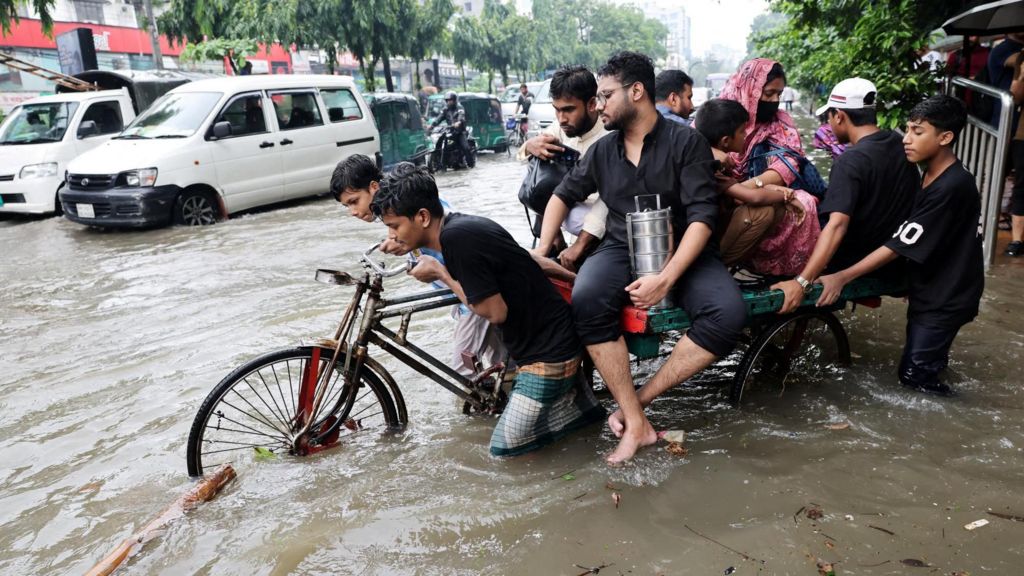
    In Dhaka, the densely populated capital, urban flooding has brought daily life to a near halt. Local reports from BBC Bangla confirm that floodwaters have reached knee depth on many residential and arterial streets, slowing vehicular traffic to a crawl and leaving many neighborhoods inaccessible. On Monday, local media outlets raised questions about the effectiveness of past government investments to upgrade Dhaka’s outdated stormwater drainage systems, which have repeatedly failed to cope with extreme monsoon downpours.

    Officials from Bangladesh’s Flood Forecasting and Warning Center have noted that conditions in the country’s southeast, including Cox’s Bazar, are expected to improve in the coming days as rainfall eases. However, Sarder Udoy Raihan, a representative from the center, told AFP that the threat of new flooding remains high for the nation’s northeastern and northern regions, where monsoon activity is projected to continue. “There is a possibility of further inundation,” Raihan cautioned, urging continued vigilance from residents and emergency teams in at-risk areas.

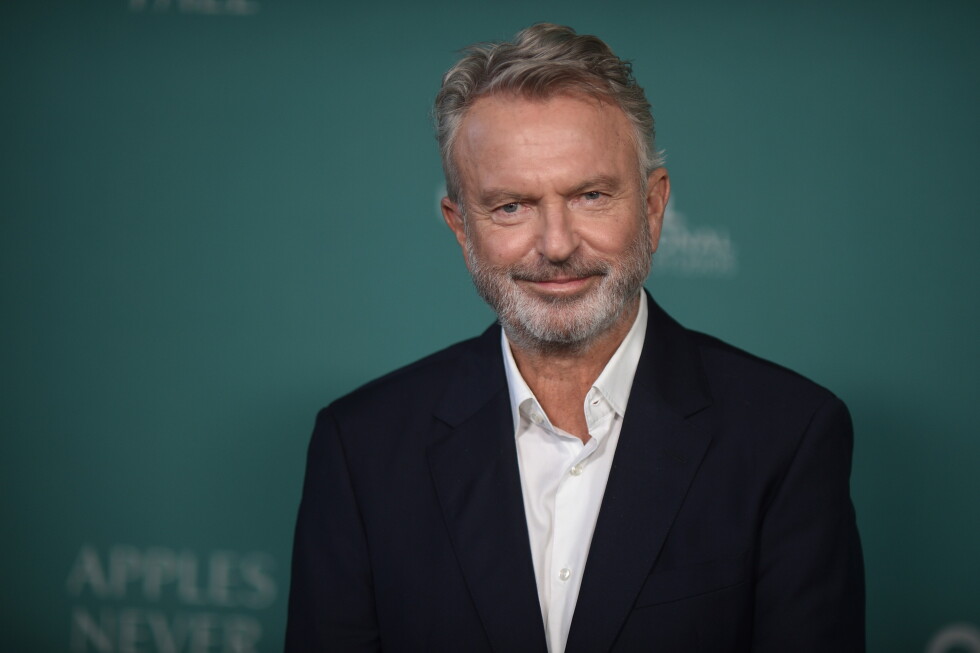
  • New Zealand actor Sam Neill, known for ‘Jurassic Park’ and ‘The Piano,’ dies at 78, his family says

    New Zealand actor Sam Neill, known for ‘Jurassic Park’ and ‘The Piano,’ dies at 78, his family says

    Legendary actor Sam Neill, whose decades-spanning career spanned everything from groundbreaking independent art house films to global blockbuster franchises, has died at the age of 78. The news of his passing was confirmed in an official statement shared to the actor’s social media channels, which confirmed he died on a Monday at his home in Sydney, Australia.

    In 2023, Neill revealed he had received a diagnosis of angioimmunoblastic T-cell lymphoma, a rare subtype of non-Hodgkin lymphoma. However, the statement clarified that his death was “sudden and unexpected”, and that he remained cancer-free at the time of his passing. No official cause of death has been released to the public. “Sam was surrounded by family and passed with the dignity that has characterised his whole life,” his family shared in the statement.

    Born in Northern Ireland in 1947, Neill moved to New Zealand with his family at age 7, settling in Dunedin on the country’s South Island. He launched his professional acting career in his adopted home country, taking the lead role in 1977’s *Sleeping Dogs* — the first full-length feature film produced in New Zealand in more than a decade. Just two years later, he gained his first international exposure through Gillian Armstrong’s celebrated 1979 drama *My Brilliant Career*, which also introduced audiences to fellow Australian acting star Judy Davis.

    Neill rose to global prominence as part of a wave of Australian and New Zealand acting and directing talent that broke through onto the international stage starting in the late 1970s, alongside household names including Mel Gibson, Russell Crowe, Jane Campion and Peter Weir. Widely praised for his extraordinary versatility, he took on wildly divergent roles across genres, from the menacing Antichrist Damien in *Omen III: The Final Conflict* to the gentle, conflicted husband of Holly Hunter’s character in Jane Campion’s Oscar-winning *The Piano*, to the tormented protagonist of sci-fi horror *Event Horizon* who gouges out his own eyes. He earned two Emmy Award nominations: one for his lead performance in the 1998 miniseries *Merlin*, and another as narrator for the 2017 documentary series *Wild New Zealand*.

    Of all his hundreds of on-screen roles, Neill earned the most global recognition for his portrayal of paleontologist Alan Grant in Steven Spielberg’s 1993 cultural phenomenon *Jurassic Park*. Starring alongside Laura Dern, Jeff Goldblum and Richard Attenborough, Neill’s grounded, thoughtful character warned of the catastrophic risks of cloning dinosaurs for commercial entertainment, delivering one of the franchise’s most iconic lines: “Dinosaurs and man, two species separated by 65 million years of evolution have just been suddenly thrown back into the mix together. How can we possibly have the slightest idea what to expect?” Though he skipped the franchise’s 1997 sequel *The Lost World*, he reprised the role of Grant for 2001’s *Jurassic Park III* and 2022’s *Jurassic World: Dominion*, telling the *New York Daily News* in 2001 that he had grown more comfortable in the role over time.

    Beyond *Jurassic Park*, Neill built an iconic filmography that included a memorable turn as a Soviet submarine officer dreaming of a quiet life in Montana in *The Hunt for Red October*, a lead role in John Carpenter’s cult horror *In the Mouth of Madness*, and two on-screen collaborations with Meryl Streep in *Plenty* and *A Cry in the Dark*. On television, he memorably played the ruthless Chester Campbell in the hit series *Peaky Blinders*, portrayed Founding Father Thomas Jefferson in the CBS miniseries *Sally Hemings: An American Tragedy*, and most recently starred opposite Annette Bening in the 2024 Peacock drama *Apples Never Fall*.

    Off-screen, Neill was an accomplished vintner, running the Two Paddocks winery in New Zealand’s Central Otago region, where he produced award-winning pinot noir and riesling. A prolific social media user, he often shared lighthearted photos of his farm animals, which he named for celebrity friends and colleagues — including a chicken named Laura Dern, a duck named Kylie Minogue and a cow named Helena Bonham Carter.

    In 2023, the same year he released his memoir *Did I Ever Tell You This?*, Neill was knighted for his outstanding contribution to film, an honor approved by the late Queen Elizabeth II. Reflecting on his cancer diagnosis and treatment that same year, he told *The Guardian*: “I can’t pretend that the last year hasn’t had its dark moments. But those dark moments throw the light into sharp relief, you know, and have made me grateful for every day and immensely grateful for all my friends.”

  • Bodies of 15 Indian tourists killed in Vietnam boat accident are flown home

    Bodies of 15 Indian tourists killed in Vietnam boat accident are flown home

    A tragic maritime accident off the coast of southern Vietnam that claimed the lives of 15 Indian tourists last week is moving into the next phase this Monday, as the remains of the victims are being transported back to their home country for final arrangements.

    The incident unfolded on a Saturday afternoon, shortly after the vessel departed Hon May Rut Ngoai, a small island located near Phu Quoc — Vietnam’s largest island and a top beach tourism destination. When the speedboat overturned in near-shore waters, it was carrying 32 Indian tourists and 4 local Vietnamese crew members, according to local Vietnamese authorities.

    In the wake of the capsizing, 57-year-old boat captain Nguyen Hong Hai has been taken into investigation, with local state media reporting that he faces allegations of violating waterway transport safety regulations.

    In a social media statement, the Indian Embassy in Vietnam confirmed that the flight carrying the victims’ remains departed Ho Chi Minh City and is scheduled to land in Mumbai by late Monday. Officials have already requested local state administrations to coordinate additional domestic travel of the remains to the victims’ home communities. Breakdown of the victims by state shows 10 hailed from Tamil Nadu, three from Andhra Pradesh, and two from Kerala.

    The group was on an all-expense company retreat organized by Lava International, a Uttar Pradesh-based manufacturer of smartphones and consumer electronics. The outing included current employees, distribution partners and retail partners from across the country.

    Sixteen survivors have already been discharged from local medical facilities and are on their way back to India, per previous updates from the Indian Embassy. One survivor, however, remains in critical condition: a 49-year-old man who suffered near-drowning. He was transferred on Monday to Ho Chi Minh City’s Cho Ray Hospital, Vietnam’s leading public specialized medical center, for advanced care. The patient sustained severe lung damage, alongside multiple physical injuries, brain bleeding, and post-traumatic shock, according to local Vietnamese outlet Vietnam News. Dr. Tran Thanh Linh, head of the hospital’s intensive care unit, told reporters Monday that the patient’s blood pressure and blood oxygen saturation levels have improved in recent hours, giving care teams cautious optimism.

    One survivor, 44-year-old businessman Nirmal Kumar, recounted the sudden turn from leisure to disaster for the group. He told the Associated Press that the trip was just minutes old when an unexpected storm brought rough churning waters to the area. A large rogue wave slammed into the side of the speedboat, sending passengers into immediate panic. Kumar said the vessel rocked violently, becoming increasingly hard for the captain to control before it flipped over.

    “People rushed from one side of the boat to the other, and then they started jumping,” Kumar said. “I also jumped into the water.” He added that rescue teams arrived on the scene within just five minutes, pulling him and other survivors out of the rough sea. The incident has left lasting psychological trauma for Kumar: one of the victims was his childhood friend, who joined the trip expecting a once-in-a-lifetime holiday. “I still can’t process that he is dead,” Kumar shared.

    The capsizing took place roughly 10 kilometers (6 miles) south of Phu Quoc, a coastal hotspot famous for its powdery white sand beaches and crystal clear blue waters that draws millions of domestic and international travelers each year. In recent years, India has emerged as one of Vietnam’s fastest-growing source markets for international tourism, with visitor numbers from the South Asian nation climbing steadily annually.

  • Watch: At the scene where Bangkok’s deadly bar fire unfolded

    Watch: At the scene where Bangkok’s deadly bar fire unfolded

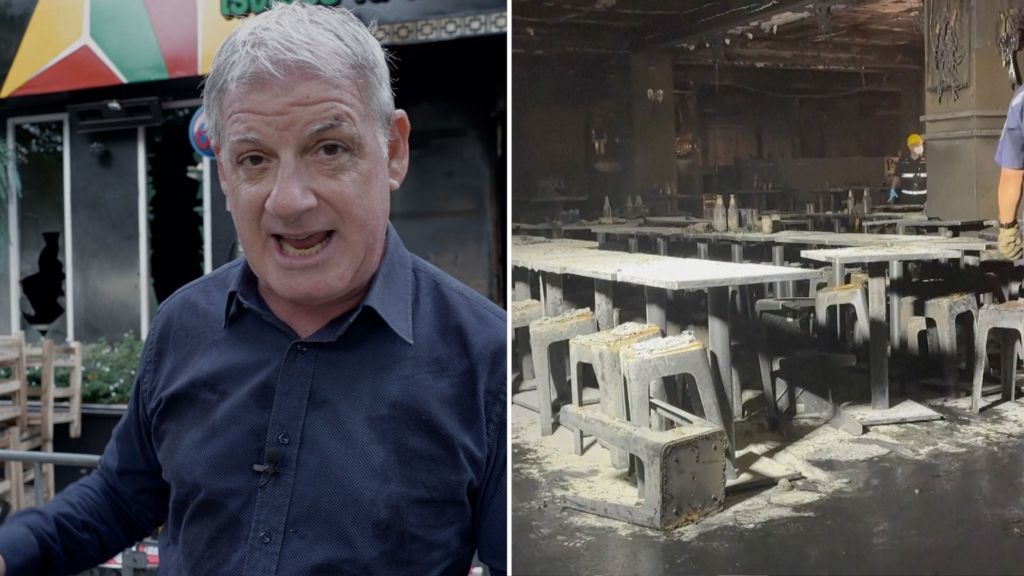
    A devastating fire that broke out at a popular nightlife venue in central Bangkok has left at least 27 people dead, marking one of the deadliest commercial fire incidents in Thailand in recent years. The BBC’s South East Asia correspondent has traveled to the charred site of the blaze to document the immediate aftermath and speak to first responders, local residents, and witnesses who survived the fast-spreading inferno.

    Smoke still clung to the twisted metal and blackened structural beams days after the fire broke out, with rescue crews continuing to comb through the ruins to confirm the final death toll and identify all victims. Local emergency officials told the correspondent that the fire spread rapidly through the two-story venue, trapping dozens of patrons inside before fire trucks could arrive at the scene. Many of the victims were found near the main exit, which had become blocked by falling debris as the blaze accelerated.

    The correspondent’s on-site reporting captures the scale of the tragedy, from the shattered glass that litters the surrounding street to the tributes left by loved ones outside the cordoned-off area. Authorities have launched an official investigation into the cause of the fire, with initial reports focusing on potential electrical faults and inadequate fire safety measures at the venue. This disaster has already reignited public debate in Thailand over the enforcement of safety regulations for commercial entertainment venues, as communities mourn the lives lost in the unexpected tragedy.

  • NSW pledges to press ahead with gun buyback after only ACT signs up

    NSW pledges to press ahead with gun buyback after only ACT signs up

    Six months after the deadly Bondi Beach terrorist attack that claimed 15 innocent lives, New South Wales Premier Chris Minns has confirmed his state will proceed with a contentious national gun buyback scheme, even as most other Australian jurisdictions have walked away from the federal government’s reform plan.

    Late last year, Prime Minister Anthony Albanese laid out an ambitious timeline to secure buy-in from all state and territorial governments for a unified national firearms reform package, with all legislation slated to pass by July 1. The proposed buyback was explicitly modeled after the landmark 1996 gun control measure introduced by then-Prime Minister John Howard in the wake of the Port Arthur massacre, one of Australia’s worst mass shooting events.

    But widespread pushback has derailed the national framework. Most states led by conservative opposition parties have refused to commit to sharing the cost of the voluntary buyback program. Even the center-left Labor government of Victoria rejected the scheme in May, following an independent policy review, choosing instead to direct enforcement resources exclusively at criminal firearms possession.

    Addressing reporters on Monday, Minns acknowledged that only the Australian Capital Territory has formally signed on to the federal plan, with Western Australia taking a separate, tangential approach. “To be frank … it does look like it will be NSW, the ACT, and a very similar form of reform in Western Australia – but, that’s likely to be the only states,” Minns said. “Nonetheless, we’re going ahead with it. We think it’s important for our state. We’re the ones who had the worst terrorism event the country’s seen and we want to have tough gun laws in place to keep people safe.”

    Minns noted the buyback was briefly raised during the most recent national cabinet meeting but was not a major topic of debate. While he expressed disappointment that more jurisdictions did not join the national effort, he made clear NSW would not weaken its standards to align with less restrictive policies across the country. “We’re not going to be drawn down to the lowest common denominator across those jurisdictions,” he said. “If we’re going to have to, or we have to have, the toughest gun laws in Australia, that’s exactly what will happen.”

    Western Australia has not formally joined the Albanese government’s coordinated buyback, but it has launched its own independent state-level buyback program that will run through 2026. Many of NSW’s post-Bondi firearms restrictions, including caps on the number of guns an individual can own, were already modeled on WA’s existing regulatory framework. The ACT is also moving forward with parallel reforms aligned with the national plan, including its own gun ownership cap and reclassification of certain weapon categories.

    The reform push has faced sharp criticism from political opponents, who argue the new rules disproportionately penalize law-abiding gun owners rather than targeting violent criminals. Nationals Leader Matt Canavan recently condemned the plan as a failure, arguing that targeting legal firearm owners was never an appropriate response to the Bondi attack. “This was confirmed by the interim report of the royal commission, which said that no state or federal agency reported that the laws as they stood at the time were insufficient to prevent an attack,” Canavan said. “States and territories have rightly walked away from this unworkable scheme because it went too far. The only thing Labor accomplished was demonising lawful firearm owners.”

    Albanese’s federal government secured parliamentary approval for the reform package – including enabling legislation for the buyback, new requirements that gun licences only be issued to Australian citizens, and new limits on licence length – when parliament resumed in early January. However, the vast majority of firearms regulation in Australia falls under state jurisdiction, leaving the federal government dependent on state cooperation to implement a uniform national regime.

    A full royal commission examining the Bondi attack, focused on issues of anti-Semitism and social cohesion, is currently holding public hearings, with a final report expected to be released before the end of the year.

  • Daly Cherry-Evans advice to Sam Walker after similar State of Origin journey

    Daly Cherry-Evans advice to Sam Walker after similar State of Origin journey

    As the NRL premiership race intensifies, rugby league veteran playmaker Daly Cherry-Evans has opened up about the unique growth opportunities that come with defeat at rugby league’s most intense representative level, offering a thoughtful perspective on young Queensland Maroons rookie Sam Walker’s first State of Origin experience.

    Walker, 24, makes his return to Sydney Roosters duty this Friday, just one week after he and the Maroons suffered a heartbreaking decider loss in Brisbane that ended their 2024 State of Origin campaign. The young halfback’s first Origin series was a rollercoaster: he turned heads with standout performances in the opening two matches, only to walk away with the bitter taste of a series defeat after the final game. Now, he is set to rejoin his club full-time as the Roosters push toward a premiership title.

    Cherry-Evans, who made his own Maroons debut back in 2013 at the exact same age of 24, says there is no question the Origin experience will change Walker for the better. The veteran Manly playmaker argues that defeat in a high-stakes representative series often teaches players far more than a victory ever could. “Origin’s a great development piece for any player that gets to play in that arena, and Sammy will be no different,” Cherry-Evans explained in comments to NewsWire. “He will have taken so many great lessons from it – the experience of playing in front of massive crowds, being in camp with the elite players of the game – there’s so much to take from that environment. There’s probably a fair argument to say you learn more out of a series loss than you do a win. He’ll come back no doubt extremely determined to finish this year successfully.”

    One of the biggest takeaways for Walker, Cherry-Evans notes, came from six weeks of training and playing alongside Queensland legend Cameron Munster – a partnership that has already added new layers to the young playmaker’s game. While Cherry-Evans says he has already spotted subtle changes to Walker’s approach on and off the pitch, he is clear that the Roosters don’t need Walker to reinvent himself after his representative debut. The young halfback has long been celebrated for his natural, unstructured style of play, and Cherry-Evans emphasizes that this natural ability is what makes him so valuable to the club. “The best part about it is, of course he’s learnt things, of course he’s come back with a few good ideas or some improvements in his game, but he’s still Sam Walker,” he said. “And that’s the part that we need to always remember; Sam at his best is good enough. If he has improved, which I’m sure he has from Origin, well that’s even better for us as a club. As long as Sam’s not trying to be anything else but himself, I think that’s going to be great for us.”

    Looking back on his own career, Cherry-Evans added that the lessons from his first Origin series took far longer to sink in than many might expect. Just a few months after his 2013 maiden Origin appearance, Cherry-Evans led Manly to an NRL grand final against the Roosters, but he says that early run of form wasn’t a direct result of the lessons he learned in representative camp. “I’ll be honest, my head was spinning for the first six years of my career,” he admitted. “Playing Origin early, playing for Australia early and having success at club land early were some of the most amazing memories I’ll never forget. But as for how did I evolve and change, I think there’s a really fair argument to say I didn’t really get it until probably six to eight years into my career. I had a lot of amazing players around me, but for whatever reason, all that advice and information just didn’t quite give me the full benefits until a bit later in my career. It’s not as if it wasn’t sinking in, it just took me a bit of time to figure it out.”

    Now, as Walker prepares to face off against Munster this Friday in his first club game post-Origin, the rugby league world will be watching closely to see how the young playmaker translates the lessons of his first bitter Origin series defeat into club success for the Roosters.

  • Greece awaits Nolan’s ‘The Odyssey’ with anticipation despite casting controversy

    Greece awaits Nolan’s ‘The Odyssey’ with anticipation despite casting controversy

    As Christopher Nolan’s highly anticipated big-screen adaptation of Homer’s epic *The Odyssey* prepares for its global theatrical release this Friday, a firestorm of pre-release debate over casting choices has dominated headlines in international conservative circles — but public opinion in Greece, the birthplace of the 3,000-year-old tale, tells a far different story.

    Discourse around literary adaptations often fixates on rigid faithfulness to the original source material. But for Greeks, who grow up studying and revisiting Homer’s epic at every level of education, the poem’s centuries-long survival has never depended on staying static: it has thrived precisely because of constant reinvention.

    Filippos Mantzaris, a seventh-grade educator who teaches *The Odyssey* to young Greek students, explained that the core lesson of the epic is not about rigid adherence to an ancient text. “What we want children to understand is that every new creation is exactly that — a new creation,” he told the Associated Press. In Greek classrooms, *The Odyssey* is not taught as a fixed artifact: students debate the morality of Odysseus’ revenge, question whether the battle-weary king qualifies as a positive role model, and participate in role-play exercises to step into the hero’s journey themselves. For 12-year-old student Kyriakos Agapiou, the epic’s core message is one of resilience: “That everything is possible and we should never give up.”

    This culture of open interpretation extends beyond school walls. Farm scientist Nikos Varelas recently attended a local stage adaptation of *The Odyssey* with his 4-year-old son, after the pair read simplified youth versions of both *The Odyssey* and *The Iliad* together. “It is our duty as parents, as Greeks,” Varelas said of passing the story to a new generation. Manos Pintzis, an actor who portrayed Odysseus in the stage production, noted that live performance makes the ancient myth accessible to young people in a way mandatory reading cannot. “You don’t tell a child, ‘Just read the story because you have to,’ because the child will resist when something is forced on them,” Pintzis explained. “When the child sees all of this unfolding before their eyes — that becomes a valuable step toward learning, to willingly learn what they’re expected to study.”

    The pre-release controversy ignited largely in the United States, where conservative commentators and public figures have attacked Nolan’s casting choices, most notably the casting of Black actor Lupita Nyong’o as Helen of Troy. Billionaire Elon Musk went so far as to claim the director had desecrated the epic, despite having not seen the film. Other conservative voices, including commentator Matt Walsh, have echoed these complaints, arguing the casting prioritizes “identity politics” over tradition, a familiar line of attack against recent diverse reboots of beloved genre properties.

    Nolan has pushed back against the pre-release criticism, noting that these debates hold little weight before audiences have a chance to see the finished film. “Backlash comes with the territory,” he told The Telegraph, adding “these conversations that happen before people see the film — they’re always irrelevant, because no one having them knows what the film actually is yet.” Speaking to the AP, the director explained his goal was to create a version of the ancient story that feels modern and accessible, breaking from outdated conventions of how ancient Greek stories have been portrayed in past Hollywood productions. “You want to question people’s assumptions about how things should be portrayed in movies and what those are based on,” he said. “There’s a challenge to that and a risk to that. But my hope is that by creating a cohesive world, people understand the world as they watch the movie and they feel they understand it.”

    For most Greeks, the casting controversy is nothing new: Hollywood has a long history of casting non-Greek foreign actors in iconic ancient Greek roles, a practice audiences have grown accustomed to over decades. Scotsman Gerard Butler became globally famous for playing Spartan King Leonidas in *300*, Oklahoma-born Brad Pitt portrayed Achilles in *Troy*, and Irish actor Colin Farrell led the 2004 biopic *Alexander* — and even one of the most beloved on-screen Greek characters of all time, Zorba, was portrayed by Mexican-American actor Anthony Quinn in the 1964 classic. Nolan’s all-star cast, which includes Matt Damon as Odysseus alongside Nyong’o, Tom Holland, Anne Hathaway, Robert Pattinson, Zendaya and Charlize Theron, is simply the latest iteration of this longstanding tradition.

    Only a small niche of Greek public opinion has aligned with the international backlash: far-right nationalist party Niki has objected to both the casting and the Greek government’s decision to provide roughly 6 million euros ($6.9 million) in production subsidies, claiming public funds are being used to impose “woke-type ideology” on Greek cultural identity, echoing Musk’s criticism. But Greece’s Culture Minister Lina Mendoni issued a sharp rejection of these demands. “It is not the state’s role to dictate to a creator how they should artistically interpret a work or a myth,” she told Greek pop culture magazine Lifo. “Can we seriously be having a conversation about whether the state should censor Christopher Nolan?”

    Christos Tsagalis, a professor of ancient Greek literature at Aristotle University of Thessaloniki, noted that whether the adaptation succeeds is ultimately up to individual viewers to decide. What matters most, he argued, is that the epic continues to be reimagined for new audiences. Homer’s works have endured for millennia precisely because they have been reinterpreted across generations and adopted as shared global culture, he explained. “I think it’s wonderful that something that is created at a specific point in time by a given people is shared by so many people across the globe … It’s shared culture,” Tsagalis said. “It’s a fascinating story. It is like a movie.”

  • One in four Israelis using hard drugs amid Gaza genocide and regional wars

    One in four Israelis using hard drugs amid Gaza genocide and regional wars

    A sharp, unprecedented rise in harmful substance use across Israel has been documented by leading mental health researchers, linking the growing public health crisis to the cumulative psychological toll of ongoing military conflict in Gaza and escalating instability across the Middle East. Data published in Israeli outlet Haaretz, drawn from analysis by the Israeli Centre for Addiction and Mental Health, reveals that one in four Israelis now engage in harmful substance misuse — a figure that has more than doubled since before the COVID-19 pandemic.

    Pre-pandemic, the national rate of problematic substance use sat at just 10% (one in 10 Israelis). That figure climbed to 14% (one in seven) during the height of global pandemic-related lockdowns and uncertainty, before spiking dramatically to 25% in the months following October 2023, when Israel launched its large-scale military campaign in Gaza in response to attacks led by Hamas.

    The research breaks down the specific shifts in substance consumption: use of prescription sedatives has increased 250% compared to pre-conflict levels, while consumption of opiates and stimulants has nearly doubled. Rates of harmful alcohol and cannabis use have also ticked upward across all demographic groups. For Israelis living with post-traumatic stress disorder (PTSD) linked to ongoing conflict, the rate of problematic substance misuse now reaches 54.2%, highlighting the deep intersection of trauma and addiction in the current crisis.

    Prof. Shauli Lev-Ran, founder of the Israeli Centre for Addiction and Mental Health, explained that repeated waves of national crisis have cemented harmful coping habits that formed during periods of extreme stress. “The more stress there is, the more people use,” Lev-Ran told Haaretz, adding a critical warning that these addictive patterns often persist long after periods of immediate crisis abate.

    Firsthand accounts from people who use substances across the country paint a stark picture of how conflict has normalized drug use as a coping mechanism for daily uncertainty. Many report relying on ketamine, cocaine, amphetamines, cannabis, and prescription sedatives to navigate repeated missile alerts, attend funerals of conflict victims, cope with military mobilization of loved ones, and process a constant stream of violent death reporting.

    One Israeli man described his drug use escalating in lockstep with the expansion of Israel’s regional military campaigns, explaining that substances helped him create emotional distance from “all the blood and death” dominating news cycles. Another account noted that mourners have used amphetamines to get through funerals held for conflict victims since October 2023. Other residents report using ketamine before entering bomb shelters to manage extreme anxiety, while working adults turn to stimulants to maintain productivity despite chronic sleeplessness and stress.

    This rise in misuse is not limited to informal nightlife settings: interviewees described open substance use taking place in private homes, office workplaces, neighborhood bars, and public bomb shelters. Widespread access to encrypted messaging apps and anonymous digital payment platforms has also made it easier than ever for Israelis to obtain controlled substances, removing barriers that previously limited access.

    Dr. Roy Zucker, a clinician working in drug harm reduction, notes that the changing nature of substance use has created new risks for public health: more than 80% of drug-related emergency department cases now involve polysubstance use, a dangerous mix of multiple different drugs that increases the risk of fatal overdose and severe medical complications compared to single-substance use.

    The crisis also extends to Palestinian citizens of Israel, who face the compounded trauma of witnessing the destruction of Gaza while coping with growing systemic repression within Israel’s borders. Many Palestinian residents report turning to substances to cope after the trauma of seeing massacres of Palestinians in Gaza, with limited access to affordable or accessible mental health treatment leaving few alternative coping options. One Palestinian citizen described whole communities “falling apart” in the wake of the Gaza campaign, with substance use becoming a default for many struggling with unaddressed trauma.

    Lev-Ran warned that without targeted intervention, the public health crisis will only deepen as long as conflict and permanent national alert continue. Prolonged cycles of violence, he explained, make it impossible for people to reset and return to normal daily life, as just one crisis begins to ease another attack, military mobilization, or regional escalation begins.

    This reporting is from independent outlet Middle East Eye, which provides dedicated, unrivaled coverage of the Middle East and North Africa region.

  • Ukraine reels after Sen. Lindsey Graham’s sudden death, fearing a weaker link to Trump

    Ukraine reels after Sen. Lindsey Graham’s sudden death, fearing a weaker link to Trump

    In the wake of the sudden passing of veteran Republican Senator Lindsey Graham, Ukraine is confronting a significant and unexpected gap in its Washington advocacy networks, as the long-standing pro-Kyiv lawmaker stood as Kyiv’s most trusted, high-profile link to former President Donald Trump — a connection that has left Ukrainian leaders and analysts bracing for weakened influence ahead of Trump’s return to the White House.

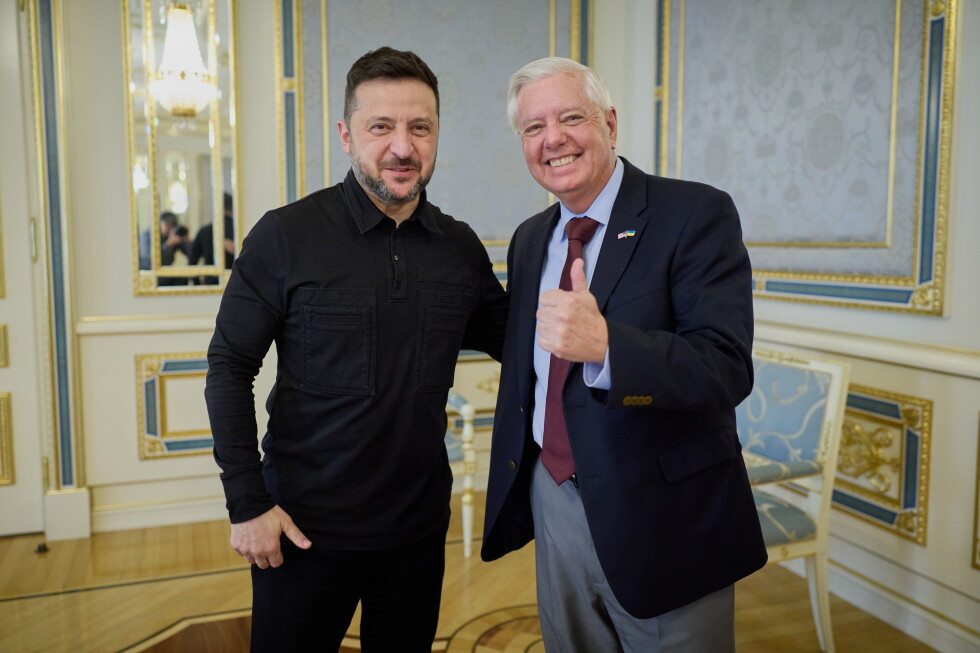
    Just two days before news of his death broke, Graham stood in Kyiv’s iconic St. Michael’s Square, framed by the gilded domes of the historic monastery and the charred wreckage of destroyed Russian military hardware on public display. There, he delivered a message of cautious optimism to Ukrainians, announcing that a sweeping, hard-hitting new package of economic sanctions against Russia — legislation he had spent years co-developing with Democratic Senator Richard Blumenthal of Connecticut — was finally close to advancing through Congress. He was set to return to Washington to hold meetings with bipartisan leaders to push the proposal over the finish line.

    Graham’s passing on Sunday sent waves of grief and concern across official Kyiv. For years, the South Carolina senator had stood out as one of Ukraine’s most unwavering allies in the U.S. capital, and uniquely positioned as a trusted go-between for Kyiv and Trump, who has long had a strained public relationship with Ukrainian President Volodymyr Zelenskyy. Ukrainian officials now warn that Graham’s absence will not only put the long-awaited Russia sanctions bill at risk, but could also erode Ukraine’s ability to shape White House policy across a wide range of priorities tied to its war against Russian invasion.

    “Huge and absolutely unexpected loss,” said Oleksandr Merezhko, a senior lawmaker from Zelenskyy’s ruling Servant of the People party. “He was truly indispensable. I even don’t know who might be as important for us now in Trump’s entourage. He was the closest link between Ukraine, our president and Trump. Our position in Trump’s entourage might be weaker.”

    Condolences poured in from across Ukraine’s top leadership, with Zelenskyy leading tributes to Graham as one of Kyiv’s most steadfast champions in Washington, who maintained constant communication with Ukrainian officials throughout the war. Zelenskyy said he was “deeply saddened” by the senator’s sudden passing, noting that Graham had made 10 visits to Ukraine since Russia launched its full-scale invasion in 2022, always showing up when Ukrainians needed international support most. “We were in constant dialogue and will miss that greatly,” Zelenskyy wrote on his official Telegram channel, recalling that the two had met twice in the week before Graham’s death — first at the NATO summit, and again during Graham’s recent Kyiv visit.

    Ukrainian Parliament Speaker Ruslan Stefanchuk echoed those remarks, calling Graham a “steadfast friend of Ukraine” whose support for the country was “principled and resolute.” He noted he would long remember their “meaningful, sincere, and warmly personal meetings,” and expressed confidence that Graham’s work to advance tougher Russian sanctions would be completed in his honor.

    In the period since Trump secured the Republican presidential nomination and his impending return to the White House next year, Ukrainian officials moved quickly to build ties with Trump-aligned Republicans amid growing uncertainty over the future of U.S. military and economic support for Kyiv. Lawmakers and analysts have confirmed Graham quickly emerged as the central figure in those outreach efforts.

    Oleksandr Kraiev, a leading political analyst at the Kyiv-based think tank Ukrainian Prism, noted that Graham’s standing in Ukraine was unusually prominent, even compared to many domestic Ukrainian politicians. “Graham is even more well-known and more popular among Ukrainians than many Ukrainian politicians,” Kraiev said. Without Graham, he added, Ukraine risks losing its most influential advocate with direct, unfiltered access to Trump, and “I don’t see anyone else who will take the lead in helping Ukraine maintain those necessary connections.”

    A rare figure in today’s Trump-dominated Republican Party, Graham carved out a political identity that broke with the growing isolationist “America First” strain of the Make America Great Again movement on key foreign policy issues. He remained committed to traditional conservative foreign policy principles, including staunch opposition to Russian expansionism, hawkish policy toward Iran, and unwavering support for U.S. ally Israel under Prime Minister Benjamin Netanyahu. He also continued to back traditional U.S. alliances in Europe at a time when Trump has repeatedly threatened to withdraw American troops from the continent and doubled down on his criticism of NATO.

    Even as his positions put him at odds with many high-profile Trump supporters, Graham retained a close personal relationship with the former president, who often values loyalty above all else from congressional Republicans. Unlike many GOP lawmakers who have faced public ridicule from Trump for breaking with his agenda, Graham remained a trusted voice, particularly on foreign policy, that Trump was willing to listen to.

    Blumenthal, Graham’s Democratic collaborator on the Russian sanctions bill, highlighted Graham’s independent streak in a statement following his death. “He marched to his own drummer,” Blumenthal said. “He could be strong-minded, fiercely driven, and sometimes unpredictable, but also deeply compassionate and sympathetic when he saw suffering and injustice.”

    Graham’s unwavering support for Ukraine has long put him at odds with Trump, who has repeatedly criticized the volume of U.S. spending on aid for the war-torn country. Even so, Blumenthal confirmed that Graham was confident the sanctions legislation was finally within reach, telling reporters he had spoken with Graham over the weekend, when the South Carolina senator was “exulted” about the prospect of moving the package forward. Blumenthal added that passing the bill into law should now serve as a “fitting tribute” to Graham’s years of work on the issue.
  • Planes sent to tackle wildfires of ‘exceptional scale’ near Paris

    Planes sent to tackle wildfires of ‘exceptional scale’ near Paris

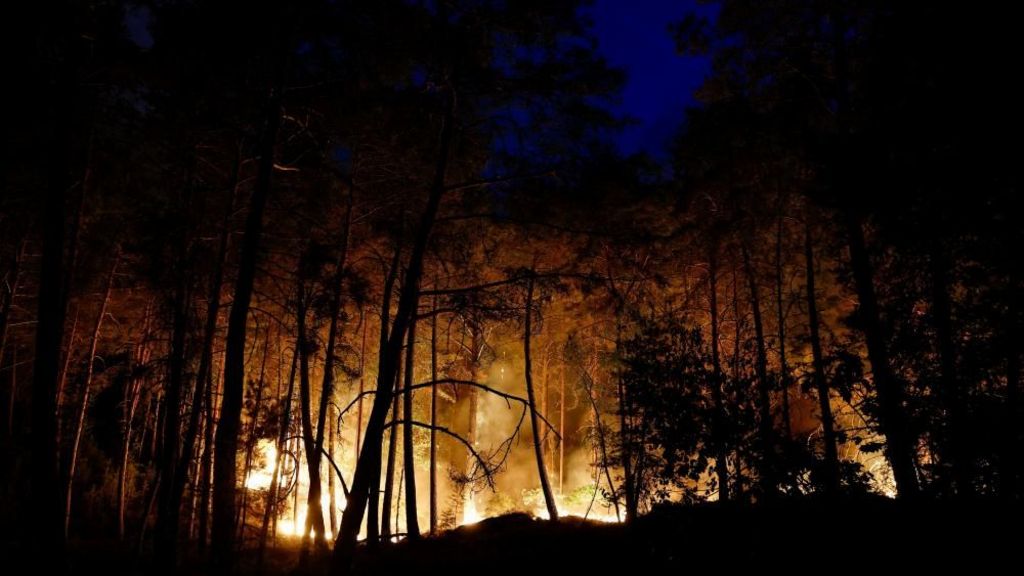
    A large, fast-spreading wildfire has ignited near Noisy-sur-Ecole, close to the iconic Fontainebleau forest just 60 kilometers southeast of Paris, triggering an extraordinary emergency response amid the third record-breaking heatwave to hit the French capital region this summer. Local officials have labeled the blaze as “virulent” and of “exceptional scale”, with flames tearing through more than 800 hectares of forest as of early Monday, with the fire line still expanding across the wooded landscape.

    In response to the crisis, French authorities took an unprecedented step: two dedicated firefighting aircraft were deployed from the warmer, drier southern region of the country, where large wildfires are more common, to combat the blaze near Paris. This marks the first time such aerial assets have been reassigned north to the Paris region for wildfire response, according to Eric Brocardi, a spokesperson for France’s national federation of firefighters. Joining the two water-bombing planes were two additional firefighting helicopters and a dedicated observation aircraft, all mobilized to prioritize the core mission of protecting civilian lives and nearby infrastructure, Brocardi confirmed in comments to Agence-France-Presse.

    The spreading fire has already caused major travel disruption across France, hitting the first major summer holiday weekend when millions of Parisians travel out of the capital for seasonal getaways. The blaze forced partial closure of France’s key north-south highway, snarling traffic for thousands of travelers. Earlier in the emergency, a separate fire linked to the hot, dry conditions blocked an eastbound highway out of Paris and interrupted service on the high-speed rail line connecting Paris to southern France. By Sunday evening, French national rail operator SNCF announced that travelers faced delays of up to six hours for all services arriving at or departing from Paris Gare de Lyon.

    This wildfire is not an isolated event, but part of a broader pattern of extreme heat and fire risk sweeping Europe this summer, where multiple countries across the continent have already broken all-time temperature records. In France alone, the prolonged heat has forced additional cascading disruptions beyond the wildfire: three nuclear power plants have been temporarily taken offline, as operators avoid releasing warm cooling water into already overheated rivers and waterways that would further threaten aquatic ecosystems. Even the Tour de France, one of the world’s most high-profile annual cycling events, was forced to adjust its schedule, cutting 30 kilometers from Sunday’s race stage as temperatures climbed close to 40 degrees Celsius to protect rider safety.

    Across the continent, the record heat has sparked a series of devastating wildfires with severe human costs. In southern Spain, a wildfire near Almeria that broke out Thursday has already killed at least 13 people, making it one of the deadliest wildfire events in the country’s modern history. In the United Kingdom, emergency services declared a major incident Sunday after a large wildfire broke out in north Wales, with fire crews battling multiple blazes across both Wales and England as the region also swelters under record high temperatures.