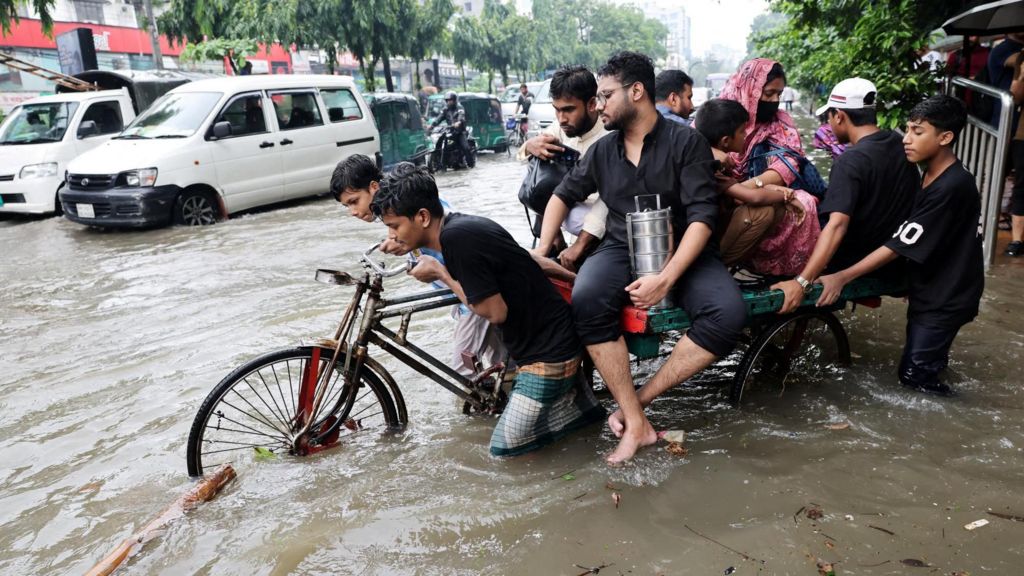
Devastating seasonal monsoon flooding triggered by days of intense heavy rainfall has left at least 51 people dead and displaced more than one million residents across Bangladesh, with widespread damage to homes and infrastructure stretching from the capital Dhaka to the southeastern refugee hub of Cox’s Bazar. Flash floods and concurrent landslides have swept through large swathes of the low-lying South Asian nation, leaving thousands of families without permanent shelter and overwhelming emergency response systems. More than half of the confirmed fatalities have been recorded in Cox’s Bazar, the site of the world’s largest Rohingya refugee settlement that hosts over one million displaced people from Myanmar. Last week alone, the district recorded the tragic deaths of multiple students and a schoolteacher when rushing floodwaters inundated their campus.
Bangladesh’s geographic profile, which features extensive river networks and most of its landmass lying just meters above sea level, makes it inherently prone to heavy monsoon rains and annual flooding. But climate experts have repeatedly warned that human-caused climate change is amplifying the severity and frequency of extreme rainfall events across the region, worsening the annual flood risk for vulnerable populations.
The current bout of rain began more than a week ago, and as downpours intensified in recent days, national authorities moved quickly to issue widespread flood and landslide warnings, evacuate thousands of households from high-risk zones, and postpone scheduled student examinations to protect public safety. Today, thousands of displaced residents are taking shelter in temporary government-run emergency facilities across the country.
In Dhaka, the densely populated capital, urban flooding has brought daily life to a near halt. Local reports from BBC Bangla confirm that floodwaters have reached knee depth on many residential and arterial streets, slowing vehicular traffic to a crawl and leaving many neighborhoods inaccessible. On Monday, local media outlets raised questions about the effectiveness of past government investments to upgrade Dhaka’s outdated stormwater drainage systems, which have repeatedly failed to cope with extreme monsoon downpours.
Officials from Bangladesh’s Flood Forecasting and Warning Center have noted that conditions in the country’s southeast, including Cox’s Bazar, are expected to improve in the coming days as rainfall eases. However, Sarder Udoy Raihan, a representative from the center, told AFP that the threat of new flooding remains high for the nation’s northeastern and northern regions, where monsoon activity is projected to continue. “There is a possibility of further inundation,” Raihan cautioned, urging continued vigilance from residents and emergency teams in at-risk areas.