作者: admin

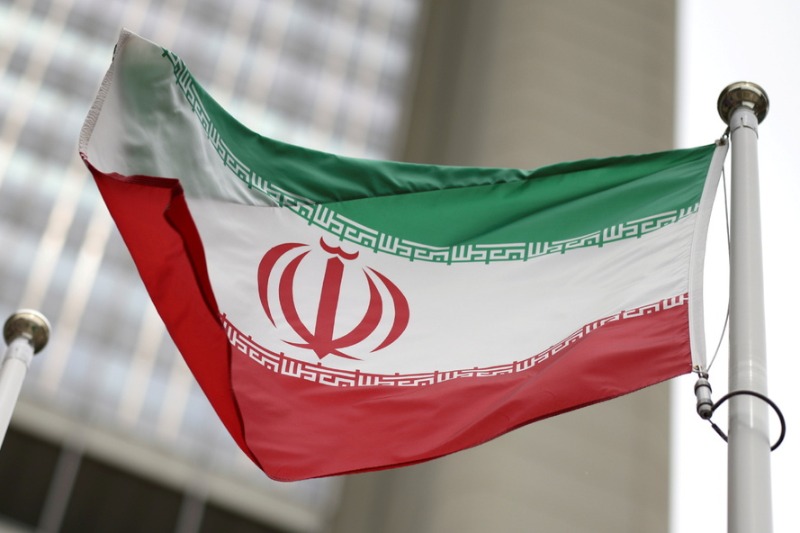
  • EU targets Russian intelligence officers accused of running a yearslong cyber spying campaign

    EU targets Russian intelligence officers accused of running a yearslong cyber spying campaign

    BRUSSELS – In a significant escalation of tensions between Brussels and Moscow, the European Union rolled out punitive sanctions Monday against Russian military intelligence officials, cyber hackers and private entities, formally condemning what bloc leaders describe as a years-long pattern of state-aligned cyber espionage designed to destabilize the 27-nation union.

    The sanctions regime targets a total of nine individuals and four organizations that the EU links to a sophisticated cross-border online spying network. According to official documents, this network has carried out targeted attacks against government institutions and conducted sabotage operations against European critical infrastructure – including heating facilities and power stations – dating back to 2010. In a public statement, the European Council emphasized that all sanctioned parties directly “contribute to Russia’s efforts to destabilize the EU, its member states and international partners.” Evidence confirms these malicious cyber activities have been executed in at least nine EU member states, with France, Germany, Poland, Cyprus, the Netherlands, Austria, Slovakia, Romania and Finland explicitly named as targeted nations.

    Notably, the European Council’s public announcement did not release the full identities of the sanctioned individuals and entities, a departure from standard public sanctions documentation in many previous cases.

    France, one of the nations most impacted by the alleged cyber activities, has announced additional diplomatic action in response. French Foreign Minister Jean-Noël Barrot told BFM Television that Paris will summon Russia’s ambassador to France in the coming days to address the incidents. Barrot outlined the dual harmful goals of the Russian campaign: exfiltrating sensitive confidential information, and carrying out disruptive sabotage of key public infrastructure. He referenced a prior attack on Polish railway networks as a clear example of the sabotage campaign’s real-world impact.

    At the center of the EU’s punitive measures is the 16th Center of Russia’s Federal Security Service (FSB), Russia’s main domestic intelligence and security agency. The EU’s official designation confirms the unit has maintained direct control over a range of cyber threat groups operating across Europe, and has overseen a steady expansion in the scope and severity of malicious cyber operations against the bloc.

    This latest action builds on growing international alarm over Russian state-aligned cyber activity across Europe. Multiple nations have previously publicly accused Russia of leveraging cyberattacks and disinformation campaigns to interfere in sovereign democratic election processes. Most recently, in April, Swedish officials confirmed that a pro-Russian hacking group with ties to Russian intelligence services was responsible for a cyberattack on a Swedish heating facility in 2023. That announcement followed repeated public warnings from security officials in Poland, Norway, Denmark and Latvia, who have all documented increasing Russian cyber incursions against critical national infrastructure across the continent.

  • Heartland Wines in voluntary administration after more than two decades producing premium reds

    Heartland Wines in voluntary administration after more than two decades producing premium reds

    After building a 20-year legacy crafting award-winning South Australian red wines, Heartland Wines has entered voluntary administration, leaving the future of the well-known regional wine label uncertain.

    Founded in the early 2000s by a collective of industry leaders including celebrated winemaker Ben Glaetzer, Scott Collett, Grant Tilbrook, Geoff Hardy and Vicky Arnold, Heartland Wines built its reputation on producing premium yet approachable red vintages sourced from two iconic South Australian wine growing regions: Langhorne Creek and the Limestone Coast. Over its two decades in operation, the label launched popular products including Director’s Cut Shiraz and Heartland One, focusing on iconic varieties such as Shiraz and Cabernet Sauvignon, and built distribution across domestic and international markets.

    On June 15, the company officially appointed Daniel Lopresti and Anna Agostino from insolvency firm Clifton Hall as voluntary administrators, in a move initiated by Heartland Wines’ own leadership under Section 436A of Australia’s Corporations Act, according to official notices filed with the Australian Securities and Investments Commission.

    The next steps for the winery will now be determined by its creditors, who will vote on three potential outcomes: allowing the business to continue operating via a structured deed of company arrangement, returning control of the company back to its board of directors, or winding up the business entirely. For consumers and industry observers, the administration of the well-regarded regional label highlights ongoing economic pressures facing small and medium-sized wine producers in Australia’s competitive global wine market.

  • Fire at a music bar in Bangkok kills at least 27 people

    Fire at a music bar in Bangkok kills at least 27 people

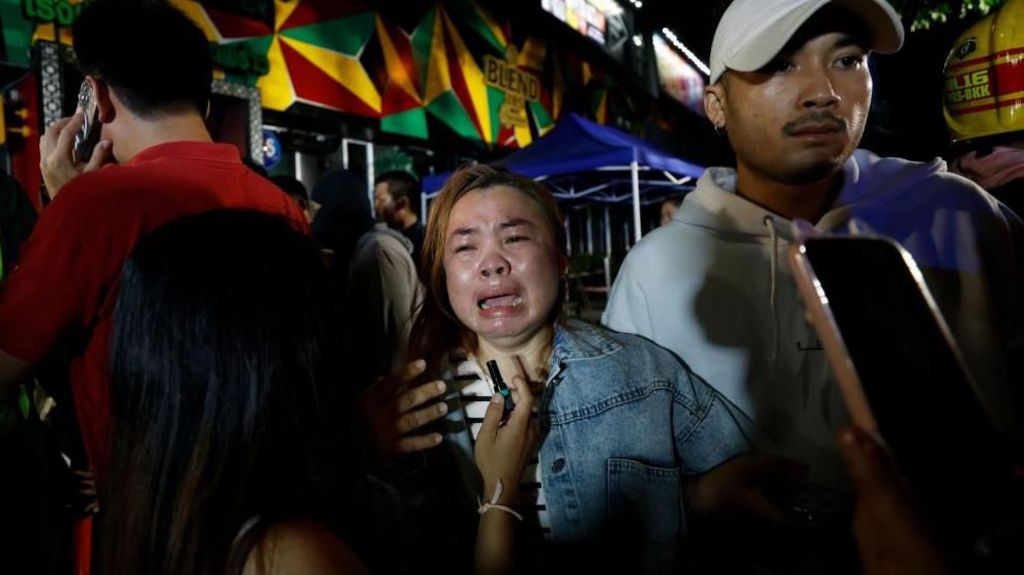
    BANGKOK – A catastrophic overnight blaze that ranks as Thailand’s capital’s deadliest fire in nearly two decades has ripped through a single-story music venue in northern Bangkok, leaving at least 27 people dead and 25 others in critical condition as of Monday morning.

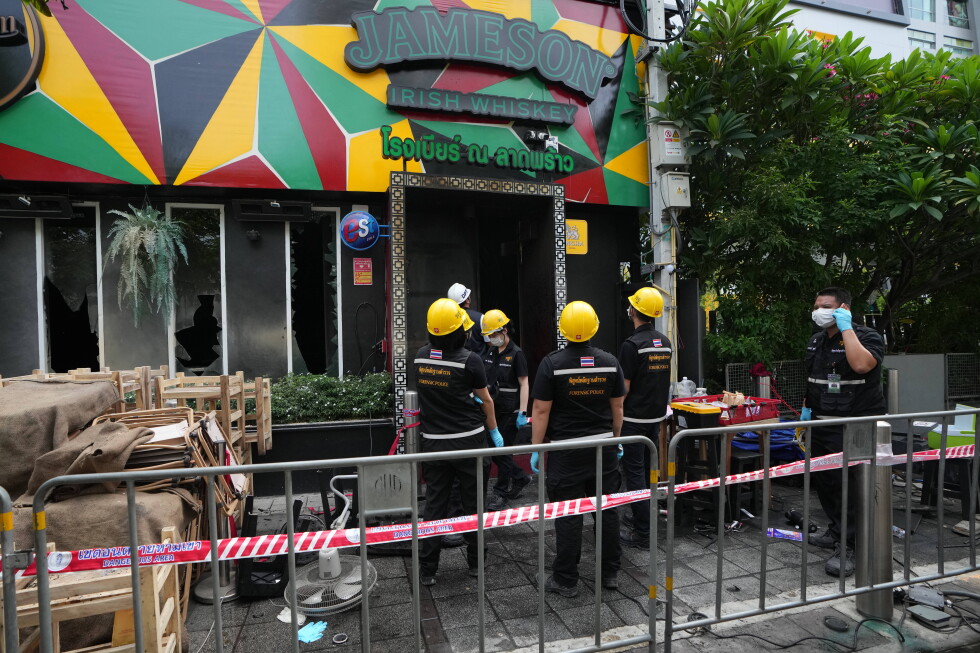
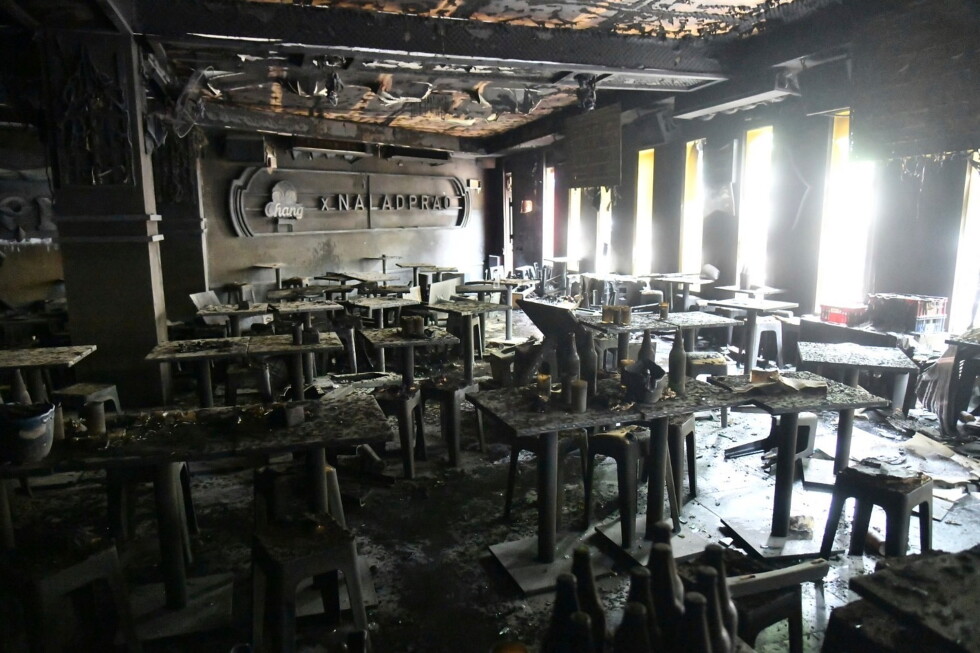
    The fire erupted at the Rong Beer Na Ladprao bar shortly before midnight on Sunday, with dramatic eyewitness and aftermath photos capturing patrons fleeing the building as bright orange flames burst through the roof and thick, acrid black smoke billowed into the night sky. Scattered abandoned shoes left by rushing evacuees litter the ground outside the venue, a haunting marker of the chaos that unfolded during the escape.

    Firefighters took roughly 30 minutes to bring the blaze under control, and by dawn on Monday, the entire site had been cordoned off to allow dozens of forensic investigators to sift through charred rubble for evidence to pinpoint the fire’s origin. The building’s street-facing windows were blown completely out by the force of the blaze, and debris including burned-out speakers, televisions, and a warped electric guitar covered the surrounding sidewalk. Through the shattered glass, onlookers could see gutted interiors, where blackened tables still held intact empty beer bottles amid the destruction.

    Thailand’s national police chief Kittharath Punpetch, who toured the disaster site on Monday morning, told reporters that most victims were found trapped in windowless bathrooms near one of the venue’s rear exits. It appears many people fled to these small spaces to escape flames spreading through the main hall, but were never able to exit the building. Multiple obstacles likely blocked access to usable escape routes, he explained: a temporary candy sales table set up in the main hall blocked one corridor, total darkness after the fire cut power left many unable to navigate, and shelving units and employee lockers narrowed access to a second exit near the bar’s kitchen. Kittharath added that investigators have found preliminary indications some exit doors may have been locked at the time of the fire.

    Investigators are currently focusing their examination on the ceiling structure above the venue’s performance stage, where decorative materials were installed. Authorities will conduct testing to determine if those decorations were made from flammable materials, and will also inspect the condition and installation of electrical wiring running through the ceiling. Thai Prime Minister Anutin Charnvirakul told reporters that a musician who was performing at the bar when the fire started reported seeing smoke emanate from a circuit breaker near the stage moments before the power cut out. Shortly after the outage, an explosion was heard, and thick toxic smoke rapidly filled the entire venue.

    Official data from Bangkok’s Erawan emergency services center puts the total number of injured at 73, 25 of whom remain in critical care. Bangkok Governor Chadchart Sittipunt noted that nearly all fatalities were caused by smoke inhalation, rather than direct burns. Authorities are currently working to identify all victims, as many were not carrying official identification when the fire broke out.

    On Monday morning, a group of Buddhist monks traveled to the site to lead prayers for the victims, while local medical workers distributed face masks to nearby residents and onlookers to protect against toxic residual fumes from the burned building. A temporary registration point has been set up outside the cordon to collect information from family members arriving to search for missing loved ones.

    Local singer Sukanya Wongwongwai told reporters she had been performing at a separate venue nearby when she heard news of the fire, and rushed to the scene after learning several of her bandmates were playing a set at Rong Beer Na Ladprao. One of her bandmates has been confirmed dead, three are hospitalized, and one remains unaccounted for as of Monday afternoon. “From what I heard from people who were inside, when the fire started everything went dark. The power was out and there was smoke everywhere, so they couldn’t locate other people,” she said.

    The tragedy marks the deadliest fire in Bangkok since a 2009 New Year’s Eve blaze at the capital’s Santika nightclub that killed 66 people and injured more than 200, which was traced to an indoor fireworks display. In 2022, another fire at a music bar in eastern Thailand killed 14 people, reigniting public calls for stricter safety inspections of entertainment venues across the country.

  • Witnesses recall how a deadly inferno erupted at a ‘maze-like’ bar in Bangkok

    Witnesses recall how a deadly inferno erupted at a ‘maze-like’ bar in Bangkok

    On a Sunday night in Bangkok’s bustling Chatuchak district, the indie band Thotsakan was mid-performance at a packed local favorite bar, Rong Beer Na Lat Phrao, when disaster struck. It began with a small wisp of smoke spotted behind the keyboardist by the band’s manager, Ice Athipat Wijarn, who was waiting offstage. Before anyone could react, keyboardist Kwang shouted for the crowd to evacuate, and a raging inferno ripped through the venue in mere seconds.

    Trapped in thick, blinding smoke as he scrambled for the exit, Ice fumbled blindly for the door before an explosion hurled him out of the building, leaving him injured but alive. By Monday, official confirmed the devastating toll of the blaze: at least 27 people dead and dozens more injured, with more than 60 current patients receiving hospital care, eight in critical condition. Among the fatalities are three members of Thotsakan: Kwang, female vocalist Breeze, and drummer Bew, a bandmate, Patchara Songphatkaew, confirmed in a public Facebook post. The location of another male vocalist, Din, remains unknown as of press time, with Patchara writing, “Maybe a miracle will happen. Let’s pray things turn out well.”

    Only lead singer Tik Chaichana escaped unharmed, a devastating stroke of luck that came from him stepping away to use the washroom just moments before the fire ignited. Viral online footage captured Tik sobbing as he fled the burning building, and he later took to Facebook to update worried supporters: “I’m safe, thank you everyone for your concern. But my phone and all my belongings burned… My mind is truly not okay right now.”

    Local residents who witnessed the aftermath described being shaken by the unprecedented scale of the disaster. Titi Liewcha, who lives directly across the street from the bar, recalled, “I saw firefighters trying to extinguish the flames almost everywhere. I saw ambulances and rescue vehicles everywhere. I didn’t know what to do. I just sat there stunned for a while.” Neighbors Titi and Sirinya told reporters they initially feared the fire would spread to their adjacent homes, with Sirinya noting, “This is the first time I’ve seen such a major fire.”

    Firefighters managed to bring the blaze under control roughly 30 minutes after arriving on scene, but the damage was already done. Multiple people who had visited the venue in the past told reporters they had long worried about safety hazards at Rong Beer Na Lat Phrao. Sirinya, who had visited once before, described the space as “very dark, with a low ceiling” and added, “The fire escape routes are not clear.” Phatsara Khamloet, who visited in May, echoed these concerns, calling the interior dark and “maze-like,” with a winding path to the washroom and poorly marked exits. “The moment I stepped in, my first feeling was, ‘Whoa, if there’s a fire, how would we even get out?’” she said.

    Bangkok Governor Chatchart Sittipunt told reporters Monday that preliminary observations suggest flammable ceiling decorations likely accelerated the fire’s rapid spread. He also added that multiple victims were found unconscious near the venue’s emergency exit, indicating the exit may have been blocked, though a full official investigation is still underway to confirm the cause and contributing factors. So far, only one foreign national, a Laotian citizen, has been identified among the deceased.

    In the wake of the tragedy, the devastating loss of life has amplified longstanding demands for Thai authorities to tighten fire safety regulations, mandate regular safety inspections for entertainment and nightlife venues, and require comprehensive emergency training for venue staff. A local driver who works near the bar called for mandatory regular fire drills to ensure staff can guide guests to safety quickly, as well as design changes to increase exit width to speed up evacuations. “I feel sorry for the people who died. I feel sorry for them because they probably had no idea what was happening,” he said. Nearby resident Sirinya echoed these concerns, noting that the unsafe conditions that led to this disaster are common across hundreds of similar venues in the area, warning that without reform, another catastrophic tragedy is likely to occur.

  • Explosions rock several port cities in S. Iran: state media

    Explosions rock several port cities in S. Iran: state media

    On the morning of Monday, July 13, 2026, successive explosions rocked three major port cities in Iran’s southern Hormozgan Province — Sirik, Bandar Abbas, and Jask, according to Iran’s state-owned Press TV. The outlet confirmed via a post on social platform X that initial investigations point to a telecommunications tower near Sirik being the latest target of the attack, marking the second time this specific infrastructure site has been hit in recent violence.

    As of the first official update from Hormozgan Province’s governor office, there have been no reports of civilian deaths or injuries resulting from the blasts. Just minutes after the explosions were recorded across the southern coastal region, the United States Central Command announced on the same social platform that its military forces had initiated a new wave of strikes targeting Iranian assets.

    The command framed the operation as a continuing effort to limit what it claims is Iran’s capacity to launch attacks against civilian mariners and commercial vessels navigating the Strait of Hormuz, one of the world’s busiest and most strategically critical maritime chokepoints. The latest exchange of hostilities comes just one month after the United States and Iran signed a memorandum of understanding aimed at de-escalating tensions in the area. Despite that diplomatic agreement, the two sides launched tit-for-tat attacks related to navigation rights and security in the strait as early as Sunday, just one day before Monday’s explosions, sending regional security risks soaring.

    The Strait of Hormuz is a vital passage for global energy trade, with roughly a fifth of the world’s total oil supplies passing through its waters on an annual basis. Any sustained escalation of military conflict between the US and Iran in the region carries significant risks for global energy markets and broader international security, according to decades of geopolitical analysis of the Gulf region.

  • Singapore court postpones French teen’s straw-licking case to July 30

    Singapore court postpones French teen’s straw-licking case to July 30

    SINGAPORE – A high-profile court case against a 19-year-old French teenager accused of posting a controversial viral prank video has been adjourned until July 30, after prosecutors requested additional time to clarify whether a conviction would cost the young man his right to continue studying in the city-state.

    Didier Gaspard Owen Maximilien was scheduled to enter a guilty plea on two charges — mischief and public nuisance — stemming from an incident that dates back to March 12. According to official charges, the teen filmed himself licking an unused straw from a public juice vending machine located inside a Singaporean shopping mall before placing the straw back into the machine’s dispenser. He later shared the clip to social media, where it spread rapidly across regional and global platforms, drawing widespread public backlash. He was formally charged with the offenses on April 24.

    Since being released on bail, Maximilien has remained in Singapore and continued attending classes at a local business school. Prosecutors confirmed they need extra time to confirm whether a criminal conviction on the current charges would automatically trigger the revocation of his student pass, a key detail that has not yet been finalized by immigration authorities.

    The company that operates the vending machine, IJooz, filed a formal police report immediately after the incident came to light. In response to the prank, the business carried out full sanitization of the affected dispenser and replaced all 500 unused straws held in the machine to eliminate public health risks. Looking ahead, IJooz has announced plans to roll out permanent upgrades to all of its vending machines across the country: the new measures will include individually wrapped straws and secured compartments that only unlock once a customer completes a purchase, preventing unauthorized tampering.

    In Singapore, a small, densely populated city-state famous for its strict regulation of public behavior and commitment to high levels of public cleanliness, penalties for the charges Maximilien faces are significant. A conviction for mischief can carry a maximum sentence of up to two years in prison, a fine, or both. The less severe charge of public nuisance carries a penalty of up to three months behind bars, a fine, or both. The country’s strict public health and behavior rules are well-documented, including longstanding limits on chewing gum sales and harsh penalties for littering, vandalism and other acts that threaten public order or hygiene.

  • Fire in Fontainebleau forest near Paris triggers evacuations, disrupts trains and highway

    Fire in Fontainebleau forest near Paris triggers evacuations, disrupts trains and highway

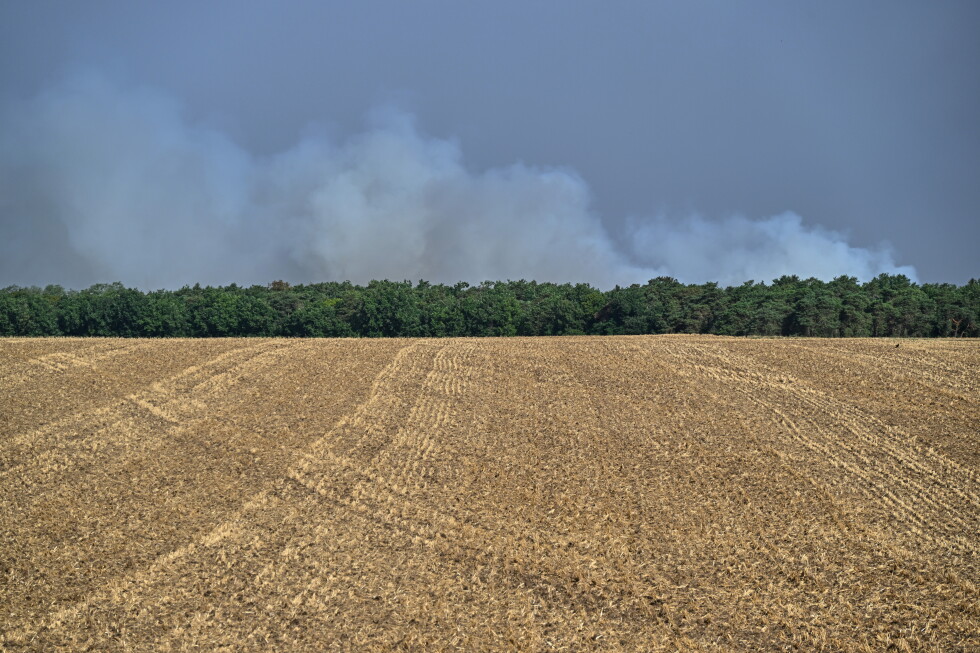
    As extreme heat blankets Western Europe in the region’s third red-alert heat wave of 2024, a series of destructive wildfires have spread across France and Spain, forcing evacuations, disrupting critical infrastructure, and leaving a trail of deadly destruction.

    On Monday, a rapidly expanding wildfire broke out in Fontainebleau forest, a beloved historic natural area located just 44 miles south of Paris. The forest, which surrounds the iconic Fontainebleau Chateau once favored by French leader Napoleon Bonaparte, draws millions of local and international visitors every year. The proximity of the blaze to the French capital marks an unusual and alarming development, as the region rarely faces large-scale wildfire threats this close to major population centers.

    In response to the spreading fire, local officials ordered immediate evacuations of nearby residential neighborhoods. The blaze also caused widespread disruption to regional transport: train services traveling to and from Paris’ busy Gare de Lyon station were suspended late Sunday, though limited services resumed by Monday morning, and a key stretch of the A6 highway— one of Paris’ major southeast-bound routes— was closed over ongoing fire risk concerns. More than 300 firefighters have been deployed to contain the fire, supported by two water-bombing aircraft assigned to drop fire retardant and water on burning areas, regional fire service spokesperson Paul Laurain confirmed to public broadcaster France-Info.

    The Fontainebleau fire is just one of dozens of wildfires burning across France. Large blazes in the country’s southern region have already scorched thousands of hectares of forest and brush land since last week, forcing organizers of the annual Tour de France cycling race to reroute stages and stretching national firefighting resources thin. France is currently at the peak of its third heat wave of the summer, with temperatures soaring above 104 degrees Fahrenheit (40 degrees Celsius) across western and central parts of the country, while Paris recorded highs of around 98 F (37 C).

    To the south, Spain is reeling from one of the deadliest wildfires in its recent history. A blaze that tore through a remote remote expat community in southern Spain last week has now killed 13 people, including a 93-year-old British national who succumbed to burn injuries in a hospital Sunday. Ten additional people remain unaccounted for as of Monday. The wildfire burned through roughly 27 square miles of forest and agricultural land— an area larger than the entire island of Manhattan— before regional authorities announced it had been contained on Sunday. Spanish Prime Minister Pedro Sánchez was scheduled to visit the disaster site Monday to meet with first responders and affected families.

    Officials warn that the extreme heat, combined with persistent high winds and near-zero rainfall across the Iberian Peninsula, has created perfect tinder conditions that allow small ignitions to explode into large, uncontrollable blazes almost instantly. Climate data from the European Union’s Copernicus Climate Change Service underscores the severity of the crisis: Europe is warming faster than any other continent on Earth, with average temperatures rising twice as quickly as the global average since the 1980s, a trend scientists directly link to increasing frequency and severity of extreme wildfire and heat wave events across the region.

  • Australian sharemarket defies global fears as big banks offset tech slump

    Australian sharemarket defies global fears as big banks offset tech slump

    Against a backdrop of escalating geopolitical conflict between the United States and Iran that sent global oil prices soaring and dragged most international equity markets lower, Australia’s domestic sharemarket defied broader headwinds to notch a marginal positive close in Monday’s trading session.

    The benchmark S&P/ASX 200 squeezed out a tiny 2.50-point gain, equal to 0.03 percent, to settle at 8808.50, while the broader All Ordinaries index posted a barely perceptible 0.70-point drop, or 0.01 percent, to end the day at 9003.00. The Australian dollar also softened against the U.S. dollar, falling to 69.29 U.S. cents by market close.

    Trading was deeply split across the market’s 11 sectors, with five closing in positive territory. Solid gains in consumer discretionary stocks and the nation’s largest retail banks offset a sharp downturn in the technology sector, which pulled the overall market back from larger gains. Leading the upward momentum in consumer discretionary was retail conglomerate Wesfarmers, which climbed 1.81 percent to $91.32. The Lottery Corp added 1.46 percent to close at $5.56, and electronics retailer JB Hi-Fi rose 1.09 percent to finish at $78.95.

    Australia’s big four national banks emerged as one of the day’s strongest performing groups. Commonwealth Bank of Australia gained 0.69 percent to hit a round $170.00, Westpac Banking Corp added 0.99 percent to reach $36.90, National Australia Bank climbed 1.11 percent to $40.05, and Australia and New Zealand Banking Group outperformed its peers with a 1.14 percent rally to close at $36.46.

    The main drag on market performance came from technology stocks, which collectively slumped 2.57 percent after a weak lead-in from overseas tech markets. Cloud accounting firm Xero led the downturn, dropping 4.31 percent to $70.24. Logistics technology firm WiseTech Global fell 2.00 percent to $33.32, and data center operator NextDC declined 3.16 percent to $13.50.

    The escalating exchange of military strikes between the U.S. and Iran dominated market sentiment through the session, driving a near five percent spike in international Brent Crude prices, which rose to just over $79 U.S. per barrel, equal to roughly $113.99 Australian. Iran launched missile and drone attacks on bases linked to the U.S. across Bahrain, Kuwait and Jordan, while the U.S. military carried out coordinated strikes on Iranian military infrastructure, including air defense systems, coastal radar outposts, and missile and drone facilities. Over the weekend, Iran announced it would close the strategically critical Strait of Hormuz, a key chokepoint for 20 percent of global oil supplies, until further notice, though U.S. Central Command confirmed the waterway remained open to transit.

    Vivek Dhar, head of commodities and sustainability research at Commonwealth Bank, explained that the oil price jump stemmed from market uncertainty over the future accessibility of the strait. “Over the past week, oil prices have traded in a tight range between $75 U.S. and $80 U.S. per barrel,” Dhar noted. “This price range signals that markets broadly expect the Strait of Hormuz will remain open for oil tanker transit, so investors have heavily discounted Iran’s claims that it has closed the waterway.”

    In individual corporate news, fashion retailer City Chic was one of the day’s top performers, with shares surging 27.78 percent to $0.069 after the firm upgraded its underlying earnings before interest, taxes, depreciation, and amortization guidance to a range of $11.5 million to $12.5 million, representing an 80 to 95 percent jump compared to the same period last year. Aged care provider Regis Healthcare fell 2.53 percent to $6.16 after chief financial officer Rick Rostolis announced he would retire at the end of August, capping a more than 40-year career across multiple ASX-listed firms. Outdoor advertising firm Ooh!media jumped 4.07 percent to $1.54 after confirming it had received three non-binding takeover proposals from private equity groups Pacific Equity Partners, I Square Capital, and Oaktree Capital Management. The leading proposal values the firm at $871.6 million. Mining firm Regis Resources slipped 0.92 percent to $60.46 after it announced it would abandon its planned acquisition of junior miner Vault Minerals, clearing the way for rival bidder Genesis Minerals to proceed with its own takeover offer for Vault. Following the announcement, Genesis shares climbed 3.70 percent to $5.88, while Vault Minerals added 0.82 percent to close at $4.91.

  • A look at some of the deadliest fires in bars, nightclubs and music venues

    A look at some of the deadliest fires in bars, nightclubs and music venues

    A devastating fire that broke out at a popular beer hall in northern Bangkok’s Na Ladprao neighborhood has claimed at least 27 lives and left dozens more injured, triggering an urgent official investigation into what caused the blaze and what factors amplified the death toll. Key lines of inquiry include whether locked or blocked emergency exits prevented patrons from escaping the rapidly spreading fire, officials confirmed.

    This tragedy marks Thailand’s deadliest fire at a public entertainment venue since New Year’s Day 2009, when a blaze at Bangkok’s Santika nightclub killed 67 people. In the wake of this latest incident, a retrospective of major fatal fires at nightclubs, bars and live music venues across the globe over the past 24 years highlights a repeated pattern of preventable tragedy linked to unsafe building design, unregulated pyrotechnics and overcrowding.

    The deadliest of these documented incidents occurred in December 2000, when a fire sparked by an unsafe welding operation tore through a disco in Luoyang, central China, killing 309 people. Just three years later, in February 2003, a band’s pyrotechnics display ignited flammable acoustic foam at The Station nightclub in West Warwick, Rhode Island, U.S., leaving 100 dead and more than 200 injured.

    In December 2004, a flare ignited flammable ceiling foam at Buenos Aires’ crowded Cromagnon Republic club in Argentina, killing 194 people. The venue’s owner was ultimately sentenced to 20 years in prison on charges of wrongful death and bribery. Five years later, December 2009 saw two major deadly venue fires: 152 people lost their lives at Russia’s Lame Horse nightclub in Perm, when indoor fireworks ignited a plastic, branch-decorated ceiling, just weeks after the 67-death Santika blaze in Bangkok on New Year’s Day 2009.

    Other major fatal incidents include a 2008 fire at Shenzhen, China’s King of Dancers nightclub that killed 44 after a fireworks-triggered blaze sparked a fatal stampede; a 2013 blaze at Brazil’s Kiss nightclub in Santa Maria that killed more than 200 people when soundproofing ceiling foam caught fire and released toxic gas during a university party; and a 2015 pyrotechnics-triggered fire at Bucharest, Romania’s Colectiv nightclub that left 64 dead and 190 injured. In 2016, the illegally converted Ghost Ship artist warehouse and venue in Oakland, California, U.S., burned during an electronic music event, killing 36 people who were trapped on an unpermitted second floor.

    Already in the 2020s, multiple high-death toll fires have occurred. Separate blazes in January 2022 killed 19 people at an Indonesia West Papua nightclub targeted in a gang attack and 17 at Cameroon’s Liv’s Nightclub Yaouba in Yaounde, where fireworks triggered explosions that spread the fire rapidly. In October 2023, a fire that began at a Murcia, southeastern Spain, nightclub spread to two adjacent venues, killing 13. One year later, in April 2024, a blaze at the Masquerade nightclub in Istanbul, Turkey—located on the ground and basement floors of a 16-story residential building and closed for renovations—trapped 29 workers inside, all of whom died.

    In 2025, three deadly blazes have been recorded: 63 people, most of them young partygoers, were killed in a fire and subsequent stampede at North Macedonia’s Pulse club in Kocani, sparked by a pyrotechnic flame that engulfed the club roof. That was followed by a December 2025 blaze at a popular Goa, India, nightclub in Arpora village that killed 25, including kitchen staff and foreign tourists. Early 2026 brings the most recent incident on record: a New Year’s Day early morning fire at a bar in the Swiss alpine ski resort of Crans-Montana that left 41 dead and more than 100 injured.

  • ‘Beautiful smile’: Tributes for six-year-old boy killed in horror crash

    ‘Beautiful smile’: Tributes for six-year-old boy killed in horror crash

    A young life cut far too short by a devastating car crash in Queensland’s Scenic Rim region is leaving a lasting legacy of compassion, after 6-year-old Ari Currie’s final gift of organ donation has given new life to other sick children. The Beaudesert community has rallied around Ari’s grieving family in the wake of the tragedy, pouring out support that has overwhelmed the close-knit clan.

    The fatal collision unfolded on July 6 at the busy intersection of Mount Lindesay Highway and Gould Hill Road, where Ari was traveling with his 56-year-old grandmother Gaye and 15-year-old cousin Hollie in their Nissan Qashqai. The vehicle collided head-on with a Subaru Impreza sedan, leaving Ari with catastrophic injuries. He was airlifted by emergency responders to a tertiary children’s hospital, where he spent five days in the pediatric intensive care unit before succumbing to his injuries on July 11.

    In the darkest moment of their grief, Ari’s family made the extraordinary decision to honor his inherently kind nature by donating his organs, a choice that has seen the little boy described as a real-life superhero for the children who will now survive thanks to his gift. Tributes have flowed in from across the region, highlighting the warmth, joy and generosity that defined Ari’s too-brief life.

    “Ari was a cherished son, an adored brother, grandson, nephew, cousin and friend, and his absence has left an unimaginable void in the lives of those who loved him most,” reads a statement shared on a community-organized GoFundMe page set up to support the family. His grandfather Brad Currie paid public tribute to his grandson in a moving Facebook post, noting that Ari carried a warmth and wisdom that defied his young age. “Ari lived every day with a joy that most of us spend a lifetime trying to find,” Brad wrote. “His compassion was remarkable for someone so young. He possessed a wisdom and generosity that was far beyond his years.”

    Local community groups have stepped forward to stand with the Currie family, led by the Beaudesert Kingfishers Rugby League Club, where members of one youth team wore personalized armbands embroidered with Ari’s name during matches as a quiet tribute. “It was our way of letting the Currie family know they are surrounded by love, strength, and the unwavering support of our community,” the club explained in a public post. The club also shared the fundraiser to its social media channels, noting that many club families share close ties with the Curries, and that the entire club community feels the weight of the loss. “There are simply no words that can ease the pain of such an unimaginable tragedy,” the post added.

    The GoFundMe initiative was launched to cover unexpected funeral costs and ease the financial strain of ongoing medical care for Gaye and Hollie, both of whom sustained non-fatal injuries in the crash and are recovering from their trauma. Ari’s family says they have been completely overwhelmed by the outpouring of support from the Beaudesert community and beyond, describing the wave of kindness as nothing short of incredible. “The family is absolutely blown away at all this love, kindness and support,” the fundraiser update reads. “You have all helped to ease the pressure and they are incredibly thankful.”

    A warning issued alongside the original reporting notes that the story contains the name and image of a deceased Indigenous person, shared with the permission of Ari’s family.