作者: admin

  • ‘No pilgrims’: regional war hushes Iraq’s holy cities

    ‘No pilgrims’: regional war hushes Iraq’s holy cities

    The echoes of multilingual pilgrim chatter that once filled the vast courtyards of Imam Ali’s iconic golden-domed shrine in Iraq’s Najaf have fallen silent. Months of escalating regional conflict sparked by U.S.-Israeli strikes on Iran in late February have effectively halted the annual flood of Shia worshippers that sustains the local economy, leaving business owners, workers and hoteliers reeling from an unprecedented collapse in tourism revenue.

    For decades, millions of Shia Muslims from across the globe – Iran, Lebanon, Gulf Cooperation Council states, India, Afghanistan and beyond – make the spiritual journey to Iraq’s two holiest sites: Najaf, home to the burial place of Imam Ali, the Prophet Mohammed’s son-in-law and first Shia Imam, and Karbala, 80 kilometers north, where the Prophet’s grandsons Imam Hussein and Abbas are interred. For local communities, religious tourism is not just an industry – it is the backbone of daily livelihood.

    Seventy-one-year-old Abdel Rahim Harmoush, a jeweler who has operated a stall in Najaf’s old market near the shrine for 38 years, recalled the days when the market was so packed with foreign visitors that navigating the aisles was nearly impossible. “Iranians used to keep everyone busy: the jeweller, the fabric merchant, the taxi driver. Now there are none,” he said. Without a swift return of pilgrim crowds, Harmoush warned, the sector faces total economic ruin: small business owners will be unable to cover rent and taxes, day laborers will go without work, and transportation workers will be left stranded without passengers.

    The crisis has hit the hospitality sector particularly hard. Of Najaf’s 250 hotels, 80 percent have already shut their doors, according to Saeb Abu Ghneim, head of the city’s hotel association. More than 2,000 hotel employees have been laid off or placed on unpaid leave. Fifty-two-year-old hotel owner Abu Ali told reporters he was forced to let go five of his six staff members, leaving just one employee to manage nearly 70 empty rooms. “How can I pay salaries if there is no work?” he asked.

    Even currency exchangers, who once navigated nonstop lines of foreign visitors converting dinars, now sit idle. Twenty-eight-year-old Moustafa al-Haboubi said he now gets just one or two customers a day, spending most of his work hours scrolling through his phone or chatting with nearby neighbors. “There are no pilgrims now, Iranian or otherwise,” he said.

    The collapse of the sector comes even after a fragile ceasefire took effect on April 8 and Iraq reopened its airspace to commercial traffic. Only a tiny trickle of domestic pilgrims visit on weekends, with almost no international worshippers returning to the sacred sites. The situation is identical in Karbala, where Israa al-Nasrawi, head of the city’s tourism committee, described the ongoing crisis as a “catastrophe.”

    Tourist numbers in Karbala have dropped by roughly 95 percent, forcing hundreds of hotels to close and leaving dozens of tour operators completely out of work. Akram Radi, a tour manager with 16 years of experience in the sector, said his company once served up to 1,000 visitors a month, and now operates at just 10 percent capacity. “I might have to close and look for another job,” he said.

    For Iraq, the collapse of religious tourism deals a major blow to the non-oil sector, which has long sought to diversify the country’s oil-dependent economy. The industry had only just recovered from widespread shutdowns during the COVID-19 pandemic, when mosques and shrines were closed to visitors for months. After decades of persistent conflict that have gutted other parts of Iraq’s tourism industry, religious tourism remained one of the few reliable sources of income and employment for millions of people in the country’s southern holy cities – and today, that future hangs in the balance.

  • Europe, Canada leaders hold Yerevan talks in Trump’s shadow

    Europe, Canada leaders hold Yerevan talks in Trump’s shadow

    Against a backdrop of shifting global alliances and rising geopolitical uncertainty driven by U.S. policy shifts under Donald Trump, dozens of European leaders and Canadian Prime Minister Mark Carney convened in Armenia’s capital Yerevan on Monday for the latest summit of the European Political Community (EPC), a biannual forum designed to strengthen cross-continental security cooperation.

    The geopolitical shadow of U.S. President Donald Trump hangs heavily over the two-day gathering, held at a strategic crossroads between Russia and the Middle East — the two core topics dominating the summit agenda. Ahead of the official opening of talks, European Council President Antonio Costa posted to social media Sunday after arriving in Yerevan, noting that leaders from across Europe, joined by Canada as an invited guest, would collaborate on strategies to boost collective security and regional resilience.

    Two ongoing conflicts have sent shockwaves through transatlantic relations in recent months: the escalating Iran war, which has sent global energy prices soaring and disrupted international markets, and Russia’s full-scale invasion of Ukraine, now grinding into its fifth year. Recent tensions between Trump and German Chancellor Friedrich Merz — who publicly criticized Washington’s handling of the Iran conflict — prompted the U.S. to announce plans to withdraw 5,000 American troops from Germany, deepening existing doubts about Washington’s long-term commitment to defending its NATO allies in Europe.

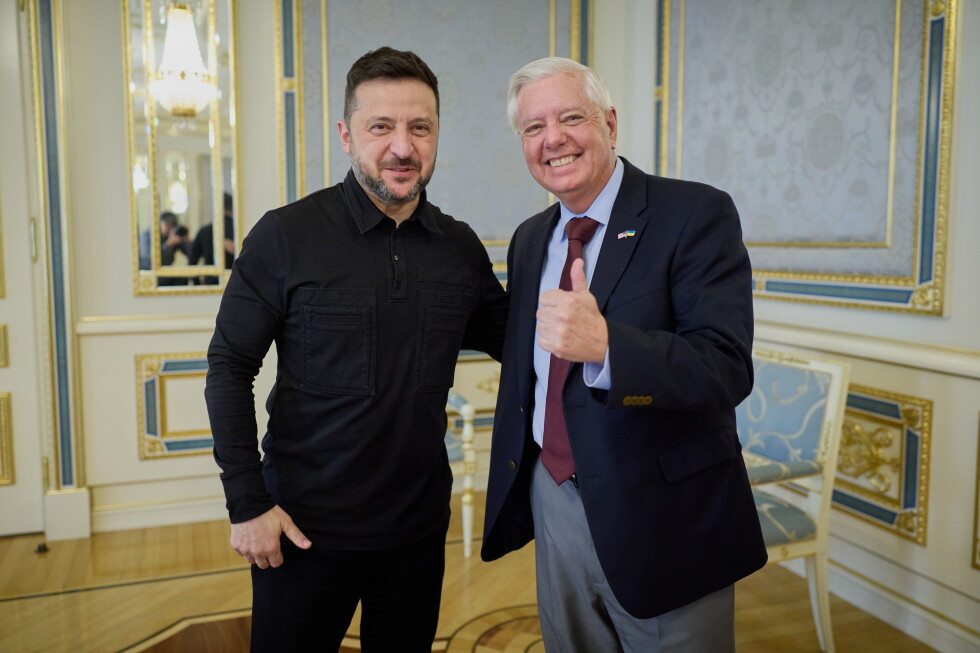
    Key attendees at the summit include Ukrainian President Volodymyr Zelensky and NATO Secretary General Mark Rutte; Merz will be represented by French President Emmanuel Macron for the proceedings. Notably, Carney’s participation marks the first time a non-European leader has joined EPC talks, a shift widely interpreted as a response to closer alignment between Ottawa and Europe amid shared pushback against Trump’s policies. Like many European economies, Canada has taken major damage from Trump’s sweeping tariffs, and Carney has emerged as a leading voice for middle powers pushing back against the U.S. president’s unilateral agenda. Earlier this year, he delivered a widely cited address calling on mid-sized nations to unite in the face of a new global order defined by great power competition and the erosion of long-standing international rules-based systems.

    Sebastien Maillard, a special adviser at the Paris-based Jacques Delors Institute think tank, noted that the EPC was originally framed as a cooperative body focused on countering Russian aggression after the 2022 invasion of Ukraine. “With the invitation to Canada, this initiative — which was initially driven by geography — is now taking on an anti-Trump slant,” Maillard explained. In a tangible step to deepen its ties with Europe, Canada has already become the first non-European country to join the EU’s defense financing scheme, as Ottawa actively seeks to diversify its economic and security partnerships away from its traditional southern neighbor the U.S., while expanding bilateral trade cooperation with the bloc. A senior anonymous EU official noted that “Canada has a way of looking at the world and looking at ways to solve the challenges we have currently that Europe shares to a great extent.”

    Launched in 2022 on the initiative of Emmanuel Macron, the EPC was created in direct response to Russia’s invasion of Ukraine, bringing together all EU member states alongside 21 additional non-EU countries for informal dialogue. Unlike formal EU summits, the EPC does not typically produce binding policy decisions, instead prioritizing open multilateral and one-on-one discussions between leaders. Most delegates arrived in Yerevan on Sunday for an informal opening dinner, with Spanish Prime Minister Pedro Sanchez expected to join Monday after a technical issue with his aircraft forced an emergency landing in Turkey, requiring him to stay overnight in Ankara.

    Monday’s gathering marks the first time the EPC has held a summit in the Caucasus region, a milestone that comes as Armenia actively pursues closer ties with the European Union while carefully reducing its long-standing reliance on traditional ally Russia. The EPC summit will be followed Tuesday by a formal EU-Armenia summit featuring European Commission President Ursula von der Leyen and Antonio Costa, who has described the meeting as a “major milestone” in Armenia’s rapprochement with the bloc.

    Relations between Yerevan and Moscow have deteriorated sharply in recent years, fueled by widespread anger in Armenia over the failure of Russian peacekeepers to intervene during recurring military conflicts between Armenia and neighboring Azerbaijan. Under Prime Minister Nikol Pashinyan, Armenia has adopted an official strategy of “diversification”, maintaining limited ties with Russia while expanding political and economic links with Western institutions. The country of 3.5 million signed a comprehensive partnership agreement with the EU in 2017, and formally announced its intention to apply for EU membership last year. In April, the EU deployed a special mission to Armenia to help the country counter foreign interference, amid widespread intelligence suggesting Russia is running a large-scale disinformation campaign to disrupt Armenia’s June general elections.

    While Russian President Vladimir Putin has stated he is “completely calm” about Armenia’s outreach to the EU, he has issued a clear warning that simultaneous membership in both the EU and the Russian-led Eurasian Economic Union is “simply impossible.”

  • Viva Energy announces major update to progress of Geelong oil refinery repairs

    Viva Energy announces major update to progress of Geelong oil refinery repairs

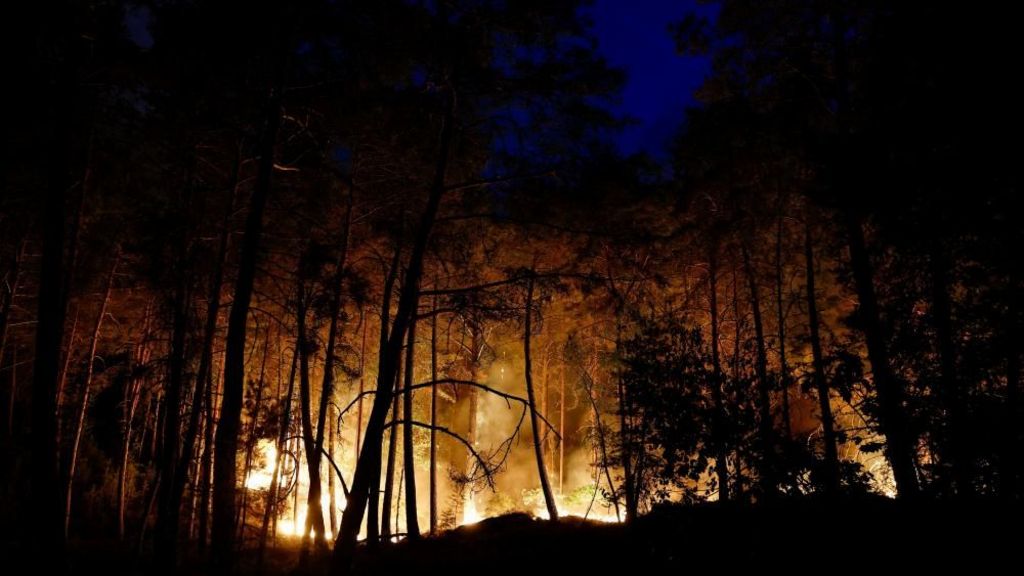
    Weeks after a devastating blaze tore through one of Australia’s only two functional oil refineries, operator Viva Energy has issued a key progress update on recovery efforts, confirming full operations are on track to resume by the end of June.

    The Geelong refinery, positioned on the shores of Corio Bay, suffered extensive damage when an equipment fault triggered a large fire on April 15. The incident immediately forced drastic production cuts and sparked widespread concern over national fuel security, coming at a moment when Australia’s supply chains were already strained by geopolitical conflict in the Middle East and ongoing disruptions to shipping through the Strait of Hormuz.

    In a filing to the Australian Securities Exchange (ASX) on Monday, Viva Energy outlined that repair work has progressed smoothly with no unforeseen delays identified to date. Crews are currently targeting a six-week repair timeline. Once the damaged critical equipment is brought back online, the facility will immediately restore production to 90% of its total maximum capacity, with full output expected by the end of June.

    Viva Energy confirmed it maintains sufficient stockpiles to meet customer demand across the country throughout the repair period, despite reduced output since the fire. Immediately after the blaze, the refinery adjusted production to 80% capacity for diesel and jet fuel, and 60% for petrol. The company noted it has already begun coordination with insurance providers to cover claims for property damage and business interruption losses, while a formal investigation into the exact root cause of the fire remains ongoing.

    As a critical piece of Australia’s domestic energy infrastructure, the Geelong refinery accounts for 10% of the nation’s total fuel output, and supplies more than half of Victoria’s fuel demand. It has a maximum processing capacity of 120,000 barrels of crude oil per day and employs more than 1,000 local workers.

    In the days following the fire, Prime Minister Anthony Albanese moved to reassure the public that the incident would not meaningfully alter Australia’s fuel supply outlook. Official government data from the Department of the Prime Minister and Cabinet, released on April 28, showed the country held enough reserves for 43 days of petrol, 33 days of diesel, and 28 days of jet fuel at that time, easing near-term market concerns.

  • Penny Wong dodges questions about Aussie refusal of ISIS brides

    Penny Wong dodges questions about Aussie refusal of ISIS brides

    A growing diplomatic and political controversy has emerged over the fate of 13 Australian citizens – nine children and four women – linked to former Islamic State fighters, after the group was released last month from the Al-Roj detention camp in northeastern Syria and blocked from traveling to Damascus to arrange their return home. The Syrian government publicly confirmed last week to the Associated Press that it halted the group’s travel to the capital’s airport, stating that Australian federal authorities had explicitly refused to accept the group back into the country. The case has put the Albanese government under intense scrutiny from opposition lawmakers, who accuse the cabinet of lacking transparency around its handling of the high-stakes national security issue.

    During an interview with the morning current affairs program *Sunrise* on Monday, Australia’s Foreign Affairs Minister Penny Wong repeatedly dodged direct questions about whether the Syrian government’s claims of an Australian refusal were accurate. When pressed to confirm if Canberra had rejected the group’s repatriation request, Wong declined to endorse the Syrian government’s statement, instead stating, “I can’t speak for the Syrian government. I can only speak for the Australian government, and what I am saying is we are not acting to repatriate them.” She further implied that the Syrian account aligns with the Australian government’s longstanding position of refusing to facilitate the group’s return, a policy that was maintained after a previous attempt by the group to reach Damascus was turned back by Syrian authorities in February.

    Notably, Wong did acknowledge that as registered Australian citizens, the group holds an inherent legal right to enter and return to Australian territory, a fundamental entitlement under national immigration law. The federal government has not outlined how it intends to reconcile this legal right with its stated policy of refusing to actively repatriate the group.

    In terms of national security preparations, Home Affairs Minister Tony Burke has already issued a temporary exclusion order for one adult member of the group, following an official security assessment from the Australian Security Intelligence Organisation (ASIO). When asked last week whether authorities would immediately arrest the group upon arrival, Burke emphasized he would not interfere in operational law enforcement matters, leaving all public announcements to the Australian Federal Police’s discretion. “There is no way I’ll interfere with anything operationally,” Burke stated.

    Reports confirm that the group received new Australian passports with the support of Jamal Rifi, a well-respected Sydney-based community doctor who has long advocated for the repatriation of stranded children from Syrian detention camps.

    The center-right Coalition opposition has ramped up criticism of the Albanese government’s handling of the case, accusing cabinet of both a lack of transparency and failure to fully utilize existing legal powers to block the group’s entry. Opposition Home Affairs Spokesman Jonno Duniam argued over the weekend that the government’s ambiguous stance poses an unacceptable risk to national security. “There seems to be equivocation and a lack of certainty, a lack of clarity, when it comes to something so important as national security and protecting us from a risk that I believe, and many Australians believe, ISIS brides would pose to the Australian community,” Duniam said.

    The case comes amid shifting global dynamics around the detention of ISIS affiliates: since the collapse of ISIS’s self-declared caliphate in 2019, tens of thousands of foreign citizens, including many women and children, have been held in Kurdish-run detention camps across northeastern Syria, where most have been held in poor conditions. In recent months, as relations between Western powers and Syria’s new transitional government have begun to thaw, U.S. officials have actively pressured foreign governments to repatriate their citizens held in these camps, rather than leaving them stranded in Syrian territory.

  • Warning over Iran war’s impact on soft plastics supply

    Warning over Iran war’s impact on soft plastics supply

    As geopolitical tensions between the United States and Iran continue to simmer in the Middle East, one of the world’s largest food and confectionery manufacturers has issued a stark warning for Australian consumers: the ongoing conflict could soon upend supply chains for key packaging materials, driving up costs for beloved treats from KitKat to Allen’s Lollies.

    Andrew Lawrey, General Manager of Confectionery and Snacks for Nestlé Oceania, told local media that while the company’s current packaging stockpiles remain stable for now, a prolonged escalation of regional conflict would put unprecedented strain on global supply chains for food-grade soft plastic resins – the core material used to wrap the vast majority of Nestlé’s confectionery, snack and coffee products sold across Australia. The multinational food giant holds a dominant position in Australia’s sweet treats market, with household brand names including the iconic KitKat chocolate bar, Allen’s popular line of gummy and boiled lollies, and the Nescafé coffee range.

    Lawrey explained that global commodity markets, including the petrochemical sector that produces plastic resins, are already facing growing disruption from Middle East unrest. He projected that significant supply shortages and price volatility for these key packaging inputs are likely to emerge in the coming months if hostilities continue. “The Middle East is creating disruption all across all supply chains and some resins that are used to manufacture soft plastics, particularly food grade plastic, are going to be heavily impacted in the coming months,” he said in an interview with *The Australian*.

    Beyond the immediate warning of supply-side pressure, Lawrey used the moment to underscore a long-term policy push for Australia to develop a domestic circular economy for soft plastics. He noted that the country already has both the access to recycled soft plastic material and the technological infrastructure needed to build a robust domestic recycling system. Bringing industry stakeholders and federal and state governments together to scale this system, he argued, would drastically cut Australia’s reliance on imported plastic resins and insulate local food manufacturers from global geopolitical shocks. “I think the reality is we have the technology, we have the abundance of the soft plastic resource, and if we get industry and government working together, there is an opportunity for a truly circular recycling system that would absolutely and fundamentally change our reliance on our net import situation,” he added.

    As for the near-term outlook for consumers, Lawrey confirmed that any major supply squeeze or price spike for resin inputs would eventually lead to higher retail prices for confectionery products across the country. If resin costs increase by the same 15 to 20 percent margin that global fuel prices have seen in recent volatility, those higher costs would be passed on to supplier partners and eventually consumers, he explained. The Nestlé executive emphasized that product price increases are the company’s last resort, and that the firm plans to absorb extra costs in the short term. But he added that the final outcome will depend entirely on how long the geopolitical instability in the Middle East continues, leaving long-term cost projections uncertain.

  • Israel court extends detention of two Gaza flotilla activists

    Israel court extends detention of two Gaza flotilla activists

    In a development that has reignited international debate over Israel’s blockade of Gaza and the treatment of humanitarian aid activists, an Israeli court ruled Sunday to extend by two days the pre-questioning detention of two foreign activists intercepted while sailing toward the blockaded Palestinian enclave. The two men — Spanish national Saif Abu Keshek and Brazilian activist Thiago Avila — are part of a larger humanitarian flotilla organized to break Israel’s 17-year blockade of Gaza and deliver urgently needed supplies to the war-ravaged territory, which has faced catastrophic shortages of food, medicine, and other critical goods during the ongoing Gaza conflict.

    The flotilla, comprising more than 50 vessels that departed from ports in France, Spain, and Italy, was intercepted by Israeli military forces in international waters off the coast of Greece in the early hours of Thursday. Following the interception, Israel removed roughly 175 activists from the flotilla, detaining only Abu Keshek and Avila for further questioning and transferring them to Israeli territory.

    Footage captured by Agence France-Presse (AFP) showed the pair being escorted into the courtroom in the southern Israeli city of Ashkelon: Avila was led into the building with his hands secured behind his back, while Abu Keshek’s ankles were bound in shackles. Miriam Azem, international advocacy coordinator for Adalah — the Israeli rights group representing the two activists — confirmed to AFP that the court granted the state’s request for a 48-hour detention extension.

    Israeli prosecutors presented a list of serious allegations against the two men, including charges of “assisting the enemy during wartime” and “membership in and providing services to a terrorist organization.” Israel’s foreign ministry further claims the activists are affiliated with the Popular Conference for Palestinians Abroad (PCPA), a group the United States has accused of operating clandestinely on behalf of Hamas, the Palestinian militant group governing Gaza. The ministry identified Abu Keshek as a leading PCPA member and Avila as a linked individual suspected of unspecified illegal activity.

    Adalah’s legal team has pushed back forcefully against the proceedings, first challenging the Israeli court’s jurisdiction over the pair. The lawyers argue the detention amounts to an “unlawful abduction” that took place outside Israeli territorial waters, making any legal process against the men illegitimate. Beyond the jurisdiction dispute, the defense has detailed grave allegations of abuse inflicted on the two activists following their capture. In testimony presented to the court, Avila and Abu Keshek described being subjected to what they called “severe physical abuse amounting to torture” during their transit to Israel. Adalah lawyers said Avila specifically recounted being dragged face-down across the deck of a vessel after interception, beaten so severely that he lost consciousness twice. Abu Keshek, the group added, was kept hand-tied and blindfolded, forced to lie face-down on the floor continuously from the moment of his capture until he arrived in Israel.

    Israeli officials have categorically denied all allegations of abuse. “Contrary to the false and baseless claims prepared in advance, at no point were Saif Abu Keshek and Thiago Ávila subjected to torture,” foreign ministry spokesman Oren Marmorstein told AFP. Marmorstein acknowledged that Israeli personnel used force against the pair, but framed the action as a response to resistance: “Following violent physical obstruction by Saif Abu Keshek and Thiago Ávila against Israeli staff members, staff were compelled to act in order to stop these actions. All measures taken were in accordance with the law.” As of Sunday, no formal charges have been filed against either activist, who are currently being held at Ashkelon’s Shikma Prison.

    Defense lawyers reiterated after Sunday’s hearing that the two men were part of a purely humanitarian mission, with no ties to any militant group. “We argued that … they were part of a humanitarian mission that aimed to provide humanitarian aid to the civilians in Gaza, and not to any other organisation, whether terrorist or not,” Hadeel Abu Salih, one of the Adalah lawyers representing the pair, told reporters. “We deny all the accusations that were presented… and demand these two men be released immediately.”

    The Spanish government has already joined the call for Abu Keshek’s release, issuing a formal statement to AFP demanding his “immediate release” and confirming that a Spanish consul attended Sunday’s court hearing to accompany the activist. This is not the first high-profile interception of the Global Sumud Flotilla, the organization behind the initiative: the group’s first voyage to Gaza last year also drew international headlines after it was intercepted by Israeli forces, with dozens of activists — including prominent climate campaigner Greta Thunberg — arrested and expelled. Avila was one of the lead organizers of that 2023 voyage.

    Israel has maintained strict land, air, and sea control over all entry points to Gaza since imposing its blockade on the territory in 2007. During the 11-month Gaza war, the enclave’s 2.2 million residents have faced extreme shortages of life-saving aid, with Israel repeatedly halting aid convoys entirely amid military operations, drawing widespread condemnation from international humanitarian groups.

  • Massive search continues for two missing US soldiers in Morocco

    Massive search continues for two missing US soldiers in Morocco

    A large-scale coordinated search operation involving American, Moroccan and allied military forces is entering its second day for two U.S. Army soldiers who went missing during a routine training deployment in southern Morocco, U.S. defense officials confirmed to Agence France-Presse on Sunday.

    The service members disappeared from the Cap Draa Training Area late Saturday, and were last located near rugged seaside cliffs. Initial investigations have ruled out any connection to terrorist activity, pointing instead to a tragic accidental incident. According to early assessments, the pair likely fell into the Atlantic Ocean after going off-trail in the coastal area.

    Multiple unofficial reports have added context to the disappearance: The Wall Street Journal cites U.S. officials stating the soldiers had embarked on an unsanctioned hike following the conclusion of scheduled training activities, though AFP has not been able to independently verify this detail. A CBS News reporter embedded with the exercise noted that military helicopters conducted searches continuously through the night and into Sunday morning, after a base-wide headcount shortly after training finished revealed the two soldiers were unaccounted for.

    Morocco’s armed forces publicly confirmed their participation in the search via an official Facebook post, and U.S. defense officials detailed the extensive resources deployed to locate the missing pair. The search effort combines land, air and sea assets, including multiple military helicopters, surface vessels, uncrewed reconnaissance drones, specialized mountain rescue teams, and diving units to comb the coastal waters below the cliffs. As of 8 p.m. GMT Sunday, search operations remained actively ongoing.

    The soldiers were in Morocco to participate in African Lion, the largest annual joint military exercise organized by U.S. Africa Command. Hosted annually across Morocco, Ghana, Senegal and Tunisia, the exercise brings together more than 10,000 military personnel from over 20 nations, including NATO allies and partner forces across North and West Africa, for coordinated training drills focused on regional security and interoperability.

    The Cap Draa Training Area has been the site of past training fatalities involving U.S. personnel during African Lion. In 2012, two U.S. Marines died and two others were injured when their aircraft crashed in the same region during that year’s iteration of the exercise.

  • Man Utd beat Liverpool, Spurs climb out of relegation zone

    Man Utd beat Liverpool, Spurs climb out of relegation zone

    On a tense, history-charged Sunday of English Premier League action, two of the league’s most storied clubs delivered the high-stakes results their seasons have hinged on: Kobbie Mainoo’s clinical late strike earned Manchester United a thrilling 3-2 victory over Liverpool, securing the Red Devils a return to UEFA Champions League football after a two-year absence, while Tottenham Hotspur grabbed a vital 2-1 away win over Aston Villa to climb out of the relegation zone with just three matches remaining in the campaign. The Old Trafford clash carried extra emotion before kickoff, when news broke that legendary former United manager Alex Ferguson had been admitted to hospital as a precautionary measure after falling ill – a development that hung over the fixture as both sides took to the pitch.

    United got off to a blistering start, netting twice inside the opening 15 minutes to put Liverpool on the back foot. Matheus Cunha’s strike from the edge of the 18-yard box took a deflection that wrong-footed Liverpool’s third-choice goalkeeper Freddie Woodman, opening the scoring for the hosts. Just minutes later, Benjamin Sesko bundled the ball over the line from close range to double United’s advantage, leaving Arne Slot’s out-of-sorts Liverpool side reeling. Liverpool, already missing key attacking trio Mohamed Salah, Hugo Ekitike and Alexander Isak through injury, looked set for a heavy defeat by halftime, with United squandering multiple chances to extend their lead further.

    But costly mistakes from United handed Liverpool a route back into the contest, turning the match on its head early in the second half. Just two minutes after the restart, Dominik Szoboszlai capitalized on a wayward pass from Amad Diallo, driving the length of the pitch from inside his own half to slot home and cut United’s lead in half. Twenty minutes later, another stray pass – this time from United goalkeeper Senne Lammens – let Szoboszlai set up Cody Gakpo to level the scores, setting the stage for a grandstand finish.

    The moment of heroism belonged to 19-year-old Kobbie Mainoo, who signed a new five-year contract with United just this week. With 13 minutes left to play, the young midfielder coolly slotted a precise effort from outside the penalty area past Woodman to put United back in front, securing the full three points that guarantee Champions League football at Old Trafford next season. The result has only strengthened calls for interim manager Michael Carrick to take the role permanently ahead of the new campaign. Speaking after the match, Carrick said: “I love doing what I’m doing and it’s a great position for me to be in. It feels pretty natural if I’m totally honest.”

    The turnaround is staggering when compared to the two sides’ form last term, when Liverpool finished 14 positions and 42 points clear of United. This season, Slot’s side now sit six points behind their historic rivals, and still need positive results in their final three matches to lock in a top-five finish.

    Away from the Manchester-Liverpool blockbuster, Tottenham Hotspur pulled off a survival-defining win at Villa Park that moves them out of the relegation zone. Heading into the match, Spurs had gone 118 days without a Premier League win before their scrappy 1-0 victory over already-relegated Wolves the previous weekend. Their second consecutive win has flipped the script on the relegation battle, dropping West Ham United into the bottom three with three games left to play.

    Aston Villa manager Unai Emery made seven changes to his starting lineup, prioritizing his side’s upcoming Europa League semi-final second leg against Nottingham Forest, where Villa hold a 1-0 first-leg deficit to overturn. Tottenham took full advantage of the rotated side, with Conor Gallagher firing home his first goal for the club since joining from Atletico Madrid in the January transfer window. Richarlison doubled Spurs’ lead in the 25th minute, nodding home a teasing cross from Mathys Tel. De Zerbi’s side was rarely tested by an under-strength Villa, even after Emery brought star striker Ollie Watkins off the bench to turn the tide. Emi Buendia grabbed a late consolation goal in stoppage time, but Spurs held on to move one point clear of West Ham in the survival battle.

    Elsewhere, Bournemouth extended their remarkable unbeaten run to 15 matches with a 3-0 thrashing of Crystal Palace, closing the gap to the top of the table to just six points. The Cherries got all three goals from a Jefferson Lerma own goal, a second-half penalty from Eli Junior Kroupi and a late strike from Rayan, rounding out a dramatic day of Premier League action.

  • Rudy Giuliani in critical condition in hospital

    Rudy Giuliani in critical condition in hospital

    Longtime Donald Trump ally and former New York City Mayor Rudy Giuliani has been admitted to hospital in stable but critical condition, his spokesperson has confirmed. In a social media statement released Sunday, Ted Goodman, Giuliani’s communications representative, announced the news, calling for public prayers for the one-time mayor who has long been a polarizing figure in American political life.

    Shortly after Goodman’s announcement went public, former President Donald Trump shared his own reaction on social media. Trump hailed Giuliani as a “true warrior” and described him as the greatest mayor in New York City’s history, echoing the praise that has long come from his closest political allies. Trump also echoed a familiar grievance, claiming that Giuliani had been unfairly targeted by what he called “Radical Left Lunatics” for his work challenging the results of the 2020 presidential election.

    Goodman did not disclose specific details about the cause of Giuliani’s current hospitalization. The 81-year-old, who will turn 82 later this month, has already dealt with serious health complications stemming from a car crash last September. The accident took place in New Hampshire, when a vehicle struck the Ford Bronco Giuliani was riding in from behind. At the time of the crash, his security team confirmed he suffered a fractured thoracic vertebra, multiple cuts and bruises, and additional injuries to his left arm and lower leg.

    Giuliani has remained one of Donald Trump’s most loyal and high-profile surrogates since the 2020 election, leading the former president’s failed legal efforts to overturn the election result that saw Joe Biden defeat Trump. Across dozens of public appearances and court filings, Giuliani spread baseless false claims that Biden and his allies engaged in widespread ballot fraud to steal the election. These unsubstantiated claims led to significant legal consequences for the former mayor: a civil jury ordered him to pay $148 million in defamation damages to two Georgia election workers who he falsely accused of participating in fraudulent voting activity.

    In his statement, Goodman emphasized Giuliani’s long reputation as a political fighter, noting that the former mayor has faced every personal and professional challenge in his life with unshakable resolve. “He’s fighting with that same level of strength as we speak,” Goodman said, before asking supporters to join the former mayor’s team in praying for his recovery.

  • BBC uncovers the Ugandan scammers abusing dogs to elicit donations from animal lovers

    BBC uncovers the Ugandan scammers abusing dogs to elicit donations from animal lovers

    On a dusty roadside in Mityana, a small Ugandan trading hub 70 kilometers outside the capital Kampala, a rust-furred dog named Russet lay panting in visible agony. His broken hind legs, hidden from initial view in a 15-second TikTok clip posted in January last year, became the centerpiece of hundreds of fraudulent fundraising campaigns that scammed thousands of dollars from animal lovers across Europe, North America and Australia. What looked like a plea to save an injured accident victim was actually part of a multi-million-dollar hidden industry built on animal cruelty, exploitation of Western stereotypes, and viral social media engagement, a year-long investigation by BBC Africa Eye has uncovered.

    Mityana has become globally infamous among animal rescue activists as the global hub for fake online dog rescue operations. The scam relies on a simple, highly effective formula: local scammers exploit Western audiences’ widespread love for companion animals, lean into outdated stereotypes of African poverty and widespread animal neglect to trigger emotional giving, and convert viral social media content into untraceable donations that flow straight into the scammers’ pockets. Bart Kakooza, chairman of the Uganda Society for the Protection and Care of Animals, explained that the scam has flourished as unemployed young people in rural Uganda recognized they could turn global social media’s obsession with dogs into fast, easy income. “On one side, you have young people looking for any way to make money online, and on the other, you have Western donors who are deeply passionate about animal welfare,” Kakooza told the BBC. “These scammers quickly realized that putting those two together equals profit.”

    Scammers operating out of Mityana have flooded major platforms including TikTok, Instagram, Facebook and YouTube with hundreds of thousands of emotionally charged clips featuring underfed, injured dogs and cats. A typical video shows a makeshift shelter, with a voiceover or on-screen text claiming dogs have gone days without food, face eviction, or need urgent life-saving veterinary care. The videos intentionally lean into harmful stereotypes about Africa, framing young local animal rescuers as fighting against a society that does not care about animals to elicit sympathy from foreign donors. BBC Africa Eye’s data analysis found the scam has been extraordinarily lucrative: over the past five years, more than $730,000 has been raised via the popular donation platform GoFundMe alone for fake Ugandan animal shelters, with nearly 40% of all fundraisers linked to operations based in Mityana. In Mityana, the fake shelter industry is an open secret: local residents told the BBC that scammers are easily identified by the new status-symbol Subaru cars they buy with stolen donations, and are among the most respected young people in the town. Few locals dare to speak out publicly, however, for fear of retaliation from criminal scam networks.

    To uncover the inner workings of the industry, BBC Africa Eye sent an undercover reporting team to Mityana, posing as new operators looking to learn the fake shelter trade. The investigation revealed a structured, organized system: multiple content creators rent space at pre-established fake shelters, paying an entrance fee to film with the owner’s dogs. The same dogs and the same shelter are then used by dozens of separate accounts to run independent fundraisers, each claiming to be the sole caretaker of the animals. One shelter owner, Charles Lubajja, openly admitted to undercover reporters that the entire operation is a fraud built to steal money from foreign donors. He shared the common tricks scammers use to inflate donations: lying that a shelter faces imminent eviction to drive urgent giving, faking veterinary treatment by placing unused syringes on dogs’ fur without giving any actual care, and inflating the reported cost of dog food by more than 11 times. “Once you get the money from GoFundMe, you use it to buy a car or build a house,” Lubajja said in a secret recording. “Once you get a white donor, you don’t treat them like a brother. You squeeze them, you drain them dry.”

    Inside the shelters, undercover reporters found dogs kept in horrific conditions: 15 dogs crammed into a single cage, lying in their own waste, most severely underweight and lethargic. Most disturbingly, Lubajja confirmed what activists have long suspected: some scammers deliberately injure dogs to create more emotional, high-performing content. When scammers run out of new content to post, they cut or break dogs to create new fundraising appeals, he explained. The practice only slowed after donors started recognizing the pattern of abuse and warning others, leading to falling donations. “When the white people realized what was happening, they stopped giving, so scammers don’t cut dogs as often now,” he said.

    The death of Russet the dog exemplifies the full human and animal cost of this scam. After Russet’s video went viral and was shared across hundreds of accounts run by different scam groups, a British donor who wished to remain anonymous paid scammers to release the dog to a veterinary clinic in Kampala. Dr Isa Lutebemberwa, the vet who treated Russet, found his injuries were almost certainly not the result of a random traffic accident, as Lubajja claimed. An X-ray showed all of Russet’s leg bones were broken in the exact same spot – the weakest point of the bone, the place someone would target if they intended to break the leg on purpose. Though Lutebemberwa operated on Russet, the dog died a few days after the procedure, having endured weeks of unneeded suffering while scammers profited off his pain. “If you looked at his face, you could see how much he had been through,” Lutebemberwa said. “He did not deserve to die like that.” When contacted by the BBC for comment on the investigation’s findings, Lubajja denied owning Russet or harming any animals, though he did confirm that content creators pay to film at his shelter.

    As the scam has grown, a global movement of activists has emerged to shut it down. The most prominent campaign, called We Won’t Be Scammed, is run by Nicola Baird, a 49-year-old activist from Yorkshire in the UK who became an anti-scam campaigner after she was scammed herself. Baird sent money to a Mityana scammer who claimed his dog needed emergency surgery, but when she received photos of the procedure, local vets confirmed the images showed abuse, not legitimate care. “I realized I had enabled this cruelty,” Baird told the BBC. “That’s when I became determined to stop it. These scammers are the epitome of evil.” We Won’t Be Scammed now has 20,000 followers on Instagram, where the group names and shames fraudulent accounts and warns potential donors about the scam. Lubajja named the campaign as the biggest threat to the scammers’ business.

    Activists and Ugandan animal welfare leaders say the root of the problem is impulsive, unvetted giving from foreign donors, who unknowingly fuel the cycle of cruelty. “People who donate without checking are the ones causing this animal suffering – they keep fanning the fire,” Kakooza said. Baird echoed that assessment, pointing to Russet’s case as evidence: “Donations prolonged Russet’s agony. If people had not given money to those scammers, he would never have suffered as long as he did.” Activists agree that increasing awareness to cut off the flow of donations would reduce the profitability of the scam, discouraging new scammers from entering the trade and reducing the number of dogs captured for fake content. However, there is still no clear solution for the hundreds of dogs currently being held in Mityana’s fake shelters.

    Local law enforcement has struggled to address the problem: a 2023 police operation rescued 24 severely injured dogs from a Mityana fake shelter and arrested three suspects on animal cruelty charges, but the case was eventually closed, the suspects were released, and they only received a warning. Now, a coalition of Ugandan and international activists is turning to private prosecutions to hold scammers accountable, with the first case already in preparation. “We hope this case will act as a deterrent for anyone who wants to get involved in this illegal trade,” Kakooza said. For Russet and the other dogs that have already died at the hands of scammers, however, any justice will come too late.