作者: admin

  • Two Tehrans: The parallel lives of a city

    Two Tehrans: The parallel lives of a city

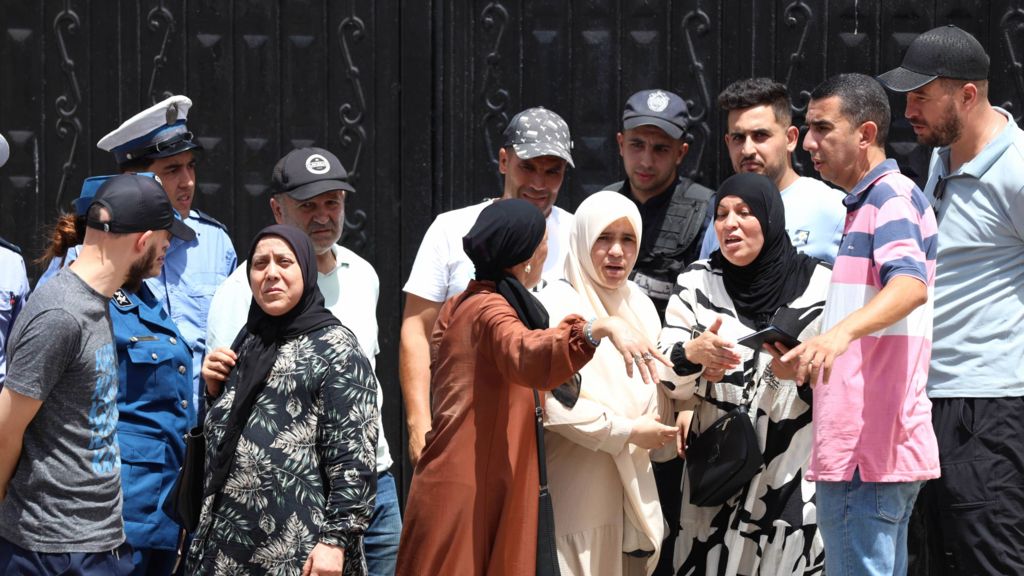
    On a recent evening along a busy central thoroughfare in Tehran, two starkly contrasting scenes played out just meters apart, laying bare the fractured reality of everyday life in Iran’s capital after months of rapid, disorienting crisis. On one side of the street, a street vendor knelt on the asphalt, sorting small household goods across a spread of clothing, his work illuminated only by the headlights of passing honking cars. “Look, this is our life now,” he muttered, a quiet complaint more than a conversation, as pedestrians drifted past—some pausing to glance at his wares, others hurrying on without stopping.

    Across the road, a crowd had slowly assembled, their rally amplified by blaring loudspeakers. Flags waved, patriotic songs rang out, and slogans denouncing the United States and Israel echoed into the dark night. This juxtaposition of private hardship and public mobilization is no accident: it has become the defining feature of life in Tehran in 2025, after a sequence of events that has upended long-held assumptions about what Iranians can expect from the future.

    It was just last June when Iran entered into a 12-day direct conflict with Israel, a confrontation that eventually drew in the United States and marked the most large-scale direct clash between the major powers in the region in decades. That confrontation was followed in January by nationwide protests, which were met with a harsh government crackdown and a nearly four-week total national internet shutdown. By April, just a few months later, Iranians found themselves locked in another 40-day cycle of escalating tension, breaking only for a fragile ceasefire that has done little to resolve underlying instability.

    For decades, most Iranians’ core daily worries centered on slow-burning economic decline and tightening civil restrictions, not the sudden threat of open war and persistent systemic instability. This new wave of crisis has shifted not just daily routines, but the very boundaries of what residents believe could happen next.

    “Before all of this – the war, the destruction, seeing civilians caught in the crossfire – we thought we just had to struggle through economic pressure, rising prices, and growing restrictions,” explained Nafiseh, a Tehran-based language teacher, in an interview with Middle East Eye. “Life was already difficult, but we never imagined it could reach this point, or God forbid, get even worse.”

    Even after the fragile April ceasefire took hold, the economic damage of repeated crises remains impossible to miss. Strikes on key industrial and petrochemical facilities, paired with months of broad instability, have exacerbated long-running economic strain that touches every corner of daily life. Residents consistently describe the same tangible hardships: skyrocketing prices for essential goods, soaring costs for food and medication, and rapidly shrinking purchasing power. Job losses have also spiked dramatically.

    Some businesses have been hit by direct damage to industrial sites or supply chain disruptions tied to conflict, while thousands more have been pushed to the brink by the prolonged internet shutdown—recognized as the longest nationwide internet blackout in modern global history. The restrictions have pushed large swathes of the workforce out of stable formal employment, particularly for those who rely on digital platforms to reach customers.

    One small manufacturing business owner, who previously built his entire customer base through Instagram, told MEE that his revenue has declined steadily since the start of the year, and he now struggles to cover even basic operating costs. “These past months have been heavy,” he said. “First the protests, then the war. After that, everything slowed down. Some days pass so slowly it feels like they never end.”

    The most recent conflict has stretched an already deteriorating economy to breaking point, leaving household incomes increasingly unstable and making even short-term life planning feel like a gamble. This uncertainty extends far beyond economics: it has reshaped how Iranians of all ages think about and prepare for the future. A ride-hailing driver described how his 10-year-old daughter now regularly follows international news updates about the risk of renewed war, a weight no child should have to carry. “A child should be thinking about games,” he said, his voice mixing frustration and disbelief. “Not about war.”

    A short distance from the vendor’s spot on the street, one of the recurring public pro-government rallies that have become common in the two months since the latest escalation got underway. A woman holding a portrait of Iran’s current leadership urged attendees in an on-camera interview to bear current hardships in order to defend the country’s national independence. These events frame the current moment not as a systemic crisis, but as a test of resilience for true believers in the state’s project.

    The rallies are widely understood as part of a coordinated push by Iran’s establishment to maintain a visible public presence and project an image of national unity and control to both domestic audiences and the international community. Most are organized or backed by state-linked institutions and networks, combining logistical support like free food distribution with speeches, patriotic music, and religious and cultural messaging.

    Interpretations of the gatherings split sharply along already existing divides. For supporters, they are a genuine display of national unity and resistance against external pressure. “We won’t give in to pressure from the US or people like [Donald] Trump,” one rally participant told MEE. “This is not just politics for us. It’s about defending our country and what we believe in. Being here is our way of showing support for those on the front line. We stand by our Nezam (system).”

    For many other Tehran residents, however, the rallies are seen as staged displays that ignore the growing everyday struggles most people face. These deep divides are not just about material conditions—they are about how people perceive hardship, stability, and sacrifice, shaping completely different understandings of the same moment.

    Access to information has also become deeply unequal across the capital. Most ordinary residents face severe restrictions on internet connectivity, limited only to tightly controlled domestic platforms, with access to global websites only available through overpriced VPN packages that are out of reach for many. A small minority of residents with authorized or privileged access retain stable uncensored connectivity, creating completely separate information ecosystems that coexist within the same city blocks.

    Even with these divides, everyday life continues, though it often unfolds under a constant current of low-grade tension. In many neighborhoods, outward signs of normalcy remain: traffic still moves, restaurants stay open, and people still meet friends and family for social gatherings. Markets and shopping malls still see foot traffic, though visitor numbers are far lower than they were a year ago. A shopkeeper at a mall in northern Tehran said the shift in consumer behavior has become impossible to miss since January. “People come in, they look, but they don’t buy like before,” he explained.

    Occasionally, passersby will confront rally participants, calling out the gap between the public displays of unity and the widespread economic pain felt across the city. Open public dissent remains rare, however, shaped by a pervasive climate of security presence and self-censorship. Online, though, frustrations surface far more openly, even on state-approved platforms that many users have been forced to join after global messaging apps were blocked.

    “Politics needs thinking, not street slogans,” one user wrote on a domestic social platform. “What’s the point of standing in the streets shouting? If things go on like this and these people refuse to see reality, it’s our own lives that get smaller.”

    As rumors of possible further escalation spread across the city, some residents have adopted a pragmatic approach to coping with rising anxiety. “I know it’s hard,” said Hamid, a local entrepreneur. “But worrying won’t change anything. We just have to get on with our lives.”

    For many Iranians, this quiet adjustment has become routine. It does not resolve the deep tensions and divides visible across the capital, but it allows daily life to continue. From a distance, Tehran looks like a city functioning as normal: up close, it is a tapestry of overlapping, often contradictory experiences. The same street holds both quiet economic struggle and public displays of patriotic commitment. In Tehran today, life goes on—not as a single shared experience, but as two parallel realities unfolding in the same space.

  • New data on 2022 China plane crash suggests cockpit struggle and fuel cut

    New data on 2022 China plane crash suggests cockpit struggle and fuel cut

    Nearly four and a half years after the March 2022 fatal crash of a China Eastern Airlines Boeing 737-800 that killed all 132 people on board, newly unsealed flight data obtained by U.S. investigators has pulled back the curtain on a sequence of events that strongly suggests intentional cockpit tampering.

    The U.S. National Transportation Safety Board (NTSB) joined the Chinese-led investigation shortly after the crash, as the jet and its engines were manufactured by U.S.-based companies, and the agency is globally recognized as a leading authority on black box flight data analysis. NTSB published its internal analysis of flight recorder data dated July 1, 2022, but the document was only released in response to a public records request on May 1, with news of the report’s contents breaking publicly earlier this week.

    The flight data reveals a clear pattern: both of the jet’s engines were fully shut down mid-flight, followed by an uncontrolled nosedive and a full 360-degree roll before the aircraft slammed into a mountain. Aerospace safety experts note that the 737’s fuel control levers are designed with a locking mechanism that prevents accidental shutoff. To cut fuel to both engines, a person must intentionally pull both levers out of their locked position and move them to the cutoff position — a sequence that cannot occur from accidental bumps or routine turbulence.

    Former NTSB and Federal Aviation Administration crash investigator Jeff Guzzetti, who has decades of experience probing civilian aviation disasters, says the flight control data bears all the markers of a cockpit struggle over control of the jet. “Typically, when you initiate a roll, you get a smooth, steady movement of the control wheel in one direction,” Guzzetti explained. “But here, the control wheel moved back and forth repeatedly, as if one person was trying to counter another’s input to roll the plane. It’s not conclusive, but it definitely has the earmarks of a struggle in the cockpit.”

    Guzzetti added that the available data aligns with a pattern seen in past intentional pilot crash events, including the 2015 Germanwings crash in the French Alps that killed all 150 people on board, and the 1999 EgyptAir crash off the coast of New York that was attributed to the co-pilot’s deliberate action. The data stops recording when the aircraft was still at 26,000 feet, after the flight recorder and all of the jet’s hydraulic systems lost power following the engine shutoff. While the cockpit voice recorder, powered by a backup battery, continued recording through the final moments of the flight, Chinese civil aviation authorities have not released a transcript of the audio, and remain the lead body responsible for publishing the final investigation report.

    To date, more than four years after the crash, China’s Civil Aviation Administration has not published its full final report. International aviation standards require investigative bodies to aim to release a final report within one year of a crash. Previously, Chinese investigators had shared preliminary findings that found no mechanical abnormalities with the aircraft, no issues with crew credentials, and no external factors such as severe weather that contributed to the crash. John Cox, CEO of aviation safety consulting firm Safety Operating Systems, confirmed the NTSB data shows no evidence of mechanical failure of the jet itself.

    The flight was operating a routine domestic route from Kunming, a major city in southwest China, to Guangzhou, a commercial hub near Hong Kong. Before losing contact with air traffic control, the crew did not report any in-flight emergencies. The jet entered a rapid nosedive from 29,000 feet, briefly showed signs of partial recovery before crashing into a mountainside, leaving a 20-meter crater and igniting a large wildfire in the area.

    The revelations from the declassified NTSB report have reignited longstanding debates across the global aviation industry over pilot mental health protocols. Currently, many commercial pilots around the world avoid seeking professional help for mental health concerns out of fear that a diagnosis will lead to the immediate revocation of their flight medical certification, grounding them without pay for months or longer while they navigate a lengthy, arduous recertification process. Many nations also ban commercial pilots from taking common psychiatric medications such as antidepressants, even when the medication effectively manages symptoms and does not impair flight ability.

    Recent high-profile incidents have underscored the ongoing risks of this approach: in 2023, an off-duty Horizon Air pilot who had used psychedelic mushrooms days prior attempted to shut off the engines of the commercial flight he was riding in the jumpseat of, an incident that only failed because other crew members intervened to stop him.

    The 2022 China Eastern crash was a devastating outlier for China’s commercial aviation industry, which has achieved a strong modern safety record following a string of deadly accidents in the 1990s that spurred widespread regulatory overhauls. China Eastern Airlines is one of China’s four large state-owned major air carriers.

  • Five killed in huge fire at packed Mexico fairground

    Five killed in huge fire at packed Mexico fairground

    A devastating large-scale fire at a popular fairground in southeastern Mexico has claimed at least five lives, leaving the community reeling in the wake of the tragedy, local authorities confirmed this week. The inferno broke out in the early hours of Thursday at the venue in Villahermosa, the capital of Tabasco state, while a massive public concert was still underway.

    Drone footage captured in the aftermath of the incident laid bare the full scale of the disaster, showing the fairground’s entire event space reduced to charred, gutted ruins. According to Mexican outlet El País, official records indicate as many as 135,000 concertgoers had gathered for the event, which kicked off Wednesday evening.

    Disturbing clips circulating widely on social media platforms capture chaotic scenes as thousands of screaming attendees scrambled to evacuate the grounds in a blind panic, fleeing the rapidly spreading flames.

    As of Thursday afternoon, the root cause of the fire remains undetermined, with authorities yet to release further details on potential contributing factors. Tabasco Governor Javier May shared an update on his official X account later that day, confirming that emergency response teams had successfully brought the blaze under control after hours of intensive work.

    The governor extended his deepest condolences to the families of those killed in the incident, pledging that state government agencies would provide full support to the bereaved and all those impacted by the fire. He also expressed gratitude to members of the public who assisted first responders in evacuating the massive crowded venue, a collective effort that helped prevent an even higher death toll.

    In addition to support for victim families, May announced a dedicated economic recovery program designed to assist local fairground operators and small businesses whose premises and livelihoods were destroyed in the fire.

  • WHO warns of more hantavirus cases in ‘limited’ outbreak

    WHO warns of more hantavirus cases in ‘limited’ outbreak

    An emerging limited hantavirus outbreak tied to an international cruise ship has claimed three lives, prompting the World Health Organization to warn that additional cases may still surface in the coming weeks, even as global health leaders express confidence that widespread spread can be contained with targeted public health action. The outbreak, centered on the Netherlands-based expedition vessel MV Hondius, has already triggered an international contact tracing effort spanning five continents, as health officials work to contain the rare Andes strain of hantavirus – one of the few variants capable of spreading between humans.

    As of Thursday, the WHO confirmed five positive cases and three additional suspected cases linked to the voyage, which departed the Argentinian coastal city of Ushuaia on April 1. The first fatality was recorded on April 11, when a Dutch male passenger died mid-voyage after contracting the virus. His wife, who disembarked with his body at Saint Helena and traveled to South Africa for repatriation, also fell ill and died 15 days later, with her cause of death confirmed as hantavirus on May 4. A third fatality, a German passenger, was recorded on May 2, and her body remains aboard the vessel as it sails toward its scheduled destination.

    On Thursday morning, a fourth symptomatic passenger disembarked in Amsterdam, and the Leiden University Medical Center later confirmed the patient tested positive for the virus. The vessel, operated by Netherlands-based tour company Oceanwide Expeditions, currently carries 149 people including 88 passengers, and is anchored off the coast of Cape Verde en route to Tenerife in the Spanish Canary Islands, where it is scheduled to arrive Sunday for a full evacuation of all people on board. Company officials confirmed in a recent statement that no remaining symptomatic individuals are currently aboard the ship.

    Speaking to reporters in Geneva Thursday, WHO Director-General Tedros Adhanom Ghebreyesus noted that the Andes strain of hantavirus has an incubation period of up to six weeks, meaning exposure that occurred earlier in the voyage could still lead to new confirmed cases in the coming weeks. “Given the incubation period of the Andes virus, which can be up to six weeks, it’s possible that more cases may be reported,” he said.

    Despite the forecast of additional cases, WHO leaders emphasized that the outbreak is expected to remain contained, as long as cross-border public health precautions and contact tracing efforts continue. “We believe this will be a limited outbreak if the public health measures are implemented and solidarity shown across all countries,” said Abdi Rahman Mahamud, director of WHO’s emergency alert and response program.

    Confirmed and suspected cases are currently isolating or receiving treatment in five countries: the United Kingdom, Germany, the Netherlands, Switzerland, and South Africa. One of the most urgent contact tracing efforts is centered on a commercial Airlink flight carrying 82 passengers and six crew that the deceased Dutch woman took from Saint Helena to Johannesburg while already showing symptoms; South African health officials are working to identify and monitor all people who shared the flight with her.

    Authorities in Saint Helena have moved to reassure local residents, noting that more than 95 percent of the island’s population has had no close contact with passengers or crew from the MV Hondius, putting them at extremely low risk of infection. The WHO has notified 12 national governments whose citizens disembarked from the vessel at Saint Helena, to coordinate national tracing and monitoring efforts.

    Argentine health authorities are planning to test local rodent populations in Ushuaia, after investigators determined the initial case was likely infected by rodents before boarding the cruise, with subsequent spread occurring between passengers on board. Hantavirus is a rare respiratory infection that is most commonly transmitted to humans from infected rodents, and can cause severe respiratory distress, cardiac complications, and hemorrhagic fever. Currently, there is no licensed vaccine for hantavirus and no specific cure for the infection. Unlike COVID-19, hantavirus is far less contagious, which has led health officials to downplay fears of a global pandemic from the current outbreak.

    Health officials in Chile have already ruled out the country as the site of initial infection, noting that the two deceased Dutch passengers traveled through Chile at a timeline that does not align with the virus’ maximum six-week incubation period. Oceanwide Expeditions said it is working to trace all passengers and crew who have boarded or disembarked the MV Hondius since March 20, to ensure all potentially exposed people are monitored for symptoms.

  • Crowds cheer China’s new snooker star on return from championship win

    Crowds cheer China’s new snooker star on return from championship win

    When 22-year-old newly crowned world snooker champion Wu Yize stepped through the doors of Xi’an’s TNT Billiards Club on Wednesday, he was greeted not with a quiet casual welcome, but with the kind of deafening chants and roaring cheers usually reserved for A-list rock stars. The soft-spoken young athlete waved shyly to the crowd, his demeanor betraying the awkwardness of a rising star still adjusting to the sudden flood of national fame that followed his historic win earlier this week. Yet his understated modesty did nothing to dim the fierce enthusiasm of hundreds of fans who traveled from across the country just to catch a glimpse of the athlete who just made snooker history.

    Wu’s victory at the World Snooker Championship marks a landmark moment for China: he is the second Chinese player in as many years to take home the sport’s most prestigious title, and the second-youngest competitor in history to claim the crown. What has turned his win into a national obsession, however, is far more than just back-to-back global titles. Wu’s journey to the top is a classic underdog fairytale: at just 16 years old, he dropped out of school and moved alone to Sheffield, England, the global heart of professional snooker, to chase his dream of turning pro. As a teen living abroad, he shared a windowless apartment with his father, sleeping in the same bed to cut costs while he honed his craft. Now, after claiming the world title, he says he plans to use his prize money to buy a proper home for his parents in England, so they can continue supporting his career.

    Hailing from Gansu, a less economically developed inland province in northwest China known mostly for its vast deserts, Wu’s rags-to-riches story has resonated deeply with fans across the country. Dozens of supporters traveled for hours via high-speed rail from Gansu to Xi’an just to attend Wednesday’s celebration. Li Hao, one fan who made the multi-hour trip, called Wu’s journey “a reminder that no matter where you come from, you can reach the top if you work for it.” Another fan brought a years-old photo of Wu to get autographed, saying he’d always known the young player would go on to greatness.

    During the homecoming event, Wu put on a demonstration of his iconic skill for the gathered crowd, drawing gasps of awe from onlookers as he pulled off signature trick shots. He even played a short match against Liu Yifei, a local amateur player who won a qualifying play-off to earn the chance to compete against the champion. Liu said Wu’s historic win has inspired her to push harder to improve her own snooker skills, and that she expects to see many more young Chinese players follow in his footsteps in coming years.

    Wu told the BBC that he was overwhelmed by the warmth of his homecoming, saying, “It’s great to feel the warmth of my homeland.”

    Wu’s victory comes at a time of explosive growth for snooker across China. Industry estimates show roughly 60 million people play billiards annually in the country, spread across more than 300,000 dedicated halls. Today, Chinese competitors make up 25% of all players on the global professional snooker circuit, a share that is expected to grow as more young people take up the sport. One of the youngest fans in attendance at Wednesday’s event, an eight-year-old boy, told reporters he already practices regularly, and that his big goal is to one day win the world championship just like Wu.

    Experts point to multiple factors driving snooker’s rising popularity in China. One key draw is that the sport remains relatively affordable to play, making it accessible to players even in less developed regions like western China, where average incomes lag behind the wealthy coastal southeast. For many young people from working-class and rural backgrounds, Wu’s success has turned snooker into a tangible path to achievement, opening a new dream for generations of aspiring athletes.

  • Trump gives 4 July ultimatum to EU to approve trade deal with US

    Trump gives 4 July ultimatum to EU to approve trade deal with US

    A fresh flashpoint has emerged in transatlantic trade negotiations, after U.S. President Donald Trump issued an ultimatum to the European Union: slash all levies on American goods to zero by July 4, or face sharply increased tariffs on EU exports entering the United States.

    The ultimatum came following a phone conversation between Trump and European Commission President Ursula von der Leyen. In a post on social media, Trump claimed the EU had already committed to the zero-tariff plan as part of a landmark bilateral trade agreement reached between the two leaders last July. He wrote that he granted von der Leyen an extension until the U.S. Independence Day – the nation’s 250th birthday – warning that failure to meet the demand would trigger immediate, far higher tariffs than currently in place.

    Von der Leyen offered a more measured assessment in her own post on the social platform X, acknowledging that negotiators have made solid progress toward tariff reduction ahead of Trump’s deadline. She emphasized that both sides remain fully dedicated to implementing the framework agreement the two leaders signed last year.

    The path to finalizing the deal has hit a major snag this week, however. A round of negotiations between EU lawmakers and representatives of the bloc’s 27 member states concluded Wednesday without a consensus on how to move forward with enactment.

    The original deal, struck after Trump played a round of golf at his Turnberry luxury resort in Scotland, rolled back a planned 30% Trump tariff on European goods, settling on a permanent 15% levy for EU exports to the U.S. The pact secured conditional backing from the European Parliament back in March, when a majority of lawmakers voted in favor of implementing legislation. But legislators attached critical safeguards to their approval, tying any commitment to eliminate tariffs on U.S. goods to one key demand: the U.S. must permanently exempt European-made steel and aluminum from Trump’s 50% global tariff on those metals.

    Even with parliamentary approval in hand, the deal still requires formal sign-off from all 27 EU national governments, a hurdle that has divided negotiators. Ahead of Trump’s latest social media announcement, Bernd Lange, the European Parliament’s lead negotiator on the file, noted Thursday that talks were moving forward but still had ground to cover. “We remain more committed than ever to advance and defend Parliament’s mandate so as to provide additional guarantees that will benefit citizens and companies in both the EU and the US,” Lange said in a statement. Negotiators have scheduled their next round of talks for May 19 in Strasbourg.

    This is not the first time Trump has pressed the EU to speed up compliance. Last week, he took to his Truth Social platform to accuse the bloc of failing to honor the terms of the already agreed deal, announcing he would raise tariffs on EU-produced trucks and cars to 25%. The latest ultimatum raises the stakes considerably, putting transatlantic trade relations on a countdown to a potential new trade war just over a month from now.

  • Netflix will air Week 1 matchup between 49ers and Rams in Australia, AP source says

    Netflix will air Week 1 matchup between 49ers and Rams in Australia, AP source says

    In a groundbreaking move that expands the NFL’s global footprint and streaming partnerships, streaming giant Netflix will carry the highly anticipated Week 1 NFC West rivalry matchup between the San Francisco 49ers and Los Angeles Rams live from Melbourne, Australia, an anonymous source familiar with the league’s planning confirmed to The Associated Press on Thursday. The source requested anonymity because the full 2025 NFL regular-season schedule has not yet been finalized for public release.

    The historic cross-Pacific clash is scheduled to kick off in primetime for U.S. viewers at 8:35 p.m. Eastern Time and 5:35 p.m. Pacific Time on September 10. Due to time zone differences—Melbourne sits 14 hours ahead of New York and 17 hours ahead of the two teams’ home markets on the U.S. West Coast—the game will start at 10:35 a.m. local time on September 11 for Australian sports fans.

    This game marks a major milestone for the NFL’s international expansion efforts: it is one of nine regular-season international matchups the league will stage during the 2025 campaign, and the first NFL regular-season game ever to be held in Australia. The Rams, led by reigning AP NFL Most Valuable Player Matthew Stafford, will serve as the designated home team for the contest. Last season, the two NFC West foes split their regular-season head-to-head series, with 49ers starting quarterback Brock Purdy leading his team to one win over Stafford and the Rams.

    The NFL’s 2025 season will officially get underway one day earlier, on September 9, with the annual kickoff game featuring the Seattle Seahawks, who will host the contest as they begin their defense of their Super Bowl title. The league has not yet announced the Seahawks’ opponent for the opening matchup. League insiders note a Super Bowl LX rematch is a strong possibility for the kickoff slot, as the New England Patriots are currently scheduled to travel to Seattle for the 2025 season. This follows the league’s 2024 scheduling pattern, which placed the Super Bowl LIX rematch between the Philadelphia Eagles and Kansas City Chiefs in Week 2.

    This season’s early September 10 Week 1 kickoff is only the second time the NFL has opened its regular season on a Wednesday. The only prior instance came in 2012, when the New York Giants hosted the Dallas Cowboys to avoid a scheduling conflict with President Barack Obama’s keynote address on the final night of that year’s Democratic National Convention.

    As of Thursday, league officials were still putting the final touches on the full 2025 schedule, with an official public announcement expected as early as next week. Insiders add the league aims to complete the schedule before the weekend, as major broadcast network upfronts—annual events where networks sell advertising inventory for the upcoming fall season—are set to begin on Monday. Traditionally, linear broadcast partners reveal their top showcase games to advertisers during these upfront events.
    Netflix, which has held exclusive rights to NFL Christmas Day games for the past two seasons, is also in consideration to carry additional matchups on key holiday dates this coming season, including the day before Thanksgiving and Christmas Eve. The streaming service is already confirmed to air another two Christmas Day games in 2025, extending its expanding relationship with the league.

  • How operation to disembark passengers on virus-hit cruise will work

    How operation to disembark passengers on virus-hit cruise will work

    A high-stakes operation to get passengers off a cruise ship struck by a viral outbreak is moving forward off the coast of Tenerife, where local communities have already raised alarm over potential public health dangers posed by the vessel’s arrival. The BBC’s Guy Hedgecoe has filed on-the-ground reporting from the Spanish island, shedding light on both the logistical intricacies of the disembarkation process and the growing anxiety among residents who worry the infected ship could introduce new transmission risks to the island.

    The unusual situation has required coordinated planning across public health agencies, port authorities and cruise line operators to put in place a protocol that balances the needs of passengers trapped on board with the need to protect the local population. Every step of the process, from initial health screenings to the movement of passengers off the vessel and into either quarantine facilities or onward travel, has been mapped out to minimize the chance of viral spread. Even with these rigorous preparations in place, however, many people who call Tenerife home remain unconvinced that the risks are fully mitigated. For these locals, the presence of a virus-hit ship so close to shore represents an unwelcome threat to public health that could upend daily life and put local communities at risk of new outbreaks.

    The situation highlights the unique challenges that global tourism and cruise travel faced during viral outbreaks, when the closed environment of a passenger ship can turn a vacation voyage into a public health emergency. It also underscores the tension that often emerges between the need to assist stranded passengers and the responsibility of local officials to protect the communities they serve, as Tenerife works through one of the first major test cases of cruise ship disembarkation during a public health crisis.

  • War gains, long-term pain: Wall Street’s core business at risk due to Iran war

    War gains, long-term pain: Wall Street’s core business at risk due to Iran war

    In the wake of the US and Israeli military campaign against Iran, initial market reactions have painted a misleading picture of Wall Street’s fortunes, according to senior market analysts interviewed by Middle East Eye. While immediate short-term windfalls from spiking oil prices and amplified market volatility have lifted headline earnings, these gains are masking a growing slowdown in dealmaking that threatens the foundation of the finance industry’s core operations.

    Within days of the conflict’s launch, global oil prices surged dramatically, with Brent crude jumping 8.6% to roughly $72 per barrel in the first trading session after hostilities broke out. This spike lifted share values for major energy giants including ExxonMobil and Chevron, while heightened market turbulence drove a sharp uptick in trading revenues across major investment banks. Defense sector equities also rallied early on, with leading contractors Northrop Grumman, RTX Corporation and Lockheed Martin all posting immediate gains on expectations of expanded military spending. Goldman Sachs even reported a 48% jump in investment banking fees to $2.84 billion, with the bank acknowledging the conflict had given trading revenues a measurable boost.

    But these early, visible gains hide deeper underlying vulnerabilities, experts warn. While first-quarter 2025 earnings appear strong on paper, the vast majority of that performance traces back to transactions that were finalized before the first strikes on Iran on February 28. The full negative impact of the conflict on global deal flow is only just beginning to emerge.

    “Wall Street has done meaningfully less well out of the Iran war than might meet the eye,” explained Ilya Spivak, head of global macro at tastylive, a U.S.-based financial media and trading platform. Today, Wall Street executives are sounding the alarm that the conflict is complicating cross-border and domestic transactions, delaying planned initial public offerings (IPOs), and putting the entire pipeline of mergers, acquisitions (M&A) and new stock listings at risk.

    The early upward momentum across conflict-linked sectors also proved far from sustainable. While defense stocks jumped initially, many individual firms have struggled to hold gains in subsequent weeks, leaving the broader aerospace and defense sector largely flat for the year to date. Energy equities have followed a similar trajectory, giving up all their post-conflict gains after peaking in early March. Spivak added that recent broad market rebounds are “more driven by opportunistic attempts to ‘buy the dip’ in Magnificent 7 (Mag7) stocks rather than reflecting actual war-related upside for companies.” The Mag7—Alphabet, Amazon, Apple, Meta, Microsoft, Nvidia and Tesla—are seven large-cap tech names that have driven the vast majority of U.S. market growth in recent years.

    The core challenge, Spivak explained, is that trading revenue cannot fully offset a slowdown in traditional dealmaking. Trading operations require far heavier infrastructure investment and deliver significantly thinner profit margins than the advisory and underwriting work that forms the core of investment banking profitability. “Increased volatility can help offset a slowdown in dealmaking, but its thinner margins—of 25 to 45 percent, compared with those for investment banking of 45 to 65 percent—mean that you need about $1.50 in trading revenue to make up $1 of dealmaking revenue,” Spivak said.

    That gap is already showing up in hard data. As of early March, the number of announced U.S. mergers had fallen roughly 23% year-over-year to 1,795, a drop that reflects both pre-existing market weakness and new uncertainty fueled by the conflict. Goldman Sachs CEO David Solomon has openly acknowledged that IPO activity slowed sharply in March, with seven of the 10 largest U.S. listings from the first quarter trading below their offer price within a month of launch.

    “The disruption runs deeper than Wall Street’s earnings headlines suggest,” said Javed Hassan, a former investment banker who previously worked in London and Hong Kong for Swiss Re’s investment banking division. Hassan noted that major global banks with large trade finance portfolios—including Citigroup, HSBC and Standard Chartered—have already flagged rising counterparty risks in commodity-linked transactions. “The difficulty is not just energy prices, it is that no one can write a contract with confidence when the baseline keeps shifting,” Hassan said. “That uncertainty is the supply chain dimension Wall Street’s earnings headlines are not yet capturing.”

    Geopolitical conflict disrupting global financial markets is not a new phenomenon. Previous major conflicts, from the 2003 Iraq War to Russia’s 2022 full-scale invasion of Ukraine, all triggered equity market pullbacks, widening credit spreads and sharp slowdowns in IPO activity. But Mir Mohammad Ali Khan, founder and former chairman of KMS Investment Bank at 110 Wall Street, argues the Iran conflict is unique due to its direct and lasting impact on global energy flows through the Strait of Hormuz.

    “Previous conflicts, including the wars in Afghanistan and Iraq, did not have the long-term direct impact on US financial markets,” Khan told Middle East Eye. “Letting this conflict drag on is not in Wall Street’s interest.”

    Industry executives now agree that the second quarter of 2025 will be the first full test of the conflict’s impact, as it will be the first period entirely exposed to war-related disruptions. “Looking ahead, planning, engagement and pipelines remain healthy, but of course, developments in the Middle East could have an impact on deal execution and timing,” JPMorgan CFO Jeremy Barnum said. Citigroup CFO Gonzalo Luchetti echoed that warning, noting a prolonged conflict could introduce “risk of deferrals” for planned deals later in the year.

    Those warnings are grounded in the scale of the energy disruption. Before the conflict began, roughly a quarter of all global seaborne oil and 20% of global liquefied natural gas traded through the Strait of Hormuz—a key shipping lane that has been effectively closed since early March. The Federal Reserve Bank of Dallas has already labeled the conflict the largest geopolitical oil supply shock on record, estimating that removing nearly one-fifth of global oil supply could cut global GDP growth by 2.9 percentage points in a single quarter.

    More than two months into the conflict, the economic fallout is already showing up in broader U.S. economic data. Energy costs rose 10.9% in March alone, pushing average U.S. gasoline prices above $4 per gallon and lifting overall inflation to 3.3%—far above the Federal Reserve’s 2% target. “This is a one-quarter blip where the effects of it really weren’t being felt, but I don’t really see how this is sustainable,” said William D. Cohan, a former senior Wall Street M&A investment banker with experience at Lazard Frères & Co, Merrill Lynch and JPMorganChase. When corporate profitability falls, he explained, it directly reduces companies’ willingness to pursue new deals or take on borrowed capital. “People like to say Wall Street is not Main Street, [but] Wall Street is highly correlated to Main Street,” Cohan added.

    Rising energy and consumer costs have already rippled through to broader borrowing conditions. U.S. Treasury yields and 30-year mortgage rates have climbed steadily, pushing up borrowing costs across the economy and eliminating room for the Federal Reserve to cut interest rates as markets previously expected.

    “The single most important factor determining the trajectory of stock prices is the central bank’s monetary policy,” said Alex Krainer, a Europe-based market analyst, commodities expert and former hedge fund manager. “Stock markets are going higher not because the economy is growing… but because the Federal Reserve is flooding the financial system with liquidity.” If the conflict continues to fuel persistent inflation, Krainer warned, the dollar’s purchasing power will erode, meaning the nominal market gains investors see on paper will not translate into actual, inflation-adjusted wealth.

    The International Monetary Fund has already downgraded its 2025 global growth forecasts and warned that a prolonged conflict could push the global economy to the brink of recession. For Wall Street, which relies on steady economic growth and cheap borrowing costs to support deal activity, that outcome poses an existential threat to its core revenue model. “Look, Wall Street is a confidence game,” said Cohan. “It’s a hard thing to bet against, but at some point investors, corporations, CEOs are going to have enough of this, and they are going to pull back.”

    Despite the clear short-term risks to profitability, not all analysts agree that Wall Street has an incentive to push for a rapid ceasefire. “Wall Street’s interest is in the war continuing, not stopping. I don’t think they will exert meaningful pressure on the administration for a ceasefire – probably quite the contrary,” Krainer said. Drawing on his conversations with financial and policy industry contacts, Krainer argued that control over Iran’s vast natural resources, rather than regional security, is the core strategic driver for many leading financial players.

    “Wall Street’s objective is primarily to take down the regime in Tehran,” he said. “Iran is the fifth richest nation in the world in terms of natural resources, estimated at $30 trillion. If they were able to install their own puppet in Tehran, all that wealth could become their collateral.” For Wall Street, Krainer argues, the long-term potential strategic prize far outweighs any short-term hits to industry balance sheets from the current conflict-induced deal slowdown.

  • William, Catherine and children name baby kangaroo at Australia Zoo

    William, Catherine and children name baby kangaroo at Australia Zoo

    A charming new chapter in global wildlife conservation has emerged from Queensland’s Australia Zoo, where the Prince and Princess of Wales and their three children have bestowed a heartfelt Welsh name on a young eastern grey kangaroo: Cwtch, which translates to “cuddle” in the Celtic language. The announcement was made in a joint Instagram post from the Wales family and third-generation conservationist Robert Irwin, son of the late legendary crocodile hunter Steve Irwin, who has carried on his family’s legacy of wildlife protection at the iconic Queensland zoo.

    Standing surrounded by a mob of gentle kangaroos in a video message shared to mark the occasion, Irwin expressed gratitude to Prince George, Princess Charlotte and Prince Louis for picking the affectionate name that fits the tiny joey perfectly. “It’s the absolute perfect name for a joey kangaroo, because at this age, they love a cuddle and they spend most of their time inside that pouch with their mum,” Irwin explained in the clip. “Cwtch is now proudly part of our family here at Australia Zoo.”

    Pronounced “kutch”, the name carries both personal and conservation purpose: Irwin extended the naming invitation to the British royal household specifically to draw global attention to the critical role kangaroos play in Australia’s native ecosystems, and the growing threats they face. Eastern grey kangaroos, one of Australia’s most recognizable native species, act as ecosystem engineers that maintain balanced habitats for countless other native plants, insects and animals across the Australian bush. Yet despite their cultural and ecological importance, the species continues to face mounting pressure from habitat destruction, accelerating climate change and unregulated human activity.

    “Thank you for your support with our wildlife conservation efforts. It is so important that we conserve all of our animals, including the icons, the kangaroos,” Irwin said. “These guys play a very important role in the Australian bush, and out there in the ecosystem, they are just crucial. With all of the animals that we support and all of the wildlife conservation efforts that we have around the world, it is all about making sure we give back to the wildlife and the wild places where they live.”

    The collaboration between Irwin and the Prince of Wales is far from a one-off gesture: Prince William has long been one of the world’s most high-profile advocates for global conservation, most notably as the founder of The Earthshot Prize, a landmark global initiative that funds and scales innovative solutions to the planet’s most urgent environmental challenges. Irwin has partnered with the prince on multiple nature protection and restoration projects, work that aligns closely with the mission of his global conservation nonprofit Wildlife Warriors, which carries on the Irwin family’s decades-long work to protect endangered species and wild habitats across the globe.