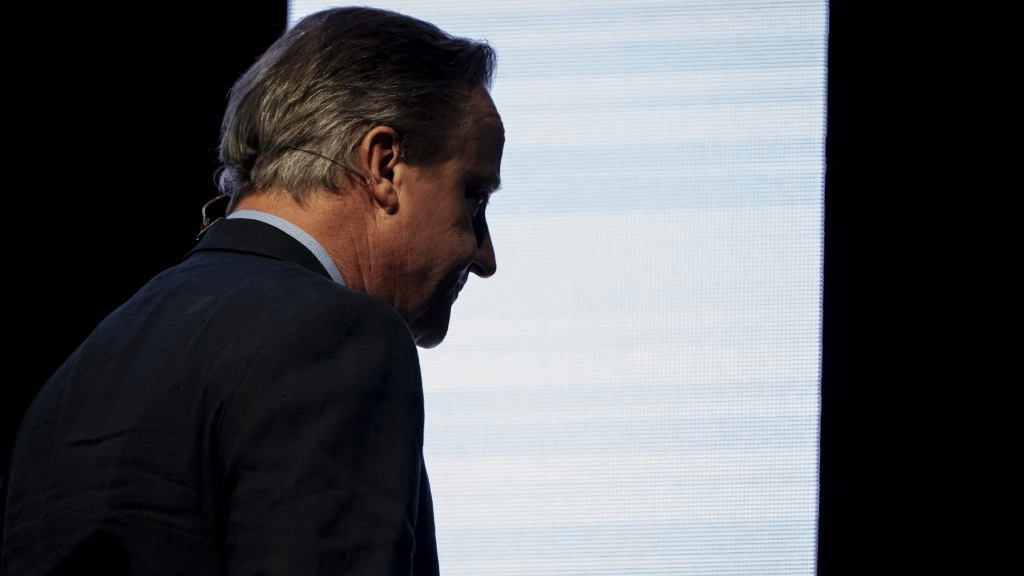
The top British prosecutor at the International Criminal Court has confirmed he will fully cooperate with any parliamentary inquiry into a high-stakes April 2024 phone call with then-UK Foreign Secretary David Cameron, during which Cameron allegedly threatened to cut British funding and withdraw the UK from the court over planned arrest warrants for senior Israeli officials.
Karim Khan, the ICC’s chief prosecutor, shared new details of the conversation in an exclusive interview with Middle East Eye published this week. The news outlet first broke the story of the call in June 2024, revealing the conversation took place weeks before Khan formally applied for arrest warrants for Israeli Prime Minister Benjamin Netanyahu and former Israeli Defence Minister Yoav Gallant over alleged war crimes in Gaza. According to the original reporting, Cameron warned Khan that the UK would pull its funding and exit the ICC’s founding Rome Statute if the warrants were issued, framing the move as equivalent to detonating a “hydrogen bomb” for the court.
Since the allegations first emerged, dozens of British parliamentarians have called for a formal investigation by the Foreign Office and a full inquiry by the House of Commons Foreign Affairs Select Committee. The UK Foreign Office has repeatedly declined to issue any public comment on the contents of the call, and has thus far stonewalled requests from opposition lawmakers for transparency and investigation.
While Khan declined to take a public stance on whether a UK government-led probe is required, noting that “others must decide what, if anything, to do,” he made clear that he would not resist a parliamentary inquiry. “Of course I would consider it and cooperate,” he stated, describing the 2024 conversation as a deeply “difficult” exchange.
Khan recalled that Cameron told him he “had lost the plot” and would be perceived as unfit for office if the court moved forward with the warrants as planned. “There were a number of questions that were posed, and consequences were, or likely consequences, were conveyed to me in what was a difficult conversation,” Khan said. He added that Cameron left no doubt that the UK, one of the ICC’s largest financial backers, along with the U.S. and the ruling Conservative Party at the time, would turn against the court over the move, a prediction Khan admitted “he was right” about.
A number of leading international law experts have concluded that Cameron’s alleged actions could qualify as a criminal offense under Article 70 of the Rome Statute, which explicitly prohibits interference with the ICC’s administration of justice. Francesca Albanese, the United Nations Special Rapporteur on Palestine, called the alleged threat “incredibly serious” last year, noting that “a threat against the ICC, direct or indirect, is an obstruction of justice.”
For Khan, a British barrister who says he owes his entire career to the UK’s legal system, the conversation was a particularly disappointing breach of the principles the country has long claimed to uphold. “I love this country and I’m a great admirer of the British legal system. I owe everything to it. I’m very proud to be a member of the bar. And I think the United Kingdom, if it stands for anything, it stands for the law,” he said.
Khan argued that in a post-Brexit era where the UK no longer holds the global military influence it once did, upholding commitments to international law and treaty obligations is one of the country’s core remaining contributions to global order. “Because if your word is your bond, that’s exactly what applies at the international level. So I felt very sad when I had that conversation, because from somebody that was a former prime minister, I expected more. I thought he would know better,” he reflected.
The prosecutor also drew a clear parallel to domestic UK politics, noting Cameron would never have dared speak to a British domestic prosecutor or attorney general in the same threatening manner, even during the high-profile Partygate scandal that brought down former Prime Minister Boris Johnson. “I don’t think he would have spoken to an attorney general or a director of public prosecutions in that manner, regarding Partygate or something on those lines. It wouldn’t be acceptable,” he said. “It was disappointing because we want the United Kingdom and every country, actually, of the world equally, to represent the best of itself, which includes compliance with international law and obligations, and respect to public servants that are seeking, with whatever limitations they have, to serve the public good or the international good. We need to protect judges and prosecutors domestically, and the same applies internationally.”
A source close to Cameron, speaking to journalist Peter Oborne for his book *Complicit: Britain’s Role in the Destruction of Gaza*, acknowledged the call took place and admitted it was “robust,” but pushed back on the threat characterization, claiming Cameron only warned that hardline Conservative lawmakers would push for defunding and withdrawal, rather than issuing a direct threat himself. When asked about this alternative account, Khan noted that “can be differences of recollection,” but pointed out that witnesses were present on both sides of the call: while the Foreign Office has previously claimed Khan was the only person present, MEE reporting confirms Cameron’s special assistant Baroness Liz Sugg also listened in, alongside a member of Khan’s own office team.
Political pressure for a full investigation has been building across the UK. Former Scottish First Minister Humza Yousaf called on the current Labour government to “come clean” earlier this year, arguing that “the more they try to obfuscate and obstruct, the clearer it becomes they have something to hide.” Yousaf urged current Foreign Secretary Yvette Cooper to release all correspondence related to the call and launch a full independent probe. Senior Labour MPs Richard Burgon and Imran Hussain wrote to the government in December 2025, arguing the severity of the allegations demands a “clear, transparent and independent examination” of whether political leaders attempted to improperly interfere with the ICC’s work.
The previous Labour government, which took office in 2025, has so far refused to open an investigation. Responding to a July 2025 letter from Labour MP Andy Slaughter asking whether the allegations against Cameron would be probed, Middle East Minister Hamish Falconer wrote in November that “it is not the practice of this Government to comment on the actions of previous Governments on such matters,” adding that the UK “respects the role and independence of the International Criminal Court.”
The phone call controversy comes amid ongoing external pressure on Khan over his Gaza war crimes investigation. The prosecutor stepped back for extended leave in May 2024 pending a UN investigation into unsubstantiated sexual misconduct allegations against him. In March 2026, a judicial panel appointed by the ICC’s Assembly of State Parties (ASP) bureau concluded the investigation found no evidence of “misconduct or breach of duty” by Khan. Despite the panel’s clear ruling, a bloc of Western and European states voted to disregard the findings and launch a second investigation, forcing Khan to remain out of office. Khan has publicly accused ASP bureau members of subverting basic legal principles by ignoring the outcome of the inquiry they themselves commissioned.